Complete Guide to the History and Highlights of Ueyama Castle (Kagoshima City, Kagoshima Prefecture) | From the Nanboku-cho Period to the Satsuma Rebellion
Mount Shiroyama, towering over the heart of Kagoshima City, is the site of a former mountain castle called Ueyama Castle. This castle, which served as the stage for approximately 600 years of history from the Nanboku-cho period to the Edo period and the Satsuma Rebellion of the Meiji era, remains a beloved symbol of Kagoshima City. This article provides a detailed explanation of Ueyama Castle’s history, structure, highlights, and access information.
Overview and Basic Information of Ueyama Castle
Ueyama Castle is a mountain castle located in Shiroyama-cho, Kagoshima City, Kagoshima Prefecture, at an altitude of approximately 108 meters. Built from the summit to the middle of Mount Shiroyama, it functioned as a defensive structure that skillfully utilized the unique topography of the Shirasu plateau.
Basic Castle Data
- Location: Shiroyama-cho and Shinshoin-cho, Kagoshima City, Kagoshima Prefecture
- Alternate Names: Kaminoyama Castle, Shiroyama
- Castle Structure: Mountain Castle
- Elevation: Approximately 108 meters
- Year of Construction: Around Bunwa 1st year / Shohei 7th year (1352)
- Builder: Kaminoyama clan
- Main Lords: Kaminoyama clan, Shimazu clan
- Year of Abandonment: Abandoned once during the Shohei era (1346-1369), then redeveloped by the Shimazu clan
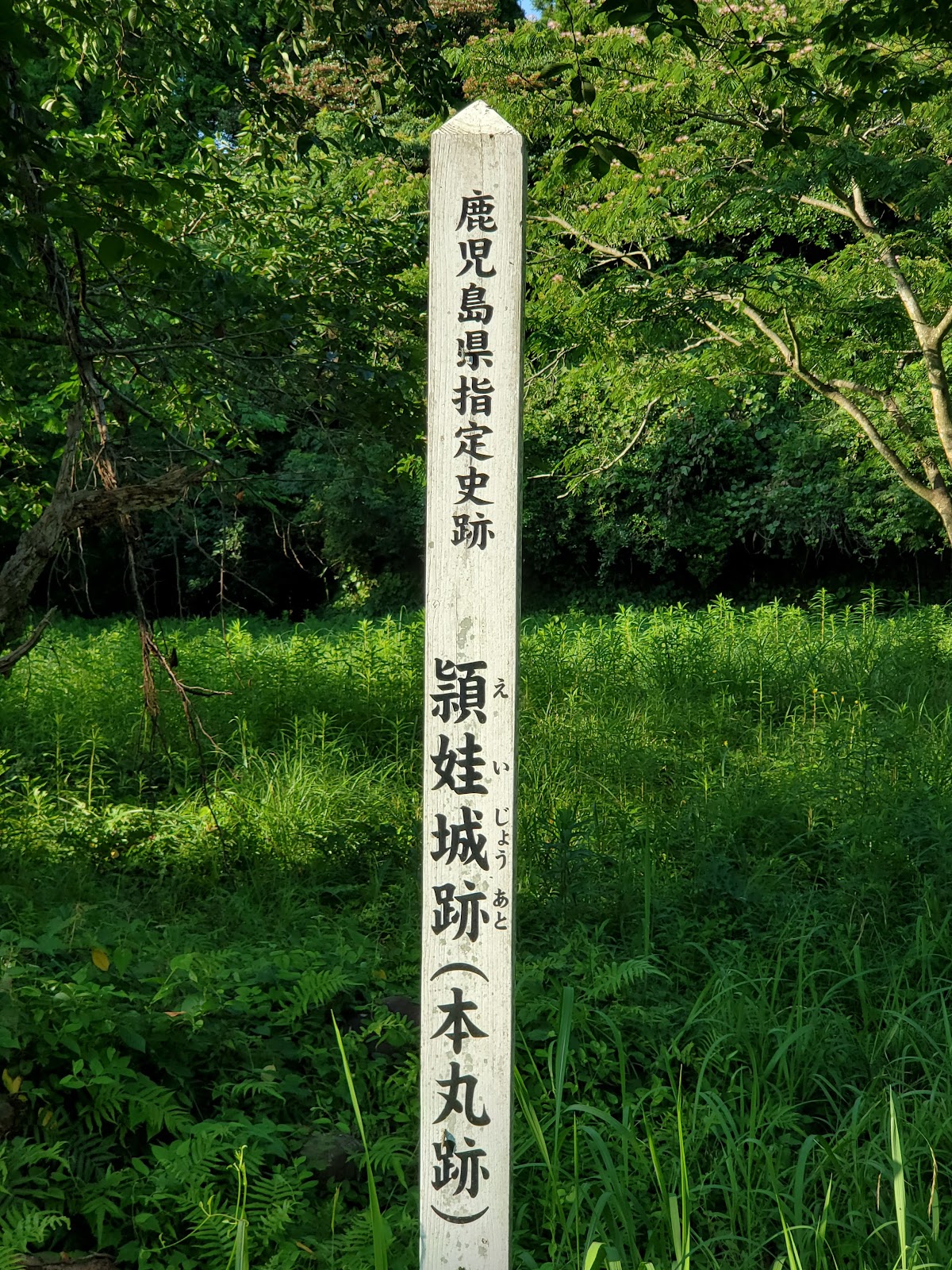
- Remains: Earthworks, dry moats, bailey remains
- Designated Cultural Property: The entire Shiroyama mountain is a national natural monument (for its flora)
History of Kaminoyama Castle
Nanboku-cho Period: Built by the local lord Kaminoyama clan
The history of Kaminoyama Castle dates back to the Nanboku-cho period. The castle was built around 1352 (Bunwa 1 / Shohei 7) by the Ueyama clan, a local lord who migrated from Ogata in Bungo Province to Satsuma Province. At that time, the three provinces of Satsuma, Osumi, and Hyuga were under the control of local lords, as the Shimazu clan, the shugo (provincial governor), resided in Kamakura from the first lord Tadahisa to the third lord Hisatsune. The Ueyama clan was one such local lord, establishing their base in this area.
The Ueyama clan maintained their power with Shiroyama as their residence, but during the Shohei era (1346-1369), they moved their residence to Sakurajima, and Ueyama Castle was abandoned. While historical records are limited regarding the detailed circumstances of this period, it is believed that changes in their relationship with the Shimazu clan and the regional political situation played a role.
Early Edo Period: Redevelopment by the Shimazu Clan
Ueyama Castle reappeared on the historical stage approximately 250 years later, in the early Edo period. In 1601 (Keicho 6), Shimazu Tadatsune (later renamed Iehisa), the 18th head of the Shimazu family, chose the foot of Shiroyama Mountain as his new base, replacing his previous residence, Uchijo Castle.
Shimazu Tadatsune constructed a residence (yakata) at the eastern foot of Shiroyama Mountain, which became Kagoshima Castle (Tsurumaru Castle). Simultaneously, he undertook extensive renovations to Shiroyama Mountain itself, developing Kaminoyama Castle as a backup castle—a “fortified castle”—in case of any unfortunate events at the Yakata at the foot of the mountain. At this time, Shimazu Tsunehisa, a close relative of Shimazu Tadatsune, was appointed as the castle lord and took up residence.
This renovation resulted in extensive improvements to the baileys, earthworks, and dry moats, transforming the castle from a medieval mountain castle into a modern fortress. The combined defensive system of Kagoshima Castle and Kaminoyama Castle, a unique castle structure combining mountain and flatland castles, became the military center of the Satsuma Domain.
Edo Period: Restricted Access and Nature Preservation
Throughout the Edo period, Shiroyama was strictly managed as an important military facility of the Satsuma Domain. Because public access was restricted, the natural forest of Shiroyama was well preserved. This restriction is a factor in the rich natural environment that remains today, with approximately 500 species of plants growing naturally in the heart of the city.
Meiji Period: Battlefield of the Satsuma Rebellion
In 1877 (Meiji 10), Shiroyama, where Kaminoyama Castle stood, became the site of the final battle of the Satsuma Rebellion, Japan’s last civil war. The Satsuma army, led by Saigo Takamori, was cornered by the government forces and holed up on Shiroyama, where the final fierce battle took place in the early morning of September 24th.
Saigo Takamori lost his life in this battle, bringing the Satsuma Rebellion to an end. Many historical sites related to Saigo Takamori’s death and the Satsuma Rebellion remain on Shiroyama today, making it a popular tourist destination as an important stage in modern Japanese history.
Structure and Layout of Kaminoyama Castle
Overall Layout
Kaminoyama Castle was a mountain castle that skillfully utilized the terrain of Shiroyama Mountain, with multiple baileys arranged from the summit to the middle of the mountain. The steep cliffs characteristic of the Shirasu plateau were used as natural defenses, and earthworks and dry moats were constructed at key points to enhance its defensive capabilities.
Main Bailey and Second Bailey
The site where the current Shiroyama Hotel stands is believed to be the site of the main bailey. The main bailey was located at the highest point of Shiroyama Mountain and was the central area that oversaw the entire castle.
The second bailey is believed to have been located around the area now called “Don Plaza.” The name Don Plaza originates from the fact that the government forces set up cannons (don) there during the Satsuma Rebellion, and a small information board mentioning Kaminoyama Castle is also installed at this location.
Earthworks and Dry Moats
Remnants of the earthworks and dry moats from that time still remain on Shiroyama Mountain. In particular, the earthworks, which were extensively renovated during the Keicho period by the Shimazu clan, were constructed by excavating the Shirasu plateau, demonstrating the high level of civil engineering technology at the time.
The dry moats were built between the baileys and served to prevent enemy intrusion. Traces of the moats can still be seen in some places today.
Relationship with Kagoshima Castle
Kaminoyama Castle was not a standalone castle, but rather formed a defensive system in conjunction with Kagoshima Castle (Tsurumaru Castle) at the foot of the mountain. It exhibits a unique castle structure from the transitional period between the medieval and early modern eras, where government affairs were conducted in the residence at the foot of the mountain, and in times of emergency, the castle lords took refuge on the mountain.
Highlights of Kaminoyama Castle
View from the Castle Mountain Observation Deck
One of the biggest highlights of Castle Mountain is the spectacular view from the observation deck. From an altitude of 108 meters, you can enjoy a panoramic view of Kagoshima city, Kinko Bay, and Sakurajima volcano. The majestic sight of Sakurajima is particularly breathtaking, and on clear days, you can even see it volcanically erupting. The former lords of the castle must have contemplated the management of their territories while gazing upon this view.
Historical Sites Related to the Satsuma Rebellion
Shiroyama has numerous historical sites related to the Satsuma Rebellion:
- The Site of Saigo Takamori’s Death: A monument stands at the place where Saigo Takamori met his end.
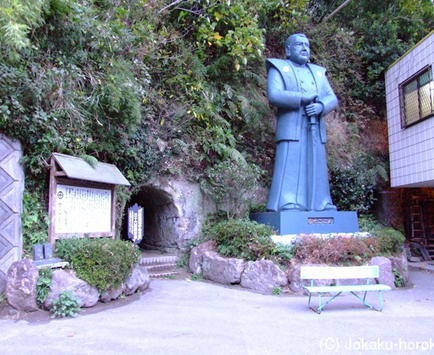
- Saigo Cave: A cave where Saigo Takamori is said to have spent his last five days.
- Don Square: The site where the government forces set up cannons.
These historical sites are important places to remember the final days of Saigo Takamori, a key figure in the Meiji Restoration, and are visited by many people.
Natural Forest and Flora
Shiroyama is designated a national natural monument, and despite being in the heart of the city, it retains a valuable natural forest with approximately 500 species of plants. The evergreen broadleaf forest, primarily composed of laurel trees, is a historical natural heritage site that has been protected by access restrictions during the Edo period.
Walking trails are maintained, allowing visitors to observe plants of all seasons and enjoy nature walks. The scenery is particularly beautiful during the fresh greenery of spring and the vibrant autumn foliage.
Kagoshima Castle Main Gate Ruins
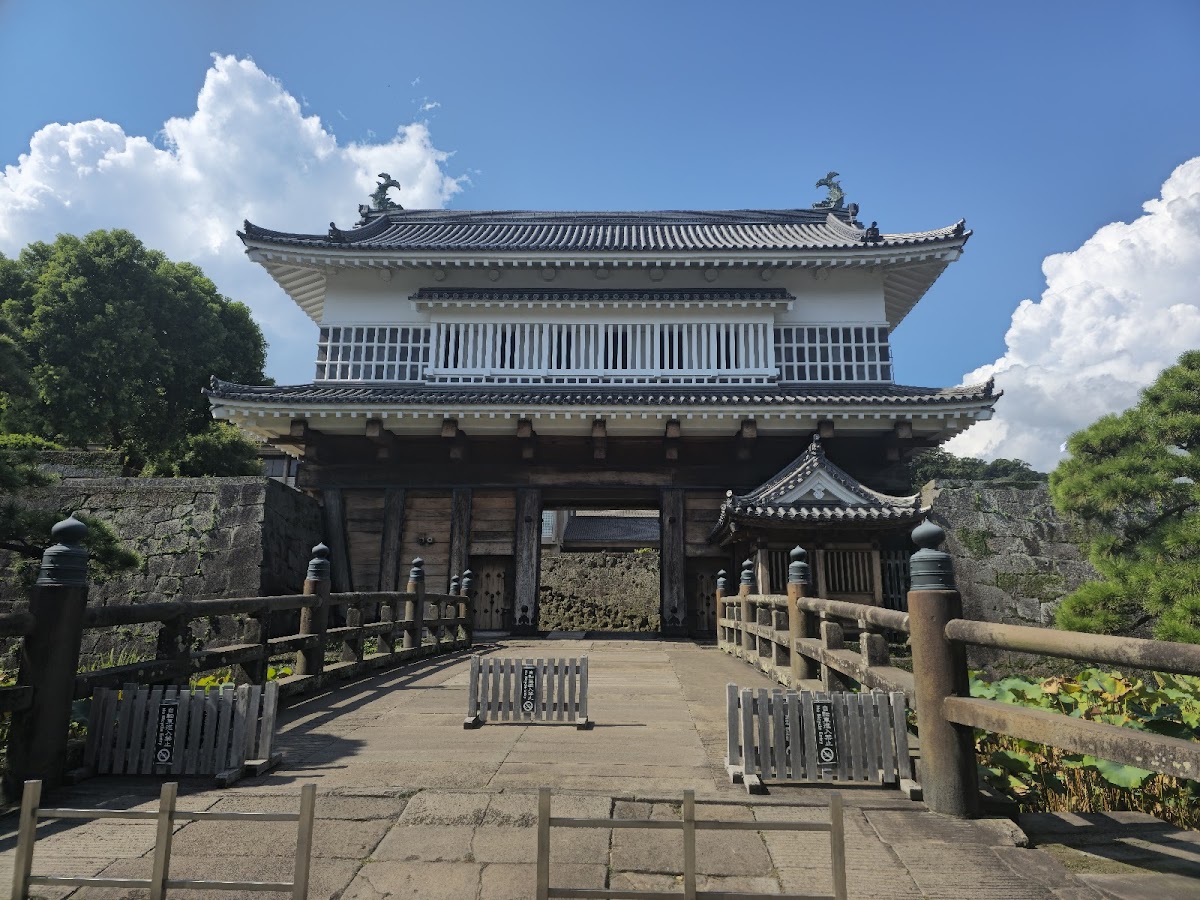
Located west of Terukuni Shrine, the Kagoshima Castle Main Gate Ruins marked the starting point of the approach to Kaminoyama Castle. The approximately 5-minute walk from here to Shiroyama Park was once an important route leading to the castle. Remnants of stone walls remain around the main gate, allowing visitors to experience the atmosphere of the past.
Points to Confirm the Remains
The following points can be observed on Shiroyama (Castle Hill):
- Kuruwa (Enclosure) Remains: Flat areas of multiple enclosures, including the main enclosure and second enclosure.
- Earthwork: Traces of earthworks carved out of the Shirasu plateau.
- Dry Moat: Moats between enclosures.
- Cut Cliff: Steep, artificial cliff faces.
These remains are integrated with the natural terrain and require careful observation, but they provide clues to imagining the appearance of the castle from the medieval to early modern periods.
Access Information to Kaminoyama Castle
Access by Public Transportation
Using the Tram and Bus
- Get off at the “Tenmonkan-dori” tram stop, then walk approximately 15 minutes to the Shiroyama trailhead.
- Take the “Kagoshima City View” sightseeing bus from Kagoshima Chuo Station, and get off at the “Shiroyama” bus stop.
- Take a local bus bound for “Shiroyama/Iso,” and get off at the “Shiroyama” bus stop.
Travel Time from Kagoshima Chuo Station
- Taxi: Approximately 10 minutes
- Bus: Approximately 20 minutes
- Walking: Approximately 30-40 minutes
Access by Car
Parking Information
Free parking is available at the Shiroyama Observatory:
- Capacity: Approximately 40 regular cars, several large buses
- Hours: 24 hours
- Fee: Free
Access from Major Roads
- Approximately 20 minutes from the Kyushu Expressway “Kagoshima IC”
- Approximately 10 minutes from downtown Kagoshima via National Route 10.
Walking Route to the Castle
When climbing from the direction of Terukuni Shrine, the route that passes through the site of the main gate of Kagoshima Castle and leads to Shiroyama Park follows the historical path. The estimated walking time is approximately 15-20 minutes, and there are guide signs along the way.
Nearby Tourist Attractions
Kagoshima Castle (Tsurumaru Castle) Ruins
This is the site of Kagoshima Castle, which formed part of a castle system with Kaminoyama Castle. Currently, the Kagoshima Prefectural History and Art Center “Reimeikan” stands here, where you can learn about the history and culture of the Satsuma Domain. Parts of the stone walls and moats remain, allowing you to imagine its former appearance.
Terukuni Shrine
This shrine, dedicated to Shimazu Nariakira, is located very close to the site of the main gate of Kagoshima Castle. As a shrine dedicated to Lord Nariakira, a driving force behind the Meiji Restoration, it attracts many worshippers.
Saigo Takamori Statue
The bronze statue of Saigo Takamori, located at the foot of Shiroyama Mountain in Shiroyama-cho, is a symbolic landmark of Kagoshima City. You can stop by on your way to Kaminoyama Castle.
Sengan-en Garden (Iso Garden)
This Japanese garden, built as a villa for the Shimazu clan, is about a 15-minute drive from Shiroyama Mountain. The beautiful garden, with Sakurajima as a borrowed landscape, is one of the constituent assets of the World Cultural Heritage site “Sites of Japan’s Meiji Industrial Revolution.”
Best Season and Time Required for Visiting Kaminoyama Castle
Recommended Time to Visit
Spring (March-May)
The fresh greenery is beautiful, the weather is mild, and it’s perfect for a stroll. You can also enjoy cherry blossom viewing at the foot of Shiroyama Mountain during cherry blossom season.
Autumn (October-November)
The autumn leaves are beautiful, and the temperature is comfortable. The air is clear, and the view of Sakurajima is excellent.
Winter (December-February)
There are relatively few tourists, allowing for a peaceful visit to the historical sites. However, it can be windy, so warm clothing is necessary.
Summer (June-September)
The greenery is lush, making it a good time to observe the natural forest. However, due to the heat and humidity, early morning or evening visits are recommended.
Estimated Time Required
- Observation Deck Only: 30 minutes
- Walking Tour Including Sites Related to the Satsuma Rebellion: 1-1.5 hours
- Thorough Examination of the Remains: 2-3 hours
- Including Surrounding Facilities (Kagoshima Castle Ruins, Terukuni Shrine, etc.): Half a Day
Historical Significance of Kaminoyama Castle
Kaminoyama Castle is an important historical site indispensable to understanding the history of Kagoshima. From the residence of a local lord during the Nanboku-cho period, to the Shimazu clan’s stronghold, and finally to the stage of the Satsuma Rebellion after the Meiji Restoration, it tells the story of approximately 600 years of historical transformation.
In particular, the fact that this medieval mountain castle was redeveloped as a fortified outpost in the early modern period, functioning in conjunction with the residence at the foot of the mountain, is a fascinating example in the history of Japanese castles. Furthermore, its role as the site of a fierce battle during the Satsuma Rebellion, representing the last resistance of the samurai during Japan’s modernization, also holds historical significance.
The rich natural forest that remains in the heart of the city today demonstrates a fascinating relationship between history and nature: the military necessity of restricting access during the Edo period ultimately led to nature conservation.
Summary: The Value of Visiting Kaminoyama Castle
Kaminoyama Castle may not have a flashy keep or stone walls, but it is an important spot for deeply understanding the history of Kagoshima. From its construction by the local Kaminoyama clan during the Nanboku-cho period, to its development as a fortified outpost by the Shimazu clan, and its role as the site of a fierce battle during the Satsuma Rebellion, it boasts a multi-layered history.
The view of Sakurajima and Kinko Bay from the Shiroyama Observatory deeply impresses visitors. Furthermore, the abundant natural forests remaining in the heart of the city offer many valuable lessons to us living in the modern age, as a precious space where history and nature blend seamlessly.
When you visit Kagoshima, be sure to visit Shiroyama, where the ruins of Kaminoyama Castle are located, and experience the weight of history and the beauty of nature etched into this land. Standing before the view that the castle’s lords of yesteryear must have gazed upon, your imagination about history will surely expand.