Shimizu Castle (Kagoshima Prefecture, Kagoshima City): A Complete Overview of the Medieval Mountain Castle that Supported the Glory of the Shimazu Clan
What is Shimizu Castle?
Shimizu Castle (Shimizu-jō) was a medieval Japanese mountain castle located in Shimizu-chō, Kagoshima City, Kagoshima Prefecture. Built in 1387 (Kakei 1st year/Genchū 4th year) by Shimazu Ujihisa (or Motohisa), it served as the residence of eight generations of the Shimazu family for approximately 160 years, until the 16th head of the family, Shimazu Takahisa, moved his residence to Uchijō in 1550 (Tenbun 19th year), and was the political center governing the three provinces of Satsuma, Ōsumi, and Hyūga.
This castle, with its dual structure—a fortified outpost (rear-guard castle) built on a mountaintop approximately 128 meters above sea level and a residence for peacetime on the plains at the foot of the mountain—became the basic model for later Shimazu clan castle architecture and is known as an important historical site that shows the prototype of castle construction in Satsuma during the Sengoku period.
History and Development of Shimizu Castle
Background of Construction
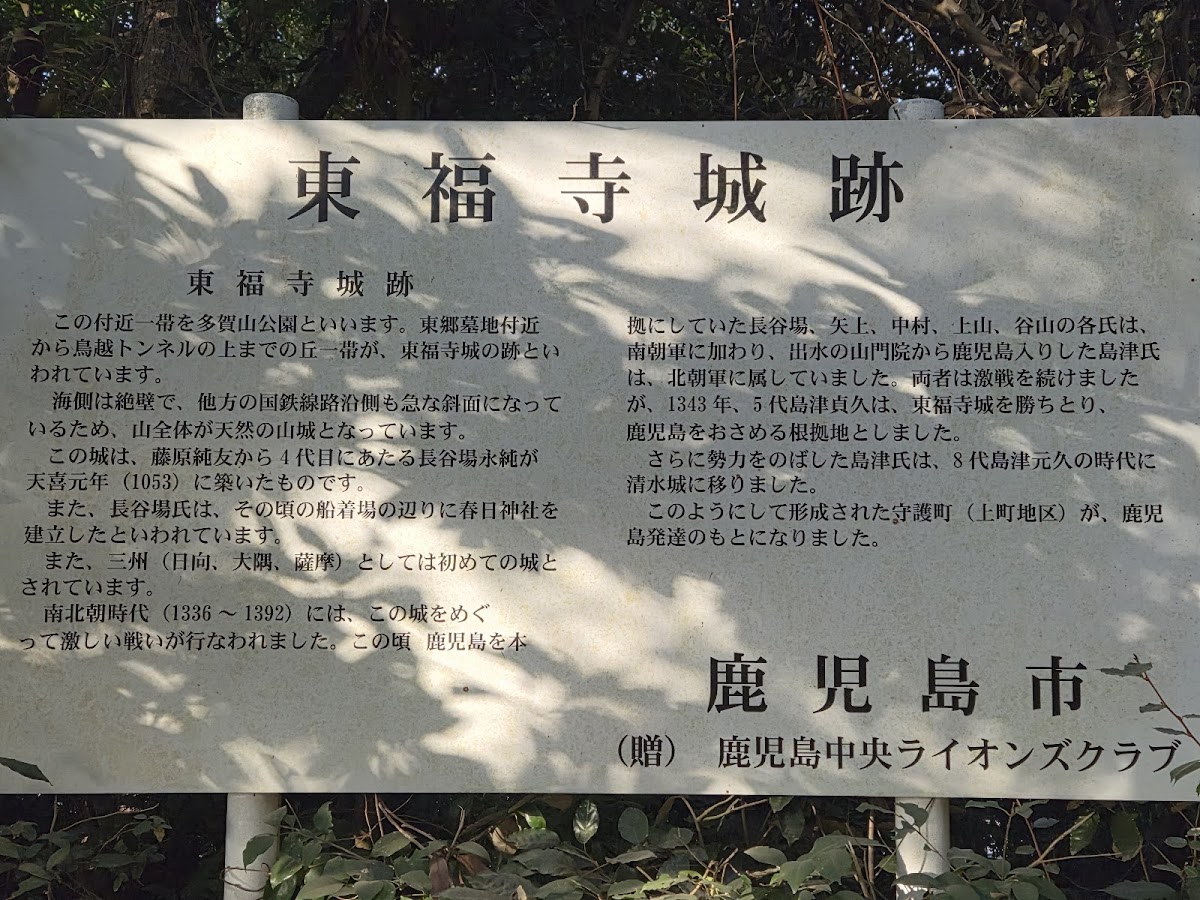
In 1341 (Ryakuō 4), Shimazu Sadahisa attacked and captured Tōfukuji Castle, making it the Shimazu clan’s base. While Tōfukuji Castle was a strategically important location utilizing a small hill overlooking the coast, it was too narrow and unsuitable for conducting peacetime administrative affairs. As the Shimazu clan’s power expanded, a larger castle with more political and administrative functions became necessary.
Against this backdrop, Shimazu Ujihisa (or possibly Ujihisa’s son, Motohisa, according to one theory) built a new castle in Shimizu, slightly inland from Tofukuji Castle, in 1387 (Kakei 1 / Genchu 4). This was Shimizu Castle.
As the Shimazu Clan’s Residence
Shimizu Castle served as the residence of the Shimazu main family for approximately 160 years after its construction. During this period, the following Shimazu clan heads governed the three provinces of Satsuma, Osumi, and Hyuga, based at Shimizu Castle:
- 7th Head: Shimazu Ujihisa (or 8th Head: Motohisa)
- 8th Head: Shimazu Motohisa (or 9th Head)
- 9th Head: Shimazu Hisatoyo
- 10th Head: Shimazu Tadakuni
- 11th Head: Shimazu Tatsuhisa
- 12th Head: Shimazu Tadamasa
- 13th Head: Shimazu Tadaharu
- 14th Head: Shimazu Katsuhisa
- 15th Head: Shimazu Takahisa (until relocation)
During this time, the Shimazu clan expanded their power as the shugo daimyo (provincial governor) of Satsuma, Osumi, and Hyuga, establishing a firm position in southern Kyushu. A castle town developed in the Inari River basin around Shimizu Castle and from the Inari River estuary to the vicinity of Namerikawa, and an urban area developed centered around Shimizu Castle.
Relocation to Uchijo Castle and Abandonment
In 1550 (Tenbun 19), the 16th head of the Shimazu clan, Shimazu Takahisa, relocated his residence to Uchijo Castle. This marked the end of Shimizu Castle’s role as the Shimazu clan’s base. It is believed to have been abandoned sometime during the Keicho era (1596-1615).
The Shimazu clan further relocated in 1602 (Keicho 7), during the time of the 18th head, Shimazu Tadatsune (Iehisa), to Kagoshima Castle (Tsurumaru Castle), where they built their base. From Shimizu Castle to Uchijo Castle, and then to Kagoshima Castle, the Shimazu clan’s residence shifted with the times.
Structure and Layout of Shimizu Castle
Double-Layered Castle Structure
The most distinctive feature of Shimizu Castle is its double-layered structure: a residence on flat ground and a fortified castle on a mountaintop. This structure became the basic form of later Shimazu clan castle architecture and is important as a typical example of medieval castles in Satsuma.
Peacetime Residence: The residence, located on the flat land at the foot of the mountain, functioned as a place for daily administrative affairs and living. Currently, Shimizu Junior High School stands on the site of this residence, and many of the original remains have been lost, but remnants such as the Inari Dry Moat remain in the surrounding area.
Layoff Castle (Backup Castle): The mountain castle section, built on the hillside at an altitude of approximately 128 meters, functioned as a defensive base during wartime. It was a strategically important location utilizing the steep terrain, and remnants such as baileys and moats can still be seen today.
Remains of the Mountain Castle Section
A hiking trail is still maintained in the mountain castle section, allowing visitors to see the following remains:
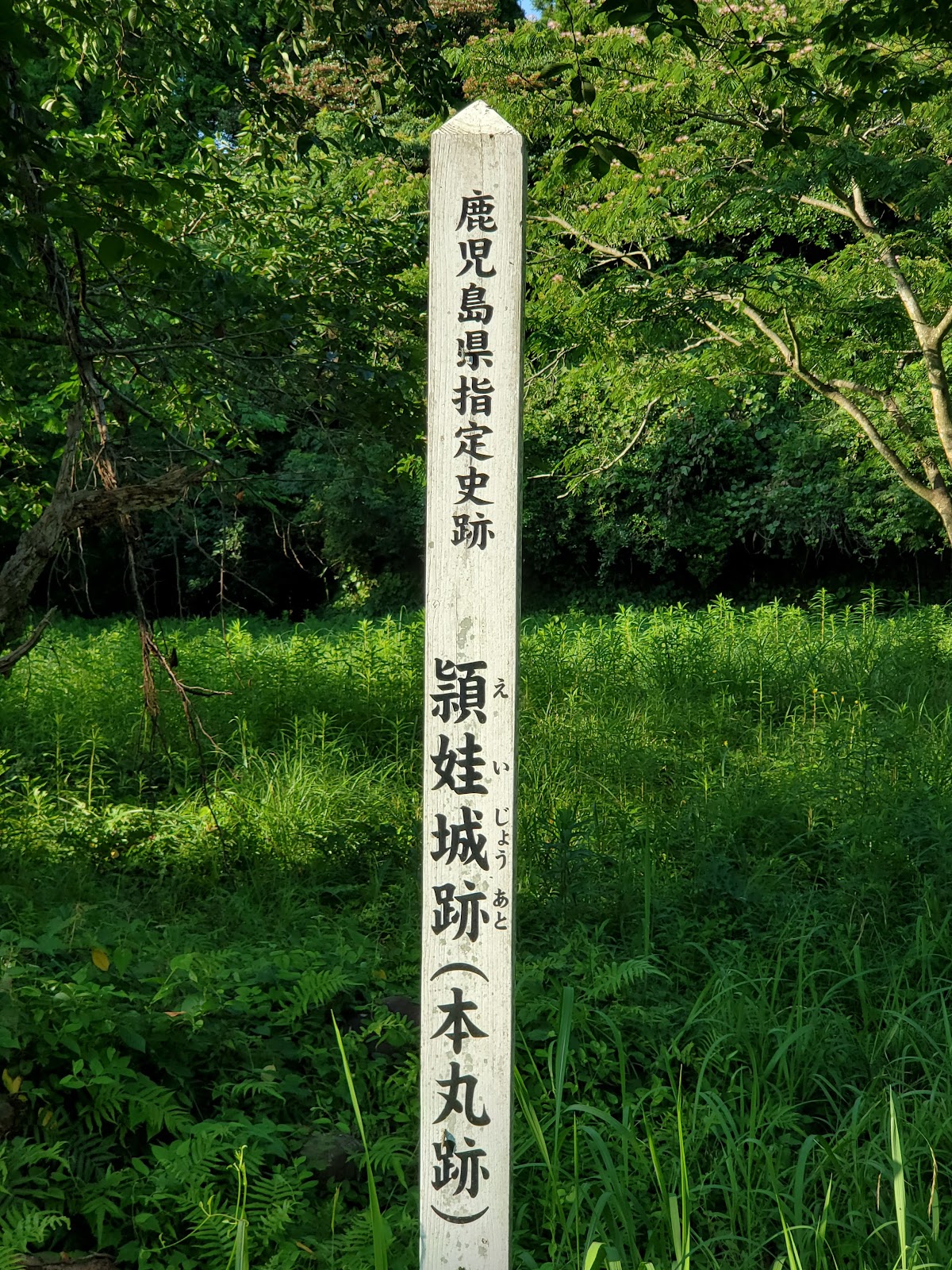
Main Enclosure (Honmaru): Located at the mountaintop, the main enclosure is the central bailey of the castle. Built utilizing the relatively flat terrain, it has an orthodox structure.
Enclosures: Multiple enclosures are arranged around the main enclosure. Built in a stepped fashion following the terrain, it exhibits a typical layout of a medieval mountain castle.
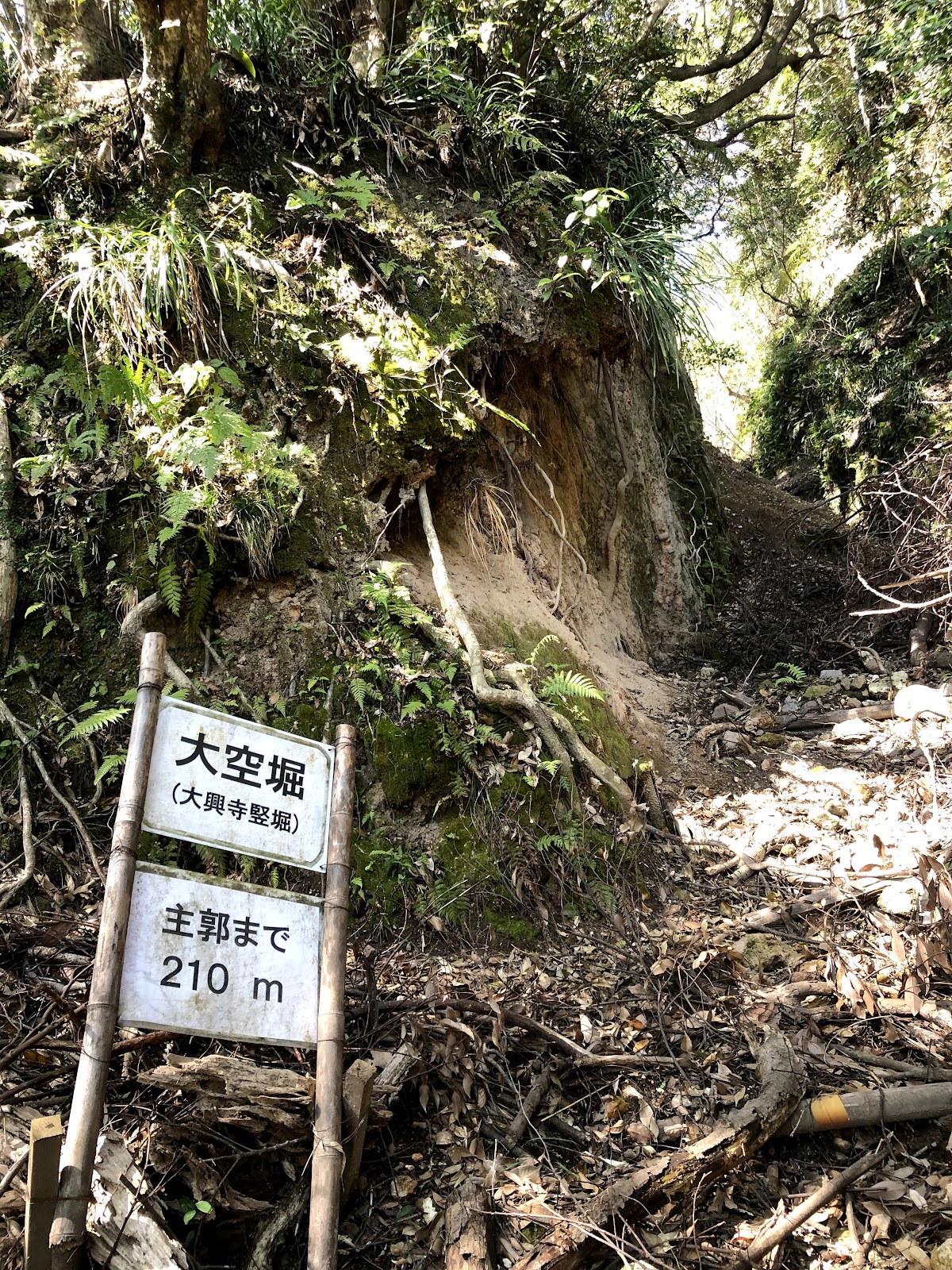
Moats: Moats dug to cut through the ridges are important defensive structures to prevent enemy intrusion. The moats at Shimizu Castle are deeply and sharply dug, demonstrating the high level of castle-building technology of the time. Among castle enthusiasts, they are highly regarded as “moats that cut through,” and are a highlight that excites visitors.
Stone Walls: Unusually for a Shimazu-affiliated castle site, some of the original stone walls remain. They are considered to have high historical value as valuable relics demonstrating medieval stonework techniques.
Remains of the Residence Area
The residence area on the flat land has been urbanized, and many remains have been lost, but the following traces remain:
Inari Dry Moat: A portion of the dry moat, believed to have surrounded the residence, remains in the Inari area.
Land Layout: Traces of the original residence layout can be discerned within the current town layout.
Temple Arrangement: Several temples are located around Shimizu Castle, believed to be remnants of the castle town’s formation.
Current Status and Visiting Information for Shimizu Castle
Access and Location
Location: Shimizu-cho, Kagoshima City, Kagoshima Prefecture
Former Province: Satsuma Province
Access:
- Approximately 15 minutes by car from JR Kagoshima Main Line “Kagoshima-Chuo Station”
- Accessible by tram and bus (get off around Shimizu-cho)
- No dedicated parking is available; use of public transportation is recommended.
Visiting the Ruins
Mountain Castle Section: A hiking trail is maintained, and the elevation gain to the main enclosure is approximately 100 meters. While the trail is relatively well-maintained, appropriate clothing and footwear for mountain castle visits are recommended. The round trip takes approximately 1 hour.
Evaluation of Remains: The state of preservation of the remains is rated at ★★★☆☆, and major remains such as baileys, moats, and stone walls can be seen. The moats, in particular, are impressive and allow visitors to fully experience the atmosphere of a medieval mountain castle.
Residence Site: Currently, this is the site of Shimizu Junior High School, and entry into the school grounds is prohibited. The surrounding Inari dry moat and topography offer a glimpse into its former appearance.
Precautions for Visiting
- The mountain castle area is a natural forest, and vegetation may be overgrown depending on the season.
- Caution is needed as the ground can be slippery during and after rain.
- Remember to take insect repellent in summer and warm clothing in winter.
- Unauthorized entry into school grounds is strictly prohibited.
- Please take all your trash with you.
Historical Significance of Shimizu Castle
Prototype of Shimazu Clan Castles
Shimizu Castle’s double structure (flatland residence + mountaintop fortress) had a significant influence on later Shimazu clan castle architecture. This structure was a rational system that balanced peacetime administrative functions with wartime defensive functions, and it became the basic form of castle construction in Satsuma during the Sengoku period.
Many of the Shimazu clan’s branch castles, including Ichijoji Castle, adopted a double-layered structure similar to Shimizu Castle, suggesting that Shimizu Castle served as the prototype for Shimazu clan castle architecture.
Political Center of Southern Kyushu
For approximately 160 years, Shimizu Castle was the residence of the Shimazu main family and the political center governing the three provinces of Satsuma, Osumi, and Hyuga. Orders and policies issued from here influenced the entire southern Kyushu region, making it a base for the Shimazu clan’s expansion.
During the period when Shimizu Castle was their base, the Shimazu clan transformed from a shugo daimyo (provincial governor) to a sengoku daimyo (warring states lord), establishing their position as a powerful daimyo in Kyushu.
Formation of Castle Town
With the construction of Shimizu Castle, an urban area was formed in the Inari River basin and from the Inari River estuary to the vicinity of Namerikawa. This represents a crucial stage in urban development in Kagoshima and laid the foundation for the later development of the Kagoshima castle town.
The temples and town layout traces surrounding Shimizu Castle are valuable historical materials illustrating the process of castle town formation during the transition from the medieval to the early modern period.
Shimizu Castle and Related Historical Sites
Tofukuji Castle
Tofukuji Castle, the former residence of the Shimazu clan before Shimizu Castle, was a strategically important location utilizing a small hill overlooking the coast. In 1341, Shimazu Sadahisa captured it and made it the Shimazu clan’s base, but due to its cramped location, they moved to Shimizu Castle. The ruins of Tofukuji Castle still remain as a historical site today.
Uchijo Castle
Uchijo Castle, to which Shimazu Takahisa moved from Shimizu Castle in 1550, was a larger castle with transitional characteristics towards early modern castles. The remains of Uchijo Castle also exist within Kagoshima City, and visiting it along with Shimizu Castle allows you to trace the changes in the Shimazu clan’s castles.
Kagoshima Castle (Tsurumaru Castle)
Built in 1602 by Shimazu Tadatsune, Kagoshima Castle served as the administrative center of the Satsuma Domain throughout the Edo period. Currently, the Kagoshima Prefectural Historical Materials Center, Reimeikan, stands on the site, where you can learn about the history of the Shimazu clan. The changes in the Shimazu clan’s castles, from Shimizu Castle to Kagoshima Castle, symbolize the flow of Japanese castle history from the medieval to the early modern period.
Basic Information on Shimizu Castle
Castle Name: Shimizu Castle (Shimizu-jo)
Common Name/Alternate Name: None in particular
Classification/Structure: Mountain castle, residence
Year of Construction: Kakei 1st year / Genchu 4th year (1387)
Builder: Shimazu Ujihisa (or Shimazu Motohisa)
Year of Abandonment: Keicho era (circa 1596-1615)
Main Lords: Shimazu clan (8th generation of the main family)
Remains: Enclosures, moats, stone walls, dry moats
Elevation: Approximately 128 meters
Relative Height: Approximately 100 meters
Designated Cultural Property: None in particular
Summary
Shimizu Castle is a medieval mountain castle that holds an extremely important position in the history of the Shimazu clan. From its construction in 1387 to its relocation to Uchijo Castle in 1550, it served as the residence of eight generations of the Shimazu clan for approximately 160 years, becoming the political center of Satsuma, Osumi, and Hyuga provinces.
Its dual structure—a residence on the plains and a fortified castle on the mountaintop—became the basic form of later Shimazu castle architecture and greatly influenced castle construction in Satsuma during the Sengoku period. Even today, the mountain castle section retains well-preserved remains such as baileys, moats, and stone walls, allowing visitors to fully experience the atmosphere of a medieval mountain castle.
Its convenient location within Kagoshima City makes it a must-see historical site for anyone interested in the history of the Shimazu clan or medieval castle enthusiasts. Visiting it along with Tofukuji Castle, Uchijo Castle, and Kagoshima Castle will provide a deeper understanding of the Shimazu clan’s castle transitions and the history of southern Kyushu.
The well-maintained hiking trails make it relatively easy to explore the mountain castle section, which is another attractive feature. When you visit Kagoshima, be sure to visit the ruins of Shimizu Castle and reflect on the appearance of this medieval mountain castle that supported the glory of the Shimazu clan.