Explanation of the history and charm of Takada Castle | The mystery of the stone wall and the story of the nation’s construction process after the Edo period
Takada Castle is located in Honjo-cho, Joetsu City, Niigata Prefecture, and is a plain castle built in the early Edo period (1614). It was originally the residence of Tokugawa Ieyasu’s sixth son, Matsudaira Tadateru, and was also known as “Shima Castle”, “Stone Castle”, “Locheng”, “Gaoyang Castle”, etc. during the imperial country construction process. Right now, the construction of Takada Castle has been designated as a historical monument in Niigata – Takada Castle Park Park has been selected as one of the 2017 “Japan’s Top 100 Famous Castles”.
The main text covers all aspects of Takada Castle, including its history from its construction to the present, the unique structure of the stone-free castle, the post-Edo period stories of the national construction process, its current history and restoration, and its works as well as the tourist attractions.
Takada Castle overview and basic information
Takada Castle is a plain castle fort located above Bodhihara in Takada Plain. It has a concentric circle shape, the main city is in the center, the surrounding area is two, three, and three north tiers of the city. The fortress area is 1 km long from north to south, 600 meters wide from east to west, and the city is well-used to cultivate natural rivers such as the Guang River and Qingtian River.
The main city has an area of 220 to 230 square meters, the second outer fort is surrounded by four walls, the third outer fort is to the south, and the northern outer fort is to the north. All kinds of construction structures have strong defensive ability, and the idea of building a castle town is also improved.
Another name and origin of Takada Castle
Alias of Takada Castle. “Samegajo” is the most well-known local resident. The name of the location is Yuu City Fortress, which is similar to the shape of a fish, or the image of a conquering land general and the work of a fish and fish, which is the guardian deity of a castle fort. In addition to this, Yuyu City Encampment, Yukin Guanchuan, hence the name `Sekijo''; Yuyu's spiral-shaped distribution, hence the name `Castle” (Rajo); “Koyojo” is an elegant surname, and the place name “Takada” means “Taiyo”.
In addition, Takada Castle is not known for its military fortress, and it is also a cultural and spiritual fortification.
Takada Castle History Exhibition
Construction background Yotokugawa Ieyasu’s strategy
The construction of Takada Castle and Ieyasu Tokugawa’s political strategy and close cooperation. In 1614, the sixth son of Ieyasu Kesadamasa, Matsudaira Tadateru no kami Echigo Takada. This is because the Tokugawa family was active in the northern part of the country and the post-Vietnam region, and the family of the Tokugawa family who lived in the northern part of the country had a strong influence on the people who lived there.
However, he had a different appearance, a Japanese personality, and a lack of rule, and since a long period of time, the capital had fallen into a cold state. However, the political marriage between Masamune and Igoba’s daughter, who was also in power, played an important role. The construction of Takada Castle is actually a reality under the current political background.
Helping with national construction process and building within a short time
Since the construction of Takada Castle, it has been a formal process of “national construction process”. The national construction project is a large-scale civil engineering project at the expense of feudal lords across the country under the Shogunate. The construction of Takada Castle was completed within four months of the 13th rank Daimyo’s training and development, and the Reijin’s departure.
The key figures in the eastern part of Japan who participated in the construction of Takada Castle include, for example, Masamune Ida, Kagetoshi Uesugi, Toshimitsu Maeda, Naoaki Hori, and Yasutoshi Honda. The idea of gaining wealth is that Takada Castle’s layout (planning) is because it is a disadvantage to Masamune, and the other is the father of being loyal. Masamune was a famous master of fort construction, and he was able to use other techniques to complete the design of Takada Castle. The construction and installation work was completed between March and July of the 19th year of the Emperor’s reign (1614), costing hundreds of thousands of hours. This rapid construction, the immediate arrival of the general in winter in Osaka, reflected the military situation of Ieyasu Tokugawa and Ieyasu Hirohito.
Matsudaira Tadateru’s medical school
Matsudaira Tadateru entered the Takada castle, became a powerful feudal lord in Vietnam, and had an area of 750,000 koku. However, it is true that the law will last a long time. During the summer in Osaka (1615), there was an order to resist conflict, and after Ieyasu’s death, his actions were subject to any problems, so he was in the second year of Genwa (1616), and two years later, he was assigned to another location.
Zhongzheng flowed to the country’s introduction, and then came back to the country’s high mountains. In 1992, Li Gaoguo was discharged and was given a pardon. This meant that Takada Castle was lost and became the direct residence of the descendants of Ieyasu Tokugawa, and later became a fort for the ruling feudal lords of the feudal lords (Seiban vassals).
Fortress owner change
Matsudaira Tadateru died as the castle’s fortress and was the residence of the former daimyo of the Taoi family at Takada Castle. Major changes to the castle lord:
- Sakai Ieda (Genna 2 / 1616): More than 100,000 stone worth of land.
- Matsudaira Mitsunaga (Kanei 1/1624): 260,000 koku, later removed
- After the expulsion of Matsudaira Mitsunaga, the shogunate was directly restored
- Masamichi Choka (Enpo 7/1679): 100,000 koku
- Tadamasa Okuda (Jokyo 3 / 1686): 50,000 koku
- Sadashige Matsudaira (Hoei 3 / 1706): 100,000 koku
- Masakuni Sakakibara (Kyoho 2 / 1717): 150,000 koku
Among them, the Sakakibara family lived in Takada Castle for the longest time. Masaaki Sakakibara enters the domain and enters the new Meiji era, and the Sakakibara family has been established for about 150 years. The Sakakibara family is a descendant of Yasumasa Sakakibara, one of the four great kings of the Tokugawa shogunate, and is a wealthy family in the area.
Changes from Meiji to New Years
After the Meiji period, Takada Castle was built. In 1870 (Meiji 3), the castle was built and built. In 1873 (Meiji 6), Takada Castle officially disappeared and its function as a fort was completed.
After this, the castle fort was used as the base of the 13th Army of the Imperial Japanese Army. In 1907 (Meiji 40), the General Staff Headquarters was established, and was moved to undergo major renovations. During this period, part of the main castle tower was renovated, the military training camp was renovated, and the castle fort was completely destroyed.
In the Showa period, after the war, in 1949 (Showa 24), the construction of the Takada Castle Park began. In 1970 (Showa 45), the Niigata Museum of History was designated as the designated place, and the history of the city was designated as new. In 1993 (Heisei 5), the 20th anniversary of the founding of Joetsu City, the three-tiered castle tower was completed, and its current appearance was completed.
Takada Castle
Takada Castle’s most famous special expedition was the lost Awa stone tomb. Usually visited, the stone coffin is the key to the defense of the early modern castle fort, but the stone citadel was built when Takada Castle was destroyed?
Short construction deadline
The main reason is that the construction period lasted four months. The demand for stone masonry construction, the demand for suitable stone materials for processing and import, the demand for skilled stone craftsmen, and the demand for a large amount of time and effort. The construction of Takada Castle was completed by Ieyasu Tokugawa, but the construction of the stone mound was omitted when the castle was in winter in Osaka on the eve of the battle.
Geographical effects
The Takada Plain’s topography is characterized by a thick and heavy stone burial ground built in a mismatched manner. The demand for building stone mounds is based on the actual ground, but the ground conditions in Takada make the ground construction process very large.
Outside of this, the Takada area is the area with the highest amount of snowfall in Japan. In winter, the snow can be several meters thick, and the weight of the snow can be absorbed by the ice. When you look at the angle of construction, it is reasonable to rebuild the castle of the stone castle that was not built.
Hijikata Construction Wajo Castle River Defense System
Takada Castle was built with a stone mound, which is a defensive system for the construction of the castle and river. Three layers of castle river system protected castle fort: Inner castle river ring castle tower gate, middle castle river ring second outer fort, outer castle river wall used by the river and water flow of Qingtian River.
The height of the earthworks was approximately 5-6 meters, and the castle tower was completed. The construction of the stone mound was easy, and the construction of the fort was completed within a short period of time. In addition, in areas with heavy snowfall, the amount of snow that can be received by earthworks construction, the amount of snow that can be received, and the amount of ground that falls on the ground.
The castle river was wide open and the enemy’s attack was deep. Utilize Takada’s wealth of water resources, and the defensive ability of the castle river.
Cause of missing castle tower
Takada Castle’s lost castle tower. This is possible since the law of “one province, one castle” and the samurai’s righteous law, the construction of the castle tower, and the creation of other causes outside of the restrictions.
The principle behind this method is that the construction cycle is short, the castle tower can be built in a timely manner, and the design concept of the Italian government has excellent practicality, has important defensive functions, and has unimaginable conquest intentions. In this case, the construction of the three-tiered tower within the temple was completed, and the castle tower functioned accordingly.
Additional Japanese modifications
Existing legacy
After the Meiji era, Takada Castle’s many constructions were opened and disappeared, but the basic structure of the fort was small, as in the case of the castle’s Kawa Hijikata construction, and it has been perfectly preserved.
Inner Castle River The castle tower has been installed, and the water is currently full.The original appearance is basically on hold. The length of the river is 30-40 meters, and the length of the river is 3-4 meters. In spring, a beautiful picture book with a beautiful composition.
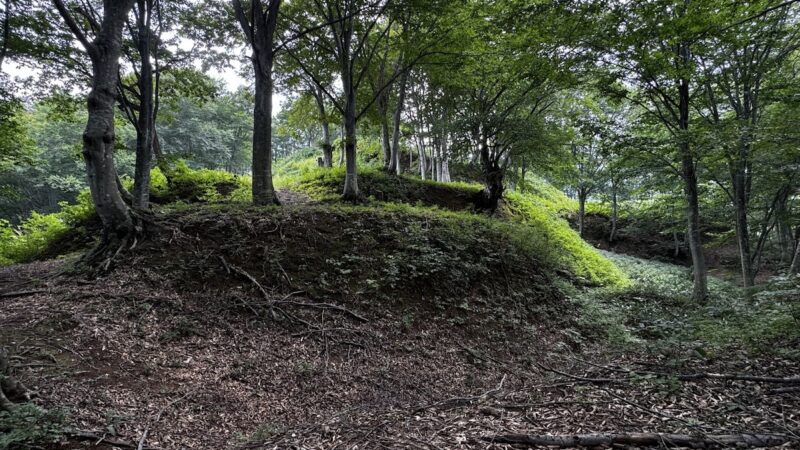
The earthworks have also been partially preserved, and the earthworks north of the castle tower have been particularly well preserved. Part of the earthworks work was completed and the fort was closed when the fort was cleared.
极乐桥 The main entrance to the castle tower is across the river. The modern bridge is a modern heavy building, but the position is similar to Yowara Bridge.
Three-level pagoda after repair
In 1993, in celebration of the 20th anniversary of the founding of Joetsu City, the construction of Takada Castle was completed, and the three-story pagoda was completed. The fire tower is the most important structure in the castle tower of Takada Castle, and is the most important structure in the castle tower.
The original appearance of the three-tiered gun tower can be repaired, and the original appearance of the loyal area is included, as well as historical materials such as the historical site of the Edo period (Takada castle site image and survey). Other than that, it has a special style, white gray clay tile, and black tile roof, with a height of 18 meters.
Internal structure
The interior of the three-tiered gun tower has a structure with three-tiered and four-tiered structures, each with uniform exhibition space.
- Part : Exhibition of the historical construction process of Takada Castle. Explanation content Comprehensive construction process, construction techniques from Daimyo onwards.
- Second layer: Exhibition of stories about Matsudaira Tadateru and the subsequent castle lords. The intervention was completed by Tadateru and the Sakakibara family.
- 3rd floor: Exhibition of Takada clan’s weapons and Japanese daily necessities, understand the life of a samurai at the time.
- 4th floor (observation deck): Provides a 360 degree panoramic view of the beautiful views of Takada Plain, Mt. Myoko, Mt. Yoneyama, etc.
The three-story high castle tower is a strategic construction of Takada Castle Park, and is also an important construction in the history of Joetsu City, and is deeply loved by many visitors and citizens.
Opening of Takada Castle Park
Takada Castle Ruins is a public park opened in 1949, a popular recreational area for citizens of Chengdu, and the famous “Takada Castle Ruins Park”. The park land is approximately 50 years old, the fort is fully utilized, and various constructions have been completed.
Celebrity Victory
Takada Castle Park is a famous winning place, and has been honored as one of Japan’s “Three Great Night Shows.” Approximately 4,000 Yoshino oak trees have been planted in the garden, and are in full bloom from early April to mid-April every year.
Stop looking at the beautiful flowers and flowers on the riverside of the city. At night, the lanterns are lit, the Japanese castle tower with three layers of light is illuminated, and the Japanese maple flower is reflected, and the Japanese castle tower is reflected on the surface of the water. More than 1 million people have visited each year.
Joetsu City History Museum
In 2013, Joetsu City Museum of History opened in Takada Castle Park. The museum has a full display of the history and culture of the Joetsu region, and has collected a large amount of materials from the Takada clan and Takada castle. The three-level pagoda of the National Museum of History and the Foreclosure Management Center.
Other settings
The park has facilities for sports such as the Kobayashi Ancient Scenic Museum, the Gorin Square (integrated sports hall), and the Wada Baseball Stadium. Besides this, outside the park there is a city river, a river in the middle of the river, a rest area, a rest area, and a four-season tour.
Jowa castle town attached to Takada Castle
Attached castle layout
The Takada Castle is mainly located within the Takada Domain, and the attached castle is located within the territory of the Takada Domain. Major affiliated castles included:
Fukushima Castle: Before the construction of Takada Castle, Fukushima Castle is the central fort in the area. Built in 1598 by Hideharu Hori, it later became the residence of the Hori clan, but was later built and occupied by Takada Castle.
Kasugayama Castle: A famous mountain castle for the troupe, this was the residence of Nobunobu Uesugi. Although the Takada clan was still in power during that period, it is important to note that its remains are important historical monuments.
This is a part of the central defense system of Takada Castle after the construction of the attached fort.
Takada Castle Town Exhibition
Reconstruction of Takada Castle, complete construction of the castle town. City capital bureau presentation, samurai residence, business district, temple district, 划文clear lucidity.
Honmachi, Wanaka-cho, the commercial center of the development, and the prosperous station on Hokkoku Kaido Road. It is a type of gangi-style walking path, which is unique to the snowy region, and is suitable for the envoys to pass during the winter. At this time, Takada was still on hold, and was the region with the most number of envoys in Japan.
The defense of the fortress in the temple town was also an important part of the defense. This is the first design of the temple, which is under construction and defense construction in an emergency situation.
Transportation and travel information
Takada Castle Transportation Guide
Sitting fire car
- Travel time approximately 20 minutes from JR Shinetsu Main Line “Takada Station”
- After leaving Vietnam, it takes about 20 minutes to walk to Myoko Haba Line “Takada Station”
- Approximately 5 minutes by taxi from Takada Station
- Tomoe was sitting at Takada Station at “Kasugayama/Sannai Line” and was at “Takada Castle Ruins Park Entrance” by car.
Motor vehicle route
- Departing from Joetsu IC on the Beijing Expressway, approximately 10 minutes by car
- Depart from Joetsu Takada IC on the Shinetsu Expressway, approximately 5 minutes by car
- Parking: Free parking spaces for park tours (approximately 500 cars), parking spaces for paid parking during the park season.
Visitor Information
Takada Castle Three-storied Pagoda
- Site: 6-1 Honjocho, Joetsu City, Niigata (within Takada Castle Park)
- Opening time: 9:00 am – 5:00 pm (last entry time 4:30 pm)
- Closing date: Shuichi (as for the first day of Shuichi, the day after the first day), New Year holidays (December 29th to January 3rd)
- Gate ticket: 200 yuan for adults, 100 yuan for junior high and elementary school students (Kyoetsu City Museum of History ticket)
- Telephone: 025-524-3120 (Joetsu City Museum of History)
Takada Castle Ruins Park
- Free entry area
- Bamboo flower season (early April to mid-April) Mitsuhide with lights (9:00 left and right at sunset)
Zhoukan Scenic Point
Joetsu City Historical Museum: Located in Takada Castle Park, complete guide to Joetsu City’s military history.
Former President’s Official Residence: Western-style construction from the Meiji era, designated as a nationally important cultural property.
Kasugayama Castle Site: Uesugi Shinnobu’s castle fort site, national historical monument. Approximately 20 minutes by car from Takada Castle.
Rangdori: Located in Takada Town, Japan, it is the longest corridor in existence in Japan.
Yukikage Kobayashi Memorial Museum: Exhibited works by the Japanese painter Yukikage Kobayashi. Inside Yu Park.
Takada Castle’s cultural heritage and contemporary meaning
Selected “Japan’s 100 Famous Castles”
In 2017, Takada Castle was selected as one of Japan’s 100 most famous castles. As a result of the selection of Japanese castles and ponds, the current status of “Japan’s 100 Famous Castles” has been extended, and the history of Takada Castle has been preserved.
Visitors can visit the Joetsu City Museum of History with the “Japan’s 100 Famous Castles” seal, and the castle is a hot destination for enthusiasts.
Exposure to the construction area
Takada Castle Park is not only a historic site for Joetsu citizens, but also an indispensable part of everyone’s daily life. This is an active place, such as flower gardens, flower gardens, etc., which are open to the public and are open to the public.
The three-layer pagoda is the symbol of Joetsu City, and it is the foundation stone of the current city government publications and promotions, and the foundation of citizens’ recognition.
History Education Center
Takada Castle Ruins Park, Three Towers and Joetsu City Museum of History is an important place for the education of local Japanese history. Students from elementary and junior high schools in the city visited Takada Castle, worked on social studies, learned about the local history, and studied local history.
In addition, those who wish to travel regularly will organize a series of activities to explore the Takada Castle, providing a historical opportunity for all visitors to Takada Castle.
Overview
Takada Castle is a unique castle fort, which is part of Ieyasu Tokugawa’s political strategy, and was built in four short months. Takada Castle had a stone tower and a castle tower, and this is its unique architectural features, the interaction of various factors, the comprehensive historical background of its construction, the geographical conditions and climate conditions, and the main characteristics of Takada Castle, which were originally built.
The long history of Takada Castle, its construction was a part of a major project aimed at “moving the world forward,” the master Masamune’s self-planning bureau, the tragic fate of Matsudaira Tadateru, and the long period of construction of the Sakakibara family.
Now, after the renovation, the three-level castle tower is in good condition, and the Takada Castle ruins park is an important tourist source in Joetsu City, and it is also a citizen’s pride. Of course, this is the season when the trees are in full bloom, and visitors have come to visit various parts of Japan since then, and the beauty of the country’s history and the harmony of nature and harmony is one of Japan’s three great places to win night trees.
If you don’t want to visit Takada Castle, you will have a chance to explore the historical past, as well as understand the political bureau of the early Jiang Dynasty, the fort construction technology, and the wealth of people’s wisdom and creative power in the snow area. Takada Castle is known as one of the “Japan’s 100 Famous Castles”, and its history has been praised by people since its inception.