Takada Castle Complete Guide: The History and Charm of the Castle Built Through a Nationwide Construction Project, the Residence of Tokugawa Ieyasu’s Sixth Son
What is Takada Castle?
Takada Castle is a Japanese castle ruin located in Honjo-cho, Joetsu City, Niigata Prefecture. It was built in 1614 (Keicho 19) through a nationwide construction project as the residence of Matsudaira Tadateru, the sixth son of Tokugawa Ieyasu. It is also known by other names such as “Samegajo,” “Sekijo,” “Rajo,” and “Koyojo,” with “Samegajo” being the most familiar name to local residents.
Currently, it is maintained as Takada Castle Ruins Park and designated as a historical site of Niigata Prefecture. In 2017 (Heisei 29), it was selected as one of the Continued Top 100 Japanese Castles, and its historical value is widely recognized. The park covers an area of approximately 50 hectares, making it one of the largest parks in Japan located in the heart of an urban area.
History and Background of Takada Castle
Before the Establishment of the Edo Shogunate
Before Takada Castle was built, this region was part of Echigo Province and ruled by various forces. Echigo, which had been under the influence of the Uesugi clan, came under the control of the Tokugawa family after the Battle of Sekigahara. Tokugawa Ieyasu recognized the need to contain the Toyotomi forces in the Hokuriku region, particularly Maeda Toshitsune, the lord of the Kaga Domain, and to secure the rear of Edo.
Construction through a Nationwide Project
In 1614 (Keicho 19), Tokugawa Ieyasu decided to station his sixth son, Matsudaira Tadateru, in Echigo. Tadateru had married Goro-hime, the daughter of Date Masamune, and it is said that his father-in-law, Date Masamune, was in charge of the castle’s layout (design) due to this connection.
The castle’s construction was carried out as a nationwide project, mobilizing 26 daimyo from 13 provinces across the country. Because the construction was underway just before the Winter Siege of Osaka, it proceeded at a rapid pace and is said to have been completed in an astonishingly short time of just four months. This rapid construction led to the unique structure without stone walls, which will be discussed later.
The Era of Matsudaira Tadateru
Matsudaira Tadateru entered Takada Castle as the lord of the Takada Domain with a 750,000 koku stipend, but his reign did not last long. In 1616, when Tokugawa Ieyasu died, Tadateru was dismissed from his position (his territory was confiscated) and exiled to Asama in Ise Province, partly due to his lateness to the funeral. It is thought that the shogunate’s concern about Tadateru’s powerful influence played a role in his downfall.
Successive Lords and Changes in Takada Castle
After Tadateru’s dismissal, the following lords successively entered Takada Castle:
- The Era of Matsudaira Mitsunaga: Entered the castle as the lord of the Echigo Takada Domain with a 260,000 koku stipend. During this period, the castle’s fortifications were improved.
- Inaba Masamichi Era: The “Takada Castle Map and Measurements” was created, recording the detailed size of the castle at the time.
- Sakakibara Family Era: The Sakakibara family ruled the Takada Domain for a long period, contributing to the development of the castle town.
Throughout the Edo period, Takada Castle continued to function as an important base for the Tokugawa Shogunate in the Hokuriku region.
Changes After the Meiji Restoration
After the Meiji Restoration, Takada Castle was abolished due to the castle demolition order. During the Meiji era, it was used as an army facility, and many of the castle’s buildings were demolished. The three-story turret was also dismantled in 1870 (Meiji 3).
In the Showa era, efforts were made to preserve and utilize the castle ruins, and it was developed as a park. In 1969 (Showa 44), it was designated a Niigata Prefecture historical site, officially recognizing its historical value.
In 1993, as part of the 20th anniversary celebration of Joetsu City’s founding, the three-story turret of Takada Castle was restored. This restoration revived the symbol of Takada Castle in the modern era, increasing its value as a tourist attraction.
In 2017, it was selected as one of the Continued Top 100 Japanese Castles, further enhancing its national recognition.
Structure and Characteristics of Takada Castle
Layout and Scale
Takada Castle is a flatland castle built on Bodaigahara in the Takada Plain. The main keep measures approximately 230 meters square, surrounded by the second bailey, the third bailey to the south, and the northern bailey to the north, creating a concentric layout.
The entire castle grounds extend approximately 1 kilometer north-south and 600 meters east-west, with natural rivers such as the Sekikawa and Aota River used as outer moats. This water-based defense system is a unique feature of flatland castles.
Reasons for the Absence of Stone Walls
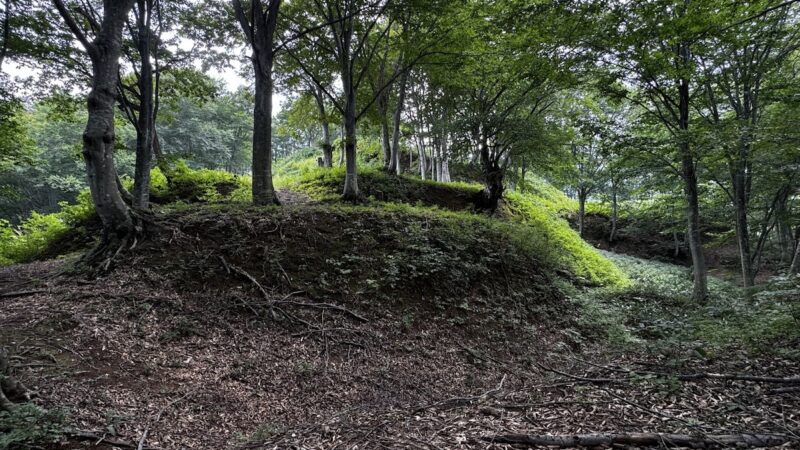
The most distinctive feature of Takada Castle is that it lacked a keep and stone walls. Earthen ramparts were used for all the baileys (enclosures), and their remains are still well-preserved today.
The following theories are considered the most likely reasons why stone walls were not built:
- Construction Time Constraints: With the Siege of Osaka Winter Campaign imminent, the castle needed to be built in a short period of only four months, so stone wall construction was omitted.
- Ground Problems: The soft ground of the Takada Plain made it difficult to support heavy stone walls.
- Difficulty in Procuring Materials: Suitable stone materials were scarce in the surrounding area, and procurement was expected to be time-consuming.
- Effectiveness of Earthen Routing: In the climate and terrain of Echigo, earthen ramparts were considered easier to maintain and provided sufficient defensive functionality.
This defensive system of earthen ramparts and moats can be considered a rational choice reflecting the castle-building technology and regional characteristics of the time.
Absence of a Main Tower and the Three-Story Turret
Takada Castle never had a main tower (tenshu). Instead, a three-story turret was built in the southwest corner of the main enclosure, becoming a symbolic feature of the castle. The turret functioned similarly to a main tower, playing a crucial role as a vantage point for overlooking the castle and as a defensive stronghold.
The main reasons for the absence of a main tower are believed to be construction constraints and the need for rapid construction. However, the scale and structure of the three-story turret were impressive enough to demonstrate the authority of Takada Castle.
Takada Castle Three-Story Turret
History of Restoration
The current Takada Castle three-story turret was restored in 1993 as part of the 20th anniversary celebration of the founding of Joetsu City. It was the first reconstruction in approximately 120 years since its dismantling in 1870.
For the restoration, the scale was determined based on the measurements recorded in the “Takada Castle Map” from the time of Inaba Masamichi, and the exterior was based on the “Honmaru Goten Ezu” (Main Palace Map) from the time of Matsudaira Mitsunaga. This aimed to faithfully reproduce the appearance of the castle during the Edo period.
Structure and Scale
The three-story turret has a three-tiered structure, with the following functions on each floor:
- 1st and 2nd Floors: Used as exhibition rooms, displaying exhibits on the history of Takada Castle, its construction, successive feudal lords, and the development of the castle town. Artifacts unearthed during archaeological excavations, historical drawings, and models are also on display, allowing visitors to learn about the history of Takada Castle in detail.
- 3rd Floor: Open as an observation room, offering panoramic views of the entire Takada Castle Park, Joetsu city, and distant mountains such as Mt. Myoko. Especially during cherry blossom season, visitors can enjoy a spectacular view of the approximately 4,000 cherry trees in the park below.
Visitor Information
Takada Castle’s three-story turret is open to the public. Detailed visitor information is as follows:
- Location: 6-1 Honjo-cho, Joetsu City, Niigata Prefecture (within Takada Castle Ruins Park)
- Phone: 025-524-3120
- Opening Hours: Usually 9:00 AM – 5:00 PM (may vary seasonally)
- Closed: Mondays (or the following day if Monday is a public holiday), New Year holidays
- Admission Fee: 200 yen for adults, 100 yen for elementary and junior high school students (group discounts available)
*If Takada Castle is closed, the Joetsu City Historical Museum will handle inquiries. We recommend checking the Joetsu City official website for the latest information.
Remains and Restored Facilities
Existing Remains
Takada Castle still preserves valuable remains from the Edo period:
- Earthworks: The earthworks surrounding the main keep, second bailey, and third bailey remain in good condition, allowing visitors to appreciate the scale of the castle at the time.
- Moat: Parts of the inner and outer moats remain, forming a beautiful landscape with lotus plants. The lotus blooming season in summer is particularly spectacular.
- Layout of Enclosures: The layout of the main keep, second bailey, and third bailey remains clearly visible, allowing for an understanding of the concentric layout.
Results of Archaeological Excavations
Since the Heisei era, multiple archaeological excavations have been conducted at the Takada Castle site. These investigations yielded the following results:
- Confirmation of the locations of the foundation stones and post holes of the main castle keep
- Excavation of daily life items such as ceramics, roof tiles, and metal products
- Clarification of the castle’s transformation process
- Detailed analysis of the earthwork structure and construction techniques
These investigation results are on display in the exhibition room inside the three-story turret, allowing visitors to gain a deeper understanding of Takada Castle.
Development Project
Joetsu City is continuously working on the development of Takada Castle Ruins Park. This includes preserving the earthworks, dredging the moats, and improving the park’s pathways, aiming to balance the preservation of the historical landscape with improved visitor convenience.
The Charm of Takada Castle Ruins Park
One of Japan’s Three Great Night Cherry Blossom Viewing Spots
Takada Castle Ruins Park is nationally famous as one of Japan’s three great night cherry blossom viewing spots. Approximately 4,000 cherry trees are planted in the park, and the “Takada Castle Million-Person Cherry Blossom Viewing Festival” is held annually from early to mid-April.
During the cherry blossom viewing season, approximately 3,000 lanterns are lit, illuminating the cherry blossoms, the three-story turret, and the moat’s surface in a magical way. This scene has been selected as one of “Japan’s Top 100 Cherry Blossom Viewing Spots,” and attracts over one million tourists every year.
The beauty of the cherry blossoms at night is further enhanced by the illumination of the three-story turret, and the combination with the reflection of the cherry blossoms on the water’s surface is breathtaking.
Lotus Viewing Spot
Alongside the cherry blossoms, another attraction of Takada Castle Ruins Park is the lotus flowers that fill the outer moat. Approximately 190,000 lotus plants are planted, and they are in full bloom from mid-July to early August.
During this time, when the “Joetsu Lotus Festival” is held, the park is bustling with people admiring the lotus flowers from early morning. Since the lotus flowers bloom in the early morning, a morning visit is recommended. The combination of pink lotus flowers and the three-story turret is a representative summer scene of Takada Castle.
Enjoying the Park Through the Seasons
Takada Castle Ruins Park displays various expressions throughout the year:
- Spring: Cherry blossoms in bloom and cherry blossom viewing events, the beauty of fresh greenery
- Summer: Lotus blossoms in bloom, strolls amidst deep greenery
- Autumn: Autumn foliage, the sounds of autumn insects
- Winter: The three-story turret amidst a snowy landscape, a tranquil atmosphere
In particular, the winter scenery of Joetsu City, a snowy region, is beautiful with the contrast between the three-story turret and the snow, making it popular with photography enthusiasts.
Branch Castles and Castle Towns
Arrangement of Branch Castles
Takada Castle was the center, and several branch castles were located in the surrounding area. These formed the defense network of Takada Castle and also functioned as administrative centers within the territory. The main branch castles included the following:
- Kasugayama Castle: Known as the residence of Uesugi Kenshin, Kasugayama Castle was maintained as an important base even after the construction of Takada Castle.
- Fukushima Castle: This castle was the residence of Matsudaira Tadateru before Takada Castle was built, and after Takada Castle was constructed, it functioned as a subsidiary castle.
The cooperation with these subsidiary castles strengthened the Tokugawa family’s control over Echigo Province.
Development of the Castle Town
Along with the construction of Takada Castle, a planned castle town was built. Merchant districts and temple districts were developed, and it also developed as a post town on the Hokkoku Kaido road.
The castle town was laid out in a grid pattern, and commerce flourished. In particular, arcade-like passages called “gangi,” unique to snowy regions, developed and remain a characteristic feature of Takada’s townscape today. These gangi boast the longest length in Japan, totaling 16 kilometers.
Access
Public Transportation
- By JR: Get off at Takada Station on the JR Shin’etsu Main Line, approximately 20 minutes on foot.
- By Bus: Get off at Honmachi 4-chome bus stop on the Kubiki Bus from Takada Station, approximately 5 minutes on foot.
- Echigo Tokimeki Railway: Get off at Takada Station on the Myoko Hanema Line, approximately 20 minutes on foot.
By Car
- Hokuriku Expressway: Approximately 10 minutes from Joetsu IC.
- Joshin’etsu Expressway: Approximately 15 minutes from Joetsu Takada IC.
Parking
Several parking lots are available around Takada Castle Ruins Park. Normally, parking is free, but during the cherry blossom viewing season, there is a fee, and surrounding roads become congested, so using public transportation is recommended.
Nearby Tourist Attractions
Joetsu City History Museum
This museum, located within Takada Castle Ruins Park, offers a comprehensive overview of the history of the Joetsu region. The detailed exhibits on Takada Castle are extensive, and visiting them in conjunction with the three-story turret will provide a deeper understanding.
Kasugayama Castle Ruins
Known as the residence of Uesugi Kenshin, the Kasugayama Castle Ruins are located about 20 minutes by car from Takada Castle. Selected as one of Japan’s Top 100 Castles, it is a valuable historical site that conveys the appearance of a mountain castle from the Sengoku period.
Former Division Commander’s Residence
This Western-style building, constructed during the Meiji era, is designated as a National Important Cultural Property. It is a valuable relic from the time when Takada Castle was used as an army facility.
Cultural Value of Takada Castle
Selection as one of Japan’s Continued Top 100 Castles
In 2017, Takada Castle was selected as one of Japan’s Continued Top 100 Castles (No. 130). This selection was based on the following evaluations:
- Historical significance as a castle built through a nationwide construction project
- Unique structure without stone walls
- Excellent preservation of earthworks and moats
- Value as a symbol of local history and culture
The stamp for the Continued Top 100 Japanese Castles can be obtained at the Takada Castle three-story turret.
Niigata Prefecture Designated Historic Site
Designated as a Niigata Prefecture historic site in 1969, it is subject to legal protection. This ensures the preservation and appropriate use of the remains.
Local Pride and Identity
For the citizens of Joetsu, Takada Castle symbolizes the region’s history and culture. Events such as cherry blossom viewing parties and lotus festivals play a role in strengthening community bonds, and citizen-participatory preservation and utilization are being promoted.
Points to Note When Visiting Takada Castle
Recommended Time to Visit
- Cherry Blossom Season (Early to Mid-April): The best time to experience one of Japan’s three greatest night cherry blossom viewing spots. However, crowds are inevitable.
- Lotus Season (Mid-July to Early August): Enjoy the blooming lotus flowers by visiting early in the morning.
- Fresh Green Season (May): Fewer crowds, allowing for a pleasant stroll in refreshing weather.
- Autumn Foliage Season (Late October to Early November): A time when the autumn colors are beautiful.
Tips for Visiting
- The Three-Storied Turret is a Must-See: The exhibits are extensive, deepening your understanding of Takada Castle.
- Walk Along the Earthworks: The earthworks around the main keep have walking paths, allowing you to appreciate the scale of the castle.
- Stroll Along the Moat: The promenade along the moat is ideal for understanding the castle’s defensive system.
- Early Morning Visit: Especially during lotus season, early morning is recommended. You can feel the history in a quiet atmosphere.
Estimated Time Required
- Three-Story Turret Only: 30 minutes to 1 hour
- Walking the Entire Park: 1 hour 30 minutes to 2 hours
- Including Surrounding Facilities: 3 hours to half a day
Summary
Takada Castle is a historically important castle built as a nationwide construction project for Matsudaira Tadateru, the sixth son of Tokugawa Ieyasu. It has many interesting features, including its unique structure consisting of earthworks and moats without stone walls, its astonishingly rapid construction in just four months, and its layout designed by Date Masamune.
Currently, it is maintained as Takada Castle Ruins Park, with the restored three-story turret as its symbol. It is also a place where you can enjoy the beauty of the four seasons, as one of Japan’s three great night cherry blossom viewing spots and a famous lotus viewing location.
Takada Castle, selected as one of the Continued Top 100 Japanese Castles and protected as a historical site by Niigata Prefecture, is a symbol of Joetsu City’s history and culture and will continue to be cherished by many people. It is an attractive destination not only for history enthusiasts but also for those who enjoy nature and photography.