Suzuo Castle (Hiroshima Prefecture) Complete Guide | A Thorough Explanation of the Legendary Birthplace of Mori Motonari and the History of the Fukuhara Clan
What is Suzuo Castle?
Suzuo Castle is a Japanese mountain castle located in Fukuhara, Yoshida-cho, Aki-Takata City, Hiroshima Prefecture. Also known as Fukuhara Castle, it is known as the residence of the Fukuhara clan, important retainers of the Mori clan. Its most notable feature is that it is the castle where the legend of the birth of Mori Motonari, a hero of the Sengoku period, remains. On November 10, 1940 (Showa 15), it was registered as a Hiroshima Prefecture designated historical site as the “Legendary Birthplace of Mori Motonari (Suzuo Castle Ruins).”
Built on a hill approximately 310 meters above sea level and 100 meters above ground level, Suzuo Castle is located in the southern part of the Yoshida Basin, on the east bank of the Kawai River (Gono River). It is approximately 6 kilometers southwest of Yoshida-Koriyama Castle, the Mori clan’s base, and was one of the important branch castles within the Mori clan’s sphere of influence.
History and Background of Suzuno Castle
Construction and the Fukuhara Clan
Suzuno Castle is said to have been built in 1381 (Eitoku 1st year/Kowa 1st year) by Fukuhara Hiroyo. The Fukuhara clan was a powerful local lord in Aki Province and had established close ties with the Mori clan from an early stage.
The Fukuhara clan served as important retainers of the Mori clan for generations, and in particular, the sister of Fukuhara Sadatoshi, the ninth head of the Fukuhara clan, married Mori Hiromoto and gave birth to Okimoto and Motonari. Due to this blood relationship, the Fukuhara clan came to occupy an important position as a branch of the Mori clan.
The Legend of Mori Motonari’s Birth
The most historically significant reason for Suzuno Castle is the legend that it is the birthplace of Mori Motonari. On March 14, 1497 (Meiō 6), it is believed that Motonari was born at Suzuno Castle to a woman who was the daughter of Fukuhara Hirotoshi, the eighth head of the Fukuhara clan, and the principal wife of Mōri Hiromoto.
However, there are various theories regarding his birthplace, with some suggesting he was born at Yoshida Kōriyama Castle or Sarukake Castle. Nevertheless, the Suzuno Castle theory is widely accepted and serves as the basis for the castle’s designation as a prefectural historical site. It is certain that Motonari’s mother was from the Fukuhara clan, and there is no doubt about the deep connection between Suzuno Castle and Motonari.
Suzuno Castle in the Sengoku Period
Throughout the Sengoku period, the Fukuhara clan served as important retainers of the Mōri clan. In particular, Fukuhara Sadatoshi, Hirotoshi, and their descendants played crucial roles in Mōri Motonari’s unification of the Chūgoku region. Suzuno Castle, as the Fukuhara clan’s base, was one of the important strategic locations in the Mōri clan’s expansion of power.
The Fukuhara clan, as important retainers second only to the Mori’s two main branches (the Kikkawa and Kobayakawa clans), played a significant role in both military and diplomatic affairs. Suzuno Castle functioned as a symbol of the Fukuhara clan’s authority and power.
Abandonment and Present State
After the Mori clan’s defeat in the Battle of Sekigahara in 1600, siding with the Western Army, their territory was reduced to Suo and Nagato provinces (present-day Yamaguchi Prefecture). Following the Mori family’s relocation to Hagi, the Fukuhara family also moved to Hagi, and Suzuno Castle was abandoned.
After its abandonment, the castle ruins remained and were designated a historical site of Hiroshima Prefecture in 1940. Currently, it is preserved as a valuable mountain castle site, attracting many castle enthusiasts and history buffs.
Layout and Remains of Suzuno Castle
Castle Structure
Suzuno Castle has the typical structure of a medieval mountain castle. Multiple enclosures are arranged around the main enclosure, with defensive structures built along the ridge.
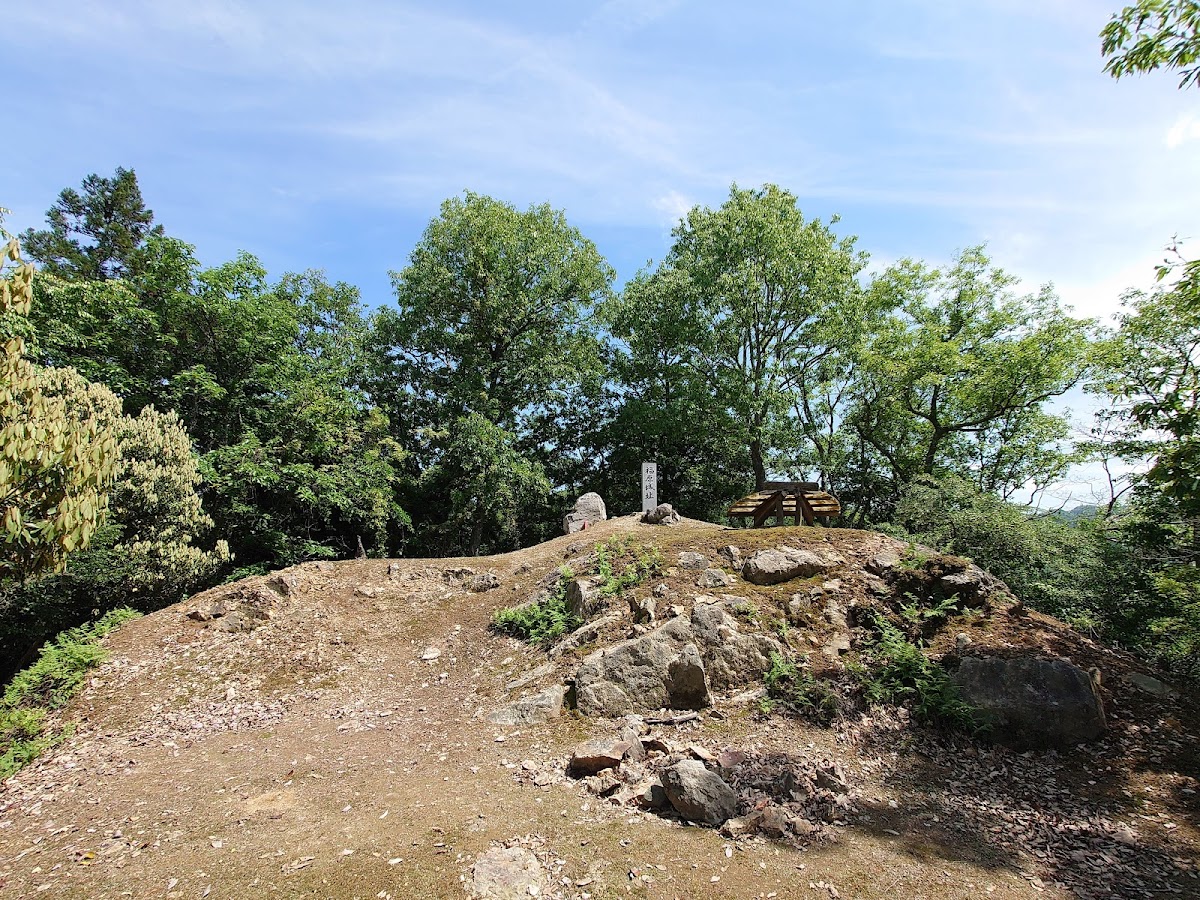
The main enclosure is located at the highest point of the castle, from which a long, narrow group of enclosures extends north and south. Although the main enclosure is relatively small, it is surrounded by earthen ramparts, enhancing its defensive capabilities.
Major Remains
Earthen Ramparts
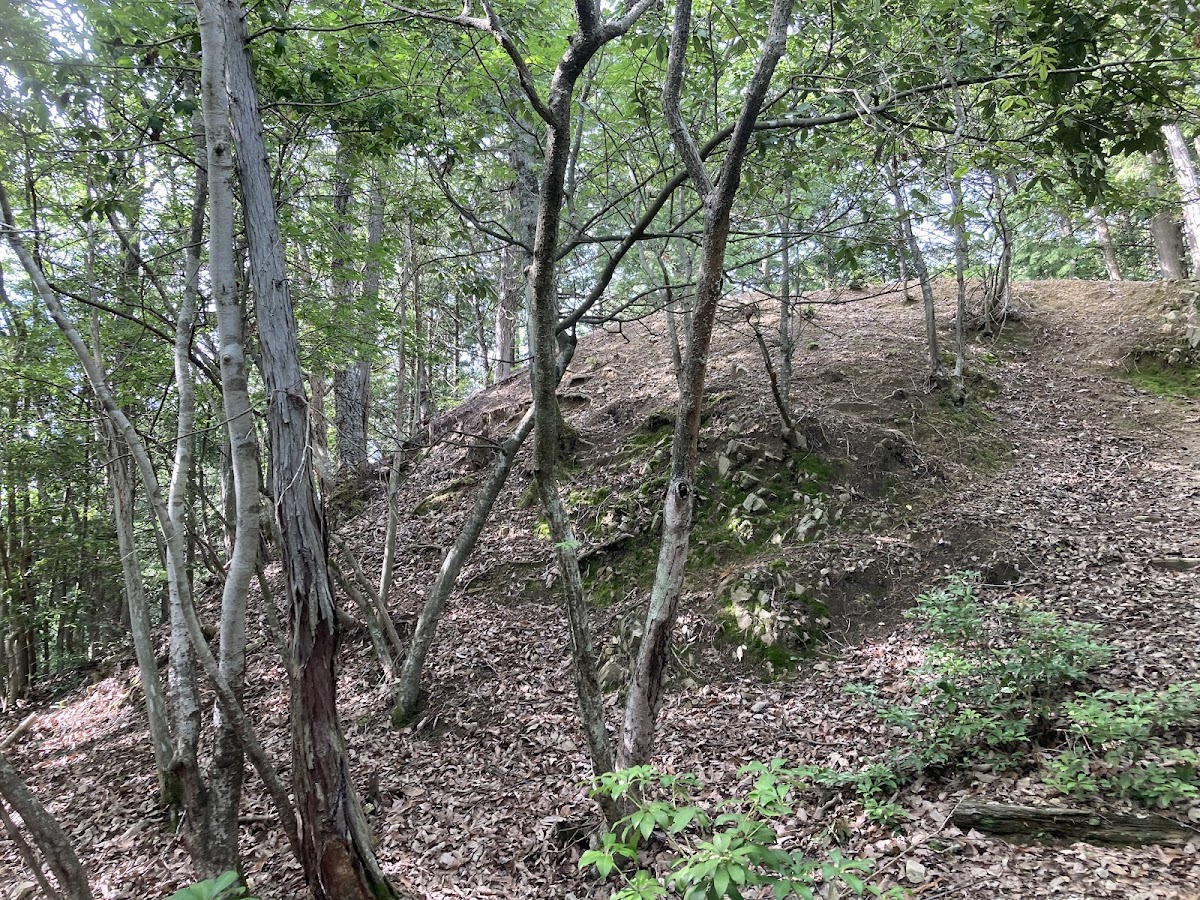
The most distinctive remains of Suzuno Castle are the earthen ramparts. Earthen ramparts were built around each enclosure, centered on the main enclosure, and some are still clearly visible today. The height of the ramparts varies depending on the location, but the maximum height remaining is approximately 2 meters.
Moats
Multiple moats dividing the ridge are located in various places. These were important defensive structures to prevent enemy intrusion and are remnants that attest to the defensive strength of Suzuno Castle.
Vertical Moats
Vertical moats descending the slope have also been confirmed, serving to prevent attacks from the flanks. Vertical moats are a defensive feature unique to mountain castles, demonstrating the tactical ingenuity of Suzuno Castle.
Well Remains Well remains within the castle grounds, indicating that water supply was considered during sieges. Securing water was vital for mountain castles, and the presence of wells was essential for maintaining the castle’s functionality.
Koshikuruwa (Lower Enclosures) Multiple koshikuruwa are arranged around the main enclosure. These functioned as layers of defense and as spaces for troop deployment.
Fukuhara Clan Residence Site
The Fukuhara clan residence site is preserved on the eastern slope of the mountain. This residence site is approximately 50 meters north-south and 20 meters wide, forming a relatively large, flat area.
The residence site can be accessed by proceeding approximately 100-150 meters from the castle entrance through a gate in a fence designed to keep out wild animals. A stone monument marking the “Legendary Birthplace of Mori Motonari” stands at this site, preserving the legend of Motonari’s birth.
The residence site is thought to have been used as a place for daily life, and it may have had a “Negoya-style” structure, separating its functions from the main enclosure at the mountaintop.
Relationship between the Fukuhara and Mori Clans
Origins of the Fukuhara Clan
The Fukuhara clan maintained power as local lords in Aki Province from the medieval period to the Sengoku period. While there are various theories regarding the Fukuhara clan’s lineage, it is certain that they forged a strong alliance with the Mori clan through marriage.
As a Key Retainer Supporting the Mori Clan
The Fukuhara clan participated in numerous battles as key retainers of the Mori clan. In particular, Fukuhara Sadatoshi and his family played a crucial role in Mori Motonari’s unification of the Chugoku region.
While Mori Motonari fought for survival between the two major powers, the Ouchi and Amago clans, the Fukuhara clan remained consistently loyal to the Mori clan. This loyalty was also based on the blood relationship, as a daughter of the Fukuhara clan became Motonari’s mother.
The Fukuhara Clan After the Battle of Sekigahara
After the Battle of Sekigahara, the Fukuhara clan moved to Hagi following the Mori clan’s relocation. Throughout the Edo period, the Fukuhara clan continued to be involved in the administration of the Choshu Domain as important retainers. The Fukuhara family continued after the Meiji Restoration, and their descendants continue to this day.
Access and Visiting Information for Suzuno Castle
Access Methods
Access by Car
Approximately 15 minutes from the Takada Interchange on the Chugoku Expressway. From the central urban area of Aki-Takada City, proceed approximately 3 kilometers along National Route 54 towards Hiroshima City, and you will arrive at the Kawaibashi North Intersection. A sign for “Prefectural Historic Site: Suzuno Castle Ruins” is posted at the intersection, making it easy to find.
There is some parking space near the entrance to the castle, but it is limited, so please be careful.
Access by Public Transportation
Approximately 15 minutes by taxi from Mukaihara Station on the JR Geibi Line. However, due to limited public transportation access, access by car is recommended.
Ascent Route
From the entrance to the castle, proceed approximately 100-150 meters along the well-maintained mountain path, opening (and closing) the gate of the animal-proof fence. The path is relatively gentle, making it accessible even for beginners.
From the residence site to the main enclosure, further up the mountain path is required. The estimated time is approximately 10 minutes to the residence site and 30-40 minutes to the main enclosure.
Points to Note During Your Visit
Clothing and Equipment
As this is a mountain castle, comfortable clothing and non-slip shoes are essential. Particular caution is needed after rain, as the ground can become slippery. Insect repellent is recommended in summer, and warm clothing in winter.
Visiting Time
The average visiting time is approximately 50-60 minutes. If you wish to carefully observe the remains, allow about 1.5 hours.
Important Notes
- Always close the animal-proof fence.
- Always take your trash with you.
- Do not damage the historical remains.
- Beware of venomous snakes and wasps during the summer.
- Avoid visiting the castle alone; visit with others if possible.
Nearby Historical Sites
Numerous historical sites related to the Mori clan exist around Suzuno Castle.
Yoshida-Koriyama Castle
This was the Mori clan’s base and the castle where Motonari was stationed. Located about 6 kilometers from Suzuno Castle, visiting both together is recommended. It is designated as a national historic site.
Fukuhara Family Cemetery
Near Suzuno Castle is the cemetery of successive generations of the Fukuhara family, where you can reflect on the history of the Fukuhara clan.
Mori Motonari’s Cemetery
At the foot of Yoshida-Koriyama Castle, at the site of Toshunji Temple, is the cemetery of Mori Motonari. A must-see spot when visiting places associated with Motonari.
Highlights and Charms of Suzuno Castle
The Legendary Birthplace of Mori Motonari
The greatest charm of Suzuno Castle is undoubtedly its connection to the legend of Mori Motonari’s birth. You can feel the origins of the environment in which Motonari, also known as the “God of Strategy,” was born and raised.
Standing before the stone monument at the site of the Fukuhara clan’s residence, you can feel the spirit of the Sengoku period and reflect on Motonari’s life.
Well-Preserved Mountain Castle Remains
Despite being abandoned more than 400 years ago, the remains of Suzuno Castle are remarkably well-preserved. By actually seeing the defensive structures such as earthworks, moats, and vertical trenches, you can learn about the castle construction techniques of the Sengoku period.
In particular, the earthworks around the main enclosure are clearly preserved, making it easy to imagine the castle’s appearance at the time.
View of the Yoshida Basin
From the main enclosure, you can enjoy a panoramic view of the Yoshida Basin. From here, you can see towards Yoshida-Kōriyama Castle, the base of the Mōri clan, and truly appreciate the position of Suzuno Castle within the Mōri clan’s sphere of influence.
This view is also important from a military perspective, revealing Suzuno Castle’s role in monitoring the surrounding area.
Quiet Atmosphere of a Mountain Castle
Since Suzuno Castle is not a well-known tourist spot, it is relatively uncrowded, allowing for a peaceful visit. Walking along the mountain paths surrounded by trees and exploring the ruins is truly the essence of mountain castle exploration.
For castle enthusiasts, it is a valuable spot where you can carefully observe the ruins without worrying about crowds.
Summary of Suzuno Castle Information
- Alternate Name: Fukuhara Castle
- Location: Fukuhara, Yoshida-cho, Aki-Takata City, Hiroshima Prefecture
- Castle Structure: Mountain Castle
- Elevation: Approximately 310 meters
- Relative Height: Approximately 100 meters
- Year of Construction: Eitoku 1st year / Kowa 1st year (1381)
- Builder: Fukuhara Hiroyo
- Main Lord: Fukuhara clan
- Year of Abandonment: Around Keicho 5th year (1600)
- Main Remains: Earthworks, moats, vertical moats, wells, baileys
- Designated Cultural Property: Hiroshima Prefecture Designated Historic Site (Designated November 10, 1940)
- Main Related Figures: Mori Motonari, Fukuhara Hiroyo, Fukuhara Sadatoshi, Fukuhara Hirotoshi
How to Enjoy Your Visit to Suzuno Castle
Experiencing Historical Romance
The greatest pleasure of visiting Suzuno Castle is touching upon the origins of Mori Motonari, a hero of the Sengoku period. Experiencing the environment where Motonari was born and spent his childhood (or is believed to have spent it) deepens your understanding of history.
Learning About the Structure of a Mountain Castle
The remains of Suzuno Castle exhibit a typical structure of a medieval mountain castle. By actually seeing defensive structures such as earthworks, moats, and vertical trenches, you can learn about the castle-building techniques and tactics of the time.
For those interested in castles, this will be a valuable learning resource where you can learn firsthand.
Connecting with Nature
Visiting mountain castles also includes elements of hiking through nature. Enjoying the changing seasons while exploring history in a healthy way is another attractive aspect.
Suzuno Castle, which shows different faces depending on the season, such as the fresh greenery of spring and the autumn leaves, offers new discoveries with every visit.
Photography
The remains of Suzuno Castle and the surrounding natural scenery are attractive subjects for photography. The stone monument marking the site of the residence and the view from the main enclosure are particularly excellent photo spots.
You can capture beautiful photos for sharing on social media or as a record.
Summary
Suzuno Castle is a historically important mountain castle with a legend of Mori Motonari’s birth. Built as the residence of the Fukuhara clan, and serving as a base for the Fukuhara clan who played an active role as important retainers of the Mori clan, this castle conveys a part of the politics and military affairs of Aki Province during the Sengoku period.
The remains of earthworks, moats, and vertical trenches are well-preserved, making it a valuable spot for learning about the structure of medieval mountain castles. Protected as a Hiroshima Prefecture designated historical site, Suzuno Castle is a place worth visiting for castle enthusiasts and history lovers.
Visiting it along with other nearby historical sites such as Yoshida-Koriyama Castle will allow you to gain a deeper understanding of the history of the Mori clan. When visiting Aki-Takata City, be sure to visit Suzuno Castle. You’ll have a valuable experience where you can feel the spirit of the Sengoku period and touch upon the origins of the great warlord, Mori Motonari.