Tomo Castle (Hiroshima Prefecture) Complete Guide: The Full Picture of a Historically Significant Castle Built at a Strategic Point in the Seto Inland Sea
Overview of Tomo Castle and the Importance of its Location
Tomo Castle is a flatland castle located in Tomo-cho Gochi, Fukuyama City, Hiroshima Prefecture. It is a Japanese castle built on a hill with an elevation of 24m and a relative height of 22m. Currently protected as a Fukuyama City designated historical site, its remains are preserved in a corner of the charming port town of Tomonoura.
Tomo as a Military Hub in the Seto Inland Sea
Tomo has been known since ancient times as a “port for waiting for the tide,” and was a crucial base on the Seto Inland Sea shipping routes. Located almost in the center of the Seto Inland Sea, it was an ideal location for ships to wait for the tides during voyages that utilized the ebb and flow of the tides. This geographical characteristic made Tomo an extremely important strategic location militarily.
In an era when whoever controlled the Seto Inland Sea could control maritime traffic in western Japan, Tomo Castle was not merely a local fortress, but functioned as a political, military, and economic hub. It was also a transit point on the route from Kyoto to Kyushu, which explains why many powerful figures valued this location.
Basic Structure of the Castle
Tomo Castle is classified as a hilltop castle, skillfully built utilizing the hilly terrain south of the town of Tomo. Its distinctive feature is the stone wall at the southeastern corner, centered around the main keep. Parts of this wall have been restored, allowing us to imagine its former appearance. The castle’s location facing the sea provided both port and defensive functions.
History of Tomo Castle: From the Nanboku-cho Period to the Edo Period
Nanboku-cho Period: Deep Connections with the Ashikaga Clan
The history of Tomo Castle dates back to the Nanboku-cho period. In 1336 (Kenmu 3), a significant historical event occurred when Ashikaga Takauji stopped in Tomo on his eastward journey from Kyushu. He received an imperial decree from Emperor Kōgon in this town. This event marked a turning point in Ashikaga Takauji’s victory and is recorded as an event illustrating the deep connection between Tomo and the Ashikaga clan.
This historical fact, also recorded in the *Taiheiki*, demonstrates that Tomo was not merely a provincial port town, but a stage for a turning point in Japanese history. Ashikaga Takauji refined his strategy in this place and eventually established the Muromachi Shogunate.
Sengoku Period: The Rule of the Bingo Region’s Local Clans and the Mōri Clan
With the start of the Sengoku period, Tomo Castle became the residence of the Watanabe clan, a powerful local clan in the Bingo region. The Watanabe clan ruled this area for generations, playing a crucial role in controlling maritime traffic in the Seto Inland Sea.
In the mid-16th century, Mōri Motonari, who rose to power as the ruler of the Chūgoku region, expanded his influence into the Bingo region. The Mori clan fully recognized the strategic importance of Tomo, and by firmly establishing control over this area, they strengthened their control of the Seto Inland Sea. During the time of Mori Terumoto, who succeeded Mori Motonari, Tomo Castle was developed as an important branch castle of the Mori clan.
Tomo Shogunate: As Ashikaga Yoshiaki’s Base
The most noteworthy period in the history of Tomo Castle is the era of the “Tomo Shogunate,” from 1576 to 1582. After Ashikaga Yoshiaki, the 15th Shogun of the Muromachi Shogunate, was driven out of Kyoto by Oda Nobunaga, he moved to Tomo under the protection of Mori Terumoto.
During this period, Ashikaga Yoshiaki attempted to maintain the functions of the shogunate, albeit formally, using Tomo Castle and its surroundings as his base. From Tomo, Yoshiaki issued official letters to various daimyo, attempting to build a network to encircle Oda Nobunaga. During this period, Tomo was known as the “Tomo Shogunate,” and, albeit temporarily, became one of Japan’s political centers.
The approximately six years that Ashikaga Yoshiaki stayed in Tomo can be considered the most glorious period for Tomo Castle in Japanese history. With the support of the Mori clan, Yoshiaki attempted to unite anti-Oda forces, but ultimately, he was unable to stop the expansion of Oda Nobunaga’s power.
Edo Period: Renovations by Fukushima Masanori and Mizuno Katsunari
After the Battle of Sekigahara in 1600 (Keicho 5), when Fukushima Masanori took up residence in Hiroshima Castle, Tomo Castle gained an important position as a subsidiary castle. Fukushima Masanori extensively renovated Tomo Castle, strengthening its functions as a fortress, including improving the stone walls.
Later, in 1619 (Genna 5), when Fukushima Masanori was dispossessed of his domain, Mizuno Katsunari became the first lord of the Bingo Fukuyama Domain. Mizuno Katsunari made Fukuyama Castle his residence, but Tomo Castle continued to be maintained as an important subsidiary castle. During this period, Tomo Castle was also known as “Tomo Fortress” and continued to function as a base for monitoring and defending the Seto Inland Sea.
Throughout the Edo period, Tomo Castle played an important role as the Fukuyama Domain’s maritime gateway and as a port of call for Korean envoys. It was customary for the Korean envoys to rest in Tomonoura upon their arrival in Japan, making Tomo, as a castle town, a place of international exchange.
Current Status and Remains of Tomo Castle
Restored Stone Walls and Historical and Folk Museum
At the current Tomo Castle site, the southeastern corner of the main keep and a portion of the stone wall connected to it have been restored. These stone walls are valuable remains that demonstrate the castle construction techniques of the early Edo period, conveying the state of castle architecture at that time.
On top of the stone wall stands the Fukuyama City Tomonoura Historical and Folk Museum, which exhibits the history and culture of Tomonoura. From the museum, you can enjoy a panoramic view of the beautiful scenery of Tomonoura, experiencing the landscape of the Seto Inland Sea as seen by the former castle lords.
The Townscape of Tomonoura, Retaining the Remnants of a Castle Town
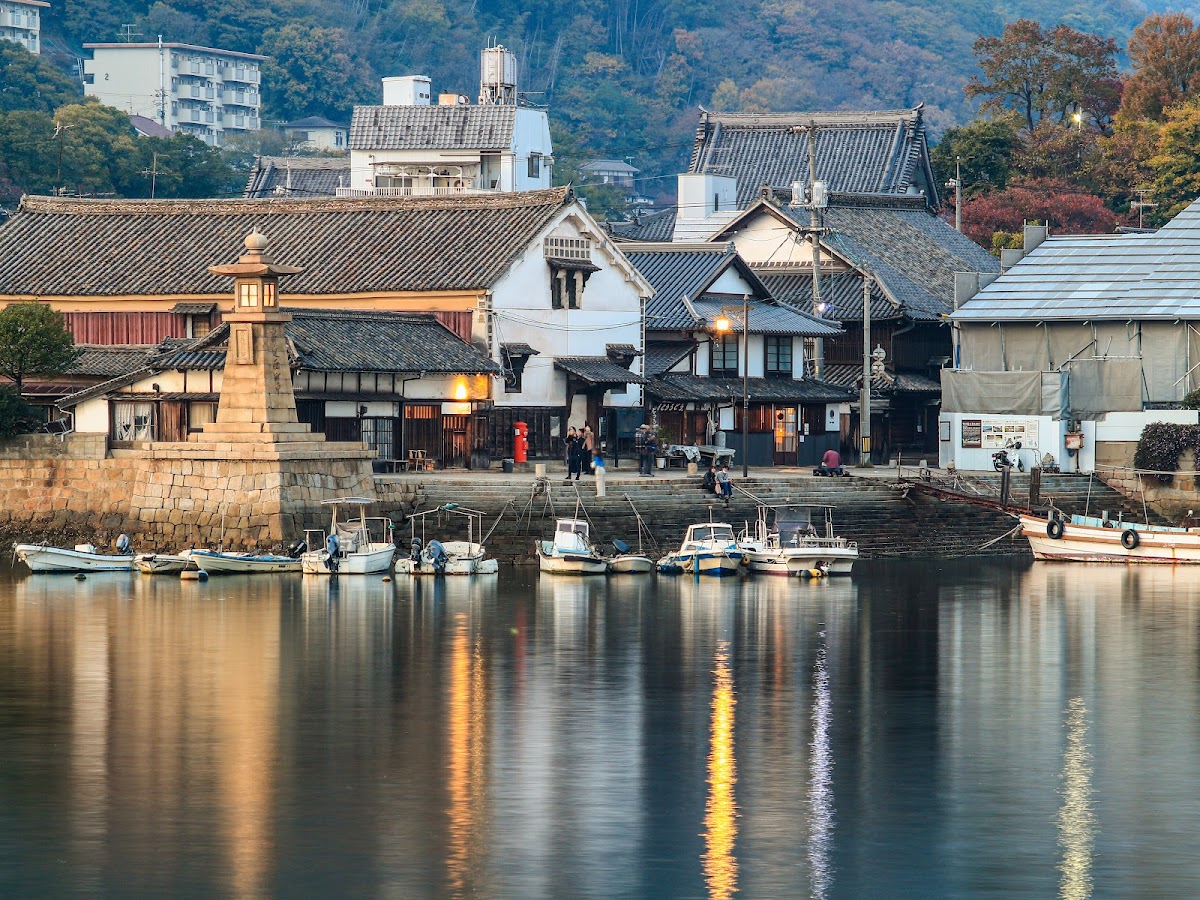
Around the Tomonoura Castle ruins, the townscape of the Edo period remains strongly preserved. Many historical buildings from its port town days, such as stone lanterns, stone steps, and piers, still exist, and the area has been designated a National Important Preservation District for Groups of Traditional Buildings.
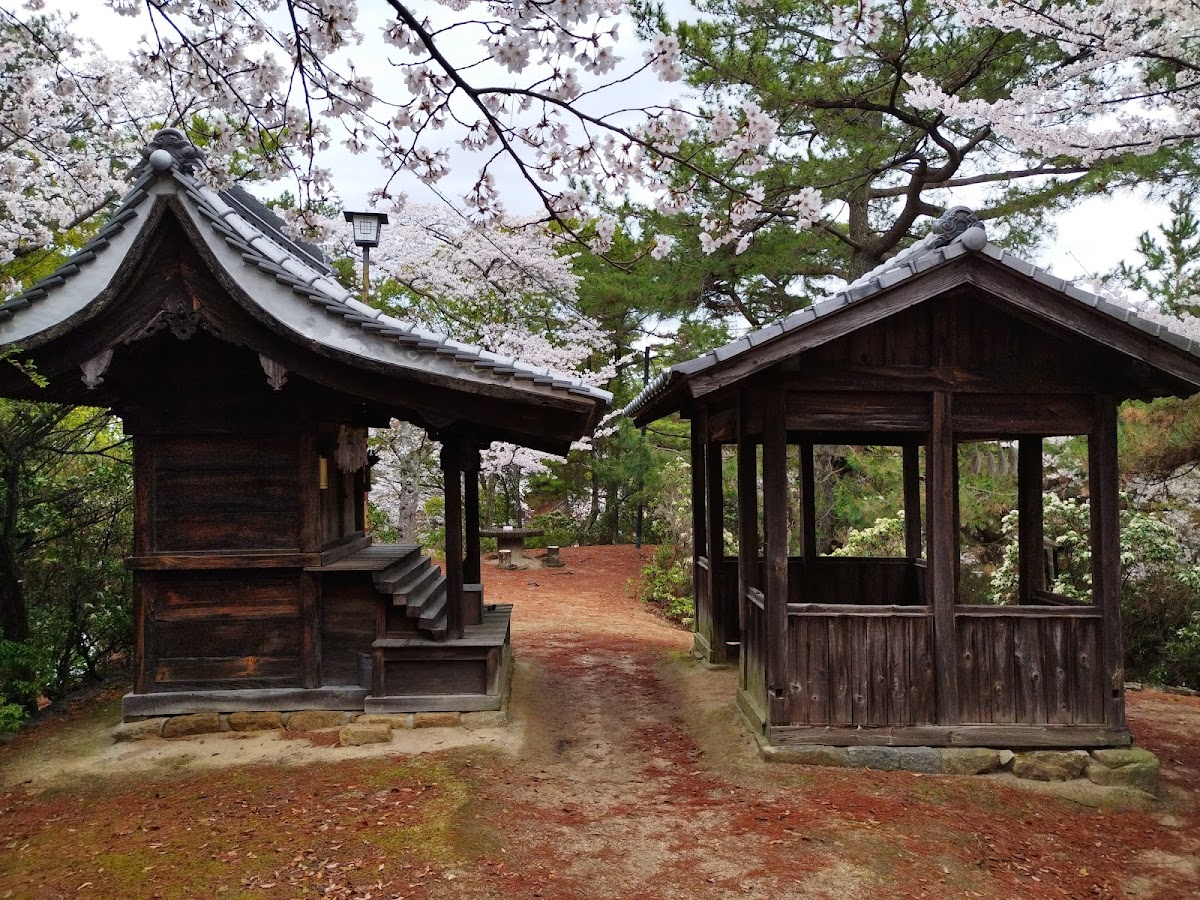
Walking through the streets of Tomonoura, you’ll find narrow alleys, old merchant houses, and temples and shrines scattered throughout, creating an atmosphere that feels like stepping back in time. These townscapes tell the story of its development as a castle town of Tomonoura, and together with the castle ruins, they enhance the historical value of Tomonoura.
Archaeological Investigations and New Discoveries
Recent excavations have yielded new insights into Tomo Castle. More detailed information has been revealed regarding the structure of the stone walls, the extent of the castle grounds, and the layout of the buildings.
In particular, investigations around the main keep have confirmed traces of renovations spanning multiple periods, providing important data for understanding the changes in the castle from the Sengoku period to the Edo period. Excavated ceramics also offer insights into the lifestyle and trade within the castle.
Access and Visiting Information for Tomo Castle
Transportation Access
To reach the Tomo Castle ruins, take the Tomotetsu Bus from Fukuyama Station on the JR Sanyo Main Line, get off at the “Tomonoura” bus stop, and walk for approximately 5 minutes. The bus journey takes approximately 30 minutes.
By private car, it takes approximately 30 minutes from the Fukuyama East Interchange on the Sanyo Expressway, or approximately 40 minutes from the Fukuyama West Interchange. However, the roads around Tomonoura are narrow and can get crowded during the tourist season, so using public transportation is recommended.
Points to Note When visiting Tomonoura Castle Ruins, keeping the following points in mind will help you understand the history more deeply.
Observing the Stone Walls: The restored stone wall at the southeastern corner of the main keep is an important relic demonstrating the castle-building techniques of the early Edo period. It’s worth observing the details, such as the way the stones are stacked and the treatment of the corners.
Checking the View: From the castle ruins, a magnificent view of the Seto Inland Sea and Tomonoura unfolds. Imagine the former castle lords monitoring maritime traffic while gazing at this scenery.
Visiting the Historical and Folk Museum: The Tomonoura Historical and Folk Museum has detailed exhibits on the history of Tomonoura Castle and the culture of Tomonoura. Visiting before or after your visit to the castle ruins will deepen your understanding.
Townscape Stroll: Beyond the castle ruins, the surrounding historical townscape is a must-see. There are numerous points of interest, including the permanent lantern, the Ota family residence, and Fukuzenji Taichoro.
Related Historical Sites in the Surrounding Area
When visiting Tomo Castle ruins, we recommend also visiting the surrounding historical sites.
Fukuzenji Taichoro: A scenic spot praised by the Korean envoy as “the most beautiful scenery in East Japan,” offering a spectacular view of Tomonoura from its tatami room.
Permanent Lantern: A port lighthouse built in the late Edo period, a symbolic landmark of Tomonoura.
Ota Family Residence: The residence of a wealthy merchant from the mid-Edo period, designated a National Important Cultural Property. It provides insight into the lifestyle of a merchant family at that time.
Ioji Temple: An ancient temple founded in the Heian period, offering panoramic views of Tomonoura from its grounds.
Historical Significance and Cultural Value of Tomo Castle
The Position of Tomo Castle in Japanese History
Although not as large as some of the major castles, Tomo Castle’s importance in Japanese history is immeasurable. It played a crucial role at turning points in history, appearing during the reigns of Ashikaga Takauji of the Nanboku-cho period, the Mori clan of the Sengoku period, and Ashikaga Yoshiaki, the last shogun of the Muromachi shogunate.
In particular, the period of the “Tomo Shogunate” symbolizes the transition from the end of the Muromachi shogunate to Oda Nobunaga’s unification of Japan, and Tomo Castle stands as a witness to this history. The fact that this small castle was deeply involved in the major currents of Japanese history offers important insights for the study of regional castles.
Characteristics as a Coastal Castle
Tomo Castle is a typical “coastal castle.” Taking advantage of its location facing the sea, its primary function was the monitoring and control of maritime traffic. The construction of Tomo Castle, based on an understanding of the characteristics of the Seto Inland Sea and a thorough knowledge of its tidal currents, is an important case study in the study of coastal castles within the history of Japanese castles.
Coastal castles needed to be able to withstand not only land defenses but also attacks from the sea and naval blockades, and their structure and operation incorporated unique ingenuity. Research on Tomo Castle provides valuable information for understanding these characteristics of coastal castles.
Efforts toward Preservation and Utilization
Fukuyama City protects the Tomo Castle ruins as a city-designated historical site and implements appropriate preservation and management. Efforts are underway to balance the preservation and utilization of the historical site, including the restoration of the stone walls and the establishment of a historical and folk museum.
In recent years, the historical value of the region has been re-evaluated, with the entire Tomonoura area being designated as a Japan Heritage site. As an important component of this, efforts are being made to pass on the Tomo Castle ruins to future generations while balancing their use as a tourist resource with their preservation as a historical heritage site.
Latest Trends in Tomo Castle Research
Re-examination from Documentary Sources
Recent research has provided a clearer picture of Tomo Castle by carefully examining primary sources such as ancient documents and maps, in addition to military chronicles like the *Taiheiki* and *Intoku Taiheiki*.
Documents from the period when Ashikaga Yoshiaki stayed in Tomo are particularly important sources of information for understanding the state of Tomo Castle at the time, the functions of the castle town, and its relationship with the Mori clan. Analysis of these historical materials is gradually revealing the reality of the “Tomo Shogunate” and the details of Yoshiaki’s political activities.
Progress in Archaeological Investigations
Progress in archaeological excavations has revealed the castle’s structure and changes that were not apparent from documentary sources alone. Analysis of the stone wall construction techniques allows for the estimation of the castle’s construction date and renovation period, and this is being compared with historical records.
Analysis of excavated artifacts is also revealing aspects of the lifestyle within the castle and the distribution of trade goods. In particular, the analysis of the production sites of ceramics indicates that Tomo was located within a wide-area trade network.
Importance in Regional History Research
Studies on Tomo Castle are indispensable for understanding the medieval and early modern history of the Bingo region. It is related to a variety of research themes, including the activities of the Watanabe clan, a powerful local family, the reality of the Mori clan’s rule over Bingo, and the coastal defense system of the Fukuyama Domain.
Furthermore, from the perspective of the history of maritime traffic in the Seto Inland Sea, Tomo Castle is an important subject of study. Its function as a port for waiting for favorable tides, its role as a key point for maritime traffic, and its role as a port of call for Korean envoys provide valuable examples for maritime history research.
Summary: The Appeal and Future Prospects of Tomo Castle
Tomo Castle is a rare castle, though small in scale, that has consistently been involved in important turning points in Japanese history. From the Nanboku-cho period to the Edo period, it maintained its position as a key point in the Seto Inland Sea, while playing different roles in each era.
The remaining stone walls and the historic townscape surrounding the site are invaluable cultural heritage that convey the appearance of the past. Combined with the beautiful scenery of Tomonoura, the Tomo Castle ruins continue to fascinate not only history buffs but also many tourists.
Through continued research and proper preservation, the historical value of Tomo Castle will undoubtedly become even clearer. As a regional treasure and an important historical site that tells the story of Japanese history, the Tomo Castle ruins are expected to be passed down to future generations.
When visiting Tomonoura, be sure to visit the Tomo Castle ruins and reflect on the historical drama that unfolded here from the hilltop overlooking the Seto Inland Sea. The passage of time etched into the stone walls and the unchanging scenery of the Seto Inland Sea are sure to deeply move visitors.