Susaki Castle (Kochi Prefecture) Complete Guide: The History and Remains of the Mountain Castle Overlooking the Sea of the Tsuno Clan, One of the Seven Great Lords of Tosa
What is Susaki Castle?: A Strategic Base Controlling the Seas of Tosa
Susaki Castle is a medieval mountain castle located in Jagatani, Tanogo-ko, Susaki City, Kochi Prefecture. Also known as Kojōyama (Old Castle Mountain), it was built on a mountaintop 143m above sea level (approximately 140m relative height) overlooking Susaki Port. This castle, with its view of the natural harbor of Susaki Bay, functioned as an important military base controlling a crucial point for maritime traffic in Tosa Province.
The most distinctive feature of Susaki Castle lies in its location. From the mountaintop, the entire Susaki Port could be seen, allowing for the monitoring of ships entering and leaving Tosa Bay. Due to this strategic location, Susaki Castle is believed to have played a vital role not merely as a defensive structure, but also in monitoring maritime traffic and managing logistics.
Even today, the remains of earthworks, stone walls, baileys, and moats are well preserved on the mountaintop, making it a valuable historical site where one can experience the layout of a medieval mountain castle. Located relatively close to the center of Susaki City, Susaki Castle retains much of its original appearance and is an important historical heritage site that tells the story of Tosa’s Sengoku period history.
History of Susaki Castle: From the Tsuno Clan to the Chosokabe Clan
Construction by the Tsuno Clan and the Era of the Seven Great Lords of Tosa
While there are no clear records of the construction date of Susaki Castle, it is said to have been built by a family of the Tsuno clan, one of the seven great lords of Tosa. The Tsuno clan was a powerful local lord based at Himenono Castle (Himeno Castle) in Takaoka County, and expanded its influence to the Susaki region.
The Tsuno clan boasted immense power in medieval Tosa, controlling a vast area stretching from Takaoka County to Agawa County. Susaki Castle is believed to have been a branch castle of the Tsuno clan, responsible for the defense of Susaki Port and the management of maritime traffic in cooperation with Himenono Castle. Himenono Castle, the Tsuno clan’s main base, was located approximately 8.6 km from Susaki Castle, and the two castles formed the Tsuno clan’s sphere of influence in southwestern Tosa Province.
The Invasion of Chosokabe Motochika and Tsuno Chikatada
In the late Sengoku period, Tosa Province became the stage for Chosokabe Motochika’s unification wars. Tsuno Katsuoki, the head of the Tsuno clan, abandoned resistance in the face of the overwhelming military power of the Chosokabe clan and chose to surrender. At this time, he chose to preserve the Tsuno clan name by adopting Chosokabe Chikatada (Tsuno Chikatada), Motochika’s third son.
Tsuno Chikatada is said to have inherited the Tsuno clan as an adopted son and become the lord of Susaki Castle. However, Chikatada’s fate was unfortunate. After Chōsokabe Motochika unified Tosa Province, Chikatada became embroiled in succession disputes and power struggles within the family.
In 1585, during Toyotomi Hideyoshi’s conquest of Shikoku, Chōsokabe Motochika surrendered, and his rule over Tosa Province was recognized. Subsequently, Motochika lost his eldest son, Nobuchika, in the Battle of Hetsugigawa, exacerbating the succession problem. It is presumed that Chikatada’s position became unstable amidst this turmoil.
Susaki Castle in the Edo Period and Beyond
After the Battle of Sekigahara in 1600, Yamauchi Kazutoyo took control of Tosa Province, establishing the Tosa Domain. Under the Yamauchi clan’s rule, Susaki Castle was abandoned and lost its military function. During the Edo period, Susaki continued to develop as a port town, prospering as a center of fishing, particularly bonito fishing.
During the late Edo period, the importance of Susaki Port was re-recognized, and the Susaki Battery (Susaki Daiba) was constructed. This was one of the batteries developed by the Tosa Domain as part of coastal defense against the arrival of the Black Ships. The Susaki Battery is located approximately 1.1 km from Susaki Castle, indicating that Susaki’s military importance continued into modern times.
Layout and Remains of Susaki Castle: A Castle Structure Spread Across Two Peaks
Structure of the Main Enclosure (North Peak)
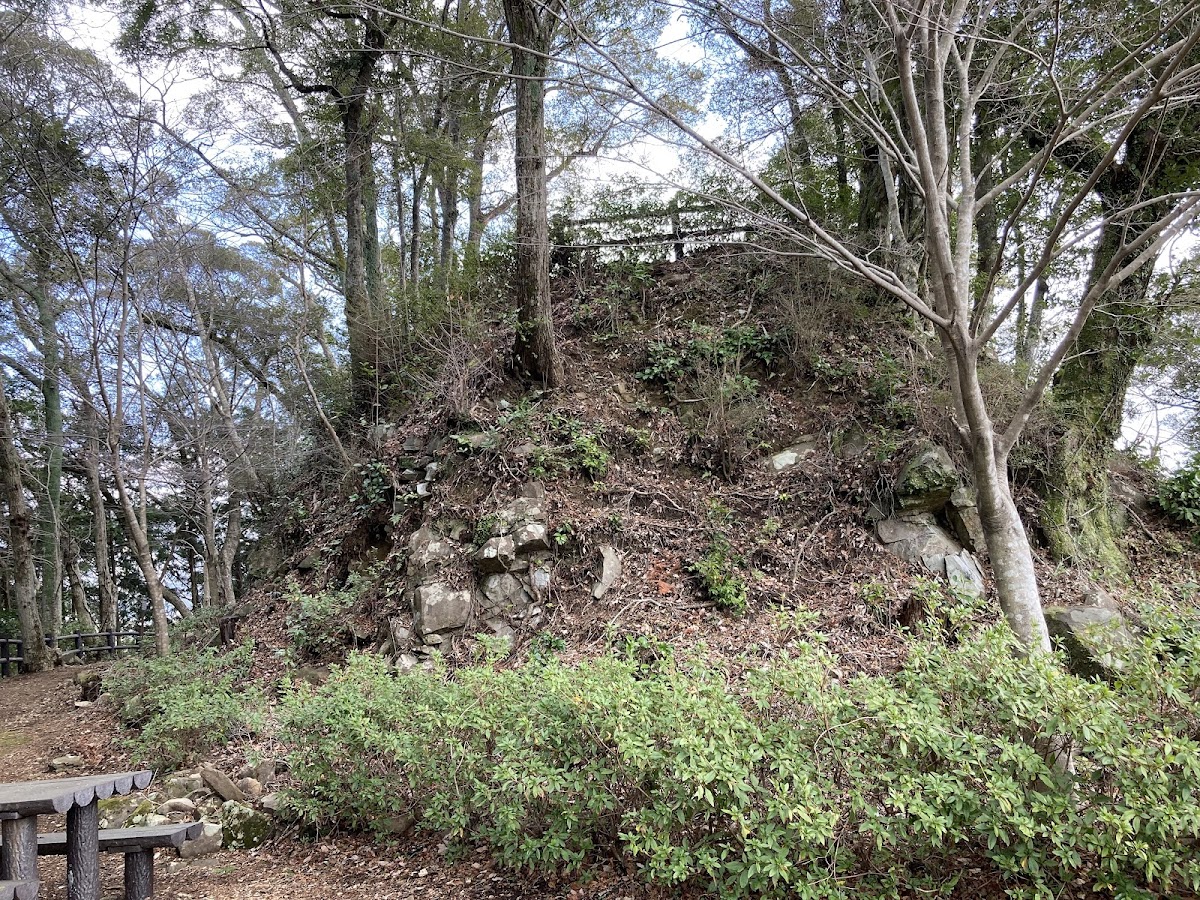
Susaki Castle is built on two peaks running north-south, with the main enclosure located on the northern peak. The main enclosure is arranged in a circular pattern on the mountaintop, surrounded by an earthen rampart. A distinctive feature of this rampart is that its interior is reinforced with stonework. In medieval mountain castles before the full-scale introduction of stonework techniques, the technique of reinforcing the interior of the earthen rampart with stone was a method to increase structural strength.
A second enclosure (second bailey) surrounds the main enclosure, forming a multi-layered defensive structure. This structure allowed for multiple defensive lines to intercept the enemy before they reached the main enclosure. The main enclosure offered a panoramic view of the entire Susaki Port, demonstrating its effective function as a lookout point.
The earthworks remain well-preserved, their height and width conveying the high level of defense they possessed at the time. While some parts of the stonework inside the earthworks show signs of weathering, it remains a valuable historical site for observing medieval stonework techniques.
South Peak Enclosure and Triangulation Point
An enclosure was also located on the south peak, where a triangulation point from the Geospatial Information Authority of Japan is situated. Although slightly smaller than the main enclosure, it played a role in enhancing the overall defensive strength of the castle through its coordination with the main enclosure. The layout, utilizing both the north and south peaks, is a typical example of a medieval mountain castle design that maximized the use of the terrain.
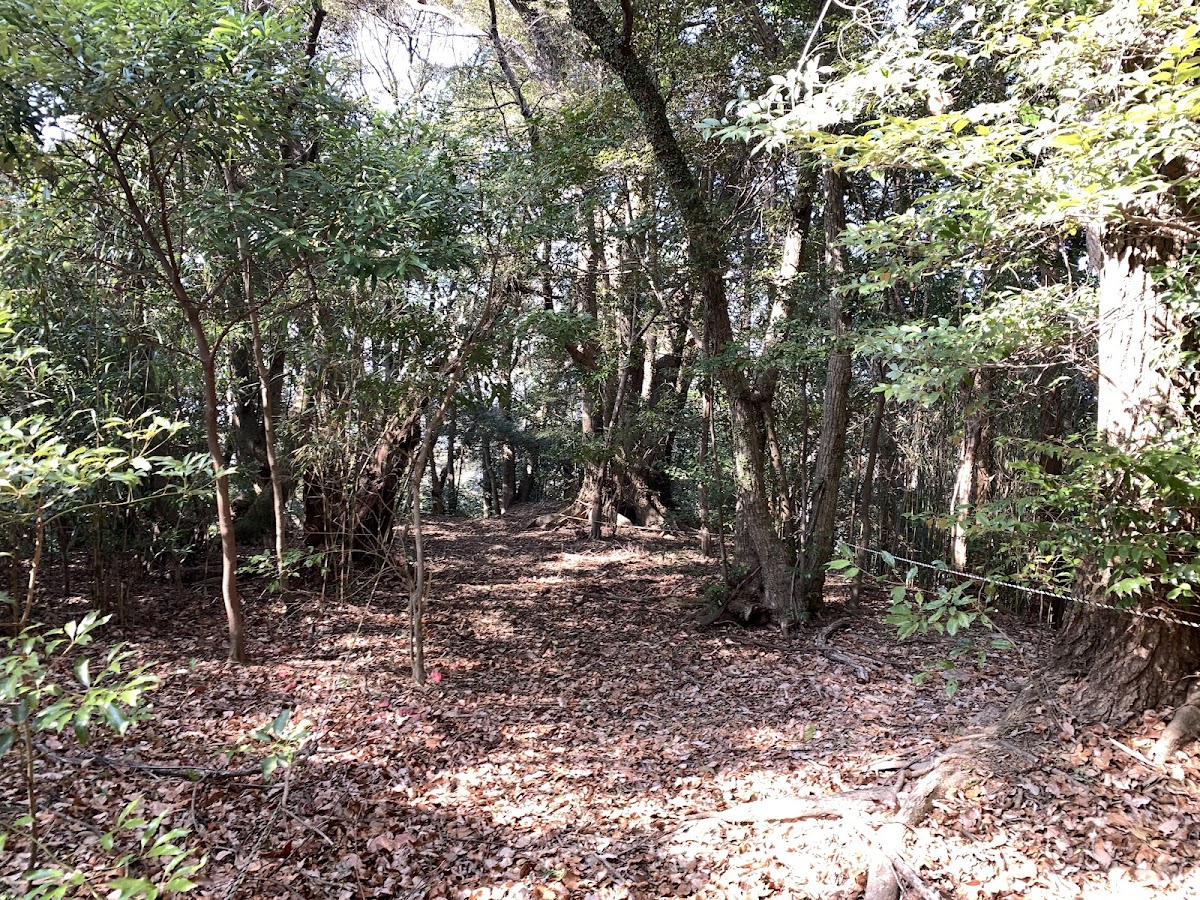
A saddle exists between the south and north peaks, suggesting the possibility of a moat being located here. Moats were important defensive structures that prevented enemy intrusion by severing ridges, and are thought to have played a vital role in Susaki Castle’s defensive system. ### Technical Characteristics of the Stone Walls and Earthworks
The stone walls of Susaki Castle were constructed using a technique known as “nozurazumi,” where natural stones are stacked as they are. This is characteristic of stone wall construction techniques from the Sengoku period to the early Azuchi-Momoyama period, and provides a clue to estimating the construction and renovation period of Susaki Castle.
The earthworks were firmly constructed using the rammed earth technique and have withstood hundreds of years of wind and rain to this day. Observing the cross-section of the earthworks reveals traces of layered construction, where soil was compacted as it was piled up. This technique is an ancient civil engineering technique that played an important role in medieval castle architecture.
From the layout of the enclosures and the location of the moats, it can be inferred that Susaki Castle was designed not only for defense but also to prioritize monitoring and gathering information on Susaki Port. The placement of the main enclosure on high ground overlooking the sea, allowing for constant monitoring of the port’s inflow and outflow, clearly demonstrates its character as a castle controlling a key point for maritime traffic.
Access and Visiting Information for Susaki Castle
Location and Basic Information
Location: Jagatani, Tanogo-ko, Susaki City, Kochi Prefecture (Kojoyama)
Castle Type: Mountain Castle
Elevation: 143m
Relative Height: Approximately 140m
Remains: Stone walls, earthworks, baileys, moats
Cultural Property Designation: None (Not a city-designated historical site)
Parking: Some space available near the entrance to Shiroyama Park
Access by Public Transportation
The nearest station to Susaki Castle is JR Dosan Line’s “Susaki Station.” It’s about a 15-minute walk from Susaki Station to the entrance of Shiroyama Park. Susaki Station is a major station where express trains also stop, and it’s easily accessible from Kochi City.
From Susaki Station, head towards the Susaki City Hall and then south along Prefectural Road 388. You will find a sign for the entrance to Shiroyama Park. Following this sign will lead you to the castle entrance.
Access by Car
From the Susaki East Interchange on the Kochi Expressway, it takes approximately 10 minutes to reach the entrance to Shiroyama Park. The easiest route is to pass through the Susaki city center and head towards Prefectural Road 388.
However, parking space near the entrance to Shiroyama Park is limited, so we recommend using the public parking lot at the Susaki City Hall or nearby paid parking lots.
Precautions When Visiting the Castle
While the path to Susaki Castle is maintained as part of Shiroyama Park, information as of 2024 indicates that some sections of the path are in poor condition and difficult to access. We recommend checking the latest conditions with the Susaki City Tourism Association or other relevant organizations before your visit.
As this is a mountain castle, the following equipment and preparations are recommended:
- Hiking boots or trekking shoes: Shoes with good grip are necessary due to slippery areas.
- Long-sleeved shirt and long pants: To protect yourself from bushes and insects.
- Drinking water: Sufficient hydration is especially necessary in summer.
- Insect repellent spray: Essential from spring to autumn.
- Gloves: To protect your hands when pushing through bushes and on rocky areas.
- Map and compass (or GPS): To avoid getting lost.
Allow approximately one hour for the round trip to the castle. The view from the summit is magnificent, offering a panoramic view of Susaki Port and Tosa Bay.
Related Historical Sites and Tourist Spots Around Susaki Castle
Nearby Castle Historical Sites
When visiting Susaki Castle, exploring the surrounding related castles will allow you to gain a deeper understanding of Tosa’s Sengoku period history.
Susaki Battery (Susaki Daiba) (approx. 1.1km): A coastal battery built by the Tosa Domain during the late Edo period. It was constructed as a defense against the arrival of the Black Ships.
Himenono Castle (approx. 8.6km): The base of the Tsuno clan. They controlled southwestern Tosa in cooperation with Susaki Castle.
Kure Castle (approx. 9.8km): The residence of the Ohira clan, one of the seven powerful clans of Tosa. Located in Kure, Nakatosa-cho.
Sagawa Castle (approx. 11.0km): The residence of the Fukao clan. During the Edo period, it became the center of the Sagawa territory, a branch domain of the Tosa Domain.
Okamoto Castle (approx. 12km): A castle of a powerful local lord in the Susaki area.
Tonami Castle (approx. 11.6km): A medieval mountain castle located in Tosa City.
Visiting these castles allows you to experience the power distribution in Tosa during the Sengoku period and the process of Chosokabe Motochika’s unification of Tosa.
Tourist Spots in Susaki City
Susaki Port: Still a vibrant fishing port, where you can enjoy fresh seafood. Bonito, in particular, is a Susaki specialty.
Susaki City Civic Culture Center: Features exhibits on the history and culture of Susaki City, and may include some materials related to Susaki Castle.
Nabeyaki Ramen: Famous as a local specialty of Susaki City. Served in an earthenware pot, it’s perfect for a meal after visiting the castles.
Susaki Machikado Gallery: A facility showcasing local history and culture.
Major Castles in Kochi Prefecture
A castle tour starting from Susaki Castle and visiting major castles in Kochi Prefecture is also recommended.
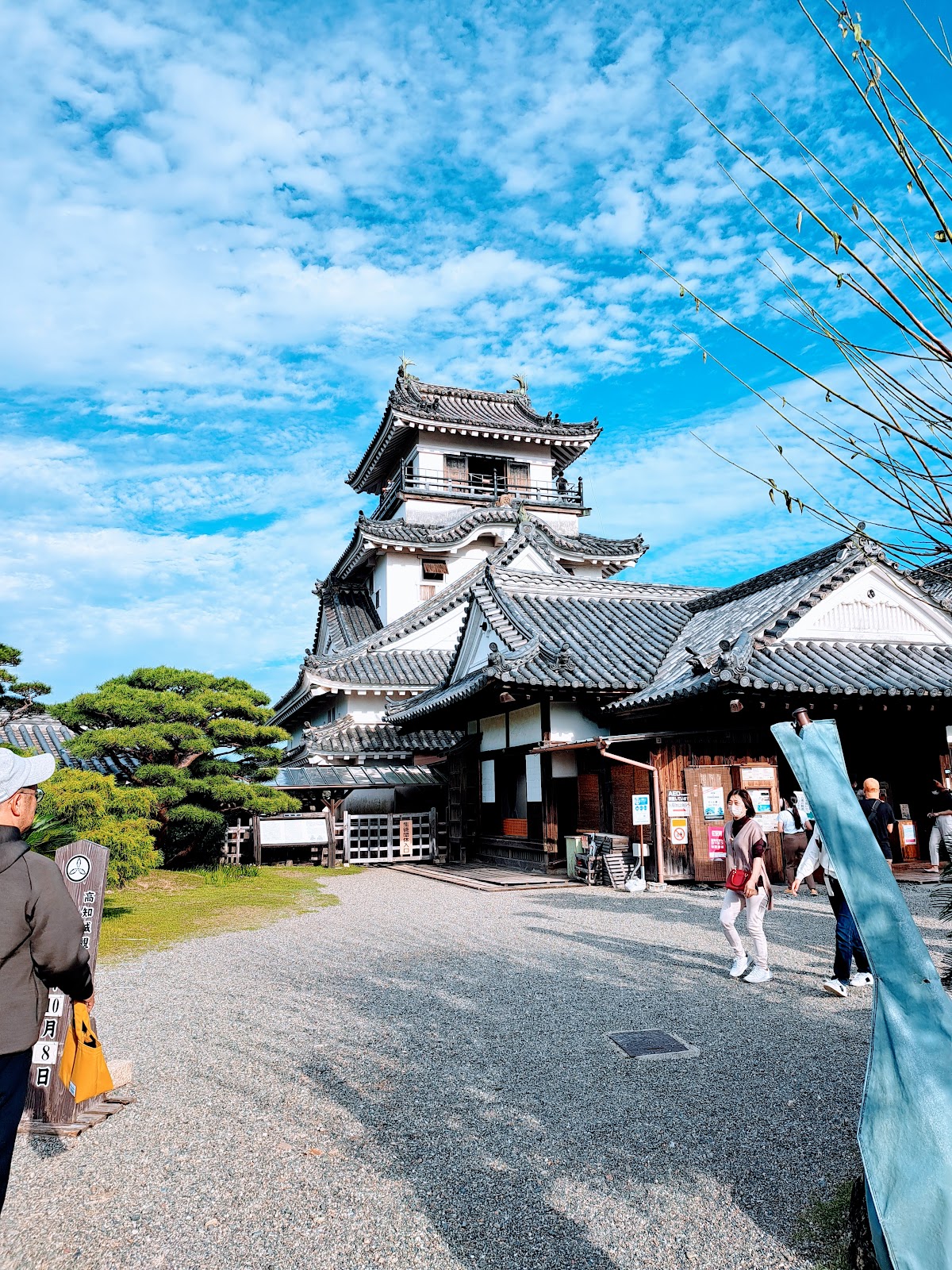
Kochi Castle: One of Japan’s leading castles with an existing keep. This is a masterpiece of early modern castle architecture built by Yamauchi Kazutoyo.
Okō Castle: The residence of Chōsokabe Motochika. It served as the base for the unification of Tosa as the headquarters of the Chōsokabe clan. Currently, a historical and folk museum is located on the premises.
Urato Castle: The castle to which Chōsokabe Motochika moved his base after unifying Tosa. It is located near Katsurahama Beach.
Nakamura Castle: A castle located in Shimanto City (formerly Nakamura City) in western Tosa. It flourished as the residence of the Ichijō clan.
By visiting these castles, one can systematically understand the flow of history in Tosa from the medieval to the early modern period.
Historical Significance and Evaluation of Susaki Castle
A Key Point for Maritime Transportation during the Era of the Seven Great Warlords of Tosa
The historical significance of Susaki Castle lies, first and foremost, in its role as a castle controlling a key point for maritime transportation during the era of the Seven Great Warlords of Tosa. In medieval Tosa, maritime transport was extremely important for the transportation of goods and military movements. Susaki Port was a natural harbor and functioned as an important port in Tosa Bay.
The construction of Susaki Castle by the Tsuno clan and their control of this region was not merely territorial expansion, but also a manifestation of an economic and military strategy to secure maritime transport rights. It is believed that the Tsuno clan expanded their influence through trade with other provinces and intelligence gathering via Susaki Port.
The Role of the Chosokabe Clan in the Unification of Tosa
Susaki Castle was one of the important bases in the process of Chosokabe Motochika’s unification of Tosa. Motochika’s sending his third son, Chikatada, as an adopted son to the Tsuno clan indicates that he recognized the strategic importance of the Susaki region.
By controlling Susaki Castle, the Chosokabe clan gained control of maritime transport in southwestern Tosa and a foothold for further expansion into the Hata district to the west. Furthermore, utilizing Susaki Port made it possible to streamline logistics and the transportation of military supplies during the Shikoku unification war.
Value in Medieval Mountain Castle Research
Susaki Castle is a valuable example in the study of medieval mountain castles. It retains many characteristics of Sengoku period mountain castles, including a defensive system combining stone walls and earthworks, a layout that makes maximum use of the terrain, and a location overlooking the sea.
In particular, the technique of reinforcing the inside of the earthworks with stone masonry is important evidence of the development of stone wall technology. It is of high value in the history of castle architecture because it allows us to observe transitional technology before fully stone-walled castles became mainstream.
Points to Note and How to Enjoy Visiting Susaki Castle
Highlights of the Remains
When visiting Susaki Castle, paying attention to the following remains will allow you to understand the castle’s history more deeply.
Main Enclosure Earthworks: The circular earthworks are the most distinctive remains of Susaki Castle. Observe its structure while paying attention to the stone masonry on the inside. Second Tier: The second tier surrounding the main enclosure demonstrates a multi-layered defensive structure. The height and width of the tiers reveal ingenious defensive techniques.
Stone Walls: The rough-hewn stone walls are a valuable example of medieval stonework techniques. Pay close attention to the arrangement and stacking of the stones.
Moat: The moat separating the north and south peaks was an important structure preventing enemy incursions along the ridge.
View: The view from the mountaintop is one of Susaki Castle’s greatest attractions. Imagine the scenery seen by the former castle lords as you gaze upon Susaki Port and Tosa Bay.
Photo Spots
Susaki Castle is a castle ruin suitable for photography. The following points are recommended:
- View of Susaki Port from the Main Enclosure: A superb composition that demonstrates the castle’s strategic location.
- Joint between Earthworks and Stone Walls: Valuable detail that shows medieval castle-building techniques.
- Ridge Connecting the North and South Peaks: A landscape that shows the overall structure of the castle.
- Castle Mountain Viewed from the Foot of the Mountain: A composition that conveys the castle’s grandeur.
Best Season for Visiting
Susaki Castle is accessible year-round, but each season offers a different charm.
Spring (March-May): Beautiful fresh greenery and mild weather make it ideal for visiting the castle. However, this is also the time when insects begin to increase.
Summer (June-August): While the views are good, be aware of the heat and insects. Early morning visits are recommended.
Autumn (September-November): With autumn foliage and mild weather, this is the best season to visit.
Winter (December-February): Fewer insects, clear air, and superb views. However, cold weather gear is necessary.
Summary: The Charm of Susaki Castle and its Future Preservation
Susaki Castle, built by the Tsuno clan, one of the seven powerful clans of Tosa, holds an important position in the history of Tosa’s Sengoku period. It is a castle site with many attractions, including its strategic location overlooking Susaki Port, its defensive system combining stone walls and earthworks, and the history of its lord, Chikatada, the third son of Chosokabe Motochika.
Currently, Susaki Castle is not designated as a cultural property, but its well-preserved remains are a valuable example of a medieval mountain castle, and its preservation and utilization are highly anticipated. While the condition of the access road to the castle is a challenge, this also means that it retains a stronger sense of its former glory.
Susaki Castle, with its convenient access from the Susaki town center and within walking distance of JR Susaki Station, offers an experience of a full-fledged mountain castle, making it a historical site well worth visiting for castle enthusiasts. For those interested in the history of Tosa, those who want to learn about the structure of medieval mountain castles, and those who want to enjoy the spectacular view overlooking the sea of Susaki, this castle ruin is definitely worth a visit.
We hope that in the future, as Susaki City continues to develop the site as a historical landmark and utilize it as a tourist resource, the charm of Susaki Castle will be conveyed to even more people. It is hoped that Susaki Castle, as a valuable legacy that tells the story of Tosa’s Sengoku period history, will be properly preserved and passed on to future generations.