Complete Guide to Shoryuji Castle | History, Highlights, Access, and Relationship with Hosokawa Gracia Explained in Detail
Shoryuji Castle is a historical flatland castle located in Nagaokakyo City, Kyoto Prefecture. During the Sengoku period, it played a crucial role as a strategic point protecting the southwest of Kyoto, and is widely known as the castle where Hosokawa Gracia (Akechi Tama) spent her newlywed days. It was also the base from which Akechi Mitsuhide retreated after his defeat in the Battle of Yamazaki, his final battle following the Honnoji Incident, making it a must-see for history buffs.
This article comprehensively explains everything you need to know before visiting Shoryuji Castle, from its historical background and highlights to access methods and surrounding tourist spots.
History of Shoryuji Castle
From Construction to the Sengoku Period
The origins of Shoryuji Castle date back to the Nanboku-cho period. It is believed to have been built in 1339 by Hosokawa Yoriharu, and initially functioned as a military base protecting the southwest of Kyoto. The castle’s name originates from the nearby temple, Shoryuji.
Throughout the Muromachi period, Shoryuji Castle remained an important fortress protecting Kyoto, despite being at the mercy of the political situation in the Kinai region. During the Sengoku period, it came under the control of powerful daimyo such as Miyoshi Nagayoshi and Matsunaga Hisahide, becoming the stage for numerous battles.
The Era of Hosokawa Fujitaka and the Castle’s Development
In 1568, when Oda Nobunaga entered Kyoto with Ashikaga Yoshiaki, Shoryuji Castle was given to Hosokawa Fujitaka (later Hosokawa Yusai). Hosokawa Fujitaka was a samurai known for his culture and was well-versed in waka poetry and the tea ceremony.
Fujitaka extensively renovated Shoryuji Castle, giving it the appearance of a modern castle. He improved the stone walls and moats and also focused on developing the castle town. During this period, Shoryuji Castle served not only as a military base but also as a cultural center.
Hosokawa Gracia and Shoryuji Castle
When discussing Shoryuji Castle, the relationship with Hosokawa Gracia (Akechi Tama) is essential. In 1578, Tama (later Gracia), the third daughter of Akechi Mitsuhide, married Hosokawa Tadaoki, the eldest son of Hosokawa Fujitaka.
It is said that the couple lived in Shoryuji Castle during their newlywed days and enjoyed happy times. Within the castle grounds is a beautiful garden called the “Gracia Garden,” which still preserves the atmosphere of that time. However, this happy period did not last long.
The Honnoji Incident and the Battle of Yamazaki
On June 2, 1582, the “Honnoji Incident” occurred, in which Akechi Mitsuhide assassinated Oda Nobunaga at Honnoji Temple. At this time, Hosokawa Fujitaka and his son Tadaoki refused Mitsuhide’s offer and shaved their heads, indicating their intention to retire. Gracia, due to her father Mitsuhide’s rebellion, found herself in the position of “daughter of a traitor.”
Just 11 days after the Honnō-ji Incident, on June 13th, Akechi Mitsuhide and Hashiba Hideyoshi (later Toyotomi Hideyoshi) clashed at Yamazaki (present-day Ōyamazaki-chō, Kyoto Prefecture). This was the Battle of Yamazaki.
Mitsuhide was defeated and retreated to Shōryūji Castle. However, he did not remain at the castle, and while fleeing towards his base at Sakamoto Castle, he was ambushed by samurai hunters at Ogurusu and lost his life. Shōryūji Castle thus became etched in history as the last castle Akechi Mitsuhide visited.
Edo Period and Beyond
After the Battle of Yamazaki, Shōryūji Castle left the hands of the Hosokawa clan and subsequently came under the control of various feudal lords. During the Edo period, Nagai Naokiyo, a retainer of Tokugawa Ieyasu, became the lord of the castle. However, when the Nagai clan was transferred to Takatsuki in Settsu Province in 1619, Shoryuji Castle was abandoned.
After its abandonment, the site became farmland, and the castle’s remains gradually disappeared. However, some of the moats and earthworks remained, preserving the appearance of the castle.
Modern Shoryuji Castle
In the Showa era, the historical value of the Shoryuji Castle ruins began to be re-evaluated. From 1987 to 1992, archaeological excavations and restoration work were carried out by Nagaokakyo City.
The current Shoryuji Castle Park, based on the results of the excavations, features restored stone walls, moats, earthworks, and castle gates, and is developed as a historical park where visitors can imagine the appearance of the castle during the Sengoku period.
Structure and Characteristics of Shoryuji Castle
Characteristics as a Flatland Castle
Shoryuji Castle is a typical flatland castle (a castle built on flat land). Unlike mountain castles, its construction on flat land made it suitable for the garrisoning of large armies and the accumulation of supplies. Furthermore, its location at a key transportation hub to Kyoto made it a strategically important base.
Layout (Castle Design)
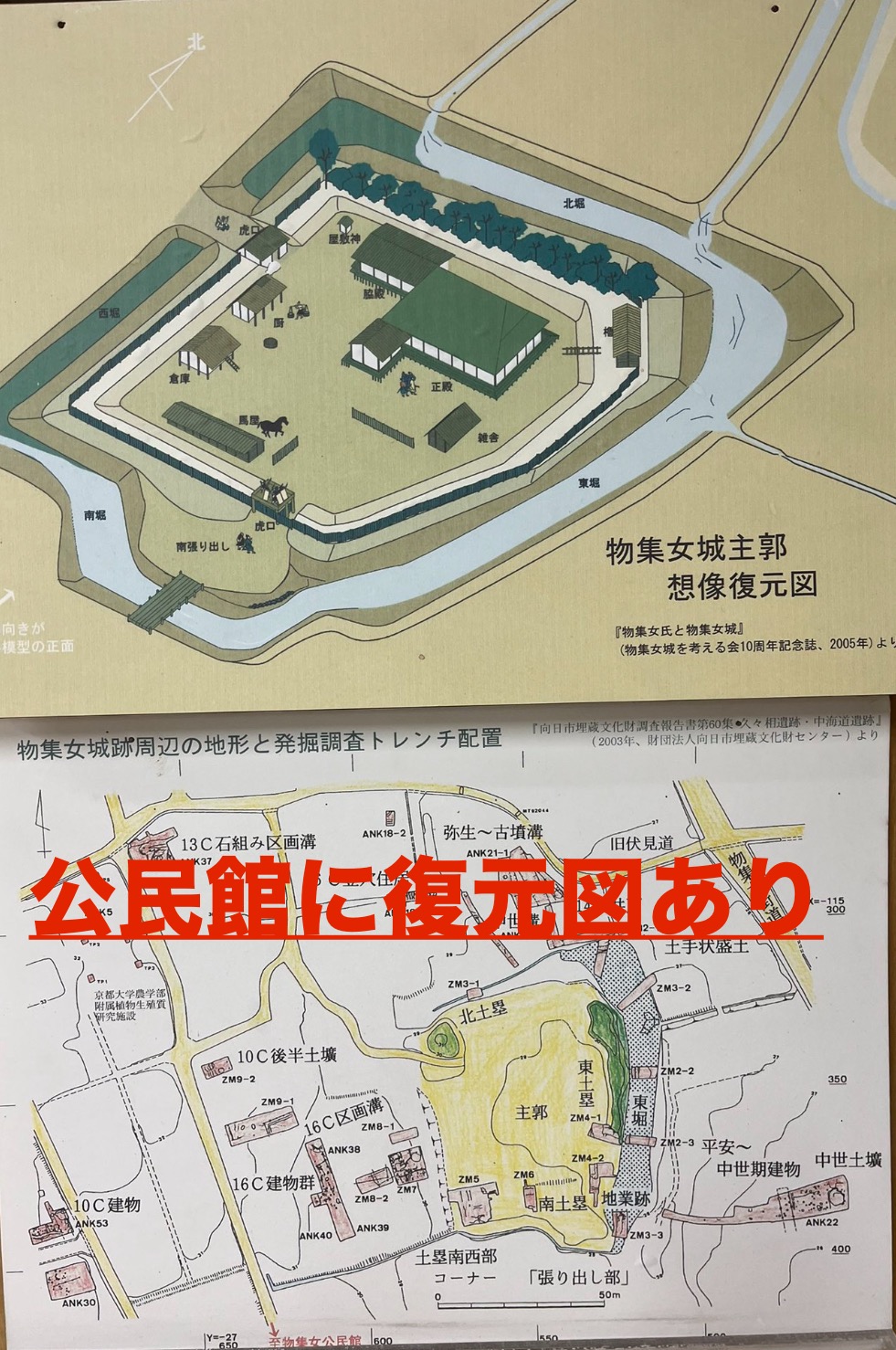
Shoryuji Castle has a terraced layout centered around the main keep (Honmaru). The main keep is surrounded by the second and third baileys, with each bailey demarcated by moats and earthworks.
Archaeological excavations have revealed that the main keep measured approximately 110 meters east-west and 90 meters north-south. It is presumed that the main keep contained turrets and a palace, functioning as the lord’s residence.
Stone Walls and Moats
The stone walls of Shoryuji Castle were constructed using a technique called “nozurazumi” (rough stone masonry). This method involves stacking natural stones with minimal processing, a common technique for building stone walls from the Sengoku period to the Azuchi-Momoyama period.
The restored stone walls faithfully reproduce the techniques of the time, allowing visitors to learn about Sengoku period castle construction techniques. Furthermore, a moat approximately 10 meters wide surrounded the castle, enhancing its defensive capabilities.
Castle Gates
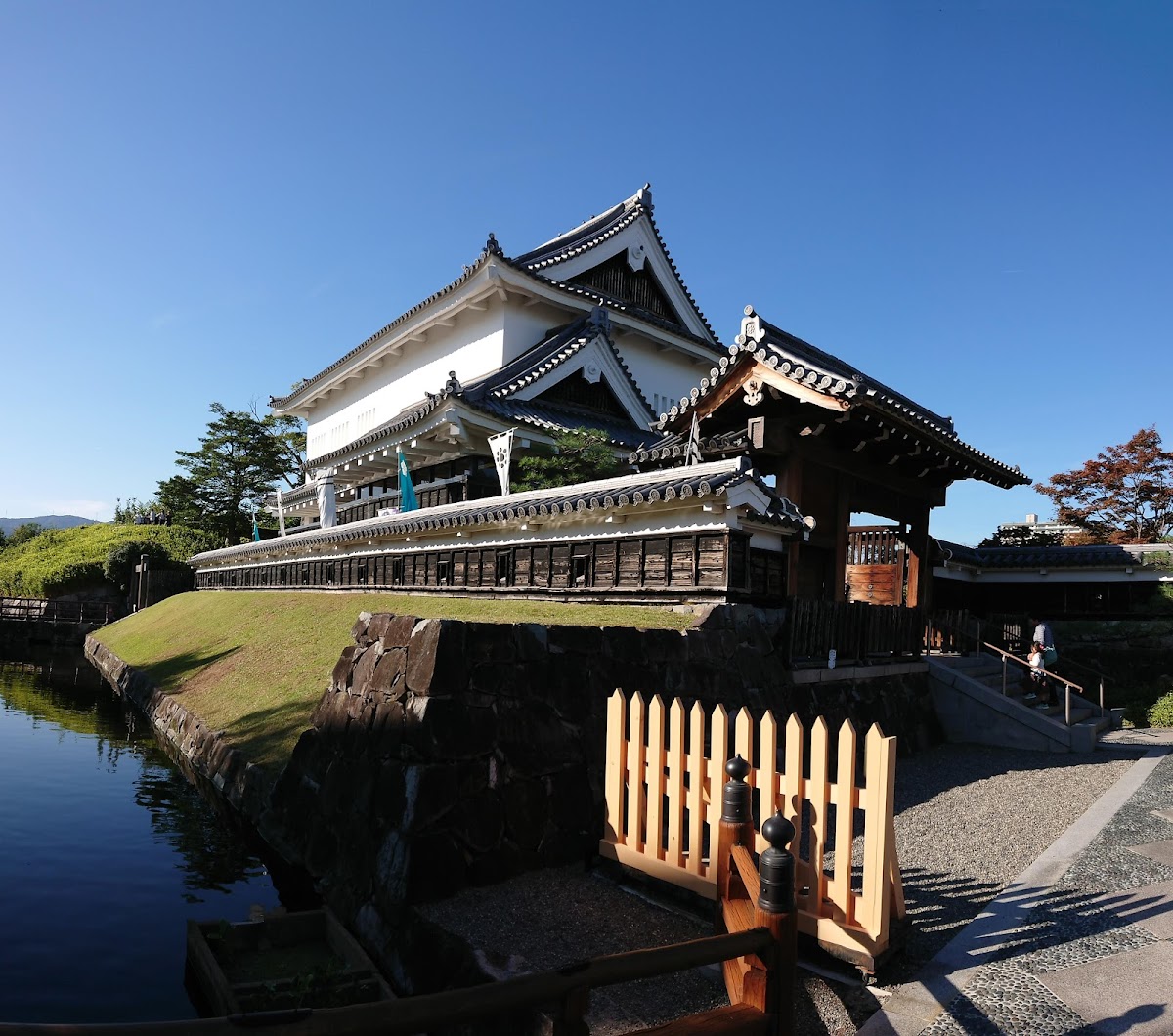
Currently, the South Gate and North Gate have been restored at Shoryuji Castle Park. The South Gate, in particular, was the main entrance to the inner citadel and boasts a magnificent turret-style structure. Stone walls are built on both sides of the gate, demonstrating the castle’s imposing presence.
Highlights of Shoryuji Castle
Shoryuji Castle Park
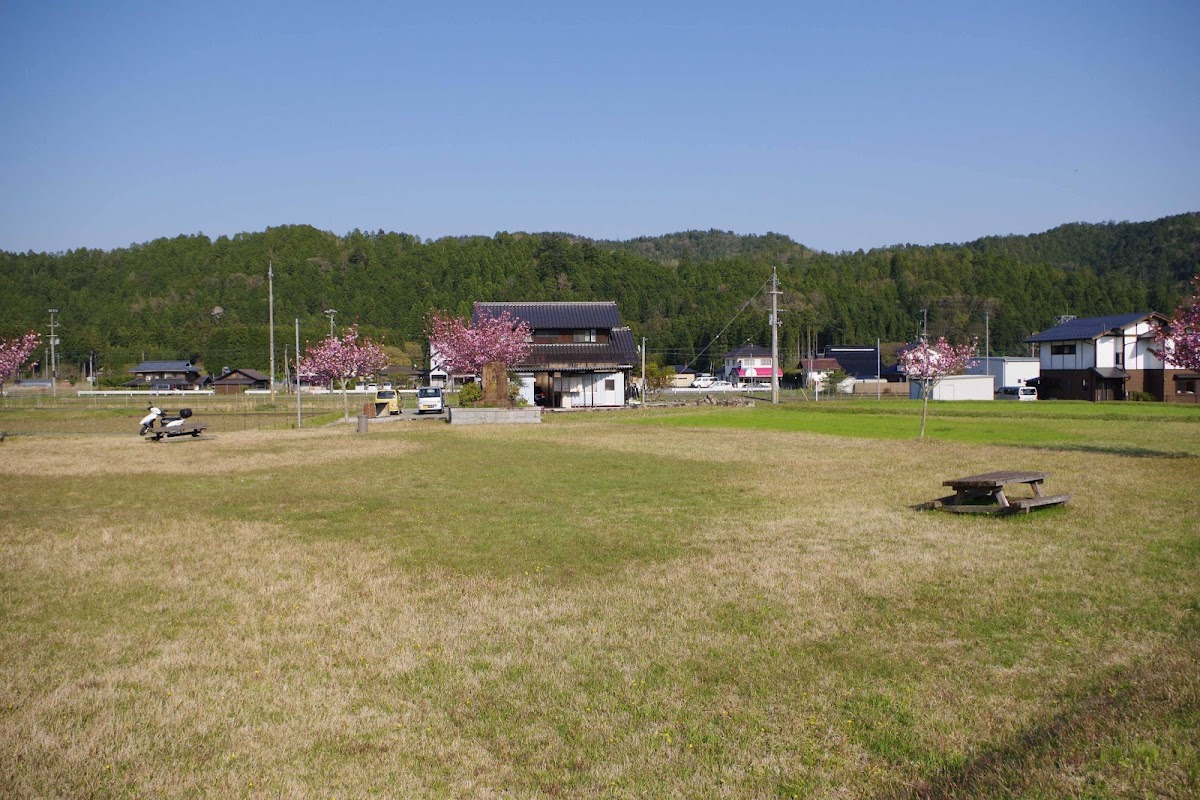
The ruins of Shoryuji Castle are now maintained as “Shoryuji Castle Park,” which can be visited free of charge. Within the park, restored stone walls, moats, earthworks, and castle gates are available, allowing visitors to experience the atmosphere of a Sengoku period castle.
The park is beautifully maintained and is a popular place for citizens to relax, enjoying cherry blossoms in spring and autumn leaves in fall.
Gracia Garden
Within Shoryuji Castle Park is a Japanese garden called “Gracia Garden.” This garden is said to be a recreation of the garden where Hosokawa Gracia spent her newlywed days.
It is a pond-centered strolling garden where you can enjoy the beautiful scenery of each season. A statue of Gracia is also installed in the garden, making it a popular photo spot.
Administration Building and Exhibition
The administration building in the park houses an exhibition introducing the history of Shoryuji Castle and the results of archaeological excavations. Artifacts such as roof tiles and ceramics, a reconstructed model of the castle, and panel displays allow for a deeper understanding of the castle’s history.
Admission is free, and you can also receive detailed explanations from the staff.
Stone Monument and Information Boards
Several stone monuments marking the “Shoryuji Castle Ruins” and information boards explaining the castle’s history are installed within the park. In particular, the sign indicating “the site where Akechi Mitsuhide was defeated” conveys the historical importance of the Battle of Yamazaki.
Remains of Earthworks and Dry Moats
Some remains of the earthworks and dry moats from that time can be found around the perimeter of the park. These were preserved after archaeological excavations and are valuable remains for understanding the castle’s defensive system.
A Deeper Look at Hosokawa Gracia
The Life of Gracia
Hosokawa Gracia (1563-1600) was born as the third daughter of Akechi Mitsuhide, and her real name was Tama. In 1578, at the age of 15, she married Hosokawa Tadaoki and lived her newlywed life at Shoryuji Castle.
After the Honnoji Incident, her father, Mitsuhide, became a rebel, and Gracia was confined to Midono in Tango Province (present-day northern Kyoto Prefecture). After approximately two years of confinement, Gracia was allowed to return to the Hosokawa residence in Osaka thanks to the intercession of Toyotomi Hideyoshi.
During this period of hardship, Gracia encountered Christianity and was baptized. Her name, “Gracia,” originates from her baptismal name, “Gratia” (grace).
In 1600, as a prelude to the Battle of Sekigahara, Ishida Mitsunari attempted to take Gracia hostage. However, Gracia refused to become a hostage and, at the age of 38, ordered her retainers to perform the ritual suicide at the Hosokawa residence in Tamatsukuri, Osaka.
Memories of Gracia and Shoryuji Castle
It is said that Gracia’s newlywed period at Shoryuji Castle was the happiest time of her life. Her life with her cultured husband, Tadaoki, was enriched, and she is said to have enjoyed days filled with waka poetry and tea ceremony.
Gracia gave birth to her eldest son, Tadataka, and second son, Okiaki, at Shoryuji Castle. It was a place where she experienced the joys of motherhood.
Historical Sites Associated with Gracia
Besides Shoryuji Castle Park, there are several historical sites associated with Gracia within Nagaokakyo City.
- Shoryuji Temple: This temple is the origin of the castle’s name, and it is said that Gracia visited it.
- Gracia Festival: This festival is held every November and features a procession of Gracia and warriors.
- Gracia Street: The road leading from JR Nagaokakyo Station to Shoryuji Castle Park is named “Gracia Street.”
Akechi Mitsuhide and the Battle of Yamazaki
The Circumstances of the Battle of Yamazaki
On June 2, 1582 (Tensho 10), Akechi Mitsuhide assassinated Oda Nobunaga at Honnoji Temple. However, Mitsuhide’s reign was so short-lived that it is called a “three-day reign.”
Hashiba Hideyoshi, who was confronting the Mori clan in the Chugoku region, immediately made peace with the Mori upon learning of Nobunaga’s death and returned to Kyoto with astonishing speed (the Great Return from Chugoku).
On June 13th, the two armies clashed at Yamazaki (near the border of present-day Oyamazaki Town in Kyoto Prefecture and Shimamoto Town in Osaka Prefecture). Mitsuhide’s army numbered approximately 16,000, while Hideyoshi’s army was said to number approximately 40,000. Outnumbered, Mitsuhide’s army was defeated.
Retreat to Shoryuji Castle
Defeated, Mitsuhide retreated to Shoryuji Castle. Upon entering the castle, Mitsuhide decided to head to Sakamoto Castle (Otsu City, Shiga Prefecture) to attempt a comeback.
Mitsuhide escaped Shoryuji Castle under the cover of night and, with a small retinue, headed for Sakamoto Castle. However, along the way, at Ogurisu, he was attacked by farmers hunting down defeated warriors and suffered a fatal wound. Mitsuhide committed suicide, ending his 55-year life.
The Role of Shoryuji Castle
During the Battle of Yamazaki, Shoryuji Castle functioned as a rear base for Mitsuhide. During the battle, Mitsuhide’s retainers and provisions were gathered at the castle, and it served as a temporary refuge after his retreat.
However, fearing pursuit by Hideyoshi’s army, Mitsuhide chose to escape rather than remain in the castle. If Mitsuhide had remained in Shoryuji Castle, history might have unfolded differently.
Access Methods
Access by Train
Public transportation is the most convenient way to access Shoryuji Castle Park.
From JR Kyoto Line “Nagaokakyo Station”
- Approximately 10 minutes on foot
- Exit the station and head west, then proceed straight along “Gracia Street” to reach the park.
From Hankyu Kyoto Line “Nagaoka Tenjin Station”
- Approximately 20 minutes on foot, or by bus
- Get off at the Hankyu Bus “Shoryuji” bus stop, then approximately 5 minutes on foot
Access by Car
If using the expressway
- Approximately 15 minutes from Meishin Expressway “Kyoto Minami IC”
- Approximately 10 minutes from Kyoto Jukan Expressway “Nagaokakyo IC”
Parking
- There is no dedicated parking lot at Shoryuji Castle Park.
- We recommend using nearby coin-operated parking lots or public transportation.
Address and Contact Information
Shoryuji Castle Park
- Address: 13-1 Shoryuji, Nagaokakyo City, Kyoto Prefecture 617-0836
- Phone: 075-955-9515 (Nagaokakyo City Culture and Sports Promotion Office)
- Opening Hours: Always open (Administration building: 9:00-17:00)
- Closed: Administration building closed during the New Year holidays (December 28th – January 4th)
- Admission Fee: Free
Nearby Tourist Attractions
Nagaoka Tenmangu Shrine
Nagaoka Tenmangu Shrine, located about a 20-minute walk from Shoryuji Castle Park, is a shrine dedicated to Sugawara no Michizane. Known as the god of learning, it attracts many worshippers during exam season.
The shrine grounds feature the beautiful Hachijo-ga-ike Pond, and in spring, approximately 150-year-old Kirishima azaleas bloom magnificently.
Komyoji Temple
Located in Ao, Nagaokakyo City, Komyoji Temple is the head temple of the Seizan Jodo sect. It is famous for its autumn foliage, with the “Maple Path” turning a vibrant red in the fall.
It’s about a 15-minute drive from Shoryuji Castle Park, making it a recommended visit in conjunction with a historical walk.
Yanagiya Kannon Temple
Yangokuji Temple, revered as the “Kannon of the Eyes,” is an ancient temple nestled in the mountains of Nagaokakyo City. Its beautiful flower-filled water basin is a popular “Instagrammable” spot.
It’s about a 20-minute drive from Shoryuji Castle Park.
Oyamazaki Villa Museum of Art
Located about a 10-minute drive from Shoryuji Castle Park, the Oyamazaki Villa Museum of Art is a museum housed in the former villa of businessman Shotaro Kaga. The museum primarily displays works related to the Mingei (folk craft) movement, centered around the collection of Tamesaburo Yamamoto, the founder of Asahi Beer.
The building itself is beautiful, and the garden offers a panoramic view of the Kyoto Basin.
Site of the Battle of Yamazaki
Approximately 3 kilometers south of Shoryuji Castle lies the site of the Battle of Yamazaki. A stone monument marking the “Battle of Yamazaki” stands at the foot of Mt. Tenno, allowing visitors to truly experience the historical setting.
Mt. Tenno is also the origin of the phrase “Tennozan, the site of the decisive battle for control of Japan.”
Points to Note When Visiting Shoryuji Castle
Best Season
Shoryuji Castle Park can be enjoyed throughout the year, but the following seasons are particularly recommended:
Spring (Late March – Early April)
- Cherry blossoms bloom, enveloping the entire park in a vibrant atmosphere.
- The cherry blossoms in the Gracia Garden are also magnificent.
Autumn (Early to Late November)
- The autumn foliage is beautiful, and the autumn leaves in the Gracia Garden are a must-see.
- The “Gracia Festival” is held in November, attracting many tourists.
Estimated Time Required
Allow approximately 30 minutes to 1 hour for a visit to Shoryuji Castle Park. If you plan to carefully view the exhibits in the administration building or enjoy taking photographs, allow a little more time.
If you plan to visit other nearby historical sites and tourist spots, we recommend planning a half-day to full-day itinerary.
Clothing and Items to Bring
The park has paved walking paths, but we recommend wearing comfortable shoes. In summer, the sun is strong, so it’s a good idea to bring a hat, parasol, and drinks.
A camera is essential. There are many photo opportunities, including the stone walls, gardens, and castle gates.
Event Information
Gracia Festival
Held annually around the second Sunday of November, the “Gracia Festival” is an autumn tradition in Nagaokakyo City. A procession centered around women dressed as Gracia parades through the city, and there are also samurai processions and demonstrations by musketeers.
During the festival, various events are held around Shoryuji Castle Park, attracting many tourists.
Historical Significance of Shoryuji Castle
Shoryuji Castle is a castle that played a crucial role in a significant turning point in Japanese history.
The End of the Sengoku Period
The Battle of Yamazaki was a battle that determined the fate of Japan after the death of Oda Nobunaga. Following Akechi Mitsuhide’s defeat, Hashiba Hideyoshi began his path to unifying Japan. Shoryuji Castle was the stage for this historical turning point.
Perspective from Women’s History
The life of Hosokawa Gracia symbolizes the way women lived during the Sengoku period. Her father’s rebellion, her imprisonment, her conversion to Christianity, and her tragic end—Gracia’s story tells of a woman who, despite being tossed about by the times, remained true to her beliefs.
Shoryuji Castle is an important historical site that preserves Gracia’s memory, as it was the place where she spent her happiest years.
Regional Cultural Heritage
For Nagaokakyo City, Shoryuji Castle is an important cultural heritage site that forms the city’s identity. The city is focusing on promoting historical tourism centered around Shoryuji Castle, aiming to establish a regional brand as “Gracia’s Town.”
Summary
Shoryuji Castle is a valuable historical site where one can experience the history of the Sengoku period firsthand. It is a place where memories of Hosokawa Gracia’s newlywed days remain, and it is also the castle where Akechi Mitsuhide last visited.
The current Shoryuji Castle Park is beautifully maintained and serves as a place of relaxation for citizens, with free admission. There are many attractions, including the restored stone walls, castle gates, and Gracia’s Garden.
When sightseeing in Kyoto, why not extend your trip a little and visit Shoryuji Castle? You’ll be able to experience living history that you can’t learn from textbooks.
Shoryuji Castle is a must-see spot, especially for those interested in the Sengoku period, Akechi Mitsuhide, or Hosokawa Gracia. Enjoy a fulfilling historical stroll by visiting the surrounding historical sites and tourist attractions as well.