Shimizu Castle (Ibi District, Gifu Prefecture) Complete Guide | The Retirement Castle of Inaba Ittetsu and the History of the Three Lords of Western Mino
Shimizu Castle, located in Ibigawa Town, Ibi District, Gifu Prefecture, is a flatland castle built by Inaba Yoshimichi (Ittetsu), one of the three lords of Western Mino who made a name for himself during the Sengoku period. Currently, the site is occupied by Shimizu Elementary School, and only limited remains from its original form remain. However, it is an important historical site for understanding the life of the Sengoku warlord Inaba Ittetsu and the history of the Western Mino region, attracting attention from history enthusiasts and castle fans.
The History of Shimizu Castle and Inaba Ittetsu
Inaba Yoshimichi (Ittetsu) and the Three Lords of Western Mino
Indispensable to discussing Shimizu Castle is its lord, Inaba Yoshimichi, also known as “Inaba Ittetsu.” Ichitetsu, along with Ando Morinari and Ujiie Naomoto, was known as one of the “Three Lords of Western Mino” and was a powerful Sengoku period warlord who wielded considerable influence in western Mino Province.
Initially, Ichitetsu served Saito Dosan, but during the conflict between Dosan and his son Yoshitatsu, he sided with Yoshitatsu and subsequently served as a senior retainer of the Saito clan. While Oda Nobunaga advanced his invasion of Mino, the Three Lords of Western Mino resisted to the end, but ultimately surrendered to Nobunaga in 1567 (Eiroku 10). Afterward, he served as a retainer of the Oda family and achieved numerous military successes.
From Shimizu Old Castle to Shimizu Castle
Before Shimizu Castle was built, Shimizu Old Castle (a mountain castle) existed on this site. Shimizu Old Castle was built by Hayashi Shichirozaemon Michikane and served as the residence of the Kano clan during the Sengoku period. However, in 1557 (Koji 3), it was attacked and captured by Inaba Yoshimichi, the lord of Sone Castle.
Ittetsu abandoned this mountain castle and built a new one on the plains at the foot of the mountain. This was Shimizu Castle. Built as a flatland castle, Shimizu Castle offered superior livability and convenience compared to the mountain castle, making it a suitable fortress for Ittetsu’s base.
Shimizu Castle as a Retirement Castle
In 1579 (Tensho 7), Inaba Yoshimichi handed over Sone Castle, his long-time residence, to his eldest son, Inaba Sadamichi, and retired to Shimizu Castle. At this time, Ittetsu was already over 60 years old, and he would spend the final years of his life as an old general who had survived the turbulent Sengoku period at Shimizu Castle.
Ichitetsu lived in this area until his death at Shimizu Castle in 1588 (Tensho 16). After Ichitetsu’s death, Shimizu Castle was inherited by Inaba Shigemichi, and then by his son Michishige, remaining the Inaba clan’s residence for three generations and 28 years.
The Battle of Sekigahara and the Castle’s Demise
In the Battle of Sekigahara in 1600 (Keicho 5), Inaba Michishige initially belonged to the Western Army, but switched sides to the Eastern Army during the battle. For this achievement, Michishige’s territory was secured, and the Shimizu Jinya (fortified residence) was established there even into the Edo period.
However, in 1607 (Keicho 12), Michishige was dispossessed of his domain due to a disturbance in Kyoto, and Shimizu Castle was abandoned. The history of Shimizu Castle, spanning three generations of the Inaba clan, came to an end here.
Structure and Layout of Shimizu Castle
Characteristics as a Flatland Castle
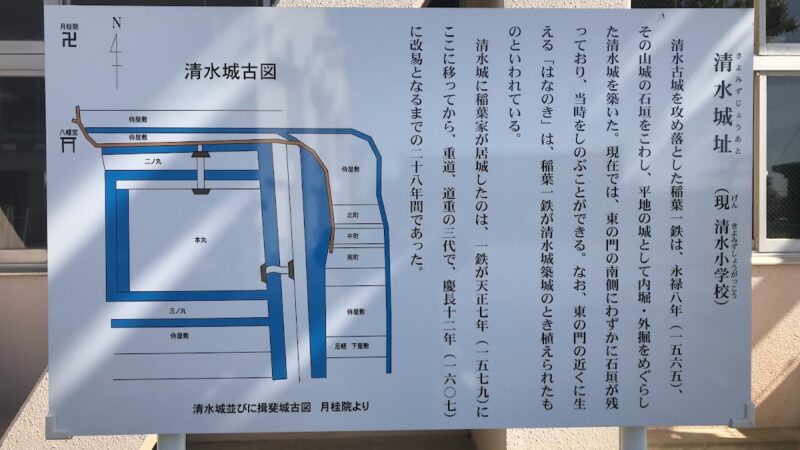
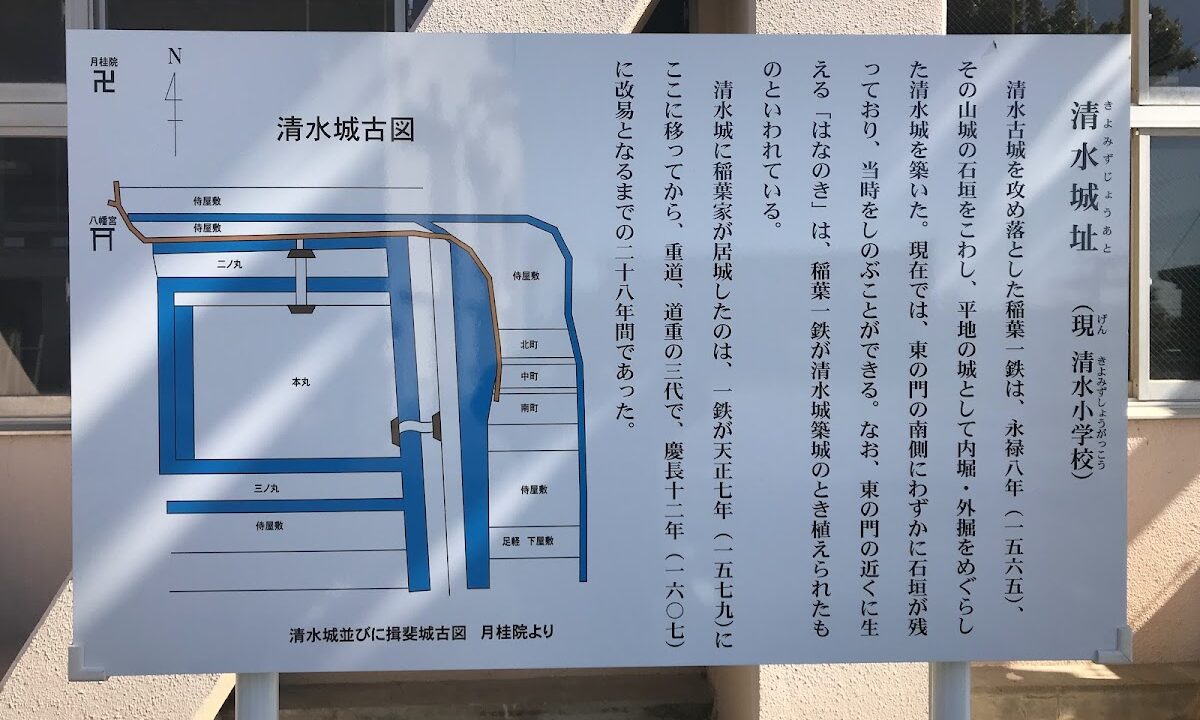
Shimizu Castle was a typical flatland castle, surrounded by a moat. According to the existing layout map, the main keep (Honmaru) was at the center, with the second and third baileys (Ninmaru and Sannomaru) arranged around it, and samurai residences extended further out.
The main keep was located on the site of the current Shimizu Elementary School, built on a slightly elevated terrain. This difference in elevation is still visible today, allowing us to imagine the castle’s appearance in its heyday.
Defensive Structures
As a flatland castle, Shimizu Castle lacked the topographical defensive capabilities of a mountain castle, but it was fortified with moats and earthworks. The moats surrounded the main keep, serving to prevent enemy intrusion. Unfortunately, the moats have now been filled in, making it difficult to see any traces of them.
The second and third baileys were similarly separated by moats, suggesting a multi-layered defensive structure. These baileys are now residential areas and farmland, and the castle layout map is essential to imagining their former appearance.
Highlights and Existing Remains of Shimizu Castle
Stone Wall East of Shimizu Elementary School
The most important existing remains of Shimizu Castle are the stone wall located beside the main gate (east side) of Shimizu Elementary School. This stone wall, visible on the lower side of the marker post, is believed to date back to the castle’s construction period and is a valuable relic that proves the existence of Shimizu Castle.
While the stone wall is not large in scale, it is valuable for showcasing stonework techniques from the Sengoku period to the early Edo period. When visiting, it is important to be considerate of the school grounds and observe proper visiting etiquette, such as avoiding class times.
Information Board and Castle Layout Map
On the opposite side of the elementary school, there is an information board explaining the history of Shimizu Castle. Although some of the lettering is faded due to age, it includes a castle layout map and is a valuable resource for understanding the castle’s layout in its heyday.
Walking around the area while looking at this map allows you to imagine the traces of the former moats and baileys within the current topography and road layout.
Understanding the Castle’s Form from the Topography
The fact that the grounds of Shimizu Elementary School are slightly higher than the surrounding area is an important clue indicating the location of the main keep. This slight elevation shows that, despite being a flatland castle, it maintained a certain level of defensive capability.
Walking around the area, you can sense the lowlands where moats once existed and the changes in topography that indicate the boundaries of baileys. Searching for traces of the castle hidden within the modern townscape is one of the joys of visiting castle ruins.
Historical Sites Associated with Inaba Ittetsu
Tsukigetsuin (Gekkeiin)
Located on the mountainside north of Shimizu Castle, Tsukigetsuin (also known as Gekkeiin) is a temple deeply connected to Inaba Ittetsu. It contains the graves of Inaba Ittetsu and his wife, as well as the graves of his wife and second wife, and is a Gifu Prefecture designated historical site.
Ittetsu spent his later years at Shimizu Castle and ended his life here. The fact that his tomb is located at this Tsukigetsuin Temple speaks volumes about the importance Ittetsu placed on this place.
Ittetsu’s Battle Bell
Tsukigetsuin Temple houses a bell known as “Ittetsu’s Battle Bell,” which is a designated Important Cultural Property of Gifu Prefecture. This bell is believed to have been used by Inaba Ittetsu on the battlefield and is a valuable cultural artifact that conveys the exploits of Ittetsu as a Sengoku period warlord.
Battle bells were used to signal the movement of troops and the time, making them important artifacts for understanding the military culture of the Sengoku period.
Hakunzan Jōrinji Temple
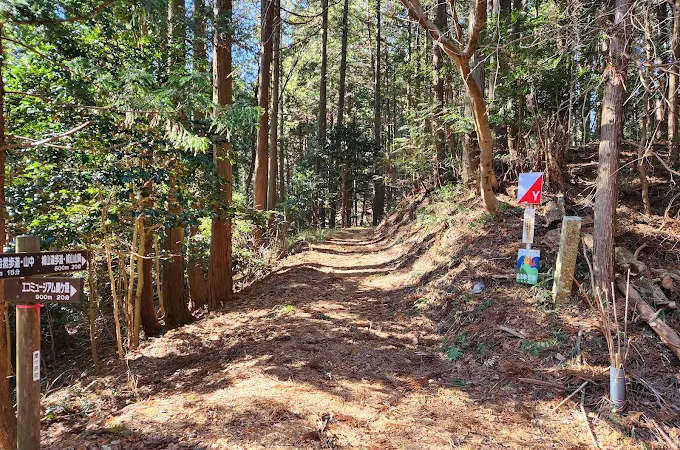
Hakunzan Jōrinji Temple, which has an entrance to the hiking trail to Shimizu Old Castle, is also worth visiting as a historical site related to Shimizu Castle. Shimizu Old Castle was a mountain castle that preceded Shimizu Castle, and was abandoned after Ittetsu conquered it.
By visiting both Shimizu Old Castle (a mountain castle) and Shimizu Castle (a flatland castle), you can understand Ittetsu’s castle strategy and the changes in castle architecture from the Sengoku period to the early Edo period.
Access and Visiting Guide
Location
Address: Shimizu, Ibigawa-cho, Ibi-gun, Gifu Prefecture (Shimizu Elementary School)
Transportation Access
Public Transportation:
- Approximately 15 minutes on foot from Ibi Station on the Yoro Railway
- Taxi available from Ibi Station (approximately 5 minutes)
By Car:
- Approximately 30 minutes from Ogaki IC on the Meishin Expressway via National Routes 258 and 417
- Approximately 25 minutes from Ono-Kobe IC on the Tokai-Kanjo Expressway
- Parking: Use public spaces around Shimizu Elementary School (consideration for school events, etc., is necessary)
Precautions for Visiting
Since Shimizu Castle Ruins are located on the grounds of Shimizu Elementary School, the following points should be noted when visiting:
- Avoid weekday class hours: To protect the safety and learning environment of the children, visits on weekends, holidays, or during long vacations are preferable
- Entry onto school grounds: Observe the stone walls visible from outside the school gate, and do not enter the grounds without permission.
- Photography: Take care to avoid including children in your photos and be mindful of their privacy.
- Quietness: As this is a residential area, avoid loud conversations and noise.
Estimated Visit Time
While a visit to the main Shimizu Castle ruins takes about 30 minutes, we recommend allocating 2-3 hours if you also want to see Tsukigetsuin Temple and Shimizu Old Castle.
Nearby Tourist Attractions
Historical Sites in Ibigawa Town:
- Tanigumi-san Kegonji Temple: The 33rd temple of the Saigoku Thirty-Three Kannon Pilgrimage
- Ibigawa Historical and Folk Museum: A facility where you can learn about the history and culture of the region
- Yokozoji Temple: An ancient temple known as the Shosoin of Mino
Nearby Castles:
- Sone Castle (Ogaki City): The castle that was the base of Inaba Ittetsu
- Ogaki Castle (Ogaki City): The castle that became a base for the Western Army in the Battle of Sekigahara
- Sunomata Ichiyajo Castle (Ogaki City): A castle associated with Toyotomi Hideyoshi
Historical Background of Shimizu Castle and Western Mino
The Role of the Three Lords of Western Mino
The Three Lords of Western Mino (Inaba Ittetsu, Ando Morinari, and Ujiie Naomoto) formed a powerful force in the western part of Mino Province. As senior retainers of the Saito clan, they became the last force to resist Oda Nobunaga’s invasion of Mino Province.
With the surrender of the three generals to Nobunaga, Mino Province came completely under the control of the Oda clan, paving the way for Nobunaga’s unification of Japan. In that sense, Shimizu Castle was not merely a regional castle, but a crucial base involved in a turning point in Japanese history.
Inaba Ittetsu’s Strategic Acumen
Ittetsu is known for his unyielding character, said to be the origin of the phrase “stubborn and unyielding,” but he also possessed excellent strategic acumen. In the conflict between Saito Dosan and Yoshitatsu, he sided with Yoshitatsu, and ultimately chose to submit to Oda Nobunaga upon his rise to power.
Thanks to this judgment, Ittetsu survived the turbulent Sengoku period and was able to enjoy a peaceful later life at Shimizu Castle. Shimizu Castle can be considered the culmination of Ittetsu’s life.
The Battle of Sekigahara and the Inaba Clan
The Inaba clan continued after the death of Ittetsu, and the Battle of Sekigahara took place during the time of his grandson, Inaba Michishige. Michishige’s defection to the Eastern Army, along with Kobayakawa Hideaki’s betrayal, was a crucial factor in the Eastern Army’s victory.
However, the subsequent incident of violence in Kyoto that led to their downfall marked the end of the Inaba clan, who had survived the turbulent Sengoku period. The abandonment of Shimizu Castle can also be seen as a symbolic event marking the end of the Sengoku period and the establishment of the Edo shogunate.
The Charm of Shimizu Castle and the Significance of Visiting
A Place to Feel Historical Romance
Unlike castles with large stone walls and keeps remaining, Shimizu Castle has limited remains. However, precisely because of this, visitors can use their imagination to envision the castle that once stood here and the lives of the people who lived there.
The site of the main keep, now a primary school; the second and third baileys, transformed into residential areas; and the sites of samurai residences, now farmland. Within the peaceful landscape of today, the turbulent history of the Sengoku period (Warring States period) is intertwined.
The Value of Learning Local History
Visiting Shimizu Castle is also an opportunity to learn about the history of the Ibi District in Gifu Prefecture. While it’s a local castle that doesn’t appear often in central history books, it certainly held the lives of people and the drama of history.
Through the life of a single warrior, Inaba Ittetsu, one can understand the major currents of Japanese history, such as the situation in the Mino region during the Sengoku period, Oda Nobunaga’s process of unifying Japan, and the impact of the Battle of Sekigahara.
Perspectives on Castle Research
For castle enthusiasts, Shimizu Castle is an interesting example for learning about the structure of flatland castles and the changes in castles from the Sengoku period to the early Edo period. The transition from a mountain castle (Shimizu Old Castle) to a flatland castle (Shimizu Castle) indicates that the function of castles changed from a “battle base” to a “governance base” with the end of the Sengoku period.
Furthermore, its history of functioning as a military encampment after the Battle of Sekigahara and subsequently being abandoned as a castle is also relevant to understanding the Edo shogunate’s castle policies.
Recommended Itinerary for Visiting Shimizu Castle
Half-Day Course (Approx. 3 Hours)
- Shimizu Castle Ruins (Shimizu Elementary School): Visit the stone walls and explanatory signs (30 minutes)
- Tsukigetsuin Temple: Visit the grave of Inaba Ittetsu and the battle bell (40 minutes)
- Hakunzan Jorinji Temple: Check the trailhead to Shimizu Old Castle (20 minutes)
- Shimizu Old Castle: Visit the remains of the mountain castle (90 minutes including climbing time)
Full-Day Course (Tour of Surrounding Castles)
Morning:
- Visit Shimizu Castle Ruins, Tsukigetsuin Temple, and Shimizu Old Castle
Afternoon:
- Visit Sone Castle Ruins in Ogaki City (Inaba Ittetsu’s base)
- Visit Ogaki Castle (If time permits, also visit Sumomata Ichiyajo Castle)
Deep Dive into History Course
Before or after visiting Shimizu Castle, browsing local historical materials at the Ibigawa Historical and Folk Museum or the Ibigawa Library will provide a deeper understanding. Materials published by local history research societies are also helpful.
Summary: The Historical Weight Conveyed by Shimizu Castle
Shimizu Castle is now a modest historical site, with only small stone walls and an explanatory sign remaining. However, it holds the mark of the life of Inaba Ittetsu, one of the three great figures of Western Mino, and the significant historical transition from the Sengoku period to the Edo period.
Inaba Ittetsu served three successive lords—Saito Dosan, Saito Yoshitatsu, and Oda Nobunaga—and embodied the history of Mino during the Sengoku period. Shimizu Castle is where Ittetsu spent his later years and met his end. Standing at the castle ruins, we can imagine the landscape Ittetsu saw and reflect on the life of a man who survived the turbulent Sengoku period.
Located in Ibi District, Gifu Prefecture, a place not exactly easily accessible by public transport, Shimizu Castle has undoubtedly played a part in Japanese history. While it hasn’t been heavily commercialized for tourism, this is precisely why it’s a valuable historical site for history buffs and castle enthusiasts, offering a quiet respite from history.
When visiting Shimizu Castle, don’t just look at the ruins; reflect on the lives of the people who lived here and the role the castle played within the grand scheme of history. By doing so, each small stone in the walls will begin to tell a rich historical story.