Complete Guide to Omidō Castle (Gifu Prefecture): Birthplace of Takenaka Hanbei and Highlights of the Castle Ruins
What is Omidō Castle?
Omidō Castle was a flatland castle located in Kōgō, Ōno-chō, Ibi-gun, Gifu Prefecture. It is widely known among history enthusiasts as the birthplace of Takenaka Hanbei Shigeharu, a renowned military strategist of the Sengoku period. Built on the east bank of the Ibi River in Mino Province, this castle played an important role as the early residence of the Takenaka clan.
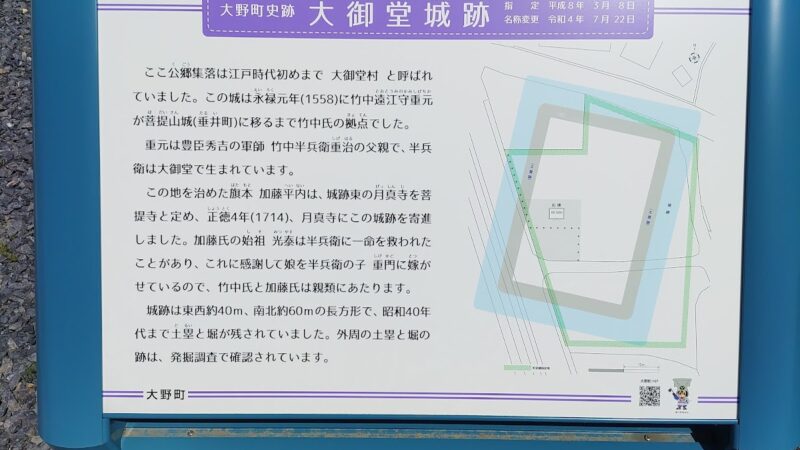
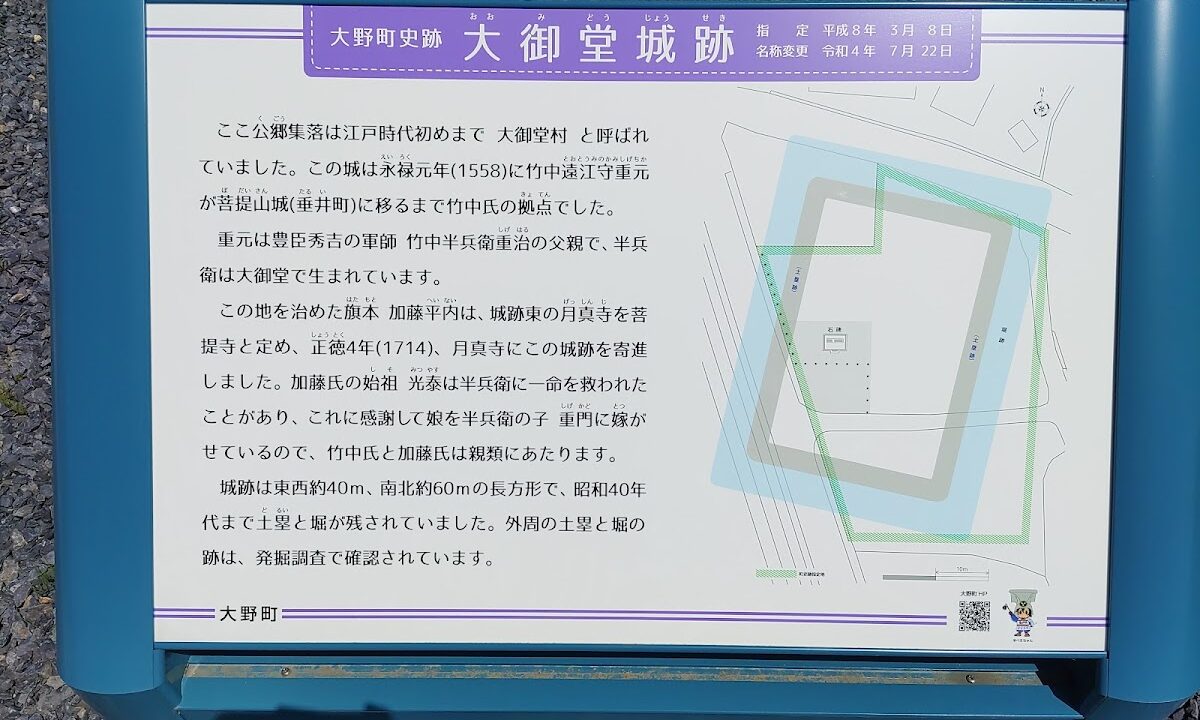
Currently, no clear remains of the castle exist, but the area around Hachiman Shrine is believed to have been the castle grounds, and a monument and information board commemorating Takenaka Hanbei’s birthplace have been erected there. As a valuable historical site where one can feel the history of the Sengoku period, it is a place visited by many history fans.
History of Omidō Castle
The Takenaka Clan and the Establishment of Omidō Castle
Omidō Castle was built as the residence of the Takenaka clan. The Takenaka clan was a powerful family in this region, serving as local lords of Mino Province. While the exact construction date of Omidō Castle is unclear, it is believed to have been built sometime between the late Muromachi period and the early Sengoku period.
The castle was a flatland castle built on the plains along the Ibi River, taking advantage of its location near water transport. The castle grounds extended throughout the Kugō settlement, and it is presumed to have been structured around a residence.
Abandonment in 1558
The most important turning point in the history of Omidō Castle occurred in 1558. In this year, Takenaka Shigemoto (also known as Takenaka Shigetoshi), the father of Takenaka Hanbei, succeeded in capturing Iwate Castle (Bodaisan Castle), the residence of Iwate Nobuhisa.
Bodaisan Castle was a mountain castle built on Mount Bodai, approximately 402 meters above sea level, and was a more defensible fortress than Omidō Castle. Shigemoto decided to move his residence to the newly acquired Bodaiyama Castle, resulting in the abandonment of Omidō Castle. This relocation symbolized the expansion of the Takenaka clan’s power and the strengthening of their defenses.
Birth of Takenaka Hanbei
The main reason Omidō Castle remains in history is that Takenaka Hanbei Shigeharu was born there in 1544. Hanbei later served as a military strategist for Toyotomi Hideyoshi and became such a brilliant strategist that he was called “the modern-day Zhuge Liang.”
Having spent his childhood at Omidō Castle, Hanbei is said to have maintained his connection to the area even after his father, Shigemoto, moved to Bodaiyama Castle. Although Hanbei died young at the age of 36, his achievements are deeply etched in the history of the Sengoku period, and Omidō Castle, his birthplace, is recognized as an important historical site.
Structure and Layout of Omido Castle
Characteristics as a Flatland Castle
Omido Castle was built as a flatland castle in Mino Province, on the lowlands on the east bank of the Ibi River. Unlike mountain castles, flatland castles were designed with superior habitability and a focus on functioning as a political and economic center.
The castle grounds extended across the Kugo settlement, and the area around the present-day Hachiman Shrine is thought to have been the castle’s central point. A natural moat, the Ibi River, was positioned to the west, suggesting its use for transporting goods via water and for defense.
Estimated Castle Structure
Since no clear remains are left, the detailed structure is unknown. However, based on the general characteristics of flatland castles from the early Sengoku period, it is estimated to have had the following structure:
- Main Enclosure (Honmaru): The central area where the lord’s residence was located
- Moat and Earthworks: Defensive structures surrounding the castle
- Retainer Residences: A group of samurai residences located around the main enclosure
- Town Area: A residential area for merchants and artisans formed below the castle
Located on the flood plain of the Ibi River, it is thought that the castle was built on slightly elevated ground as a measure against flooding.
Current Highlights of the Omido Castle Ruins
Hachiman Shrine and the Monument to Takenaka Hanbei’s Birthplace
The main attraction when visiting the Omido Castle Ruins is Hachiman Shrine. This shrine is known for its connection to the Takenaka family, and a large monument marking the birthplace of Takenaka Hanbei stands within its grounds.
The monument is inscribed with “Birthplace of Takenaka Hanbei Shigeharu,” and an information board with a map of the castle is also installed. There is also a stone monument detailing the life and achievements of Takenaka Hanbei, allowing visitors to learn about this renowned military strategist of the Sengoku period.
The grounds of Hachiman Shrine have a quiet and peaceful atmosphere, making it an ideal place to reflect on history.
Gesshinji Temple and the Takenaka Family Cemetery
Gesshinji Temple, located adjacent to the west side of the Omido Castle ruins, is an important historical site as the Takenaka family’s ancestral temple. Within the temple grounds is the grave of Takenaka Shigemoto (Shigetoshi), the father of Takenaka Hanbei, and memorial services for successive generations of the Takenaka family have been held there.
Gesshinji Temple also houses documents and artifacts related to the Takenaka family, making it a valuable place to learn about the history of the Takenaka clan. Furthermore, it contains the graves of successive generations of Kato Heinai, a hatamoto (direct retainer of the shogun), making it an important temple that conveys the samurai culture of this region.
The temple grounds are well-maintained, allowing visitors to enjoy a historical stroll in a tranquil environment.
Landscape around the castle ruins
The area around the Omido Castle ruins is now a quiet rural area with sprawling rice fields. While gazing at the flow of the Ibi River, one can imagine the appearance of the castle that stood here during the Sengoku period.
Walking through the Kugo settlement, which is believed to have been the castle grounds, one may be able to sense traces of the former castle in the subtle undulations of the terrain and the layout of the roads. Although no clear remains exist, the castle’s presence is etched into the memory of the land.
About Takenaka Hanbei Shigeharu
Life and Achievements
Takenaka Hanbei Shigeharu was born at Omido Castle in 1544 and served as a leading military strategist of the Sengoku period until his death at the age of 36 in 1579.
He displayed remarkable military talent at a young age, and in 1564, he successfully executed a daring plan to seize Inabayama Castle (later Gifu Castle) with only 17 men, making his name famous throughout Japan. This incident is well-known as “Hanbei’s Seizure of Inabayama Castle.”
As a Military Advisor to Toyotomi Hideyoshi
After serving under Oda Nobunaga, he became a military advisor to Toyotomi Hideyoshi (then known as Hashiba Hideyoshi). During Hideyoshi’s campaign in the Chugoku region, Hanbei, along with Kuroda Kanbei (Josui), was known as the “Two Hanbei,” and they supported Hideyoshi’s unification of Japan.
Hanbei’s military strategies were meticulous and daring, and he was highly regarded, even being called “the modern Zhuge Liang.” He excelled particularly in stratagem and information warfare, and was skilled at controlling the enemy not only with military force but also with strategic intellect.
A Premature Death
In 1579, during the siege of Miki Castle in Harima Province, Hanbei fell ill and passed away at the young age of 36. Many historians speculate on how history might have unfolded if Hanbei had lived longer.
Hideyoshi deeply mourned Hanbei’s death and praised his achievements. Hanbei’s children received Hideyoshi’s protection, and the Takenaka family continued into the Edo period.
Access Information
Location
Address: Kugo, Ono-cho, Ibi-gun, Gifu Prefecture (Hachiman Shrine)
Access by Public Transportation
- JR Tokaido Main Line: Get off at Ogaki Station
- Take the Meihan Kintetsu Bus “Ono Line” from Ogaki Station (approx. 30 minutes)
- Get off at the “Kugo” bus stop, approx. 5-minute walk
Since the number of buses is limited, it is recommended to check the timetable in advance.
Access by Car
- Meishin Expressway: Approx. 15 minutes from Ogaki Interchange
- Tokai Loop Expressway: Approx. 10 minutes from Ono-Kobe Interchange
There is parking space around Hachiman Shrine, but it is not large, so please use it with consideration for others.
Visiting Information
- Visiting Hours: Open 24 hours a day, 7 days a week (as it is an outdoor historical site)
- Admission Fee: Free
- Estimated Time Required: Approximately 30 minutes to 1 hour
If you plan to visit Gesshinji Temple, it is recommended to visit during the temple’s opening hours.
Related Historical Sites in the Surrounding Area
Bodaisan Castle (Iwate Castle)
Bodaisan Castle, located about 15 minutes by car from Omidō Castle, is a mountain castle that Takenaka Shigemoto seized in 1558 and moved his residence from Omidō Castle to. Built on Mount Bodai, at an altitude of 402 meters, it is a formidable stronghold where Takenaka Hanbei also spent his youth.
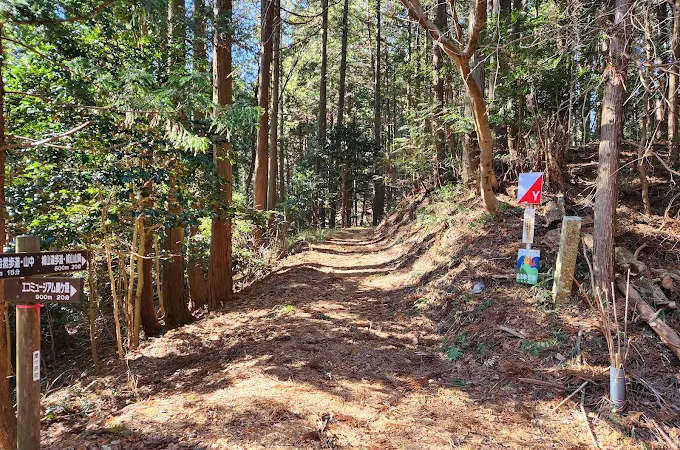
The remains of the mountain castle are still well-preserved, and you can see the baileys, moats, and earthworks. A hiking trail is maintained, making it a must-see historical site for mountain castle enthusiasts.
Ono Castle
Located in the heart of Ono Town, Ono Castle was built by a branch of the Toki clan, a powerful local family in Mino Province. It is approximately 3 kilometers from Omido Castle and is an important historical site for understanding medieval castles in this region.
Hongō Castle
Hongō Castle, also located in Ono Town, is a castle closely associated with the Takenaka clan. It is believed to have functioned as a branch castle of the Takenaka clan, and visiting it along with Omido Castle allows you to experience the extent of the Takenaka clan’s influence.
Aiba Castle and Shimizu Castle
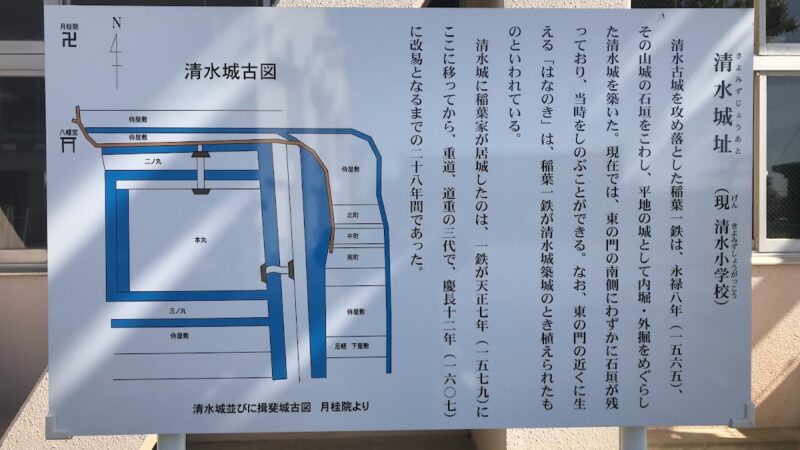
Around Ono Town, there are numerous castle ruins from the Sengoku period, including Aiba Castle and Shimizu Castle. Visiting these castles allows you to understand the complex power dynamics of Mino Province and the position of the Takenaka clan.
Points to Note When Visiting Omido Castle
Best Season for Visiting
Omido Castle Ruins are an outdoor historical site and can be visited year-round, but the following seasons are especially recommended:
- Spring (March-May): The surrounding scenery is beautiful during cherry blossom season, making it ideal for a stroll.
- Autumn (October-November): The autumn foliage and refreshing weather make it a pleasant time for a historical walk.
- Winter (December-February): Fewer tourists, allowing for a quiet immersion in history.
Summer is hot and there are many insects, so precautions are necessary.
Useful Items to Bring
- Camera: For photographing monuments and information boards
- Maps and Guidebooks: For efficiently visiting related historical sites in the surrounding area
- Drinks: There are few vending machines or shops in the area
- Comfortable Walking Shoes: For walking through rural areas
Facilities to Visit in Combination
Since visiting the Omido Castle Ruins can be completed in a relatively short time, combining it with the following facilities will make for a more fulfilling historical exploration:
- Bodaiyama Castle: A mountain castle associated with Takenaka Hanbei
- Ono Town Historical and Folk Museum: A facility where you can learn about the history of the region
- Historical Spots in Ibigawa Town: Castle ruins and temples and shrines in the surrounding area
Historical Significance of Omido Castle
Importance in Takenaka Clan Research
Omido Castle is an indispensable historical site for studying the history of the Takenaka clan, as it was one of their early bases. The emergence of the outstanding military strategist Takenaka Hanbei was rooted in the foundations laid by the Takenaka clan in this region.
Position in the History of Castles in Mino Province
Mino Province was a region where many castles were built during the Sengoku period (Warring States period), but Omidō Castle is important as a flatland castle that prioritized habitability and political functions in an era when mountain castles were dominant.
Value in Local History
In the history of Ōno Town and Ibi District, the Takenaka clan and Omidō Castle are at the core of the regional identity. It is a historical heritage site that is a source of pride for local residents and is also utilized as a tourist resource.
Summary
Omidō Castle (Gifu Prefecture) is a castle site of historical importance as the birthplace of Takenaka Hanbei, a renowned military strategist of the Sengoku period. Although it was abandoned in 1558 and no clear remains survive, the stone monuments and information boards around the Hachiman Shrine convey the historical importance of this site to the present day.
Located in a quiet rural area along the Ibi River, this historical site is a precious place where you can feel the spirit of the Sengoku period. Visiting it together with Gesshinji Temple, the family temple of the Takenaka clan, will allow you to gain a deeper understanding of the Takenaka clan’s history.
When visiting Gifu Prefecture, why not stop by the Omidō Castle ruins and reflect on the historical romance of the Sengoku period in the birthplace of a famous military strategist who left his mark on Japanese history? Visiting it together with the nearby Bodaisan Castle and other related historical sites will allow you to experience the Sengoku history of Mino Province in a more comprehensive way.