Complete collection of Sendai clan’s castle residences: An explanation of castle forts from the medieval period to the early modern period
Is it “Sendai Domain’s Old Castle Residence”?
《Sendai Clan Old Castle Residence》 This is a research work based on the history of the Sendai Clan (Imamiya Castle, Iwate Castle), a fortress residence that existed in the precincts from the medieval period to the early modern period. The Sendai clan has many ancient castles and early modern Sendai castles and other famous forts, but most of the castle forts are residential and small in size, and are from the Kenyu period to the Middle Ages. This is a very important part of the history of the area, and the book is a complete record of its progress.
This book is a four-volume compilation, with detailed descriptions of the number of pages in each castle fort residence. This book is a collection of detailed information on historical background, current situation and location of the city, and is a must-have reference material for fort researchers, as well as an important resource for history enthusiasts and historical enthusiasts in the Hexian area.
Historical background of Sendai Castle Fort
Castle fort culture in the north eastern region of the Middle Ages
In the late Middle Ages, in the Tohoku region, the fort was built by the Sendai domain. This castle fort was mainly built by the samurai of the western region during the wars. At the end of the Heian period, after the death of the Fujiwara clan in Oshu, the Tohoku region gathered warriors to fight against each other, and each of them built their own forts and protected the area.
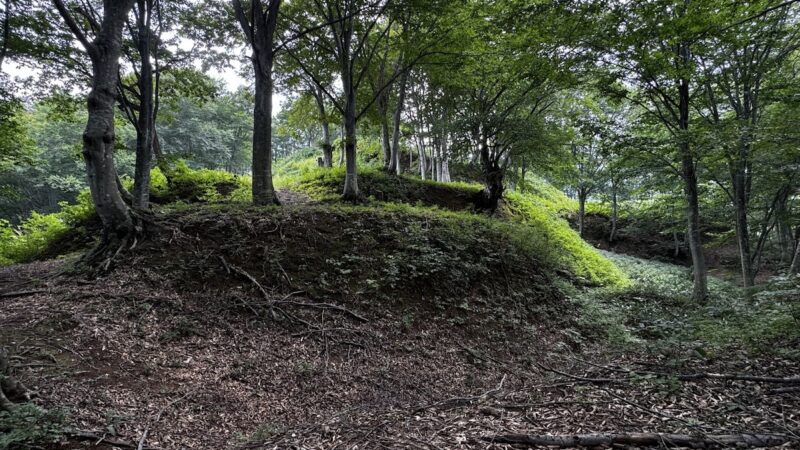
The special feature of medieval castle forts is the universal existence of mountain castles and hill castles, and the clever use of natural terrain for construction and defense construction. This is a small civil engineering technology for castle redoubt operation, such as Hijikata process, dry trench construction, followed by advanced manual construction and effective defense design.
Mr. Ida’s Raku Kiyojo Pond Network
At the time of the war, the power of the Ida clan was put to use, and the last control was completed across the castle, and the territory of Fushima and Yamagata. At the time of current management, the Ida clan skillfully used the land and built a new castle with a castle pond and a strategic plan. In particular, during the Masamune period in Italy, the core of Sendai Castle was built, and the strategic areas in the area were completed, but the castle was defended, and the castle pond was built. This area can be used to improve the defense of the area, to block traffic routes, and to restrict the development of the area.
Early modern Sendai clan’s castle and pond policy
After the Eiko shogunate’s “one clan and one castle” order (1615), the castle pond was established. However, the Sendai domain, Sendai Castle was the main castle, and it was also designated as a defensive military fort. Shiroishi Castle is a specially designed division of the castle, and is the residence of the high-ranking vassals of the Ichi clan.
In addition, there are traces of the medieval castle fortification construction work on the Nawa topography in the Middle Ages, and an identical part of the Chengli region.
Summary of 《Sendai Domain Ancient Castle Village》
Four-volume edition
This book is divided into four volumes, divided by region:
Volume 1: Sendai City and Shukan District
Since this book, it has been the center of Sendai Castle, and now it is the residence of the castle village of Sendai City and its surrounding areas, and since then, it has been the residence of the castle village of the Awano clan, the Kokubun clan that existed before the reign of the sect.
Volume 2: Northern Palace Area
Wataku residence in the northern part of the castle town, Wuda Castle, located in the Osaki Wakurihara district. Among them are the castle residences of Kazuyaku, a major medieval castle lord, such as the Osaki clan and the Kasai clan.
Volume 3: Southern Palace and coastal areas
Wataku residence in the southern coastal district of Honwakhan, Nyoto, Natori, Iwanuma Wakagama, and later Kadowa Shiroishi district. In-depth exploration of this volume, the special features of the castle fort and mansion on the maritime transportation route.
Volume 4: Southern Iwate area
The defense work for the fortifications in the southern part of Iwate, which belonged to the Sendai domain, was completed by Waesa, Zuisai (now Oshu City). The central point of medieval power in the region, such as the Kasai clan and the Kazue Saji clan.
Details of each castle fort
The details of each castle fort are as follows:
- Position information: Current site, topography location
- Historical background: Builder, change of fort owner, Sangguan history incident
- Fortification bureau (design): Outer fortification bureau, defense design structure
- Present history: Hijikata process, dried up river, stone burial ground, etc.
- Visit information: Visit method, current situation
- Reference materials: Sokanku history materials and research results
The fortress station is very important, it contains a large amount of basic information, and the details of the fort are clearly understood by the envoy.
Summary of major castles and fortresses
Sendai Castle (Aokana Castle)
Sendai Castle was built in the early 1600s by Masamune, and was the residence of the Sendai clan, with a production capacity of 620,000 koku (minimal rice production). Approximately 130 years ago, it was a natural fortification on Mt.
Construction features
The installation, the evacuation, and the caution of Tokugawa Ieyasu’s military commander, Sendai Castle’s uniquely abandoned castle tower gate. However, its lord’s castle area was approximately 20,000 tsubo (approximately 66,000 sq. Sendai Castle was completed during the time of the second feudal lord Tadamune Idazu, and it has been in use for approximately 270 years.
Sendai Castle Ruins
The construction of the castle’s interior was impeccable, but the tall stone walls and towers of the large gate towers were still visible in my imagination. A statue of Masamune Idazu’s horse and horse standing on the ruins of the main castle, a magnificent panoramic view of Sendai City’s Japanese-Pacific region. Seikan Castle History Museum, CG technology heavy construction model fort model Japanese materials, detailed understanding of the history of Sendai Castle.
Takajo
The castle is an ancient castle in the Nara era, and was the ancient administrative center of the northeastern region. This is the location of Oku Doku, the headquarters of the military headquarters, and the central point of the performance during the period in the Tohoku district of the Ritsuryo country. However, it is understood that it is an important historical site in the historical background of the Sendai domain.
Shiroishi Castle
Shiroishi Castle was built as a branch castle of the Sendai domain, and was built under the special law of “one domain, one castle.” It was the residence of the clan, and also the defensive fortress of the southern part of the clan. Nowadays, the castle tower (three-level pagoda) is a rare place for the restoration of wood for the Hezheng gate capital, and the construction of the historical castle fort where the mission was built.
Iwateyama Castle
Before the construction of Sendai Castle, Iwateyama Castle was Masamune’s residence. After the vassal Hideyoshi conquered Oshu, Masamune’s residence was Iwateyama, and this castle was established between 1591 and 1600. After that, Iwateyama Castle was built by Nao, and was the residence of the Iwateyama Ida family, a branch of the Ida clan, at the end of the Edo period.
Main medieval castle fort Wataku residence
Kokubu family residence
The residence of the Kokubun clan, Sendai Plains. In front of Sendai, the military headquarters of the ruling sect, it is a major owner of the area.
Awano family residence
The site of the medieval residence of the troupe in Taihaku Ward, Sendai City. The Awano clan is the local owner of the affiliated U.Kokubun clan.
Osaki Clan Sokan Castle Wataku Residence
The northern part of the Osaki clan’s castle fortress, Wataku Residences, and the Zengsheng Palace. It includes Iwateyama Castle (Yuikan).
Kasai Clan Sokan Castle Wataku Residence
The Kasai clan’s castle fortress, Wataku residences, from the northern part of the Zengkei castle to the southern part of Iwate. Teraike Castle is one of the most representative.
Liangdianhe Special Expedition at Castle Fort Site
Hijikata construction Japanese dry river
The construction of the earthworks was the most basic defense work for the castle fort in the Middle Ages. The Sendai clan’s castle fort is commonly used for its hilly and highland topography, expansion of the land, and formation of mountains.
It is possible to prevent the entry of enemies from the construction of the earthworks, and also to prevent the construction of the road. The dry water in the city river is often seen in the fortresses of the North East region. The basic purpose is different, the shape of the 护城川 is also diverse, and the special difference is the box-shaped 护城川 (the flat-bottomed 护城川) and the V-shaped 护城川.
Stone technology
Sendai Castle is one of the modern castle forts, and the stone mound technology has evolved since its inception. The castle tower’s stone burial mound is 17 meters tall, and is constructed using the famous “Kirihagi” precision cutting technique. At the beginning of the Jiangzhou era, cutting-edge technology was developed, and the Sendai domain’s scientific and technological capabilities were developed by Kazuo.
Stone technology
Sendai Castle is one of the modern castle forts, and the stone mound technology has evolved since its inception. The castle tower’s stone wall is 17 feet tall, and the precision cutting and joining techniques used during construction. In the lower part of the castle, the stone citadel was used very little during the medieval period, and the main construction method was the civil engineering process. However, in the middle of the castle fort, there are stone rows, which can be used for defense or divided areas.
Clothing Bureau
The central part of the fort is called the fortress (kuryu), and its schematic form is the main function of the fort. The medieval castle fortress of the Sendai domain, the most common layout was the line form (连阁) and the Japanese ladder form (tai阁).
In addition, there is a concentric area for the construction of a small fort, the second and third fortifications are placed in the main fort, and the concentric area is arranged, and the wisdom of specific topographical clever design is developed.
Castle gate design (small mouth)
The castle gate, the entrance, is the most important area to defend. Preventing enemy intrusion, man-made use of multiple defense techniques, such as the square-shaped castle gate (Kou Street Xiaoguchi) and the square-shaped castle gate (Masugata Xiaoguchi).
The main gate of Sendai Castle is a typical square-shaped castle gate (square-shaped defense construction), four walls of stone walls, and an exquisite defense design that was developed in the early modern period.
Scientific meaning of 《Ancient castle residence of Sendai domain》
Contribution to regional history research
This book covers the history of castles, residences, residences, etc., and provides important insight into the history of the medieval area (documents are scarce). Due to the location of the residence in the city, its layout, the political situation at the time, the power of the owner, and the special influence of the local society.
As a result of this book’s study of archaeology, excavation of Japanese textiles, and a variety of new perspectives, the general view of castles and residences is mutually connected, and non-isolated.
Fort research basic materials
While researching castle forts in Japan, I made a note on the history of medieval castle forts in the Tohoku region, including Japanese residences. 《Sendai Clan’s Ancient Castle Fortress Wataku Residence》 is completely blank, and is an indispensable basic material for Chengdu Castle Fortress researchers.
In the book, the accuracy of the detailed explanation of the castle’s construction is particularly important for gaining recognition, and the reference provided by the researcher is provided by the researcher. In addition, this book contains currently available historical materials, a comprehensive review of the historical background of the fort, and a subsequent research center.
Use for cultural protection
The castle’s fortifications caused the expansion of the castle and the natural damage caused by the strong wind. This book is an exhaustive review, its production is culturally diverse, and the preservation work provided by the author is a powerful guarantee.
As a matter of fact, this book describes the location of the fort, and during the course of the research, there is a lot of emphasis on newly acquired materials, and it is also designated as a designated city’s cultural heritage or historical site.
Castle Fort Site Tour Guide
Preparation before visiting
Before visiting the castle fort, it is important to make sufficient preparations. A book about the construction of “Ancient castles and residences in the Sendai domain”, a reference topographical map of the modern land, and an understanding of the current location of the castle fort. If the fort is located in a forest or on private land, it is possible to obtain the required and allowable access.
Required items include suitable walking shoes, long sleeves and long shoes (preventing shrubs and insects from biting), ground cloth, guide poles (or GPS functional intelligent handheld) and drinking water.
Transportation and sightseeing points
Sendai Castle Ruins
A sightseeing tour from the center of Sendai city, “Loople Sendai” (Loople Sendai), “Sendai Castle Ruins” station. The main castle site is free of charge, and the Qinghao Castle History Museum provides detailed historical materials (purchase slips accepted). Opening time is 9:00-17:00 (possible to change at any time), closing date is not fixed. The driving time is 1-2 minutes.
Takan Castle Ruins
You can now walk to JR Sengoku Line’s Takajo Station. Many castles are designated as national special historical sites, and are also central to government administrative districts, with large pieces of historical sites reserved. This is a model of the original Japanese artifacts excavated from the exhibition at the East Beiku History Museum, located at the Baiyun site.
Shiraishi Castle
It takes about 10 minutes to reach Shiroishi Station on the JR East Main Line. The castle tower of Awa Castle is the main scenic spot, and we also offer an internal tour (additional charge applies). Shiroishi Castle is on hold, and the castle town is a very suitable place for a walk.
Medieval City Fort Site
The place is located in Usan-gu, usually a poor and clear route. The local culinary history research group or the education department can provide detailed information.
Visit Knowledge
- If you are a private citizen, please do not hesitate to contact us if you wish.
- Be careful of wild animals in the forest, such as the bear bee.
- A collection of plants.
- It is necessary to take part in the race.
- Exhaustive avoidance independent review, best companion.
- A full viewing time, a study time and a daily falling time.
Sokanku historical materials Japanese research
Main reference materials
In addition to the old castle residence of the Sendai Domain, there is also some other minor important material that I understand.
- 《Itaji administration records》: Sendai clan’s official records, records of the castle’s repair management information.
-《Enclosed Wind Record》: Local history of the Sendai domain, recorded information on various castles and mansions.
- 《Shrine History》Japanese 《Iwate History》: Comprehensive history, comprehensive history of castle forts.
- 《History of each city, town, village》: Detailed information about the castle and Wataku residence in each district.
Archaeological excavation results
In recent years, a research team has begun to rapidly explore the Japanese academic field and reveal the true face of fortification and defense construction, which has never been recorded in historical documents. Sendai Castle, excavation of the foundation stones at the site of the main palace and Japanese garden garden, and the detailed investigation of the provision of life during the feudal era.
During the medieval period of the castle’s defense construction, cultural relics such as pillar caves and pottery and Japanese ironware were found, as well as the construction date and period of use of the site.
Structural use of numbers
In recent years, there has been a long-term progress in preserving the progress of numerical technology, for example, the acquisition of images of three-dimensional numbers in castle forts and unmanned aircraft navigation. In addition, there are a number of areas such as employment research, education, travel promotion, etc.
The castle castle, the Sendai City Board of Education and the various large museums are located on their terminals, and the information on the castle forts and the related information, the latest information, and the latest information is available.
Use of area for defense work
Use for travel resources
The site of the city’s defense construction is an important source of tourism resources, and is a historical feature of the area. The site of Sendai Castle is a major tourist attraction in Sendai City, attracting hundreds of thousands of visitors every year, and the statue of Ida Masamune Horse is also a hot spot for visitors to visit.
The construction of Shiroishi Castle is similar to the modification, and the construction is visually appealing and has a useful route for travel design. In addition to this, we will improve the guidelines, expand the walking path, and develop the experience of the visitor.
Educational use
During local school education, the fortress is a perfect learning material for local history. If you want to see the history of the recent school, please feel free to visit the school.
He is the teacher in charge of the local school history department and the homeroom researchers for the junior and senior high school students of the Shita City Town and Village Association who visit the castle fort.
Fusion district construction
The construction of the central social district is also being promoted in various locations. This is a small item that can be communicated with the surrounding scenery of the castle grounds, and the appearance of the historical city area of 复兴历圆圆 cultural heritage, and the attraction of the district’s chiropractic attraction.
For example, Shiroishi City is a castle town with a history of tourism, a castle fort, a samurai residence, a Japanese commercial residence, and a walking route.
Prospects for future challenges
Protective equilibrium
At the beginning and end of the wind, the fortress disappeared and became a castle city. However, it is difficult to protect the fort on flat land, to use the agricultural industry or to open housing.
It is an important monument, it is necessary to take legal protection measures, examples are given to the designated historical site, and the discussion is given to the author. In addition to this, the preservation record is very important and requires very little preservation detail.
Long-term research
After the publication of “Sendai Clan Ancient Castle Fortress and Residence”, new research results were continuously published. Our requirements are consistent with each other, and regular updates will be provided.
In addition, the construction of the castle fortress and residence has not yet been completed, and the completion period requires a large amount of manpower for a long period of time. We also hope to develop new research methods, such as public participation research items.
传書给下一代
Fortress research Japanese culture and protection area’s main family members are currently aging, and the new generation of researchers are in the middle of the day. Universities, museums, education departments, demand collaboration, research items by young researchers in Kazhou.
In addition to this, it is very important to raise public awareness, encourage the aspirational advisors, guide the protection activities, and build a sustainable protection system.
overview
《Ancient castle fort in the Sendai domain, Wataku residence》 This is the first research result, and has been completely recorded.The castle is located in Iwate, and the medieval castle in the early modern period, Wataku residence, in the southern part of Japan. In the area of Sendai Castle, a large fortress has become a small and unknown residence site, and each city has an important cultural heritage, and the history of the area.
This is not a small castle, but it is a long time ago, and it has an important educational meaning that exists in the present. Understand how people can understand the topography, the technology used and the organization of the society, the history of the local area, and the general knowledge of the city of the future.
When we visited the castle fort, we studied materials such as the Sendai Domain’s old castle and residence, and we also looked at the castle fortifications. Wisdom and ingenuity in the training of the master of the body – the curves of earthworks, the depth of rivers and rivers, and the construction of stone walls – are the true charms of learning and history.
It is important to understand the history of the Tohoku region from the Middle Ages to the early modern period. I personally read the local history of the city, the history of the local culture, and the history of the treasured cultural heritage of the generals and their children and dynasties.