Complete Guide to Ancient Castles and Residences in the Sendai Domain: A Thorough Explanation of Castle Remains from the Medieval to Early Modern Periods
What is “Ancient Castles and Residences in the Sendai Domain”?
“Ancient Castles and Residences in the Sendai Domain” is a valuable research book that systematically records the remains of castles and residences from the medieval to early modern periods that existed in the Sendai Domain (present-day Miyagi Prefecture and southern Iwate Prefecture). While the Sendai Domain boasts famous castles such as the ancient Taga Castle and the early modern Sendai Castle, the vast majority of castles and residences are relatively small, built during the medieval period. These remains are extremely important for understanding the history of the region, and this book comprehensively records them.
Composed of four volumes, this book is compiled regionally, providing detailed explanations of several pages for each castle and residence. Layout maps, historical background, current state of the remains, and location information are carefully compiled, making it an essential resource not only for castle researchers but also for history enthusiasts and those interested in regional history.
Historical Background of Castles in the Sendai Domain
Castle Culture in the Medieval Tohoku Region
Numerous castles were built throughout the medieval period in the Tohoku region, particularly in the area that became the Sendai Domain. These were primarily constructed by local lords and provincial samurai from the Kamakura period to the Sengoku period. After the fall of the Oshu Fujiwara clan at the end of the Heian period, many samurai groups vied for power in the Tohoku region, each building castles to protect their own territories.
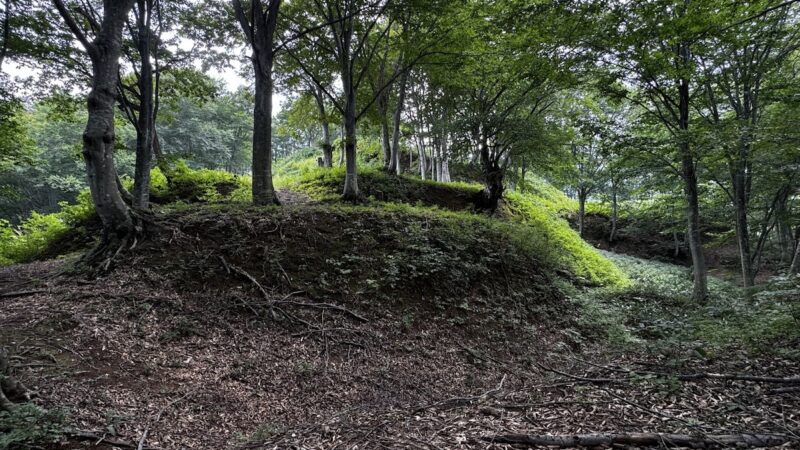
A characteristic of these medieval castles is the prevalence of mountain castles and hill castles, which skillfully utilized the natural terrain for defensive structures. They employed civil engineering techniques such as earthworks, dry moats, and steep slopes, constructing effective defensive facilities with relatively little labor.
The Rise of the Date Clan and the Castle Network
During the Sengoku period, the Date clan expanded its power, coming to control a vast territory spanning present-day Miyagi, Fukushima, and Yamagata prefectures. In managing their domain, the Date clan strategically utilized existing castles while strategically placing new ones. Especially during the time of Date Masamune, a systematic castle network was established with Sendai Castle as the core, and branch castles and fortifications strategically placed throughout the domain. This allowed for efficient defense of the territory, securing transportation routes, and establishing bases for regional control.
Castle Policy of the Early Modern Sendai Domain
After the Edo Shogunate’s “One Castle Per Province” decree (1615), many castles were abandoned. However, in the Sendai Domain, Sendai Castle served as the main castle, and multiple military strongholds known as fortifications were maintained. Shiroishi Castle was a branch castle granted as an exception, and it functioned as the residence of the Katakura clan, senior retainers of the Date clan.
Furthermore, many of the abandoned medieval castles and fortifications left traces in place names and topography, becoming part of the regional identity.
Structure and Contents of “Ancient Castles and Residences in the Sendai Domain”
Structure of the 4-Volume Series
This book is composed of the following four volumes, organized by region:
Volume 1: Sendai City and Surrounding Area
Focusing on Sendai Castle, this volume includes castles and residences located within the current Sendai city area and its vicinity. It also includes castles and residences of the Kokubun and Awano clans, which existed before Masamune’s time.
Volume 2: Northern Miyagi Prefecture
This volume covers castles and residences scattered throughout northern Miyagi Prefecture, including the Osaki and Kurihara regions. It includes numerous castles and residences of powerful medieval lords, such as the Osaki and Kasai clans.
Volume 3: Southern Miyagi Prefecture and Coastal Region
This volume covers castles and residences in coastal areas such as Watari, Natori, Iwanuma, and Shiogama, as well as in the Kakuda and Shiroishi areas of southern Miyagi Prefecture. It provides insight into the characteristics of castles and residences built at key points for maritime traffic.
Volume 4: Southern Iwate Prefecture
This volume covers castles and fortifications in southern Iwate Prefecture, including Ichinoseki, Mizusawa (present-day Oshu City), and Esashi, which were part of the Sendai Domain. It introduces numerous strongholds of local medieval powers, such as the Kasai and Esashi clans.
Details of Each Castle
The following information is recorded in detail for each castle:
- Location and Position Information: Current address, location on topographic map
- Historical Background: Builder, changes in castle lords, related historical events
- Castle Layout (Design): Arrangement of baileys, structure of defensive facilities
- Existing Remains: Remaining status of earthworks, dry moats, stone walls, etc.
- Access Information: How to visit, current conditions
- References: Related historical materials and research findings
The castle layout maps are particularly important, containing numerous precise drawings based on expert surveys, allowing for a visual understanding of the castle’s structure.
Introduction to Major Castles and Fortresses
Sendai Castle (Aoba Castle)
Built by Date Masamune during the Keicho era (around 1600) as the residence of the Sendai Domain, which had a 620,000 koku (unit of rice production) territory. Located on Aoba Mountain, approximately 130 meters above sea level, it is known as a natural stronghold, with cliffs protecting its east and south sides.
Features of Construction
It is said that a keep was deliberately omitted to avoid attracting the attention of Shogun Tokugawa Ieyasu. However, the main enclosure boasted a vast area of approximately 20,000 tsubo (approximately 66,000 square meters), a scale befitting a large domain. Completed during the time of the second lord, Date Tadamune, it functioned as the residence of the Date clan for approximately 270 years.
Current Site of Sendai Castle
Although no buildings remain, the high stone walls and the reconstructed Otemon-side turret allow us to imagine its former grandeur. A statue of Date Masamune on horseback stands on the site of the main enclosure, offering a spectacular panoramic view of downtown Sendai and the Pacific Ocean. At the Aoba Castle Historical Museum, you can learn about the history of Sendai Castle in detail through CG-generated reconstructions of the castle and related materials.
Taga Castle
An ancient castle built during the Nara period as a base for the ancient rule of Tohoku. It housed the Mutsu Provincial Office and the Chinju-fu (military headquarters), playing a central role in the administration of Tohoku by the Ritsuryo state. While it differs in era from the medieval castles and residences designated as “Ancient Castles and Residences within the Sendai Domain,” it is an important historical site for understanding the historical context of the Sendai Domain.
Shiroishi Castle
As a branch castle of the Sendai Domain, it was an exceptionally permitted castle under the “One Castle Per Province” decree. As the residence of the Katakura clan, it served as a defensive base in the southern part of the Date domain. Currently, the keep (three-story turret) and the main gate have been restored in wood, making it a valuable facility where you can experience historical castle architecture.
Iwadeyama Castle
This castle was the residence of Date Masamune before the construction of Sendai Castle. Masamune was transferred from Yonezawa to Iwadeyama as a result of Toyotomi Hideyoshi’s pacification of Oshu, and he used this castle as his base from 1591 to 1600. Afterward, it continued to exist as the residence of the Iwadeyama Date family, a branch of the Date clan, until the end of the Edo period.
Major Castles and Residences of the Medieval Period
Kokubun Clan Residence
The residence of the Kokubun clan, who ruled the Sendai Plain. They were powerful lords in this region before Masamune’s expansion into Sendai.
Awano Clan Residence
The remains of a medieval residence located in Taihaku Ward, Sendai City. The Awano clan were local lords who served under the Kokubun clan.
Osaki Clan Related Castles and Residences
A group of castles and residences of the Osaki clan, who ruled northern Miyagi Prefecture. This includes Iwadeyama Castle (Yubikan).
Kasai Clan Related Castles and Residences
The castles and residences of the Kasai clan, who held power from northern Miyagi Prefecture to southern Iwate Prefecture. Teraiike Castle is a representative example.
Highlights and Characteristics of Castle Ruins
Earthworks and Dry Moats
Earthworks and dry moats are the most basic defensive structures of medieval castles. Castles within the Sendai domain frequently utilized techniques such as trenches cutting ridges and steep slopes carved into the terrain, taking advantage of the hilly and plateau topography.
Earthworks prevented enemy intrusion and could also be used as pathways. Dry moats, which do not hold water, are common in castles in the Tohoku region. Various forms can be seen, particularly box moats (moats with flat bottoms) and V-shaped moats, depending on their purpose.
Stone Wall Techniques
Sendai Castle, a modern castle, employs advanced stone wall techniques. The stone walls of the main keep reach a height of 17 meters and are constructed using a precise cutting technique called kirikomi-hagi. This was cutting-edge technology in the early Edo period, demonstrating the technological prowess and financial resources of the Sendai domain.
Stone Wall Techniques
Sendai Castle, a modern castle, utilizes advanced stone wall techniques. The stone walls of the main keep reach a height of 17 meters and are constructed using a precise cutting and joining technique. On the other hand, stone walls were rarely used in medieval castles, with civil engineering being the primary method of construction. However, stone masonry and stone rows have been found in some castles, suggesting they were used for defensive or demarcation purposes.
Arrangement of Enclosures (Kuruwa)
The central part of a castle is called an enclosure (kuruwa), and its arrangement pattern reveals the intentions of the castle lord and the castle’s function. In medieval castles within the Sendai domain, the most common layouts are the linear (renkaku) and stepped (taikaku) arrangements.
There are also castles with a concentric layout, where the second and third enclosures are arranged in concentric circles around the main enclosure (honmaru), showcasing ingenuity adapted to the specific terrain.
Design of Entrances (Koguchi)
The entrance to a castle, the koguchi, is the most crucial area for defense. Various techniques were employed to make enemy intrusion difficult, such as the staggered entrance (kuichigai koguchi) and the square entrance (masugata koguchi).
The main gate of Sendai Castle is a typical example of a masugata koguchi (square-shaped fortified entrance) surrounded by stone walls, demonstrating the sophisticated defensive design of early modern castles.
Academic Significance of “Ancient Castles and Residences in the Sendai Domain”
Contribution to Regional History Research
This book plays a crucial role in shedding light on medieval regional history, where documentary sources are scarce, through physical evidence such as castles and residences. From the location, size, and structure of castles and residences, it is possible to infer the political situation, the lord’s sphere of influence, and the characteristics of the local community at the time.
In particular, by compiling the results of archaeological excavations and layout surveys, it provides a perspective that understands individual castles and residences not as isolated points, but as a network of interconnected areas.
Basic Material for Castle Research
In Japanese castle research, medieval castles and residences in the Tohoku region were a relatively understated area. “Ancient Castles and Residences in the Sendai Domain” has become an indispensable resource for castle researchers, filling this gap as fundamental material.
The accuracy and detail of the castle layout maps are particularly noteworthy, serving as a benchmark for subsequent researchers conducting on-site investigations. Furthermore, the historical background of each castle is comprehensively examined using available historical materials, functioning as a starting point for research.
Use in Cultural Property Protection
Many castle sites are at risk of loss due to development and natural disasters. Detailed records like those in this book clarify their value as cultural properties and serve as supporting documentation for protection and preservation.
In fact, many of the castles described in this book have had their importance re-recognized through subsequent investigations and have been designated as municipal cultural properties or historical sites.
Visiting Castle Sites: A Practical Guide
Preparation Before Visiting
When visiting castle sites, prior preparation is crucial. It is advisable to check the location and current status in “Ancient Castles and Residences in the Sendai Domain” and compare it with topographic maps and modern maps. Many castle sites are located in forests or on private land, so permission to enter may be required.
Essential equipment includes comfortable walking shoes, long-sleeved shirt and long pants (for protection against bushes and insects), a map, compass (or smartphone with GPS), and water.
Access and Visiting Points
Sendai Castle Ruins
A sightseeing bus called “Loople Sendai” operates from central Sendai, and you can get off at the “Sendai Castle Ruins” bus stop. The main keep ruins are freely accessible, and detailed historical information is available at the Aoba Castle Historical Museum (admission fee applies). Opening hours are 9:00-17:00 (may vary seasonally), and closing days are irregular. Estimated visit time is 1-2 hours.
Taga Castle Ruins
Accessible on foot from Tagajo Station on the JR Senseki Line. Designated as a National Special Historic Site, vast remains centered around the government office site remain. The Tohoku Historical Museum is adjacent, where you can view excavated artifacts and reconstructed models.
Shiraishi Castle
Approximately a 10-minute walk from Shiraishi Station on the JR Tohoku Main Line. The reconstructed castle tower and main gate are the highlights, and interior tours are available (for a fee). The town retains its castle town atmosphere, making it ideal for a stroll.
Medieval Castle Sites
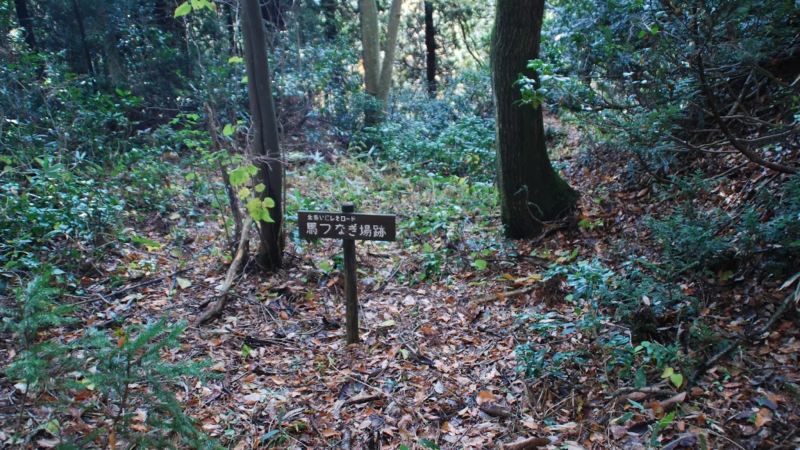
Many are located in mountainous areas, and clear signposts are often lacking. You may be able to obtain more detailed information by contacting local history research societies or boards of education.
Points to Note During Your Visit
- Avoid trespassing on private property and obtain permission if necessary.
- Be aware of wild animals such as bears and bees in forests.
- Do not damage the ruins or collect plants.
- Always take your trash with you.
- Avoid visiting alone; visit in groups if possible.
- Plan your visit with ample time, considering the weather and sunset times.
Related Historical Materials and Research
Main References
Besides “Ancient Castles and Residences in the Sendai Domain,” there are other important materials for understanding castles in the Sendai Domain and the Tohoku region:
- “Date Jikei Kiroku”: The official record of the Sendai Domain, containing descriptions of castle repairs and management.
- “Fūnai Fudoki”: A local history of the Sendai Domain, containing descriptions of castles and residences in various locations.
- “Miyagi Prefecture History” and “Iwate Prefecture History”: General histories at the prefectural level, with chapters on castle history.
- Historical Records of Each City, Town, and Village: Contains detailed information on castles and residences for each region.
Results of Archaeological Excavations
In recent years, emergency excavations and academic research conducted in conjunction with development have revealed the actual state of castles and fortifications not recorded in historical documents. At Sendai Castle, the foundation stones of the main palace and garden remains have been excavated, providing concrete insights into life during the feudal period.
Even at medieval castles and fortifications, the discovery of artifacts such as post holes, pottery, and iron products allows for more accurate estimation of construction dates and usage periods.
Utilization of Digital Archives
Recently, the use of digital technology for record preservation, such as 3D survey data of castles and aerial images taken by drones, is progressing. This data is being used in various fields, including research, education, and tourism promotion.
Miyagi Prefecture, the Sendai City Board of Education, and museums publish castle-related information on their websites, which is useful as up-to-date information that complements the content of “Ancient Castles and Fortifications in the Sendai Domain.”
Regional Development and the Utilization of Castles and Fortifications
Utilization as a Tourism Resource
Castle and fortification sites are important tourism resources that demonstrate the historical identity of the region. Sendai Castle Ruins are a major tourist attraction in Sendai City, attracting hundreds of thousands of visitors annually, and the equestrian statue of Date Masamune is a popular spot for commemorative photos.
Restoring buildings, similar to Shiroishi Castle, is an effective way to create a visually accessible tourist facility. Furthermore, improving signage, developing walking paths, and conducting guided tours can enhance visitor understanding and satisfaction.
Educational Applications
In local school education, castle ruins serve as excellent teaching materials for local history. Visiting the actual remains allows students to feel closer to history and foster a sense of attachment to their region.
Many municipalities hold castle tours and history lectures for elementary and junior high school students, with local history experts and researchers serving as instructors.
Development into Community Building
Community building initiatives centered around castle ruins are also progressing in various locations. These efforts aim to enhance the overall appeal of the region through landscape preservation around the remains, the revitalization of historical townscapes, and the networking of related cultural properties.
For example, Shiroishi City is promoting tourism by leveraging the historical atmosphere of its castle town, and walking courses combining the castle, samurai residences, and merchant houses are proving popular.
Future Challenges and Prospects
Balancing Preservation and Development
The risk of losing castle ruins due to urbanization and development is always present. In particular, castle sites on flat land are often used for farming or residential development, making preservation of the remains difficult.
For important remains, legal protection measures such as designation as historical sites must be taken, and coordination with development plans must be considered. Furthermore, it is important to preserve records, at least detailed survey maps and photographs.
Continuous Research
Even after the publication of “Ancient Castles and Residences in the Sendai Domain,” new discoveries and research results continue to accumulate. A system is needed to integrate these and regularly update the information.
Also, many castles and residences remain uninvestigated, and completing a comprehensive survey (investigating everything) will require a long time and many personnel. The development of new research methods, such as citizen-participatory research projects, is also expected.
Passing on to the Next Generation
The aging of experts involved in castle research and cultural property preservation is progressing, making the training of the next generation of researchers and conservationists an urgent necessity. Universities, museums, and boards of education need to collaborate to enhance training programs for young researchers.
Furthermore, raising public awareness and promoting participation in volunteer guides and preservation activities is essential for building a sustainable protection system.
Summary
“Ancient Castles and Residences in the Sendai Domain” is a valuable research achievement that comprehensively records medieval and early modern castles and residences scattered throughout Miyagi and southern Iwate prefectures. From large-scale castles like Sendai Castle to small, unnamed residence ruins, each is an important cultural heritage that tells the history of the region.
These castles and residences are not merely relics of the past; they teach us many things today. Understanding how people of that time interpreted the terrain, utilized technology, and organized society allows us to reaffirm the historical identity of a region and apply that knowledge to future urban development.
When visiting castle ruins, studying materials such as “Ancient Castles and Residences in the Sendai Domain” beforehand and observing the actual remains on-site will lead to a deeper understanding. Experiencing the wisdom and ingenuity of our ancestors embedded in the details—the curves of the earthworks, the depth of the dry moats, the construction of the stone walls—is the very joy of learning history.
The castles and residences of the Sendai Domain are indispensable for understanding the history of the Tohoku region from the medieval to the early modern period, and continued research, appropriate preservation, and utilization are essential. It is important for each of us to take an interest in local history and pass on these valuable cultural heritages to future generations.