Sendai Domain Tokachi Jinya (Hokkaido): The Complete History and Remains of the Guard Post in Ezo (Hokkaido) during the Late Edo Period
What is the Sendai Domain Tokachi Jinya?
The Sendai Domain Tokachi Jinya was a fortified residence built in 1859 (Ansei 6) in Hiroo-cho, Hiroo-gun, Hokkaido, during the late Edo period. Established as part of the Edo Shogunate’s order to the Sendai Domain to guard Ezo (Hokkaido), it became an important base for the Sendai Domain in the Tokachi region. Currently, remains of the fort exist at Nishi 4-jo 9-chome, Hiroo-cho, Hiroo-gun, Hokkaido.
At that time, Hokkaido was called “Ezochi,” and defense against Russia’s southward expansion policy was an urgent issue. The Sendai Domain had its main residence in Shiraoi and built branch residences in Akkeshi, Nemuro, Kunashiri, and Etorofu, in addition to the Tokachi Jinya in Hiroo, creating a vast guard system for eastern Ezo.
The Role of the Sendai Domain in Guarding Ezo (Hokkaido) during the Late Edo Period
The Need for Opening the Country and Guarding the North
In 1854 (Ansei 1), the Edo Shogunate concluded the Treaty of Amity and Commerce with the United States, ending its isolationist policy that had lasted for approximately 200 years. After opening the country, the southward expansion of Russian influence became a real threat, and the Shogunate was compelled to strengthen its defense system in Ezo.
Until then, Ezo had been under the control of the Matsumae Domain, but the Shogunate determined that it would be difficult for the Matsumae Domain alone to guard the north. The Tsugaru, Nanbu, Akita, and Sendai Domains of Tohoku, as well as the Matsumae Domain, were ordered to guard Ezo, and each domain was granted territory as an allocation of guard posts.
Scope of the Sendai Domain’s Guard Post
In November 1859 (Ansei 6), Shiraoi, Tokachi, Akkeshi, Kunashiri, and Etorofu were officially recognized as territories of the Sendai Domain. Including the shogunate’s garrison territories under the control of the Sendai Domain (Hidaka, Kushiro, Habomai, and Shikotan), the Sendai Domain’s territory and garrison areas comprised a vast area, nearly one-third of Hokkaido’s total land area.
To efficiently guard this vast region, the Sendai Domain constructed the following network of encampments:
- Shiraoi Moto Encampment: Central command and control base
- Tokachi Encampment (Hiroo): Guard base for the Tokachi region
- Akkeshi Encampment: Relay point for Kushiro and Nemuro
- Nemuro Encampment: Frontline base for the Kuril Islands
- Kunashiri Encampment: Guard for the Kuril Islands
- Etorofu Encampment: Guard base at the northernmost tip
Construction and Structure of the Tokachi Encampment
History of Establishment
In 1859 (Ansei 6), the Sendai Domain established the Tokachi Encampment in what is now Hiroo Town to strengthen security in the Tokachi region. Tokachi was part of the Sendai Domain, and this facility was planned as the administrative and military center of the region.
The reason Hiroo was chosen was its strategic location on the Pacific coast, a key point for maritime traffic, and its entrance to the inland Tokachi Plain. It possessed excellent locational advantages for both sea transport of supplies and inland deployment.
Scale and Function of the Jinya (Fortified Residence)
The Tokachi Jinya was staffed by samurai dispatched from Sendai, who performed the following duties:
- Coastal Guard: Monitoring Russian ships and preventing illegal intrusion
- Territorial Management: Administrative oversight of the Tokachi region
- Interaction with the Ainu People: Building relationships with local residents
- Promotion of Development: Encouraging agriculture and fishing
- Information Gathering: Understanding and reporting on the situation in the north
The Jinya included offices, barracks, an armory, and a food storage facility, creating a self-sufficient system. The dispatched samurai sometimes brought their families with them, and the Tokachi Jinya (fortified residence) became a small but important base for transmitting the culture of the Sendai Domain.
Relationship with Shiraoi Motojinya (Original Fortified Residence)
Command System and Coordination
The Tokachi Jinya was positioned as an outpost of the Shiraoi Motojinya, and a close coordination system was established between them. The Shiraoi Motojinya was built in 1856 (Ansei 3) and served as the command center for the Sendai Domain’s defense of Ezo (Hokkaido).
The Shiraoi Motojinya housed 150 to 200 samurai, and a full-fledged defensive facility with earthworks and moats was constructed on a vast site of approximately 66,000 square meters. Six gates were established to prohibit entry into the grounds, and a strict security system was in place.
Information Transmission and Supply Transport
Regular ferry services operated between the Tokachi Jinya and the Shiraoi Motojinya, facilitating information transmission and the transport of supplies. By utilizing sea routes, a rapid communication system, difficult to achieve by land, was maintained.
Instructions from the Shiraoi main encampment to each branch encampment were transmitted in writing, and reports from each encampment were regularly collected in Shiraoi. This information was ultimately reported to the Sendai main domain and the Edo shogunate, becoming fundamental data for northern policy.
Life and Culture at the Encampment
Daily Life of Samurai
Samurai dispatched from Sendai carried out their duties in Hokkaido’s harsh climate and unfamiliar environment. The winter cold was even more severe than in Sendai, and securing food was a major challenge.
Between their guard duties, the samurai also engaged in agriculture and fishing. They cultivated crops using seeds brought from their hometowns and learned fishing and hunting techniques from the local Ainu people. At the Shiraoi main encampment, red pine trees transplanted from the domain’s samurai hometowns still remain as a historical landscape.
Interaction with the Local Community
The samurai at the Tokachi encampment deepened their interactions with the local Ainu people. The Sendai Domain learned about life in Hokkaido from the Ainu people, while simultaneously transmitting Japanese culture and technology. This cultural exchange formed the foundation for the later development of Hokkaido.
Regular festivals and ceremonies were held at the encampment, allowing Sendai’s culture to take root in the northern land. Martial arts training was also diligently conducted, maintaining samurai discipline.
The Boshin War and the End of the Encampment
The Impact of the Meiji Restoration
In 1868, when the Boshin War broke out, the Sendai Domain joined the Ouetsu Reppan Alliance and opposed the new government forces. This political turmoil forced the Sendai Domain to withdraw from Ezo (Hokkaido).
The samurai at the various encampments, including the Tokachi encampment, were suddenly ordered to return to Honshu. The security system and local relationships built over approximately 10 years came to an abrupt end.
Abolition of the Jinya and its Aftermath
The Meiji government established the Hokkaido Development Commission and created a new system of governance. The Sendai Domain’s Jinya (fortified residence) was abolished, and many of its facilities were dismantled or repurposed.
The site of the Tokachi Jinya became urbanized with the progress of development, and many of the remains have now been lost. However, the historical fact that samurai from the Sendai Domain were stationed here and dedicated themselves to guarding the northern region is passed down as an important memory in the area.
Current Status of the Tokachi Jinya Site
Status of the Remains
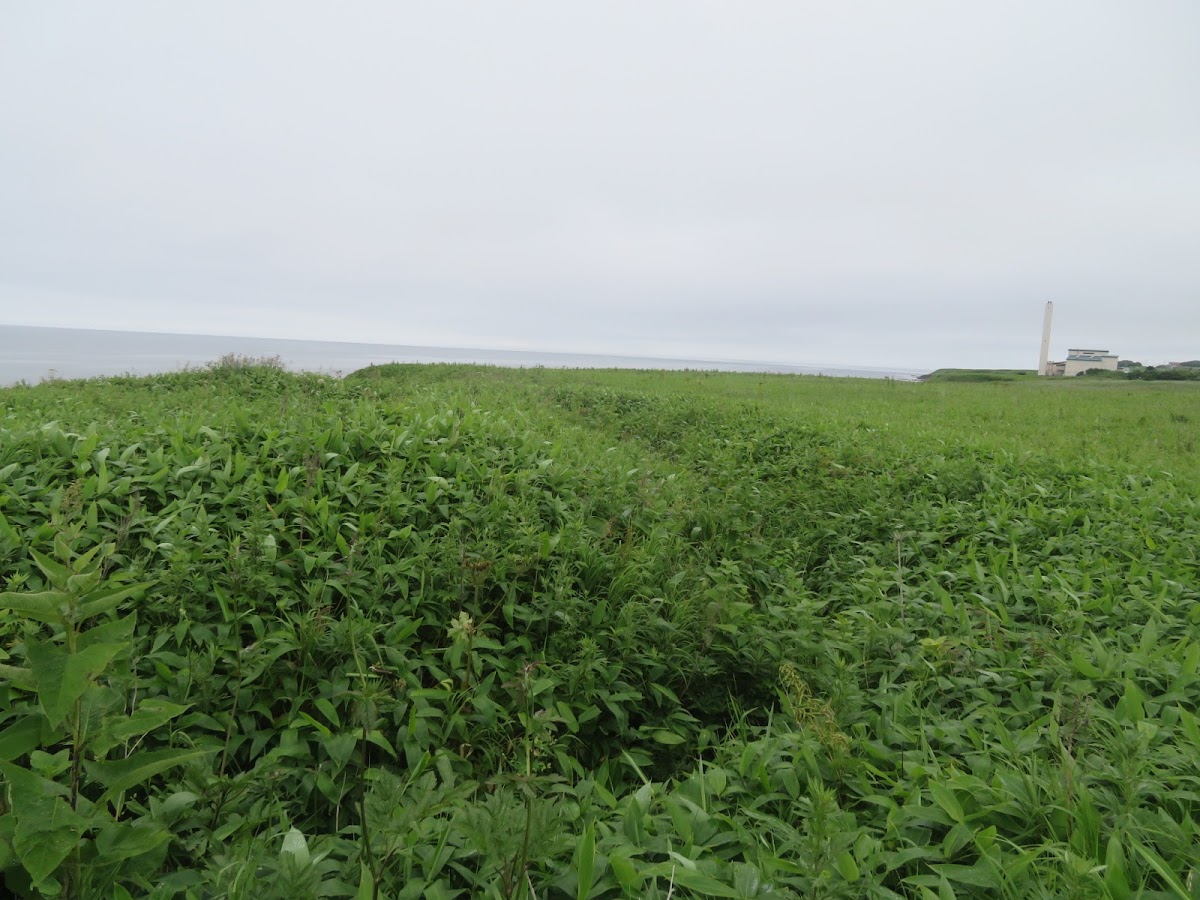
Currently, the Tokachi Jinya site is located near Nishi 4-jo 9-chome, Hiroo-cho, Hiroo-gun, Hokkaido, but it has not been developed as a large-scale historical park like the Shiraoi Motojinya (former Jinya). Due to urbanization, many of the remains from that time are buried underground or have already been lost.
While it is difficult to confirm clear traces of earthworks or moats on the surface, investigations are continuously being conducted by local historians and community researchers. If archaeological excavations are conducted, there is a possibility that valuable artifacts and building remains will be discovered.
Comparison with Shiraoi Motojinya
In contrast, Shiraoi Motojinya is a nationally designated historical site and has been developed into a historical park covering approximately 66,000 square meters. Important remains such as earthworks and moats are well preserved, maintaining the historical landscape.
In Shiraoi Town, the Sendai Domain Shiraoi Motojinya Museum opened in 1984, exhibiting approximately 300 items including drawings, ancient documents, and weapons of Shiraoi Motojinya. This museum allows visitors to learn about the entire history of the Sendai Domain’s defense of Ezo (Hokkaido), including the Tokachi Jinya.
Historical Significance and Lessons for the Present
Pioneering Attempts at Northern Defense
The Sendai Domain’s Tokachi Jinya occupies an important position in the history of Japan’s northern defense. The construction of a defense system in response to the changing international situation at the end of the Edo period formed the basis for the development of Hokkaido after the Meiji Restoration.
The network of military encampments established by the Sendai Domain was an advanced system for efficiently managing a vast area. The system of mutual cooperation and information sharing among the encampments is a concept relevant to modern regional disaster prevention and crisis management.
History of Cultural Exchange
The exchange between the Japanese and Ainu people at the Tokachi encampment can be evaluated as a pioneering example of multicultural coexistence. The attempt to deepen mutual understanding and live together among people with different cultural backgrounds offers important insights for modern society.
The technology and culture brought to Hokkaido by the samurai of the Sendai Domain contributed to the region’s development. On the other hand, the knowledge learned from the Ainu people supported the survival of the samurai and was passed down to later settlers.
Access and Surrounding Information
Access to Tokachi Jinya Ruins
Location: Near Nishi 4-jo 9-chome, Hiroo-cho, Hiroo-gun, Hokkaido
Public Transportation:
- Approximately 2 hours by Tokachi Bus bound for Hiroo from Obihiro Station, alight at Hiroo Bus Terminal
- Approximately 10 minutes on foot from the bus terminal
By Car:
- Approximately 80 km (1 hour 30 minutes) from Obihiro city center via National Route 236
- Approximately 4 hours from Sapporo city center via the Hokkaido Expressway and Hidaka Expressway
Notes:
- As the site is not developed as a historical park, signage and other information are limited.
- Please be considerate of local residents when visiting.
- For detailed information, please contact the Hiroo Town Board of Education.
Visiting Related Facilities
Sendai Domain Shiraoi Former Jinya Museum
To understand the overall picture of the Sendai Domain’s defense of Ezo (Hokkaido), including Tokachi Jinya, a visit to the Sendai Domain Shiraoi Former Jinya Museum in Shiraoi Town is recommended.
- Location: 681-4 Jinyacho, Shiraoi-cho, Shiraoi-gun, Hokkaido
- Opening Hours: 9:30 AM – 4:30 PM (Open only on Saturdays, Sundays, and public holidays from November to March)
- Closed: Mondays (or the following day if Monday is a public holiday), New Year holidays
- Admission Fee: 300 yen for adults, 150 yen for elementary and junior high school students
- Exhibits: Approximately 300 items including maps, ancient documents, and armor
Historic Site: Shiraoi Sendai Domain Jinya (fortified residence)
Adjacent to the museum is a historical park where you can see actual remains such as earthworks and moats. Restored buildings and information boards allow you to concretely imagine what the fortified residence looked like at the time.
Nearby Tourist Attractions
Around Hiroo Town:
- Hiroo Santa Land: A tourist facility known as the birthplace of Santa Claus
- Tokachi Port: A fishing port facing the Pacific Ocean, where you can enjoy fresh seafood
- Ogon Road: A scenic section of National Route 336 that winds along cliffs
Around Shiraoi Town:
- Upopoy (National Ainu Museum and Park): A national facility where you can learn about Ainu culture
- Lake Kuttara: A beautiful caldera lake with high transparency
- Noboribetsu Onsen: One of Hokkaido’s leading hot spring resorts
Regional Preservation Activities and Future Prospects
Inheritance of History
In Hiroo Town, efforts are being made to preserve the memory of the Tokachi Jinya as a regional historical asset. Through research by the Local History Research Society, local history education in schools, and the compilation of the town history, efforts are being made to pass on history to younger generations.
Among the local residents are descendants of Sendai domain samurai and families connected to the Tokachi Jinya (fortified residence), and oral traditions of history continue. These memories are a valuable source of information that conveys the realities of daily life that cannot be understood from written documents alone.
Future Challenges and Possibilities
A full-scale excavation and preservation of the Tokachi Jinya site is a crucial challenge for the future. While there are difficulties given the current urbanization, the academic value of the buried remains is high, and planned investigations are desirable.
Even if creating a historical park like the Shiraoi Motojinya is difficult, it is possible to create an environment where visitors can learn about history by installing information boards and developing small exhibition facilities. Virtual reconstructions utilizing digital technology are also being considered as a new method of historical transmission.
Wide-Area Historical Network
The Sendai domain’s defense of Ezo (Hokkaido) is a wide-area history spanning Shiraoi, Hiroo, Akkeshi, Nemuro, Kunashiri, and Etorofu. These regions need to cooperate and work together to preserve and utilize these sites as a shared historical heritage.
A wide-area collaboration, such as the “Sendai Domain Ezo Jinya Network,” would enable the development of historical tourism routes connecting various Jinya sites, joint research, and information dissemination. It is hoped that a comprehensive preservation and utilization plan will be formulated, centering on the Shiraoi Motojinya, which is designated as a Hokkaido Heritage site, and including other Jinya sites.
Summary
The Sendai Domain Tokachi Jinya is an important historical heritage site that played a crucial role in Japan’s northern defense amidst the turbulent international situation of the late Edo period. Although it only existed for about 10 years, from 1859 to 1868, the footprint it left in this area holds significant meaning in the history of Hokkaido.
Currently, much of the remains have been lost, but the role played by the samurai of the Sendai Domain in the Tokachi region and the history of their interactions with the local community are still recounted. At the Shiraoi Former Jinya Museum and other related facilities, you can learn about the overall picture of the Sendai Domain’s defense of Ezo (Hokkaido), including the Tokachi Jinya.
The Sendai Domain’s jinya (fortified residences) are an indispensable element in understanding the history of Hokkaido. Knowing the history of the Tokachi Jinya leads to an understanding of the origins of Hokkaido’s development, from northern defense during the late Edo period to cultural exchange and up to the present day. When you visit Hiroo Town, why not reflect on the historical memories etched into this land?