Ochirishi Chashi (Shinhidaka Town, Hokkaido): History and Highlights – A Complete Guide to Ainu Cultural Sites
Located in Shinhidaka Town, Hidaka District, Hokkaido, Ochirishi Chashi is a valuable archaeological site that conveys the history and culture of the Ainu people. Among the more than 500 Chashi sites in Hokkaido, it is of particularly high historical value and is protected as a regional cultural heritage site. This article provides a comprehensive explanation of Ochirishi Chashi, including detailed information, historical background, and highlights for visitors.
What is Ochirishi Chashi?
Ochirishi Chashi is an Ainu cultural site located in the Shizunai district of Shinhidaka Town, Hokkaido. “Chashi” is an Ainu word meaning “fence,” “enclosure,” or “fortress,” and is used as a general term for characteristic facilities built by the Ainu people.
Basic Definition of Chashi
Initially, chashi were interpreted as “Ainu fortresses,” but recent archaeological research has revealed that their function was not simply that of military facilities. Over 500 chashi sites have been identified in Hokkaido, and each is believed to have played a diverse role.
The main uses of chashi include:
- Site of Rituals: A sacred place for communicating with the gods
- Site of Charanke (Negotiation): A place for negotiations and discussions between groups
- Watchtower: For monitoring resource management and trade routes
- Defensive Base: A fortified position for combat as needed
- Site of Ritual and Ceremonial Events: A venue for important community events
These functions are thought to have changed in accordance with the times, region, and social conditions, and it has been suggested that a single chashi may have fulfilled multiple roles simultaneously or over different periods.
Location and Geographical Characteristics of Ochirishi Chashi
Location and Environment
Ochirishi Chashi is located in the Shizunai district of Shinhidaka Town, Hidaka District, Hokkaido. Shinhidaka Town was formed in 2006 through the merger of Shizunai Town and Mitsuishi Town, and is located in the central coastal area of the Hidaka Subprefecture.
Geographically, it has the following characteristics:
- Southwest: Facing the Pacific Ocean, blessed with abundant marine resources
- Northeast: Mountainous areas originating from the Hidaka Mountains, designated as part of the Hidaka Mountains-Erimo-Tokachi National Park
- Climate: Cool summers and relatively mild winters, with less snowfall than other parts of Hokkaido
- Natural Environment: A rich natural environment overlooking the magnificent Pacific Ocean coexists with the convenience of an urban area
Importance of Strategic Location
The location of Ochirishi Chashi held significant importance from the perspective of trade routes and resource management during the Ainu cultural period. The Hidaka region has long been known as a source of high-quality kelp and was also a key trading point with the inland areas. It is presumed that these economic and strategic factors were behind the construction of the Chashi (fortified settlement) in this location.
Many of the Chashi sites on the Nemuro Peninsula are built on the coast facing the Nemuro Strait, demonstrating that location selection, mindful of access to marine resources and maritime trade, is a common characteristic of Chashi in Hokkaido. Ochirishi Chashi also takes advantage of its geographical location along the Pacific coast.
Historical Background of Ochirishi Chashi
Hidaka Region during the Ainu Cultural Period
Ochirishi Chashi is thought to have been built during the Ainu cultural period, from the medieval to the early modern period. During this time, the Hidaka region was dotted with multiple kotan (settlements), each forming its own sphere of influence.
Numerous Chashi sites have been identified in the Hidaka region, and Ochirishi Chashi is presumed to have played an important role in the local community as one of them. At that time, Ainu society’s economic activities were based on aquatic resources such as salmon and trout, game meat and furs obtained through hunting, and goods traded with Honshu.
Connection to Shakushain’s Rebellion
Indispensable to understanding the history of the Hidaka region is Shakushain’s Rebellion, which broke out in 1669. Shakushain was the chief of the Ainu people of the Shizunai region, and he rose up against the unfair trade practices and oppressive rule of the Matsumae Domain.
This conflict unfolded as follows:
- Background: Exploitative trade practices by the Matsumae Domain and conflicts among the Ainu people
- Uprising: In 1669, the Ainu people of eastern Ezo (Hokkaido), led by Shakushain, rose up in unison.
- Development: Initially, they gained the upper hand by attacking Japanese trading posts in various locations.
- Conclusion: Shakushain was assassinated and the rebellion was suppressed through a plot by the Matsumae Domain.
The Shizunai area, where Ochirishichashi is located, is close to Shakushain’s base and may have played an important role in this conflict. However, historical records regarding its specific use are limited, and further research is needed.
Subsequent History
Following Shakushain’s rebellion, the Matsumae Domain’s rule was strengthened, and Ainu society was forced to undergo significant transformation. At the end of the 18th century, further resistance movements arose, such as the “Battle of Kunashiri-Menashi” (1789), but gradually, Japanese rule became established.
During this process, many chashi (fortified settlements) lost their function and were left as ruins. It is believed that Ochirishi Chashi followed a similar trajectory.
Structure and Characteristics of Ochirishi Chashi
General Structure of Chashi
While the structure of chashi varies depending on location and size, it generally consists of the following elements:
Cliff-faced Chashi
- Utilizes cliffs on the coast or riverbank
- Features moats or earthworks on the landward side
- The most common type in Hokkaido
Isolated Hill Chashi
- Built on an independent hill
- Surrounded by a moat
- Highly defensible
Hilltop Chashi
- Utilizes the tip of a plateau or hill
- Features a moat on only one side
Climbtop Chashi
- Built on the top of a hill
- Offers excellent views
Regarding the specific structure of Ochirishi Chashi, detailed records based on field surveys and archaeological excavations are necessary, but it is known that many chashi in the Hidaka region have characteristics of cliff-faced or hilltop chashi.
Scale and Preservation
The size of the chashi varies, ranging from small ones of a few tens of square meters to large ones of several thousand square meters. Many chashi are too small to be considered “fortresses,” which is one reason to suggest they had uses other than military facilities.
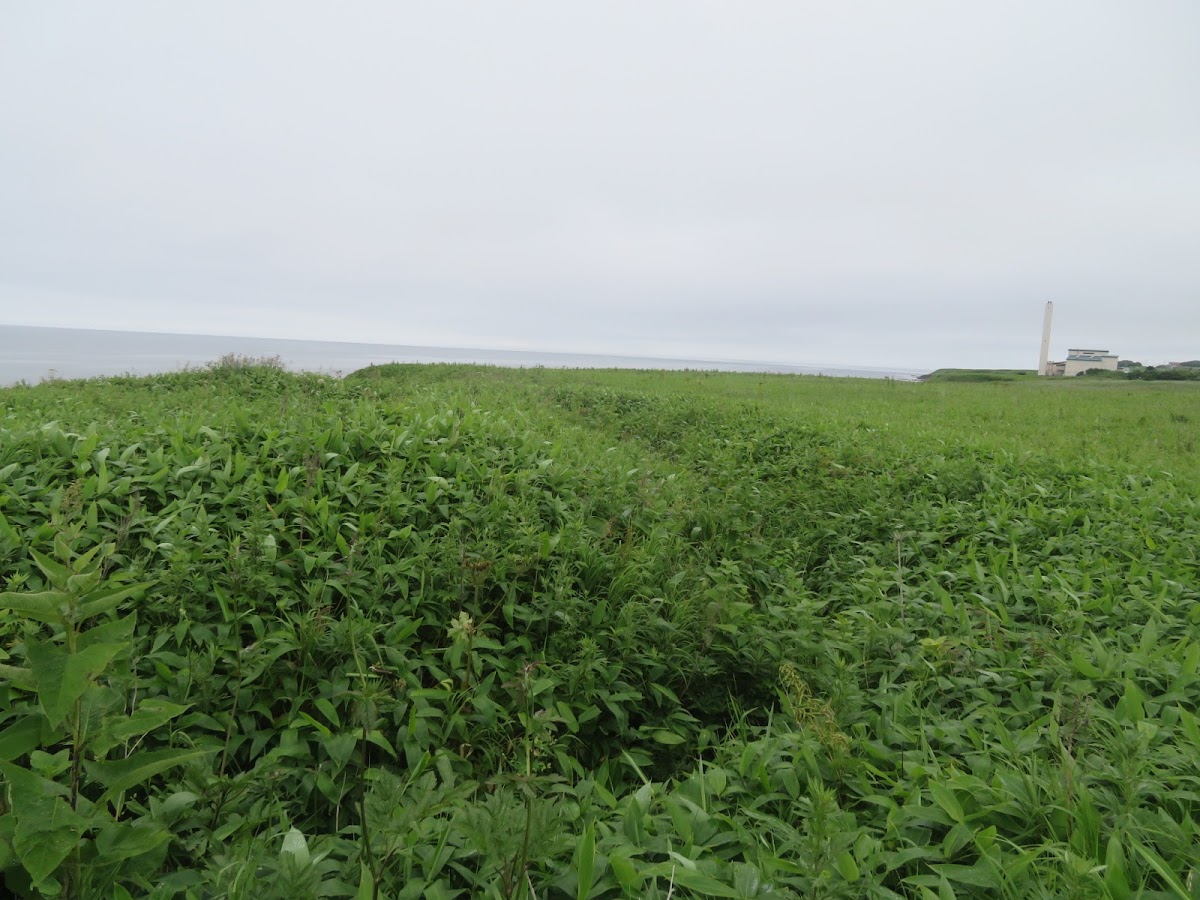
The current Ochirishi Chashi does not retain its original form due to years of weathering and changes in vegetation, but its structure can be inferred from the topographical features and traces of earthworks.
Chashi Groups in Shinhidaka Town
Chashi Ruins in the Shizunai Area
In addition to Ochirishi Chashi, several other chashi sites have been confirmed in Shinhidaka Town, particularly in the former Shizunai Town area:
- Menachashi
- Shibechari Chashi
- Hoinashirichashi
- Ruiopirachashi
These chashi are scattered along the Shizunai River basin and the Pacific coast, providing important clues to the layout of the kotan (village settlements) and spheres of influence at the time. Each Chashi (fortified settlement) may have been positioned within visual range of the others, suggesting the possibility of them forming a communication or defensive network.
Preservation and Utilization in the Region
In Shinhidaka Town, these Chashi sites are recognized as valuable cultural heritage and efforts are being made to preserve and utilize them. Their use in local history education and as a tourist resource is also being considered, playing an important role in promoting understanding of Ainu culture.
Comparison with Major Chashi Sites in Hokkaido
Nemuro Peninsula Chashi Sites
The most famous Chashi site group in Hokkaido is the Nemuro Peninsula Chashi Sites, designated as a national historic site. A total of 32 Chashi sites are scattered throughout Nemuro City, 24 of which are designated as national historic sites.
Characteristics of the Nemuro Peninsula Chashi Sites:
- 24 sites, including the representative Onnemoto Chashi
- Concentrated on the northern coast of the peninsula facing the Nemuro Strait
- Location optimized for fishing and maritime trade
- Estimated to have been constructed between the 17th and 18th centuries
Kushiro River Basin Chashi Sites
In the Kushiro region, the Kushiro River Basin Chashi Sites have been designated as a historical site. Approximately 40 chashi sites have been identified along the Kushiro River, including those in lake areas, and the following sites are collectively designated:
- Tsurugadai Charanke Fort Site (Kushiro City)
- Mosiriya Fort Site (Kushiro City)
- 9 other sites in Kushiro Town, Shibecha Town, and Teshikaga Town
These chashi sites are deeply connected to river transportation and inland trade, and have characteristics different from those of the chashi along the Pacific coast, such as Ochirishi Chashi.
Characteristics of Chashi in Each Region
The distribution and characteristics of Chashi vary by region:
Eastern Hokkaido Region
- Nemuro, Kushiro, etc.
- Emphasis on access to marine resources
- Many are relatively large in scale
Southern Hokkaido Region
- Early contact with the Japanese
- Function as a trading hub
Hidaka Region (including Ochirishi Chashi)
- Intermediate characteristics between inland and coastal areas
- Connection to historical events such as Shakushain’s Rebellion
- Key point for trading marine products such as kelp
Guide for Visiting Ochirishi Chashi
Access Methods
There are the following ways to access Shinhidaka Town:
By Car
- Approximately 2 hours 30 minutes from Sapporo (via National Route 235)
- Approximately 2 hours from New Chitose Airport
- Approximately 1 hour 30 minutes from Tomakomai
By Public Transportation
- Since the JR Hidaka Main Line was discontinued in 2021, bus use is the main mode of transport
- Donan Bus operates from Sapporo and Tomakomai.
Nearest Major Facilities
- Shinhidaka Town Hall Shizunai Branch
- Shizunai Town Center
Points to Note When Visiting
When visiting the Chashi ruins, please note the following:
- Protection of the Ruins: Take care not to damage the earthworks or moat remains.
- Safety Assurance: Wear appropriate footwear as some areas may have uneven ground.
- Private Property: Entry may require permission; please check in advance.
- Season and Weather: Visiting may be difficult during winter or in bad weather.
- Checking Signs: Always check any information boards.
Nearby Tourist Attractions
Shinhidaka Town has many other attractions besides Ochirishi Chashi:
Nature and Scenery
- Nijukken Road Cherry Blossom Avenue (Japan’s Longest Cherry Blossom Avenue)
- Mountain Landscape of the Hidaka Mountains
- Pacific Coastline
Cultural Facilities
- Shinhidaka Town Ainu Folklore Museum
- Shizunai Local History Museum
Industrial Tourism
- Racehorse farm tour
- Kelp fishing tour (seasonal)
Aiyo Culture and the Modern Significance of Chashi
Value as Cultural Heritage
The Chashi sites, including Ochirishi Chashi, are valuable physical evidence that conveys the history and culture of the Ainu people to the present day. In Ainu society, where written records were limited, these sites hold significant importance in the following respects:
- Historical Evidence: Concrete traces showing the organization and activities of Ainu society
- Cultural Understanding: Clues to understanding the Ainu people’s worldview and values
- Educational Resource: Teaching materials for cultural transmission to the next generation
- Identity: The basis of the historical identity of the Ainu people
Revival and Transmission of Ainu Culture
In 2019, the “Ainu Policy Promotion Act” was enacted, marking the first time a law explicitly designating the Ainu people as “indigenous people” was established. This law has spurred serious efforts toward the revival and transmission of Ainu culture.
The preservation and utilization of Chashi sites are one of the important pillars of this cultural revival. It is hoped that through these sites, a correct understanding of Ainu history will be fostered, leading to the realization of a society that respects diversity.
Tourism and Regional Development
Chashi sites are also attracting attention as a regional tourism resource. For tourists interested in history and culture, these sites are valuable places where they can experience the multifaceted history of Hokkaido.
Shinhidaka Town is considering tourism promotion measures utilizing Ainu cultural heritage, including Chashi sites, aiming to achieve both regional economic revitalization and cultural preservation.
Current Status and Challenges of Chashi Research
Advances in Archaeological Research
Research on Chashi has continued since before the war, but recent excavations and scientific analyses have revealed new insights one after another:
Dating
- More accurate determination of construction period through radiocarbon dating
- It has been found that many Chashi were built between the 15th and 18th centuries
Elucidation of Function
- Evidence suggesting uses other than military facilities from analysis of excavated artifacts
- Discovery of ritual artifacts
Distribution Survey
- Detailed distribution surveys using aerial photographs and drones
- Confirmation of undiscovered Chashi sites
Challenges in Preservation and Utilization
There are several challenges in preserving Chashi sites:
- Weathering and Collapse: Deterioration of remains due to natural forces
- Coordination with Development: Balance with land use
- Securing Budget: Financial resources necessary for preservation and management
- Human Resource Development: Shortage of personnel with specialized knowledge
- Understanding Local Residents: Raising Awareness of the Importance of Preservation
Addressing these challenges requires cooperation among government agencies, research institutions, and local residents.
Summary: The Historical Value of Ochirishi Chashi
Ochirishi Chashi is an important Ainu cultural site located in Shinhidaka Town, Hidaka District, Hokkaido. More than just a military facility, it is believed to have had diverse functions such as rituals, negotiations, surveillance, and trade, conveying the rich culture and history of the Ainu people.
In the Hidaka region, where connections to the historical event of Shakushain’s Rebellion have been pointed out, Ochirishi Chashi is indispensable for understanding the region’s history. Along with the Nemuro Peninsula Chashi Sites and the Kushiro River Basin Chashi Sites, it is a valuable cultural heritage of Hokkaido, and appropriate preservation and utilization are required in the future.
When visiting Shinhidaka Town, be sure to visit Ochirishi Chashi and other Chashi sites to reflect on the history of the Ainu people. These ruins, standing quietly amidst magnificent nature, surely teach us about the multifaceted history and cultural diversity of Hokkaido.
The preservation and research of the Chashi sites are important efforts toward understanding and passing on Ainu culture, and realizing a multicultural society. Through a single site like Ochirishi Chashi, we can rediscover the depth of Hokkaido’s history and the richness of its indigenous cultures.