Oyama Castle (Oyama City, Tochigi Prefecture) Complete Guide | History, Highlights, and Access Information for Gion Castle
What is Oyama Castle? | Basic Information and Overview
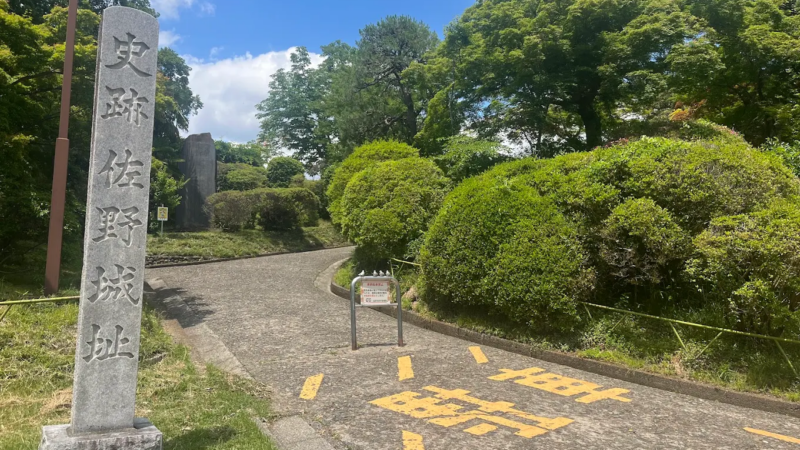
Oyama Castle (Oyama-jo) is a hilltop castle located in Shiroyama-cho, Oyama City, Tochigi Prefecture, also known as Gion Castle. Locally, it is primarily known as Gion Castle and is a representative example of a medieval castle built in Oyama, Tsuga District, Shimotsuke Province.
The castle ruins are designated as a National Historic Site as part of the “Oyama Clan Castle Ruins (Washijo Castle Ruins, Gion Castle Ruins, Nakakuki Castle Ruins),” and are now maintained as Shiroyama Park, a place of relaxation for citizens. It has also been selected as one of the 100 Best Views of Mount Fuji in the Kanto Region, and is known not only for its historical value but also for its scenic beauty.
Basic Data on Oyama Castle
- Location: Shiroyama-cho, Oyama City, Tochigi Prefecture (Oyama, Tsuga District, Shimotsuke Province)
- Alternate Name: Gion Castle
- Castle Structure: Hilltop Castle
- Year of Construction: Believed to be during the Kyūan era (1145-1151)
- Builder: Oyama Masamitsu
- Main Lords: Oyama clan, Hōjō clan, Honda Masazumi
- Year of Abandonment: Genna 5 (1619)
- Cultural Property Designation: Part of the nationally designated historic site “Oyama Clan Castle Ruins”
- Existing Remains: Earthworks, dry moats, and mud moat remains
Oyama Castle measured approximately 280 meters east-west and 450 meters north-south. At its peak, it was a vast flatland castle measuring approximately 790 meters east-west by 1336 meters north-south. Located on a plateau on the left bank of the Omoigawa River, its layout is characterized by its skillful use of the natural terrain.
History of Oyama Castle | From the Rise and Fall of the Oyama Clan to its Abandonment
Construction and Development by the Oyama Clan
The history of Oyama Castle dates back to the Kyūan era (1145-1151) at the end of the Heian period. It is believed to have been built by Oyama Masamitsu, a descendant of Fujiwara no Hidesato, and thereafter became the main castle of the Oyama clan and the political and military center of southern Shimotsuke Province.
During the Kamakura period, the Oyama clan served Minamoto no Yoritomo as gokenin (vassals) and prospered as a powerful gokenin in Shimotsuke Province. Oyama Tomomasa distinguished himself in the Jōkyū War (1221), and the Oyama clan reached its peak of power. Even into the Muromachi period, the Oyama clan continued to exert its influence as a powerful warlord in the Kanto region.
The Turmoil of the Sengoku Period and the Rule of the Hōjō Clan
With the arrival of the Sengoku period, the Oyama clan became embroiled in the struggle for supremacy in the Kanto region. In particular, during the time of Oyama Hidetuna, they found themselves in a difficult position caught between the power struggles of the Hōjō and Uesugi clans.
In 1576, Oyama Hidetuna surrendered to Hōjō Ujimasa, and Oyama Castle came under the control of the Hōjō clan. From then on, Oyama Castle functioned as an important base for the Hōjō clan’s conquest of northern Kanto. It is believed that the Hōjō clan renovated Oyama Castle and strengthened its defenses.
In 1590, when the Hōjō clan was destroyed in Toyotomi Hideyoshi’s siege of Odawara, the Oyama clan also disappeared from the historical stage.
Tokugawa Ieyasu’s Transfer to Kanto and the Oyama Council
After the fall of the Hojo clan, Tokugawa Ieyasu was transferred to the Kanto region, and Honda Masazumi became the lord of Oyama Castle. Masazumi was a highly valued confidant of Tokugawa Ieyasu and governed Shimotsuke Province from Oyama Castle.
In July of Keicho 5 (1600), Oyama Castle became an extremely important stage in Japanese history. While Tokugawa Ieyasu was on his way to subdue Uesugi Kagekatsu in Aizu, he received news of Ishida Mitsunari’s uprising and held a war council at Oyama. This was the Oyama Council.
At this council, Ieyasu confirmed the intentions of the various daimyo and decided to turn back west to confront Ishida Mitsunari. This decision led to the Battle of Sekigahara, and Oyama Castle played a historical role as a prelude to the decisive battle for control of Japan.
Currently, a stone monument marking the site of the “Oyama Council” stands in the parking lot in front of the main entrance of the Oyama City Hall, commemorating this historical moment.
Preservation of the Abandoned Castle and Castle Ruins
In 1619, when Honda Masazumi was transferred to Utsunomiya, Oyama Castle was abandoned. Although it lost its function as a castle, the remains such as earthworks and dry moats have been preserved in relatively good condition.
After the Meiji era, some parts of the castle site were developed into residential areas, but the main part on the hilltop was preserved and designated a national historic site in 1935. Currently, it is maintained as Shiroyama Park, serving as a place of relaxation for citizens and a valuable site for historical learning.
The Layout and Structure of Koyama Castle | Characteristics of Medieval Castles
An Overview of a Vast Hilltop Castle
Koyama Castle is a hilltop castle built on a plateau on the left bank of the Omoigawa River. At its peak, it boasted a vast size of approximately 790 meters east-west by 1336 meters north-south. It is characterized by its skillful use of the natural terrain and a defensive system that utilizes the difference in elevation.
The castle was surrounded by a triple layer of defenses: high earthen ramparts, deep dry moats, and mud moats. Mud moats are defensive structures where mud is mixed into water-filled moats to make enemy intrusion difficult, and are a characteristic structure of medieval castles in the Kanto region.
Highlights of Existing Remains
Currently, the eastern side of the castle is being developed into residential areas, but the remnants of the medieval castle remain strongly visible on the hilltop. The following remains are particularly noteworthy.
Earthworks
The earthworks of Koyama Castle are approximately 3 to 5 meters high, with some sections reaching nearly 10 meters. These earthworks, built by piling up earth, served to prevent enemy intrusion and also functioned as lookout posts from within the castle. Even today, walking through Shiroyama Park allows you to appreciate the height and scale of the earthworks from that time.
Dry Moats
Several dry moats, over 10 meters wide and around 5 meters deep, can be found. Dry moats are structures designed to prevent enemy intrusion without water, and at Koyama Castle, they were combined with the earthworks to form a complex defensive line. Even today, strolling through Shiroyama Park allows you to experience the impressive depth of these dry moats.
Remains of Muddy Moats
Of the three moats, the outermost was a muddy moat. Although currently filled in, its existence has been confirmed through archaeological excavations, and it is attracting attention as an important remains that demonstrates the characteristics of medieval castles in the Kanto region.
Overall Structure of the Oyama Clan Castle Ruins
Oyama Castle (Gion Castle) was the central structure of the castle complex built by the Oyama clan. In addition to its main castle, Gion Castle, the Oyama clan also established Washi Castle and Nakakuki Castle as subsidiary castles, creating a coordinated defensive system across the three castles.
These three castles are collectively designated as a national historic site under the name “Oyama Clan Castle Ruins,” and represent a valuable group of remains for understanding the medieval castle network.
Highlights of Oyama Castle | Present as Shiroyama Park
Overview of Shiroyama Park
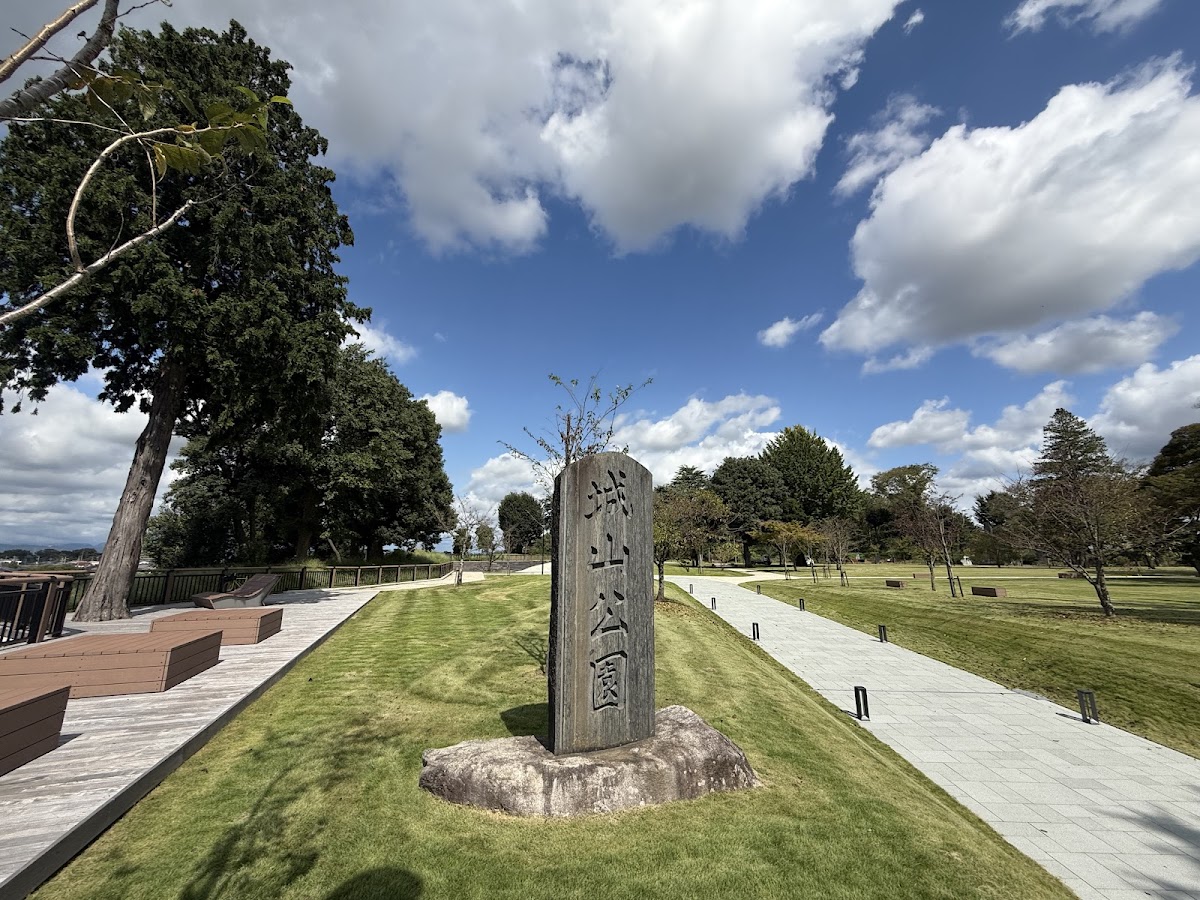
The Oyama Castle ruins are now developed as Shiroyama Park, serving as a place of relaxation for local residents. Walking paths are maintained within the park, allowing visitors to view the remains, such as earthworks and dry moats, up close.
The park is also known as a cherry blossom viewing spot, attracting many visitors in the spring. Furthermore, the park contains ancient trees designated as natural monuments, making it a spot where you can enjoy both history and nature.
One of the 100 Best Views of Mount Fuji in the Kanto Region
Oyama Castle Ruins are selected as one of the “100 Best Views of Mount Fuji in the Kanto Region.” If the weather conditions are good, you can see Mount Fuji in the distance from Shiroyama Park, making it a valuable place to enjoy both historical exploration and scenic beauty.
Also Selected as One of the 100 Best Views of Oyama
Oyama Gion Castle Ruins (Shiroyama Park) are included in the “100 Best Views of Oyama” selected by Oyama City, and are positioned as a representative historical, cultural, and scenic spot of Oyama City. For the local people, Oyama Castle Ruins are not merely a historical site, but a place cherished as a source of local pride.
Stone Monument of the Oyama Council Site
A stone monument marking the “Oyama Council Site” is erected in the parking lot in front of the main entrance of Oyama City Hall, a short distance from Shiroyama Park. This marks the site of a historical military council that served as a prelude to the Battle of Sekigahara, and is a must-see spot when visiting Oyama Castle.
Historical Spots Around Oyama Castle
Tennoin Temple | Mausoleum of the Oyama Clan
Located approximately 1.5 kilometers northeast of Oyama Castle, Tennoin Temple is the mausoleum of the Oyama clan. Founded as the Oyama clan’s family temple, it houses the tombs of successive Oyama clan heads, conveying the history of the Oyama clan’s rise and fall.
When visiting Oyama Castle, we recommend extending your visit to Tennoin Temple to gain a deeper understanding of the Oyama clan’s history.
Washijo Castle Ruins and Nakakuki Castle Ruins
The other two castles that make up the Oyama clan’s castle ruins, Washijo Castle Ruins and Nakakuki Castle Ruins, are also historical sites worth visiting along with Oyama Castle. Washijo Castle is located approximately 3 kilometers northeast of Oyama Castle, and Nakakuki Castle is located approximately 4 kilometers north, allowing visitors to experience the Oyama clan’s castle network.
Both are preserved as nationally designated historical sites, and remnants such as earthworks and dry moats remain.
Oyama City Museum
Located approximately 2 kilometers northeast of Oyama Castle, the Oyama City Museum features exhibits on the history of the Oyama clan and Oyama Castle. Artifacts unearthed during archaeological excavations and reconstructed models of the castle are on display, allowing visitors to learn more about the history of Oyama Castle.
Access and Parking Information
Access by Train
- Approximately 15 minutes on foot west from JR Tohoku Main Line, Mito Line, and Ryomo Line “Oyama Station” (approximately 1.2 kilometers)
- Exit from the west exit of Oyama Station and proceed west along National Route 4 towards Shiroyama-cho.
Oyama Station is easily accessible, approximately 40 minutes from Tokyo Station by Shinkansen and approximately 20 minutes from Utsunomiya Station, making a day trip perfectly feasible.
Access by Car
- Approximately 20 minutes from Tohoku Expressway “Sano-Fujioka IC”
- Approximately 30 minutes from Kita-Kanto Expressway “Moka IC”
- From National Route 4 towards Shiroyama-cho
Shiroyama Park has a dedicated parking lot, which is free to use. However, it can become full during peak seasons such as cherry blossom season, so visiting earlier in the day is recommended.
Access to the Oyama Hyōjō Site
The Oyama City Hall, where the Oyama Hyōjō site monument is located, is about a 10-minute walk from the east exit of Oyama Station. While you can use the city hall’s parking lot, it can get crowded on weekdays, so using public transportation is recommended.
Points to Note and Recommended Time to Visit
Estimated Visit Time
If you want to thoroughly explore the ruins within Shiroyama Park, it will take approximately 1 to 1.5 hours. A walk around the park, observing the earthworks and dry moats, and reading the explanatory signs will provide a deeper understanding of the history.
If you also plan to visit the Oyama Hyōjō site monument and Tennōin Temple, it’s best to allocate about half a day.
Recommended Time to Visit
Spring (Late March to Mid-April)
During the cherry blossom season, Shiroyama Park is bustling with visitors. The combination of the full-blooming cherry blossoms and the historical ruins is magnificent, making it the most spectacular time to visit. However, it can get crowded, so if you want to enjoy a quiet historical stroll, visiting on a weekday is recommended.
Autumn (Late October to Mid-November)
The autumn foliage is beautiful, and the pleasant weather makes it ideal for a walk. The undulations of the earthworks and dry moats are colored by the autumn leaves, allowing you to fully experience the atmosphere of a medieval castle.
Winter (December to February)
Winter, after the leaves have fallen, is the best time to see the structure of the earthworks and dry moats. Since the vegetation has withered and the view is unobstructed, a winter visit is recommended for history buffs who want to observe the castle’s layout in detail.
Points to Note When Visiting
- The grounds of Shiroyama Park are uneven, so we recommend wearing comfortable shoes.
- Some areas of the dry moats and earthworks can be slippery, so extra caution is needed during or after rain.
- In the summer, there are many insects such as mosquitoes, so it’s a good idea to take precautions against insects.
- Information boards are placed throughout the site; reading them carefully while you visit will deepen your understanding.
Cultural Value of Oyama Castle
Importance as a National Historic Site
Oyama Castle (Gion Castle Ruins), along with Washijo Castle Ruins and Nakakuki Castle Ruins, is designated as a National Historic Site as part of the “Oyama Clan Castle Ruins.” This designation indicates that the Oyama clan’s castle complex is a valuable historical site that demonstrates the castle form of a samurai group in the medieval Kanto region.
In particular, the triple defensive system of earthworks, dry moats, and mud moats is highly valued academically as a typical example of a medieval Kanto castle. It is also important because it allows us to trace the changes in the castle from the Kamakura period to the Sengoku period. ### Historical Significance as the Stage of the Oyama Conference
Oyama Castle is an extremely important site in Japanese history as the stage of the Oyama Conference, a preliminary battle to the Battle of Sekigahara. It was here that Tokugawa Ieyasu confirmed the intentions of the various daimyo and made the decision to retreat west, which led to his subsequent unification of Japan.
Oyama Castle, the stage of this historic moment, is not merely a local castle ruin, but a place symbolizing a turning point in Japanese history, and its cultural value is recognized.
A Hub of Local History and Culture
Oyama Castle ruins are a symbolic presence of Oyama City’s history and culture, having been selected as one of the “100 Scenic Views of Oyama.” It is a source of local pride for residents and is also used as a site for history education.
Every year, local elementary and junior high school students visit for social studies field trips, providing a valuable opportunity to learn about local history. Furthermore, it is a popular venue for local events such as the cherry blossom festival at Shiroyama Park, making it a prime example of historical heritage being rooted in the modern community.
Future Preservation and Utilization of Oyama Castle
Preservation and Maintenance Efforts
Tochigi Prefecture and Oyama City are continuously working on the preservation and maintenance of the Oyama Castle ruins. They are conducting archaeological excavations, confirming the state of preservation of the remains, and taking protective measures as needed.
In recent years, in particular, long-term preservation plans have been implemented, including preventing the collapse of earthworks, preserving dry moats, and managing trees. Furthermore, efforts are being made to improve the environment for visitors, such as updating explanatory signs and enhancing directional signage.
Utilization as a Tourism Resource
Oyama City is actively working to utilize the Oyama Castle ruins as a tourism resource. They are highlighting the historical importance of the Oyama Council and implementing measures to attract history and castle enthusiasts.
In particular, they have established the “Oyama Council Hometown Ambassador” system to increase awareness of the Oyama Council and are conducting activities to raise interest in the Oyama Castle ruins.
Information Dissemination Utilizing Digital Technology
In recent years, information dissemination utilizing digital technologies such as VR (Virtual Reality) and AR (Augmented Reality) has been considered. There are expectations for providing historical experiences incorporating new technologies, such as recreating the appearance of the castle in its heyday using smartphone apps when visiting the site.
Summary | Rediscovering the Charm of Oyama Castle
Oyama Castle (Gion Castle) is a historical heritage site that Oyama City, Tochigi Prefecture, is proud of. Since its construction during the Kyūan era, it served as the main castle of the Oyama clan and functioned as the center of southern Shimotsuke Province for approximately 450 years. It also made its mark in Japanese history as the site of the Oyama Conference, a preliminary battle to the Battle of Sekigahara.
The well-preserved earthworks and dry moats are valuable remains that convey the appearance of a medieval castle, and their value is recognized as a nationally designated historical site. The castle ruins, developed as Shiroyama Park, are a place of relaxation for citizens and an important site for historical learning.
Its convenient location, within walking distance of Oyama Station, makes it easily accessible for a day trip from Tokyo. Known as a famous cherry blossom viewing spot, its stunning scenery, selected as one of the “100 Best Views of Mount Fuji in the Kanto Region,” is also not to be missed.
By visiting Oyama Castle, you can experience firsthand the history of the Oyama clan, who lived through the transition from the medieval to the early modern period, the site of the Oyama Council where crucial decisions leading to the Battle of Sekigahara were made, and the typical structure of a medieval castle in the Kanto region.
Oyama Castle ruins are a recommended spot not only for history buffs and castle enthusiasts, but also for those interested in local history and culture, and those who enjoy nature walks. Why not visit this historical site at least once?
--765x450.png)