Complete Guide to Okotoyo Castle (Kochi Prefecture): A Thorough Explanation of the Highlights and History of the Chosokabe Clan’s Castle Ruins
What is Okotoyo Castle?
Okotoyo Castle is a medieval mountain castle located in Okotoyo-cho, Nankoku City, Kochi Prefecture. It is known as the residence of the Chosokabe clan, who became the rulers of Shikoku during the Sengoku period, and is also the birthplace of Chosokabe Motochika, who aimed to conquer Shikoku after unifying Tosa.
Built on Mount Okotoyo, at an elevation of 97 meters, this castle is a typical medieval mountain castle utilizing an isolated hill located on the right bank of the Kokubu River, at the northwestern edge of the Kochi Plain. It was designated a National Historic Site in July 2008 and selected as one of the “Continued Top 100 Japanese Castles” (No. 180) in 2017.
Even today, the remains of the castle, including the main fortifications, baileys, earthworks, moats, vertical moats, stone walls, and wells, are well-preserved. It is a valuable historical site representing Sengoku period castles in Shikoku, and is maintained and open to the public.
History of Okotoyo Castle
Construction and the Rise of the Chosokabe Clan
The exact construction date of Okotoyo Castle is unclear, but records indicate that it fell once around Eisho 5-6 (1508-09). It was later rebuilt around Eisho 13 (1516) by Chosokabe Kunichika, the father of Chosokabe Motochika.
Chosokabe Kunichika used Okotoyo Castle as a base to expand his power and grew into a powerful daimyo of Tosa Province. Kunichika excelled in strategy and military prowess, subjugating surrounding local clans one after another and establishing the foundation of the Chosokabe clan.
The Era of Chosokabe Motochika
Chosokabe Motochika, son of Kunichika, was born at Okotoyo Castle in 1539. Following in his father’s footsteps, Motochika inherited the family headship in 1560, unified Tosa Province, and further expanded his power throughout Shikoku.
Under Motochika’s rule, Okotoyo Castle functioned as the Chosokabe clan’s base and the political and military center of Tosa Province. Motochika established a military system known as “Ichiryo-gusoku,” a system of half-farmers, half-soldiers, creating an efficient military organization. This unique system supported the rapid expansion of the Chosokabe clan’s power.
Relocation to Urado Castle and Abandonment of Okotoyo Castle
In 1591, Chosokabe Motochika built a new castle, Urado Castle (Kochi City), and moved his residence there. Urado Castle was a flatland castle facing the sea, situated at a strategic point for maritime traffic, making it ideally located for managing a larger territory.
With this relocation, Okotoyo Castle ceased its role and was abandoned. Having functioned as the residence of the Chosokabe clan for approximately 80 years, Okotoyo Castle subsequently disappeared from the stage of history.
Preservation and Development in Modern Times
After the Meiji era, the Okotoyo Castle ruins were neglected for a long time, but full-scale archaeological excavations began in the late Showa period. Following its designation as a National Historic Site in 2008, it is now developed as a historical park by Nankoku City and Kochi Prefecture and is open to the public.
The Kochi Prefectural Museum of History and Folklore has been built on the hillside of the castle ruins, featuring a permanent exhibition on the Chosokabe clan. Thanks to restoration and development based on archaeological excavations, it has become a valuable historical site where visitors can experience the appearance of a mountain castle from the Sengoku period.
Structure and Layout of Okotoyo Castle
Layout of the Main Enclosure
The main enclosure of Okotoyo Castle has a multi-enclosure structure with the “Tsume” (main enclosure) located at the highest point of the mountaintop. The following enclosures are arranged around the Tsume:
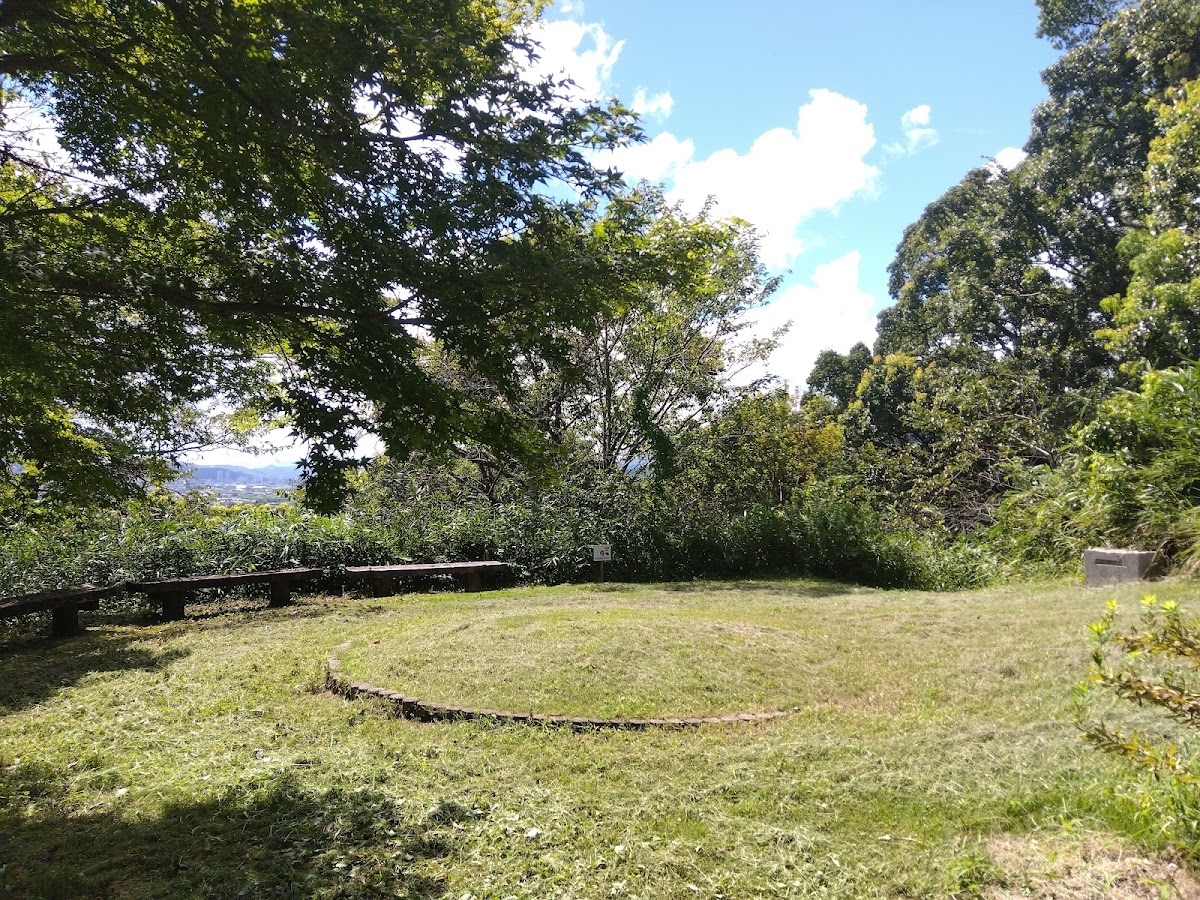
Tsume: This enclosure, located at the mountaintop, is the main keep and the castle’s final defensive stronghold. From here, one can enjoy a panoramic view of the Kōchō Plain.
Tsume Lower Enclosure: This enclosure is located one level below the Tsume and served to complement it.
Ninodan: This enclosure extends eastward from the Tsume and is one of the main defensive lines.
Sannodan: This enclosure surrounds the Tsume from west to south, and has a large area, allowing for the deployment of many soldiers.
Yondan: This western enclosure forms the koguchi (gateway to the castle) and was an important defensive stronghold to prevent enemy intrusion.
Structure of the Secondary Enclosures
Two secondary enclosures are located around the main enclosure.
Traditional Stable Enclosure: Located west of the main enclosure, it is presumed to have been a place where horses were kept, based on its name.
Traditional Chief Retainer’s Residence Enclosure: Located on the southern slope, it is said to have been the site of a chief retainer’s residence.
These secondary enclosures served as an outer defense for the main enclosure, and are also thought to have functioned as everyday living spaces and military facilities.
Characteristics of Defensive Structures
The defensive structures of Okotoyo Castle possess typical characteristics of medieval mountain castles.
Horizontal Moat: A moat dug horizontally into the mountain slope, serving to prevent lateral movement of the enemy. Multiple horizontal moats have been confirmed at Okotoyo Castle, forming a strong defensive line.
Vertical Moat Group: A moat dug vertically into the slope, making it difficult for the enemy to climb. The slopes of Okotoyo Castle are lined with numerous vertical moats, designed to withstand attacks from multiple directions.
Earthworks: These are defensive walls made by piling up earth, surrounding the baileys. They provided protection from enemy arrows and firearms, and also obstructed visibility.
Cliffs: These are artificially carved steep slopes that physically hinder enemy intrusion. Clear cliffs can be seen around each bailey at Okotoyo Castle.
Stone Walls: Stone walls and masonry are used in some areas, reinforcing the defenses of important locations. Relatively advanced stonework techniques are evident for a medieval mountain castle.
Wells: Multiple wells were provided within the castle in preparation for a siege. Securing a water source was an extremely important element for mountain castles.
Highlights of Okotoyo Castle
View from the Main Enclosure
Standing at the main enclosure on the mountaintop, a magnificent panoramic view of the Kōchō Plain unfolds. During the Sengoku period, Chosokabe Motochika likely surveyed his territory from this very spot. On clear days, the Pacific Ocean is visible, truly highlighting the castle’s excellent location.
Currently, an observation deck has been constructed, allowing visitors to safely enjoy the scenery. It’s a spectacular spot where you can enjoy the changing seasons, from cherry blossoms in spring to autumn leaves.
Well-Preserved Remains
The greatest appeal of Okotoyo Castle lies in its numerous remains that convey the appearance of a Sengoku period mountain castle.
Layout of Enclosures: You can actually walk through and confirm the clearly preserved layout of the enclosures, from the main enclosure to the fourth level. The elevation differences and sizes of each enclosure give you a sense of the castle’s scale at the time.
Moats and Earthworks: The moats and earthworks surrounding the mountain slopes are well-preserved and are valuable remains that allow us to understand the actual defensive structures of the Sengoku period.
Vertical Moats: The vertical moats carved into the slope appear like the teeth of a comb when viewed from above, and their scale and density are overwhelming.
Stone Walls and Structural Structures: The partially remaining stone walls and structural structures are important historical materials that show the developmental stages of stonework technology in medieval castles.
Well Remains: The well remains within the castle grounds tell the story of the castle’s function in anticipation of siege warfare.
Kochi Prefectural Museum of History and Folklore
Located on the hillside of the Okotoyo Castle ruins, the Kochi Prefectural Museum of History and Folklore is a facility worth visiting in conjunction with a tour of the castle ruins.
Chosokabe Exhibition Room: This room features a permanent exhibition on the Chosokabe clan, including Chosokabe Motochika, displaying excavated artifacts, ancient documents, armor, and swords. Visitors can learn in detail about Motochika’s life and the process of unifying Shikoku.
Explanation of Okotoyo Castle Ruins: The castle’s structure, history, and archaeological findings are explained in an easy-to-understand manner. Visiting before or after your visit to the castle ruins will deepen your understanding.
Special Exhibitions: Special exhibitions are held regularly, covering a variety of themes related to the history and culture of Kochi Prefecture.
Development as a Historical Park
Okotoyo Castle Ruins has been developed as a historical park with walking paths. There are plenty of information boards and explanatory signs, allowing even first-time visitors to understand the castle’s structure and history while exploring.
The walking paths are relatively gentle, making it easy for even those with limited physical fitness to climb. However, as it is a mountain castle, comfortable walking shoes are recommended.
Cherry Blossom Spot
Okotoyo Castle Ruins is also known as a cherry blossom spot. In spring, approximately 230 Somei Yoshino cherry trees bloom, attracting many visitors. The contrast between the view from the castle gate and the cherry blossoms is magnificent, making it a popular spot for photography.
Access Information
Access by Public Transportation
By JR:
- Get off at “Gomen Station” or “Tosa-Otsu Station” on the JR Dosan Line
- Approximately 10 minutes by taxi from Gomen Station
- Approximately 15 minutes by taxi from Tosa-Otsu Station
By Local Bus:
- Take the bus bound for “Gakko Junction” from in front of Kochi Station
- Get off at the “Gakko Junction” bus stop and walk for approximately 15 minutes
Access by Car
By Kochi Expressway:
- Approximately 5 minutes from “Nankoku IC” on the Kochi Expressway
- There are signs along National Route 32
Parking:
- Free parking is available at the Kochi Prefectural Museum of History and Folklore (approximately 50 regular cars)
- Large buses can also be parked
Location
1099-1 Yahata, Okutoyo-cho, Nankoku City, Kochi Prefecture 783-0044 (Kochi Prefectural Museum of History and Folklore)
Visitor Information
Opening Hours and Closing Days
Okotoyo Castle Ruins (Historical Site Park Area):
- Open 24 hours
- Free
Kochi Prefectural Museum of History and Folklore:
- Opening Hours: 9:00 AM – 5:00 PM (Last entry 4:30 PM)
- Closing Days: Year-end and New Year holidays (December 27th – January 1st), and other temporary closures may occur
- Admission Fee: General 470 yen, University Students 250 yen, High School Students and younger Free
*Fees may change during special exhibitions
Estimated Visiting Time
- Visiting only the castle ruins: Approximately 30 minutes to 1 hour
- Including museum visit: Approximately 1 hour 30 minutes to 2 hours
- For a thorough visit: 2 hours to 3 hours
Notes for Visitors
- As it is a mountain castle, please wear comfortable shoes and clothing.
- In summer, please remember to take precautions against insects and stay hydrated.
- Please be careful as the ground can become slippery in rainy weather.
- To protect the historical site, please do not damage the remains or enter restricted areas.
Nearby Tourist Attractions
Statue of Chosokabe Motochika’s First Battle
At the foot of Okotoyo Castle stands a bronze statue commemorating Chosokabe Motochika’s first battle. It depicts Motochika’s courageous figure at the age of 22 during his first battle and is a popular spot for commemorative photos.
Tosa Kokubunji Temple
Located about 10 minutes by car, this is the 29th temple of the Shikoku 88 Temple Pilgrimage. This historic temple, established during the Nara period by order of Emperor Shomu, houses a wooden seated statue of Yakushi Nyorai, designated as a National Important Cultural Property.
Kochi Ryoma Airport
Located about 15 minutes by car from Okotoyo Castle, this is Kochi Prefecture’s gateway to the sky. The airport features exhibits related to Sakamoto Ryoma and shops selling Kochi Prefecture’s local products.
Urado Castle Ruins
These are the ruins of the castle where Chosokabe Motochika moved from Okotoyo Castle. Currently located in the Urado district of Kochi City, near Katsurahama Beach, very few remains exist, but it’s worth visiting as a place associated with Motochika.
Kochi Castle
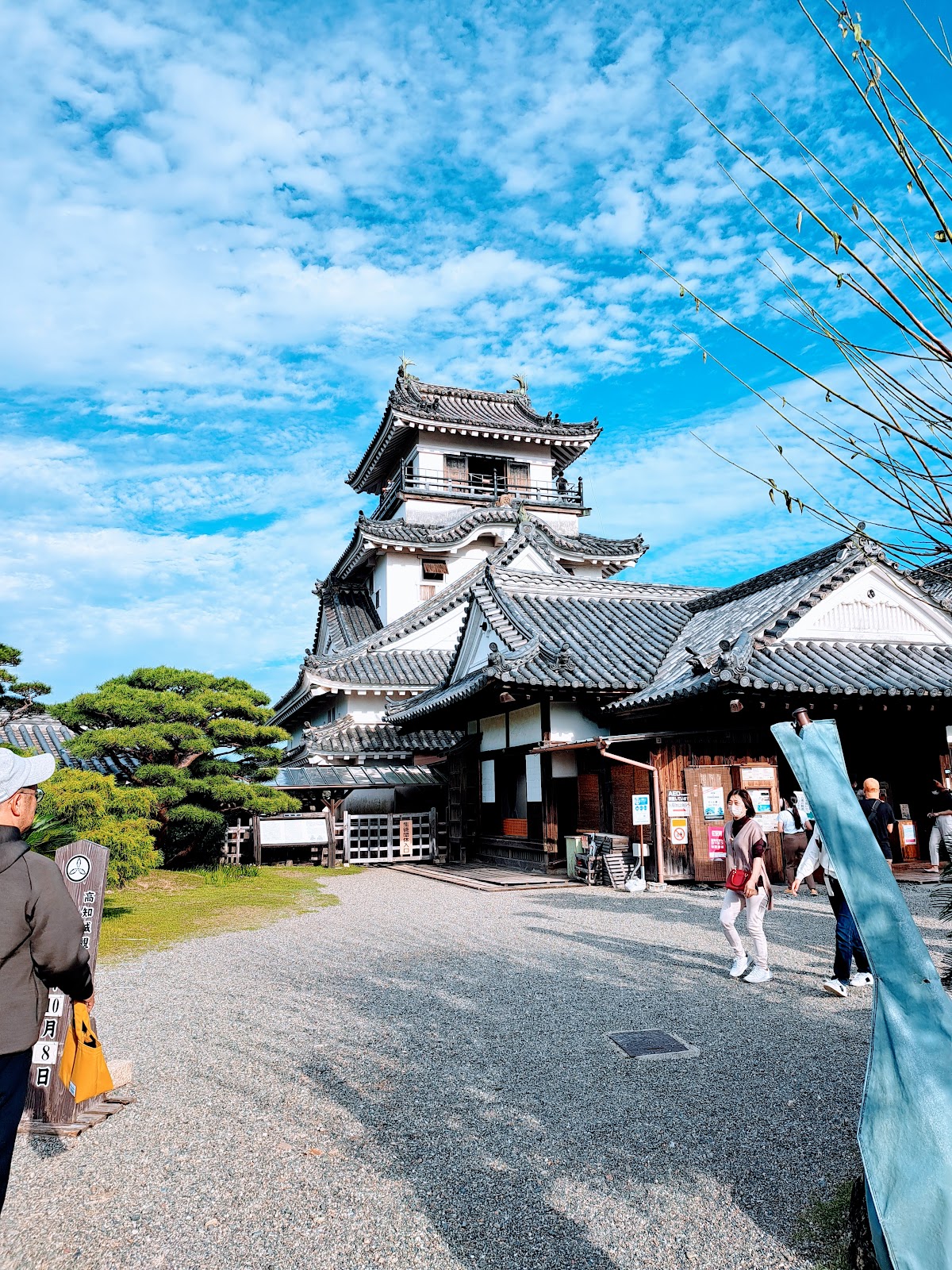
A famous castle with an existing keep, located about 30 minutes away by car. It was the residence of the Yamauchi clan, the lords of the Tosa Domain during the Edo period, and many of its buildings, including the keep and the main palace, are designated as Important Cultural Properties. Visiting both Okotoyo Castle and Kochi Castle allows you to learn about the changes in castle architecture from the medieval to the early modern period.
Model Itinerary for Visiting Okotoyo Castle
Half-Day Course (Approx. 3 Hours)
- Preparation at Kochi Prefectural Museum of History and Folklore (30 minutes)
- Visit the main enclosure of Okotoyo Castle (1 hour)
- Enjoy the view from the fortified position (30 minutes)
- Visit the museum’s permanent exhibition (1 hour)
Full-Day Course (Approx. 6 Hours)
- Morning: Visit Kochi Prefectural Museum of History and Folklore (1 hour 30 minutes)
- Detailed visit to the main and secondary enclosures of Okotoyo Castle (2 hours)
- Lunch: Enjoy Tosa cuisine in Nankoku City (1 hour)
- Afternoon: Visit Tosa Kokubunji Temple (1 hour)
- View the statue commemorating Chosokabe Motochika’s first battle (30 minutes)
Two-Day Course (Tour of Places Associated with the Chosokabe Clan)
Day 1:
- Visit to Okotoyo Castle Ruins and Kochi Prefectural Museum of History and Folklore
- Urado Castle Ruins and Katsurahama Beach
- Overnight stay in Kochi City
Day 2:
- Visit to Kochi Castle
- Kochi City Ryoma’s Birthplace Memorial Museum
- Sunday Market (if it’s a Sunday)
Cultural Value of Okotoyo Castle
Importance in Shikoku’s Sengoku History
Okotoyo Castle is an indispensable historical site when discussing the Sengoku history of Shikoku. The history of the Chosokabe clan, who unified Tosa from this castle and further expanded their power throughout Shikoku, is noteworthy as a typical example of how a small local clan grew into a Sengoku daimyo.
Chosokabe Motochika’s “Ichiryo-gusoku” system was a unique military system that mobilized farmers as soldiers during wartime, a method for efficiently securing military power with a small population. This system is said to have influenced the character of Tosa later on.
Value in Medieval Mountain Castle Research
Okō Castle is a valuable archaeological site for studying the structure of medieval mountain castles. It retains many characteristics of Sengoku period mountain castles, including a multi-bailey layout centered around a main enclosure, defensive structures such as horizontal and vertical moats and earthworks, and the use of stonework.
Excavations have unearthed pottery, weapons, and tools that reveal aspects of life within the castle, providing concrete clues to understanding castle life during the Sengoku period.
Regional Identity
Okō Castle is an important cultural heritage site that forms the identity of Nangoku City and Kochi Prefecture as a whole. Chōsokabe Motochika is still revered as a local hero, and Okō Castle is a symbolic representation of him.
Every year, events such as the “Chōsokabe Festival” are held at the Okō Castle site, providing a place for local residents to learn about history and cultivate pride in their hometown.
Photo Spots at Okotoyo Castle
Panorama from the Main Enclosure
The panoramic view of the Kochi Plain from the main enclosure at the top of the mountain is a must-see for anyone visiting Okotoyo Castle. The plain shrouded in morning mist and the sky painted crimson at dusk are particularly breathtaking.
Cherry Blossoms and Castle Ruins
During the spring cherry blossom season, you can take beautiful photos of the contrast between the full-blooming cherry blossoms and the castle’s baileys and earthworks. The area around San-no-dan, in particular, has many cherry trees and is an excellent photo spot.
Moat and Earthworks
The well-preserved moat and earthworks convey the impressive defensive structure of the Sengoku period. The graceful curves of the moat along the slope are popular among castle photography enthusiasts.
Statue of Chosokabe Motochika’s First Battle
The statue of Motochika at the foot of Okotoyo Castle looks stunning against a blue sky. There is also an explanatory plaque in front of the statue, making it perfect for commemorative photos.
Summary
Okō Castle is the birthplace of Chōsokabe Motochika, the conqueror of Shikoku, and a historically significant castle site that served as a stepping stone from the unification of Tosa to the conquest of Shikoku. Built on Mount Okō, at an altitude of 97 meters, this medieval mountain castle features a multi-bailey structure centered around the main keep, and its remains, including horizontal moats, vertical moats, earthworks, and stone walls, are remarkably well-preserved.
Designated as a National Historic Site and one of the Continued Top 100 Japanese Castles, this castle site is a valuable cultural heritage that conveys the appearance of a Sengoku period mountain castle. Visiting it in conjunction with the Kochi Prefectural Museum of History and Folklore allows for a deeper understanding of the history of the Chōsokabe clan and Tosa during the Sengoku period.
When visiting Kochi, be sure to visit the Okō Castle ruins and reflect on the Sengoku history of Shikoku. The view from the main keep, the well-preserved remains, and the footsteps of Chōsokabe Motochika will convey the spirit of the Sengoku period to visitors.