Noshima Castle (Ehime Prefecture) Complete Guide | History and Highlights of the Murakami Pirates’ Sea Castle
Noshima Castle, located in the Seto Inland Sea off the coast of Imabari City, Ehime Prefecture, is a sea castle that flourished as the base of the Murakami pirates, known as “Japan’s greatest pirates,” during the Sengoku period. Built on a small uninhabited island with a circumference of approximately 720 meters, this castle was protected by the natural fortifications of strong currents and became a base that controlled maritime traffic in the Seto Inland Sea. This guide provides a detailed introduction to the history, remains, and how to visit Noshima Castle, which has also been selected as one of Japan’s 100 Famous Castles (Continued).
What is Noshima Castle? | A Sea Fortress Floating in the Seto Inland Sea
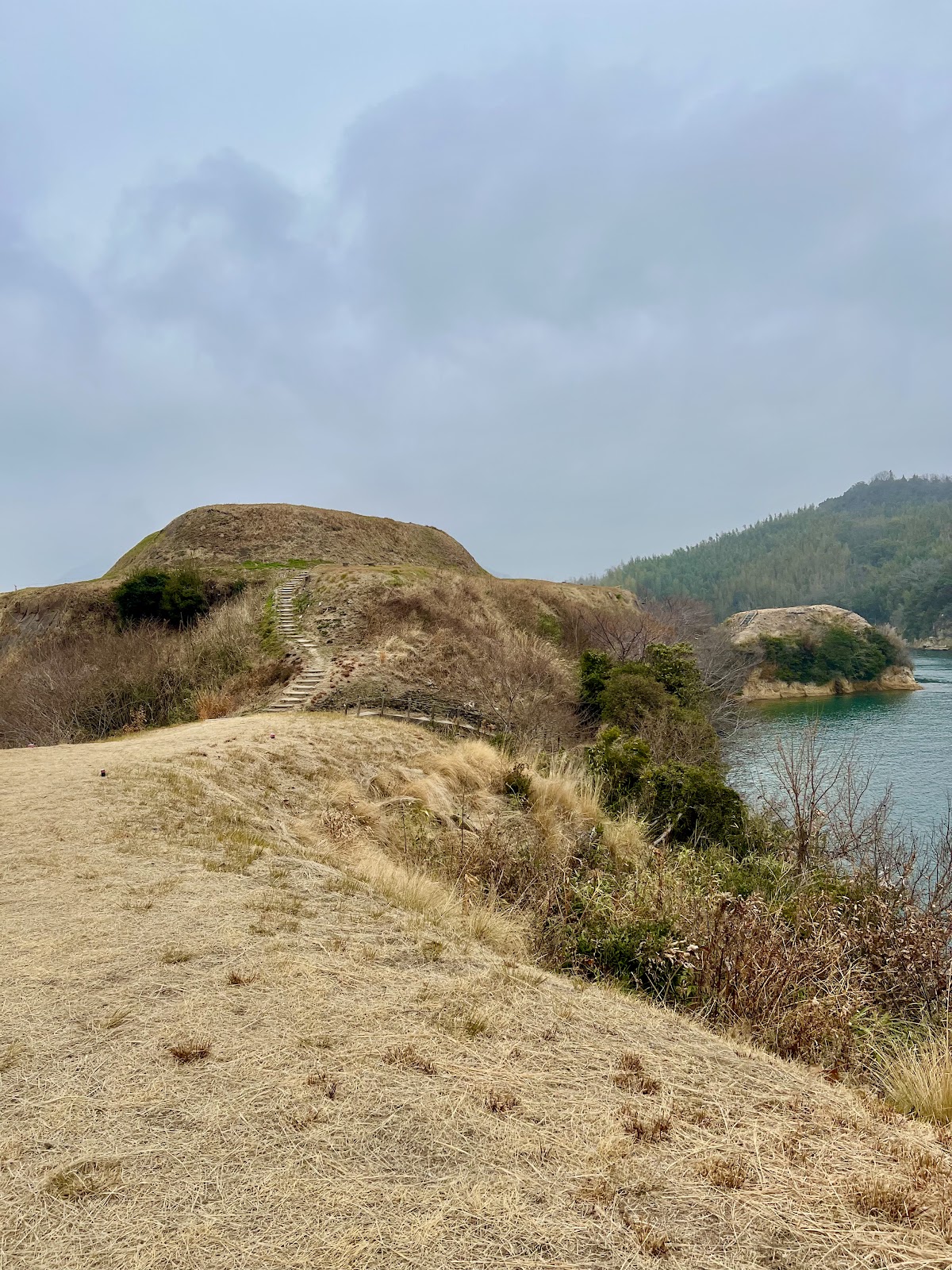
Noshima Castle is a sea castle built on Noshima Island in Miyakubo-cho, Imabari City, Ehime Prefecture, during the Sengoku period. Located in the Miyakubo Strait between Oshima and Hakata Island, it consists of Noshima Island, with a circumference of approximately 720 meters and an area of approximately 1.5 hectares, and Taizaki Island, a subsidiary island located to the south. Although currently uninhabited, it was once the base of the Noshima Murakami clan (Noshima Suigun), a maritime fortress controlling a strategic point on the Seto Inland Sea shipping route. The entire island was fortified, and instead of earthworks or stone walls, it features a unique structure that makes maximum use of the natural terrain, including strong currents and reefs.
Selected as one of the Continued Top 100 Japanese Castles
Noshima Castle was selected as one of the “Continued Top 100 Japanese Castles” in 2017. Its value as a maritime castle, its historical importance to the Murakami pirates, and the state of preservation of its existing remains were all recognized. It is also designated as a national historic site, occupying an important position in the history of Japanese castles.
History of the Murakami Pirates and the Noshima Murakami Clan
A Branch of the Mishima Murakami Suigun
The Murakami Suigun was a general term for the naval forces active in the Seto Inland Sea, divided into three branches: the Noshima Murakami clan, the Kurushima Murakami clan, and the Innoshima Murakami clan. Among these, the Noshima Murakami clan was known as the most powerful maritime force, and was described by the missionary Luis Frois as “Japan’s greatest pirates.”
However, the “pirates” referred to here differ from modern pirates; they acted like “sea checkpoints,” collecting tolls in exchange for guaranteeing the safety of maritime traffic. They were also skilled naval forces, sometimes employed by various daimyo to participate in naval battles.
Construction and Development of Noshima Castle
Noshima Castle is believed to have been built in 1419 by Murakami Yoshiaki. His eldest son, Murakami Masafusa, entered the castle, and it subsequently developed as the base of the Noshima Murakami clan.
During the Sengoku period, the Noshima Murakami clan controlled the Seto Inland Sea and expanded their power by forming alliances with powerful daimyo such as the Ouchi and Mori clans. In particular, they played a significant role in the Battle of Itsukushima (1555), cooperating with Mori Motonari and defeating Sue Harukata.
Toyotomi Hideyoshi’s Edict to Suppress Piracy and the End of Noshima Castle
The glory of the Noshima Murakami clan came to an end with Toyotomi Hideyoshi’s conquest of Shikoku. In 1585, Hideyoshi pacified Shikoku, and in 1588, he issued the “Edict to Suppress Piracy.” This prohibited the activities of the Murakami naval force, and Noshima Castle was abandoned.
Murakami Takeyoshi, the head of the Noshima Murakami clan, was forced to leave Noshima and submit to the Mori clan. From then on, Noshima became an uninhabited island, with only the remains of the castle remaining.
Structure and Characteristics of Noshima Castle
A Sea Castle Fortified on the Entire Island
The most distinctive feature of Noshima Castle is that the entire island was designed as a castle. While it lacks a typical castle tower or stone walls, it features six baileys (kuruma), each serving both defensive and residential functions.
The baileys, known as the Honmaru, Ninomaru, and Sannomaru, are arranged according to the island’s topography. Foundation stones and post holes remain in each bailey, suggesting the former presence of residences, warehouses, and barracks.
Natural Fortress | Strong Currents
The greatest defensive feature protecting Noshima Castle was the strong currents flowing around the island. The Miyakubo Strait is known as one of the fastest-flowing current areas in the Seto Inland Sea, with currents reaching up to 10 knots (approximately 18 kilometers per hour).
These currents made it difficult for enemy ships to approach the island. The Noshima Murakami clan was intimately familiar with these currents, and it is said they used the tides to skillfully maneuver their ships and outmaneuver their enemies. It was truly a “natural fortress” that made maximum use of nature.
Boat Harbor and Mooring Facilities
Noshima Castle retains the remains of a “boat harbor,” an important base for the navy. Numerous postholes (reef pits) for mooring ships have been identified in the reefs surrounding the island, and these are believed to have been used as “mooring facilities.”
Furthermore, the island’s inlet was used as a natural harbor, allowing for the concealment of numerous warships. This suggests that the Noshima Murakami clan maintained a fleet of over 100 ships at all times, enabling them to deploy quickly.
Taizaki Island | An Island Belonging to Noshima Castle
Taizaki Island, located south of Noshima, also played an important role as part of Noshima Castle. Remains of baileys and buildings have been confirmed on this island, and it is presumed to have been used as a lookout post and supply base.
The sea area between Taizaki Island and Noshima was also utilized as a ship passage and anchorage, and the two islands together formed a maritime fortress.
What Was Revealed from Archaeological Excavations at Noshima Castle
Multiple archaeological excavations have been conducted at Noshima Castle, revealing the realities of the lives and military activities of the Murakami pirates.
Building Remains and Traces of Life
Excavation surveys have uncovered numerous building foundations and postholes in each enclosure. The arrangement of these findings confirms that the main enclosure housed the residence, while barracks and warehouses stood in the other enclosures.
Furthermore, everyday items such as ceramics, pottery, and iron products have been unearthed, suggesting the high standard of living of the Noshima Murakami clan at the time. The large number of Chinese ceramics found, in particular, suggests active involvement in overseas trade.
Detailed Investigation of Mooring Facilities
Investigation of postholes (reef pits) drilled into the rocks has revealed specific methods for mooring ships. It is believed that wooden stakes were driven into these holes, and ropes were tied to them to secure the ships.
The ingenuity used to safely moor ships in areas with strong currents is evident throughout, providing valuable evidence of the Noshima Murakami clan’s advanced shipbuilding and navigation skills.
Excavation of Weapons and Armor
The excavation has unearthed weapons and armor such as sword fragments, musket bullets, and arrowheads. These are physical evidence indicating that Noshima Castle was actually the site of battle.
The discovery of musket bullets, in particular, suggests that the Noshima Murakami clan adopted firearms early on and utilized them in naval battles.
A Real Battle Occurred! The Battle of Noshima Castle
Noshima Castle was the site of several battles during its existence. The most famous was its participation in the First Battle of Kizugawaguchi in 1576.
In this battle, the Murakami navy, including the Noshima Murakami clan, sided with the Mori clan and clashed with Oda Nobunaga’s navy. The Murakami navy, utilizing firearms called Horokubiya (fire arrows), defeated the Oda navy, making their name famous throughout Japan.
Furthermore, Noshima Castle itself was attacked. During the conflict between the Ouchi and Amago clans, naval battles were fought around Noshima, testing the castle’s defensive capabilities. However, protected by the natural fortifications of strong currents, Noshima Castle never fell.
How to Get to Noshima Castle (Individual Visits Not Possible!?)
Noshima Castle is located on an uninhabited island, so individual visits are not permitted. However, it is possible to land on the island and explore the surrounding area by using sightseeing boats or tours.
Noshima Castle Landing Tours
Imabari City regularly holds sightseeing tours that include landing on Noshima Castle. Tours such as the “Noshima Castle Ruins Landing & Tidal Current Experience Cruise” allow you to explore the island with a professional guide and receive detailed explanations of the ruins.
Tours require advance reservations, and the operating schedule changes depending on the season and weather, so it is recommended to inquire with the Imabari City Tourism Association or the Murakami Suigun Museum before visiting.
Tidal Current Experience Cruise
A popular option is the “Tidal Current Experience Cruise,” which allows you to view Noshima Castle from the water without disembarking. This cruise offers a close-up experience of the powerful tidal currents around Noshima Island, giving you a real understanding of why this island became an impregnable fortress.
The tidal currents change direction between high and low tide, creating a breathtaking spectacle. Whirlpools may also occur, making this a rare opportunity to experience the power of nature.
Access Information
Tours to Noshima Castle primarily depart from Miyakubo Port on Oshima Island. Miyakubo Port can be accessed via the following methods:
By Car:
- Approximately 10 minutes from the Shimanami Kaido “Oshima Kita IC”
- Parking is available at the Murakami Suigun Museum or around Miyakubo Port.
By Public Transportation:
- Approximately 40 minutes by Setouchi Kotsu bus bound for “Omishima” from JR Imabari Station, get off at “Miyakubo”
- You can also take a ferry from Imabari Port to Oshima.
Landing on Noshima Castle! Let’s Explore
By participating in a landing tour, you can visit the main historical remains on the island with a guide.
Main Keep Site
Located at the highest point of the island, the main keep site was the location of the residence of the Noshima Murakami clan. Currently a flat area, the foundation stones and post holes allow you to imagine the building’s layout.
From the main keep, you can enjoy a panoramic view of the surrounding sea and the beautiful scenery of the Seto Inland Sea. It’s impossible not to feel the romance of history when you imagine that the head of the Noshima Murakami clan once monitored and commanded maritime traffic from here.
Enclosures
Around the main enclosure (Honmaru), there are several other enclosures, including the second and third baileys (Ninokuruwa). Each enclosure is separated by elevation changes, forming an independent defensive section.
Within the enclosures, building remains and well remains have been confirmed, indicating that the island had the necessary facilities for daily life.
Traces of Piers and Reef Pits
Numerous post holes (reef pits) for mooring ships remain on the reefs surrounding the island. These were used according to the tides and are valuable remains demonstrating the advanced navigational skills of the Noshima Murakami clan.
In particular, the remains of facilities for mooring large ships are concentrated in the inlets on the north and south sides of the island, indicating that this was the main harbor.
Remains of Taizaki Island
Remains of enclosures and buildings also remain on Taizaki Island. Although smaller than Noshima Island, it played an important role as a lookout post and supply base.
The sea between the two islands is relatively calm and is thought to have been used as a passage for ships.
Imabari City Murakami Pirate Museum (Murakami Suigun Museum): A History of the Murakami Pirates
Before or after visiting Noshima Castle, you should definitely stop by the Imabari City Murakami Pirate Museum (formerly known as the Murakami Suigun Museum). Located in Miyakubo-cho on Oshima Island, this facility offers a detailed look at the history and culture of the Murakami pirates.
Exhibits
The museum displays the history of the Murakami Suigun (Murakami Naval Force), navigation techniques, weapons and armor, and daily life items. Of particular note are the life-size models of warships and dioramas recreating naval battles.
Furthermore, numerous artifacts unearthed during the excavation of Noshima Castle are on display, allowing visitors to concretely imagine life at that time. The presence of Chinese porcelain and high-quality lacquerware suggests the high economic power of the Noshima Murakami clan.
Continued Top 100 Japanese Castles Stamp
The Murakami Pirate Museum is also the location for the Noshima Castle Continued Top 100 Japanese Castles stamp. Castle enthusiasts can get their stamp here.
Facility Information
Address: 1285 Miyakubo, Miyakubo-cho, Imabari City, Ehime Prefecture
Opening Hours: 9:00 AM – 5:00 PM (Last entry at 4:30 PM)
Closed: Mondays (or the following day if Monday is a public holiday), New Year holidays
Admission Fee: General 310 yen, Students 160 yen, Seniors (65 and over) 260 yen
Parking: Free (50 regular cars, 5 large buses)
The Edo Period and the Fate of Pirates
Due to Toyotomi Hideyoshi’s decree to suppress piracy, the Noshima Murakami clan was forced to leave Noshima. The head of the clan, Murakami Takeyoshi, served the Mori clan and moved to Nagato Province (present-day Yamaguchi Prefecture).
Afterward, some members of the Murakami clan survived as vassals of the Mori clan and played an important role as high-ranking officials of the Hagi Domain during the Edo period. Others became merchants and fishermen, scattering throughout the Seto Inland Sea.
Noshima Island became uninhabited, but it continued to play an important role as a landmark for Seto Inland Sea shipping routes. Noshima Island is even marked on Edo-period nautical charts, serving as an important indicator for navigation.
Tourist Spots Around Noshima Castle
When visiting Noshima Castle, we recommend also visiting the surrounding tourist spots.
Oshima Island
Oshima Island, the base for visiting Noshima Castle, boasts a beautiful coastline, hot springs, and restaurants where you can enjoy fresh seafood. In particular, “Yoshiumi Ikiiki-kan” offers the opportunity to purchase locally caught seafood and enjoy seafood barbecues.
Kirosan Observation Park
Kirosan Observation Park, located at the southern tip of Oshima Island, is one of the most spectacular viewpoints along the Shimanami Kaido. From the observation deck at an altitude of 307 meters, you can enjoy a panoramic view of the Kurushima Kaikyo Bridge and the islands of the Seto Inland Sea, with the sunset view being particularly breathtaking.
Hakata Island and Omishima Island
Hakata Island and Omishima Island, adjacent to the Shimanami Kaido, also offer plenty of attractions. Hakata Island is famous for “Hakata Salt,” and you can tour the salt factory. Omishima Island is home to the Oyamazumi Shrine, considered the guardian shrine of all of Japan, and houses numerous national treasures and important cultural properties of armor and weapons.
Points to Note When Visiting Noshima Castle
Reservations Required
Reservations are required for the landing tour to Noshima Castle. Especially during the spring and autumn tourist season, reservations fill up quickly, so early booking is recommended.
Cancellation Due to Weather
As this is a sea tour, operations may be cancelled depending on the weather and sea conditions. It is recommended to check the operation status the day before or the morning of your visit.
Clothing and Belongings
When exploring the island, you will be walking on rocky areas and uneven terrain, so comfortable clothing and non-slip shoes are necessary. Also, during periods of strong sunlight, bring a hat, sunscreen, and drinks.
Island Facilities
Noshima is an uninhabited island, so there are no facilities such as toilets or shops. Please complete any necessary preparations before the tour departs.
Summary | The Charm of Noshima Castle, Japan’s Only Pirate Castle
Noshima Castle in Imabari City, Ehime Prefecture, is an extremely unique structure in the history of Japanese castles. Lacking a keep or stone walls, this sea fortress, which makes maximum use of the natural force of strong currents, is unlike any other.
Noshima Castle, where you can experience the history of the Murakami pirates, maritime traffic during the Sengoku period, and the powerful force of nature in the Seto Inland Sea, is an attractive destination not only for history buffs but for all travelers.
Noshima Castle has been selected as one of the Continued Top 100 Japanese Castles and is protected as a national historical site. When visiting the Shimanami Kaido, be sure to visit this floating fortress and reflect on the glory of the Murakami Suigun, Japan’s greatest pirate force.
Through tidal current cruises and landing tours, you can experience living history that you can’t learn from textbooks. Noshima Castle, a valuable legacy of Japan’s maritime history, will undoubtedly continue to fascinate many people for years to come.