Complete Guide to Noheji Castle (Aomori Prefecture): A Thorough Explanation of the History and Remains of Kinkei Castle
What is Noheji Castle?: An Important Fortress in Aomori Prefecture
Noheji Castle (Noheji-jo) was a Japanese castle located in Noheji, Noheji-machi, Kamikita-gun, Aomori Prefecture. Also known as Kinkei Castle, it functioned as an important military and administrative base for the Hirosaki Domain during the Edo period. Currently, the castle ruins are located on the grounds of the Noheji Town Central Community Center along the right bank of the Noheji River, and the place name “Jōnai” (meaning “within the castle grounds”), which conveys the atmosphere of the past, still remains.
Noheji has long been a transportation hub as a port town facing Mutsu Bay, and during the Edo period, it flourished as a trading post connecting the Nanbu and Tsugaru regions. Due to its geographical importance, Noheji Castle was not merely a military facility, but also a key strategic point in history, playing a vital role in managing maritime traffic, controlling commercial activities, and, in the late Edo period, in the Boshin War.
History of Noheji Castle: From Construction to Abandonment
Construction and Initial Role during the Keicho Era
While there are various theories regarding the construction period of Noheji Castle, it is generally believed to have been built by the Hirosaki Domain during the Keicho era (1596-1615). After Tsugaru Tamenobu established the Hirosaki Domain, the castle was developed in Noheji as part of a policy to place branch castles and encampments in key locations within the territory.
From its inception, Noheji Castle served as a defensive base for monitoring maritime traffic in Mutsu Bay and fortifying the area near the border with the Nanbu Domain. Noheji Port was also known as a port of call for Kitamae ships and prospered as a center for the collection and distribution of goods throughout the Edo period. The castle served to protect and simultaneously supervise these economic activities.
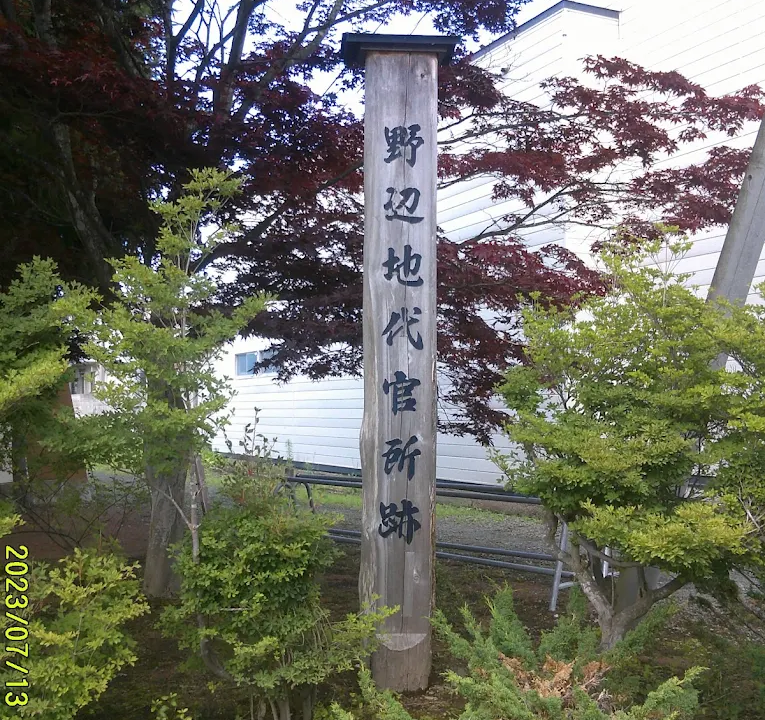
Function as the Noheji Magistrate’s Office during the Edo Period
From the mid-Edo period onward, Noheji Castle effectively functioned as the Noheji Magistrate’s Office. The Hirosaki Domain appointed a magistrate to Noheji to oversee civil administration, tax collection, and public order in the surrounding area. Domain officials were permanently stationed at the magistrate’s office, playing a crucial role as an administrative body that served as a point of contact with the local residents.
The Noheji Magistrate’s Office had a wide jurisdiction, encompassing not only the present-day Noheji town but also surrounding villages. Its main duties included supervising economic activities utilizing sea and mountain resources, particularly the management of marine products, salt monopolies, and timber distribution. The magistrate’s office was equipped with storehouses, offices, and armories, maintaining its function as a castle, albeit on a small scale.
The Boshin War and the Battle of Noheji
The most dramatic event in the history of Noheji Castle was the Battle of Noheji, which erupted in 1868 (Meiji 1). As part of the Boshin War, the Hirosaki Domain, belonging to the new government forces, and the Morioka Domain (Nanbu Domain), belonging to the former shogunate forces, clashed in the vicinity of Noheji.
Noheji was a strategically important point near the border between the two domains, and a crucial stronghold that both sides needed to secure. The Hirosaki Domain established a defensive line using Noheji Castle as its base, attempting to prevent the Morioka Domain from advancing southward. The fighting was fierce, with gun battles taking place throughout the town, resulting in numerous casualties.
Today, a graveyard for those who died in the Battle of Noheji remains in Noheji town. This cemetery, built by the Tsugaru Domain, is a valuable historical site that conveys the intensity of the battle. As a result of the war, the Hirosaki Domain emerged victorious, and Noheji came under the control of the new government.
Abandonment of the Castle After the Meiji Restoration
After the Meiji Restoration, the Hirosaki Domain ceased to exist due to the abolition of the feudal system and the establishment of prefectures, and Noheji Castle also ceased to serve its purpose. In the early Meiji period, many of the castle’s facilities were demolished, and the land was sold off to private individuals or used for public facilities. The current site of the Noheji Town Central Community Center was the former center of the castle, and the place name “Jōnai” (meaning “castle grounds”) remains in the surrounding area, preserving the memory of the past.
Structure and Layout of Noheji Castle
Characteristics as a Flatland Castle
Noheji Castle was built as a typical flatland castle. Located on the right bank of the Noheji River, on flat land near Mutsu Bay, it was surrounded by a moat. Instead of natural defensive terrain like a mountain castle, it relied on artificial moats and earthworks to enhance its defenses.
The castle was relatively small in scale and did not have a full-fledged keep. However, the necessary buildings for fulfilling the function of a magistrate’s office were already in place, including offices, residences, warehouses, and armories.
Moat and Earthwork Arrangement
The moat was a crucial defensive feature of Noheji Castle. The moat surrounding the castle prevented enemy intrusion and likely also functioned as a water moat, utilizing the waters of the Noheji River. While detailed records of the moat’s width and depth are scarce, archaeological excavations and historical documents suggest it was of considerable size.
Earthwork also played a vital role in the castle’s defense. Built by piling up earth inside the moat, it physically hindered enemy intrusion and also served as a vantage point for observation and firing from within the castle.
Castle Gates and Entrances
The castle had multiple gates, each functioning as an entrance to a specific direction. The main gates were heavily guarded, monitoring people and goods passing through. Guard posts were established around the gates, with samurai stationed there on duty.
Current Site of Noheji Castle: Remains and Points of Interest
Around Noheji Town Central Community Center
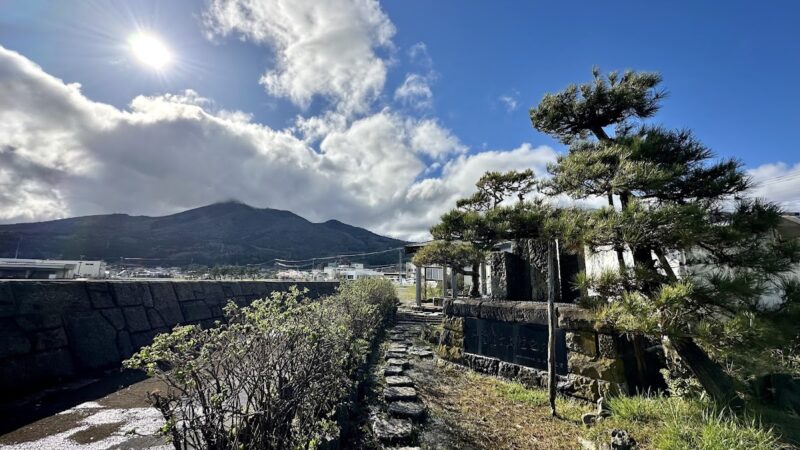
Currently, the site of Noheji Castle is used as the grounds for the Noheji Town Central Community Center. While it’s difficult to directly see traces of the former castle in the community center building and its surroundings, the topography and place names allow us to imagine its past. The place name “Jōnai” (城内), meaning “castle interior,” is important evidence that this area was once inside a castle.
Walking around the community center, one can sense the presence of castle facilities from the faint undulations of the terrain and remnants of old stone walls. Local historians and history enthusiasts are diligently preserving these traces and continuing their efforts to pass them on to future generations.
Burial Ground for Soldiers of the Noheji War
Indispensable to understanding the history of Noheji Castle is the burial ground for soldiers who died in the Noheji War. This cemetery was established by the Tsugaru Domain (Hirosaki Domain) and is the burial place of soldiers who died in the Battle of Noheji. The tombstones bear inscriptions recounting the fierce fighting of the time, serving as a reminder of the preciousness of peace to visitors.
The cemetery is located in a quiet area within Noheji town and is carefully maintained by local residents. A memorial service is held annually to comfort the souls of those who died in battle and to pass on the lessons of history to future generations.
Relationship between the Noheji River and the Castle Ruins
Noheji Castle was built on the right bank of the Noheji River. This river played a crucial role in the castle’s defense and also functioned as a natural moat. Even today, the Noheji River flows through the center of town, and a stroll along its banks allows one to understand the geographical advantages the castle once enjoyed.
While the river’s course may have changed over time, comparing it with topographical maps and old maps allows us to imagine the landscape during the Edo period.
Noheji Castle and Surrounding Historical Spots
Noheji Town Tourism and Local Products Center
For those who want to learn about the history of Noheji Castle, a visit to the Noheji Town Tourism and Local Products Center is highly recommended. Here, materials related to the history and culture of Noheji are displayed, and you can obtain detailed information about Noheji Castle and the Noheji War. Local specialties and souvenirs are also sold, making it a convenient base for sightseeing.
The center’s staff are knowledgeable about the region’s history and will kindly provide information on how to access the Noheji Castle ruins and other points of interest. A visit before your trip will allow for a more fulfilling historical exploration.
Atago Park and Eboshidake Mountain
Besides Noheji Castle, there are many other historical sites scattered throughout Noheji Town. Atago Park is located on a hill overlooking the town and offers a scenic view of Noheji town and Mutsu Bay. Perhaps the samurai of yesteryear also surveyed their territory from this spot.
Furthermore, Eboshidake is a mountain towering behind Noheji town, and in winter it is a popular destination as the Makado Onsen Ski Resort. Enjoying nature between historical explorations is one of the great pleasures of visiting Noheji.
Noheji Seaside Park and the History of Kitamae Ships
Noheji Seaside Park is a park facing Mutsu Bay, where you can feel the atmosphere of Noheji Port, where Kitamae ships once sailed. During the Edo period, Noheji Port flourished as an important port of call for Kitamae ships, bustling with trade with all over Japan.
Within the park, there are explanatory signs and monuments related to Kitamae ships, allowing you to learn about the history of maritime transport. Also, the graves of Kitamae ship sailors who died during voyages to Noheji Port or while in town, as well as ornamental finials donated by Kitamae ship owners from various regions, remain, telling the story of the prosperous trade of that time.
Access and Tourist Information for Noheji Castle
Location and Transportation Access
Location: Noheji, Noheji-machi, Kamikita-gun, Aomori Prefecture (around Noheji Town Central Community Center)
Access by Train:
- Get off at Noheji Station on the JR Tohoku Main Line or Aoimori Railway, approximately 10 minutes on foot
- Approximately 40 minutes from Aomori Station to Noheji Station, approximately 30 minutes from Hachinohe Station
Access by Car:
- Approximately 50 minutes from Aomori City via National Route 4
- Approximately 1 hour from Hachinohe City via National Route 45
- Approximately 40 minutes from Aomori IC on the Tohoku Expressway
Parking is available at the Noheji Town Central Community Center parking lot, but it is recommended to check the usage hours and conditions in advance.
Points to Note When Visiting
Since the Noheji Castle ruins are currently located within the grounds of a public facility, please observe the following points when visiting:
- Be considerate so as not to disrupt the operations of the community center.
- Do not enter private property or restricted areas.
- Do not damage or remove any remains.
- When taking photographs, be mindful of the privacy of those around you.
Nearby Accommodations and Hot Springs
There are several accommodations in Noheji Town and its surrounding areas. Hot spring facilities, especially Makado Onsen, are ideal for relaxing after a historical tour. There are also various accommodation options in the neighboring towns of Shichinohe, Aomori City, and Hachinohe City, allowing you to enjoy exploring the history of Aomori Prefecture from Noheji as your base.
Historical Significance and Evaluation of Noheji Castle
Role in the Territorial Control of the Hirosaki Domain
Noheji Castle played an important role in the territorial control of the Hirosaki Domain. Located near the border between the Tsugaru and Nanbu regions, it functioned as a front-line base for the Tsugaru side amidst the tense relations between the two domains. Furthermore, by controlling maritime transport in Mutsu Bay, it also played a role in supporting the domain’s economic base.
While serving as a magistrate’s office to administer civil affairs, Noheji Castle possessed the flexibility to quickly transform into a military base when military tensions escalated.
Strategic Importance in the Boshin War
During the Boshin War, Noheji was a crucial location that influenced the course of the war in the Tohoku region. Situated on the border between the spheres of influence of the new government forces and the former shogunate forces, the outcome of the war could have been drastically altered depending on which side controlled it.
By securing Noheji, the Hirosaki Domain was able to secure a route for the new government forces to advance from Aomori to the Shimokita Peninsula and even towards Hokkaido. Conversely, if the Morioka Domain had seized Noheji, the course of the Tohoku War might have been different.
The Position of Noheji Castle in Local History
Noheji Castle occupies a unique position in the history of castles in Aomori Prefecture. While not a large-scale castle like Hirosaki Castle or Hachinohe Castle, it played a crucial role as the political, economic, and military center of the region, deeply intertwined with the lives of the local residents.
Currently, local history research is thriving in Noheji Town, and there is a continuing movement to re-evaluate the history of Noheji Castle. Local history enthusiasts and researchers are continuing their efforts to uncover the true nature of Noheji Castle through the deciphering of ancient documents and archaeological excavations.
Historical Materials and Research on Noheji Castle
Major Historical Materials
Important historical materials for studying the history of Noheji Castle include the following:
- Hirosaki Domain Office Diary: The official record of the Hirosaki Domain, containing descriptions of the Noheji Magistrate’s Office.
- Noheji Town History: A local history compiled by Noheji Town, detailing the history of the castle.
- Boshin War Related Materials: Military records and diaries of soldiers involved in the Noheji War.
- Old Maps and Illustrations: Maps and illustrations depicting Noheji during the Edo period.
Some of these materials can be viewed at the Noheji Town Library, Aomori Prefectural Library, Hirosaki City Library, etc.
Archaeological Surveys
Several archaeological surveys have been conducted at the Noheji Castle site. Archaeological excavations conducted during public works projects and building reconstructions have unearthed traces of moats, building foundations, and pottery fragments, providing clues to the castle’s structure and the lifestyle of the time.
Further, more comprehensive excavations may reveal a more complete picture of Noheji Castle.
Recommended Itinerary for Visiting Noheji
Half-Day Course: Tour of Noheji Castle Ruins and War Historical Sites
Morning:
- Arrive at JR Noheji Station
- Gather information at Noheji Town Tourism and Local Products Center (30 minutes)
- Visit Noheji Castle Ruins (around Noheji Town Central Community Center) (30 minutes)
- Visit the graves of those who died in the Noheji War (30 minutes)
Afternoon:
- Learn about the history of Kitamae ships at Noheji Seaside Park (1 hour)
- Enjoy seafood cuisine at a local restaurant
- Enjoy a panoramic view of the town from Atago Park (30 minutes)
Full-Day Course: Enjoy the History and Nature of Noheji
In addition to the above half-day course:
- Relax at Makado Onsen (2 hours)
- Nature walk around Eboshidake (content changes depending on the season)
- Tour of historical buildings in Noheji Town
Local Cuisine of Noheji
When you visit Noheji, be sure to enjoy the local cuisine:
- Scallop Dishes: Fresh scallops caught in Mutsu Bay are exquisite.
- Squid Dishes: The area around Noheji is also known as a squid producing region.
- Noheji Leafy Turnips: A traditional Aomori Prefecture vegetable with a unique flavor.
- Local Sake: Many establishments serve sake produced in Aomori Prefecture.
Summary: The Charm of Noheji Castle and its Future Preservation
Noheji Castle is a castle that played an important role in the history of Aomori Prefecture. While it is not a castle with a large keep or stone walls, it left a definite mark on Japanese history as the political, economic, and military center of the region, and as the site of fierce battles during the Boshin War.
Currently, the castle’s remains are limited, but traces of its history remain, such as the place name “Jōnai” (meaning “within the castle”) and the graves of those who died in the Noheji War. In Noheji Town, efforts are underway to preserve these historical sites and utilize them as tourist resources.
Visiting Noheji Castle offers more than just a tour of an old castle ruin; it provides an opportunity to experience a multifaceted history, including the state of local communities during the Edo period, the turbulent era of the Boshin War, and the history of trade by Kitamae ships. When visiting Aomori Prefecture, be sure to visit Noheji and experience the rich history etched into this land.
The history of Noheji Castle has been preserved through the memories and efforts of the local people. It is hoped that local residents, researchers, and the government will continue to cooperate to pass on this valuable historical heritage to future generations. Learning, preserving, and transmitting history is a crucial foundation for building our future.