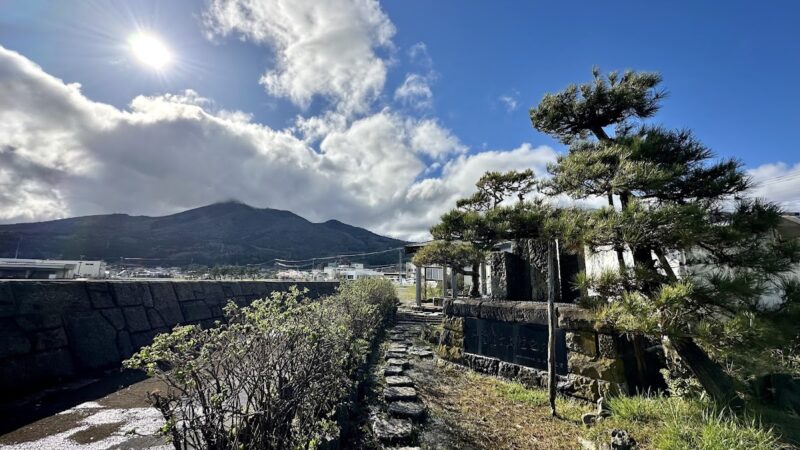
Tonami Jinya Ruins, Mutsu City (Aomori Prefecture) | A Thorough Explanation of the Historical Stage Built by Aizu Samurai
The Tonami Jinya Ruins, located in Mutsu City, Aomori Prefecture, are an important historical site that tells the story of the turbulent period from the end of the Edo period to the Meiji era. It is the historical stage where the Aizu Domain, defeated in the Boshin War, restarted as the Tonami Domain on the distant Shimokita Peninsula. As a place where the pride and hardships of the samurai are etched, it continues to attract many history enthusiasts.
This article provides a detailed explanation of the Tonami Jinya Ruins, from its historical background and topographical features to its current state and related historical sites in the surrounding Shimokita Peninsula, tracing the footsteps of the Aizu samurai.
What are the Tonami Jinya Ruins? | Historical Background and Significance
From Aizu Domain to Tonami Domain | The Path to Reconstruction
To understand the Tonami Jinya Ruins, it is necessary to first understand the historical background of the establishment of the Tonami Domain. The Aizu Domain fought fiercely against the new government forces during the Boshin War, but in September 1868 (Meiji 1), Tsuruga Castle fell, forcing the domain to surrender.
The lord of the Aizu Domain, Matsudaira Katamori, was placed under house arrest, and the Aizu Domain temporarily ceased to exist. However, in November 1869 (Meiji 2), the Meiji government permitted the restoration of the Matsudaira family name and granted Katamori’s eldest son, Kataharu, 30,000 koku in Tonami, Mutsu Province. This marked the birth of the Tonami Domain.
The name “Tonami” means “south of the Big Dipper,” representing the “northern land.” This naming reflected a determination to rebuild in the new northern lands.
Changes in the Domain’s Office | From Gonohe to Tanabu
The Tonami Domain initially established its office in Gonohe, Sannohe District (present-day Gonohe Town) in May 1870 (Meiji 3). However, Gonohe was located inland, making it inconvenient for transporting goods by sea and accommodating settlers.
Therefore, in February 1871 (Meiji 4), the domain office was moved to Entsuji Temple in Tanabu (present-day Mutsu City) on the Shimokita Peninsula. This Entsuji Temple is the site now known as the “Tonami Jinya Site.” Tanabu faces Ominato Bay, offering convenient sea transportation and making it suitable as a base for the development of the Shimokita Peninsula.
Details of Tonami Jinya (Entsuji Temple)
Location and Topographical Characteristics of the Jinya
Entsuji Temple, where the Tonami Jinya was located, is situated on a deltaic lowland formed by the Tanabu River and Ominato Bay. The topography of this area has very interesting characteristics.
A look at topographic maps reveals that the deltaic area where the Tonami Domain Jinya was located, including the sand dunes along the bay, was once the sea several thousand years ago. This area was gradually transformed into land over many years as sediment carried by the Tanabu River accumulated.
Such lowlands have poor drainage and are not necessarily suitable for agriculture. The Aizu samurai had to start a new life in this land with its harsh natural conditions.
History and Current State of Entsuji Temple
Entsuji Temple is a Soto Zen Buddhist temple that existed in Tanabu even before the establishment of the Tonami Domain. For approximately five months, from February 1871 to July 1871 (until the abolition of the feudal domains), this temple served as the Tonami Domain’s administrative office.
The current Entsuji Temple retains some of its original buildings, albeit with some renovations. Within the temple grounds, there is a stone monument and explanatory plaque marking the site of the Tonami Domain’s headquarters. It is a valuable place that preserves both its function as a temple and its historical significance.
Entsuji Temple is located in Tonamioka, Tanabu, Mutsu City, Aomori Prefecture. Situated in a quiet residential area, it doesn’t attract many visitors, but this allows visitors to quietly experience the atmosphere of that time.
Entsuji Temple is located in Tonamioka, Tanabu, Mutsu City, Aomori Prefecture. ### Domain Administration at the Jinya (Fortified Residence)
The administration of the Tonami Domain was carried out under extremely difficult circumstances. Approximately 17,000 former Aizu samurai and their families migrated, but the land they were given was cold and barren. Although the estimated yield was 30,000 koku (a unit of rice production), the actual harvest was far less.
While maintaining their samurai status, the samurai had to engage in land reclamation themselves. However, the harsh climate and undeveloped land of the Shimokita Peninsula presented unimaginable difficulties for samurai with little agricultural experience.
About the Tonami Domain | The History of the Aizu Samurai’s Hardships
The Reality of the Migration | The Mass Migration of 17,000 People
From April 1870 (Meiji 3), the migration of former Aizu samurai and their families began in earnest. The migrants landed in Aomori by sea, and from there either traveled overland to the Shimokita Peninsula or landed directly at Ominato.
The migration process was extremely arduous. After a long sea voyage, those who arrived in an unfamiliar, cold region had to start a new life with insufficient housing and food. Many perished from illness and starvation.
Life on the Shimokita Peninsula | The Harsh Reality of the Cold Region
The climate of the Shimokita Peninsula was incomparably harsher than that of the Aizu region. Summers were short and cool, and crop damage was frequent due to the influence of the yamase (cold easterly winds). Winters were characterized by deep snow and severe cold, making it extremely difficult to even secure firewood for heating.
Crop harvests were also poor. Rice cultivation was difficult due to the climate, so the focus shifted to the cultivation of grains and potatoes, but even then, it was not enough to secure sufficient food.
According to historical records, some of the samurai who migrated gathered wild vegetables and seaweed, or engaged in fishing, to stave off hunger. They had to take every possible measure to survive while maintaining their pride as samurai.
The Abolition of the Feudal Domains and the End of the Tonami Domain
In July 1871 (Meiji 4), the Meiji government implemented the abolition of the feudal domains and the establishment of prefectures, and the Tonami Domain ceased to exist after only 1 year and 8 months. The Tonami Domain became Tonami Prefecture, and was later incorporated into Aomori Prefecture.
After the abolition of the feudal domains, many former samurai left Shimokita and scattered to various places such as Hokkaido and Tokyo. However, some remained in this area and continued to cultivate the land. Their descendants still live around Mutsu City today, cherishing their ties to Aizu.
A Visit to the Tonami Domain | Touring the Tonami Jinya Ruins
Access Information
Access to the Tonami Jinya Ruins (Entsuji Temple) is as follows:
If using public transportation:
- Get off at Shimokita Station on the JR Ominato Line, approximately 30 minutes on foot.
- Approximately 10 minutes by taxi from Shimokita Station.
- Local buses running within Mutsu City are also available (however, the number of buses is limited, so prior confirmation is necessary).
If using a car:
- Approximately 2 hours and 30 minutes from Aomori City via National Route 4 and National Route 279.
- Approximately 2 hours from Hachinohe City via National Route 279.
- Approximately 5 minutes by car from the center of Mutsu City.
There are several parking spaces available on the grounds of Entsuji Temple.
Points to note when visiting
When visiting Entsuji Temple, please pay attention to the following points:
- Stone monument marking the site of the Tonami Domain’s headquarters: The stone monument located on the temple grounds indicates that this was the site of the Tonami Domain’s administrative office.
- Entsuji Temple Main Hall: Part of the original building remains, allowing visitors to experience the atmosphere of the time when it was used as the domain’s administrative office.
- Surrounding Topography: Walking around the temple grounds, you can appreciate the characteristics of a deltaic lowland. Also, observe the relative positions of the Tanabu River and Ominato Bay.
- Information Boards: Information boards located within and around the temple grounds provide detailed information about the history of the Tonami Domain.
While visits are generally free, Entsuji Temple still functions as a religious facility, so it is important to observe proper etiquette and view the site quietly.
Landing Site of the Tonami Domain | First Steps in Ominato
Overview of the Landing Site of the Tonami Domain Samurai
A monument commemorating the “Landing Site of the Tonami Domain Samurai” stands in Ominato Shinmachi, Mutsu City. It is located at 8-4 Ominato Shinmachi, Mutsu City, Aomori Prefecture, approximately a 5-minute walk from Ominato Station on the JR Ominato Line.
This location is a historical site where, in 1870 (Meiji 3), many former Aizu samurai and their families arrived by ship, setting foot on the land of Shimokita for the first time. For those who migrated by sea, this Ōminato beach marked their first steps into a new land.
Scenes from the Landing
According to historical records, the samurai who landed were exhausted from the long sea voyage and anxious about being in an unfamiliar land. However, without losing their pride as samurai, and with determination for their new lives, they dispersed from this place to various locations within the Tonami domain.
Today, a stone monument and explanatory plaque stand at the landing site, allowing visitors to imagine what it was like at that time. While gazing at Ōminato Bay, try to imagine the feelings of those who arrived in this land, far from Aizu, more than 150 years ago.
Exploring Other Tourist Spots | Historical Sites Related to the Tonami Domain in Mutsu City
Tonamigaoka Town Site
The Tonamigaoka town site is the remains of a new castle town that the Tonami Domain had planned to construct. Located in the present-day Tanabu district of Mutsu City, traces of the grid-like street layout remain in some areas.
This town was expected to develop as the center of the Tonami Domain, but the plan was thwarted midway due to the abolition of the feudal system and the establishment of prefectures. Nevertheless, some of the original street layouts have been carried over to the current town plan, allowing visitors to feel the traces of history.
Tokugenji Temple | The Family Temple of Tonami Domain Samurai
Tokugenji Temple is a temple located in Tanabu, Mutsu City, where many Tonami Domain samurai and their families are buried. The temple grounds are lined with gravestones of Tonami Domain samurai, quietly commemorating those who died before achieving their goals amidst harsh living conditions.
The gravestones bear family crests and posthumous Buddhist names characteristic of Aizu samurai, demonstrating their unwavering pride as Aizu warriors to the very end. Tokugenji Temple is located approximately 800 meters from the Tonami Jinya (fortified residence) site, and the stairs are a good landmark for easy access.
Tonami Domain Related Facilities in Mutsu City
Mutsu City also has the following facilities and historical sites related to the Tonami Domain:
- Mutsu City Library: Houses materials and books related to the Tonami Domain, making it convenient for research.
- Shimokita Peninsula Jomon Museum: Features an exhibition corner dedicated to the Tonami Domain, where visitors can see everyday items from that period.
- Tonami Domain Related Information Boards: Located throughout the city, allowing visitors to learn about history while strolling around.
Tonami Domain 150th Anniversary Project | History to the Future
2020 marked a significant milestone: 150 years since the domain’s administrative office was moved to Entsuji Temple in Tanabu in February of Meiji 4 (1871). Mutsu City implemented the “Tonami Domain 150th Anniversary Project,” deepening its sister city exchange with Aizuwakamatsu City and widely disseminating the history of the Tonami Domain.
The commemorative project included special exhibitions, lectures, and the creation of pamphlets, providing local residents and tourists with an opportunity to rediscover the history of the Tonami Domain. Mutsu City and Aizuwakamatsu City are bound by deep ties through the history of the Tonami Domain, and exchanges are expected to continue in the future.
Investigating the Topography Around the Tonami Jinya Ruins
Formation Process of the Deltaic Lowland
As mentioned above, the Tanabu district, where the Tonami Jinya Ruins are located, is a deltaic lowland formed by the Tanabu River and Ominato Bay. A closer look at the topographic map reveals that the elevation of this area is very low, only a few meters above sea level, and the ground is soft.
Several thousand years ago, this area was the sea. Sediment carried from upstream by the Tanabu River accumulated at the river mouth, gradually transforming it into land. Even today, the area faces a risk of flooding during heavy rains, making flood control measures crucial.
The Impact of Topography on the Tonami Domain Samurai
Such low-lying wetlands were unsuitable for agriculture. Poor drainage, combined with a cool climate, made rice cultivation extremely difficult. The Tonami domain samurai attempted to cultivate land at higher elevations and inland, but these areas were also undeveloped wilderness and forests, requiring enormous labor for development.
Geographical constraints were a major factor in weakening the economic base of the Tonami domain. While its official assessed yield was 30,000 koku, actual harvests fell far short, and the domain’s finances were constantly strained.
Shimokita Peninsula and the Tonami Domain | Historical Heritage of Aomori Prefecture
Geographical Characteristics of the Shimokita Peninsula
The Shimokita Peninsula is an axe-shaped peninsula located in the northeastern part of Aomori Prefecture. It features Cape Oma, the northernmost point of Honshu, and has a unique topography surrounded by the sea on three sides.
The climate is cool, with low temperatures even in summer, and harsh winters with heavy snowfall. This environment proved incredibly difficult for the samurai who migrated from Aizu.
The Position of the Tonami Domain in Aomori Prefecture
The Tonami Domain is a unique entity in the history of Aomori Prefecture. Although it existed for only a short period of 1 year and 8 months, it brought the culture and traditions of the distant Aizu region to this area.
Even today, exchanges between Mutsu City and Aizuwakamatsu City continue, and the residents of both cities are bound by a shared history of the Tonami Domain. The Tonami Domain is an indispensable and important element when discussing the history of Aomori Prefecture.
Model Course for Visiting Tonami Domain Historical Sites
We introduce a model course for efficiently visiting historical sites related to the Tonami Domain.
Half-Day Course (Approx. 3-4 hours)
- JR Ōminato Station (Start)
- Landing Site of Tonami Clan Samurai (5-minute walk, 15-minute visit)
- Entsūji Temple (Tonami Jinya Site) (10-minute drive, 30-minute visit)
- Tonamigaoka Town Site (10-minute walk, 20-minute visit)
- Tokugenji Temple (10-minute walk, 30-minute visit)
- Mutsu City Center (Goal)
Full-Day Course (Approx. 6-7 hours)
In addition to the half-day course, you can also visit the following locations.
- Shimokita Peninsula Jomon Museum: Visit the Tonami Domain exhibit
- Mutsu City Library: View Tonami Domain-related materials
- Restaurants in Mutsu City: Enjoy local seafood dishes
- Around Ominato Bay: Stroll along the coast and imagine the scenery seen by the samurai of that time
Summary | The Historical Weight Conveyed by the Tonami Jinya Ruins
The Tonami Jinya Ruins in Mutsu City, Aomori Prefecture, is a valuable historical site that conveys the hardships and pride of the Aizu samurai who lived through the turbulent times from the end of the Edo period to the Meiji era. The domain office, located at Entsuji Temple, lasted for only a short period of five months, but it bears the strong will of those who tried to survive in a new land while maintaining their pride as samurai.
In the harsh natural environment of the Shimokita Peninsula, many samurai lost their lives before achieving their goals. However, their efforts were by no means in vain. The land pioneered by the Tonami Domain samurai formed the foundation of present-day Mutsu City, and is now maintained by their descendants and local residents.
When visiting the Tonami Jinya (fortified residence) site, please don’t view it merely as a tourist attraction, but rather as a place where you can quietly contemplate the weight of history. Standing on the banks of the Tanabu River and gazing at Ominato Bay, imagining the thoughts of the Aizu Domain samurai who began their new lives here more than 150 years ago will make modern Japanese history feel more tangible.
Mutsu City has many historical sites related to the Tonami Domain. Why not explore them with a map in hand, tracing the threads of history connecting Aizu and Shimokita? Though simple, exploring while contemplating history will provide a deeply meaningful experience.