Complete Guide to Shichinohe Castle (Kashiwaba Castle) | Thorough Explanation of History, Highlights, and Access Information
What is Shichinohe Castle? | An Overview of a Representative Medieval Castle in Aomori Prefecture
Shichinohe Castle (Shichinohe-jo) is a medieval castle designated as a national historic site, located in Shichinohe-machi, Kamikita-gun, Aomori Prefecture. Also known as Kashiwaba Castle, it is known as a flatland castle that served as the residence of the Shichinohe Nanbu clan for generations.
The castle was built on a hill approximately 40 meters above sea level on the left bank of the Sakuta River, a tributary of the Shichinohe River, with a relative height of approximately 15 meters. Currently, it is maintained as Kashiwaba Park, a place of relaxation for citizens. However, the remains such as earthworks and dry moats are well-preserved, making it a valuable historical site that conveys the history of the Nanbu clan’s expansion of power in Mutsu Province during the medieval period.
The castle grounds are vast and feature a complex layout consisting of seven enclosures: the main keep, second enclosure, north enclosure, corner enclosure, west enclosure, lower enclosure, and Hosen enclosure. Each enclosure possesses a distinctive structure that demonstrates its independence. It was designated a national historic site in 1941, and archaeological excavations are still ongoing.
History of Shichinohe Castle | From the Nanbu Clan’s Residence to the Kunohe Rebellion
Construction History and Early Period
There are various theories regarding the construction date of Shichinohe Castle, but the most widely accepted theory is that it was built by Nanbu Masamitsu. It is believed that Nanbu Masamitsu, the eighth head of the Nejo Nanbu family, entered Shichinohe in 1392 (Meitoku 3) and built the castle.
The Shichinohe area is said to have been settled as early as the late Heian period, and it is also said that there was originally an Ezo residence there. During the Kamakura period, Kudo Ukon-no-Shogen is believed to have resided in this area. Subsequently, after the Kenmu Restoration, the lords of the territory changed hands between the Date, Yuki, and Nanbu clans.
Shichinohe Castle during the Nanboku-cho period
During the Nanboku-cho period, Shichinohe Castle, along with Hachinohe-ne Castle, played a crucial role as a major base for the Southern Court. During this time, the Nanbu clan sided with the Southern Court and expanded their power in Mutsu Province. The Shichinohe Nanbu clan established this base and strengthened their influence over the surrounding areas.
From the Muromachi to the Sengoku period
Throughout the Muromachi period, Shichinohe Castle continued to function as the residence of the Shichinohe Nanbu clan. The Shichinohe Nanbu family, as a powerful branch of the Nanbu clan, held an important position in northern Mutsu Province. Archaeological excavations have revealed that the castle underwent expansion and renovation during this period.
The Kunohe Rebellion and the End of Shichinohe Castle
The greatest turning point in the history of Shichinohe Castle was the Kunohe Rebellion that occurred in 1591. At this time, Shichinohe Ekuni, the head of the Shichinohe Nanbu family, along with Kunohe Masazane, a powerful figure within the Nanbu clan, rebelled against the Toyotomi regime carrying out the pacification of Oshu.
The Kunohe Rebellion was suppressed by a large-scale punitive force dispatched by Toyotomi Hideyoshi, and Kunohe Masazane was executed after surrendering. Shichinohe Ekuni also suffered the fate of extinction due to his involvement in this rebellion, and the history of the Shichinohe Nanbu clan came to a temporary end here.
Shichinohe and the Castle Ruins in the Early Modern Period
In the early Edo period, the Shichinohe area came under the control of the Morioka Domain (Nanbu Domain). Subsequently, in 1664 (Kanbun 4), the Shichinohe Domain was established, with Nanbu Naofusa becoming its first lord. However, since the domain’s administrative center was located in a newly constructed encampment rather than Shichinohe Castle, it is believed that Shichinohe Castle had already been abandoned by this time.
Structure of Shichinohe Castle | A Complex Layout Consisting of Seven Enclosures
Overall Castle Layout
Shichinohe Castle is a flatland castle built on a hill north of the point where the Sakuta River merges with the Takase River. The castle grounds extend approximately 600 meters east-west and 400 meters north-south, and consist of the following seven main enclosures:
- Honmaru
- Ninokuruwa
- Kitakan
- Kakunokan
- Nishikan
- Shimodate
- Hosenkan
Each of these enclosures is independent and separated by dry moats and earthen ramparts. Furthermore, outer baileys such as the South Outer Bailey, West Outer Bailey, Kai-no-kuchi Bailey, and Northwest Outer Bailey have also been confirmed, indicating a multi-layered defensive structure.
Main Bailey and Second Bailey
Traditionally, the main bailey was considered the center of the castle, but recent archaeological excavations have suggested that the North Bailey may have been the actual center of Shichinohe Castle. The main bailey gate is said to have been relocated to Seiganji Temple, and the remains of the East Gate have also been confirmed.
The second bailey area is currently developed as Kashiwaba Park, a popular recreational area for citizens. Walking paths are provided within the park, allowing visitors to observe the remains such as earthworks and dry moats up close.
Characteristics of Defensive Structures
The defensive structures of Shichinohe Castle exhibit strong characteristics of medieval castles.
- Dry Moat: Deep dry moats surround each enclosure.
- Earthwork: Earthworks surrounding the enclosures remain in good condition.
- Outer Enclosure/Lower Enclosure: Arranged around the main enclosure, enhancing its defensive capabilities.
- Tiger’s Mouth: Multiple gates serving as entrances to the enclosures have been identified.
- Warrior’s Hidden Places: Measures to prevent enemy intrusion are evident throughout the site.
These remains indicate that Shichinohe Castle was not merely a residence, but a full-fledged military base designed for combat.
Importance of the North Enclosure
Recent excavations have confirmed numerous artifacts from the North Enclosure, revealing that this enclosure played a central role in the castle’s function. Artifacts such as ceramics, weapons, and daily necessities suggest the possibility that the lord’s residence was located here.
There is a possibility that the location of the main enclosure was changed in the early modern period, making it an important subject of research for understanding the castle’s transformation process.
Highlights of Shichinohe Castle | Experiencing Medieval Ruins Firsthand
Castle Ruins Developed as Kashiwaba Park
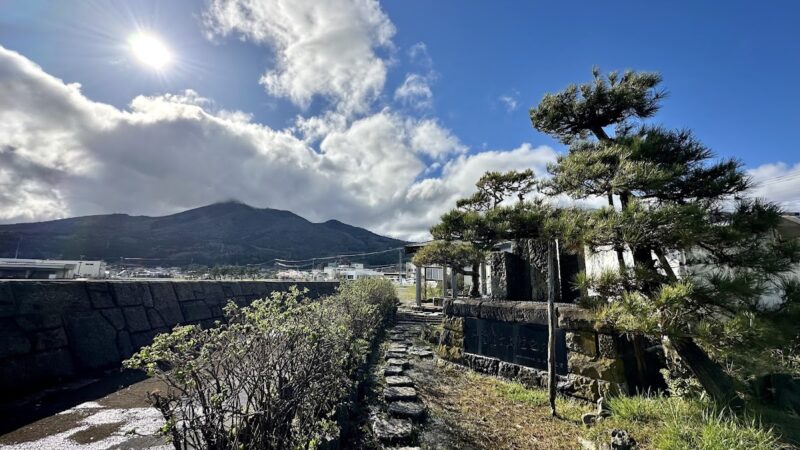
The central part of the Shichinohe Castle ruins has been developed as Kashiwaba Park, balancing historical preservation with public access. Walking paths are provided within the park, allowing visitors to stroll through the castle ruins while enjoying the changing seasons.
In spring, cherry blossoms bloom, making it a popular spot for flower viewing. In autumn, the autumn foliage is beautiful, creating a deeply evocative landscape that complements the historical atmosphere of the castle ruins.
The Impressive Earthworks and Dry Moats
The greatest highlight of Shichinohe Castle is its well-preserved earthworks and dry moats. The earthworks around the main keep, in particular, are impressive in height, demonstrating the advanced castle-building techniques of the time. The dry moats are also deep, clearly demonstrating their function as defensive structures to prevent enemy intrusion.
By walking along the paths and observing these ruins up close, you can experience firsthand how medieval castles were constructed.
Layout and Views of Each Enclosure
Walking through the castle ruins, you’ll notice the ingenious layout of each enclosure. The hilly terrain is skillfully utilized, creating a structure where each enclosure maintains its independence while simultaneously being able to cooperate with others.
From the high ground, you can enjoy a panoramic view of Shichinohe town, allowing you to imagine how the castle lord once surveyed his territory from this spot. You can also see the Sakuta River and the surrounding topography, helping you understand why the castle was built in this location.
Relocated Castle Gate
The main castle gate is said to have been relocated to Seiganji Temple within the town. When visiting the castle ruins, it’s recommended to also visit Seiganji Temple to see the former castle gate. The relocated gate is a valuable example of one of the few remaining architectural structures of Shichinohe Castle.
Results of Archaeological Excavations
Excavations are continuously being conducted at the castle ruins, and new discoveries are constantly being made. The pottery, weapons, and daily necessities unearthed through these excavations are valuable resources for understanding the life and culture of the castle at that time. The research findings may be exhibited at cultural property facilities in Shichinohe Town, so it’s a good idea to check the information before visiting.
Genealogy of the Shichinohe Nanbu Clan and Castle Lords
Establishment of the Shichinohe Nanbu Clan
The Shichinohe Nanbu clan was a branch of the Nanbu clan that established power in northern Mutsu Province. The Nanbu clan was a prestigious family descended from the Kai Genji clan and expanded into Mutsu Province during the Kamakura period.
After Nanbu Masamitsu entered Shichinohe in 1392, the Shichinohe Nanbu family ruled this area for generations, expanding their influence in the surrounding region.
Successive Castle Lords
The successive heads of the Shichinohe Nanbu family maintained relations with the main Nanbu family while forming their own spheres of influence. They were particularly active as powerful daimyo in northern Mutsu Province during the Sengoku period.
The last castle lord, Shichinohe Iekuni, is known for rebelling against the Toyotomi regime along with Kunohe Masazane. The defeat in the Kunohe Rebellion led to the extinction of the Shichinohe Nanbu family, bringing an end to the history of Shichinohe Castle.
The Legend of the Princess’ Tomb
The Legend of the Princess’ Tomb is associated with Shichinohe Castle. This legend, a tragic tale related to the castle, has been passed down in the region, adding a human depth to the castle’s history.
While the details of the legend vary from region to region, it is a valuable folk tale conveying the suffering of people during a time of war, and is an interesting element in understanding the history of Shichinohe Castle.
Access Information | How to Get to Shichinohe Castle
Location
Address: Shichinohe, Shichinohe-machi, Kamikita-gun, Aomori Prefecture
The Shichinohe Castle Ruins (Kashiwaba Park) are located north of the Shichinohe Town Hall.
Access by Public Transportation
Train:
- Approximately 15 minutes by car from Shichinohe-Towada Station on the Aoimori Railway
- Approximately 15 minutes by car from Shichinohe-Towada Station on the JR Tohoku Shinkansen
Bus:
- Buses operating within Shichinohe Town are available, but the number of services is limited, so it is recommended to check the timetable in advance.
Access by Car
Expressway:
- Approximately 5 minutes from Shichinohe IC on the Kamikita Expressway
- Approximately 15 minutes from Shichinohe-Towada IC on the Tohoku Expressway
Parking:
Kashiwaba Park has a parking lot that is free to use.
Visiting Information
Visiting Hours: Kashiwaba Park is open at all times
Admission Fee: Free
Estimated Time Required: Approximately 1-2 hours for a thorough visit
Nearby Tourist Attractions
Shichinohe Town Takayama Yuichi Memorial Museum
This museum exhibits the works of Takayama Yuichi, a sculptor from Shichinohe Town. Located about a 5-minute drive from the Shichinohe Castle ruins, this is a place where you can experience local arts and culture.
Seiganji Temple
This temple is said to have been built using the main gate of Shichinohe Castle. It’s a must-visit spot when visiting the castle ruins.
Michi-no-Eki Shichinohe (Roadside Station Shichinohe)
This roadside station offers Shichinohe town’s specialty products and fresh local produce. There’s also a restaurant where you can enjoy local flavors.
Tenmabayashi Apple Orchard
Aomori Prefecture is known as a famous apple-producing region. There are many apple orchards around Shichinohe town, and you can enjoy apple picking in the autumn.
Preservation and Utilization of Shichinohe Castle
Protection as a National Historic Site
The Shichinohe Castle ruins were designated a national historic site in 1941 and are protected as a cultural property. Due to the historic site designation, development activities are restricted, and efforts are being made to preserve the remains.
Ongoing Archaeological Excavations
The Shichinohe Town Board of Education is leading ongoing archaeological excavations. These excavations are gradually revealing the castle’s structure, its history, and the lifestyle of the time, increasing its academic value.
Coexistence with the Community
The Shichinohe Castle ruins have been developed as Kashiwaba Park, balancing the preservation of the historical site with its use as a place of recreation for local residents. This initiative is highly regarded as a good example of cultural property preservation and utilization.
The park is also used for community activities such as the spring cherry blossom festival and autumn events, making the historical site deeply rooted in the community.
Future Prospects
Shichinohe Town is planning further development and utilization of the Shichinohe Castle ruins. The installation of explanatory signs based on the excavation results and the restoration and maintenance of the remains are being considered, with the aim of developing a more accessible and attractive historical park.
Furthermore, the creation of restoration CG using digital technology and the provision of on-site information using AR are also being considered, promoting the appeal of the historical site through modern methods.
Summary | The Historical Value and Charm of Shichinohe Castle
Shichinohe Castle is an important historical site that tells the story of the Nanbu clan’s expansion into Mutsu Province and the growth of their power. From the late Kamakura period to the Sengoku period, it functioned as the residence of the Shichinohe Nanbu clan, and during the Nanboku-cho period, it played a crucial role as a base for the Southern Court.
Although the Shichinohe Nanbu family was wiped out in the Kunohe Rebellion of 1591, and the castle’s history came to an end, the well-preserved remains such as earthworks and dry moats are valuable resources for understanding the structure of medieval castles.
The complex layout, composed of seven enclosures, demonstrates the high level of castle-building technology of the time. The independence of each enclosure and the arrangement of defensive facilities clearly represent the characteristics of castle architecture from the Sengoku period.
Currently, the castle ruins, developed as Kashiwaba Park, maintain their value as a historical site while also functioning as a place of relaxation for local residents, serving as a good example of cultural property preservation and utilization.
When you visit Aomori Prefecture, be sure to stop by the Shichinohe Castle Ruins and experience the history and culture of medieval Mutsu Province. The impressive earthworks and dry moats, the panoramic views from the hillside, and the tranquil atmosphere of the park will allow you to reflect on the historical dramas that once unfolded in this very place.