Complete Guide to Nanbu-han Sawara Jinya (Hokkaido) | A Thorough Explanation of the History and Highlights of this National Historic Site
What is Nanbu-han Sawara Jinya?
The Nanbu-han Sawara Jinya (Nanbu Domain Sawara Camp) was a military base established by the Morioka Domain (Nanbu Domain) during the late Edo period by order of the Edo Shogunate to guard Ezo (Hokkaido). Located in the present-day Sawara district of Mori-cho, Kayabe-gun, Hokkaido, it is designated as a national historic site as one of the “Nanbu Domain Camp Sites in Eastern Ezo.”
Built on a coastal terrace approximately 100 meters inland from the coast of Uchiura Bay (Funka Bay), this camp housed approximately 50 samurai from the Ansei period to the Meiji Restoration, playing a crucial role in northern defense. Even today, the remains of the earthworks and moats are well-preserved, making it a valuable historical heritage site that conveys the northern defense system of the late Edo period.
Historical Background of the Nanbu Domain’s Sunahara Jinya (Fortified Residence)
Ezo Guard and the Shogunate’s Policy Shift
From the late 18th to the early 19th century, foreign ships, including Russian vessels, frequently appeared in the waters surrounding Ezo (present-day Hokkaido). This posed a serious threat to the Edo Shogunate, which maintained its isolationist policy.
In 1799 (Kansei 11), the Shogunate designated eastern Ezo as a shogunate-controlled territory and ordered the Tsugaru and Nanbu domains to guard it. However, in 1821 (Bunsei 4), Ezo was temporarily returned to the Matsumae domain, and the Nanbu domain’s guard duties were relieved.
Strengthening Northern Guard During the Ansei Era
With the signing of the Treaty of Peace and Amity between Japan and the United States in 1854 (Kaei 7), Hakodate was opened to foreign trade, and Ezo once again became a shogunate-controlled territory. In April 1855 (Ansei 2), the shogunate ordered five domains—Sendai, Akita, Nanbu, Tsugaru, and Matsumae—to share the responsibility of guarding Ezo (present-day Hokkaido).
At this time, the Nanbu domain was primarily assigned the guarding of Hakodate Omote-zaki, as well as the security of a vast coastline from Cape Esan to Horobetsu in eastern Ezo (present-day Noboribetsu City). To fulfill this mission, the Nanbu domain was compelled to establish multiple encampments.
Establishment and Operation of the Sunahara Encampment
The Nanbu domain established its main encampment north of Yachigashira in Hakodate, making it its base. Furthermore, to cover its guard area, it established the Mororan Encampment (outpost) in Hekereota (Muroran), the Oshamanbe Encampment in Oshamanbe, and the Sunahara Sub-Encampment (Sunahara Encampment) in Sunahara.
In 1856 (Ansei 3), the Sunahara Jinya (fortified residence) was located in Yonken-machi, with approximately 50 soldiers permanently stationed there. Small guard posts were established in the town of Sunahara, beside the shrine, and at the foot of Mount Komagatake, creating a comprehensive coastal surveillance system.
The Meiji Restoration and the Abolition of the Jinya
With the Meiji Restoration, the shogunate’s control over Ezo (Hokkaido) came to an end. The Nanbu clan samurai withdrew to Morioka, and the Sunahara Jinya and other fortified residences were abolished. The sites of the former fortified residences were left neglected for a long time, but their historical value was recognized, and on May 1, 1934 (Showa 9), they were designated a national historic site as the “Site of the Nanbu Clan Jinya in Eastern Ezo.” Furthermore, on August 22, 1974 (Showa 49), an additional designation was made, expanding the area of preservation.
Structure and Remains of the Sunahara Jinya
Location and Topography of the Jinya
The Sunahara Jinya was built on a coastal terrace approximately 100 meters inland from the coast of Uchiura Bay. This location was a strategic choice, making it easy to monitor enemy attacks from the sea and mitigating the risk of disasters such as tsunamis. By utilizing the natural topography of the terrace, the construction was enhanced while minimizing labor.
Arrangement of Earthworks and Moats
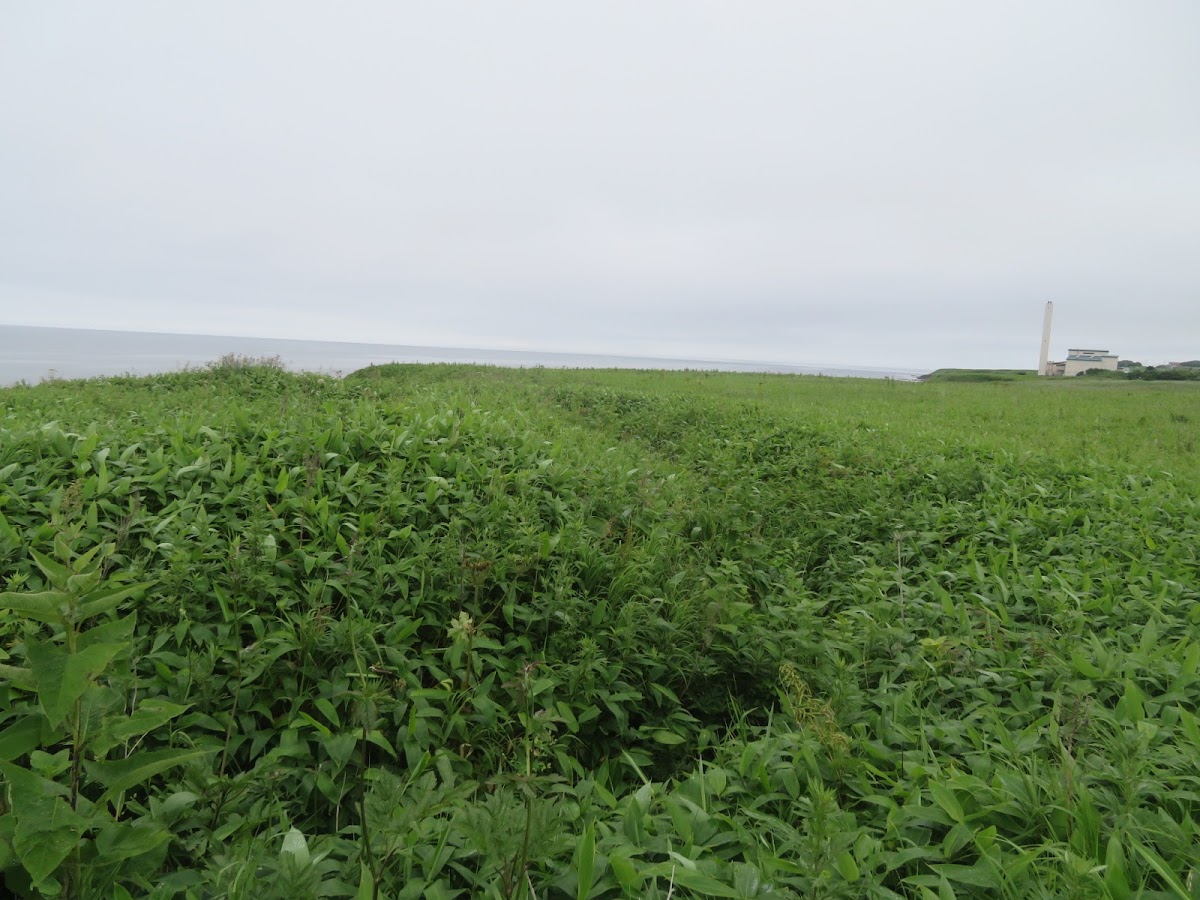
The main remains that can still be seen today are earthworks and moats. These represent a typical defensive structure for military facilities in the late Edo period. The earthworks were built surrounding the jinya, preventing enemy intrusion and obscuring the view of the interior from the outside.
The moats were dug outside the earthworks, further making enemy approach difficult. These structures, which applied the techniques of early modern castle construction, are valuable historical documents illustrating the level of castle construction technology of the Nanbu Domain at that time.
Building Layout and Function
According to historical records, it is believed that the encampment contained barracks, warehouses, and buildings with administrative functions. Since approximately 50 samurai were permanently stationed there, it is presumed to have been a complex structure integrating living spaces and military facilities.
Small guard posts (observation posts) located in the town, beside the shrine, and at the foot of Mount Komagatake functioned as surveillance bases separate from the main encampment, forming a wide-ranging security network.
Current Status of the Sunahara Encampment Site
Development as a Historical Park
Currently, the Sunahara Encampment Site has been developed as a historical park. Located at 359-1 Sunahara 3-chome, Mori-cho, Kayabe-gun, Hokkaido, it is open to visitors as a place to learn about history.
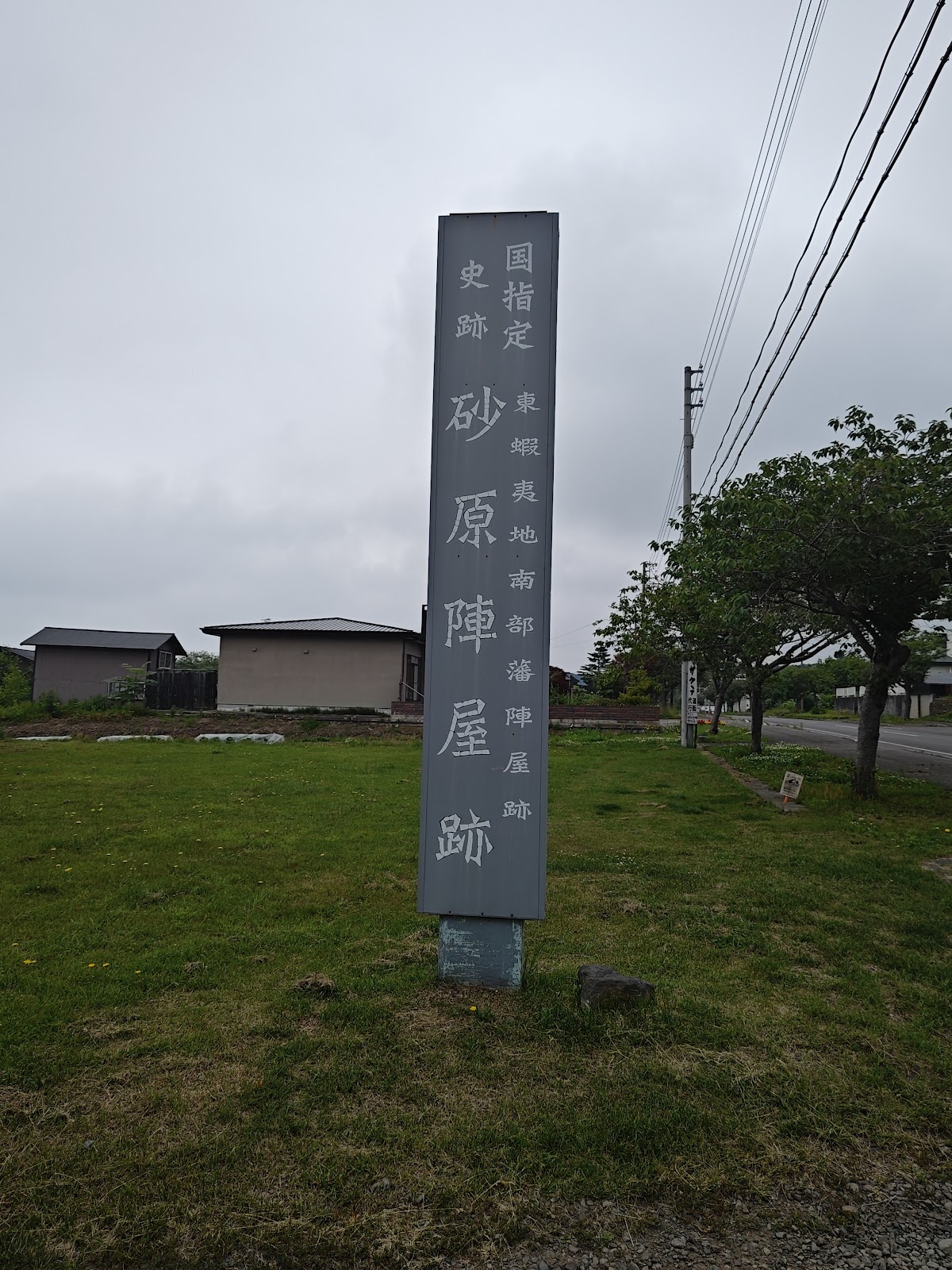
A stone monument stands at the park entrance, indicating that this site is a nationally designated historical site. Care has been taken to preserve the remains in their original state as much as possible, allowing visitors to visually confirm the shape of the earthworks and moats.
Preservation Status and Highlights
The greatest highlight of the Sunahara Jinya Ruins is the well-preserved remains of the earthworks and moats. The fact that structures from approximately 170 years ago have survived to this day is a testament to the region’s efforts in historical preservation.
By observing the height of the earthworks, the depth of the moats, and their arrangement, you can experience the defensive philosophy and fortification techniques of the time. Furthermore, by confirming the location on a coastal terrace, you can understand why this site was chosen.
When visiting the site, it is recommended to first observe from a vantage point to grasp the overall layout of the Jinya, and then examine the details of the earthworks and moats.
Eastern Ezo Nanbu Domain Jinya Ruins Group
The Sunahara Jinya did not exist in isolation, but was part of a network of Jinya established by the Nanbu Domain. These entire groups are designated as a national historic site under the name “Eastern Ezo Nanbu Domain Jinya Ruins.”
Mororan Jinya (Muroran City)
The Mororan Jinya was established in Muroran City as a branch office of the Nanbu Domain. It was an important base utilizing Muroran’s natural harbor, functioning as a monitoring point for maritime traffic and a center for the collection of supplies.
Oshamanbe Jinya (Oshamanbe Town)
The Oshamanbe Jinya was established in Jinya-cho, Oshamanbe Town, Yamakoshi District. Located midway along the Uchiura Bay coast, it is believed to have also served as a relay point for communication and information transmission between the various Jinya.
Moto Jinya (Hakodate City)
The Moto Jinya, located north of Hakodate Yachigashira, was the headquarters for the Nanbu Domain’s defense of Ezo (Hokkaido). It functioned as a command center, liaising with the Hakodate Magistrate’s Office and issuing instructions to various sub-stations.
These four Jinya worked together to effectively guard the vast coastline from Cape Esan to Horobetsu.
Access Information
Access by Public Transportation
By JR Train:
- Approximately 14 minutes by car from JR Hakodate Main Line “Mori Station”
- Taking a taxi from Mori Station is convenient
- Bus service is limited, so we recommend checking the timetable in advance.
Access by Car
From Hakodate:
- Use National Route 278
- Approximately 50km from Hakodate city center, about 1 hour by car
From Sapporo:
- Use the Hokkaido Expressway and exit at Onuma Park IC
- Then, approximately 40 minutes via National Route 5 and National Route 278
Parking:
- Parking spaces are available around the historical park (please contact Mori Town Hall for details)
Address and Basic Information
- Location: 3-359-1 Sunahara, Mori-cho, Kayabe-gun, Hokkaido 049-2222
- Admission Fee: Free
- Visiting Hours: Open 24 hours (however, nighttime visits are not recommended)
- Inquiries: Mori Town Board of Education, Social Education Division, Cultural Properties Section
Nearby Tourist Attractions
Mount Komagatake
Mount Komagatake, visible from the Sunahara Jinya (fortified residence), is an active volcano with an elevation of 1,131 meters. Its beautiful conical shape is a landmark of Uchiura Bay, and it has watched over the region in the same form since the Jinya era. Hiking and trekking are also enjoyable.
Onuma Quasi-National Park
Located about 30 minutes by car from Mori Town, Onuma Quasi-National Park is a scenic area consisting of Onuma, Konuma, and Junsai-numa, formed by the eruption of Mount Komagatake. It is one of Hokkaido’s leading tourist destinations where you can enjoy the beauty of nature throughout the seasons.
Seafood of Mori Town
Mori Town, facing Uchiura Bay (Funka Bay), is rich in seafood such as scallops and squid. You can enjoy fresh seafood at local restaurants and markets.
Sunahara Onsen (Hot Springs)
The Sunahara area has several hot spring facilities where you can relax and unwind after exploring the historical sites.
Cultural Properties and History of Mori Town
Besides the Sunahara Jinya Ruins, Mori Town has many other cultural properties. The Mori Town Board of Education has created a cultural property map, which can be used with Google Maps to locate each property.
Historical Background of Mori Town
Mori Town is the only municipality in Hokkaido that uses the word “machi” (town) in its name (others use “cho”). It prospered from forestry and fishing during the Meiji era and developed as an important port town along the Uchiura Bay.
On April 1, 2005, the former Sunahara Town and Mori Town merged to form the current Mori Town. While the town names in the former Sunahara Town area changed with this merger, historical heritage sites such as the Sunahara Jinya Ruins have been carefully preserved.
Visitor’s Guide for History Enthusiasts
Points to Note During Your Visit
- Observation of the Earthworks: Observe the height, width, and slope angle of the earthworks to understand the defensive structure.
- Depth of the Moat: Imagine the level of defensive strength from the depth and width of the moat.
- Location Confirmation: Experience the topographical features of the coastal terrace.
- Direction Confirmation: Confirm the direction of the sea and experience the surveillance line of sight.
- Surrounding Environment: Understand the positional relationship with Mount Komagatake and Uchiura Bay.
Recommended Photography Spots
- The stone monument at the entrance is a classic spot for commemorative photos.
- Photos with the earthworks in the background convey the scale of the ruins.
- On sunny days, you can photograph the encampment ruins with Mount Komagatake in the background.
- The oblique light in the early morning or evening highlights the unevenness of the earthworks, allowing for impressive photographs.
Best Time to Visit
- Spring (April-June): After the snow melts, the fresh greenery is beautiful.
- Summer (July-August): This is the easiest season to visit, but be sure to take precautions against insects.
- Autumn (September-October): The combination of autumn leaves and Mount Komagatake is beautiful.
- Winter (November-March): Snow cover makes sightseeing difficult, but the snowscape is fantastic.
Required Time
- Visiting only the Jinya ruins: 30 minutes to 1 hour
- Visiting including surrounding cultural properties: 2 to 3 hours
- When combined with sightseeing in Mori Town: Half a day to a full day
Related Historical Events
Connection to the Hakodate War
During the Hakodate War (the final phase of the Boshin War), which took place from 1868 to 1869, the former shogunate forces occupied Hakodate. During this period, the Nanbu domain sided with the new government, and it is believed that the samurai at the Sunahara Jinya were affected by this turmoil.
The Origins of the Northern Territories Issue
The Nanbu Domain’s order to guard Ezo (Hokkaido) stemmed from Russia’s southward expansion policy. The tensions in Russo-Japanese relations during this period were a contributing factor to the later Northern Territories issue. The Sunahara encampment was located on the front lines of this international situation.
The Nanbu Domain’s Management of Ezo
About the Morioka Domain (Nanbu Domain)
The Nanbu Domain was a large domain that ruled over the area from northern Iwate Prefecture to eastern Aomori Prefecture, with a rice yield of approximately 100,000 koku. The Nanbu clan was a prestigious family descended from the Kai Genji clan, and they remained a powerful daimyo in the Tohoku region throughout the Sengoku and Edo periods.
The Burden of Guarding Ezo
Guarding Ezo was a significant economic burden for the domain. The dispatch of personnel to distant locations, the construction and maintenance of encampments, and the transportation of supplies all incurred enormous costs. However, as this was an order from the shogunate and also a national mission of northern defense, the Nanbu domain fulfilled its responsibility.
The Lives of the Samurai
The approximately 50 samurai stationed at the Sunahara Jinya (fortified residence) carried out their duties far from their hometowns. Their hardships were immeasurable: the harsh Hokkaido winters, life in unfamiliar lands, and duties requiring constant vigilance. However, it was also an opportunity to experience the rich nature and unique culture of Ezo (Hokkaido).
Preservation Activities and Future Prospects
Preservation as a Cultural Property
The Sunahara Jinya site is legally protected as a nationally designated historical site. The Mori Town Board of Education is leading efforts to preserve and utilize the remains. Steady preservation activities, such as regular grass cutting and maintenance of the earthworks, continue.
Educational Utilization
Local elementary and junior high schools provide opportunities for students to visit the Sunahara Jinya site as part of their local history education. This provides children with a chance to learn about local history and understand the importance of cultural property preservation.
Utilization as a Tourism Resource
In Mori Town, efforts are underway to utilize historical sites, including the Sunahara Jinya ruins, as tourism resources. This includes disseminating information for history enthusiasts and castle fans, and developing information boards.
Future Challenges and Prospects
Future challenges include further research and investigation of the remains, creation of more detailed reconstruction drawings, and information dissemination utilizing digital technology. Recreating the Jinya using VR and AR may also be feasible in the future.
Summary
The Nanbu Domain’s Sunahara Jinya is a historical site that played a crucial role in northern defense during the turbulent Bakumatsu period. The well-preserved remains of the earthworks and moats convey the castle-building techniques and defensive philosophies of the time.
Located in the Sunahara district of Mori Town along National Route 278, and easily accessible from Hakodate and Onuma, this historical site is an essential place for learning about Hokkaido’s history. Amidst the beautiful scenery overlooking Mount Komagatake, one can reflect on the lives of the samurai of the domain approximately 170 years ago.
Designated as a national historic site along with the Mororan and Oshamanbe encampments, this group of ruins, representing the site of the Southern Domain’s eastern Ezo (Hokkaido) encampment, is a valuable resource for comprehensively understanding the northern defense system during the late Edo period. It’s a place well worth visiting not only for history enthusiasts, but also for anyone interested in the origins of Hokkaido or the history of the late Edo period.
When you visit Mori Town, be sure to stop by the Sunahara encampment site and experience the historical romance of the late Edo period.