Hekirichi Jinya: The History and Construction Techniques of Japan’s First Star-Shaped Fortress
What is Hekirichi Jinya?
Hekirichi Jinya is the site of a Matsumae Domain encampment from the late Edo period, located in Nozaki, Hokuto City, Hokkaido. Its official name is “Matsumae Domain Hekirichi Jinya Site,” and it was designated a National Historic Site on March 18, 1965.
The most distinctive feature of this encampment is that it was the first in Japan to adopt a star-shaped fort (star bastion) based on bastion-style fortification techniques. As an innovative fortress incorporating Western military theory, it occupies an extremely important position in the history of Japanese castle construction.
About the Name
The place name “Hekirichi” is believed to originate from the Ainu word “Pekirechi.” It has been used since ancient times as a name referring to this entire region, and was adopted as the official name when the Matsumae Domain constructed its encampment here. The official name of the historical site is “Matsumae Domain Tokiriji Jinya Site,” but it is commonly known as “Tokiriji Jinya” or “Shiryokaku.” The name “Shiryokaku” comes from its star-shaped structure, which has four projecting sections (bastions).
Construction History and Location
Perry’s Arrival and the Opening of Hakodate Port
The construction of Tokiriji Jinya was set against the backdrop of the turbulent international situation at the end of the Edo period. Perry’s arrival in 1853 (Kaei 6) forced Japan to abandon its isolationist policy that had lasted for over 200 years. With the signing of the Treaty of Peace and Amity between Japan and the United States in 1854 (Ansei 1), Hakodate Port (present-day Hakodate Port) was opened to the public along with Shimoda.
The opening of Hakodate Port meant that Ezo (Hokkaido) became an international point of contact. The Edo Shogunate was compelled to drastically strengthen the defense system of Ezo (Hokkaido) in preparation for the arrival of foreign ships and to counter Russia’s southward expansion from the north.
Order to Build a Fortress in the Matsumae Domain
In 1854 (Ansei 1), the Shogunate ordered the Matsumae Domain to strengthen its defenses in Ezo. Initially, the Matsumae Domain planned to build a fortress near Hakodate, but ultimately, the site of present-day Nozaki in Hokuto City was chosen.
Full-scale construction began in 1855 (Ansei 2) and was completed in 1857 (Ansei 4). The total construction cost was estimated at approximately 30,000 ryo in the currency of the time, placing a significant burden on the Matsumae Domain’s finances.
Reasons for Choosing Tokiri-chi
The reason Tokiri-chi was chosen as the location for the fortress is based on the principles of fortress site selection in 19th-century European military theory.
Geographical Advantages:
- Located approximately 15 km northeast of Hakodate Port, a strategic point controlling the land route to Hakodate.
- A slightly elevated position offering panoramic views, ensuring visibility and firing range in artillery battles.
- Backed by mountains, providing a defensible terrain.
- A location with a secure water source.
Strategic Significance:
- Located midway along the road connecting Hakodate and Matsumae.
- An outpost against invasions from the north.
- Functions as a second line of defense for Hakodate.
These conditions align with the principles of fortress location advocated by European fortification theorists such as Vauban and Carnot.
The Practice of 19th-Century European Military Theory in Structure and Site Selection
What is Bastion Fortification?
Bastion fortification is a modern fortification technique that developed in Italy during the 15th and 16th centuries and subsequently spread throughout Europe. With the development of artillery rendering traditional high stone walls and castle towers ineffective, defensive systems were devised using low, thick earthen ramparts and geometrically arranged structures.
Characteristics of Bastion-Style Fortresses:
- Star-shaped plan (star fort)
- Elimination of blind spots by projecting bastions
- Resistance to artillery fire due to low, thick earthen ramparts
- Mutual support fire through geometric arrangement
- Prevention of approach by dry moats
Structure of Tokiriji Jinya
The Tokiriji Jinya is based on a square with sides of approximately 70 meters, employing a “four-bastion” structure with bastions at the four corners. The overall shape has a unique silhouette resembling a cross-shaped shuriken, and a clear star shape can be seen from above.
Main Structural Elements:
Earthwork:
- Height approximately 3-4 meters
- Base width approximately 10 meters
- Gentle slope on the inside, steep slope on the outside
- Six gun emplacements positioned on top of the earthwork
Dry Moat:
- Width approximately 10 meters
- Depth approximately 3 meters
- Surrounds the entire encampment
- Prevents enemy approach and limits targets for firing
Basin Placement:
- Basins projecting from the four corners
- Designed to allow flanking fire on adjacent castle walls from each basin
- Geometric arrangement to minimize blind spots
Ground Entrance (Kokuchi):
- One entrance located on the southeast side
- Employs a square-shaped gate structure
- Designed to cross the dry moat via a wooden bridge
Application of European Military Theory
The design of the Tokiriji encampment reflects the latest European military theory of the 19th century. In particular, the following principles were faithfully implemented:
Principle of Mutual Support:
By firing flanking shots from each bastion at adjacent walls, the enemy was prevented from approaching the walls. This created a system where multiple gun emplacements could counterattack from any direction.
Principle of Low Stance:
By employing low earthen ramparts instead of high stone walls, the target for enemy artillery fire was reduced, and the ramparts absorbed the energy of the artillery shells.
Principle of Securing a Field of Fire:
Trees around the encampment were cut down to secure a wide field of fire. This allowed for early detection of approaching enemies and effective artillery fire.
Internal Structure and Historical Role
Layout of Buildings within the Encampment
Various buildings were arranged within the encampment (within the enclosure) to serve both defensive and administrative functions.
Main Buildings:
Jinya Office:
- Located in the center of the enclosure
- The central administrative and military command center of the domain
- Matsumae domain officials were permanently stationed there
Barracks:
- Accommodation for permanently stationed soldiers
- Capable of housing approximately 100 soldiers
- Also accommodated soldiers gathered from surrounding areas in times of emergency
Armory:
- Stored cannons, guns, and ammunition
- The gunpowder magazine was located in a separate building for security
Wells:
- Secured a water source in preparation for a siege
- Multiple wells were located within the enclosure
Stables:
- Horse breeding facilities
- Horses for communication and reconnaissance were permanently stationed there
Weapons Deployed
The Tokiriji Jinya was equipped with the most advanced firearms of the time.
Cannons:
- Bronze cannons
- Cast iron mortars
- Estimated to be around 10 in total
Small Arms:
- Gewehr rifles (Dutch smoothbore guns)
- Japanese matchlock guns
- Bows and arrows (traditional weapons also used)
Role in Actual Combat
The Tokiriji encampment actually played a military role approximately 11 years after its completion, during the Hakodate War.
Peacetime Role:
- Base for guarding Ezo (Hokkaido)
- Administrative branch office of the Matsumae Domain
- Maintaining public order around Hakodate
- Rear support for monitoring foreign ships
Role in the Hakodate War:
In October 1868 (Meiji 1), a fleet led by Enomoto Takeaki of the former shogunate army arrived in Hakodate. Faced with an overwhelming difference in troop numbers, the Matsumae Domain abandoned its resistance at the Tokiriji encampment. The defending troops set fire to the encampment themselves and retreated to Matsumae Castle.
This “self-destruction of the encampment” meant that the Tokiriji encampment ended its short military life without ever engaging in actual combat.
From the Self-Destruction of the Encampment (Meiji 1) to the Present
The Hakodate War and the Abandonment of the Encampment
On October 21, 1868 (Meiji 1), when the former Shogunate forces landed in Hakodate, the Matsumae Domain decided to abandon the Tokiriji encampment without a fight. The defending troops set fire to the buildings within the encampment and retreated to Matsumae Castle with their weapons and ammunition.
The following factors were behind this decision:
- The overwhelming superiority of the former Shogunate army’s forces and equipment
- The Matsumae Domain’s lack of troops
- The isolated location of the encampment (reinforcements could not be expected)
- A strategic decision to concentrate forces on the defense of Matsumae Castle
Although almost all buildings within the encampment were destroyed by fire, the earthworks and dry moats remained almost completely intact, unaffected by the fire.
Changes since the Meiji Era
Early Meiji Era (1870s-):
The encampment site was neglected and gradually fell into disrepair. The land was sold off to private individuals, and some was used as farmland.
Taisho Era (1912-1926):
Local residents began planting cherry trees at the encampment site. Approximately 300 Somei Yoshino cherry trees, said to have been planted to commemorate the victory in the Russo-Japanese War, eventually formed a magnificent row of cherry trees.
Early Showa Period (1926-1945):
In the 1930s, local historians began to re-evaluate the historical value of the jinya (fortified residence). However, it was neglected during World War II and further deteriorated.
Late Showa Period (1945-1989):
On March 18, 1965 (Showa 40), it was designated a national historic site as the “Matsumae Domain Tokiri-chi Jinya Site.” On October 7 of the same year, Kamiiso Town (now Hokuto City) was designated as the managing body, and full-scale preservation and maintenance began.
From the 1970s to the 1980s, archaeological excavations and restoration work were carried out in stages:
- Restoration and reinforcement of earthworks
- Dredging of dry moats
- Installation of explanatory and information boards
- Improvement of park paths
Since the Heisei era (1989-):
In 2006 (Heisei 18), it was selected as one of “Japan’s Top 100 Castles,” attracting the attention of castle enthusiasts.
Continued maintenance has been carried out since the 2000s, and currently:
- Maintaining the good state of preservation of earthworks and dry moats
- Management and renewal of cherry tree avenues
- Enhancement of visitor center functions
- Regular mowing and cleaning
These are currently being carried out.
Current Situation
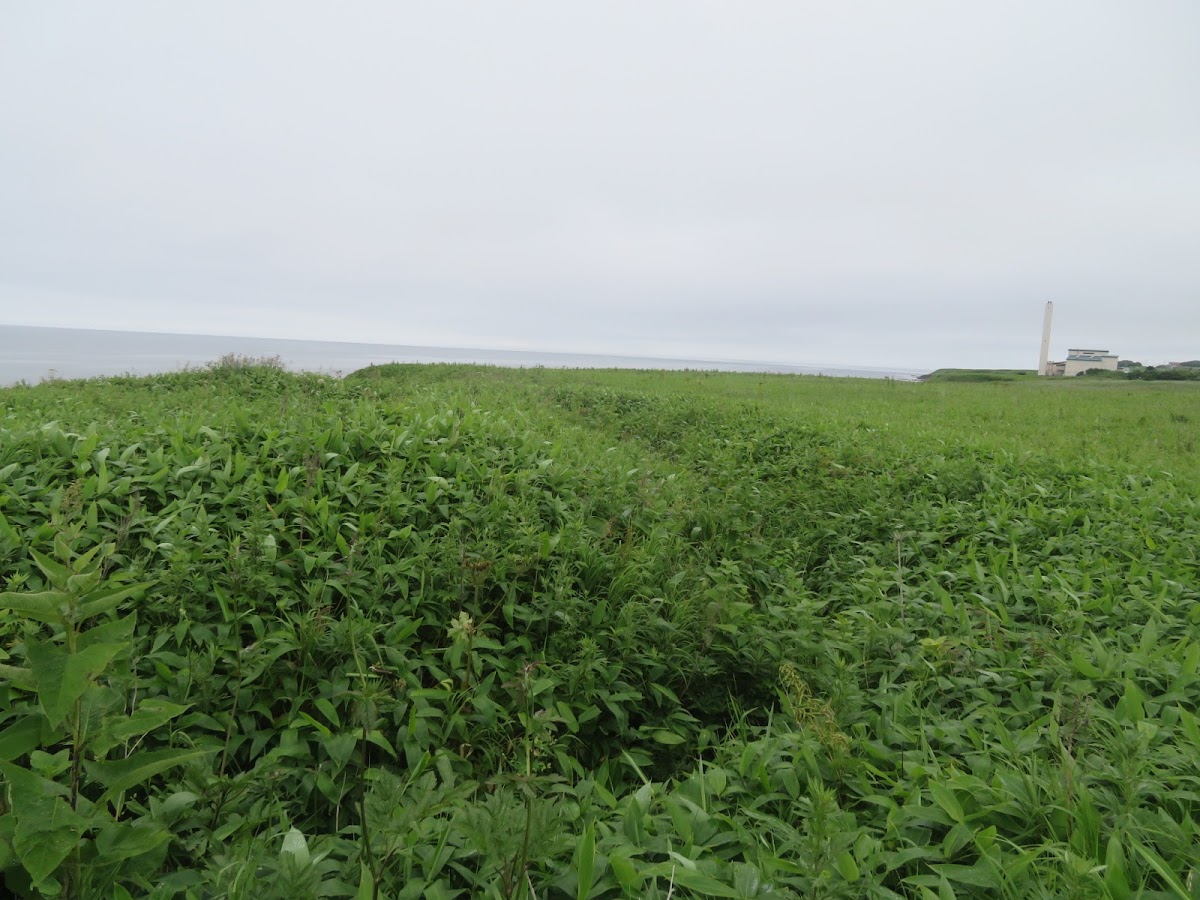
The current Tokiriji Jinya site is managed by Hokuto City as a nationally designated historical site. Although no buildings remain within the enclosure, the earthworks and dry moats retain almost their original form from the time of construction, allowing for a clear observation of the star-shaped castle structure.
Preservation Status:
- Earthworks: Almost completely intact (partially restored)
- Dry Moat: Clearly visible
- Bastions: All four remain
- Entrance Gate: Location identifiable
- Enclosure: Developed as flat ground
Usage:
- Open to the public as a historical park
- Installation of explanatory and information boards
- Development of walking paths
- Spring cherry blossom festival held
- Used as a site for historical learning
The lineage of the four-bastion bastion in bastion fortifications and the historical positioning of the Tokiriji Jinya (fortified residence) in connection with it
Bastion Fortifications of the World
Bastion fortification techniques originated in Italy in the late 15th century and spread throughout Europe and even the world from the 16th to the 19th centuries.
Representative Bastion Fortresses:
Europe:
- Parmanova (Italy): A perfect star-shaped city with nine bastions
- Naarden (Netherlands): A star-shaped fortress with six bastions
- Neuf-Brisac (France): Designed by Vauban
Asia:
- Galle Fortress (Sri Lanka): Built by the Dutch East India Company
- Fort Zeelandia (Taiwan): Built by the Dutch
Bastion Fortresses in Japan
The technique of constructing bastion fortresses was introduced to Japan during the late Edo period, with the Tokiriji Jinya being a pioneering example.
Major Bastion Fortresses in Japan:
- Togirichi Jinya (Completed 1857):
- Japan’s first full-fledged bastion fortress
- Four-bashing fortress type
- Size: Approximately 70 meters per side
- Goryokaku (Completed 1866):
- Star-shaped fortress with five bastions
- Large-scale fortress based on the experience gained from Togirichi Jinya
- Size: Approximately 125 meters per side
- Designed by: Takeda Ayasaburo
- Shiryokaku (Completed 1869):
- Built as a subsidiary castle of Goryokaku
- Four-bashing fortress type
- Used in combat during the Hakodate War
- Tatsuoka Castle (Completed 1867):
- Located in Saku City, Nagano Prefecture
- Five-bashing fortress type
- One of the surviving bastion fortresses in Japan
Historical Positioning of Tokiriji Jinya
Tokiriji Jinya occupies an extremely important position in the history of Japanese castle construction in the following respects:
Technological Historical Significance:
- First Introduction of Western Fortification Techniques:
Tokiriji Jinya is the first castle in Japan to fully adopt the bastion-style fortification technique. Until then, Japanese castles had traditional structures centered on high stone walls and keeps, but Tokiriji Jinya introduced a completely new form based on Western military theory.
- Evidence of Technology Transfer:
This is a valuable example demonstrating that Western fortification theory, transmitted through Dutch studies, was accurately understood and put into practice in actual construction. The existing remains confirm that the designers did not merely imitate the form, but understood the military principles of bastion-style fortifications before designing it.
- Influence on Subsequent Castles:
The experience gained from constructing the Tokiriji Jinya (fortified residence) directly influenced the construction of subsequent castles such as Goryokaku, Shiryokaku, and Tatsuoka Castle. In particular, records show that Takeda Ayasaburo, the designer of Goryokaku, referenced the Tokiriji Jinya.
Cultural and Historical Significance:
- Symbol of East-West Cultural Exchange:
The Tokiriji Jinya is a legacy that demonstrates the concrete results of East-West cultural exchange during the late Edo period. The fact that castle construction techniques developed in Europe over several centuries were transplanted to Japan and implemented in just a few years speaks to the high level of technological absorption ability of the Japanese people at that time.
- Living Witness to Late Edo Period History:
This is a valuable historical site that conveys the turbulent history of the late Edo period, from Perry’s arrival to the Battle of Hakodate, as a physical relic. The series of historical events—the opening of Japan, the defense of Ezo (Hokkaido), and the collapse of the shogunate—are closely linked to the reason for the existence of this fortified residence.
Academic Significance:
- Military Archaeological Value:
This is an extremely important tangible artifact for studying 19th-century military technology and fortification theory. It allows us to verify the technological level of the time not only through documents but also through actual remains.
- Standards for Comparative Research:
By comparing it with bastion fortresses around the world, we can clarify the process of the spread of fortification technology and its regional transformations.
Cherry Blossom Tunnel and its Value as a Tourist Resource
History of the Cherry Blossom Tunnel
The Tokiriji Jinya Ruins are known not only as a military historical site but also as one of Hokkaido’s leading cherry blossom viewing spots.
Approximately 300 Somei Yoshino cherry trees are planted along the approximately 800-meter-long approach leading from the prefectural road to the Jinya Ruins. These cherry trees are said to have been planted to commemorate the victory in the Russo-Japanese War (1904-1905), and some are ancient trees with a history of over 100 years.
Characteristics of the Cherry Blossom Avenue:
- Total Length: Approximately 800 meters
- Number of Trees: Approximately 300
- Variety: Primarily Somei Yoshino cherry trees
- Age: Includes ancient trees over 80-100 years old
- Blooming Season: Typically late April to early May
During peak bloom, a tunnel of cherry blossoms forms, transporting visitors to a fantastical world. The sight of the petals fluttering down is known as “cherry blossom blizzard,” making it a popular photography spot for many photography enthusiasts.
Utilization as a Tourism Resource
Hokuto City positions the Tokiriji Jinya Ruins as an important tourism resource and is undertaking various initiatives.
Spring Uses:
- Cherry Blossom Festival (late April to early May)
- Light-up Event
- Sale of Local Specialty Products
- Guided Tours
Year-Round Uses:
- Establishment of Historical Site Walking Courses
- Use as a Place for Historical Learning
- Activities to Raise Awareness of Cultural Property Preservation
- Venue for Local Events
Autumn Foliage:
The cherry trees display beautiful autumn foliage, offering a different atmosphere from spring.
Access and Visiting Information
Location:
Nozaki, Hokuto City, Hokkaido
Access:
- Approximately 15 minutes by car from JR Hakodate Main Line “Shin-Hakodate-Hokuto Station”
- Approximately 30 minutes by car from central Hakodate City
- Approximately 25 minutes on foot from Donan Isaribi Railway “Kiyokawaguchi Station”
Visiting:
- Free admission
- Open year-round
- Parking available (can be crowded during cherry blossom season)
Facilities:
- Information boards
- Restrooms
- Parking
- Walking paths
Preservation and Transmission of Tokiriji Jinya to the Future
Protection as a Cultural Property
The Tokiriji Jinya site has been under strict protection under the Cultural Properties Protection Law since its designation as a National Historic Site in 1965. Hokuto City, as the managing organization, implements the following preservation activities.
Daily Management:
- Regular mowing and cleaning
- Erosion prevention measures for the earthworks
- Tree management
- Facility maintenance and repair
Academic Research:
- Regular surveying
- Monitoring of preservation status
- Archaeological excavations as needed
- Provision of materials to researchers
Disaster Prevention Measures:
- Fire prevention measures
- Landslide prevention measures
- Fallen tree prevention measures
Education and Outreach Activities
Various educational and outreach activities are being conducted to pass on the historical value of the Tokiriji Jinya to future generations.
Collaboration with School Education:
- Social studies field trips for local elementary and junior high schools
- Implementation of outreach lessons
- Provision of teaching materials
- Support for local history studies
Public Outreach:
- Holding on-site information sessions
- Creation of brochures and guidebooks
- Information dissemination via website
- Public relations using social media
Support for Researchers:
- Permission for research and investigation
- Provision of access to materials
- Support for academic presentations
Future Challenges and Prospects
Several challenges exist in preserving and utilizing the Tokiriji Jinya Ruins.
Preservation Challenges:
- Addressing the deterioration of the earthworks over time
- Planning for the replacement of old cherry trees
- Countermeasures against the impacts of climate change
- Ensuring the continuity of budget allocation
Utilization Challenges:
- Balancing increased tourism with the preservation of the historical site
- Strengthening information dissemination
- Collaboration with surrounding tourist resources
- Improving access
Future Prospects:
- Utilization of Digital Technology:
By recreating the site’s appearance in its heyday using VR and AR, visitors can more clearly understand the appearance of the fortified residence at that time.
- International Collaboration:
Academic exchange and tourism collaboration with bastion fortifications around the world are expected to increase international recognition.
- Efforts toward World Heritage Registration:
There are also movements to aim for registration as part of the industrial and military heritage sites of the late Edo period, following the “Jomon Prehistoric Sites in Hokkaido and Northern Tohoku.”
- Contribution to Regional Revitalization:
Tourism promotion centered on historical sites is expected to contribute to the revitalization of the local economy and job creation.
Summary
The Tokiriji Jinya is a historically extremely important castle, being the first in Japan to adopt Western-style bastion-type fortification techniques. Built during the turbulent Bakumatsu period as the front line of defense for Ezo (Hokkaido), this fort had a short military life of only 11 years, but its remains are still well-preserved more than 150 years later.
The star-shaped structure, a combination of earthworks and dry moats, is evidence that the Japanese of that time accurately understood and implemented Western military technology, representing a valuable achievement of East-West cultural exchange. Furthermore, the cherry blossom tunnel in spring symbolizes both the solemn aspect of a military historical site and its role as a beloved place of relaxation for the local people.
Protected as a national historical site and counted among Japan’s 100 Famous Castles, the Tokiriji Jinya Ruins will continue to be passed down to future generations as a valuable cultural heritage that tells the history of Japan’s modernization. When you visit Hakodate and the southern Hokkaido region, why not visit this historic star-shaped fortress and reflect on the turbulent period at the end of the Edo period?