
A Complete Guide to the History and Highlights of Mobetsu-kan Ruins | A Fortress of the Twelve Castles of Southern Hokkaido That Survived the Koshamain War
Mobetsu-kan is a nationally designated historical site located in Yafurai, Hokuto City, Hokkaido. It is a medieval castle built in the mid-15th century. Known as one of the twelve castles of Southern Hokkaido, it holds a special place in the study of Japanese medieval history as one of the only castles, along with Kaminokuni Hanazawa-kan, to survive the Koshamain War of 1457.
What is Mobetsu-kan?
Mobetsu-kan is a castle built on the southern edge of a hill on the left bank of the Mobetsu River, at an altitude of approximately 34 meters. Also known as “Mobetsu-kan” and “Shimokuni-kan,” it functioned as a base for Japanese forces in Ezochi (present-day Hokkaido).
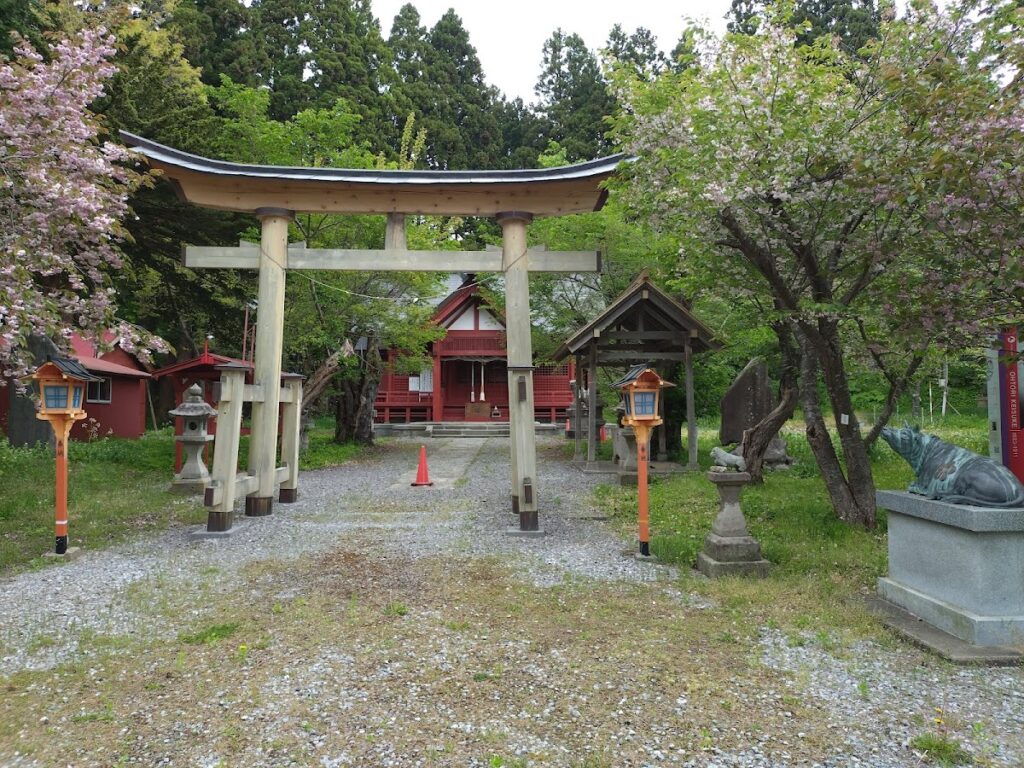
The name “Mobetsu” is believed to originate from the Ainu word “Mobechi” (meaning “quiet river”), indicating that this area was inhabited by the Ainu people since ancient times. Currently, the Yafurai Tenmangu Shrine stands on the site of the former Odachi, and remnants such as dry moats, earthworks, and baileys remain in good condition in the surrounding area.
History of Mobetsu Castle
Construction by Ando Morisue (1443)
The history of Mobetsu Castle begins in 1443. According to historical records such as the “Shinra no Kiroku,” when Ando Taro Morisue, the governor of Tsugaru, was defeated in battle against Nanbu Yoshimasa, and Tosaminato was captured, and Kodomari was also seized, he fled to Ezo Island (Hokkaido) and built a castle in this location.
The Ando clan was originally a powerful local family that ruled the Tsugaru region and was also a maritime force that controlled trade in the Sea of Japan. Having been defeated in a conflict with the Nanbu clan, Ando Morisue sought to expand into Ezo (Hokkaido) and established a base in Mobetsu.
The Era of Ando Masasue (1454-1456)
In 1454 (Kyotoku 3), Ando Masasue was driven out by the Nanbu clan and fled to Ezo Island. It is believed that he resided at Mobetsu Castle until his departure to Dewa Province in 1456 (Kōshō 2). During this period, Mobetsu Castle functioned as an important base for the Ando clan in Ezo.
Defense System by Shimokuni Kunimasa
After Ando Masasue departed for Dewa Province, his younger brother, Shimokuni Ando Hachirō Iemasa (Mobetsu Iemasa), with the support of Kōno Masamichi of Hakodate, guarded this castle. The Shimokuni clan was a branch of the Ando clan, based in Shimonokuni (present-day Hiyama region), and the Mobetsu Castle came to play an important role as the castle of the Shimonokuni provincial governor.
The Battle of Koshamain and the Mobetsu Castle
The Crisis of the Twelve Castles of Southern Hokkaido
In May of the first year of the Chōroku era (1457), the most important event in the history of the Mobetsu Castle occurred: the Battle of Koshamain.
At that time, twelve castles built by the Japanese were scattered throughout the southern Hokkaido region. These castles functioned as bases for the Japanese engaged in trade and fishing, but they were plagued by unfair trade practices by Japanese merchants and continued oppression of the Ainu people.
A large Ainu army, led by Koshamain, the chief of eastern southeastern Hokkaido, launched a simultaneous attack on the twelve castles scattered throughout southern Hokkaido. In this battle, ten castles fell one after another, and the Japanese forces suffered a devastating blow.
The Resistance of Mobetsu Castle
Amidst fierce fighting, only two castles remained standing: Mobetsu Castle and Kaminokuni Hanazawa Castle. Mobetsu Castle, defended by Shimokuni Kunimasa, withstood the Ainu army’s fierce attacks thanks to its advantageous terrain and robust defensive structures.
While Mobetsu Castle held out, Takeda Nobuhiro, a guest general at Hanazawa Castle, gathered the forces from the retreating castles and advanced to Nanaehama. Nobuhiro’s powerful bow killed Koshamain and his son, finally bringing the rebellion to an end.
The role of Mobetsu Castle in this battle was extremely important; if it had fallen, the Japanese forces in southern Hokkaido might have been completely wiped out.
Mobetsu Castle After the War
After the Battle of Koshamain, Takeda Nobuhiro became the ancestor of the Kakizaki clan (later the Matsumae clan), establishing Japanese rule in the southern Hokkaido region. Mobetsu Castle is believed to have continued to function as an important base within this new order.
Structure and Remains of Mobetsu Castle
Double Structure of the Large and Small Castles
Mobetsu Castle is a complex castle consisting of the large castle in the south and the small castle in the north. This double structure is thought to have enhanced defensive capabilities and separated the living space from the defensive space.
Features of the Large Castle:
- The west side faces a cliff on the bank of the Mobetsu River, making it a natural stronghold.
- The south and north sides are separated by natural streams.
- The east side is an artificially dug dry moat.
- Earthen ramparts surround the castle on the north, east, and south sides.
- The Yafurai Tenmangu Shrine is currently located there.
Features of the Small Castle:
- Located north of the large castle.
- The east side is a natural stream.
- Similarly, earthen ramparts are built on the north, east, and south sides.
- A deep valley leading to a dry moat separates it from the large castle.
Details of Defensive Facilities
Dry Moat:
A clear dry moat remains on the east side of Mobetsu Castle. This dry moat was an important defensive line separating the main enclosure from the outside, and is estimated to be approximately 5-8 meters wide and 2-3 meters deep. As a clearly visible structure, it allows visitors to experience the defensive system of the time.
Earthworks:
Both the main and smaller enclosures are surrounded by earthworks on the north, east, and south sides. They are approximately 1-2 meters high, and although some have been altered in later periods, the basic shape remains. Partition-like earthworks are also found within each enclosure, indicating that the enclosures were divided into smaller sections.
Enclosures:
Multiple enclosures (kuruwa) have been identified, each thought to have had a different function. A hierarchical structure, including a main enclosure, second enclosure, and third enclosure, has been revealed through archaeological excavations and topographical surveys.
Gate Entrance:
The gate entrance (koguchi) to the enclosure has also been identified. The gate, a weak point in defense, was cleverly constructed with earthworks and moats to make enemy intrusion difficult.
The Advantage of the Location
The location of Mobetsu Castle possesses ideal conditions for a medieval castle:
- Natural Moat by River: The Mobetsu River on the west side functions as a natural moat.
- Defense by Cliffs: The riverbanks are cliffs, making attacks from the west difficult.
- Demarcation by Natural Streams: The castle is divided north and south by natural streams, limiting attack routes.
- Excellent View: Located on a hill approximately 34 meters above sea level, it offers easy monitoring of the surrounding area.
- Securing Water Source: Water is easily secured by the Mobetsu River.
These geographical advantages were a major factor in Mobetsu Castle’s ability to withstand the Battle of Koshamain.
Highlights of Mobetsu Castle
Yafurai Tenmangu Shrine
Currently, Yafurai Tenmangu Shrine stands on the site of the former castle. This shrine is an important landmark that conveys the history of Mobetsu Castle to the present day, and is a place visited by both worshippers and castle enthusiasts.
The shrine grounds offer an excellent vantage point for understanding the castle’s structure. In particular, the earthworks and dry moat behind the shrine are well-preserved, strongly retaining the atmosphere of a medieval castle.
Stone Monument and Information Board
A stone monument indicating its designation as a national historic site and a detailed information board have been installed. The information board details the history, structure, and role of Mobetsu Castle in the Battle of Koshamain, helping visitors to deepen their understanding.
Well-Preserved Remains
The greatest highlight of the Mobetsu Castle is undoubtedly the remarkably well-preserved remains themselves:
- Dry Moat: The dry moat on the east side remains clearly visible, allowing visitors to appreciate its depth and width.
- Earthworks: The earthworks surrounding the castle on three sides, though lower in height than they were in their heyday, retain their clear layout and shape.
- Enclosures: The divisions of multiple enclosures can be discerned from the topography.
- Gate: The structure of the entrance to the castle can be observed.
These remains hold high academic value as typical examples of medieval castles in Hokkaido.
Surrounding Landscape
The Mobetsu River and the surrounding natural landscape are also highlights. From the castle ruins, one can look down on the flow of the Mobetsu River, and imagine the castle’s lords contemplating trade and defense while gazing at this scenery.
Access and Visiting Information
Access by Public Transportation
By JR Train:
- Get off at Mobechi Station on the JR Esashi Line (now the South Hokkaido Railway).
- Walk northeast from the station for approximately 15-20 minutes (about 600 meters).
- Head east along the road north of the Mobechi Gymnasium and cross the Mobechi River.
- After about 500 meters, you will see the torii gate of Yafurai Tenmangu Shrine on your left.
Access by Car
From Hakodate:
- Head north on National Route 228.
- Follow the signs in the Mobechi area of Hokuto City.
- Cross the Mobechi River and head towards Yafurai Tenmangu Shrine.
Parking:
If you enter from the back entrance of Yafurai Tenmangu Shrine, there are several parking spaces behind the shrine. The front entrance is a steep slope, so access by car from the back entrance is recommended.
Points to Note When Visiting
- Estimated Time Required: Approximately 30-60 minutes for a thorough visit.
- Attire: Comfortable walking shoes are essential as you will be walking on the ruins.
- Season: Spring to autumn is the best time to visit (winter is difficult due to snow).
- Guidance: While there are explanatory signs, learning about the history beforehand will deepen your understanding.
- Manners: As this is a shrine site, please observe proper worship etiquette.
The Positioning of the Twelve Castles of Southern Hokkaido and the Mobetsu Castle
What are the Twelve Castles of Southern Hokkaido?
The Twelve Castles of Southern Hokkaido are a collective term for the castles of the Japanese built in the Southern Hokkaido region in the mid-15th century. Specifically, the following fortifications are included:
- Mobetsu Fort (Hokuto City)
- Hanazawa Fort (Kaminokuni Town)
- Shinori Fort (Hakodate City)
- Usugishi Fort (Hokuto City)
- Hobetsu Fort (Hokuto City)
- Nakano Fort (Hakodate City)
- Wakimoto Fort (Hakodate City)
- Hishi Fort (Hakodate City)
- Haraguchi Fort (Kikonai Town)
- Nebota Fort (Kaminokuni Town)
- Atsusabetsu Fort (Atsusabetsu Town)
- Odachi (Matsumae Town)
These fortifications functioned as trading posts, fishing bases, and defensive facilities, serving as bases for the Japanese expansion into Ezo (Hokkaido).
The Fate of Each Fort in the Battle of Koshamain
In the Battle of Koshamain in 1457, ten fortifications fell, with only Mobetsu Fort and Hanazawa Fort holding out. This fact speaks to the high defensive strength of both fortifications and the valiant efforts of the defenders.
The fact that the remnants of the fallen ten fortifications gathered at Mobetsu Fort and Hanazawa Fort, and ultimately launched a counterattack under the command of Takeda Nobuhiro, was a crucial event that determined the survival of Japanese forces in southern Hokkaido.
Cultural Value of Mobetsu Fort
Importance as a National Historic Site
The Mobetsu Fort site was designated a National Historic Site in 1982. This designation was based on the following evaluations:
- Historical Significance: Its role in the Battle of Koshamain
- Preservation of Remains: The dry moats, earthworks, and baileys are well-preserved.
- Academic Value: A typical example of a Japanese fortified castle in medieval Ezo (Hokkaido).
- Cultural Significance: It illustrates the history of interaction and conflict between the Japanese and Ainu.
Research and Investigation
Multiple archaeological excavations and surveys have been conducted on the Mobetsu Castle. These investigations have revealed the castle’s structure, period, and artifacts used.
Excavated artifacts include ceramics, iron products, and coins, providing clues to the state of trade and daily life at the time. In particular, the ceramics brought from Honshu are important materials that show the position of the Mobetsu Castle within the Japan Sea trade network.
Recommended Points When Visiting Mobetsu-kan
Visiting Nearby Historical Sites in Combination
There are several other medieval historical sites scattered around Mobetsu-kan:
- Shinori-kan Ruins: One of the twelve castles of southern Hokkaido, located in Hakodate City (approx. 30 minutes by car)
- Hokkeji Temple: An ancient temple in Hokuto City (approx. 10 minutes by car)
- Trappist Monastery: A popular tourist attraction in Hokuto City (approx. 15 minutes by car)
Combining these will allow for a more fulfilling historical exploration.
Photo Spots
For castle enthusiasts and photography lovers, Mobetsu Castle is an excellent photo spot:
- Dry moat and earthworks: From an angle that captures the entirety of the remains
- Yafurai Tenmangu Shrine: A combination of shrine architecture and historical site
- View of the Mobetsu River: A view overlooking the castle ruins
- Information board and stone monument: For documentation purposes
Seasonal Charms
- Spring: The remains stand out amidst the fresh greenery
- Summer: Enjoy a stroll in a lush green environment
- Autumn: The contrast between the autumn leaves and the historical site is beautiful
- Winter: Visiting is difficult due to snow, but the castle ruins in a snowy landscape are fantastical
Relationship between Mobetsu Castle and the Matsumae Clan
Takeda Nobuhiro, who played an active role in the Battle of Koshamain, became the son-in-law of Kakizaki Suehige, the lord of Hanazawa Castle, and later became the de facto head of the Kakizaki clan (the predecessor of the Matsumae clan). Shimokuni Masayoshi, who successfully defended the Mobetsu Castle, played a crucial role in this new system of rule.
The Matsumae clan later established the Matsumae Domain and became the center of Ezo (Hokkaido) rule throughout the Edo period. Tracing its origins, it can be said that the Mobetsu Castle’s surviving the Koshamain Rebellion was one of the starting points for the Matsumae clan’s rise.
Summary
The Mobetsu Castle is an important historical site indispensable to understanding the medieval history of Hokkaido. As one of only two castles to withstand the critical situation of the Koshamain Rebellion, it played a decisive role in the survival of the Japanese forces.
The well-preserved remains, such as the dry moat, earthworks, and baileys, convey the tense situation of the time and the efforts of those who defended the castle. In the tranquil environment where the Yafurai Tenmangu Shrine stands, visitors can reflect on the history of medieval Ezo.
If you’re visiting Hokkaido, especially if you’re interested in history or castles, I highly recommend visiting the Mobetsu Castle ruins. Beyond the explanatory signs and monuments, actually walking through the remains and observing the topography will give you a tangible sense of history that you can’t get from textbooks.
Mobetsu Castle is a historical site that holds a crucial key to understanding Hokkaido’s medieval history, encompassing interactions and conflicts between the Japanese and Ainu, the Ando clan’s expansion into Ezo (Hokkaido), and the rise of the Matsumae clan.

