
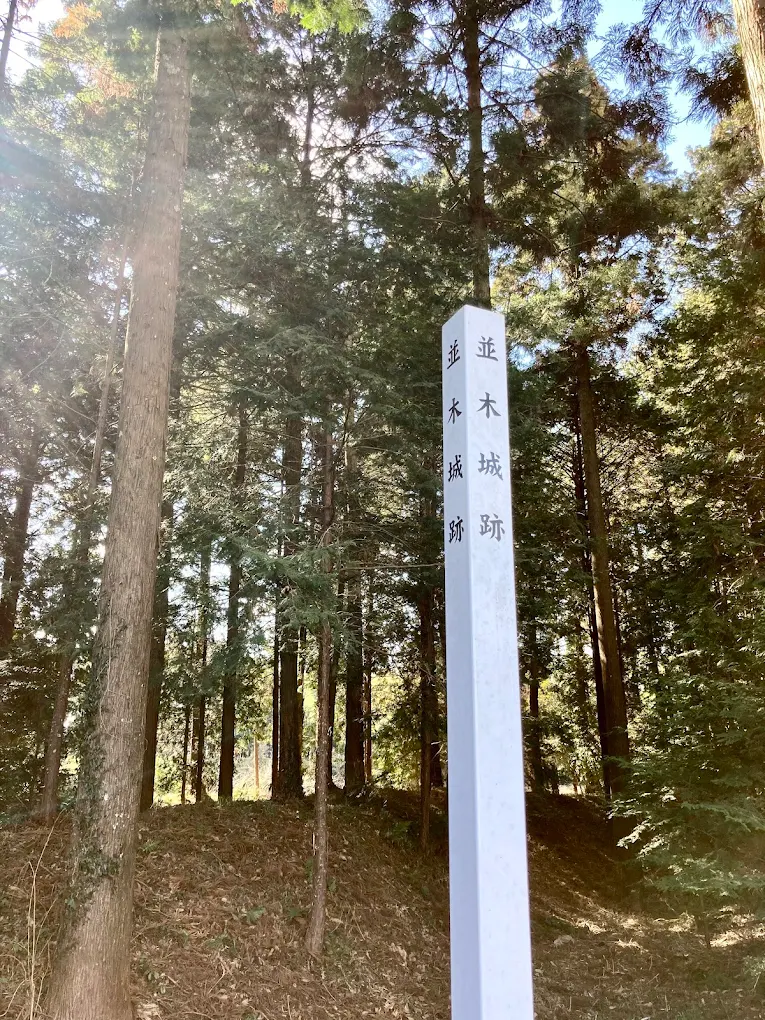
Namiki Castle (Chiba Prefecture) | A Detailed Explanation of the History and Remains of a Medieval Castle in Tako Town
Namiki Castle is a medieval hilltop castle located in Minami-Namiki, Tako Town, Katori District, Chiba Prefecture. Known as the residence of the Iida clan, who served the Chiba clan of Shimosa Province, its remains, such as earthworks and moats, are still well-preserved. This article provides a detailed overview of Namiki Castle, from its historical background and castle structure to its highlights, access methods, and information on popular castle stamps.
Historical Background of Namiki Castle
Construction Period and Origins
The exact construction date of Namiki Castle is unclear, but it is believed to have been built during the Nanboku-cho period (1336-1392). However, many of the remains visible today are thought to have been developed during the Sengoku period, making it a valuable historical site for understanding the development process of medieval castles.
Shimōsa Province was a region controlled by the Chiba clan, and Namiki Castle was located within their sphere of influence. The Chiba clan was a powerful family that held sway primarily in Shimōsa Province from the late Heian period through the Sengoku period, and is associated with many castles in Chiba Prefecture, including Sakura Castle and Hon-Sakura Castle.
The Iida Clan’s Residence and Role
It is said that the Iida clan, vassals of the Chiba clan, resided at Namiki Castle. The Iida clan was one of the influential vassal groups serving the Chiba clan, and they played a crucial role in governing the surrounding region and military affairs from Namiki Castle.
During the Sengoku period, Shimōsa Province was a region where the powers of various clans, including the Hōjō, Satomi, and Uesugi clans, were intricately intertwined. Namiki Castle, built on a plateau in Tako Town, is thought to have functioned as a strategic point for monitoring surrounding transportation routes. In particular, it is highly probable that it played a key role in the regional defense network, coordinating with major Chiba clan strongholds such as Usui Castle and Hon-Sakura Castle.
Trends in the Sengoku Period
During the late Sengoku period, the Chiba clan’s power in Shimosa Province gradually declined, eventually falling under the influence of the Hojo clan. During Toyotomi Hideyoshi’s siege of Odawara in 1590 (Tensho 18), the Chiba clan, who had been loyal to the Hojo, also fell from power, and it is presumed that Namiki Castle was abandoned around this time.
While Chiba Prefecture also has early modern castles such as Kururi Castle, Otaki Castle, and Tateyama Castle, Namiki Castle remains a valuable legacy as a typical example of a medieval castle, conveying the castle-building techniques and defensive philosophies of the time.
Namiki Castle’s Layout and Structure
Location and Utilization of Topography
Namiki Castle is a flatland castle built on a plateau approximately 40 meters above sea level behind the Minami-Namiki settlement. The relative height difference is approximately 30 meters, resulting in a defensive structure that skillfully utilizes the natural terrain.
The castle’s design, which utilizes the edge of the plateau to make enemy intrusion difficult, exhibits a “natural terrain-dependent” construction method characteristic of medieval castles. This is a feature shared by other medieval castles in Chiba Prefecture, such as Sakura Castle and Sakata Castle.
Major Remains
Arrangement of Enclosures (Kuruwa)
Namiki Castle has multiple enclosures. The layout is a series of interconnected enclosures, with the main enclosure at the center, followed by the second and third enclosures. Each enclosure is demarcated by earthworks and moats.
The main enclosure is located in the center of the castle and is the most heavily fortified area. It is believed that the lord’s residence and important facilities were located here. The flat areas of the enclosures remain relatively well-preserved today, allowing us to imagine their original scale.
Earthworks
One of the distinctive remains of Namiki Castle is the earthworks surrounding each enclosure. These earthworks served to prevent enemy intrusion and obstructed visibility from within the castle, thus enhancing its defensive capabilities.
Even today, earthen ramparts approximately 2-3 meters high remain, demonstrating the high level of civil engineering technology used in medieval castles. It is presumed that fences or walls were built on top of these ramparts, forming a stronger defensive line.
Moats and Dry Moats
Moats and dry moats were constructed to separate enclosures or to demarcate the castle grounds from the outside. Moats, dug to cut across ridges, were important defensive structures that hindered enemy advances.
Some of the moats at Namiki Castle reach depths of several meters, illustrating the immense effort required for their construction at the time. These moats functioned as dry moats, a typical structure for medieval castles in the Kanto region.
Characteristics as a Medieval Castle
Namiki Castle possesses the typical characteristics of a medieval castle. It lacks elements of early modern castles such as stone walls and keeps, and is primarily an earthen castle with earthen ramparts and moats. This is a characteristic shared by many medieval castles in Chiba Prefecture, including Kogane Castle, Negiuchi Castle, and Kōnodai Castle.
Castles from the Sengoku period (Warring States period) were more often defensive strongholds during wartime than permanent residential spaces, and Namiki Castle is no exception. It is believed that during peacetime, residents lived in a residence at the foot of the mountain, and during wartime, they would fortify themselves in the castle on the mountaintop.
Current Status and Highlights of Namiki Castle
Local Conditions
The current site of Namiki Castle is a forest, and the remains stand quietly amidst nature. While large-scale development has not been carried out, this makes it a valuable place where you can experience the atmosphere of a medieval castle firsthand.
A faint trail leads to the castle ruins, so comfortable shoes and clothing are recommended. Particular caution is needed after rain, as the ground can become slippery.
Points to Note When visiting Namiki Castle
When visiting Namiki Castle, pay attention to the following points:
- Height and Shape of Earthworks: Observe the structure of the earthworks surrounding each enclosure to appreciate the ingenuity of its defensive features.
- Depth of Moats: The moats between enclosures are important remains that demonstrate the advanced civil engineering technology of the time.
- Arrangement of Enclosures: Walking around while imagining how the interconnected enclosure layout contributed to defense will lead to a deeper understanding.
- View: The view from the plateau will make you realize that this castle was a strategic point for monitoring the surrounding area.
Connection to Surrounding Castles
When visiting Namiki Castle, you can gain a deeper understanding by also visiting the surrounding castles in Chiba Prefecture. The following castles, in particular, are closely related to Namiki Castle and are important for understanding the Chiba clan’s sphere of influence:
- Hon-Sakura Castle: A castle that flourished as the Chiba clan’s base and is designated a National Historic Site.
- Usui Castle: Known as a strong fortress that repelled attacks by Uesugi Kenshin.
- Sakura Castle: An important base that became the residence of a Fudai daimyo during the Edo period.
- Sakata Castle: A castle related to the Chiba clan located in Sōsa City.
By visiting these castles, you can gain a three-dimensional understanding of the Chiba clan’s sphere of influence in Shimōsa Province and the role each castle played.
Castle Stamp Information
Namiki Castle’s Castle Stamp
Castle stamps (Gojōin) have become increasingly popular nationwide in recent years. Namiki Castle also issues castle stamps, attracting attention among castle enthusiasts.
A castle stamp (Gojoin) is a type of seal or certificate that can be purchased as a memento of visiting a castle, modeled after the Goshuin (temple/shrine stamps) found at shrines and temples. Each castle has its own unique design, making them popular collector’s items.
Where and How to Obtain
The Namiki Castle stamp can be obtained at Michi-no-Eki Tako Ajisai-kan. Michi-no-Eki Tako Ajisai-kan is a tourist hub in Tako Town, offering local specialties and tourist information.
Opening hours and closing days may vary depending on the facility, so it’s recommended to check beforehand. Also, castle stamps may be limited in quantity, so those who want to be sure to get one should visit early.
Chiba Prefecture Castle Stamp Collection
Besides Namiki Castle, many other castles in Chiba Prefecture issue castle stamps. The Chiba Prefecture Tourism and Products Association is also running a campaign called “Let’s Collect Chiba Prefecture’s Castle Stamps!”, making castle tours in the prefecture even more enjoyable.
Representative castles in Chiba Prefecture that issue castle stamps include the following:
- Sakura Castle
- Otaki Castle
- Kururi Castle
- Tateyama Castle
- Sekiyado Castle
- Hon-Sakura Castle
Collecting the castle stamps of these castles, along with those of Namiki Castle, will allow you to enjoy Chiba Prefecture’s castle culture more deeply.
Access Information
Location
289-2241 Minami-Namiki, Tako-machi, Katori-gun, Chiba Prefecture
Namiki Castle is located in the Minami-Namiki area of Tako-machi. Tako-machi is relatively close to Narita Airport and is a town rich in history and nature in the northeastern part of Chiba Prefecture.
Access by Public Transportation
If using public transportation:
- Take a bus bound for Tako-machi from JR Narita Station or Keisei Narita Station.
- After getting off at a bus stop in Tako-machi, walk or take a taxi to the castle ruins.
Access by public transportation is somewhat inconvenient, so consider renting a car.
Access by Car
The most convenient way to access the site is by car:
- From Higashi-Kanto Expressway Narita IC: Approximately 20 minutes
- From Higashi-Kanto Expressway Daiei IC: Approximately 15 minutes
A good route is to head towards the Tako Ajisai-kan roadside station and then proceed to the Minami-Namiki area. There is no dedicated parking lot around the castle ruins, so please be considerate and avoid parking on the street.
Points to Note When Visiting
- The castle ruins are in an undeveloped forest, so please wear comfortable shoes and clothing.
- In summer, take precautions against insects, and in winter, take precautions against the cold.
- You may need to pass through private property, so please observe proper etiquette while visiting.
- Please make efforts to protect the ruins and avoid damaging them.
- Visiting in a group is safer than visiting alone.
Tourist Spots Around Namiki Castle
Roadside Station Tako Ajisai-kan
Roadside Station Tako Ajisai-kan, where you can obtain the castle stamp for Namiki Castle, is a tourist hub in Tako Town. You can purchase fresh local agricultural products and specialties, and enjoy dishes made with Tako rice at the restaurant.
Tako Town is a rice-producing area known for its “Tako Rice” brand, and you can purchase this delicious rice and related products at the roadside station.
History and Culture of Tako Town
Besides Namiki Castle, Tako Town has other historical sights to see. Exploring the old townscapes and temples and shrines allows you to experience the rich history and culture of this region.
In particular, the “Tako Town Hydrangea Festival” is held in June, where approximately 10,000 hydrangea plants adorn the town. Enjoying this seasonal spectacle in conjunction with a castle tour is highly recommended.
Nearby Castle Tours
After visiting Namiki Castle, consider visiting other castles in northern and eastern Chiba Prefecture:
- Sakata Castle (Yokoshibahikari Town): A medieval castle near Sōsa City, also known as a famous cherry blossom viewing spot.
- Hon-Sakura Castle (Shisui Town): An important castle designated as a national historical site, with ongoing archaeological excavations.
- Usui Castle (Sakura City): A historical castle known for its battles with Uesugi Kenshin.
These castles are located within a 30-minute to 1-hour drive of each other, making it possible to visit several in one day.
Historical Value and Preservation of Namiki Castle
Importance in Medieval Castle Research
Namiki Castle, as one of the many remaining medieval castles in Chiba Prefecture, holds a significant position in historical research. While earthen castles without stone walls or keeps tend to be perceived as less impressive compared to early modern castles, they are extremely valuable historical resources for understanding the castle-building techniques and defensive philosophies of the time.
In particular, small to medium-sized castles like Namiki Castle play an important role in understanding the Chiba clan’s sphere of influence in Shimosa Province and the deployment of their retainers. By focusing not only on early modern castles like Otaki Castle and Kururi Castle, but also on medieval castles like these, we can gain a more comprehensive understanding of the castle history of Chiba Prefecture.
Current Status and Challenges of Preservation
Namiki Castle is currently not designated as a special historical site, and no large-scale preservation and maintenance work has been carried out. Therefore, the remains are quietly preserved in nature.
On the other hand, this also means the castle retains its original form, and because it hasn’t been excessively restored, it offers the advantage of allowing visitors to purely experience the atmosphere of a medieval castle. However, future preservation requires the understanding and cooperation of the local community.
For castle enthusiasts and researchers, passing on these remains to future generations is a crucial issue. When visiting, it is essential to exercise extreme caution to avoid damaging the remains and to cooperate in their preservation.
Utilization for Regional Development
In recent years, Namiki Castle has contributed to regional development through initiatives such as the issuance of castle stamps. Utilizing the castle as a tourist resource has increased visitors to Tako Town and contributed to the revitalization of the local economy.
Throughout Chiba Prefecture, a wider variety of castle tourism is being developed by highlighting not only famous castles such as Sakura Castle, Otaki Castle, and Tateyama Castle, but also medieval castles like Namiki Castle. The Chiba Prefecture Tourism and Products Association’s “Collect! Chiba Prefecture’s Castle Stamps” campaign is a good example of this.
For Castle Enthusiasts Visiting Namiki Castle
How to Enjoy Castle Tours
When visiting a medieval castle like Namiki Castle, here are some ways to enjoy it:
- Observing the Remains: Carefully observe the shape of earthworks and moats to learn about castle construction techniques.
- Creating a Layout Map: Try to draw a diagram of the castle’s structure in your own way.
- Photography: Record the castle ruins’ appearance in each of the four seasons.
- Collecting Castle Stamps: Collect castle stamps as a memento of your visit.
- Exploring History: Research documents and materials to gain a deeper understanding of the castle’s historical background.
Recommended Equipment
Recommended equipment for visiting Namiki Castle:
- Clothing: Long-sleeved shirt and long pants (for bushwhacking and insect bite protection)
- Footwear: Trekking shoes or athletic shoes
- Items to Bring: Drinking water, towel, insect repellent, map or GPS
- Seasonal Gear: Hat and sunscreen in summer, warm clothing in winter
- Photography Equipment: Camera, smartphone (for recording)
Manners and Safety
When enjoying castle tours, please observe the following manners and safety precautions:
- Avoid trespassing on private property
- Do not damage or remove any remains
- Always take your trash with you
- Use of fire is strictly prohibited
- Avoid traveling alone; visit in groups whenever possible
- Do not force yourself to visit in bad weather; postpone your visit
- Remember to be considerate of local residents
Summary: The Charm and Value of Namiki Castle
Namiki Castle is a valuable medieval castle remaining in Tako-machi, Katori-gun, Chiba Prefecture. From the Nanboku-cho period to the Sengoku period, the Iida clan, vassals of the Chiba clan, resided there, and it functioned as a regional defense base.
The well-preserved remains of earthworks and moats are valuable historical materials that convey the castle-building techniques of the time, and occupy an important position in understanding the history of castles in Chiba Prefecture. By looking at medieval castles like Namiki Castle, along with famous castles such as Sakura Castle, Otaki Castle, Kururi Castle, and Tateyama Castle, you can gain a deeper understanding of Chiba Prefecture’s history.
The issuance of castle stamps has attracted the attention of castle enthusiasts, and they are available at the Tako Ajisai-kan roadside station. As part of the Chiba Prefecture Tourism and Products Association’s “Collect Chiba Prefecture’s Castle Stamps” campaign, visiting Namiki Castle along with other castles in the prefecture is highly recommended.
When visiting Namiki Castle, please keep in mind that it is an undeveloped forest area, and take safety precautions with appropriate equipment and clothing to fully appreciate the quiet charm of this medieval castle. The experience of exploring the earthworks and moats while reflecting on the history of Shimosa Province will surely be an unforgettable memory.
Chiba Prefecture boasts many fascinating medieval castles, including Hon-Sakura Castle, Usui Castle, Sakata Castle, Kogane Castle, Negiuchi Castle, Kōnodai Castle, and Sekiyado Castle. Why not embark on a journey to visit these castles, starting from Namiki Castle?


.png)