Inohana Castle (Chiba City) Complete Guide | History and Highlights of Inohana Park, the Base of the Chiba Clan
Inohana Castle, located in Inohana, Chuo-ku, Chiba City, Chiba Prefecture, is a flatland castle known as the base of the Chiba clan, who wielded great power on the Boso Peninsula during the Kamakura period. Also known as “Inohana Castle” or “Chiba Castle,” it is now developed as Inohana Park. This article provides a detailed explanation of everything you need to know before visiting Inohana Castle, including its history, structure, highlights, and access methods.
What is Inohana Castle? | The Chiba Clan’s Remaining Castle in Chiba City, Chiba Prefecture
Inohana Castle is a flatland castle located in Inohana, Chuo-ku, Chiba City, Chiba Prefecture, and was once the residence of the Chiba clan, who ruled Shimosa Province. The castle’s name is said to originate from the fact that the main keep juts out from the plateau in the north-northwest direction (亥). Cultural property reports often use the notation “Inohana Castle,” and it is also affectionately known locally as “Chiba Castle.”
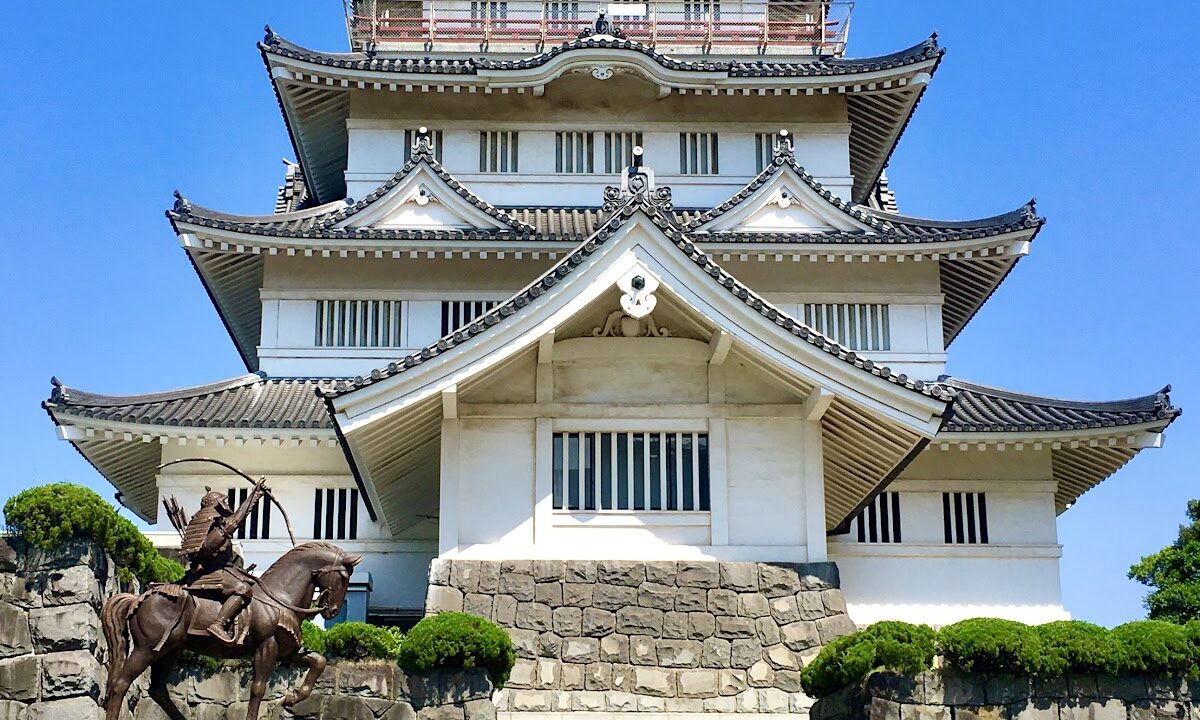
Currently, the castle ruins have been developed into Inohana Park, a historical park with an area of approximately 10,293 square meters. Remains such as earthworks and moats still exist within the park and are designated as cultural properties of Chiba City. Furthermore, a replica castle tower built in 1967 (Showa 42) serves as the park’s symbol, and its interior is open to the public as the Chiba City Local History Museum.
History of Inohana Castle | The Chiba Clan’s 330-Year Base
The Establishment of the Chiba Clan and the Construction of Inohana Castle
The history of Inohana Castle dates back to the late Heian period, specifically to Tenji 3 (1126). The Chiba clan, a prestigious family descended from the Kanmu Taira clan, is said to have originated when Chiba Tsuneshige, the first head of the clan, moved from his previous base at Ōshi Castle (Midori Ward, Chiba City) to Chiba and established his residence there.
Chiba Tsuneshige was a samurai who built his power on the Bōsō Peninsula during the late Heian period and is the origin of the place name Chiba. A legend remains that Tsuneshige established his residence here in 1126, and thereafter, Inohana Castle functioned as the Chiba clan’s base for approximately 330 years.
Chiba Tsunetane and the Kamakura Shogunate
The Chiba clan flourished most during the time of Chiba Tsunetane, Tsuneshige’s eldest son. In 1180, Tsunetane supported Minamoto no Yoritomo, who had raised an army in Izu, and, along with Kazusa Hirotsune, made a significant contribution to Yoritomo’s conquest of the Kanto region.
Chiba Tsunetane inherited the military prowess of the Chiba clan, who had participated in the Former Nine Years’ War, the Later Three Years’ War, and the Hogen and Heiji Rebellions, and earned the deep trust of Minamoto no Yoritomo. After the establishment of the Kamakura Shogunate, he was promoted to a gokenin (vassal), and after the purge of Kazusa Hirotsune, the Chiba clan reached its peak as a major power on the Boso Peninsula. Currently, a bronze statue of Chiba Tsunetane stands in Inohana Park, commemorating his achievements.
The Prosperity of the Chiba Clan and the Relocation to Hon-Sakura Castle
Throughout the Kamakura period, the Chiba clan continued to prosper as a powerful gokenin in Shimosa Province. However, with the arrival of the Muromachi period, the Chiba clan’s power underwent changes amidst the turmoil of the Sengoku period.
In the late 15th century, the Chiba clan moved their base from Inohana Castle to Hon-Sakura Castle (Shisui Town and Sakura City, Chiba Prefecture). While there are various theories regarding the exact timing of this move, it is believed to have been a strategic decision driven by a desire for a more defensible location and the expansion of their sphere of influence. It is presumed that Inohana Castle was abandoned following the move to Hon-Sakura Castle.
Inohana Castle Ruins in the Modern Era
During the Meiji era, the castle ruins fell into disrepair, but in 1909 (Meiji 42), the Inohana Castle ruins were opened to the public. Later, in 1967 (Showa 42), a replica castle tower was constructed as a base for promoting tourism and local history education in Chiba City. While this replica tower is not based on historical fact, it is a beloved symbol of Chiba Castle among the citizens.
In 1988 (Showa 63), the area around the castle ruins was fully developed as a historical park, resulting in the current Inohana Park. Cherry trees are planted within the park, and every year from late March to early April, a “Cherry Blossom Festival” is held, attracting many visitors. Furthermore, “Moon Viewing from Inohanayama” was selected as one of the Eight Scenic Views of Chiba in 1861, making it a historically significant place cherished as a famous scenic spot.
Structure of Inohana Castle | Layout Utilizing the Topography of a Hilltop Castle
Topographical Features and Location
Inohana Castle is a hilltop castle built on a plateau approximately 20 meters above sea level, sandwiched between the Miyako River and the Yoshikawa River. The castle cleverly utilizes the topography, with the tip of the plateau jutting out to the north-northwest (the direction of the boar), and the castle’s name comes from the resemblance of this protruding part to a “boar’s nose.”
The north and east sides of the plateau are steep cliffs, functioning as a natural stronghold. The southern and western sides of the castle have relatively gentle terrain, but the castle was fortified with moats and earthworks. This topographical feature made Inohana Castle easy to defend even with a small force.
Components of the Castle
The layout of Inohana Castle is based on the medieval residential style. It is believed that the main enclosure (honmaru) was at the center, with the second and third enclosures arranged around it. However, due to limited archaeological excavations, many details of the structure remain unclear.
Currently identifiable remains include the following:
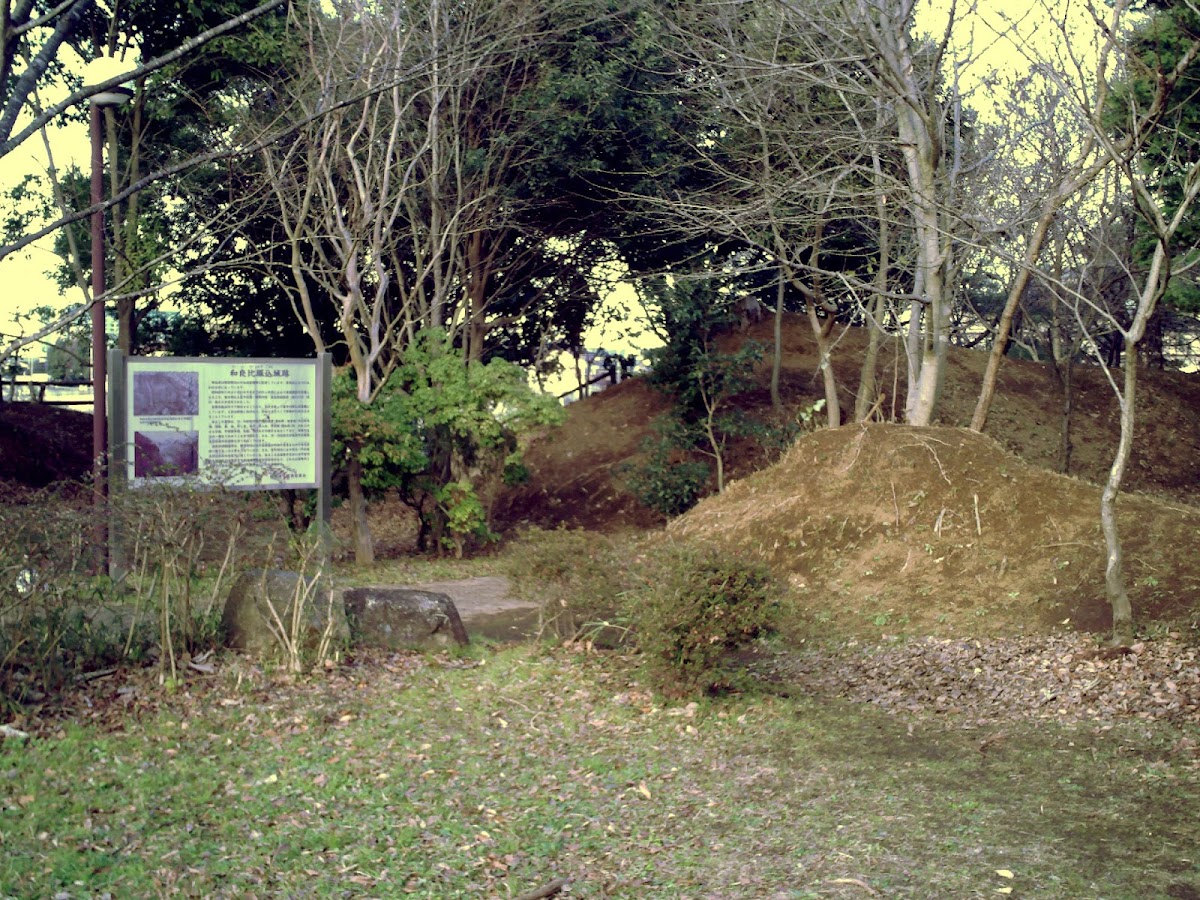
Earthworks: Part of the earthworks still remains in the main enclosure area within Inohana Park. It is located opposite the Chiba City Local History Museum (a replica keep), in the area to the left of the stairs, and an explanatory sign is also installed. These earthworks played an important role as a defensive structure for the castle.
Moats: Traces of moats, which divided the plateau, have also been confirmed. These served to prevent enemy intrusion and clearly define the boundaries within the castle. **Enclosures: It is believed that multiple enclosures (flat areas) were arranged around the main enclosure. The flat areas within the current park are presumed to be remnants of these former enclosures.
Characteristics as a Medieval Castle
Inohana Castle exhibits a typical form of a medieval castle, lacking stone walls or a keep. It was primarily a defensive structure consisting of earthworks and moats, and had a strong character as a residence. For approximately 330 years, when the Chiba clan used it as their base, this castle functioned as a political and military center. However, unlike the large mountain castles of the Sengoku period or the stone-walled castles of the early modern period, it retains strong characteristics of a samurai residence from the Heian to Muromachi periods.
The current replica keep was constructed in the Showa era for tourism purposes, and there is no historical evidence that a keep ever existed at Inohana Castle. However, this replica keep plays an important role as a landmark of Chiba City and as a local history museum.
Chiba City Local History Museum | Learning about Chiba’s History at a Replica Castle Tower
Museum Overview
The replica castle tower located within Inohana Park is open to the public as the Chiba City Local History Museum. Constructed in 1967, this building is a four-story, five-level reinforced concrete structure, its exterior modeled after a castle tower.
The museum serves as a facility introducing the history and culture of Chiba City, featuring permanent and special exhibitions. It boasts a particularly rich collection of materials related to the Chiba clan and the history of the Boso region, making it a must-see spot when visiting Inohana Castle.
Exhibits
The Chiba City Local History Museum’s exhibits are structured around the following themes:
History of the Chiba Clan: Exhibits showcase the achievements of successive heads of the Chiba clan, including Chiba Tsuneshige and Chiba Tsunetane, as well as materials introducing the Chiba clan’s activities during the Kamakura period. Visitors can also learn in detail about their relationship with Minamoto no Yoritomo and the Chiba clan’s role in the Kamakura Shogunate. History of Inohana Castle: Exhibits cover the castle’s history from its construction to its abandonment, including materials related to its structure and layout. Artifacts unearthed during archaeological excavations are also on display.
History and Culture of Chiba: This section introduces the history of the Chiba city area from ancient times to the modern era through archaeological materials, historical documents, and folklore materials.
Special Exhibitions: Seasonal special exhibitions are held on various themes, allowing visitors to learn about diverse aspects of Chiba’s history and culture.
View from the Top Floor
The top floor of the museum is an observation room offering panoramic views of Chiba city. On clear days, you can see as far as Tokyo Bay and the Boso Peninsula mountains, allowing you to imagine the scenery the Chiba clan once viewed from this location. This view evokes the lingering image of the landscape known as “Moon View from Inohana Mountain,” which was selected as one of the Eight Scenic Views of Chiba.
Visitor Information
Opening Hours: 9:00 AM to 5:00 PM (Last entry at 4:30 PM)
Closed Days: Mondays (or the following day if Monday is a public holiday), New Year holidays
Admission Fee: 60 yen for adults, 30 yen for elementary and junior high school students (Special exhibitions may have separate fees)
Location: 1-6-1 Inohana, Chuo-ku, Chiba City, Chiba Prefecture
Inquiries: Chiba City Local History Museum TEL: 043-222-8231
With its very low admission fee, this facility is popular with both citizens and tourists as an easy way to learn about Chiba’s history.
Highlights of Inohana Castle | Enjoying Castle Ruins in Inohana Park
Statue of Chiba Tsunetane
Within Inohana Park stands a bronze statue of Chiba Tsunetane, the restorer of the Chiba clan. This statue depicts Tsunetane as a warrior who supported Minamoto no Yoritomo, and it has become one of Chiba City’s symbols.
An explanatory plaque is installed in front of the bronze statue, providing detailed information about Chiba Tsunetane’s life and achievements. In particular, it highlights the episode of Tsunetane leading a large army to join Yoritomo’s uprising in 1180, significantly contributing to Yoritomo’s conquest of the Kanto region.
Existing Earthworks
Approximately a 10-minute walk from JR Hon-Chiba Station, climbing the stairs at the entrance to Inohana Park on the Chikoin Temple/Chiba Prefectural Government side, you will find the Chiba City Local History Museum (a replica castle tower) on your right. If you proceed to the left from the stairs, opposite the castle tower, you will reach the area corresponding to the main enclosure of Inohana Castle.
Here, remains of earthworks are preserved in good condition, and an explanatory plaque is also installed. This earthen embankment was actually used as a defensive structure for a medieval castle and is valuable as one of the few remaining structures of Inohana Castle. Seeing the earthen mound firsthand allows you to appreciate the scale and structure of the castle at that time.
Traces of a Moat
If you carefully observe the topography within the park, you can find traces of where a moat once stood. Although it has now been filled in or developed into a road or pathway, its remnants can be seen as depressions dividing the plateau.
Famous Cherry Blossom Spot
Inohana Park is also known as one of Chiba City’s leading cherry blossom spots. Approximately 100 Somei Yoshino cherry trees are planted in the park, and every year from late March to early April, the cherry blossoms bloom magnificently.
During this period, a “Cherry Blossom Festival” is held, and the trees are illuminated at night. The combination of the replica castle tower and the cherry blossoms makes for an excellent photo spot, attracting many photography enthusiasts. The park, bustling with cherry blossom viewers, is a beloved place of relaxation for local residents.
Surrounding Environment with a Sense of History
Inohana Park is surrounded by important facilities of Chiba City, including Chiba University School of Medicine and the Chiba Prefectural Government Office. This area can be considered the birthplace of Chiba City, and it is an area where you can feel the history of Chiba that has continued since ancient times.
From the park, you can enjoy views of the Miyako River and the city of Chiba, and you can understand why the Chiba clan chose this place as their base. This location, a transportation hub and blessed with water transport, was an ideal base for samurai in the Middle Ages.
Access to Inohana Castle | Access from Central Chiba City
Access by Train
Inohana Castle (Inohana Park) is located in the center of Chiba City and is easily accessible by public transportation.
From JR Sobu Line “Hon-Chiba Station”:
- Approximately 15 minutes on foot
- Exit the station and head southeast towards the Chiba Prefectural Government Office
- Climb the hill and you will arrive at Inohana Park
From Chiba Urban Monorail “Kencho-mae Station”:
- Approximately 13 minutes on foot
- From the station, go via the Chiba Prefectural Government Office to Inohana Park
- You can access the park from the south side of the Prefectural Government Office
From JR Chiba Station:
- Approximately 25 minutes on foot, or by bus
- Take a bus from the east exit of Chiba Station and get off at the “Local History Museum/Chiba Prefectural Cultural Hall” bus stop, then walk for approximately 5 minutes
- If taking a taxi from Chiba Station, it will take approximately 10 minutes
Access by Car
From Tokyo:
- Approximately 15 minutes from Keiyo Expressway “Anagawa IC”
- Approximately 20 minutes from the Higashi-Kanto Expressway “Wangan Narashino IC”
From Narita area:
- Approximately 20 minutes from the Higashi-Kanto Expressway “Chiba Kita IC”
Parking Information
Inohana Park has its own parking lot:
Inohana Park Parking Lot:
- Capacity: Approximately 30 cars
- Hours: 9:00 AM to 5:00 PM
- Parking Fee: Free
- However, it may become full during peak seasons such as the cherry blossom festival.
If the parking lot is full, you will need to use paid parking lots around the Chiba Prefectural Government building or coin-operated parking lots in central Chiba City. Using public transportation is recommended.
Address and Map
Address: 1-6 Inohana, Chuo-ku, Chiba City, Chiba Prefecture
The park is located south of the Chiba Prefectural Government building and is easily accessible from central Chiba City. The surrounding area includes Chiba University Hospital and Chiba Prefectural Cultural Center, offering many landmarks, making it easy to find even for first-time visitors.
Tourist Spots Around Inohana Castle | Historical Tour of Chiba City
Chiba Prefectural Government Building
Located just north of Inohana Park, the Chiba Prefectural Government Building is a 19-story skyscraper. The observation lobby on the top floor is open to the public free of charge, offering panoramic views of Chiba city and Tokyo Bay. Visiting both Inohana Castle and Chiba Prefectural Government Building allows you to experience both the history and present of Chiba City simultaneously.
Chiba Shrine
Located about a 10-minute walk from Chiba Station, Chiba Shrine is a shrine associated with the Chiba clan. It is said to have been founded during the Heian period as the guardian deity of the Chiba clan, making it an important spot for understanding the history of the Chiba clan. The vermilion-lacquered gate is impressive, and many worshippers visit for New Year’s prayers and Shichi-Go-San (a traditional Japanese rite of passage for children).
Chiba City Museum of Art
Located about a 15-minute walk from Chiba Station, the Chiba City Museum of Art is a museum that primarily exhibits modern and contemporary art. Its building, which utilizes a historical structure, is also a highlight, making it a cultural and artistic hub in Chiba City.
Hon-Sakura Castle Ruins
Hon-Sakura Castle, the site to which the Chiba clan relocated from Inohana Castle, is located across Shisui Town and Sakura City in Chiba Prefecture. It’s about a 40-minute drive from Inohana Castle, and visiting both together is recommended as part of a castle tour tracing the history of the Chiba clan. The Hon-Sakura Castle Ruins are designated a national historic site and retain much of the castle structure from the Sengoku period.
Oshi Castle Ruins
Oshi Castle, the base of Chiba Tsuneshige before he moved to Inohana Castle, is located in Midori Ward, Chiba City. Although it is now a residential area and few remains exist, it is an important site for understanding the early history of the Chiba clan.
Points to Note and Recommended Time to Visit Inohana Castle
Recommended Time to Visit
Spring (Late March to Early April): This is the cherry blossom festival season, and you can enjoy the collaboration of cherry blossoms in full bloom and the replica castle tower. However, it gets crowded during this time, so visiting on a weekday is recommended.
Autumn (October to November): This is the season for autumn leaves, and the weather is cool and pleasant. There are relatively few tourists, so you can stroll around the castle ruins at your leisure.
Early Summer (May to June): This is a time when the fresh greenery is beautiful and the weather is mild. The museum often has a good selection of special exhibitions during this time.
Clothing and Items to Bring
Inohana Park is located on a plateau, and you will need to walk uphill from the station or parking lot. We recommend wearing comfortable shoes and clothing. Especially in summer, the sun is strong, so it’s a good idea to bring a hat, sunscreen, and drinks.
Estimated Time Required
A stroll through the Inohana Castle Ruins (Inohana Park) and a visit to the Chiba City Local History Museum will take approximately 1.5 to 2 hours. If you plan to carefully view the exhibits or enjoy taking photographs, it’s advisable to allocate more time.
Photography Tips
The replica castle tower can be photographed from various angles within the park. Particularly popular are the angles looking up from the bottom of the stairs at the park entrance and the angles capturing both the statue of Chiba Tsunetane and the castle tower together. During cherry blossom season, the combination of cherry blossoms and the castle tower makes for an excellent subject.
Summary | Inohana Castle: A Place to Experience Chiba City’s History
Inohana Castle (Inohana-jo) is an important historical site symbolizing the history of Chiba City, Chiba Prefecture. For approximately 330 years, from the Heian period to the Muromachi period, this castle served as the base of the Chiba clan and was also the stage for the activities of Chiba Tsunetane, who supported the Kamakura Shogunate.
Currently developed as Inohana Park, the site retains remnants such as earthworks, and the Chiba City Local History Museum, housed in a replica castle tower, offers detailed information about Chiba’s history. It’s also known as a cherry blossom viewing spot, attracting many visitors in spring.
The site boasts excellent access from central Chiba City, being approximately a 15-minute walk from JR Hon-Chiba Station and a 13-minute walk from Chiba Urban Monorail Kencho-mae Station. Parking is available, making it accessible by car.
When visiting Chiba Prefecture, be sure to visit the Inohana Castle ruins to experience the history of the Chiba clan and the medieval castle culture. With its views from the replica castle tower, existing earthworks, and the statue of Chiba Tsunetane, this historical spot offers plenty to see. As a valuable place to experience Chiba City’s history, it’s a recommended tourist destination not only for locals but also for castle enthusiasts and history buffs.