Mukai Makido Castle (Takayama City, Gifu Prefecture) – A Hida stronghold that repelled the Kanamori army
Mukai Makido Castle is a medieval mountain castle located in Makido, Shokawa-cho, Takayama City, Gifu Prefecture. It is one of the representative castles of the Sengoku period in Hida Province and is known as a formidable fortress, with legend saying that it was the only castle that halted the advance of Kanamori Nagachika during his invasion of Hida in 1585. Currently designated as a city historical site, the castle ruins, surrounded by the rich nature of Shokawa, attract attention from history enthusiasts and castle fans.
History of Mukai Makido Castle
Construction by the Uchigashima clan
The exact construction date of Mukai Makido Castle is uncertain, but it is said to have been built by Uchigashima Tameuji during the Kansho era (1460-1466). The Uchigashima clan is said to be descended from Wada Masauji, a member of the Kusunoki clan, and originally resided in Shinano Province. During the time of Uchigashima Tameuji, they advanced into Shirakawa-go in Hida Province, expanding their power with Mukai-Makido Castle as their base.
After building Mukai-Makido Castle, Tameuji subdued the Ikkō-shū forces that held power in the region, establishing a firm base of control in northern Hida. One theory suggests that Mukai-Makido Castle was the first castle the Uchigashima clan established after moving to Hida. This castle was located at a strategically important point at the confluence of the Shōgawa (Shōkawa) and Nonomata Rivers, and was a crucial base controlling the road connecting the north and south of Hida Province.
Relocation of the Base to Kiun Castle and the Entry of the Kawajiri Clan
Later, Uchigashima Tameuji built a new castle, Kiun Castle, further inland from Shirakawa-go, and moved his base there. While Kiun Castle came to function as the main castle of the Uchigashima clan, Mukai-Makido Castle was also maintained as an important subsidiary castle. Tameuji appointed his vassal, Kawajiri Bichu-no-kami Ujinobu, as the castle lord, and thereafter, the Kawajiri clan resided there for generations.
As important retainers of the Uchigashima clan, the Kawajiri clan was responsible for the control and defense of the Shokawa region, using Mukai-Makido Castle as their base. During this period, Mukai-Makido Castle is thought to have functioned as a southern defensive stronghold within the Uchigashima clan’s sphere of influence, playing a role in preparing for invasions from the Gujo area.
The Kanamori Army’s Invasion and Battle in 1585
Mukai-Makido Castle first appears on the historical stage in August of 1585. Kanamori Nagachika, acting on orders from Toyotomi Hideyoshi (Hashiba Hideyoshi), invaded Hida Province with a large army of approximately 30,000 men. During this Hida campaign, the Kanamori army, with its overwhelming military power, successively captured castles throughout Hida Province.
However, there is a legend that Mukai-Makido Castle temporarily repelled the Kanamori army’s advance. The castle was a natural stronghold built on a cliff where the Shogawa and Nonomata rivers converge. Its defensive structures, utilizing the rugged terrain with a relative height of approximately 46 meters, troubled the Kanamori army. As the only castle in Sengoku-era Hida that managed to halt the Kanamori army’s advance, Mukai-Makido Castle deserves special mention.
Reinforcements from the Endo Clan and the Fall of the Castle
The Kanamori army initially abandoned its attempt to capture Mukai-Makido Castle and retreated, but later regrouped and launched another attack. It is said that at this time, they received reinforcements from the Gujo Endo clan, the family of the wife of Kanamori Yoshishige, the second head of the Kanamori family. With the cooperation of Mr. Endo, the Kanamori army secured an attack route to Mukai-Makido Castle and finally succeeded in capturing it.
With the fall of Mukai-Makido Castle, the Uchigashima clan’s sphere of influence completely collapsed, and Hida Province came under the control of the Kanamori clan. It is said that the Kawajiri family, the castle’s lords, returned to farming, and their descendants are believed to still reside in the area today. It is thought that Mukai-Makido Castle was abandoned after this battle.
Structure and Layout of Mukai-Makido Castle
Location and Topographical Features
Mukai-Makido Castle is located in the Mukai-Makido district of Makido, Shokawa-cho, Takayama City, Gifu Prefecture, built on a hill approximately 806 meters above sea level with a relative height of approximately 46 meters. The castle’s most distinctive feature is its natural fortress, utilizing the cliff face at the confluence of two rivers, the Shogawa (Shokawa) and the Nonomata River.
Surrounded on three sides by steep cliffs, this terrain made enemy approach extremely difficult, allowing for effective defense even with a small number of defenders. It is believed that this topographical advantage was the reason why even a large army like the Kanamori army could not easily capture it.
Arrangement of Enclosures and Moats
Although small in scale, the layout of Mukai-Makido Castle is efficiently designed, strategically placing key areas. Enclosures (kuruwa) are arranged around the main keep, and moats were constructed along the ridge. Moats are important defensive structures to prevent enemy intrusion, and in Mukai-Makido Castle, they played a crucial role in stopping enemies advancing along the ridge.
While the castle is not large, its design philosophy emphasizes defense, making maximum use of the terrain. This is a characteristic unique to mountain castles and can be considered a typical example of castle architecture adapted to the rugged terrain of Hida.
Relationship with Makido Castle on the Opposite Bank
Interestingly, another castle, “Makido Castle,” exists on the opposite bank of the Shokawa River. Makido Castle is a relatively recently discovered castle site, found in 2005. It is located at a strategic point along National Route 156, a relay point on the road between Gujo and Shirakawa Village.
Makido Castle is believed to have been a fortified camp (outpost) built by Kanamori Nagachika to attack Mukai-Makido Castle during his conquest of Hida Province. It was built on a hill approximately 50 meters high, east of the confluence of the Shogawa and Mitarai Rivers, and a hiking trail is now maintained. Mukai-Makido Castle and Makido Castle faced each other across the river, making them important historical remains that tell the story of the troop deployments of both sides during the battle in 1585 (Tensho 13).
Current Status of Mukai-Makido Castle
Preservation and Development of the Castle Site
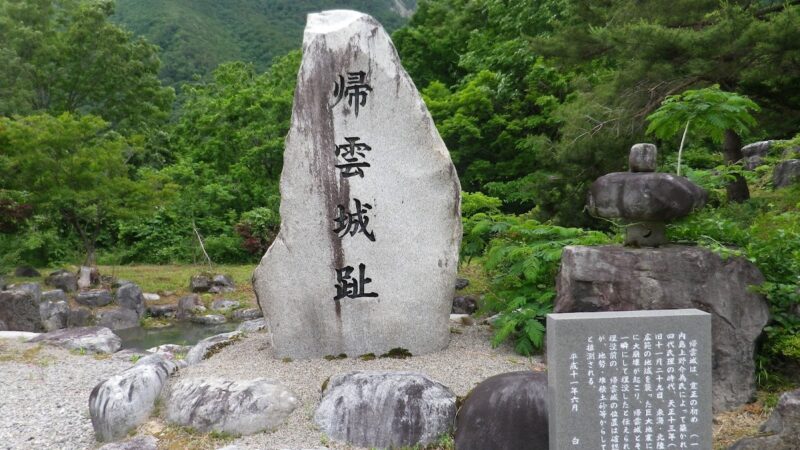
The current Mukai-Makido Castle site is protected as a city historical site (formerly a Shokawa Village historical site). A portion of the castle site has been developed into a park, creating an environment easily accessible to local residents and tourists. An observation facility has been installed at the site of the main keep, offering panoramic views of the beautiful Shokawa Valley and the surrounding mountains.
Remains such as the traces of baileys and moats can be seen, allowing visitors to imagine the castle’s appearance in its heyday. However, due to the passage of time, no clear structures such as stone walls remain. Nevertheless, the ingenious layout that made use of the terrain can be truly appreciated by visiting the site.
Visitor Guide and Access Information
Location: Makido, Shokawa-cho, Takayama City, Gifu Prefecture
Access:
- By Car: Approximately 10 minutes from the Shokawa IC on the Tokai-Hokuriku Expressway via National Route 156
- By Public Transportation: Approximately 1 hour by Nohi Bus bound for Shirakawa-go from JR Takayama Station, get off at the “Makido” bus stop, then approximately 15 minutes on foot
Parking: Limited space available around the castle ruins (prior confirmation recommended)
Visiting Hours: Open (however, visits are difficult in winter due to snow)
Admission Fee: Free
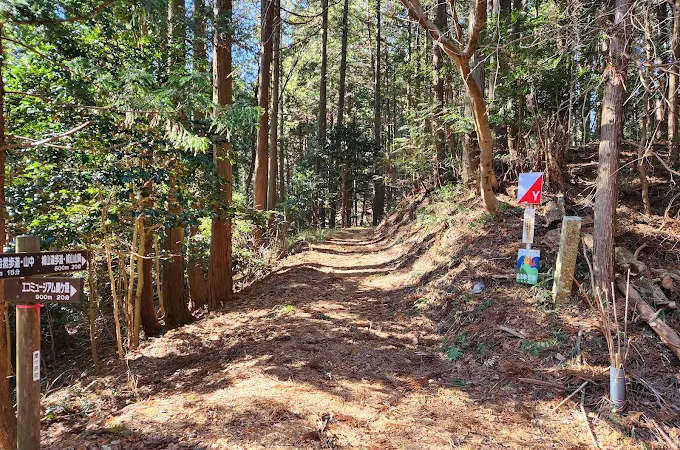
While the castle ruins are accessible on foot, it requires climbing a mountain path, so comfortable shoes and clothing are recommended. Also, the Shokawa area experiences heavy snowfall in winter, so visiting from spring to autumn is ideal.
Highlights of Mukai-Makido Castle
Fortified Cliffside Terrain
The greatest highlight of Mukai-Makido Castle is undoubtedly its location on a cliff where two rivers converge. The view of the Shokawa River valley from the main keep ruins truly demonstrates the castle’s natural fortifications. Visiting the site will clearly explain why the Kanamori army struggled to capture this castle.
Views from the Observation Facility
From the observation facility located on the main keep ruins, you can enjoy a 360-degree panoramic view of the beautiful natural scenery of the Shokawa River. The Hida Mountains, displaying different expressions in each season—from the fresh greenery of spring to the vibrant autumn foliage—are breathtaking. You can also see the direction of Makido Castle ruins on the opposite bank, allowing you to understand the relative positions of the two castles firsthand.
Remains of Moats and Enclosures
Within the castle ruins, remnants of defensive structures such as moats and enclosures from the past remain. Although small in scale, this is a valuable historical site where you can learn about the layout of a medieval mountain castle that skillfully utilized the terrain. For castle enthusiasts in particular, it will be a rare opportunity to see the textbook structure of a mountain castle in person.
A Silent Place to Immerse Historical Romance
Mukaimakido Castle Ruins may not have the bustling atmosphere of famous tourist spots, but precisely because of this, it is a place where you can quietly reflect on history. The fierce battle of 1585, the valiant efforts of the Kawajiri clan to repel the Kanamori army, and the end of the Sengoku period in Hida Province—as a castle that witnessed such turning points in history, Mukaimakido Castle leaves visitors with a profound sense of awe.
Nearby Tourist Attractions
Shirakawa-go
Heading north from Mukaimakido Castle along National Route 156, you will arrive at the Shirakawa-go Gassho-zukuri village, a World Heritage Site. It is about a 30-minute drive away, making it ideal to combine a visit to Mukaimakido Castle with sightseeing. The Uchigashima clan’s base, Kiun Castle, was also located in the Shirakawa-go area, but it was buried in the great earthquake of 1586.
Shokawa Cherry Blossoms
The “Shokawa Cherry Blossoms,” a famous spot in Shokawa town, are giant cherry trees that were transplanted from the area destined to be submerged under the Miboro Dam. They are known as one of Japan’s most famous cherry blossom viewing spots. In spring, they bloom beautifully, attracting many tourists. It’s about a 15-minute drive from Mukai Makido Castle.
Miboro Dam and Miboro Lake
The Miboro Dam, one of Japan’s leading rock-fill dams, and its artificial lake, Miboro Lake, are also worth seeing. You can learn about the history of the settlements submerged by the dam’s construction and about modern civil engineering techniques.
The Significance of Mukai Makido Castle in Hida’s Sengoku History
Mukai Makido Castle is an indispensable part of understanding Hida Province’s Sengoku period. Mukōmakido Castle served as a base for the Uchigashima clan’s expansion into Hida Province, later functioning as the residence of the Kawajiri clan, and ultimately becoming the site of fierce battles against the Kanamori army.
Notably, during the Kanamori army’s invasion in 1585 (Tenshō 13), it was the only castle in Hida Province to temporarily halt their advance. This fact speaks to the castle’s strong defenses and the high morale of its defenders. The fact that a small mountain castle temporarily repelled a large army led by Kanamori Nagachika, one of the most renowned generals of the Sengoku period, is truly a dramatic event in history.
Furthermore, the history of Mukōmakido Castle symbolizes the end of the Sengoku period in Hida Province. With the fall of this castle, the Sengoku forces of Hida, centered around the Uchigashima clan, completely collapsed, and the region transitioned to a unified rule by the Kanamori clan. In that sense, Mukōmakido Castle can be said to be the last stronghold of the Sengoku period in Hida.
The Value of Visiting Mukai-Makido Castle
Mukai-Makido Castle is not a famous castle like Gifu Castle or Inuyama Castle, but it is a historical site with unique value in the history of Japanese castles. As a typical example of a medieval mountain castle that made the most of the terrain, and as a valuable remains that convey the history of Sengoku-era Hida, it is well worth a visit.
We especially recommend visiting Mukai-Makido Castle to the following people:
- Mountain Castle Fans: You can learn firsthand about the ingenuity of the castle’s layout that makes the most of the terrain.
- Sengoku History Enthusiasts: You can experience the Sengoku period of Hida Province firsthand.
- Nature Lovers: You can enjoy the castle ruins integrated with the beautiful valley scenery of Shokawa.
- Those Who Prefer Quiet Historical Sites: You can escape the hustle and bustle and immerse yourself in history.
When visiting Mukai-Makido Castle ruins, combining it with nearby tourist spots such as Shirakawa-go and Shokawa Cherry Blossoms will allow you to enjoy a more fulfilling trip to Hida. Mukai-Makido Castle, the strongest fortress in Hida during the Sengoku period, repelled the Kanamori army. Experience the charm of its history and natural beauty firsthand.