Suibara Castle (Niigata Prefecture) Complete Guide: A Strategic Point in Echigo from the Middle Ages to the Edo Period
Located in Sotogawa-cho, Agano City, Niigata Prefecture, Suibara Castle played a crucial role as the center of Kanbara District in Echigo Province from the Kamakura period to the Edo period. Currently restored as the Suibara Magistrate’s Office, it is a valuable historical site that conveys the history of Echigo. This article provides a detailed explanation of Suibara Castle’s history, structure, highlights, and access information.
History of Suibara Castle: From the Kamakura Period to the Edo Period
Construction and Development by the Suibara Clan
The exact construction date of Suibara Castle is not precisely determined, but it is believed to have been built by the Suibara clan during the Kamakura period. The Suibara clan were descendants of Omi Hide, a Kamakura shogunate retainer originating from Omi-go in Izu Province. They obtained the position of jitō (land steward) of Shirakawa-sho in Echigo Province (later Suibara in Kanbara District) and moved there, adopting the name Suibara after the place name.
The Mizuhara clan ruled this land for generations, expanding their power as a powerful local lord in Echigo Province. They played a particularly important role in the struggle for supremacy in Echigo during the Sengoku period (Warring States period).
Sengoku Period: Relationship with the Uesugi Clan
During the Sengoku period, Mizuhara Castle became deeply involved in the political situation of Echigo Province. Of particular note is the achievements of Mizuhara Chikanori. Chikanori served Uesugi Kenshin, gained Kenshin’s trust, and made Mizuhara Castle his residence.
After Uesugi Kenshin’s death, the “Otate Rebellion” (1578-1579), a succession dispute, broke out. Mizuhara Chikanori supported Uesugi Kagekatsu and contributed to Kagekatsu’s victory. This achievement led to the Mizuhara clan occupying an even more important position within the Uesugi family.
The Turmoil of the Tensho Era and the Rebellion of Shibata Shigeie
During the Tensho era (1573-1593), Echigo Province experienced a period of great turmoil. During the “Shibata Shigeie Rebellion” (1581-1587), in which Shibata Shigeie rebelled against Uesugi Kagekatsu, Suibara Castle also held a strategically important position.
During the time of Suibara Mitsuie, Suibara Castle faced a difficult situation caught between the conflict between the Uesugi and Shibata clans. Ultimately, Shibata Shigeie was defeated in Tensho 15 (1587), and Uesugi Kagekatsu achieved the unification of Echigo Province.
The Uesugi Clan’s Transfer to Aizu and the Transformation of Suibara Castle
In Keicho 3 (1598), Uesugi Kagekatsu was transferred to Aizu with a domain of 1.2 million koku by order of Toyotomi Hideyoshi. Following this transfer to Aizu, the Mizuhara clan also moved to Aizu as vassals of the Uesugi family. This marked the end of Mizuhara Castle’s role as the Mizuhara clan’s residence.
Subsequently, Echigo Province was ruled by the Hori clan, then the Matsudaira clan, and finally became the territory of the Mizoguchi clan of the Shibata Domain. Mizuhara Castle was briefly under the control of the Shibata Domain, but its function as a castle gradually diminished.
Edo Period: Transformation into the Mizuhara Magistrate’s Office
In 1746 (Enkyo 3), the area around Mizuhara was transferred from the Shibata Domain to the direct control of the Edo Shogunate (Tenryo). Accordingly, the Mizuhara Magistrate’s Office was established on the site of Mizuhara Castle.
The Mizuhara Magistrate’s Office became an important facility responsible for a wide range of administrative affairs, including tax collection, civil administration, and justice. The office included a “Kujiba” (a place for administrative work) and a “Shirasu” (a place for interrogating criminals), functioning as a base for the Edo Shogunate’s local governance.
After the Meiji Restoration, the Suibara Magistrate’s Office was abolished, but the fact that a predecessor administrative district, “Suibara Prefecture,” was briefly established there, speaks to the administrative importance of this region.
Structure and Layout of Suibara Castle
Characteristics as a Flatland Castle
Suibara Castle is a typical flatland castle, built on the surrounding plains. Located in the center of the Echigo Plain, it is believed to have had a defensive system that utilized the abundant water of the Agano River system.
As a medieval castle, it is presumed to have had a structure mainly consisting of earthworks and moats. Unlike full-fledged early modern castles that used stone walls, it was characterized by defensive facilities centered on civil engineering works.
Architectural Layout During the Magistrate’s Office Era
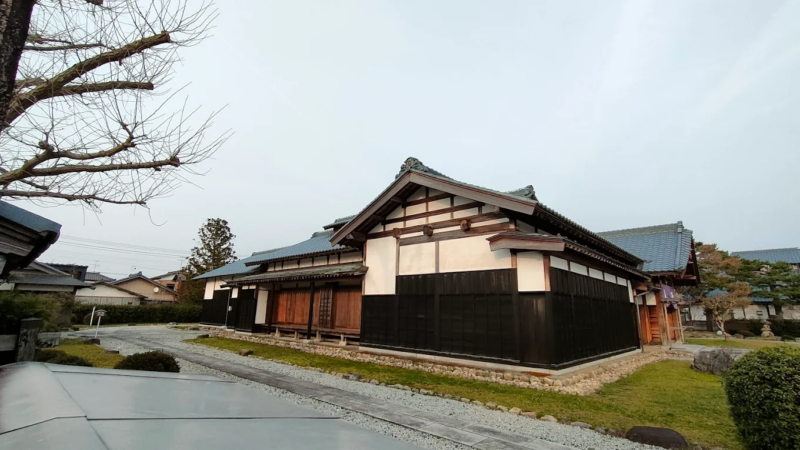
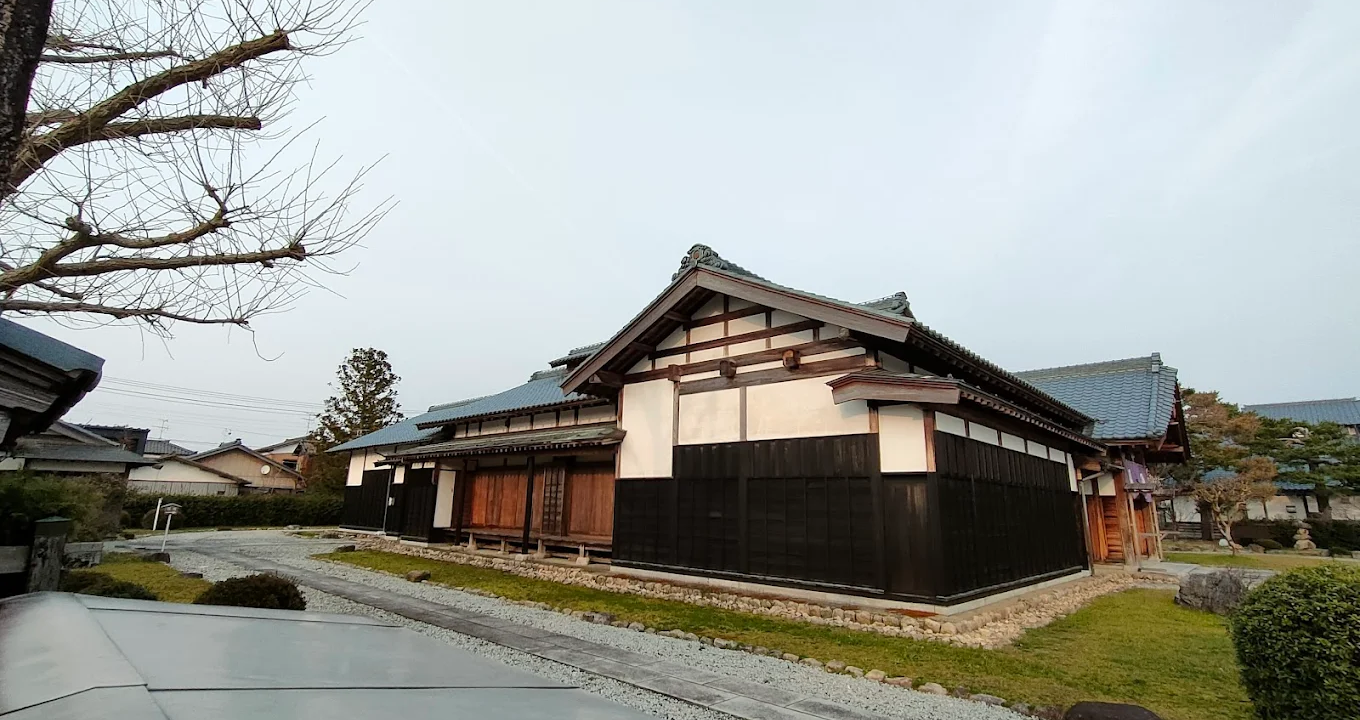
When the area was redeveloped as a magistrate’s office during the Edo period, administrative facilities were arranged on the site of the castle. The buildings currently restored were reconstructed in August 1995 based on the floor plan of the former magistrate’s office.
The main facilities of the magistrate’s office included the following:
- Main Gate: The main gate of the magistrate’s office, a facility that welcomed visitors.
- Public Affairs Area: The place where administrative work related to securing land tax collection and civil administration was carried out.
- White Court: The place where criminals were interrogated and trials were held.
- Magistrate’s Residence: The private space where the magistrate lived.
- Officials’ Office: The place where the magistrate’s office staff worked.
The layout of these facilities is valuable information for understanding the realities of local administration during the Edo period.
Highlights and Tourist Guide to Mizuhara Castle
Restored Mizuhara Magistrate’s Office
The Mizuhara Magistrate’s Office, currently restored on the site of Mizuhara Castle, is a valuable facility where you can experience the history of Echigo. The restoration work in 1995 faithfully reproduces the appearance of the magistrate’s office during the Edo period.
In the Public Affairs Area, you can learn about the administrative work of the time through exhibits and explanatory panels. You can gain a deeper understanding of the wide range of duties undertaken by the magistrate’s office, including managing tax rice, handling lawsuits from farmers, and maintaining local security.
The Shirasu is a particularly interesting facility. You can see a real “Oshirasu,” often seen in historical dramas, and experience the judicial system of the Edo period firsthand. Standing on the gravel-covered Shirasu, you can almost feel the tension of that time.
Historic Site Designation and Cultural Value
Mizuhara Castle was registered as an Agano City designated historic site on June 28, 1969, as “Mizuhara Castle Site and Mizuhara Magistrate’s Office Site.” As a valuable historical site showing the transition from a medieval castle to a modern-day magistrate’s office, it is an important cultural property that conveys the history of the region.
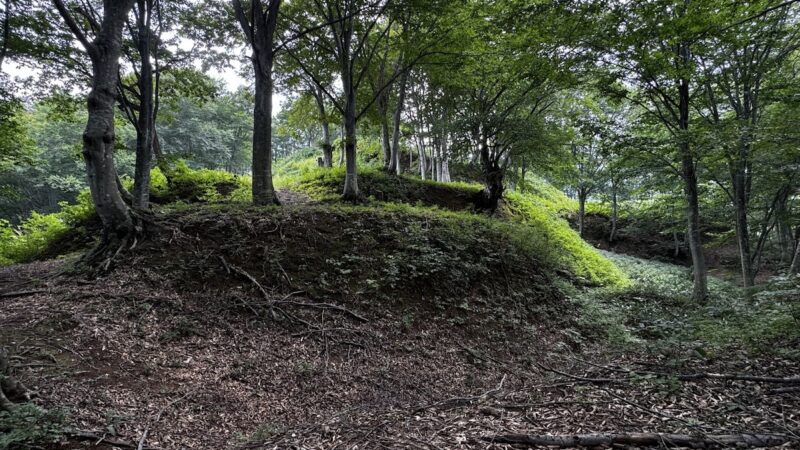
Parts of the earthworks remain around the castle site, allowing us to estimate the scale of the former castle. Detailed explanations of the history and structure of Mizuhara Castle are provided on the on-site information boards, so please be sure to check them when you visit.
Surrounding Historical Landscape
The area around the Mizuhara Magistrate’s Office retains the atmosphere of a post town from the Edo period. Mizuhara has a history of flourishing as a post town on the Hokkoku Kaido road, and some of the town layout centered around the magistrate’s office still remains.
Nearby, there are temples and shrines associated with the Mizuhara clan, allowing visitors to enjoy a historical walk through the area. Visiting the family temple of the Mizuhara clan, who served as lords of Mizuhara Castle, will provide a deeper understanding of the history.
Access Information and Visiting Guide
Location
Address: 10-5 Sotogawa-cho, Agano City, Niigata Prefecture
The Mizuhara Castle Ruins (Mizuhara Magistrate’s Office) are located in the center of Agano City and are easily accessible by public transportation.
Access by Train
Approximately a 20-minute walk from Mizuhara Station on the JR Uetsu Main Line. The route from the station to the magistrate’s office passes through the town of Mizuhara, allowing visitors to enjoy the historical atmosphere along the way.
Mizuhara Station is approximately 30 minutes from Niigata Station on the Uetsu Main Line, making it suitable for day trips from Niigata City.
Access by Car
- Approximately 10 minutes from the Yasuda IC on the Ban-etsu Expressway
- Approximately 25 minutes from the Nihonkai Tohoku Expressway on the Niigata Kameda IC
The magistrate’s office has a dedicated parking lot, which is free to use. There is ample parking space, so you can visit with peace of mind even during peak tourist season.
Opening Hours and Fees
Opening Hours: 9:00 AM – 4:30 PM (may vary depending on the season)
Closed Days: Mondays (or the following day if Monday is a public holiday), New Year holidays
Admission Fee: Free (as of 2024)
It is recommended to check the latest information on the Agano City official website or the tourist association before visiting.
Estimated Visiting Time
Allow approximately 30 minutes to 1 hour to visit the Mizuhara Magistrate’s Office. If you plan to carefully view the exhibits or explore the surrounding historical sites, we recommend allocating extra time.
Historical Figures Associated with Suibara Castle
Suibara Chikanori
Suibara Chikanori is particularly famous among the Suibara clan. He served Uesugi Kenshin, gained Kenshin’s trust, and achieved numerous military successes. He is known for supporting Uesugi Kagekatsu during the Otate Rebellion and significantly contributing to Kagekatsu’s victory.
Chikanori demonstrated not only military prowess but also excellent administrative skills, governing the Suibara region. He is an important figure who worked hard to improve the status of the Suibara clan within the Uesugi family.
Suibara Mitsuie
Suibara Mitsuie served as the lord of Suibara Castle during the Tensho era and defended the castle during the Shibata Shigeie Rebellion. In the difficult situation of the conflict between Uesugi Kagekatsu and Shibata Shigeie, he strived to defend Suibara Castle and maintain his territory.
Relationship with Uesugi Kagekatsu
The Mizuhara clan moved to Aizu following Uesugi Kagekatsu’s transfer to the region, and continued to serve as important retainers of the Uesugi family. They remained vassals of the Uesugi family of the Yonezawa Domain throughout the Edo period, and their descendants served the Uesugi family until the Meiji Restoration.
Nearby Tourist Spots and Castles
Shibata Castle
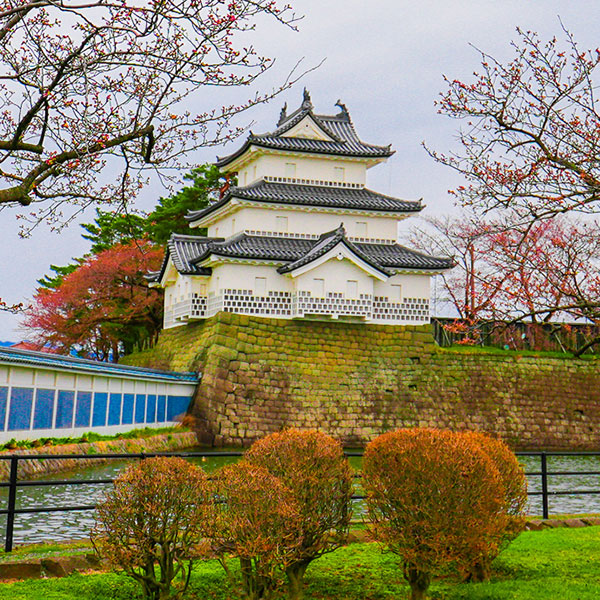
Located approximately 15km north of Mizuhara Castle, Shibata Castle flourished as the residence of the Mizoguchi clan of the Shibata Domain. It is characterized by its three shachi (mythical fish-like creatures) on the three-story turret, and the main gate and the former second bailey corner turret, designated as important national cultural properties, still exist. Visiting both Mizuhara Castle and Shibata Castle will provide a deeper understanding of Echigo’s castle culture.
Muramatsu Castle
Another castle ruin located within Agano City is Muramatsu Castle. Built as the residence of the Hori clan of the Muramatsu Domain, it possesses characteristics of a different early modern castle compared to Mizuhara Castle. Currently, it is maintained as Shiroyama Park and is known as a famous cherry blossom viewing spot. ### Hyoko Lake
Located about a 10-minute drive from the Suibara Magistrate’s Office, Hyoko Lake is an internationally important swan migration site and a Ramsar Convention-registered wetland. The sight of thousands of swans migrating there from October to March each year is breathtaking. You can create an itinerary that combines historical and natural sightseeing.
Gozu Onsenkyo Hot Spring Village
The Gozu Onsenkyo hot spring village, located in the eastern part of Agano City, is a hot spring area consisting of three hot spring resorts: Deyu Onsen, Imata Onsen, and Murasugi Onsen. After visiting Suibara Castle, you can relax and soothe your fatigue in the hot springs.
Cultural Significance and Modern Value of Suibara Castle
Importance in Regional History Research
Suibara Castle is an important historical site that shows the transition period from the medieval to the early modern period in Echigo Province. Its history, from the jitō system of the Kamakura period to the local lords of the Sengoku period, and then to the shogunate’s magistrate’s office of the Edo period, concretely illustrates the changes in Japan’s local governance system. In particular, the conversion of a castle into a magistrate’s office is a rare example nationwide, making it a valuable resource for understanding the Edo shogunate’s local governance policies.
Educational Value
The restored Mizuhara Magistrate’s Office is used as a living teaching tool for learning about local administration during the Edo period. Local elementary and junior high schools use it as a site for social studies field trips, making it an important facility for children to learn about local history.
Visiting actual facilities such as the courtroom and administrative offices allows for a concrete understanding of history that cannot be obtained from textbooks alone.
Utilization as a Tourism Resource
Agano City is focusing on promoting historical tourism centered around the Mizuhara Magistrate’s Office. Regular history lectures and events are held, providing a place for interaction between local residents and tourists.
Special openings and historical guided tours are sometimes held in spring and autumn, offering opportunities to learn more deeply about the history of Mizuhara Castle.
Points to Note When Visiting Mizuhara Castle
Recommended Prior Study
Before visiting Mizuhara Castle, acquiring basic knowledge about the Sengoku period history of Echigo Province and the history of the Uesugi clan will deepen your understanding at the site. Understanding the relationship between Uesugi Kenshin, Uesugi Kagekatsu, and Shibata Shigeie will make the strategic importance of Mizuhara Castle clearer.
Photography Tips
The Mizuhara Magistrate’s Office building is a reconstruction, but it faithfully reproduces the atmosphere of the Edo period, making it an attractive photo spot. The main gate and the white courtyard, in particular, offer opportunities to take photos with a historical drama feel.
The surrounding scenery changes with the seasons, so particularly beautiful photos can be taken during the fresh greenery of spring and the autumn foliage.
Enjoying Local Cuisine
Agano City is known as a rice-producing area, and is a major producer of Niigata Prefecture’s Koshihikari rice. There are many restaurants around Mizuhara that use local ingredients, allowing you to enjoy local cuisine along with sightseeing.
You can enjoy local specialties such as “Noppe” and “Sasa Dango,” which are particularly representative of Niigata’s regional cuisine.
Summary: Rediscovering the Historical Value of Mizuhara Castle
Mizuhara Castle (Agano City, Niigata Prefecture) is an important historical site with a history spanning approximately 600 years, from the Kamakura period to the Edo period. It began as the residence of the Mizuhara clan, served as an important base for the Uesugi clan during the Sengoku period, and then as a magistrate’s office for the shogunate during the Edo period, playing different roles in each era.
The currently restored Mizuhara Magistrate’s Office is a valuable facility that conveys the realities of local administration during the Edo period, and continues to hold educational and cultural value. It is a must-see historical site for anyone interested in Niigata Prefecture’s history, castle enthusiasts, and those interested in Japan’s local governance system.
It is easily accessible and suitable for day trips from Niigata City, and it is possible to combine it with other nearby tourist attractions. Please visit Mizuhara Castle to experience the history of Echigo.