Complete Guide to Mikaburi Castle (Niigata Prefecture): A Thorough Explanation of the History and Highlights of this Important Branch Castle of the Uesugi Clan
What is Mikaburi Castle?
Mikaburi Castle was a Japanese castle located in Echigo Province (present-day Itakura Ward, Joetsu City, Niigata Prefecture). Built on the summit of Mt. Mikaburi (242 meters above sea level), it was a typical medieval mountain castle that functioned as an important branch castle of the Uesugi clan, the powerful daimyo of Echigo Province during the Sengoku period. It was designated a historical site of the former Itakura Town, Nakakubiki District, on August 1, 1974, and after its merger into Joetsu City, it has been protected as a city historical site.
Currently, the castle ruins are maintained as “Mikaburi Castle Ruins Park,” and the remains such as earthworks, moats, baileys, and wells are well-preserved, making it a valuable historical site where one can learn about the structure of a mountain castle from the Sengoku period.
History of Minokaburi Castle
Background and Period of Construction
While there are no clear records regarding the exact construction date of Minokaburi Castle, it is believed to have been built during the Sengoku period by the Okuma clan, a senior retainer of the Uesugi clan. The Okuma clan was one of the powerful vassal groups serving the Uesugi clan, playing a crucial role in governing the region and guarding the Shinano-Echigo border.
Minokamiburi Castle was positioned as one of the branch castles of Kasugayama Castle, a strategic stronghold that formed part of the Uesugi clan’s defense network centered around Kasugayama Castle. The terrain, with the Okuma River to the east and the Koguma River to the west, created a natural fortress, providing ideal conditions for castle construction.
The Okuma Clan and Minokaburi Castle
Among the Okuma clan, known as the lords of Minokaburi Castle, Okuma Tomohide is particularly recorded as having resided there. Okuma Tomohide was a warrior who served Uesugi Kenshin and played an important role in the Uesugi clan’s rule of Echigo Province.
The Okuma clan ruled this region for generations, using Minokaburi Castle as their base to carry out duties such as guarding the Shinano-Echigo border, governing the surrounding area, and providing support to Kasugayama Castle. Due to its mountainous location, it is believed that they lived in a residence at the foot of the mountain during peacetime and took refuge in the mountaintop castle during wartime.
Role in the Sengoku Period
During the Sengoku period, Minokaburi Castle held an extremely important strategic position as a subsidiary castle of Kasugayama Castle. Its role in guarding the Shinano-Echigo border was particularly critical for the Uesugi clan.
During the time of Uesugi Kenshin, the border region between Echigo and Shinano was constantly tense, being the front line of conflict with forces such as the Takeda and Hojo clans. Minokaburi Castle is thought to have functioned as a defensive base against these threats and as a relay point for transmitting information to Kasugayama Castle.
Its location at an altitude of 242 meters allowed for easy monitoring of the surrounding area, providing the advantage of early detection of enemy invasions. Furthermore, the wide view of the Takada Plain from the mountaintop enhanced the castle’s military value.
The End of the Castle
While there are no clear records of when Minokaburi Castle was abandoned, it is believed that its military role ended with the end of the Sengoku period (Warring States period). With the arrival of the Edo period, a time of peace diminished the need for mountain castles, and it is presumed that Minokaburi Castle, like many other mountain castles, was abandoned.
Structure and Remains of Minokaburi Castle
Characteristics as a Mountain Castle
Minokamiburi Castle is a typical medieval mountain castle built on Mount Minokaburi, which is 242 meters above sea level. The elevation difference is approximately 130 meters, requiring considerable physical strength to climb. While possessing basic defensive functions as a mountain castle, it also exhibits unique castle-building techniques specific to the Echigo region.
Large-scale civil engineering works were carried out throughout the entire mountain, showcasing the pinnacle of Sengoku period mountain castle construction techniques, skillfully utilizing the natural terrain while strategically placing artificial defensive structures. The terrain, sandwiched between the Okuma River to the east and the Koguma River to the west, served as a natural moat, significantly enhancing the castle’s defensive capabilities.
Major Remains
Enclosures (Kuruwa)
Minokami Castle has multiple enclosures, with the main enclosure at the mountaintop surrounded by secondary enclosures arranged in stages. The main enclosure, as the central part of the castle, is the most important section and is thought to have housed the lord’s residence and command post.
Each enclosure is positioned according to the terrain and designed to work in conjunction with each other to provide defensive functions. The flat surfaces of the enclosures are still clearly visible today, providing important clues to understanding the layout of the castle at the time.
Earthworks
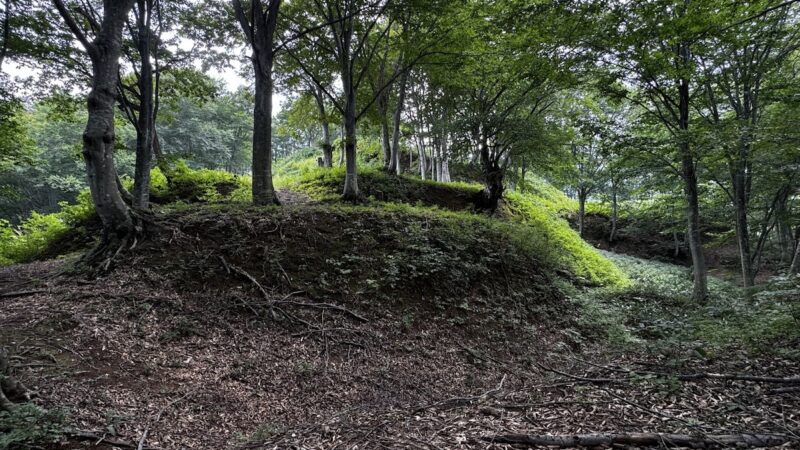
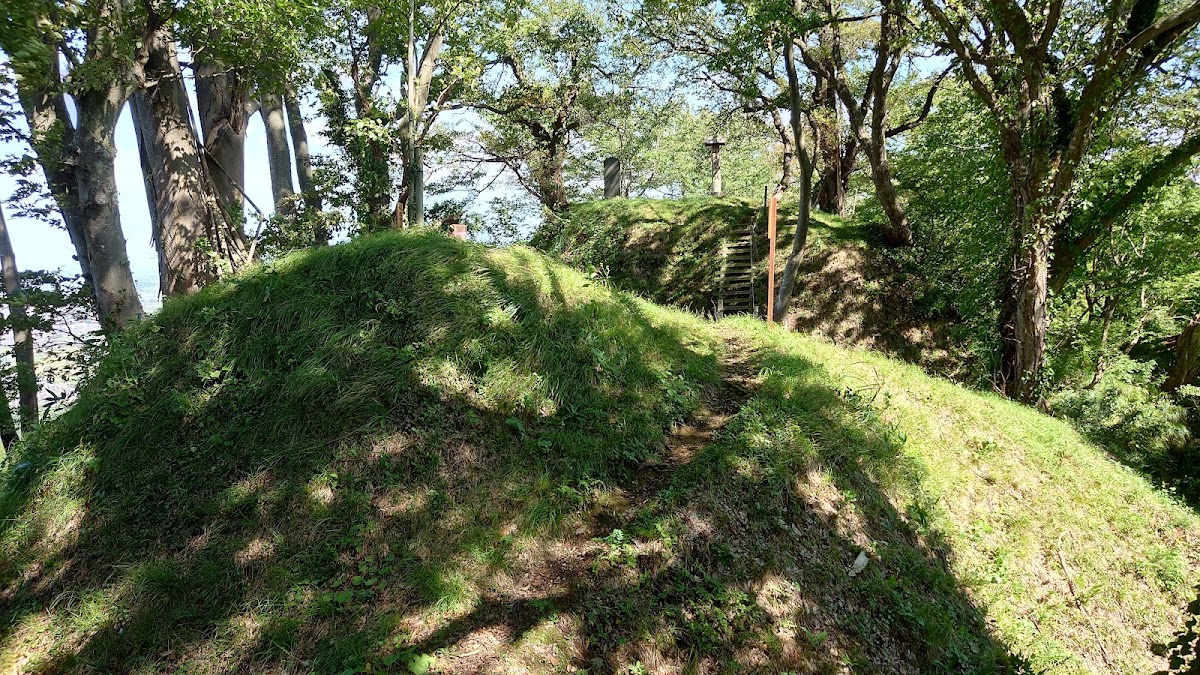
Earthworks remain in good condition throughout the castle. Earthworks are earthen walls designed to prevent enemy intrusion and are positioned to surround the enclosures. The earthworks of Minokaburi Castle are impressive in both height and width, conveying the scale of the large-scale civil engineering work carried out at the time of the castle’s construction.
The excellent state of preservation of the earthworks is one of the great values of the Minokami Castle ruins. It is considered historically important as a valuable historical site that allows for concrete observation of castle construction techniques from the Sengoku period.
Moats
Several moats, important defensive structures for mountain castles, can be found. Moats are dry moats dug to cut across ridges, serving to prevent enemy intrusion and clearly demarcate the castle area.
The moats at Minokami Castle are sufficiently deep and wide, indicating the high level of defense at the time. The clearly remaining moats are one of the highlights of exploring mountain castles.
Well Remains
Securing water was a matter of life and death for mountain castles, and well remains are found at Minokami Castle. Obtaining water near the summit at an altitude of 242 meters was not easy, making the existence of wells a crucial facility for enabling long-term sieges.
The presence of well remains indicates that Minokami Castle was not merely a watchtower, but a full-fledged mountain castle prepared for actual battle. #### Stone Walls
Some remains of stone walls have been confirmed. Stone walls are relatively rare in mountain castles in the Echigo region, and their presence at Minokaburi Castle demonstrates the castle’s importance and the high level of its construction technology.
Characteristics of the Castle Layout
The layout (castle design) of Minokaburi Castle is rational, making maximum use of the mountainous terrain. The main enclosure is located at the highest point, and secondary enclosures are arranged radially from it, creating a structure capable of defending against attacks from all directions.
By arranging enclosures along the ridges and creating trenches at key points, enemy incursion routes are limited, enabling efficient defense. This layout is attracting attention from castle researchers as a typical example of mountain castle construction technology in Echigo during the Sengoku period.
Relationship between Minokaburi Castle and Kasugayama Castle
Role as a Subsidiary Castle
Minokamiburi Castle, as one of the subsidiary castles of Kasugayama Castle, held an important position in the Uesugi clan’s control of the territory. The Uesugi clan, whose main base was Kasugayama Castle, established a network-type defense system by placing branch castles throughout their territory.
Minokami Castle, located near the border of Shinano and Echigo provinces, functioned as a frontline defensive base, particularly against threats from Shinano. It was approximately 15 kilometers from Kasugayama Castle, allowing for rapid communication in emergencies.
The Uesugi Clan’s Castle Network
After unifying Echigo Province, Uesugi Kenshin developed a network of branch castles centered around Kasugayama Castle to secure his control over the territory. Minokaburi Castle held a crucial position within this network, and along with other branch castles such as Samegao Castle, Kabasawa Castle, and Otate, it formed the foundation supporting the Uesugi clan’s military power.
This network of branch castles functioned as a base for regional control in peacetime and as a defensive base in wartime, becoming the source of the Uesugi clan’s formidable military strength.
Current State of Minokaburi Castle Ruins
Developed as Minokaburi Castle Ruins Park
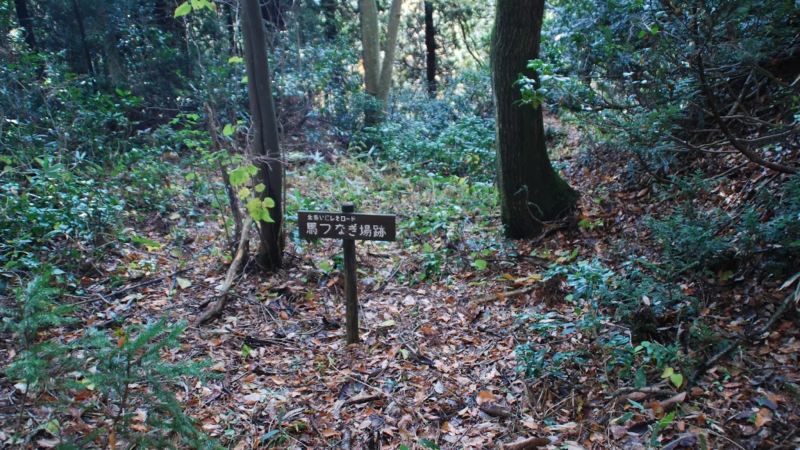
Currently, the Minokaburi Castle ruins have been developed as “Minokamiburi Castle Ruins Park” and are open to the public. Walking paths are in place, allowing for relatively safe exploration of the castle ruins. However, as it is a mountain castle, appropriate equipment and physical fitness are necessary for climbing.
Information boards are installed within the park, allowing visitors to learn about the castle’s history and remains. Visiting from spring to autumn is recommended, as winter visits are difficult due to snow.
Designation and Protection as a Historic Site
The Minokaburi Castle Ruins were designated as a historic site of the former Itakura Town, Nakakubiki District, on August 1, 1974. After Itakura Town was incorporated into Joetsu City in 2005, it has been protected as a historic site of Joetsu City.
The historic site designation legally protects the preservation of the remains and shields them from development. The Joetsu City Board of Education, among others, regularly mows the grass and maintains the walking paths, ensuring a safe environment for visitors.
Ascent Route and Access
The ascent to Minokaburi Castle ruins takes approximately 30-40 minutes on foot from the parking lot at the foot of the mountain. While the trail is well-maintained, there are steep slopes characteristic of mountain castles, so appropriate footwear such as trekking shoes is recommended.
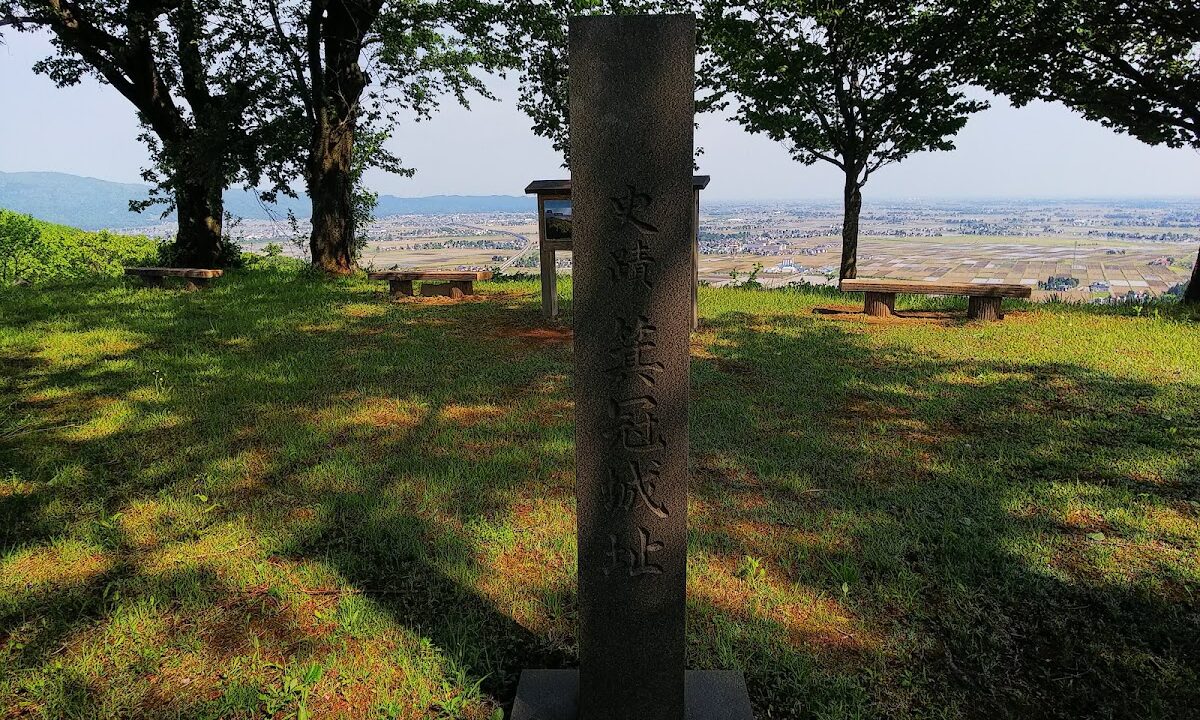
The ascent route mainly follows the ridge, allowing visitors to observe remains such as baileys and moats along the way. From the main bailey at the summit, you can enjoy a panoramic view of the Takada Plain, and on clear days, you can even see the Sea of Japan. This view offers a valuable opportunity to relive the scenery seen by the former castle lords.
Highlights of Minokaburi Castle
Well-Preserved Remains
The greatest highlight of Minokaburi Castle ruins is the well-preserved remains. Earthworks, moats, and baileys remain clearly visible, allowing visitors to concretely imagine the appearance of a mountain castle from the Sengoku period.
The scale of the earthworks is particularly impressive, demonstrating the high level of civil engineering technology of the time. The moats are also sufficiently deep and wide, allowing visitors to experience the actual defensive capabilities.
View from the Summit
The view from the 242-meter-high summit is magnificent, offering a panoramic view of the Takada Plain. One can imagine the former castle lords surveying their territory and monitoring enemy movements from this vantage point.
On clear days, the Sea of Japan can be seen in the distance, providing a valuable perspective for understanding the geographical features of the Joetsu region. This view was one of the reasons why Minokaburi Castle was chosen as a strategically important location.
Harmony with the Natural Environment
Minokamiburi Castle ruins are located in a rich natural environment, allowing visitors to enjoy the changing seasons. Spring brings fresh greenery, summer offers deep green, autumn brings vibrant foliage, and winter presents a snowy landscape, each displaying a different face with each season.
The trees covering the castle ruins also help preserve the remains, creating a space where the natural environment and historical heritage are in harmony. You can also enjoy birdwatching, making it a spot where you can enjoy both historical exploration and nature watching.
Visit Information
Basic Information
Location: Minoyama, Yamabe, Itakura-ku, Joetsu City, Niigata Prefecture
Designation: Joetsu City Designated Historic Site
Elevation: 242 meters
Elevation Difference: Approximately 130 meters
Visiting: Free (however, difficult in winter due to snow)
Parking: Available (several spaces at the foot of the mountain)
Climbing Time: Approximately 30-40 minutes one way
Access Methods
Access by Car:
- Approximately 20 minutes from the Joetsu-Takada IC on the Joshinetsu Expressway
- Approximately 25 minutes from the Joetsu IC on the Hokuriku Expressway
- Accessible via Prefectural Road from National Route 253
Access by Public Transportation:
- Convenient taxi ride from Joetsu-Myoko Station on the Echigo Tokimeki Railway
- Bus service is limited, so please check in advance.
Notes for Visitors
- Clothing and Equipment: As this is a mountain castle, comfortable walking shoes such as trekking shoes are essential. Wearing long sleeves and long pants is recommended.
- Season: Spring to autumn (April to November) is the best time to visit. Climbing the castle is difficult in winter due to snow.
- Time: Allow approximately 1.5 to 2 hours for the round trip to the castle, and 2 to 3 hours including time for viewing the ruins.
- Drinking Water: There are no drinking water facilities at the summit, so please be sure to bring your own.
- Insect Repellent: Carrying insect repellent spray is recommended in summer.
- Weather Check: The ground can become slippery in rainy weather, so please choose a day with good weather.
Nearby Tourist Attractions
When visiting the Minokami Castle Ruins, we recommend also visiting the nearby historical sites.
Kasugayama Castle Ruins: Famous as the residence of Uesugi Kenshin, the Kasugayama Castle Ruins are about a 20-minute drive from Minokami Castle. Designated a national historic site, it offers a deep dive into the history of the Uesugi clan.
Kasugayama Castle Ruins Story Museum: This facility allows visitors to learn about the history of Kasugayama Castle through videos and dioramas. It is also beneficial for understanding the relationship between Minokami Castle and Kasugayama Castle.
Rinsenji Temple: A temple associated with Uesugi Kenshin, it houses his tomb. An important spot to experience the history of the Uesugi clan.
Takada Castle Ruins: A flatland castle built in the early Edo period, offering a contrasting castle style to Minokami Castle.
Research and Evaluation of Minokaburi Castle
Position in Castle Research
Minokamiburi Castle is attracting attention from castle researchers as a typical example of a Sengoku period mountain castle in the Echigo region. Its position as a subsidiary castle of Kasugayama Castle, its well-preserved remains, and its clear layout are highly valued as research subjects.
In particular, the scale and structure of the earthworks and moats are important resources for understanding the castle construction techniques of the Echigo region, and comparative research with other Echigo mountain castles is also underway.
Importance in Local History
Minokamiburi Castle is an indispensable historical site for understanding the Sengoku period history of the Joetsu region. As a base for the Okuma clan, a powerful local family, and a concrete example of the Uesugi clan’s territorial control, it occupies an important position in local history research.
The preservation and utilization of the castle ruins are also important for maintaining the historical identity of the region, and preservation activities are being carried out by local residents.
Value as a Tourist Resource
In recent years, with the growing popularity of castle tourism, the Minokaburi Castle ruins have also attracted attention. Highly regarded by castle enthusiast communities such as “Kojodan,” it has become a destination for castle fans nationwide.
With its well-preserved remains, stunning views from the mountaintop, and harmony with the natural environment, it possesses ample appeal as a tourist resource and is positioned as an important historical tourism spot in the Joetsu region.
Significance of Visiting Minokaburi Castle
Visiting the Minokaburi Castle ruins offers significance beyond mere historical site sightseeing. You can experience firsthand the reality of a mountain castle from the Sengoku period and imagine the lives and battles of the people who lived there.
The experience of climbing the 242-meter-high mountain itself allows you to relive the hardships faced by the castle’s soldiers. Enjoying the view from the mountaintop while considering why the castle was built in this location and what its strategic intentions were deepens your understanding of Sengoku period military history.
Furthermore, the well-preserved remains are valuable evidence of the high level of Japanese castle construction technology, and provide an opportunity to appreciate the importance of cultural property preservation.
Minokami Castle, one of the stages where Uesugi Kenshin, a famous warlord in Japanese history, and his retainers were active, is a valuable historical site that allows us to experience the true nature of Japan’s Sengoku period through its historical value and current appearance.
Summary
Minokami Castle (Joetsu City, Niigata Prefecture) is a mountain castle built by the Okuma clan, a senior retainer of the Uesugi clan, during the Sengoku period. It served as an important branch castle of Kasugayama Castle, responsible for guarding the Shin’etsu border. Built on Mount Minokaburi at an altitude of 242 meters, it is a typical medieval mountain castle, and its remains, including earthworks, moats, baileys, and wells, are well-preserved.
Designated as a historical site in 1974, it is now maintained as Minokaburi Castle Ruins Park and is open to the public. With its well-preserved ruins, stunning views from the mountaintop, and harmonious integration with the natural environment, this site is a must-see not only for castle enthusiasts but also for history buffs and hiking lovers.
When visiting the Joetsu region, be sure to stop by the Minokaburi Castle ruins to experience the reality of a Sengoku period mountain castle and the history of the Uesugi clan. Visiting it in conjunction with Kasugayama Castle will give you a deeper understanding of the Uesugi clan’s castle network and their territorial control.