Umagadake Castle (Fukuoka Prefecture) Complete Guide: A Strategic Point in Buzen Province, Successively Held by Minamoto no Tsunemoto to Kuroda Kanbei
Overview of Umagadake Castle
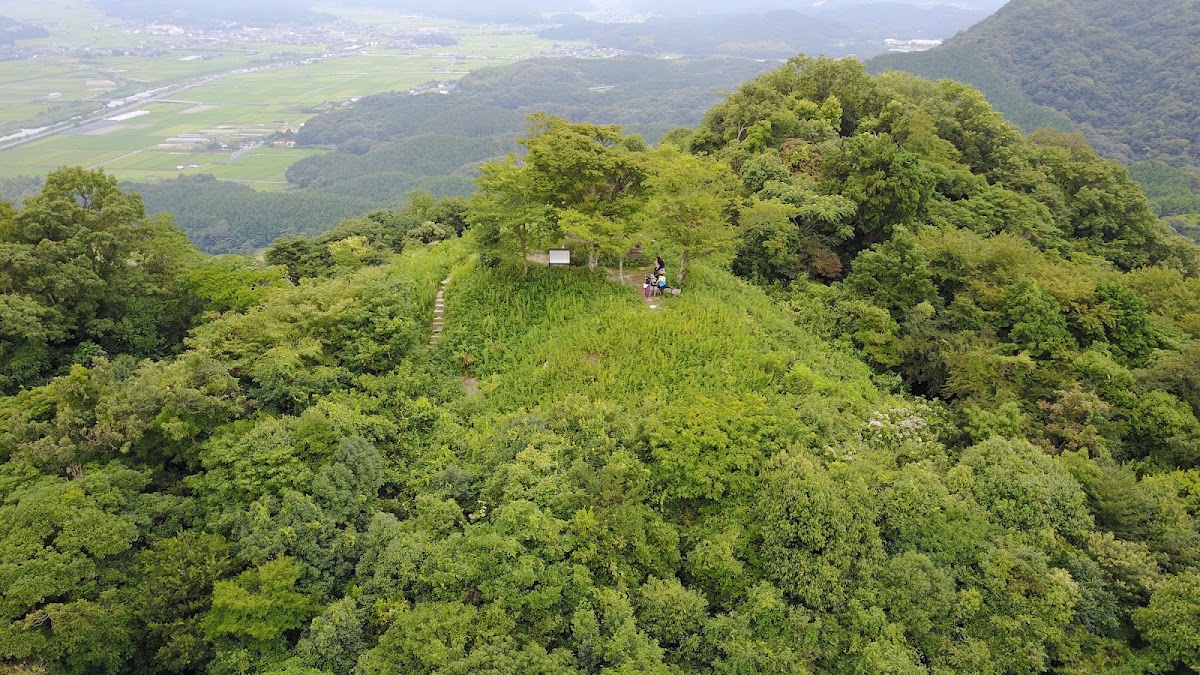
Umagadake Castle is a medieval mountain castle located on Umagadake, Tsuzumi, Yukuhashi City, Fukuoka Prefecture. It functioned as an important military base in Kyoto County, Buzen Province. Built on the summit of Mount Umagadake at an altitude of 216 meters, the castle occupies a strategically important location overlooking the Kyoto Plain. It was designated a Yukuhashi City Historic Site on November 1, 2013.
The castle’s name is said to originate from the two peaks, aligned east and west, resembling a sacred horse with a saddle. The unique layout, utilizing the distinctive topography resembling the back of a two-humped camel, is a valuable historical site that preserves the typical form of a medieval mountain castle.
The castle grounds are extensive, extending approximately 500 meters east-west and 800 meters north-south, with some of the mountaintop baileys extending into the present-day Miyako Town area. This vast castle complex speaks to the importance of Buzen Province as a political and military center.
Basic Information on Magatake Castle
Location: Tsutsumi Magatake, Yukuhashi City, Fukuoka Prefecture (partially Hanakuma, Saikawa, Miyako Town)
Former Province: Buzen Province, Kyoto District
Classification/Structure: Mountain castle, multi-bailey style
Elevation: 216 meters
Castle Area Size: Approximately 500 meters east-west, approximately 800 meters north-south
Common Name/Alternate Name: Magatake Castle
Designated Cultural Property: Yukuhashi City Designated Historic Site (Designated November 1, 2013)
Main Access Points: Three locations: Otani trailhead on the north side, Goshogatake trailhead on the west side, and Hanakuma trailhead on the south side
History of Magatake Castle
Tenkei Era: Construction by Minamoto no Tsunemoto
Magatake Castle has a long history, and it is said to have been built during the Tenkei era (938-947) by Minamoto no Tsunemoto, considered the ancestor of the Seiwa Genji clan. Minamoto no Tsunemoto was a warrior who distinguished himself in the rebellions of Taira no Masakado and Fujiwara no Sumitomo. His descendants later became the main line of the Seiwa Genji clan, which continued to Minamoto no Yoritomo.
From its construction, this castle functioned as a strategic point in Buzen Province. Its geographical advantage overlooking the Kyoto Plain made it a crucial base for regional control.
Medieval Period: The Era of the Ogata and Nitta Clans
In the medieval period, Magatake Castle became the residence of local powerful families such as the Ogata and Nitta clans. These clans established a powerful samurai system in Buzen Province.
The Ogata clan, in particular, had close ties with the Otomo clan of Bungo Province and played a key role in the network of samurai groups in Kyushu.
Nanboku-cho Period: The Beginning of Turmoil
During the Nanboku-cho period, Magatake Castle became the stage for the conflict between the Southern and Northern Courts in Kyushu. During this period, the Shōni clan (or Shōni clan) emerged as castle lords, intensifying the power struggle in Buzen Province.
The Shōni clan, as the Kyushu Tandai (governor of Kyushu), was a central force on the Northern Court side, but their power gradually weakened due to battles against the Southern Court and conflicts with the Ōuchi clan.
Sengoku Period: The Struggle for Control Among Three Major Powers
With the arrival of the Sengoku period, Magatake Castle became the stage for fierce battles between three major powers: the Ōuchi clan and Mōri clan of the Chūgoku region, and the Ōtomo clan of Bungo Province. The struggle for control of Buzen Province was repeatedly intertwined with the ownership of this castle.
The Ōuchi clan was a Sengoku daimyo based in Suō Province, and they sought to expand into northern Kyushu, positioning Magatake Castle as a crucial base. However, after Ōuchi Yoshitaka was killed by his vassal Sue Harukata, the Ōuchi clan’s power rapidly declined.
After the fall of the Ouchi clan, the Mori clan expanded their power and, for a time, controlled Magatake Castle. Meanwhile, the Otomo clan of Bungo Province also sought to expand their influence into Buzen Province, and the struggle for Magatake Castle continued.
The Nagano Clan Era
In the late Sengoku period, the Nagano clan became the lords of Magatake Castle. The Nagano clan was under the Otomo clan’s control and contributed to the Otomo clan’s maintenance of power in Buzen Province.
Under the Nagano clan’s rule, Magatake Castle continued to function as an important military base for the Otomo clan in Buzen Province.
1586 (Tensho 14): Toyotomi Hideyoshi’s Kyushu Campaign
In 1586 (Tensho 14), when Toyotomi Hideyoshi’s Kyushu Campaign began, Magatake Castle faced a major turning point in history. The Nagano clan, the castle’s lord at the time, chose to surrender in the face of the overwhelming power of the Toyotomi army.
After the surrender, Magatake Castle was used as lodging for Toyotomi Hideyoshi. The fact that Hideyoshi, who had become the ruler of Japan, stayed at this castle indicates its importance as a strategic base in Kyushu.
The Kuroda Clan’s Entry and Relocation to Nakatsu Castle
After the Kyushu campaign, Kuroda Yoshitaka (Kanbei) and his son Kuroda Nagamasa, who were granted Buzen Province, entered Magatake Castle. Kuroda Kanbei was a renowned general known as Toyotomi Hideyoshi’s strategist, and became the lord of Buzen Province with a domain of over 120,000 koku.
Initially, the Kuroda clan used Magatake Castle as their base, but considering its functionality and convenience as a modern castle, they began construction of Nakatsu Castle during the Keicho era (1596-1615). With the completion of Nakatsu Castle, the Kuroda clan’s headquarters moved to Nakatsu, and Magatake Castle was abandoned.
It is believed that the Kuroda clan did not extensively renovate Magatake Castle because they already had plans for the construction of Nakatsu Castle. Nakatsu, located closer to the plains and a strategic transportation hub, was more suitable as the residence of a daimyo (feudal lord) in the early modern period than Magatake Castle, which was a mountain castle.
Layout and Remains of Magatake Castle
Honmaru (Western Peak)
The Honmaru, the central part of Magatake Castle, is located on the western peak of the two peaks (east and west). It boasts the largest flat area within the castle grounds and functioned as the main enclosure.
From the Honmaru, one can see a panoramic view of the Kyoto Plain, making it an ideal location for monitoring enemy movements. The flat terrain remains today, allowing us to imagine its former scale.
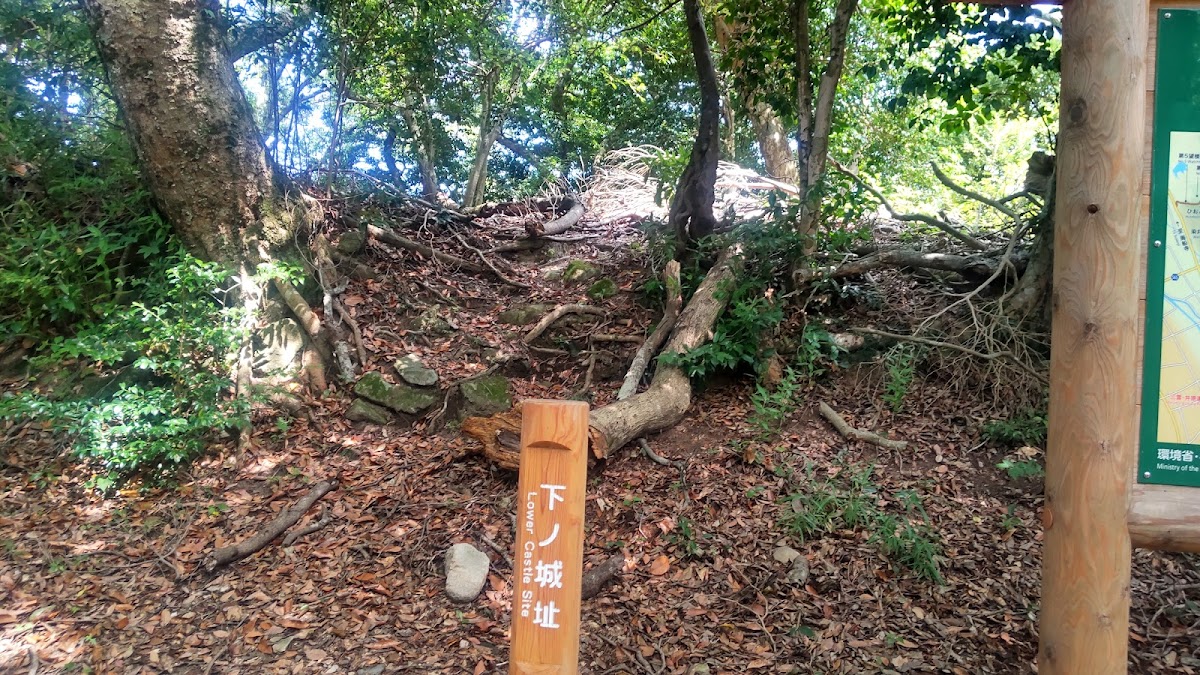
Traces of earthworks can be seen around the Honmaru, indicating that defensive facilities were in place.
Ninomaru (Eastern Peak)
The Ninomaru is believed to have been located on the eastern peak. Separated from the Honmaru by a moat, it functioned as an independent defensive base.
The view from the Ninomaru was also excellent, and together with the Honmaru, it formed the core of the castle. The clear shape of the enclosure remains today. ### Moats
Multiple moats are located between the main keep and the second bailey, and at positions separating each bailey. The moat below the southeast of the main keep is particularly large and served as an important defensive structure to prevent enemy intrusion.
Moat remains have also been confirmed on the northern slope, indicating that the castle’s layout considered defense from the foothills as well.
Ridge-shaped Vertical Moats
One of the most distinctive remains of Magatake Castle is the ridge-shaped vertical moat system built on the slope. This system, consisting of multiple vertical moats arranged in parallel, is a defensive structure unique to the Sengoku period, designed to hinder enemy lateral movement and make attacks difficult.
Ridge-shaped vertical moats are a late Sengoku period technique and are thought to have been developed under the influence of Sengoku daimyo such as the Ouchi, Mori, and Otomo clans. They remain in good condition today, making them valuable resources for understanding the defensive techniques of medieval mountain castles.
Horizontal Moats
Remains of horizontal moats have also been confirmed, mainly on the northern slope. A horizontal moat is a moat dug laterally along a slope, serving to restrict enemy movement and facilitate the movement of the defenders.
Enclosures
In addition to the main enclosure and second enclosure, numerous enclosures are located from the mountaintop to the foot of the mountain. These are thought to have been used as garrisons for soldiers and storage areas for supplies.
The arrangement of the enclosures skillfully utilizes the terrain, demonstrating the high level of castle construction technology of medieval mountain castles.
Earthworks
Earthworks were built around each enclosure, enhancing its defensive capabilities. Traces of these earthworks can still be seen in some areas today.
Ascent Route
The ascent route was also designed with defense in mind, being curved rather than straight to make enemy intrusion difficult. It is believed that the ascent route was meticulously modified during the time of the Kuroda clan.
Related Historical Sites in the Surrounding Area
Goshogatani Jinryoseki
To the west of Mount Magatake lies the Goshogatani Jinryoseki, an ancient mountain castle. The Kamigoishi are the remains of an ancient mountain castle built between the 7th and 8th centuries, characterized by the use of rows of stones to demarcate the castle grounds.
Although Magatake Castle and Goshogatani Kamigoishi are from different periods, they represent a valuable example of ancient and medieval castle remains coexisting on the same mountain range.
Iwaishi Castle
Near Magatake Castle, Iwaishi Castle also exists, forming part of a castle network in Buzen Province. It is believed that these castles cooperated with each other to establish a regional defense system.
Access and Climbing Routes to Magatake Castle
North Side Otani Trailhead
This is the most common climbing route, starting from the Otani area of Yukuhashi City. There is parking available, and the trail is relatively well-maintained. The climb takes approximately 40 minutes to 1 hour.
West Side Goshogatake Entrance
This route passes through Goshogatani Kamigoishi and offers the unique opportunity to view ancient and medieval remains simultaneously. It is a route more suitable for those with strong legs. ### South Side Hanakuma Trailhead
This route approaches the castle grounds from the south side, starting from the Hanakuma area of Saigawa, Miyako Town. Allow approximately one hour for the climb.
Highlights and Enjoyment of Magatake Castle
Breathtaking Views
The views from the main keep and second bailey are magnificent, offering a panoramic view of the Kyoto Plain. On clear days, you can even see the Suo Sea, giving you a real sense of why this location was considered a strategic stronghold.
An observation deck is also available, allowing you to enjoy a 360-degree panorama.
Observation of Ridge-Shaped Vertical Moats
The opportunity to observe ridge-shaped vertical moats, a defensive technique from the Sengoku period, up close is a major attraction for castle enthusiasts. The sight of multiple vertical moats lined up is impressive, allowing you to appreciate the high level of castle construction technology of the time.
Experiencing Historical Romance
Magatake Castle boasts a history spanning approximately 600 years, from Minamoto no Tsunemoto to Kuroda Kanbei. By viewing the same scenery seen by the castle lords of each era from the same spot, one can feel the romance of history.
In particular, it gained attention as a place associated with Kuroda Kanbei, influenced by the 2014 NHK Taiga drama “Gunshi Kanbei” (Strategist Kanbei). Even today, a flag bearing the words “Kuroda Kanbei Appears” is displayed, making it a popular destination for drama fans.
Enjoying the Mountain Climb
At an altitude of 216 meters, it’s a manageable mountain, making it easy for even beginner hikers to attempt. Its appeal lies in the fact that you can enjoy both visiting the castle ruins and hiking simultaneously. The round trip takes approximately 2 to 3 hours.
The natural beauty changes with the seasons, displaying different expressions depending on the time of year, such as the fresh greenery of spring and the vibrant autumn foliage.
Historical Significance of Magatake Castle
Magatake Castle is a castle that symbolizes the transition period from the medieval to the early modern period in Buzen Province. The history of this castle reveals a turning point in history, from mountain castles to flatland castles, and from medieval to early modern rule.
The fact that it functioned as a military base for approximately 600 years, from the time of Minamoto no Tsunemoto to the time of the Kuroda clan, speaks to the geopolitical importance of this area. The fact that powerful daimyo of the Sengoku period—the Ouchi, Mori, and Otomo clans—competed for control of it also demonstrates the high strategic value of Magatake Castle.
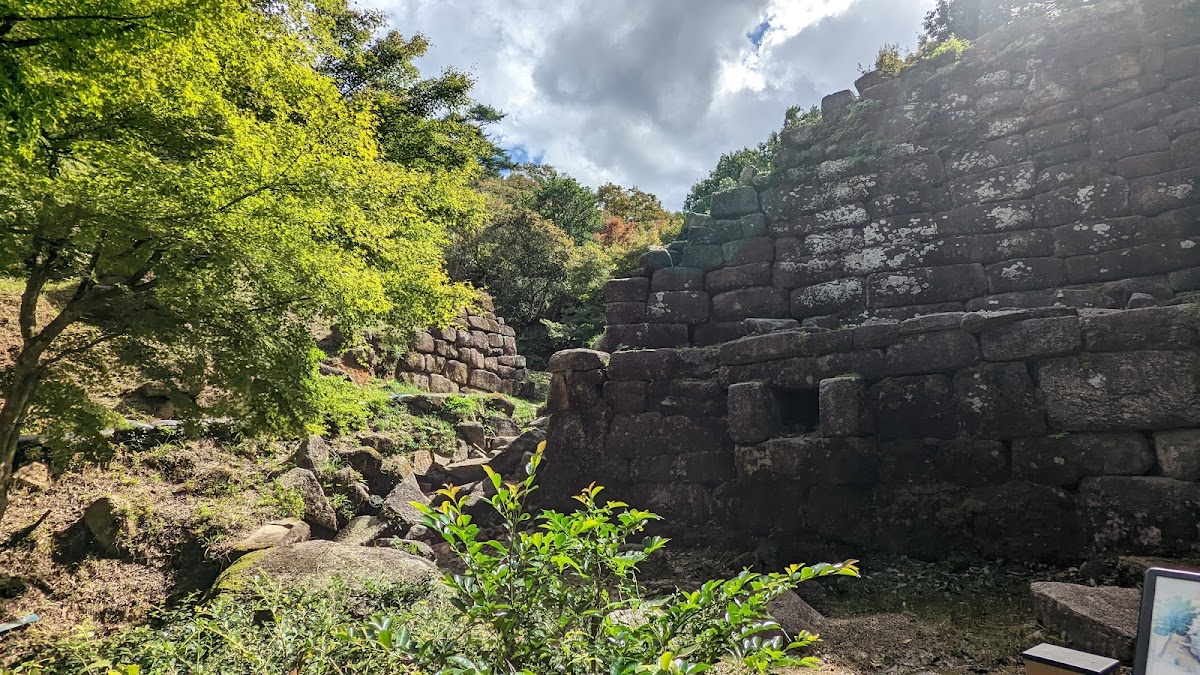
Currently, the Magatake Castle ruins are protected as a designated historical site of Yukuhashi City, preserving the valuable remains of a medieval mountain castle for future generations. The defensive structures, including the ridged vertical moats, are important historical materials that convey the castle-building techniques of the Sengoku period and hold high value in castle research.
Points to Note When Visiting
When visiting the Magatake Castle ruins, please note the following:
- Clothing and Equipment: As it is a mountain castle, comfortable clothing and hiking boots are necessary. In summer, don’t forget insect repellent spray; in winter, take precautions against the cold.
- Hydration: There are no vending machines on the hiking trail, so be sure to bring your own water.
- Time Allocation: Plan for a round trip of 2-3 hours, aiming to descend before sunset.
- Weather Check: The ground can become slippery in rainy weather, so check the weather before visiting.
- Protection of Historical Sites: To avoid damaging the historical site, please do not enter areas other than the designated routes.
- Manners: Please take all your trash with you and cooperate in protecting the natural environment.
Summary
Magatake Castle is a valuable medieval mountain castle ruin remaining in Yukuhashi City, Fukuoka Prefecture. Its long history, beginning with the legend of its construction by Minamoto no Tsunemoto and continuing through the Shoni, Ouchi, Mori, Otomo, Nagano, and Kuroda clans, tells the story of the shifts in power in Buzen Province.
From its 216-meter-high summit overlooking the Kyoto Plain, to its Sengoku period defensive structures including a series of ridged trenches, and its historical significance as a place associated with Kuroda Kanbei, Magatake Castle offers something for everyone—not just castle enthusiasts, but also history buffs and mountain climbing aficionados.
The well-preserved remains are a valuable cultural asset that conveys the appearance of a medieval mountain castle. Why not visit Magatake Castle and experience the history of Buzen Province for yourself?