Complete Guide to Kushizaki Castle (Shimonoseki City, Yamaguchi Prefecture) | History, Highlights, and Access Information
What is Kushizaki Castle?
Kushizaki Castle (Kushizaki-jo) was a Japanese castle located in Chofu Miyazaki-cho, Shimonoseki City, Yamaguchi Prefecture (formerly Toyoura District, Nagato Province). It is also written as 串崎城 and is known by other names such as Katsuyama Castle, Chofu Castle, and Chofu Jin’ya.
Built on a high point on a peninsula jutting out into the Suo Sea, this castle was a strategic stronghold overlooking the Kanmon Strait, and a crucial base controlling a vital point for maritime traffic. Currently, it is maintained as Sekimidai Park and serves as a place of relaxation for citizens, but it is believed that the castle grounds at the time extended even further north, to Toyoko Shrine.
Regarding the origin of the place name “Kushizaki,” there is an interesting legend that it originated from “Kubizaki” (meaning “head cape”), as the heads of enemy soldiers killed during the Mongol invasions of the Kamakura period were buried on this coast.
History of Kushizaki Castle
Sengoku Period: The Era of the Ouchi and Naito Clans
While there are various theories regarding the construction period of Kushizaki Castle, during the Sengoku period, it was under the influence of the Ouchi clan, a powerful daimyo family from the late Muromachi period. It is believed that Naito Takaharu, a retainer of Ouchi Yoshitaka, resided there, and that the castle’s foundation was formed during this period.
The Ouchi clan was a powerful daimyo family that dominated the western part of the Chugoku region, centered in Suo and Nagato provinces. Kushizaki Castle functioned as a base for monitoring and managing the Kanmon Strait, an important maritime trade route. This location was a crucial point on the trade route connecting the Seto Inland Sea and the Sea of Japan, occupying an extremely important position both militarily and economically.
The Mori Clan Era: Mori Hidemoto and the Establishment of the Chofu Domain
After the Battle of Sekigahara (1600), Mori Terumoto, who was defeated as the commander-in-chief of the Western Army, had his vast territory drastically reduced to just two provinces: Suo and Nagato. Terumoto made Hagi Castle his new residence and the headquarters of the Mori family, but the treatment of his family members became a crucial issue at this time.
Mori Hidemoto, the eldest son of Hoida Motokiyo (the fourth son of Mori Motonari), played a key role as the de facto commander-in-chief of the Western Army at the Battle of Sekigahara. After the war, Hidemoto was granted 60,000 koku and established the Chofu Domain with Kushizaki Castle as his residence. This gave Kushizaki Castle a new role as the administrative center of the Chofu Domain.
Mori Hidemoto renovated and expanded Kushizaki Castle and also focused on developing the castle town. The town of Chofu developed around its castle, with samurai residences and merchant districts forming, and flourished as the political, economic, and cultural center of the domain.
The One Castle Per Province Decree and Castle Demolition
In 1615 (Genna 1), after the Edo shogunate defeated the Toyotomi clan in the Summer Siege of Osaka, it issued the One Castle Per Province Decree to reduce the military power of the various daimyo. This decree obligated each domain to demolish castles other than its own.
In Nagato Province, Hagi Castle was allowed to remain as the residence of the Mori main family, but Kushizaki Castle of the Chofu domain, a branch domain, was targeted for demolition. As a result, Kushizaki Castle was abandoned, and many of its stone walls and buildings were dismantled.
After its demolition, the Chofu domain established its residence (Chofu Jinya) on the site of the present-day Yamaguchi Prefectural Toyoura High School, which served as the domain’s administrative center. This Jinya, also known as “Katsuyama Goten,” continued to function as the political center of the Chofu domain until the Meiji Restoration. Although it lost its function as a castle, the town of Chofu continued to develop as the center of the domain.
After the Meiji Restoration: Transformation into Sekimidai Park
After the Meiji Restoration, the Chofu domain ceased to exist due to the abolition of the feudal domains and the establishment of prefectures, and the Kushizaki Castle site became privately owned land. For a long time, the castle site was neglected, but from the Showa to Heisei periods, its value as a historical heritage site was re-recognized, and development progressed.
Currently, it is developed as Sekimidai Park, with the castle tower base restored and parts of the stone walls repaired and preserved. From the park, you can enjoy a panoramic view of the Kanmon Strait and the Hibikinada Sea, making it a popular viewpoint for citizens and tourists alike.
Structure and Layout of Kushizaki Castle
Castle Arrangement and Scale
Kushizaki Castle was built utilizing the terrain that juts out into the sea on the east side, making it a natural stronghold surrounded by the sea on three sides. A moat was constructed on the western land side to strengthen its defenses, making it difficult for enemies to invade.
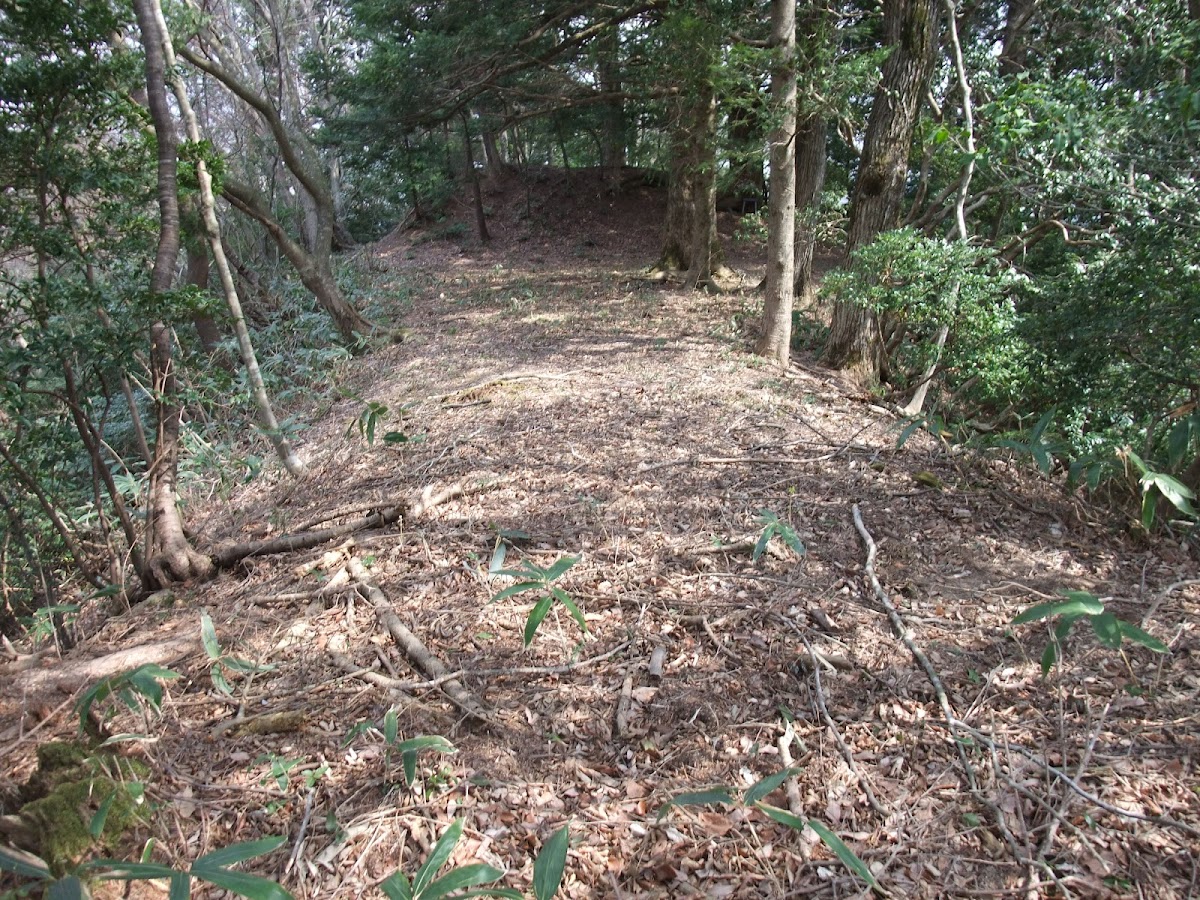
The castle grounds are estimated to have extended from the main citadel, centered around the current Sekimidai Park, to the vicinity of Toyokou Shrine to the north. Within this vast castle area, it is believed that various enclosures such as the main keep, second bailey, and third bailey were arranged, along with samurai residences and warehouses.
Main Citadel (Site of the Main Keep)
The central part of the current Sekimidai Park corresponds to the main citadel (site of the main keep). A stone structure resembling a castle tower base has been restored here, and it can be used as an observation deck. From the castle tower base, one can enjoy a magnificent view of the Kanmon Strait, a view that the former castle lords must have also enjoyed.
It is believed that the main citadel contained a palace and other important buildings, serving as the central space where the domain’s affairs and ceremonies were conducted.
Characteristics of the Stone Walls
The stone walls of Kushizaki Castle are valuable historical remains that demonstrate castle construction techniques from the Sengoku period to the early Edo period. Even today, impressive stone walls remain within Sekimidai Park and near the castle ruins monument at the northern foot of the hill, testifying to the high level of engineering skill of the time.
The stonework techniques used in the walls, such as rough-hewn stonework and fitted stonework, vary depending on the era, allowing us to understand the history of the castle’s expansion and renovation. The stone wall remains on the north side of the park are particularly well-preserved, and with information panels installed, it’s a must-see for anyone interested in castle architecture.
Moats and Defensive Structures
A moat was constructed on the western, landward side. The eastern side, facing the sea, was a cliff, and the natural terrain provided a strong defensive line, so it is thought that artificial defensive structures were mainly concentrated on the west side.
While the scale and structure of the moat are now unknown due to land reclamation and urbanization, it is presumed to have been of considerable size before the “One Castle Per Province” decree.
Highlights of Kushizaki Castle
Castle Tower Base at Sekimidai Park
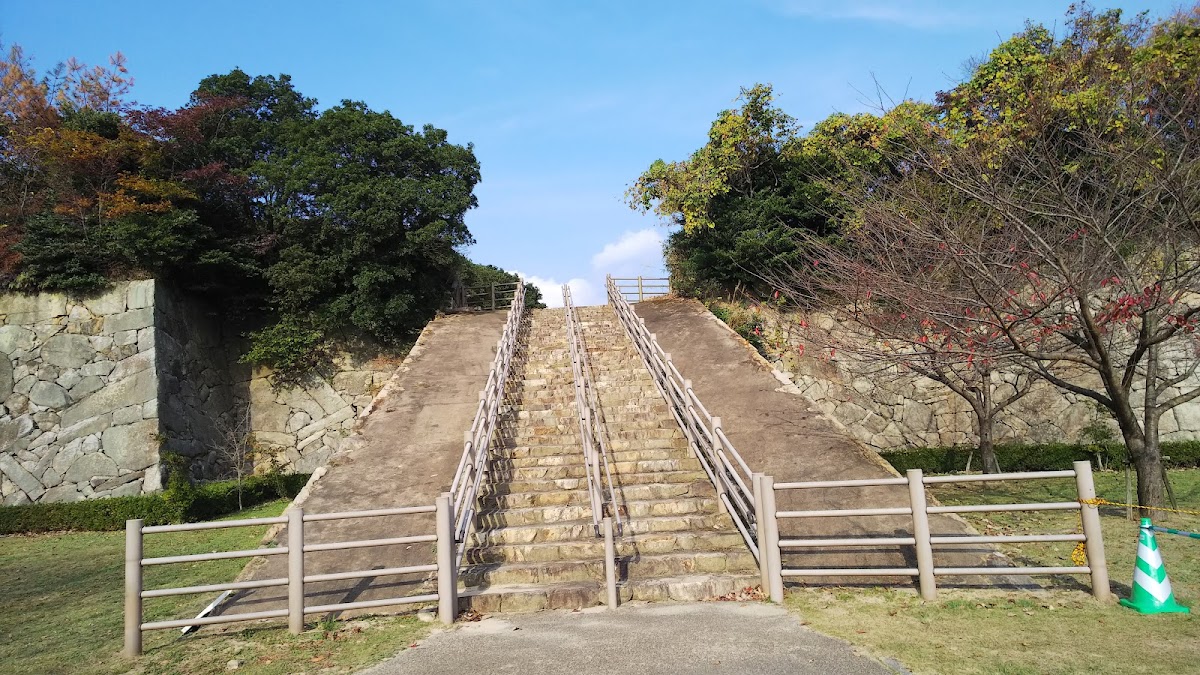
The biggest highlight of Sekimidai Park is the restored castle tower base. The stone walls have been rebuilt and the base has been developed as an observation deck, accessible by stairs. The view from the castle tower base is magnificent, offering panoramic views of ships traversing the Kanmon Strait, Kyushu (Moji) on the opposite shore, and the vast expanse of the Hibikinada Sea.
On clear days, you can even see Ganryujima Island in the distance, a historical island that was the site of the duel between Miyamoto Musashi and Sasaki Kojiro. The sunset over the sea is beautiful at dusk, making it a popular spot for photography.
Restored Stone Walls
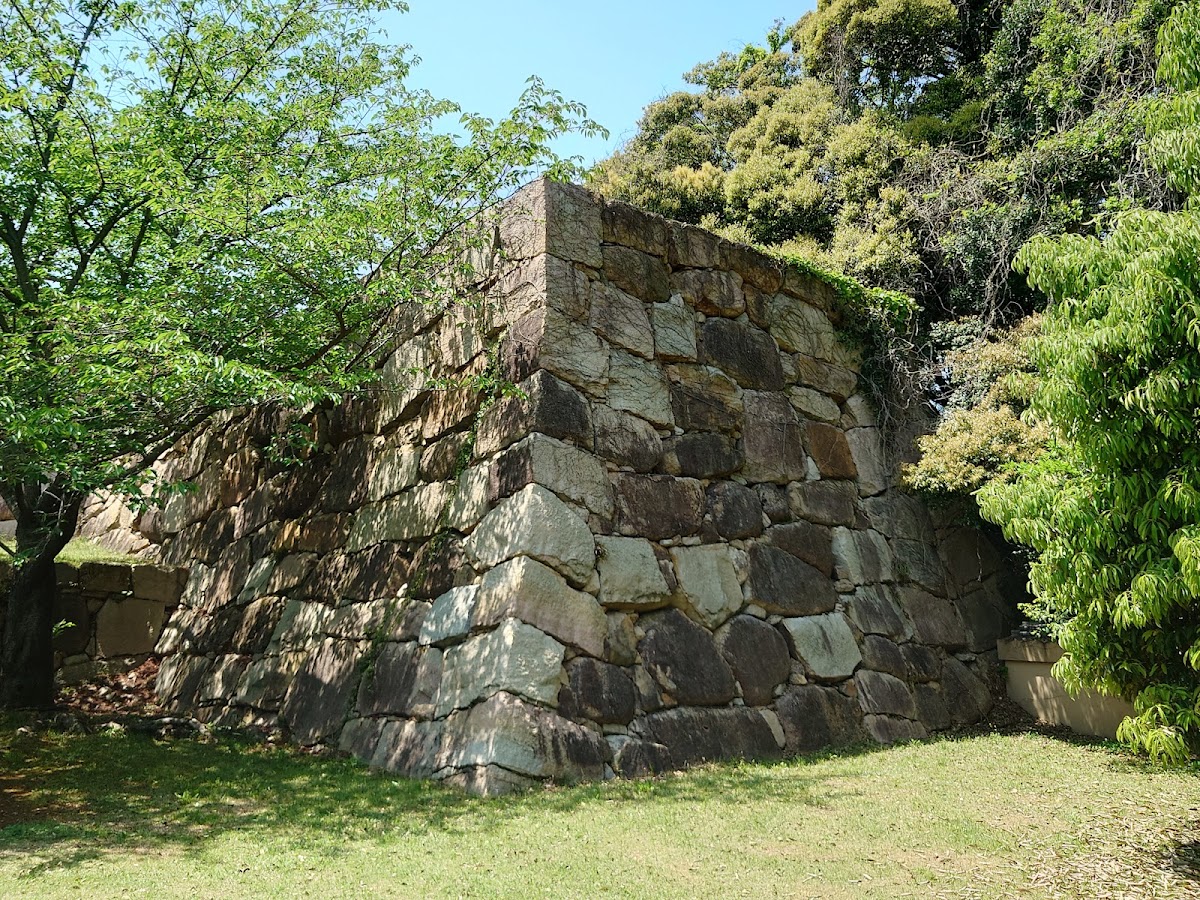
Restored and maintained stone walls can be seen throughout the park. The stone walls around the main keep site are particularly impressive, allowing you to observe castle construction techniques from the Sengoku period to the early Edo period up close.
By observing the details of the stone walls, such as the construction method, stone selection, and corner treatment, you can appreciate the skill and ingenuity of the stonemasons of that time.
Stone Wall Remains and Castle Site Monument on the Northern Foot of the Mountain
North of Sekimidai Park, towards Toyokou Shrine, you will find the remains of the original stone walls. A castle site monument and panels are installed in this area, offering detailed explanations about the history and structure of Kushizaki Castle.
While consideration is needed when taking photographs due to the presence of houses on top of the stone walls, this is an important point for experiencing the vastness of the castle grounds at the time. Exploring this surrounding area beyond the park will allow you to gain a deeper understanding of the overall picture of Kushizaki Castle.
Toyokou Shrine
Located at the northern end of the castle grounds, Toyokou Shrine is a shrine associated with the Chofu Domain. From the shrine grounds, you can enjoy views of the Kanmon Strait, and reflect on history in a tranquil atmosphere. It is a spot you should definitely visit when visiting the Kushizaki Castle ruins.
Spectacular Views of the Kanmon Strait
One of the greatest attractions of Kushizaki Castle is undoubtedly the spectacular view of the Kanmon Strait. The strait separating Honshu and Kyushu has been a vital point for maritime traffic since ancient times and has been the stage for many historical events.
From the castle ruins, you can enjoy the unique landscape where modernity and history intersect, viewing large ships traversing the strait and the majestic Kanmon Bridge. You can also witness the strong currents and swirling whirlpools, giving you a real sense of how difficult navigation through this strait once was.
The Castle Town of Chofu and Surrounding Attractions
Chofu Jinya Ruins (Katsuyama Goten Ruins)
The site of the Chofu Jinya (Katsuyama Goten), which became the domain’s administrative center after the abandonment of Kushizaki Castle, is now the grounds of Yamaguchi Prefectural Toyoura High School. While free visits are not permitted due to it being school grounds, the surrounding area retains the atmosphere of the samurai residence district from that era.
Chofu’s Samurai Residence District
The town of Chofu retains a strong sense of its Edo-period samurai residence district and has been designated a National Important Preservation District for Groups of Traditional Buildings. Walking along the streets lined with white-walled plastered fences gives you the feeling of stepping back in time.
In particular, the “Chofu Mori Residence” is open to the public, allowing visitors to see the building and beautiful garden that served as the residence of the feudal lord’s family. Also, “Kozanji Temple” is a famous temple with a national treasure Buddha hall and is known as the place where Takasugi Shinsaku raised his army.
Shimonoseki City Museum of History
Located in the Chofu area, the Shimonoseki City Museum of History features detailed exhibits on the history of Kushizaki Castle and the Chofu Domain. Through castle models, excavated artifacts, and ancient documents, you can learn more about the history of Kushizaki Castle and the Chofu Domain.
The museum also sells Kushizaki Castle’s official stamp. Several variations are available, including one where the family crest has been changed from a violet to a water plantain, making them popular souvenirs for castle tours.
Surrounding Castles
There are other historical castle ruins scattered around Kushizaki Castle. Moji Castle, located across the Kanmon Strait, played a complementary role to Kushizaki Castle in the defense of the strait. Furthermore, a short trip from Chofu will allow you to visit historical sites such as Akamagaseki (Shimonoseki), located in the heart of Shimonoseki, and the site of the Battle of Dan-no-ura.
Access Information
Access by Public Transportation
By JR Train:
- Get off at JR Sanyo Main Line “Chofu Station,” approximately 25 minutes on foot.
- Or take a bus from Chofu Station for approximately 10 minutes.
By Bus:
- Take the Sanden Kotsu bus bound for “Chofu” from JR Shimonoseki Station.
- Get off at the “Sekimidai Park Mae” or “Jokamachi Chofu” bus stop, approximately 5 minutes on foot.
- Buses run approximately 2-3 times per hour.
Access by Car
By Expressway:
- Approximately 15 minutes from Chugoku Expressway “Shimonoseki IC.”
- Approximately 20 minutes from Kanmon Expressway “Shimonoseki IC.”
By General Road:
- Accessible via National Route 9 and a prefectural road.
- Approximately 15 minutes from Shimonoseki city center.
Parking:
Sekimidai Park has a dedicated free parking lot (accommodates approximately 20 regular cars). However, it can get crowded during cherry blossom season and on holidays, so we recommend visiting with plenty of time to spare. If you plan to stroll through the Chofu samurai district, you can use the nearby paid parking lots or tourist parking lots.
Estimated Visit Time
- Visiting only Sekimidai Park: Approximately 30 minutes to 1 hour
- Including the stone wall remains at the northern foot of the mountain and Toyokou Shrine: Approximately 1 hour to 1 hour 30 minutes
- Combining with the Chofu samurai district and museum: Half a day to a full day
Points to Note and Recommended Time to Visit
Points to Note
- Safety around the stone wall: The stone wall is a historical relic; climbing or moving stones is strictly prohibited.
- Consideration for residents: There are private residences around the stone wall remains at the northern foot of the mountain, so please be considerate of residents’ privacy when taking photographs.
- Safety underfoot: While the park is well-maintained, there are stone steps and other uneven surfaces, so we recommend wearing comfortable shoes.
- Weather: Since the view from the observation deck is a major attraction, it’s best to visit on a day with good weather.
Recommended Time to Visit
Spring (Late March to Early April):
Sekimidai Park is also known as a cherry blossom viewing spot, and beautiful cherry blossoms bloom in spring. The combination of cherry blossoms and the Kanmon Strait is a spectacular sight, attracting many visitors.
Autumn (November):
The autumn foliage season is also beautiful, and you can enjoy the view of the Kanmon Strait in the clear air. The weather is mild, making it ideal for a stroll.
Early Summer/Early Autumn:
This is a time when there are relatively few tourists, allowing for a leisurely visit. Choosing a day with stable weather will make for a comfortable stroll.
Winter:
While winter can be windy and cold, the air is clear, allowing for excellent long-distance views, and the scenery on the Kyushu side is clearly visible.
Historical Significance of Kushizaki Castle
Strategic Importance of the Kanmon Strait
The greatest historical significance of Kushizaki Castle lies in its strategic location controlling the Kanmon Strait, one of Japan’s most important maritime transportation hubs. This strait, connecting the Seto Inland Sea and the Sea of Japan, held an extremely important political, military, and economic position from ancient times to the early modern period.
At the Battle of Dan-no-ura in the late Heian period, the Taira clan was annihilated in this strait, and during the Kamakura period, it served as a defensive base against the Mongol invasions. During the Sengoku period, powerful daimyo of western Japan, such as the Ouchi and Mori clans, vied for control of this region, and in the Edo period, the Chofu Domain was responsible for monitoring and managing the strait.
Throughout this historical context, Kushizaki Castle consistently played the role of an “eye” watching over the strait.
A Symbol of the Mori Clan’s Unity
After the Battle of Sekigahara, the Mori clan faced a dire situation with a significant reduction in their territory. Family unity was key to their survival. The granting of the 60,000 koku Chofu Domain to Mori Hidemoto, with Kushizaki Castle as his residence, was not merely a division of territory, but a demonstration of the Mori clan’s unity and mutual support system.
The Chofu Domain survived until the Meiji Restoration, and in the late Edo period, it contributed to the anti-shogunate movement in cooperation with the Choshu Domain (Hagi Domain), including supporting Takasugi Shinsaku’s uprising. One of the origins of this family unity can be said to lie in the establishment of the Chofu Domain centered around Kushizaki Castle.
The One Castle Per Province Decree and Early Modern Castle Policy
The demolition of Kushizaki Castle due to the One Castle Per Province Decree is one example symbolizing the Edo Shogunate’s castle policy. This decree led to the destruction of many castles throughout the country and limited the military power of the daimyo.
The transition from Kushizaki Castle to the Chofu Jinya (fortified residence) marks a major turning point in the history of Japanese castles, from the “castles” of the Sengoku period to the “fortified residences” of the Edo period. From castles as military bases to fortified residences as administrative centers, this change reflects the transition from an era of war to an era of peace.
Summary
Kushizaki Castle (Shimonoseki City, Yamaguchi Prefecture) is a historical castle built in a prime location overlooking the Kanmon Strait. During the Sengoku period, it was the residence of Naito Takaharu, a vassal of the Ouchi clan, and in the early Edo period, Mori Hidemoto developed it as the residence of the Chofu Domain, a 60,000-koku domain. Although it was abandoned in 1615 due to the “One Castle Per Province” decree, it continued to serve as the center of the domain as the Chofu Jinya.
Currently, it is maintained as Sekimidai Park, with restored castle tower foundations and stone walls evoking its former glory. The park offers a panoramic view of the Kanmon Strait, making it a valuable spot where visitors can enjoy both historical exploration and scenic sightseeing. Visiting Kushizaki Castle in conjunction with the samurai residences of Chofu and the Shimonoseki City Museum of History will allow you to gain a deeper understanding of the history of Kushizaki Castle and the Chofu Domain. Kushizaki Castle has watched over the Kanmon Strait, a crucial stage in Japanese history. Be sure to experience its history and scenery firsthand.