Kawashima Castle (Yoshinogawa City, Tokushima Prefecture) Complete Guide | History, Highlights, and Access Information for the Nine Castles of Awa Province
Kawashima Castle, located in Kawashima-cho, Yoshinogawa City, Tokushima Prefecture, is the site of a medieval mountain castle built on a hillside along the Yoshino River. The four-story keep that can be seen today was restored in 1981, and it is an important historical site that conveys the history of Awa Province from the Sengoku period to the early Edo period. This article comprehensively introduces information you should know before visiting Kawashima Castle, including its detailed history, highlights, and access methods.
What is Kawashima Castle? | A Representative Historical Spot in Yoshinogawa City
Kawashima Castle is a castle site located in Kawashima, Kawashima-cho, Yoshinogawa City, Tokushima Prefecture, and is designated as a Yoshinogawa City Historic Site. Built on a hill overlooking Zennyuji Island in the middle reaches of the Yoshino River, this castle served as an important base for Awa Province (present-day Tokushima Prefecture) from the Sengoku period to the early Edo period.
The current Kawashima Castle is a castle-like reconstruction completed in 1981 as an outdoor activity facility for workers. An observation deck stands on the site of the main keep, and a replica keep is built on the site of the second keep. Inside, there are a cafeteria, a shop, a Japanese-style room, a historical exhibit room, and an observation deck, making it a popular facility for learning about local history.
*Please note that the facility has been closed since April 2019, and some areas are currently off-limits. It is recommended to check the latest information with the Yoshinogawa City Commerce and Tourism Division before visiting.
History of Kawashima Castle | From the Sengoku Period to the Edo Period
Construction History and Kawashima Hyōe-no-shin
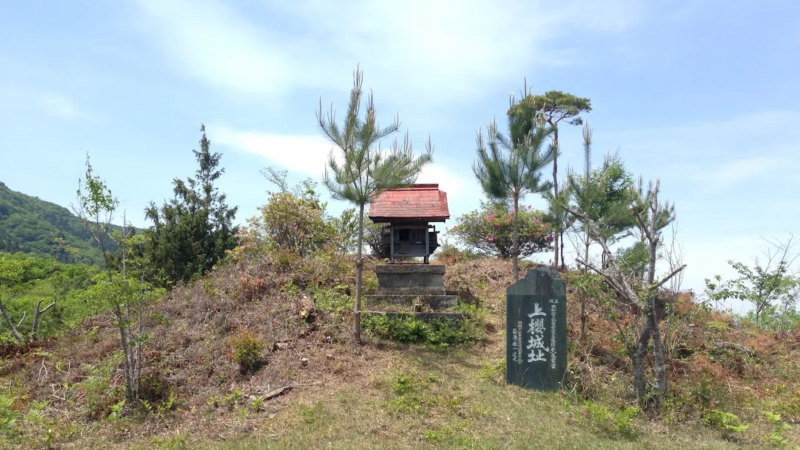
The construction of Kawashima Castle dates back to 1572 (Genki 3) during the Sengoku period. In this year, after Shinohara Nagafusa, a senior retainer of the Miyoshi clan, was defeated, Kawashima Hyōe-no-shin (Kawashima Koretada), who was granted the land of Kawashima for his services, built a new castle to replace Nagafusa’s former residence, Kami-Sakura Castle.
As a local powerful family, Kawashima Hyōe-no-shin solidified his power base in Awa Province by establishing a castle in this strategic location along the Yoshino River. It is believed that Kawashima Castle at that time played an important role as a base for monitoring water transport on the Yoshino River and governing the surrounding area.
As one of the nine castles of Awa
The most important turning point in the history of Kawashima Castle was the entry of Hachisuka Iemasa into Awa Province in 1585. After Toyotomi Hideyoshi’s conquest of Shikoku, Hachisuka Iemasa became the first lord of Awa Province, establishing Tokushima Castle as his base and building nine branch castles in important locations within the domain. These are the castles known as the “Nine Castles of Awa,” and Kawashima Castle was one of them.
Upon Hachisuka Iemasa’s arrival in the province, his senior retainer, Hayashi Yoshikatsu (Hayashi Dokan), was appointed as the castle lord of Kawashima Castle. The Hayashi clan, based at Kawashima Castle, governed the surrounding area and played a crucial role in supporting the Hachisuka domain’s administration, which centered around Tokushima Castle.
The nine castles of Awa Province included Kawashima Castle, as well as Ichinomiya Castle, Ushiki Castle, Ebisuyama Castle, Kizu Castle, Saijo Castle, Onishi Castle, Iyama Castle, and Niu Castle, each strategically positioned to protect key locations in Awa Province.
Abolition of Castles under the One Castle Per Province Decree
With the establishment of the Edo Shogunate, the One Castle Per Province Decree was strictly enforced in 1638. This decree obligated each domain to abolish all castles except the lord’s residence, and Kawashima Castle was no exception.
Thus, the approximately 70-year history of Kawashima Castle came to an end, and the castle was demolished and abandoned. Afterward, the castle ruins were used for a long time as farmland and forest, and the remnants of its former glory were lost.
Showa Era Restoration
In 1981 (Showa 56), Kawashima Castle was restored as an outdoor activity facility for workers. This restoration included the construction of an observation deck on the site of the main keep and a four-story replica keep on the site of the second keep.
While this restored keep was not based on historical research and had a strong character as a tourist and recreational facility, it has become a beloved symbol of the region and a landmark along the Yoshino River. An exhibition room was set up inside, allowing visitors to learn about the history of Kawashima Castle and the history of Awa Province.
Highlights of Kawashima Castle
Restored Keep and Observation Deck
The greatest highlight of Kawashima Castle is the four-story replica keep restored in 1981. The beautiful contrast of white walls and black tiles makes this keep a striking presence in the landscape along the Yoshino River.
The castle keep is divided into multiple floors, and from the observation deck on the top floor, you can enjoy a panoramic view of the majestic flow of the Yoshino River and the rural landscape of Zennyuji Island on the opposite bank. The Yoshino River, also known as Shikoku Saburo, is the largest river in Shikoku, and its serene flow leaves a deep impression on visitors.
From the observation deck built on the site of the main keep, you can also enjoy the surrounding scenery, and on clear days, you can even see the mountain range of the Shikoku Mountains in the distance.
Exhibition Room
The exhibition room inside the castle keep featured exhibits on the history of Kawashima Castle, the history of Awa Province, and the Hachisuka clan. Through panels and models, visitors could learn about the history from the castle’s construction by Kawashima Hyōe-no-shin, to the arrival of Hachisuka Iemasa, its role as one of the nine castles of Awa, and finally, its abandonment.
Furthermore, weapons and daily necessities from the Sengoku period to the Edo period were also on display, making it a valuable space to glimpse the lives of people at that time.
Remains of the Castle Site
Kawashima Castle ruins still retain some remnants of a medieval mountain castle. Traces of baileys and earthworks can be seen, making it an interesting exploration spot for castle enthusiasts and history buffs.
Strolling around the reconstructed keep allows you to imagine the castle’s layout and experience how castles were positioned during the Sengoku period.
Attractions as Kawashima Park
Kawashima Castle ruins have been developed into Kawashima Park, where you can enjoy not only exploring the castle ruins but also picnics and walks. In spring, cherry blossoms bloom, making it a popular spot for cherry blossom viewing among locals.
Walking paths are maintained within the park, allowing you to stroll leisurely while enjoying the nature along the Yoshino River. It’s also a popular spot for photography enthusiasts, offering beautiful scenery throughout the seasons.
Access Information | How to Get to Kawashima Castle
Access by Train
To visit Kawashima Castle by train, use the JR Tokushima Line.
- Nearest Station: JR Tokushima Line “Kawashima Station”
- Access from Station: Approximately 15-20 minutes on foot from Kawashima Station
Kawashima Station is about 20 minutes from Tokushima Station on the Tokushima Line and is sometimes called Awa-Kawashima Station. The most common route from the station to Kawashima Castle is along the Yoshino River. The route offers a peaceful walk through rural scenery.
Access by Car
If visiting by car, the following routes are convenient:
- Tokushima Expressway: Approximately 15 minutes from Donari IC
- National Route 192: Approximately 30 minutes from Tokushima City
Kawashima Castle has a parking lot that is free to use. However, parking availability may change depending on the current closure status, so it is recommended to check in advance.
Address and Contact Information
- Address: 136-1 Kawashima, Kawashima-cho, Yoshinogawa City, Tokushima Prefecture 779-3303
- Inquiries: Yoshinogawa City Commerce and Tourism Division
- Phone: 0883-22-2203 (Main)
We strongly recommend that you confirm the opening status and accessibility with the Yoshinogawa City Commerce and Tourism Division before visiting.
Nearby Tourist Attractions
Zennyuji Island
Zennyuji Island, located across the Yoshino River from Kawashima Castle, is known as one of Japan’s largest river sandbars. This island, with an area of approximately 500 hectares, boasts a rural landscape where visitors can enjoy a peaceful farming scene.
In spring, the island is covered in blooming rapeseed flowers, and the “Zennyuji Island Rapeseed Flower Festival” is held. The rapeseed fields, resembling a yellow carpet, are a popular scenic spot, attracting many tourists.
Michi-no-Eki Fujikawa
Located about 15 minutes by car from Kawashima Castle, “Michi-no-Eki Fujikawa” is a popular spot where you can purchase local specialties and fresh agricultural products from Yoshinogawa City. You can also enjoy locally grown vegetables and fruits, as well as local gourmet food such as Tokushima ramen.
The restaurant serves dishes made with ingredients from Tokushima Prefecture, making it an ideal rest stop during your travels.
Awa no Dochuu (Awa Earth Pillars)
Although slightly further from Yoshinogawa City, the “Awa no Dochuu” in Awa City is a unique natural monument designated by the Japanese government. The landscape of towering earth pillars formed by rainwater erosion is known as a rare natural phenomenon in the world.
Visiting both Kawashima Castle and Awa no Dochuu allows you to fully appreciate both the nature and history of the Yoshinogawa River basin.
Points to Note When Visiting Kawashima Castle
Current Closure Status
Kawashima Castle has been closed since April 2019, and entry to the castle keep is not permitted. Also, some areas are off-limits, so please be sure to check the latest information with the Yoshinogawa City Commerce and Tourism Division before visiting.
We also recommend checking in advance whether it is possible to view the exterior or stroll around the surrounding area.
Best Time to Visit
The best time to visit Kawashima Castle Ruins is spring (March to May) and autumn (October to November).
In spring, cherry blossoms bloom and the rapeseed flowers on Zennyuji Island are at their peak. In autumn, the autumn leaves are beautiful, and it is a pleasant season for strolling along the Yoshino River. Summer is extremely hot, and winter is extremely cold, so be sure to prepare with warm clothing and hydration.
Clothing and Items to Bring
For strolling around the castle ruins, comfortable shoes and clothing are suitable. Especially when viewing the remains, there are some uneven areas, so sneakers or trekking shoes are recommended.
In summer, bring a hat, sunscreen, and drinking water to take full precautions against heatstroke. Please remember to bring warm clothing during the winter months.
History and Culture of Yoshinogawa City
Origins of Yoshinogawa City
Yoshinogawa City was formed in 2004 (Heisei 16) through the merger of Kamojima Town, Kawashima Town, Yamakawa Town, and Misato Village. Located in the middle reaches of the Yoshino River, it has flourished as a transportation hub since ancient times.
The Yoshino River, from which the city derives its name, is a major river with a total length of 194 km, originating in the Shikoku Mountains, flowing through the Tokushima Plain, and emptying into the Kii Channel. It is also known as “Shikoku Saburo” and is considered one of Japan’s three most turbulent rivers, alongside the Tone River (Bando Taro) and the Chikugo River (Chikushi Jiro).
Awa Indigo and the Yoshino River Basin
The Yoshino River basin flourished as a major production area for “Awa Indigo” from the Edo period to the Meiji period. The abundant water and fertile soil of the Yoshino River were ideal for cultivating indigo. The indigo produced in this region, known as “Awa Indigo,” was distributed nationwide, bringing immense wealth to indigo merchants.
Even today, historical buildings such as the mansions and indigo warehouses of indigo merchants remain around Yoshinogawa City, conveying the prosperity of that era.
Traditional Culture and Festivals
Yoshinogawa City is deeply rooted in Tokushima Prefecture’s traditional culture, including the Awa Odori dance. Every August, Awa Odori festivals are held in each district, with local dance groups performing passionate dances.
In addition, harvest festivals and the annual shrine festivals are held in the autumn, providing opportunities to deepen the bonds of the local community.
Kawashima Castle Ratings and Reviews
The average rating for Kawashima Castle on the castle enthusiast community site “Kojodan” is ★★★☆☆ 2.79, with an average visit time of approximately 24 minutes.
Visitors have offered positive feedback, such as “The view of the Yoshino River is magnificent” and “The reconstructed castle tower has a great atmosphere,” but there have also been criticisms, such as “There are few historical records” and “Almost no remains remain.”
Currently, the castle is closed, so only the exterior can be viewed. However, it can be said that it has high value as a spot to enjoy the scenery along the Yoshino River and the surrounding nature.
The Future of Kawashima Castle
Although Kawashima Castle is currently closed, its preservation and utilization are expected as an important historical heritage site of Yoshinogawa City. It is hoped that it will be revitalized as a center for conveying the region’s history and as a tourist resource.
Yoshinogawa City is focusing on promoting tourism that utilizes its historical and cultural resources, and Kawashima Castle is positioned as part of this effort. For information on future reopening and development plans, we recommend checking the official information from the Yoshinogawa City Commerce and Tourism Division.
Summary
Kawashima Castle in Yoshinogawa City, Tokushima Prefecture, is a historical castle site built by Kawashima Hyōe-no-shin during the Sengoku period. After Hachisuka Iemasa entered the region, it played an important role as one of the nine castles of Awa Province. Although it was abandoned due to the “One Castle Per Province” decree of 1638, it was restored in 1981 and has been cherished as a local symbol.
Currently closed, the area boasts numerous attractive spots, including the scenery along the Yoshino River, the surrounding nature, and the rapeseed blossoms on Zennyuji Island. When visiting Tokushima Prefecture, be sure to visit the area around Kawashima Castle, where you can experience the history and nature of Yoshinogawa City.
Access is convenient, approximately 15-20 minutes on foot from Kawashima Station on the JR Tokushima Line, or about 15 minutes by car from the Donari Interchange on the Tokushima Expressway. Before visiting, be sure to check the latest opening status with the Yoshinogawa City Commerce and Tourism Division to enjoy a well-planned trip.