Kannabe Castle (Fukuyama City, Hiroshima Prefecture) Complete Guide | 280 Years of History, Highlights, and Access Information
What is Kannabe Castle? An Overview of the Mountain Castle that Played a Key Role in Bingo Province
Kannabe Castle is a mountain castle located in Kannabe-cho, Fukuyama City, Hiroshima Prefecture, dating from the Nanboku-cho period to the early Edo period. Built on Koyozan Mountain (133m above sea level, 115m relative height), this castle played a crucial role as the political and military center of Bingo Province for approximately 280 years.
It has several other names, including Murao Castle, Kannabe Michigami Castle, Momijiyama Castle, and Kaedeyama Castle, which were used differently depending on the era and context. Currently, the castle ruins are maintained as a park, and the Kannabe Historical and Folk Museum has also been constructed there.
Basic Information on Kannabe Castle
- Location: Kannabe-cho, Fukuyama City, Hiroshima Prefecture
- Year of Construction: Kenmu 2 (1335)
- Builder: Asayama Kagetsura
- Castle Structure: Renka-shiki Yamashiro (mountain castle with multiple enclosures)
- Elevation: 133m (Relative height 115m)
- Year of Abandonment: Genna 5 (1619)
- Designated Cultural Property: Hiroshima Prefecture Historic Site
History of Kannabe Castle | Approximately 280 Years of Changes from Construction to Abandonment
Construction during the Nanboku-cho Period (1335)
The history of Kannabe Castle begins with Asayama Kagetsura, who distinguished himself in the Genko War (Northern and Southern Courts War), being appointed as the governor of Bingo Province and constructing the castle in Kenmu 2 (1335). Initially known as “Michigami-no-jo,” it functioned as a base for governing Bingo Province.
The Asayama clan established their power as the governors of Bingo Province and expanded their regional control from Kannabe Castle. However, with the advent of the Muromachi period, control of Bingo Province gradually shifted.
Struggle for Power from the Muromachi to the Sengoku Period
From the mid-Muromachi period onward, Kannabe Castle became the residence of the Yamana clan. However, it became embroiled in a fierce struggle between the Ouchi clan and the Amago clan for hegemony in the Chugoku region.
Geographically located between the Sanyo and Sanin regions, and a crucial transportation hub to the Seto Inland Sea, Bingo Province was an extremely important strategic base for the Sengoku daimyo. Kannabe Castle served as the front line of the conflict between these two forces, becoming the stage for numerous battles.
The Yamana clan allied with the Amago clan to oppose the Ouchi clan, but eventually the Ouchi clan’s power became dominant, and control of Kannabe Castle shifted to the Ouchi clan.
The Mori Clan Era and the Development of the Castle into a Modern Fortress
In the mid-16th century, when the Mori clan, who had become the dominant power in the Chugoku region, brought Bingo Province under their control, Kannabe Castle became a castle directly controlled by the Mori clan. In 1591, Mori Motoyasu, son of Mori Motonari, became the lord of Kannabe Castle and oversaw its development and administration.
During this period, Kannabe Castle is believed to have undergone renovations, transforming from a medieval mountain castle into a modern fortress, with stone walls and turrets being constructed. The Mori clan’s rule continued until the Battle of Sekigahara.
The Fukushima Clan Era (1600-1619)
After the Battle of Sekigahara in 1600, the Mori clan, who sided with the Western Army, were reduced to the two provinces of Suo and Nagato. In their place, Fukushima Masanori, a general of the Eastern Army, became the lord of Hiroshima Castle in Aki Province.
Fukushima Masazumi, a chief retainer of Fukushima Masanori, became the lord of Kannabe Castle and was entrusted with governing the eastern part of Bingo Province. During this period, Kannabe Castle underwent further development as a modern castle, with a substantial keep, turrets, and stone walls.
During the Fukushima clan’s rule, Kannabe Castle functioned as an important base for controlling Bingo Province, serving as a subsidiary castle of Hiroshima Castle, and the castle town also flourished.
Abandonment of the Castle and Construction of Fukuyama Castle (1619)
In 1619 (Genna 5), when Fukushima Masanori was dispossessed of his domain for unauthorized repairs to Hiroshima Castle, Mizuno Katsunari took over Bingo Province and began constructing Fukuyama Castle.
During the construction of Fukuyama Castle, the turrets, stone walls, and building materials of Kannabe Castle were repurposed, resulting in the abandonment of Kannabe Castle. Kannabe Castle, which had functioned as the center of Bingo for approximately 280 years, relinquished its role to Fukuyama Castle and withdrew from the stage of history.
Structure and Layout of Kannabe Castle
Characteristics of a Concentric Mountain Castle
Kannabe Castle was built as a concentric mountain castle. With the main keep at the mountaintop as its center, it features a structure with multiple baileys (kuruwa) arranged along the ridge, a highly defensible design that skillfully utilizes the terrain.
The main enclosures are as follows:
- Honmaru: The central enclosure located at the mountaintop
- Ninokuruwa: Located to the east of Honmaru
- Sannomaru: Further to the east
- Nishi-no-maru: Located to the west of Honmaru
- Other Enclosures: Multiple smaller enclosures are located along the ridges and valleys
Defensive Structures and Remains
Kannabe Castle had various defensive structures from the medieval to early modern periods:
- Stone Walls: Parts of the early modern stone walls, constructed during the Fukushima clan’s era, still remain today
- Moat: A defensive structure blocking the ridge
- Vertical Moat: A defensive structure dug vertically into the slope
- Earthwork: An earthen wall surrounding the enclosures
- Tiger’s Mouth Entrance: An entrance to the bailey, featuring a complex structure designed with defense in mind.
Due to the reuse of many structures and stone walls during the construction of Fukuyama Castle, only limited remains remain today. Nevertheless, the castle’s original structure can still be discerned.
Relocated Structures
The main gate of Kannabe Castle has been relocated to Jissoji Temple in Kitayoshizu-cho, Fukuyama City, and is designated as a Hiroshima Prefecture Important Cultural Property. This main gate is a valuable relic of Kannabe Castle, conveying the architectural techniques of the time.
Highlights of Kannabe Castle | Remains Visible on-site
Remains of Stone Walls
The most noteworthy remains at the Kannabe Castle site are the few remaining stone walls. Although most were reused during the construction of Fukuyama Castle, some of the stone walls retain their original form.
Especially around the main keep, traces of stone walls built using stonework techniques characteristic of early modern castles, such as kirikomi-hagi (cut-in joint) and uchikomi-hagi (drilled joint), can be seen. These are thought to be the result of improvements made during the Fukushima clan’s era.
Arrangement of Enclosures
The arrangement of each enclosure, which still remains as part of the topography, is important for understanding the layout of Kannabe Castle. The series of enclosures, from the main keep to the second and third enclosures, exhibits a typical structure of a multi-enclosure mountain castle.
When you actually climb to the castle, you can feel that the elevation differences and arrangement of each enclosure were designed with defense in mind.
Moats and Vertical Moats
Moats are provided along the ridge, showing ingenuity in preventing enemy intrusion. Traces of vertical moats can also be seen on the slopes, allowing us to learn about the defensive techniques of medieval mountain castles.
Views
The views from the mountaintop are also one of the attractions of Kannabe Castle. From an elevation of 133 meters, you can enjoy a panoramic view of Fukuyama city and the Bingo Plain, making it clear that this area was once a strategic point for controlling Bingo Province.
On clear days, you can even see the Seto Inland Sea, giving you a real sense of the role Kannabe Castle played in monitoring this important transportation hub.
Kannabe Historical and Folk Museum
The Kannabe Historical and Folk Museum has been built on the castle site, exhibiting the history of Kannabe Castle, excavated artifacts, and local historical materials. Visiting before or after climbing to the castle will deepen your understanding of Kannabe Castle.
The museum displays a reconstructed model of Kannabe Castle, ancient documents, and excavated ceramics, providing clues to imagining the castle’s appearance in its heyday.
How to Access Kannabe Castle
Access by Public Transportation
By Train:
- Get off at Kannabe Station on the JR Fukuen Line
- Approximately 25-30 minutes on foot from the station (including a short climb)
- Approximately 10 minutes by taxi
While it is possible to access the castle on foot from Kannabe Station, it is a mountain castle and requires climbing a mountain trail. If you are not confident in your physical fitness or wish to save time, we recommend taking a taxi.
By Bus:
- Get off at the “Kannabe Branch Office” bus stop (Chugoku Bus)
- Approximately 15-20 minutes on foot from the bus stop
Access by Car
By Car:
- Approximately 10 minutes from the Sanyo Expressway “Fukuyama East IC”
- Approximately 15 minutes from the Sanyo Expressway “Fukuyama SA (Smart IC)”
- From National Route 182 towards Kannabe Town
Parking Information:
- Parking is available at the Kannabe Historical and Folk Museum (free)
- Parking capacity: Approximately 20 cars
- It is possible to drive up to the mountaintop, making it easy to visit even for those who are not comfortable with mountain climbing
Access by car is the most convenient, and since you can drive close to the museum at the top of the mountain, it is especially recommended for those who are not confident in their physical strength or who have limited time.
Ascent Routes
There are several routes to Kannabe Castle, but the main routes are as follows:
- Road Route: Use the paved road to reach the mountaintop (the easiest route)
- Hiking Trail Route: Climb the hiking trail from the foot of the mountain (approximately 20-30 minutes)
- Historical Site Tour Route: Climb the trail while visiting each enclosure (approximately 40 minutes)
For first-time visitors or those with limited time, it is most efficient to take the road route to the mountaintop and then visit each enclosure from there.
Information on Visiting Kannabe Castle
Visiting Hours and Fees
Castle Ruins (Park Area):
- Open 24 hours
- Admission: Free
Kannabe Historical and Folk Museum:
- Opening Hours: 9:00 AM – 5:00 PM (Last entry at 4:30 PM)
- Closed: Mondays (or the following day if Monday is a public holiday), New Year holidays
- Admission: Free
Estimated Visiting Time
- Visiting only the castle ruins: Approximately 30-60 minutes
- Visiting including the museum: Approximately 90-120 minutes
- Thoroughly exploring the entire site: Approximately 2-3 hours
Clothing and Items to Bring
Since the castle ruins are on a mountain, we recommend the following:
- Comfortable walking shoes: Sneakers or trekking shoes
- Comfortable clothing: Long sleeves and long pants are recommended (insect repellent)
- Drinks: Hydration is especially important in the summer
- Insect repellent spray: Spring to autumn
- Hat: Sun protection
- Rain gear: Unstable weather
Photo Spots
Recommended points for photography at Kannabe Castle:
- View from the main keep: A spectacular view of Fukuyama city and the Bingo Plain
- Remaining stone walls: Stone masonry techniques of early modern castles
- Terrain of the baileys: Structure of a multi-bailey mountain castle
- Plaza in front of the museum: A panoramic view of the entire castle site
- Castle ruins from the hiking trail: Experience the atmosphere of a mountain castle
Nearby Tourist Spots
Fukuyama Castle
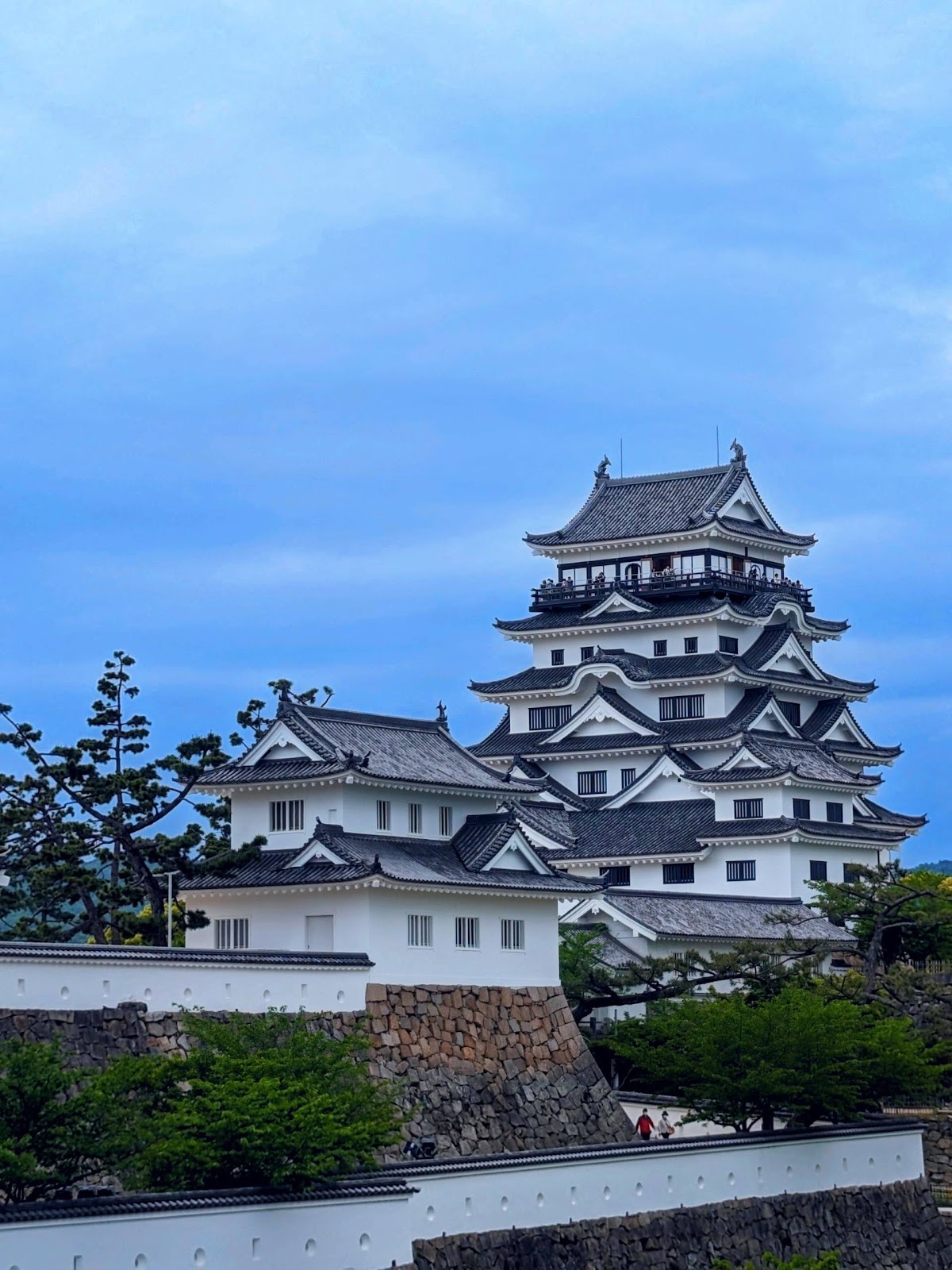
Fukuyama Castle, built using materials from Kannabe Castle, is located just north of JR Fukuyama Station. The keep underwent a major renovation in 2022, and new exhibits have been added. Visiting while considering its historical connection to Kannabe Castle will provide a deeper understanding.
- Location: Marunouchi 1-chome, Fukuyama City
- Access: 5-minute walk from JR Fukuyama Station
- Castle Tower Admission Fee: 500 yen (General Admission)
Jissoji Temple (Kannabe Castle Main Gate)
Jissoji Temple, where the main gate of Kannabe Castle was relocated, is an important spot to see valuable remains of Kannabe Castle. This gate, designated as a Hiroshima Prefecture Important Cultural Property, allows visitors to imagine the former appearance of Kannabe Castle.
- Location: Kitayoshizu-cho, Fukuyama City
- Access: Approximately 15 minutes by car from Kannabe Castle
Tomonoura
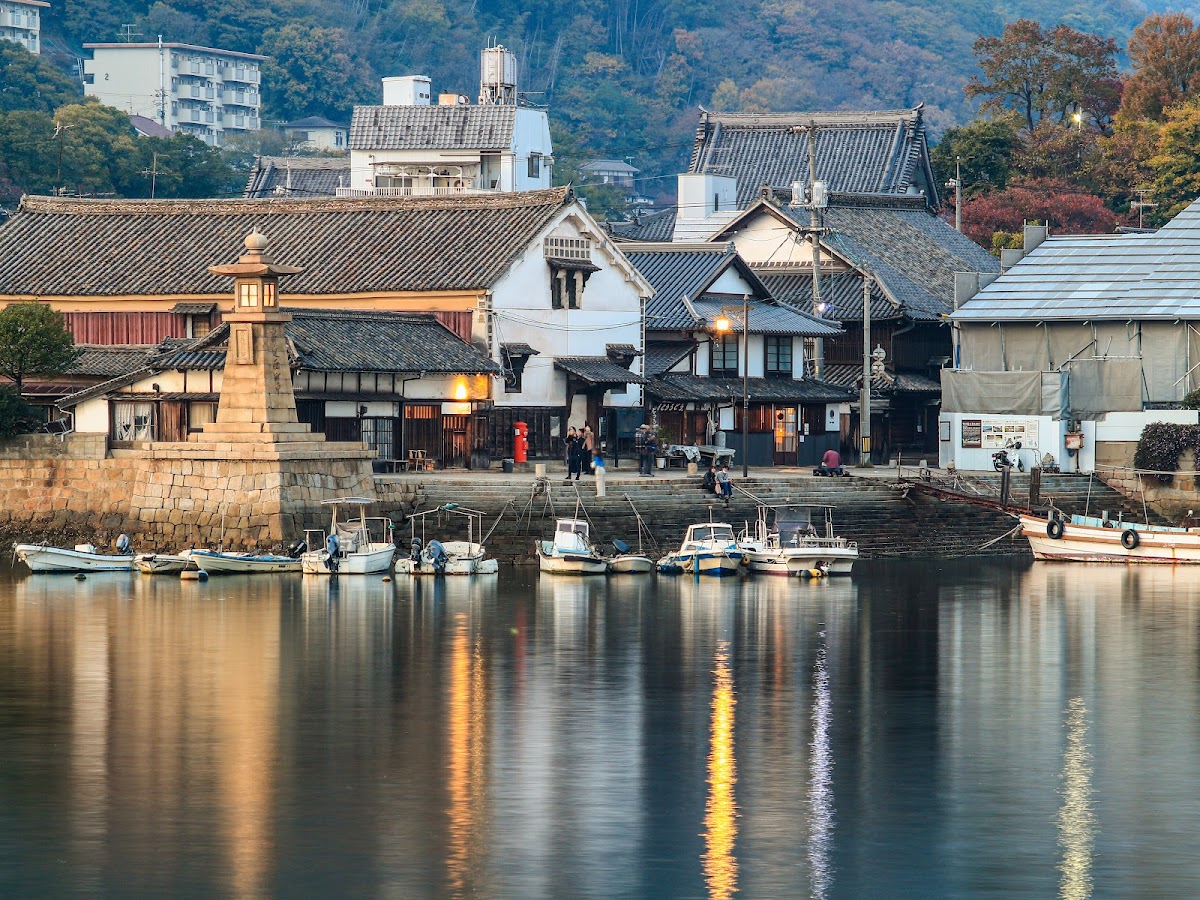
Tomonoura, known as a scenic spot on the Seto Inland Sea, is located in the southern part of Fukuyama City. The townscape, which retains the atmosphere of an Edo-period port town, is also famous as a filming location for movies and dramas.
- Location: Tomo-cho, Fukuyama City
- Access: Approximately 30 minutes by car from Kannabe Castle
Myooin Temple
Myooin Temple, with its National Treasure main hall and five-story pagoda, is a representative cultural property of Fukuyama City. It is a temple of high historical value, with existing architecture dating from the Kamakura to Muromachi periods.
- Location: Kusado-cho, Fukuyama City
- Access: Approximately 20 minutes by car from Kannabe Castle
Resources and Books for Deeper Understanding of Kannabe Castle
For those who want to learn more about Kannabe Castle, the following resources and books are recommended:
Recommended Books
- “Castles of Hiroshima Prefecture” (Hiroshima Prefectural Board of Education): A comprehensive explanation of castles in Hiroshima Prefecture
- “Mountain Castles of Bingo”: A specialized book focusing on mountain castles in the Bingo region
- “Comprehensive Survey of Japanese Castles,” Volume 13: A detailed description of castles in the Chugoku region
- “History of Kannabe Town”: A local history covering the general history of Kannabe
Reference Materials
- Exhibition materials from the Kannabe Historical and Folk Museum
- Cultural property pamphlets published by the Fukuyama City Board of Education
- “Comprehensive Survey Report of Medieval Castle Sites in Hiroshima Prefecture”
Online Resources
- Kojodan (Castle Information Site)
- Nippon Castle Tour
- Websites of various castle research organizations
Points to Note When Visiting Kannabe Castle
Safety Precautions
- Watch Your Step: The area around the stone walls and slopes can be slippery.
- Check the Weather: The hiking trails become slippery in rainy weather, so caution is necessary.
- Wild Animals: You may encounter snakes, wild boars, and other animals in the forested areas.
- Heatstroke Prevention: Take breaks and hydrate regularly during the summer.
- Insect Repellent: Don’t forget insect repellent from spring to autumn.
Manners and Rules
- Protection of Historical Structures: Do not climb on or damage the stone walls or earthworks.
- Take Your Trash Home: Always take your trash with you.
- No Plant Collection: Do not collect plants within the castle grounds.
- No Open Fires: The use of fire is strictly prohibited to prevent forest fires.
- Entry onto Private Property: Avoid entering areas other than the designated viewing paths without permission.
The Charm and Historical Value of Kannabe Castle
280 Years as the Center of Bingo Province
The most distinctive feature of Kannabe Castle is that it continuously functioned as the political and military center of Bingo Province for approximately 280 years, from the Nanboku-cho period to the early Edo period. Only a limited number of castles in the Chugoku region have played such a central role for such a long period, demonstrating the historical importance of Kannabe Castle.
Struggle for Control Among Sengoku Daimyo
Kannabe Castle, which was the lord of many prominent Sengoku daimyo and warlords, including the Yamana, Ouchi, Amago, Mori, and Fukushima clans, is an indispensable part of the history of the Sengoku period in the Chugoku region. In particular, its role as the front line in the conflict between the Ouchi and Amago clans, and the stage for numerous battles, speaks to the strategic importance of this castle.
Transition from Medieval to Early Modern Period
Kannabe Castle began as a medieval mountain castle and was remodeled into an early modern castle during the Mori and Fukushima clans. By tracing this process of transformation, we can learn about the development of Japanese castle construction techniques.
Center of Regional Culture
Kannabe, which developed as a castle town, was also the cultural and economic center of Bingo Province. Even today, historical streetscapes and temples remain in Kannabe Town, evoking its former prosperity.
Summary: The Value of Visiting Kannabe Castle
While Kannabe Castle lacks a magnificent keep or other structures, it is a highly attractive castle site due to its historical importance as the center of Bingo Province for approximately 280 years, its strategic value as a stronghold fought over by Sengoku-era daimyo, and its educational value in learning about the evolution of castle construction techniques from the medieval to the early modern period.
The view from the mountaintop is magnificent, allowing you to experience the perspective of the successive castle lords who once surveyed Bingo Province from this spot. There is also the enjoyment of imagining the castle’s structure from the few remaining stone walls and the arrangement of the baileys.
Visiting this site along with other nearby attractions such as Fukuyama Castle and Tomonoura will allow you to gain a deeper understanding of the history and culture of the Bingo region. It’s a recommended historical site not only for history buffs but also for castle enthusiasts and hiking lovers.
Visiting the Kannabe Historical and Folk Museum beforehand will enhance your experience. Take your time to fully appreciate the charm of this historic mountain castle.