Complete Guide to Kaminokawa Castle (Tochigi Prefecture) | 350 Years of History and Highlights of the Castle Ruins Park
What is Kaminokawa Castle?
Kaminokawa Castle is a medieval flatland castle located in Kaminokawa, Kawachi District, Tochigi Prefecture. It flourished for a remarkable 350 years, from 1249 to 1597, and was an important branch castle for the Utsunomiya clan, alongside Takō Castle, protecting the southern region.
Currently, most of the castle site has been developed into residential land, but the main keep site has been preserved as Kaminokawa Castle Ruins Park, a popular recreational area for the local community. It’s a valuable spot where you can enjoy a historical stroll while reflecting on the castle’s former glory.
History of Kami-Mikawa Castle
Background and Purpose of Construction
From the Kamakura period to the Azuchi-Momoyama period, the Kami-Mikawa area was located at the southern edge of the territory of the Utsunomiya clan, whose base was Utsunomiya Castle. The construction of Kami-Mikawa Castle is rooted in the delicate relationship between the Utsunomiya clan and the Kamakura Shogunate.
In the early Kamakura period, the Utsunomiya clan did not always have a good relationship with the Shogunate. In particular, in 1247 (Hōji 1), the Hōjō clan, who had seized real power in the Shogunate, destroyed the Miura clan, a powerful vassal family with close ties to the Utsunomiya clan. This Hōji War is believed to have prompted the Utsunomiya clan to strongly recognize the need to prepare for threats from the south, and they built Kami-Mikawa Castle to strengthen their southern defenses.
The Yokota Clan Era (1249–Muromachi Period)
In 1249, Yokota Yorinori, the second son of Utsunomiya Yoritsuna, built Kamimikawa Castle. Yorinori originally resided at Yokota Castle, but due to geographical advantages, his relationships with the Yuki and Haga clans, and political considerations, he built Kamimikawa Castle, making it the residence of his descendants for generations.
The Yokota clan, as a branch of the Utsunomiya clan, ruled this area for generations, functioning as a key point for the Utsunomiya clan’s southern defense. While Kamimikawa Castle had the characteristics of a flatland castle, it was equipped with defensive structures such as moats and earthworks, fully fulfilling its function as a medieval castle.
Change of Surname to Imaizumi and Succession
During the time of the 8th lord, Motoaki, the Yokota clan changed their surname from “Yokota” to “Imaizumi.” Even after this change, the Imaizumi clan continued to serve the Utsunomiya clan as lords of Kamimikawa Castle. The Imaizumi clan, as a branch of the Utsunomiya family, maintained their prestigious status and continued to rule the Kaminokawa region.
The castle’s rule is divided into two periods: the Yokota clan and the Imaizumi clan. Both were descendants of the Utsunomiya family, and Kaminokawa Castle remained an important strategic base within the Utsunomiya clan’s sphere of influence.
The Sengoku Period and the Abandonment of the Castle
With the arrival of the Sengoku period (Warring States period), the Kanto region entered a turbulent era of complex conflict between powerful clans such as the Hojo, Uesugi, and Takeda. The Utsunomiya clan was caught in the maelstrom of this period, and Kaminokawa Castle was also tossed about by the tides of the times.
In 1597 (Keicho 2), following the Utsunomiya clan’s downfall by Toyotomi Hideyoshi, Kaminokawa Castle was abandoned. The 350-year history of Kaminokawa Castle came to an end.
Structure and Characteristics of Kaminokawa Castle
Characteristics as a Flatland Castle
Kaminokawa Castle was built as a typical flatland castle. A flatland castle is a castle built on flat land, and unlike mountain castles which utilize elevation differences for defense, it is characterized by a structure that relies on artificial defensive structures such as moats and earthworks.
The topography of Kami-Mikawa, located in a corner of the Kanto Plain, was suitable for building a flatland castle. It is believed that the castle’s defenses were strengthened by utilizing the surrounding waterways and natural terrain, and by constructing moats.
Layout and Castle Structure
Kami-Mikawa Castle is presumed to have had a layout centered around the main keep (honmaru). Currently, the site of the main keep remains as Kami-Mikawa Castle Ruins Park, allowing us to understand where the central part of the castle was located at the time.
Like flatland castles of the medieval period, it is thought that multiple baileys (kuruwa) were arranged, each separated by a moat. However, due to ongoing residential development, most of the original remains have been lost.
Highlights of Kaminokawa Castle Ruins Park
Park Overview
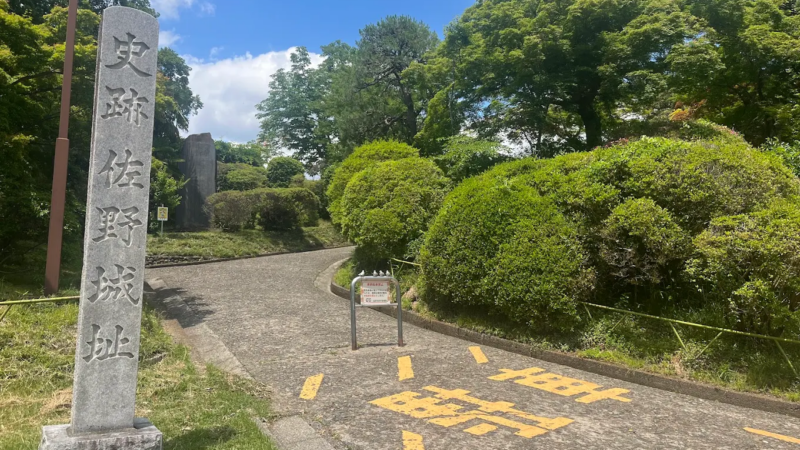
Currently, the site of the former main keep of Kaminokawa Castle has been developed into Kaminokawa Castle Ruins Park, a place of relaxation for local residents. As a beautiful park utilizing the castle ruins, visitors can enjoy strolling while feeling the weight of history.
Walking paths are maintained within the park, allowing visitors to enjoy the changing seasons and historical walks. It is also a popular spot for cherry blossom viewing during the cherry blossom season.
Remaining Structures
Unfortunately, very few clear castle remains remain at Kaminokawa Castle Ruins Park. Not only have structures such as stone walls and keeps been lost, but most of the remains such as moats and earthworks have also been lost.
However, the topography and layout of the park allow us to imagine that this was once the main keep of the castle. Information boards and other markers are installed, providing clues to the castle’s former appearance.
Nearby Historical Spots
When visiting Kaminokawa Castle Ruins Park, we recommend also visiting the nearby historical spots. Shirasagi Shrine, in particular, is an important shrine in Kaminokawa Town and a valuable place for understanding the region’s history.
Furthermore, Kaminokawa Town is known as the “Town of Origami” and is attracting attention as a center for origami culture. Visiting the town’s cultural facilities in conjunction with a visit to the castle ruins park would be a good idea.
Access and Visiting Information for Kaminokawa Castle
Access Methods
Location
Kaminokawa, Kaminokawa-machi, Kawachi-gun, Tochigi Prefecture
Access by Train
Approximately 30 minutes by Kanto Bus from JR Utsunomiya Station, get off at “Kaminokawa Town Hall” bus stop, then approximately 5 minutes on foot.
Access by Car
Approximately 10 minutes from Kita-Kanto Expressway Kaminokawa IC
Approximately 20 minutes from Tohoku Expressway Utsunomiya IC
Visiting Points
Kaminokawa Castle Ruins Park is free to visit. There are no restrictions on opening hours, so you can visit anytime.
The park has well-maintained walking paths, making it easy to stroll around. The park has benches where you can rest, allowing you to slowly reflect on history.
Estimated Visiting Time
The park itself is not very large, so even a thorough visit should take about 30 minutes to an hour. Even including photography and exploring the surrounding area, allow about an hour to an hour and a half.
History and Culture of Kaminokawa Town
Overview of Kaminokawa Town
Kaminokawa Town is located in Kawachi District, Tochigi Prefecture, with a total population of 30,223 as of May 1, 2026. It is adjacent to the southeast of Utsunomiya City and has good access to the prefectural capital.
The town center is the Kaminokawa district, where Kaminokawa Castle was built. Even today, it remains the town center, with the town hall and major facilities concentrated there.
As a Dried Gourd Producing Area
Kaminokawa Town is known as a leading producer of dried gourd strips (kanpyo) in Tochigi Prefecture. The sight of dried gourd strips (kanpyo) is a summer tradition in Kaminokawa Town, demonstrating that traditional agriculture is still practiced there.
Tochigi Prefecture accounts for the majority of Japan’s kanpyo production, and Kaminokawa Town is one of its central production areas. Within the town, you can enjoy a variety of local dishes using kanpyo.
The Town of ORIGAMI
Kaminokawa Town is promoting itself as the “Town of ORIGAMI,” focusing on the spread and promotion of origami culture. Origami-related exhibitions and workshops are sometimes held at town events and facilities.
The Relationship Between the Utsunomiya Clan and Kaminokawa Castle
The Utsunomiya Clan’s Territory
The Utsunomiya clan was a powerful samurai family that ruled Shimotsuke Province (present-day Tochigi Prefecture) from the Kamakura period to the Sengoku period. Based at Utsunomiya Castle, they were a powerful daimyo in the Kanto region and an important retainer of the shogunate.
Kamimikawa was located at the southern edge of the Utsunomiya clan’s territory and served as the front line against threats from the south. It was a strategically important location, particularly due to its proximity to the border with southern powers such as the Yuki and Oyama clans.
Role as a Subsidiary Castle
Kamimikawa Castle, along with Takō Castle, was an important subsidiary castle for the Utsunomiya clan, protecting the south. By appointing the Yokota clan (later the Imaizumi clan), a branch of the family, as castle lords, the Utsunomiya clan solidified their southern defenses.
Subsidiary castles were not merely defensive strongholds but also centers of territorial control. It is believed that the lord of Kamimikawa Castle also played a role in governing the surrounding area, collecting taxes, and mobilizing troops.
The Utsunomiya Clan’s Dispossession and the End of Kamimikawa Castle
As Toyotomi Hideyoshi’s unification of Japan progressed, the Utsunomiya clan pledged allegiance to Hideyoshi. However, in 1597 (Keichō 2), Utsunomiya Kunitsuna was suddenly dispossessed of his domain.
There are various theories regarding the reasons for this dispossession, but failure to fulfill military service during Hideyoshi’s invasion of Korea and internal political conflicts have been cited as contributing factors. Following the dispossession of the Utsunomiya clan, their subsidiary castle, Kamimikawa Castle, was also abandoned, bringing its 350-year history to an end.
Characteristics of Medieval Flatland Castles and Kamimikawa Castle
Medieval Flatland Castles in the Kanto Region
Many medieval flatland castles were built in the Kanto region. Due to the topographical characteristics of the Kanto Plain, flatland castles are more common than mountain castles.
Because flatland castles are built on flat land, they offered excellent habitability and convenience. They were well-suited to functioning as centers for daily administrative affairs and daily life, and were also advantageous for the development of castle towns.
Moats and Earthworks as Defensive Structures
The defense of flatland castles relied primarily on moats and earthworks. It is presumed that Kamimikawa Castle also had multiple moats and earthworks to strengthen its defenses.
Medieval flatland castles frequently used both water moats and dry moats. Furthermore, the castle’s defensive capabilities were enhanced by constructing fences and walls on top of the earthen ramparts. Although now lost, such defensive structures likely existed at Kaminokawa Castle.
Formation of the Castle Town
It is believed that a castle town formed around Kaminokawa Castle. Retainers of the castle lords, the Yokota and Imaizumi clans, as well as merchants and artisans, resided there, giving it the function of a medieval regional town.
The current layout of Kaminokawa Town may partially retain remnants of the castle town. Old temples, shrines, and place names allow us to infer what it was like in the past.
Cultural Value of Kaminokawa Castle
Importance in Local History
Kaminokawa Castle holds an important position in the local history of Kaminokawa Town and Tochigi Prefecture. Its 350-year history is a valuable historical resource that tells the story of the transition period from the medieval to the early modern period in this region.
Research into Kaminokawa Castle, which functioned as a branch castle of the Utsunomiya clan, is important for understanding the realities of the Utsunomiya clan’s territorial rule and the activities of medieval samurai groups in the Kanto region.
Current Status of Preservation and Utilization
Currently, very few remains of Kaminokawa Castle exist, but the preservation of the main keep site as Kaminokawa Castle Ruins Park is commendable. Developing it as a park provides local residents with an opportunity to experience history.
Further archaeological excavations and documentary research may reveal more detailed information about Kaminokawa Castle. As a regional historical heritage site, further research, preservation, and utilization are expected.
Points to Note When Visiting Kaminokawa Castle
Status of Remains
When visiting Kaminokawa Castle Ruins Park, it is important to understand that very few clear castle remains exist. Those expecting to see stone walls, moats, and other remnants may be disappointed.
However, standing on the historical site of the former main keep and imagining the castle that once stood here, you can feel the romance of history.
Combining with surrounding facilities
Since visiting Kami-Mikawa Castle Ruins Park alone takes up relatively little time, it is recommended to combine it with other nearby tourist attractions. Visiting Shirasagi Shrine, local historical sites, and facilities related to kanpyo (dried gourd strips) will allow you to enjoy a more fulfilling historical walk.
Furthermore, visiting Utsunomiya Castle Ruins Park in Utsunomiya City, as well as other historical sites related to the Utsunomiya clan, will give you a better understanding of the entire sphere of influence of the Utsunomiya clan.
Summary
Kami-Mikawa Castle was a medieval flatland castle that flourished for 350 years, from 1249 to 1597. As an important branch castle of the Utsunomiya clan, it played a crucial role in the defense of the south, and the Yokota and Imaizumi clans, both members of the Utsunomiya clan, served as its lords for generations.
While most of the castle site has now been developed into residential land, the main keep has been transformed into Kamimikawa Castle Ruins Park, a valuable spot that tells the history of the region. Although there are few clearly visible remains, strolling through the park while imagining the castle that once stood here and the 350 years of history it has witnessed allows you to feel the romance of medieval history.
When you visit Kamimikawa Town in Kawachi District, Tochigi Prefecture, be sure to stop by Kamimikawa Castle Ruins Park and reflect on the history of the Utsunomiya clan and Kamimikawa.
--765x450.png)