Kameo Castle (Iwakuni City, Yamaguchi Prefecture) Complete Guide: History, Remains, and Access Information
Kameo Castle, located in Nishikimi, Iwakuni City, Yamaguchi Prefecture, was a mountain castle that once defended a strategic point in Suo Province. Although much of its remains have been lost due to residential development, it remains an important castle indispensable to understanding the history of Iwakuni. This article provides a detailed explanation of Kameo Castle, including its historical background, builder, current status, and access methods.
Basic Information on Kameo Castle
Kameo Castle is a mountain castle located in Nishikimi, Iwakuni City, Yamaguchi Prefecture, dating from the medieval to early modern periods. Also known as Kameoyama Castle, it functioned as an important military base in Suo Province.
Location and Geographical Characteristics
Location: Nishikimi, Iwakuni City, Yamaguchi Prefecture
Former Province: Suo Province
Classification/Structure: Mountain Castle
Elevation: Hilly area of approximately 50 meters
Kameo Castle was built on a hill north of the Nishiki River, near the present-day Iwakuni city center. Located south of Iwakuni Castle (Yokoyama Castle), it was a strategically important location for monitoring the Nishiki River basin. Even today, as a residential area along National Route 2, slight traces of the former castle can still be felt from the undulations of the terrain.
Basic Castle Data
- Builder: Details unknown (estimated to be a local powerful family)
- Year of Construction: Medieval period (details unknown)
- Renovator: No record
- Lord: Estimated to be a local lord
- Year of Abandonment: Estimated to be early Edo period
- Keep Structure: None (due to being a mountain castle)
- Designated Cultural Property: Not designated
History of Kameo Castle
Background and Era of Construction
While there are no clear records regarding the construction period or builder of Kameo Castle, based on the layout of medieval castles in Suo Province, it is believed to have been built by a local lord before the Sengoku period.
Suo Province was within the sphere of influence of the Ouchi clan, and the area around Iwakuni was also under their influence. It is highly probable that Kameo Castle monitored the transportation routes in the Nishiki River basin and functioned as a base for regional control.
Kameo Castle in the Sengoku Period
During the Sengoku period, Suo Province flourished as the base of the Ouchi clan. However, after Mori Motonari defeated Sue Harukata in the Battle of Itsukushima in 1557, Suo Province came under the control of the Mori clan. It is presumed that the small mountain castles around Iwakuni functioned as part of the Mori clan’s castle network during this period.
Kameo Castle may have played some military role during this time, but no specific battle records or the names of its lords remain in historical documents.
The Edo Period and Abandonment
After the Battle of Sekigahara, the Mori clan’s territory was reduced to the two provinces of Suo and Nagato. In 1608, Kikkawa Hiroie became the lord of Iwakuni and built Iwakuni Castle. During this period, the surrounding medieval mountain castles ceased to serve their military purpose and were gradually abandoned.
It is believed that Kameo Castle had already been abandoned by the early Edo period. This is because Iwakuni Castle became the new political and military center, making the smaller mountain castles unnecessary.
Layout and Remains of Gumi Castle
Former Castle Structure
Gumi Castle is presumed to have had a typical medieval mountain castle structure, with the main enclosure at the top of a hill and several tiers of enclosures surrounding it. It was relatively small in scale and is thought to have had a strong fort-like character, intended for monitoring and defending the area.
Earthworks surrounded the main enclosure, and defensive features were enhanced by steep slopes. However, detailed survey maps and excavation reports have not been published, leaving many aspects of the specific layout unclear.
Current Status of Remains
Current Status: Mostly Lost Due to Housing Development
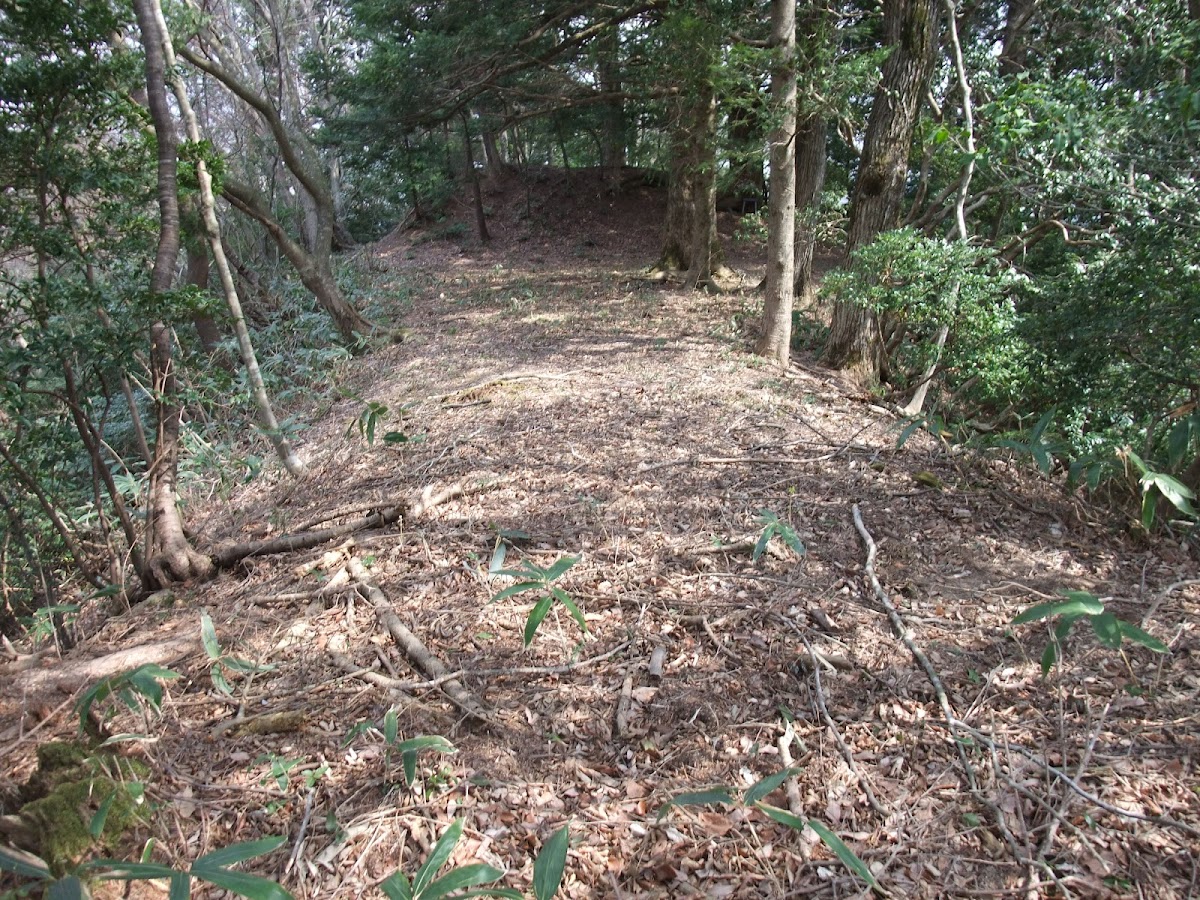
Unfortunately, the Gumi Castle site has now been completely developed into a residential area, and very few clear remains can be confirmed. It is now a residential area along National Route 2, making it difficult to find any trace of the former castle.
According to visit records by castle enthusiasts, there are reports of slight remnants of earthworks in what is believed to be the main enclosure, but detailed investigation and viewing are difficult due to it being private property.
Status of Remains Confirmation
- Main Enclosure: Unclear due to residential development
- Earthworks: Possibility of some traces remaining
- Moat: Difficult to confirm
- Enclosures: Estimated to some extent from the topography
- Stone Walls: None
- Information Board: None
How to Access Kameo Castle
Using Public Transportation
Nearest Station: JR Sanyo Main Line, Nishi-Iwakuni Station
Distance from Station: Approximately 1.5 kilometers
Travel Time: Approximately 20 minutes on foot
From Nishi-Iwakuni Station, head northwest and turn right at the intersection with National Route 2. After a short distance, you will see a gas station (self-service) on your right. The area across from it is considered to be near the entrance to the castle ruins.
If using a car
Major road: National Route 2
Parking: No dedicated parking
While accessible from National Route 2, the area is now residential, so there is no dedicated parking. Avoid street parking and use nearby paid parking lots or public transportation.
Points to note when visiting the castle
- Consideration for private property: The castle ruins are completely residential, and much of it is private property. Please be considerate of residents’ privacy and do not enter their properties without permission.
- Limited remains: Very few clear remains are left. This visit is more about confirming the historical site than sightseeing the castle itself.
- Absence of information signs: There are no information signs or explanatory boards indicating the castle ruins at the site. It is recommended to confirm the location beforehand.
- Recommended Visiting Time: Since there are very few remaining structures, 10-15 minutes is sufficient for a visit.
Nearby Castles and Attractions
Iwakuni Castle (Yokoyama Castle)
Distance: Approximately 3 kilometers northeast of Kameo Castle
A representative castle of Iwakuni, built in 1608 by Kikkawa Hiroie. A highlight of Iwakuni sightseeing, often visited in conjunction with Kintaikyo Bridge. A reconstructed keep has been built, and the interior is open to the public as a museum.
From the mountaintop, you can enjoy a magnificent panoramic view of Iwakuni city and the Seto Inland Sea. It is accessible by ropeway, making it a safe visit even for those who are not confident in their physical fitness.
Kintaikyo Bridge
Distance: Approximately 2.5 kilometers north of Kameo Castle
A wooden arch bridge, considered one of Japan’s three most famous bridges, built in 1673 by Kikkawa Hiroyoshi, the lord of the Iwakuni domain. The five arches are beautiful, and you can enjoy the scenery of each season. Along with Iwakuni Castle, it is a central spot for sightseeing in Iwakuni.
Iwakuni Castle Town
This area developed as a castle town of Iwakuni Castle, and is dotted with samurai residences and temples and shrines. While strolling through the historical townscape, you can feel the atmosphere of Iwakuni during the Edo period.
Other Surrounding Castles
- Suō Genji Castle: Another medieval mountain castle within Iwakuni City
- Castles in Kuga District: Many medieval mountain castles are scattered around Iwakuni.
Recommended Plan for Visiting Kameo Castle
Iwakuni Castle Tour Course (Half-Day Plan)
- Morning: Arrive at Nishi-Iwakuni Station → Check out the Kameo Castle ruins (15 minutes)
- Morning: Visit and stroll around Kintaikyo Bridge (1 hour)
- Lunch: Enjoy local cuisine such as Iwakuni sushi
- Afternoon: Climb to Iwakuni Castle (using the ropeway, 2 hours)
- Afternoon: Stroll around the castle town (1 hour)
This plan allows you to efficiently visit Iwakuni’s main tourist spots while confirming the historical location of Kameo Castle.
Plan for Castle Enthusiasts (Full-Day Course)
In addition to Kameo Castle, several other medieval mountain castle ruins remain around Iwakuni. A day trip by car to tour the castles of the Iwakuni region is also recommended. However, keep in mind that many castle sites have few remaining structures, and the main purpose will be to confirm the locations.
Historical Significance of Kameo Castle
Position in Local History
Kameo Castle is not a large-scale castle, but it is important for understanding the regional power structure of Suo Province during the medieval period. It is one example of how local lords maintained their spheres of influence under the control of powerful forces such as the Ouchi and Mori clans.
Challenges in Castle Research
Regarding Kameo Castle, there are almost no written historical records remaining, so the builder, lord, and specific historical events are unknown. Furthermore, archaeological investigations are difficult due to the loss of remains caused by residential development.
While new information may be revealed through future excavations in the surrounding area and the discovery of ancient documents, at present, it must be said that it is a castle shrouded in mystery.
Vanishing Castle Heritage
Like Gumi Castle, many castles across Japan have been lost due to development. These castle ruins are important legacies that once existed in those locations and etched the history of the region.
Even if no remains are left on site, visiting the location and remembering that a castle once stood there is a meaningful act in understanding and passing on the region’s history.
Points to Note When Visiting Gumi Castle
Preparation
- Check the Map: There are no signs at the site, so check the location on a map beforehand. A smartphone map app is convenient.
- Adjust Your Expectations: Very few clear remains remain. Visit with the purpose of “confirming the location of the castle ruins.”
- Combine with Nearby Sightseeing: Rather than visiting Gumi Castle alone, it is recommended to combine it with other tourist spots such as Iwakuni Castle or Kintaikyo Bridge.
How to Visit the Site
- Location Confirmation: The castle ruins are located in a residential area across from a self-service gas station along National Route 2.
- Observation of Topography: Although it’s a residential area, the slightly elevated terrain allows you to imagine the location of the former castle.
- Photography: As it’s a residential area, please be considerate of residents’ privacy when taking photographs.
- Estimated Time Required: 10-15 minutes is sufficient.
Manners and Precautions
- No Trespassing on Private Property: As this is a residential area, absolutely avoid trespassing on private property.
- Consideration for Noise: Remember that this is a residential area and observe quietly.
- Take Your Trash Home: To maintain the surrounding environment, please take all your trash with you.
- No On-Street Parking: Do not park on residential streets.
Castle Tours in Yamaguchi Prefecture and Kameo Castle
Characteristics of Castles in Yamaguchi Prefecture
Yamaguchi Prefecture boasts numerous castles associated with the Ouchi and Mori clans. From early modern castles like Hagi Castle and Iwakuni Castle to medieval mountain castles, Yamaguchi Prefecture offers a diverse range of castles to explore.
Small-scale medieval mountain castles like Kameo Castle are important historical sites for understanding the realities of regional control during the Sengoku period. They possess a different kind of charm compared to large-scale castles.
Castle Tours around Iwakuni
Besides Kameo Castle, several other medieval mountain castle ruins are scattered around Iwakuni. Visiting these allows you to experience the historical transition from the medieval to the early modern period in this region.
Major Castles:
- Iwakuni Castle (Yokoyama Castle): A representative example of early modern castles
- Kameo Castle: A regional base in the medieval period
- Other Mountain Castles: A network of regional control
Information Sources Regarding Kameo Castle
References and Materials
While detailed literature on Kameo Castle is limited, basic information can be found in the following resources:
- Castle-related books from Yamaguchi Prefecture
- Local history materials from Iwakuni City
- Databases of castle research organizations
- Various castle introduction websites
Online Information
Visit records by castle enthusiasts are available online, allowing you to check the site conditions beforehand. However, it is recommended to consult multiple sources to verify the accuracy of the information.
Summary: The Value and Significance of Visiting Kameo Castle
Kameo Castle (Iwakuni City, Yamaguchi Prefecture) is a medieval mountain castle where most of the remains have been lost due to residential development. While you may be disappointed if you visit expecting clear castle remains, this castle site has other value.
The fact remains that a castle once stood on this site, imbuing it with the history of the region. Recalling the layers of history from the medieval to the early modern period beneath the current peaceful residential area is an important experience in understanding the region’s history.
When visiting Kameo Castle, combining it with other Iwakuni tourist spots such as Iwakuni Castle and Kintaikyo Bridge will make for a more fulfilling historical exploration. Since it’s relatively easy to access from Nishi-Iwakuni Station, why not stop by this historical site as part of your Iwakuni sightseeing?
For castle enthusiasts, visiting castle ruins, regardless of whether or not remains exist, holds special significance. Kameo Castle, too, is an indispensable piece in the history of castles in Yamaguchi Prefecture.