Kamei Castle (Hiroshima Prefecture): The Full Picture and History of the Legendary Giant Castle Built by Fukushima Masanori
What is Kamei Castle?
Kamei Castle was a Japanese castle located in Ogata, Otake City, Hiroshima Prefecture, and is classified as a hilltop castle. Built on a hill approximately 70 meters above sea level facing the Seto Inland Sea, this castle was an important military base constructed by Fukushima Masanori, who ruled Aki and Bingo Provinces after the Battle of Sekigahara, as a check against the Mori clan, who were defeated as the leader of the Western Army.
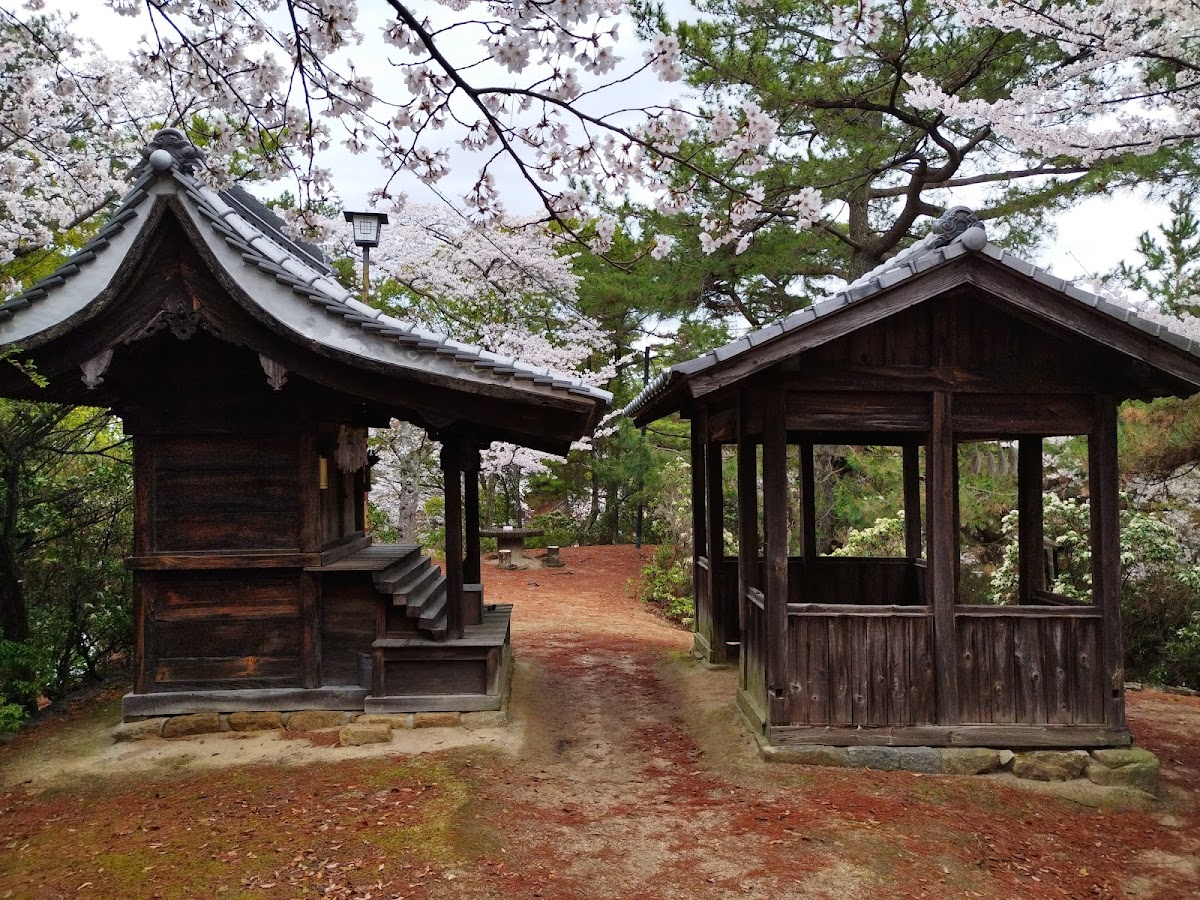
Currently, it is maintained as Kamei Park and is a designated historical site of Otake City. Beautiful views of the Seto Inland Sea can be enjoyed from the site of the main keep, and it is also known as a famous cherry blossom viewing spot in spring.
History and Background of Kamei Castle
Background of Construction
In the Battle of Sekigahara in 1600, Fukushima Masanori, who sided with the Eastern Army, was granted 498,000 koku in Aki and Bingo Provinces for his military achievements. Meanwhile, Mori Terumoto, the commander-in-chief of the Western Army, had his domain drastically reduced from over 1.2 million koku to 369,000 koku in Suo and Nagato provinces.
For Fukushima Masanori, the Mori clan, located immediately to the west, was the greatest threat. The border region along the Sanyo Road, in particular, was militarily crucial, and a strong base was needed to defend this area. It was against this backdrop that the plan for the construction of Kamei Castle was conceived.
From Construction to Abandonment
In 1603 (Keicho 8), Fukushima Masanori began construction of Kamei Castle. Taking advantage of the topography of a small hill facing the sea, it was developed into a full-fledged modern castle over five years. The castle was completed in 1608 (Keicho 13), and Yamada Koemon and Mori Sasuke were appointed as castle lords.
However, the completion of this massive castle aroused suspicion in the Tokugawa shogunate. Because Kamei Castle was so large and sturdily built as a subsidiary castle of Hiroshima Castle, the shogunate is said to have doubted Fukushima Masanori’s true intentions.
Ultimately, in 1611, by order of the shogunate, Kamei Castle was abandoned after only three years. Although it was a short-lived castle, lasting only eight years from construction to completion and abandonment, its scale and structure represented the pinnacle of castle-building technology at the time.
Connection to the Fukushima Clan’s Dispossession
The construction of Kamei Castle is said to have been one of the reasons for the later dispossession of the Fukushima clan. In 1619, Fukushima Masanori was dispossessed of his domain and reduced to 45,000 koku in Kawanakajima, Shinano Province, for unauthorized repairs to Hiroshima Castle. The construction of a large subsidiary castle like Kamei Castle was seen as a manifestation of Fukushima Masanori’s ambition against the shogunate, and is thought to have heightened the shogunate’s vigilance.
Structure and Layout of Kamei Castle
Overall Structure
Kamei Castle is a flatland castle built on a hill overlooking the Seto Inland Sea. The main keep (Honmaru) is at the center, with the second and third baileys (Ninmaru and Sannomaru) arranged around it, and a castle town developed at the foot of the hill. Taking advantage of its location facing the sea, the castle was designed to allow for monitoring of maritime traffic and utilization of water transport.
The castle’s total area was approximately 100,000 square meters, an unusually large scale for a subsidiary castle of Hiroshima Castle. This large-scale structure became a source of suspicion for the shogunate.
Main Keep and Castle Tower Base
The main keep (Honmaru) is located at the highest point of the hill, and the remains of the castle tower base are still well-preserved. The castle tower base is built of stone walls, and its size suggests that a considerably large castle tower was built there. However, there is little historical documentation to confirm whether the castle tower was actually completed.
From the main keep site, one can enjoy a panoramic view of the Seto Inland Sea, stretching as far as Yamaguchi Prefecture and Miyajima Island on the opposite shore. This excellent view was a crucial factor in fulfilling its military surveillance function.
Characteristics of the Stone Walls
The stone walls of Kamei Castle are valuable relics demonstrating castle construction techniques from the Keicho period. They show techniques from the transition period from rough-hewn stonework to fitted stonework, and the stones used are mainly locally sourced granite.
Even today, stone walls remain around the main keep, the second bailey, and the third bailey, allowing us to imagine the scale of the castle at that time. The stone walls of the main keep, in particular, reach several meters in height, suggesting a strong defensive structure.
Layout of the Enclosures
The enclosures (kuruwa) were arranged in stages around the main keep. The remains of the second and third baileys can still be seen in the topography, and flat areas believed to be the remains of buildings remain in each enclosure.
Each enclosure was demarcated by stone walls and moats, enhancing its defensive capabilities. Samurai residences and merchant houses were located at the foot of the mountain, suggesting that it also functioned as a small castle town.
Current Kamei Castle Ruins (Kamei Park)
Park Development
Currently, the Kamei Castle ruins have been developed into Kamei Park, a place of relaxation for citizens. Walking paths have been constructed, making it relatively easy to climb to the main keep site. Information boards and explanatory signs are installed within the park, allowing visitors to learn about the castle’s history.
In spring, approximately 500 cherry trees bloom, making the park a popular venue for the “Otake Cherry Blossom Festival,” attracting many cherry blossom viewers. Nighttime illuminations are also held during cherry blossom season, creating a magical atmosphere.
Ishimoto Miyuki’s Poetic Slope
Kamei Park features the “Poetic Slope,” a memorial to Ishimoto Miyuki, a lyricist from Otake City. Ishimoto Miyuki wrote numerous hit songs, including “The Longing for Hawaii” and “The House on Kakinokizaka,” and poetry monuments inscribed with her lyrics line the slope.
This park offers a cultural element, allowing visitors to enjoy the lyrics of famous songs that have graced the history of Japanese popular music, in addition to exploring the castle ruins.
Scenic Viewpoint
The view from the main keep ruins is the greatest highlight of Kamei Castle. You can see the islands of the Seto Inland Sea, Yamaguchi Prefecture across the bay, and on clear days, even Mount Misen on Miyajima Island. The view at sunset is particularly beautiful and it’s a popular spot for photography.
Standing on the site of the castle tower, you can feel the historical tension of when Fukushima Masanori once gazed upon the territory of the Mori clan from this very spot.
Access and Visiting Information for Kamei Castle
Access Methods
By Public Transportation:
- Approximately 20 minutes on foot from JR Sanyo Main Line “Otake Station”
- Take the Hiroden Bus bound for “Ogata” from Otake Station, get off at “Kamei Park Entrance,” and walk for approximately 5 minutes.
By Car:
- Approximately 10 minutes from Sanyo Expressway “Otake IC”
- Free parking available (capacity of approximately 50 cars)
Points to Note During Your Visit
- Estimated Time Required: Approximately 1-2 hours if you want to leisurely explore the entire castle ruins.
- Difficulty of Climbing: The walking paths are well-maintained, making it easy even for beginners.
- Best Season: Spring cherry blossom season (late March to early April) or autumn foliage season.
- Admission Fee: Free
- Opening Hours: Always open
Precautions During Your Visit
- Please be careful not to climb on or lean against the stone walls.
- After rain, the ground can become slippery, so please wear appropriate footwear.
- In the summer, we recommend bringing insect repellent.
- The path to the main keep is uphill, so please wear comfortable clothing.
Nearby Attractions
Otake City Historical and Folk Museum
Exhibits include materials and artifacts related to Kamei Castle. We recommend visiting before or after your visit to gain a deeper understanding of the castle’s history.
Harumi Seaside Park
A seaside park located about 10 minutes by car from the Kamei Castle ruins. Enjoy beautiful views of the Seto Inland Sea; ideal for family leisure.
Yasaka Shrine
A shrine that has long been revered as the guardian deity of Otake City, and the “Otake Festival” is held there every October. As a central shrine in the Kamei castle town, it has ties to the castle’s history.
Historical Significance of Kamei Castle
Position in the History of Early Modern Japanese Castles
Kamei Castle holds an important position in the history of Japanese castles, reflecting the tense political situation immediately following the Battle of Sekigahara. It is a historical site that tells the story of the complex political situation in the early Edo period, including the delicate relationship between daimyo loyal to the Toyotomi and the Tokugawa Shogunate, and the conflicts between daimyo themselves.
Its abandonment after only three years is a symbolic example of the strict control the Tokugawa Shogunate exerted over the daimyo. Following this, the Shogunate issued the “One Castle Per Province” decree, forcing the thorough destruction of each daimyo’s branch castles.
Fukushima Masanori’s Castle Construction Strategy
Fukushima Masanori adopted a strategy of establishing Hiroshima Castle as his main castle and placing multiple branch castles around it. Kamei Castle was one of the most important branch castles, positioned as a frontline base against the Mori clan to the west.
However, the construction of this large-scale network of branch castles appeared to the Shogunate as a manifestation of military ambition. It is believed that the shogunate’s vigilance was a contributing factor to the confiscation of Fukushima Masanori’s domain.
Importance in Local History
In the history of Otake City, Kamei Castle is one of the most important historical sites. Although its development as a castle town was short-lived, it demonstrates the importance of this region as a strategic point on the Sanyo Road.
Even today, it is cherished as a local symbol and is used as a cherry blossom viewing spot and a place of relaxation for citizens. It can be said to be a good example of preserving and utilizing historical heritage as a local resource.
Excavation and Research of Kamei Castle
Previous Investigations
Several archaeological excavations have been conducted at the Kamei Castle site. These investigations have revealed the structure of the stone walls, the layout of buildings, and the unearthed artifacts.
In particular, investigations around the main keep have unearthed foundation stones, roof tiles, and ceramics, gradually revealing the true nature of the castle. Some of the unearthed roof tiles bear the family crest of the Fukushima clan, providing important evidence supporting the identity of the castle’s builder.
Future Challenges
Many aspects of Kamei Castle remain unresolved. Further research is needed, particularly in the following areas:
- The existence and scale of the keep
- The detailed structure of the castle town
- The dismantling process at the time of its abandonment
- The group of engineers involved in its construction
- The actual circumstances of the castle lord and retainers
It is hoped that clarifying these issues will shed light on important aspects of early modern Japanese history, such as castle construction techniques and the realities of daimyo control during the Keicho period.
Summary
Kamei Castle, though a “phantom castle” abandoned after only three years, possesses immense historical significance. It is a valuable historical site that tells the story of the tense political situation after the Battle of Sekigahara, Fukushima Masanori’s military strategy, and the strict control of daimyo by the Tokugawa shogunate.
Currently, it is a popular park for citizens, known as Kamei Park, and a famous spot for cherry blossoms in spring. The view of the Seto Inland Sea from the site of the main keep is magnificent, offering visitors both the romance of history and the beauty of nature. When you visit Hiroshima Prefecture, be sure to stop by the Kamei Castle ruins and reflect on the history of over 400 years ago. The remaining structures, such as the stone walls and baileys, convey the high level of castle-building technology and the grandeur of the castle at that time.