
Inunari (Ichihara City, Chiba Prefecture) Complete Guide | Geography, History, Transportation, and Living Information
What is Inunari?
Inunari is a district located in the Ichitsu area, in the northern part of Ichihara City, Chiba Prefecture. Ichihara City is located almost in the center of Chiba Prefecture, and Inunari belongs to its northern area. Its postal code is 290-0166, and it is clearly defined as a mail delivery area by Japan Post.
Ichihara City is known as the largest city in Chiba Prefecture by area, and the Inunari district is characterized by its rich natural environment within its vast city limits. In Ichihara City, where urban and rural areas coexist, Inunari is a relatively quiet area with sprawling residential areas and farmland.
Geographical Characteristics
Topography and Geography
The geographical characteristic of the Inunari district lies in the significant difference in topography between its northern and southern parts. The northern part is generally mountainous, characterized by its undulating terrain. On the other hand, the southern part of the peninsula features relatively flat terrain, making it suitable for residential and agricultural use.
This change in topography is related to the geological formation of the Boso Peninsula. The area around Ichihara City in Chiba Prefecture is a landscape formed by the uplift of geological strata that were once the seabed, and the hilly area in the northern part of the Inunari district was also formed as a result of this geological process.
Location in relation to surrounding areas
Inunari belongs to the Ichitsu district in the northern part of Ichihara City, and is adjacent to other districts within the same Ichitsu district. It is located north of the center of Ichihara City and relatively close to the border with Chiba City.
Within Ichihara City as a whole, it is classified as a northern area rich in natural environment, far removed from the Goi district in the southern part of the city where urban functions are concentrated. Due to this geographical location, Inunari is characterized as a place that offers access to both urban convenience and a natural environment.
Climate and Natural Environment
The climate of the Inunari area reflects the characteristics of Ichihara City, located on the Pacific coast of Chiba Prefecture. It is relatively mild with stable rainfall throughout the year. Winters are milder than inland areas of the Kanto Plain, while summers are humid due to the influence of sea breezes.
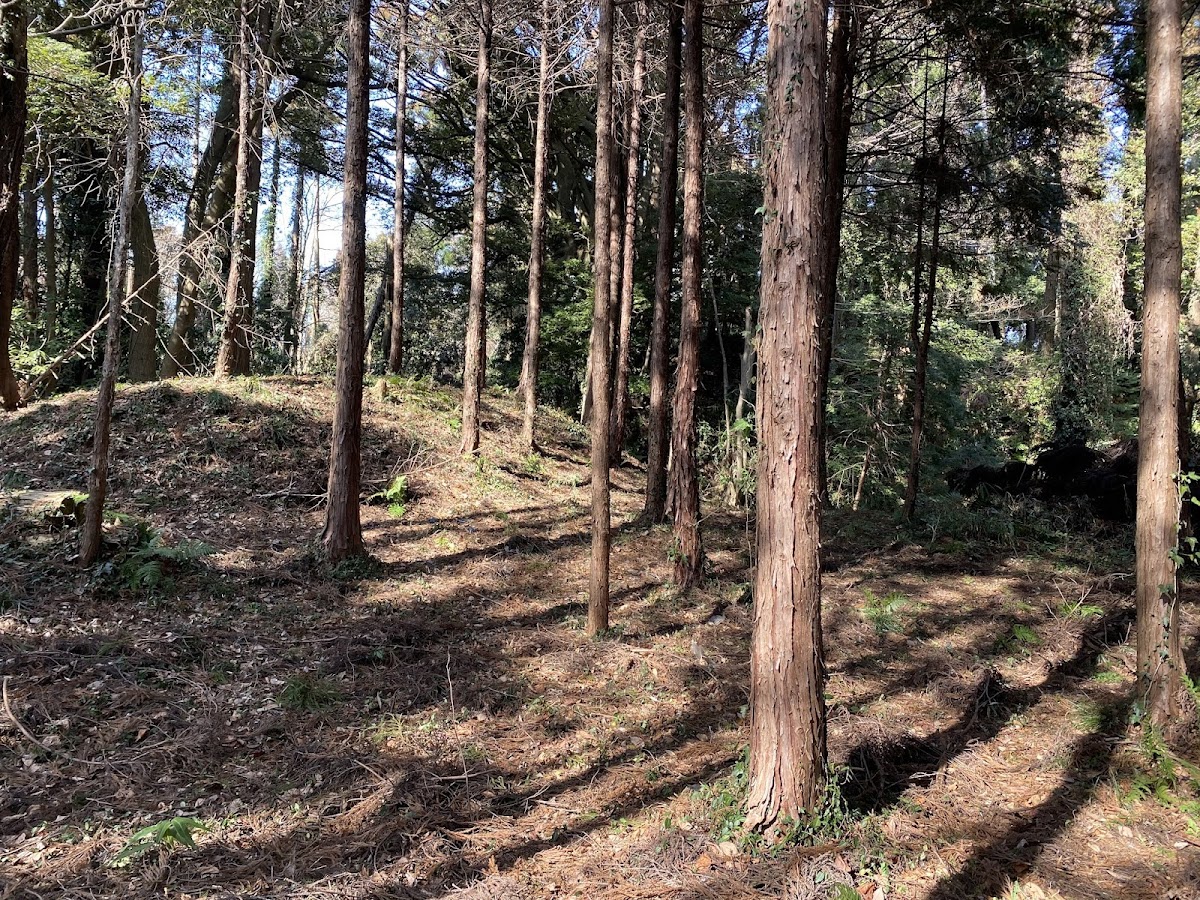
In terms of the natural environment, the northern hilly areas retain mixed forests and bamboo groves, while the southern flatlands are covered with rice paddies and fields. This natural environment makes it a valuable area that preserves a traditional rural landscape even within Chiba Prefecture, which is undergoing urbanization.
History
Origin of the Place Name
There are several theories regarding the origin of the place name “Inunari.” Generally, it is thought that the place name has existed in this area since ancient times and has been passed down to the present day, but there are no clear records of its specific etymology.
Several place names in Chiba Prefecture contain the character “Inu” (dog), and it has been suggested that these may be derived from ancient topography or animals, or from the names of influential figures or settlements of the time. In the case of Inunari, it is highly likely that the place name was given within this historical context.
Inunari Castle and Historical Remains
The Inunari area was once home to a medieval castle called Inunari Castle. This castle is believed to have been built during the Sengoku period (Warring States period) and used as a base of operations by a powerful local figure.
While many details of Inunari Castle’s history remain unclear, related castle ruins, such as Inunari Mukaiyama Castle, exist in the surrounding area, and it is thought that these formed a mutually complementary defensive system. Currently, remnants of what appear to be earthworks and dry moats remain at the castle site, attracting the interest of history enthusiasts and castle researchers.
These castles are valuable historical sites that tell the story of the medieval political and military situation on the Boso Peninsula, and are an important element of the region’s historical identity.
Changes Since the Modern Era
After the abolition of the feudal domains and establishment of prefectures in the Meiji era, the Inunari area underwent a reorganization of Chiba Prefecture’s administrative boundaries and became part of present-day Ichihara City. Ichihara City was incorporated in 1963 (Showa 38), but prior to that, several towns and villages merged repeatedly to form the current city area.
The Inunari district, too, has gradually evolved from a rural area to a suburban residential area amidst these administrative changes. However, compared to the coastal industrial zone and central urban area in southern Ichihara City, it still retains a large amount of farmland and natural environment.
Number of Households and Population
Population Dynamics
The population of the Inunari district has fluctuated in conjunction with the overall population dynamics of Ichihara City. While Ichihara City experienced a rapid population increase from the 1960s to the 1970s with the development of the Keiyo Industrial Zone, the northern area like the Inunari district did not see the same rapid population growth as the southern industrial zone.
In recent years, Ichihara City as a whole has experienced a population decline due to the effects of Japan’s overall declining birthrate and aging population. The Inunari district is no exception, and it is believed to be experiencing an outflow of young people and an aging population. ### Household Composition
The household composition of the Inunari district is characterized by a relatively spacious living environment, primarily consisting of detached houses. There are few apartment buildings like those found in urban areas; instead, a variety of housing types coexist, from traditional Japanese houses to modern residences.
The average number of people per household is declining, similar to the national average, suggesting an increase in nuclear families and single-person households. However, some households, such as those engaged in agriculture, still exhibit multi-generational living arrangements.
Transportation Access
Road Transportation
Access to the Inunari district is primarily by car. Chiba Prefectural and municipal roads pass through the district, allowing for travel to and from central Ichihara City and surrounding areas.
The nearest major roads are national and prefectural roads, which are relatively close, providing access to Tokyo and Chiba City. However, due to limited public transportation, a private car is essential for daily life.
Public Transportation
In the Inunari area, public transportation is primarily available via bus routes. Bus routes operating within Ichihara City pass through the area, providing access to Ichihara city center and the nearest train station.
The nearest train station is on the JR Uchibo Line, relatively close by. Access to these stations by bus or private car allows for train travel to Tokyo and Chiba. However, due to the distance to the train station, commuting to work or school will take some time.
Wide-Area Access
Access from central Tokyo is approximately 1 to 1.5 hours by car using the Metropolitan Expressway, Keiyo Road, and Tateyama Expressway. It is also about 1 hour by car from Narita Airport, providing relatively good access to international travel hubs.
Chiba city center is about 30 minutes away by car, and the Goi district, the center of Ichihara City, is about 20 minutes away, offering sufficient convenience for daily shopping and administrative procedures.
Living Facilities and Environment
Educational Facilities and School Districts
Children and students in the Inunari district attend designated elementary and junior high schools based on the school districts established by Ichihara City. Several elementary and junior high schools are located in the northern area of Ichihara City, and children from the Inunari district attend these schools.
Commuting methods include walking, school buses, and being driven by parents. The distance to school varies depending on the residential area within the district, but education is provided in a relaxed environment typical of rural areas.
Commercial Facilities and Daily Life
There are few large-scale commercial facilities within the Inunari district, so daily shopping requires travel to the Ichihara city center or surrounding commercial areas. While there are small shops and vending machines scattered throughout the district, supermarkets and convenience stores are located in the surrounding areas.
The nearest shopping center is about 15 to 20 minutes away by car, and it is common to use these facilities for purchasing groceries and daily necessities. There are also several large commercial facilities within Ichihara City, which are used for weekend shopping. ### Medical and Welfare Facilities
Regarding medical facilities, while there may be small-scale medical institutions such as clinics within the district, large-scale medical institutions such as general hospitals are located in the central part of Ichihara City and surrounding cities. For emergency medical care or specialized treatment, these facilities will be used.
With the aging population, the demand for welfare facilities and nursing care services is also increasing, and these services are provided within the Ichihara City-wide network.
Public Facilities
Public facilities operated by Ichihara City include libraries, community centers, and sports facilities located throughout the city. Residents of the Inunari district can also use these facilities, utilizing them as places for lifelong learning and sports activities.
Regarding administrative services, the main Ichihara City Hall is located in the southern part of the city, and can be visited for various procedures and consultations. In addition, branch offices and sub-offices are located throughout the city, making it possible to receive basic administrative services in a convenient location.
Land Prices and Real Estate
Trends in Land Prices
Land prices in the Inunari district are relatively low compared to the urban areas and coastal industrial zones in southern Ichihara City, reflecting its characteristics as a rural area in northern Ichihara City. This is influenced by factors such as the concentration of commercial facilities, access to public transportation, and the state of urban infrastructure development.
Land prices have shown gradual fluctuations, correlated with the overall real estate market trends in Japan. While there was a certain increase during the bubble economy, prices have remained stable since then, and in recent years, due to the impact of population decline, they are thought to be flat or slightly decreasing.
Characteristics of the Real Estate Market
The real estate market in the Inunari district is centered on single-family homes and farmland. Many properties have large plots of land, and the spacious living areas, which are not easily found in urban areas, are a major attraction.
New housing construction is limited, and the market is dominated by transactions of existing homes. Furthermore, land use patterns in the region are gradually changing, with conversion of farmland into residential land and land division due to inheritance.
Characteristics of the Real Estate Market
The real estate market in the Inunari district is centered on single-family homes and farmland. Many properties have large plots of land, and the spaciousness of living spaces, which is not easily found in urban areas, is a major attraction.
New housing construction is limited, and transactions of existing homes are the mainstream of the market. In addition, land use patterns in the region are gradually changing, with conversion of farmland into residential land and land division due to inheritance. Rental properties are limited, and most people seeking housing tend to choose to buy. Prices are more affordable compared to urban areas, making it an attractive option for families seeking spacious living spaces.
Regional Charms and Challenges
Abundant Natural Environment
The greatest charm of the Inunari district lies in its rich natural environment. Forests remain in the northern hilly areas, allowing residents to experience the changing seasons firsthand. The quiet environment, away from the hustle and bustle of urban areas, is a major draw for those seeking a less stressful lifestyle.
The landscape of sprawling farmland is also a distinctive feature of this region. The scenes of rice planting and harvesting convey the traditional rural landscape of Japan, providing children with opportunities to learn about the importance of nature and food.
Community and Local Culture
A close-knit community, characteristic of rural areas, exists, maintaining interaction among residents through local festivals and events. These traditional communities continue to play an important role in modern society, including crime prevention, mutual support during disasters, and monitoring the elderly.
Local shrines and temples hold various events throughout the year, which are important elements in shaping the community’s identity. Furthermore, activities to pass on the region’s history and culture to future generations are continuously carried out by local residents.
Challenges Faced
On the other hand, the Inunari district faces challenges similar to many rural areas in Japan. The most serious are population decline and aging. The outflow of young people is reducing the vitality of the community, making it increasingly difficult to pass on traditional events and culture.
The limited availability of public transportation is also a challenge. For the elderly and children who cannot drive, securing transportation is a major issue in daily life. Ichihara City is promoting the introduction of community buses and other services, but there are limitations to covering the entire vast city area.
The increase in vacant houses is also a concern. With aging and population decline, the number of houses that are not inherited and unmanaged land is increasing, potentially leading to deterioration of the landscape and security problems.
Surrounding Sightseeing and Attractive Spots
Tourism Resources of Ichihara City
Ichihara City, where the Inunari district is located, has a variety of tourism resources. The southern part of the city is home to the Yoro Valley, known as a famous spot for autumn foliage. Hiking and hot springs are popular attractions, drawing many tourists throughout the year.
Animal theme parks such as Ichihara Elephant Kingdom and Sayuri World are also popular, making them enjoyable spots for families. Furthermore, the city boasts several golf courses, making it an attractive area for golf enthusiasts.
Historical and Cultural Facilities
Ichihara City has ancient ruins such as the Kazusa Kokubunji Temple Ruins and the Kazusa Kokubun-niji Temple Ruins, attracting the interest of history buffs. These are the remains of temples built during the Nara period, indicating that the area was a center of Buddhist culture on the Boso Peninsula at that time.
The Ichihara City Buried Cultural Properties Research Center exhibits archaeological materials excavated within the city, allowing visitors to learn about the region’s history. Medieval castle ruins, including Inunari Castle, are also interesting spots for historical walks.
Nature Experiences and Outdoor Activities
The hilly area in northern Ichihara City offers an ideal environment for hiking and nature observation. In the Inunari area, you can enjoy strolling through the satoyama (traditional rural landscape) and experience a connection with nature that is not available in urban life.
Each season has its own charm: cherry blossoms in spring, fresh greenery in summer, autumn leaves in fall, and walks in the crisp winter air. It’s also an attractive field for nature lovers, offering opportunities for bird watching and insect collecting.
Considering Life in Inunari
Considering Relocation and Settlement
When considering relocating to the Inunari area, several important points need to be considered. First, you need to understand that a car is a necessity. Because public transportation is limited, a car is necessary for all aspects of daily life, including commuting, going to school, shopping, and accessing medical facilities.
On the other hand, a major advantage is the ability to secure a spacious living space at an affordable price. You can live in a detached house with a garden of a size unimaginable in urban areas, and enjoy gardening and vegetable cultivation.
As a Child-Rearing Environment
As a child-rearing environment, the greatest appeal is the opportunity to raise children in a rich natural environment. Unlike urban areas, there are fewer busy roads and crowds, providing a safe environment for outdoor play.
However, educational facilities and extracurricular activity options are more limited compared to urban areas. Commuting distances must also be considered, and in some cases, parental transportation may be necessary. Furthermore, for high school after junior high school graduation, a wider range of school choices is required, potentially leading to longer commute times.
Life for the Elderly
For the elderly, living in the Inunari area has both advantages and disadvantages. The quiet, nature-rich environment is suitable for a relaxed retirement, but access to medical facilities and daily shopping requires a car.
Careful consideration is needed regarding life after surrendering a driver’s license. It is important to confirm family support systems and the availability of local support services.
Summary
Inunari is a region located in the northern part of Ichihara City, Chiba Prefecture, rich in nature and historical background. This area, indicated by postal code 290-0166, has contrasting geographical features: a mountainous northern area and flat southern areas, resulting in an environment where rural landscapes and residential areas coexist. Historical remains such as Inunari Castle indicate that this area has been an important place since the Middle Ages, and are an important element of the region’s identity. In modern times, it is a valuable area that has preserved its natural environment and traditional community even amidst the wave of urbanization.
Transportation is primarily by car, with limited use of public transport, but in return, residents can enjoy spacious living areas and a rich natural environment not found in urban areas. While facing challenges such as population decline and an aging population, there is a need for sustainable community development that leverages the unique charm of this region.
As part of Ichihara City, the Inunari district maintains its own unique characteristics while accessing the city’s overall administrative services and urban functions. With its characteristics as an intermediate between urban and rural areas, this region has the potential to be one of the choices for people seeking diverse lifestyles.


