The History and Highlights of Oji Castle (Chiba City) | A Thorough Explanation of the Birthplace of the Chiba Clan
Located in Oji-cho, Midori-ku, Chiba City, Chiba Prefecture, Oji Castle is a historically important castle site as the birthplace of the Chiba clan. This castle, which existed from the mid-Heian period to the Sengoku period, now remains in a quiet residential area. This article provides a detailed explanation of the history of Oji Castle, from its construction to its abandonment, the remaining ruins, and access methods.
The History of Oji Castle
Heian Period: Construction by Taira no Tadatsune
There are various theories regarding the construction of Oji Castle, but the most plausible theory is that it was built in the mid-Heian period by Taira no Tadatsune. Taira no Tadatsune was the great-grandson of Taira no Takamochi and a powerful local lord who wielded considerable influence, mainly in Kazusa and Shimosa provinces.
In June 1028 (Chōgen 1), Taira no Tadatsune rebelled against the imperial court. This event is known as the Chōgen Rebellion (Taira no Tadatsune’s Rebellion). Ōshi Castle is believed to have played a crucial role as Taira no Tadatsune’s base during this rebellion. The rebellion lasted for three years, but ultimately, Taira no Tadatsune surrendered after being persuaded by Minamoto no Yorinobu, and died of illness while being escorted to Kyoto.
After Taira no Tadatsune’s death, his descendants branched out and developed into various clans, including the Chiba and Kazusa clans. The family that adopted the name Chiba, in particular, expanded their power using Ōshi Castle as their base.
The Chiba Clan Era and the Relocation to Inohana Castle
Chiba Tsunekane, a great-grandson of Taira no Tadatsune, repaired and improved Ōshi Castle, strengthening its function as the Chiba clan’s headquarters. During Tsunekane’s time, the Chiba clan had established a firm position in the northern part of the Bōsō Peninsula.
Then, on June 1, 1126 (Daiji 1), Chiba Tsuneshige, the eldest son of Tsunekane, built a new castle in Inohana, in the center of Chiba City, a more strategically advantageous location. This was Inohana Castle (Chiba Castle). Tsuneshige moved his residence from Oshi Castle to Inohana Castle, and from then on, Inohana Castle became the main base of the Chiba clan.
With this relocation, Oshi Castle is thought to have ended its role as the main castle of the Chiba clan. However, it may not have been completely abandoned and may have continued to function as a subsidiary castle.
Sengoku Period: Renovation by the Toke Sakai Clan
While much remains unknown about how Oshi Castle was used after the Chiba clan moved to Inohana Castle, it is believed that a large-scale renovation was carried out by the Toke Sakai clan during the Sengoku period.
The Toke Sakai clan were Sengoku-period daimyo who ruled this region, and they redeveloped Oshi Castle as a Sengoku-era fortress. Many of the remaining structures are thought to be the result of these Sengoku-period renovations. Defensive structures such as earthworks and dry moats were constructed, transforming the castle into a functional Sengoku-period fortress.
Abandoned Castle and Present Day
Oshi Castle is believed to have been ultimately abandoned after Toyotomi Hideyoshi’s siege of Odawara in 1590 (Tensho 18). During this period, many castles in the Kanto region were abandoned, and Oshi Castle was no exception.
Currently, the Oshi Castle ruins are located in the Asumigaoka residential area of Oshi-cho, Midori-ku, Chiba City, adjacent to One Hundred Hills. Most of the castle ruins are privately owned, and a portion has been developed as Asumigaoka 8th Green Space.
Structure and Remains of Oshi Castle
Castle Location and Layout
Oshi Castle is a hilltop castle built on a hill approximately 70 meters above sea level. It utilizes the natural fortifications of the surrounding valleys, known as yatsu, and its layout takes advantage of the terrain suitable for defense.
Although relatively small in scale, the castle’s structure reflects its history, having developed from a Heian period lord’s residence to a Sengoku period castle. It is believed that multiple baileys (kuruwa) were arranged around the main enclosure.
Remains Today
The following remains still exist at the Oshi Castle site:
Earthworks
Clear earthworks remain around the main enclosure at the mountaintop. These earthworks are earthen walls designed to prevent enemy intrusion. Their height varies depending on the location, but the highest points reach over 2 meters. These earthworks are thought to have been constructed during renovations in the Sengoku period and are valuable remains for understanding the castle-building techniques of that time.
Dry Moat
Along with the earthworks, traces of a dry moat can also be seen. A dry moat is a moat that does not hold water and served to obstruct the enemy’s advance. The dry moat at Oshi Castle is cleverly positioned using the natural terrain, showing ingenuity in constructing an effective defensive line with limited manpower.
Remains of Enclosures
Several flat areas of enclosures can be seen around the main enclosure. Enclosures are flat sections within the castle that were used for building structures or stationing soldiers. At Oshi Castle, it is presumed that in addition to the main enclosure, there were also second and third enclosures.
Cut Slopes
Cut slopes, which are artificially carved steep slopes, can be seen around the enclosures. Cut slopes were a measure to make it difficult for the enemy to climb, increasing defensive capabilities by making the natural slopes even steeper.
These remains are valuable historical sites that tell the story of the transformation of Oshi Castle from its construction in the Heian period to its renovation in the Sengoku period. However, much of the site is now privately owned, and some remains have been lost due to residential development.
Castle Construction Techniques as Seen Through Structure
A detailed examination of the structure of Oshi Castle reveals changes in castle construction techniques from different eras.
In the Heian period, it is believed that the castle primarily consisted of simple defensive structures that made the most of the natural terrain. The residence was situated on the top of a hill, utilizing the surrounding valleys as natural moats—a typical structure for the residences of powerful families of that era.
On the other hand, the renovations during the Sengoku period added more planned layouts and artificial defensive structures. The systematic arrangement of earthworks and dry moats, and the linkage of multiple baileys, significantly improved resistance to attacks. This change can be seen as an evolution from a “mansion” of the Heian period to a “castle” of the Sengoku period.
Highlights of Oshi Castle
Earthworks around the Main Enclosure
The biggest highlight of Oshi Castle is the earthworks remaining around the main enclosure. Although covered by trees, they retain a clear shape, conveying the appearance of a castle from the Sengoku period. Walking along the earthworks, you can imagine the castle lord and soldiers surveying the surrounding area from this spot.
Traces of the Dry Moat
Along with the earthworks, the traces of the dry moat are also a highlight. While some parts are buried, the V-shaped and U-shaped cross-sections of the moat can still be seen in some places. By observing the dry moat, you can understand the defensive system of the time.
View
From the castle ruins, you can see the surrounding terrain. The hill on which Oshi Castle stands overlooks the surrounding plains, giving a sense of its military importance. On a clear day, you can sometimes see as far as Tokyo Bay.
Historical Value as the Birthplace of the Chiba Clan
The greatest value of Oshi Castle lies in its historical significance as the birthplace of the Chiba clan. The Chiba clan was a powerful family that wielded considerable influence on the Boso Peninsula from the Kamakura period to the Sengoku period, and Oshi Castle was their starting point. Standing on the castle ruins, you can feel the origin of the Chiba clan’s history.
Access Information
Access by Public Transportation
If using the JR Sotobo Line:
- Approximately 30 minutes on foot from the South Exit of Toke Station on the JR Sotobo Line
- Take the Chiba Chuo Bus bound for “Sozo no Mori” from the South Exit of Toke Station, get off at the “Sozo no Mori” bus stop, and walk for approximately 7-8 minutes.
Since the number of buses is limited, it is recommended to check the timetable in advance.
Access by Car
From Major Roads:
- Approximately 10 minutes from the Keiyo Expressway “Honda IC”
- Approximately 20 minutes from the Ken-O Expressway “Mobara Chonan IC”
When using a car navigation system, it is recommended to set “Asumigaoka” or “One Hundred Hills” as your destination.
Parking:
There is no dedicated parking lot for the castle ruins. Since the surrounding area is residential, please avoid street parking and use public transportation. If visiting by car, you can use a coin parking lot near Toke Station and access the site on foot or by bus.
Precautions During Visits
- Respect for Private Property: Most of the castle ruins are on private property. Absolutely do not enter areas marked as “No Entry.”
- Safety: Some areas around the ruins have uneven footing. It is recommended to wear comfortable shoes.
- Season: In summer, vegetation grows thickly, making the ruins difficult to see. Visiting from autumn to spring is recommended. – Insect Repellent Measures: Since this is a naturally rich area, it’s a good idea to bring insect repellent spray.
Related Historical Sites in the Surrounding Area
When visiting Oshi Castle, visiting the related historical sites in the surrounding area will allow you to gain a deeper understanding of the Chiba clan’s history.
Inohana Castle (Chiba Castle)
Inohana Castle, where Chiba Tsuneshige relocated from Oshi Castle, is located in Chuo Ward, Chiba City. Currently, the Chiba City Local History Museum stands there, where you can learn about the history of the Chiba clan. The relocation from Oshi Castle to Inohana Castle was a crucial turning point in the development of the Chiba clan.
Toke Castle
Toke Castle, the base of the Toke Sakai clan, is located approximately 3 kilometers from Oshi Castle. During the Sengoku period, when the Toke Sakai clan renovated Oshi Castle, Toke Castle was a central castle in the region. It is currently maintained as Toke Castle Ruins Park.
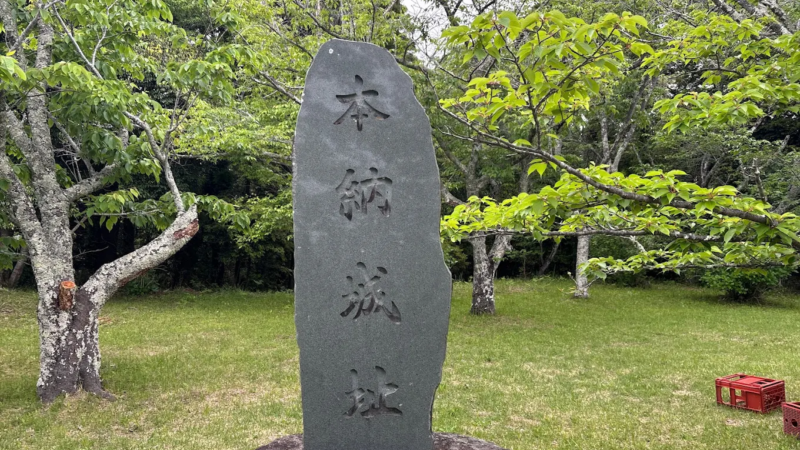
Honnō Castle
Honnō Castle, located in Mobara City, Chiba Prefecture, is another castle site associated with the Chiba clan. It is known as the residence of the Kazusa clan, a branch of the Chiba clan.
Historical Significance of Ōshi Castle
The Starting Point of the Chiba Clan’s Development
Ōshi Castle was the starting point for the Chiba clan, who later built a significant power in the Bōsō Peninsula. The Chiba clan lineage, beginning with Taira no Tadatsune, grew from Ōshi Castle as their base, eventually becoming a powerful retainer of the Kamakura Shogunate. The relocation to Inohana Castle during the time of Chiba Tsuneshige indicates the Chiba clan’s ambition to expand their control over a wider area.
History of Bōsō in the Heian Period
The history of Ōshi Castle is also important for understanding the political and military situation in the Bōsō Peninsula during the Heian period. The Chōgen Rebellion was an event that demonstrated the power of local powerful families in eastern Japan, where central government control was less effective. Ōshi Castle was one of the stages of this rebellion and is a key historical site for understanding eastern Japan society at that time.
Position in Castle History
Ōshi Castle holds an important position in the study of castle history as a typical example of a castle that developed from a Heian period lord’s residence to a Sengoku period fortress. It is a valuable historical site because it allows observation of changes in castle construction techniques across different eras within a single castle site.
Summary
Ōshi Castle, located in Midori Ward, Chiba City, Chiba Prefecture, is a historically important castle site as the birthplace of the Chiba clan. From its construction by Taira no Tadatsune in the mid-Heian period, to Chiba Tsuneshige’s relocation to Inohana Castle, and subsequent renovations by the Toke Sakai clan during the Sengoku period, this castle boasts a history spanning approximately 500 years, and still retains remnants such as earthworks and dry moats.
Although the castle site now stands quietly amidst a residential area, its historical value is extremely high, making it an indispensable site for understanding the history of the Chiba clan and the medieval history of the Bōsō Peninsula. It is easily accessible on foot from JR Toke Station, making it a must-visit for history enthusiasts.
When visiting the Oshi Castle ruins, it is important to be mindful of respecting private property and to view the remains with an awareness of the need to carefully preserve them. Why not take a moment to reflect on the history of the Boso Peninsula from the Heian period to the Sengoku period, touching upon the origins of the Chiba clan’s history?