Inawashiro Castle (Fukushima Prefecture) Complete Guide: A Thorough Explanation of Kamegajo Castle’s History, Remains, and Access
Inawashiro Castle, located in Inawashiro Town, Yama District, Fukushima Prefecture, is a Japanese castle that served as an important base in the Aizu region from the medieval to the early modern period. Affectionately known as “Kamegajo Castle,” it is currently preserved as a Fukushima Prefecture designated historical site. Situated in a scenic location overlooking Lake Inawashiro with Mount Bandai in the background, it has a history spanning approximately 700 years, from the Kamakura period to the end of the Edo period.
This article provides a thorough explanation of this historically significant castle, covering its detailed history from construction to abandonment, the characteristics of its castle structure, existing remains, and surrounding attractions.
Basic Information on Inawashiro Castle
Location: Kojōato/Chaenchi, Inawashiro-machi, Yama-gun, Fukushima Prefecture
Alternate Name: Kamegajo Castle
Castle Structure: Hilltop Castle
Construction Period: Around 1191 (Kenkyū 2)
Builder: Sahara Tsunetsura
Main Lords: Inawashiro clan, Gamō clan, Uesugi clan, Kato clan, Hoshina clan (Aizu Matsudaira clan)
Year of Abandonment: 1871 (Meiji 4)
Remains: Earthworks, dry moats, stone walls, baileys
Designated Cultural Property: Fukushima Prefecture Designated Historic Site
Access: Approximately 1.7km north from Inawashiro Station on the JR Ban’etsu West Line
History and Background of Inawashiro Castle
Medieval Period: The Era of the Inawashiro Clan
The history of Inawashiro Castle dates back to the early Kamakura period. In 1189, during the conquest of Oshu, Sahara Yoshitsura served under Minamoto no Yoritomo and distinguished himself, earning the reward of four districts in Aizu Province. Yoshitsura was a member of the Miura clan of Sagami Province and related to the Ashina clan of Kurokawa Castle (later Aizu-Wakamatsu Castle).
It is believed that the origin of Inawashiro Castle dates back to around 1191, when Yoshitsura’s grandson, Sahara Tsunetsura, built a castle in Inawashiro and adopted the name Inawashiro. This history is recorded in documents such as the “Shinpen Aizu Fudoki” and “Yama-gunshi,” and the Inawashiro clan ruled this area for approximately 400 years.
The Inawashiro clan developed into a powerful local lord in the Aizu region, and successive generations of their descendants resided at Inawashiro Castle. During the Sengoku period, the Inawashiro clan served as important retainers of the Ashina clan, who ruled Aizu. However, a turning point in history occurred in 1589 during the Battle of Suriagehara, when the 16th head of the clan, Inawashiro Morikuni, secretly allied himself with Date Masamune.
Due to Morikuni’s betrayal, the Ashina clan was destroyed, and Aizu came under the control of Date Masamune. However, the following year, 1590, Toyotomi Hideyoshi’s pacification of Oshu forced Masamune to withdraw from Aizu, and Inawashiro Morikuni lost his territory and became a wanderer. Later, Morikuni’s son, Moritsugu, served the Date family, and his name is recorded in the “Date Family Genealogy.”
Early Modern Period: An Important Base in the Aizu Territory
In 1590, Gamo Ujisato was appointed to Aizu, and Inawashiro Castle also came under the control of the Gamo clan. Ujisato established his base at Aizu-Wakamatsu Castle (a renovated Kurokawa Castle), and Inawashiro Castle was positioned as an important branch castle in the northern part of the Aizu domain.
In 1598, Uesugi Kagekatsu became the lord of Aizu with a domain of 1.2 million koku, and senior retainers of the Uesugi family were stationed at Inawashiro Castle. However, after the Battle of Sekigahara in 1600, the Uesugi clan was transferred to Yonezawa, and the Gamo clan returned to Aizu.
In 1643, following the confiscation of Kato Akimasa’s domain, Hoshina Masayuki became the lord of Aizu with a domain of 230,000 koku. Masayuki was a son of Tokugawa Hidetada and was later granted the Matsudaira surname, becoming the Aizu Matsudaira family. This Hoshina clan (Aizu Matsudaira clan) ruled until the end of the Edo period.
During the Edo period, Inawashiro Castle functioned as an important branch castle of the Aizu domain. Even when the shogunate issued the “One Castle Per Province” decree, Inawashiro Castle was one of the few castles allowed to remain due to its strategic importance within the Aizu domain. This is believed to be because Mount Bandai lay between Aizu-Wakamatsu Castle and Inawashiro Castle, making it a necessary military base.
A senior retainer of the Aizu domain was appointed as the castle lord, and a castle town was developed. According to the “Shinpen Aizu Fudoki” (New Edition of the Aizu Topography), merchant districts and temples and shrines were also established in the castle town, and it developed into the political and economic center of northern Aizu.
Late Edo Period: The Boshin War and the Fall of the Castle
During the turbulent late Edo period, Inawashiro Castle once again appeared on the historical stage. In the Boshin War of 1868, the Aizu domain sided with the former shogunate against the new government forces.
In August of the same year, when the new government forces invaded Aizu, Inawashiro Castle became a battlefield. The castle lord, Takahashi Gondaifu, and others defended the castle, but they could not withstand the overwhelming forces of the new government army, and the castle fell. It is said that part of the castle was burned down during this battle.
After the end of the Aizu War, Inawashiro Castle ceased its military role. Following the Meiji Restoration and the abolition of the feudal domains, it was officially abandoned in 1871 (Meiji 4), bringing its approximately 700-year history to an end.
Modern and Contemporary Period: Preservation as a Historic Site
After its abandonment, the Inawashiro Castle ruins were neglected for a long time, but a preservation movement began in the late Meiji period by local volunteers. In 1973 (Showa 48), it was designated a Fukushima Prefecture Historic Site, officially receiving protection.
Currently, it is maintained as “Kamegajo Park” and serves as a place of relaxation for local residents. It is also known as a famous cherry blossom viewing spot in spring, attracting many visitors. Furthermore, for history enthusiasts and castle fans, it is attracting attention as a valuable historical site where one can learn about castle structures from the medieval to early modern periods.
In recent years, Inawashiro Town has been installing information boards and preserving and maintaining the remains, and it is also being used as a place for historical education.
Structure of Inawashiro Castle
Layout and Arrangement
Inawashiro Castle is a flatland castle utilizing the hilly terrain, built on a plateau with a relative height of approximately 20 meters. The castle grounds extend approximately 400 meters east-west and 300 meters north-south, retaining characteristics of the transitional period from medieval to early modern castles.
The castle has a terraced layout with the main keep at the center, surrounded by the second and third baileys. The north and east sides are steep cliffs, forming a natural stronghold. Dry moats were dug on the south and west sides to strengthen the defenses.
Main Keep
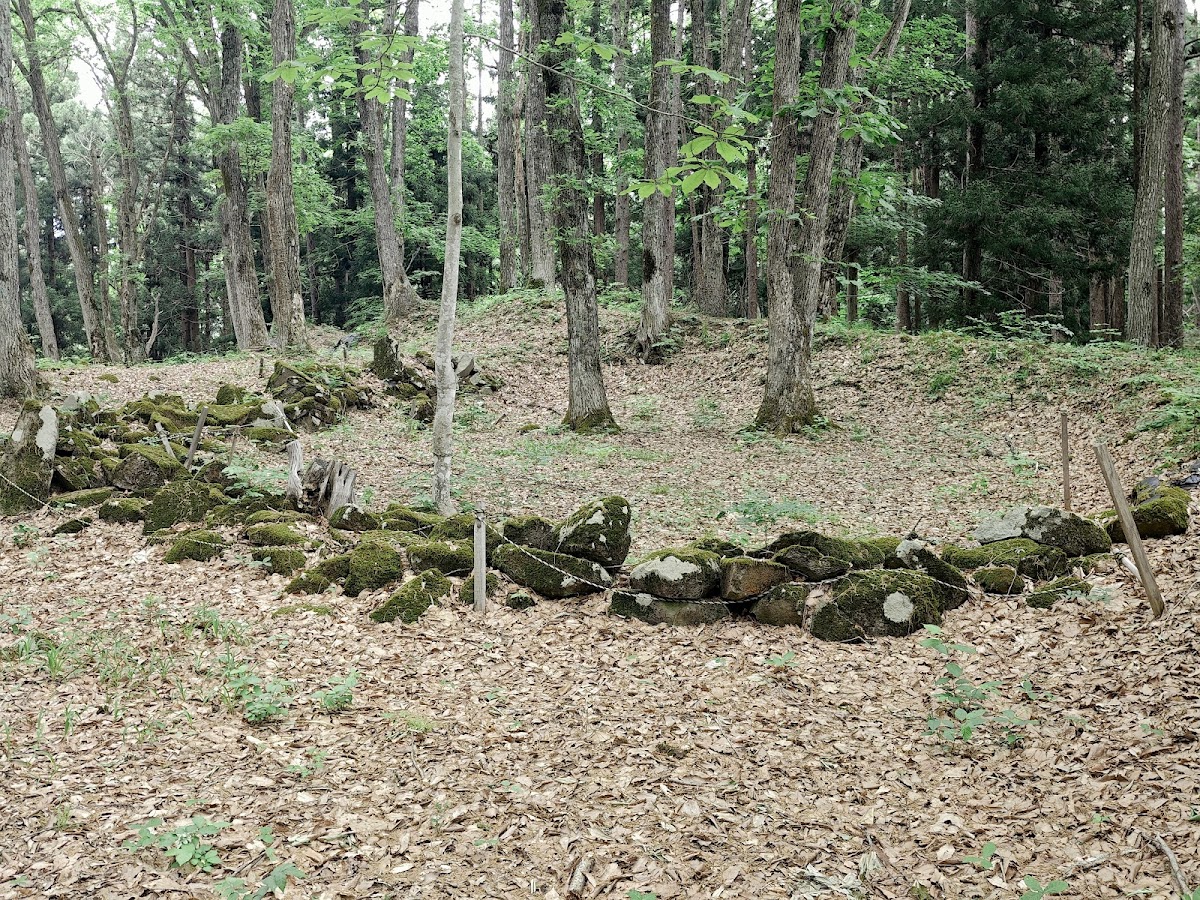
The main keep is located in the center of the castle and has an area of approximately 80 meters square. The main enclosure (Honmaru) is surrounded by earthen ramparts, some of which remain in good condition today. The ramparts reach a maximum height of approximately 4 meters in some places, giving a glimpse into the scale of the defensive structures at the time.
Within the main enclosure, there remains a raised area believed to be the base of a keep, but according to historical documents, a full-fledged keep was never built at Inawashiro Castle. Instead, palaces and turrets were constructed, functioning as the lord’s residence.
Stone Walls and Earthen Ramparts
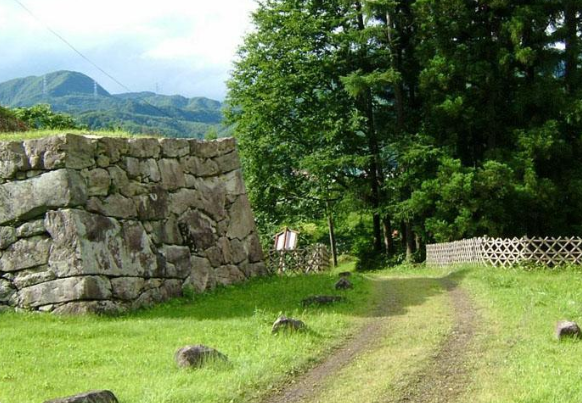
A distinctive feature of Inawashiro Castle’s defensive structures is the combined use of stone walls and earthen ramparts. Partially remaining stone walls constructed using the nozura-zumi (rough-stone masonry) method exist around the main enclosure, indicating traces of renovations to the castle during the early modern period. These stone walls are thought to have been added during the time of the Gamo and Uesugi clans.
On the other hand, earthen ramparts are a traditional defensive structure dating back to the medieval period and are built throughout the castle. The earthen rampart separating the main enclosure (Honmaru) and the second enclosure (Ninmaru) is particularly large, reaching a height of 3-4 meters and a base width of over 10 meters.
Dry Moat
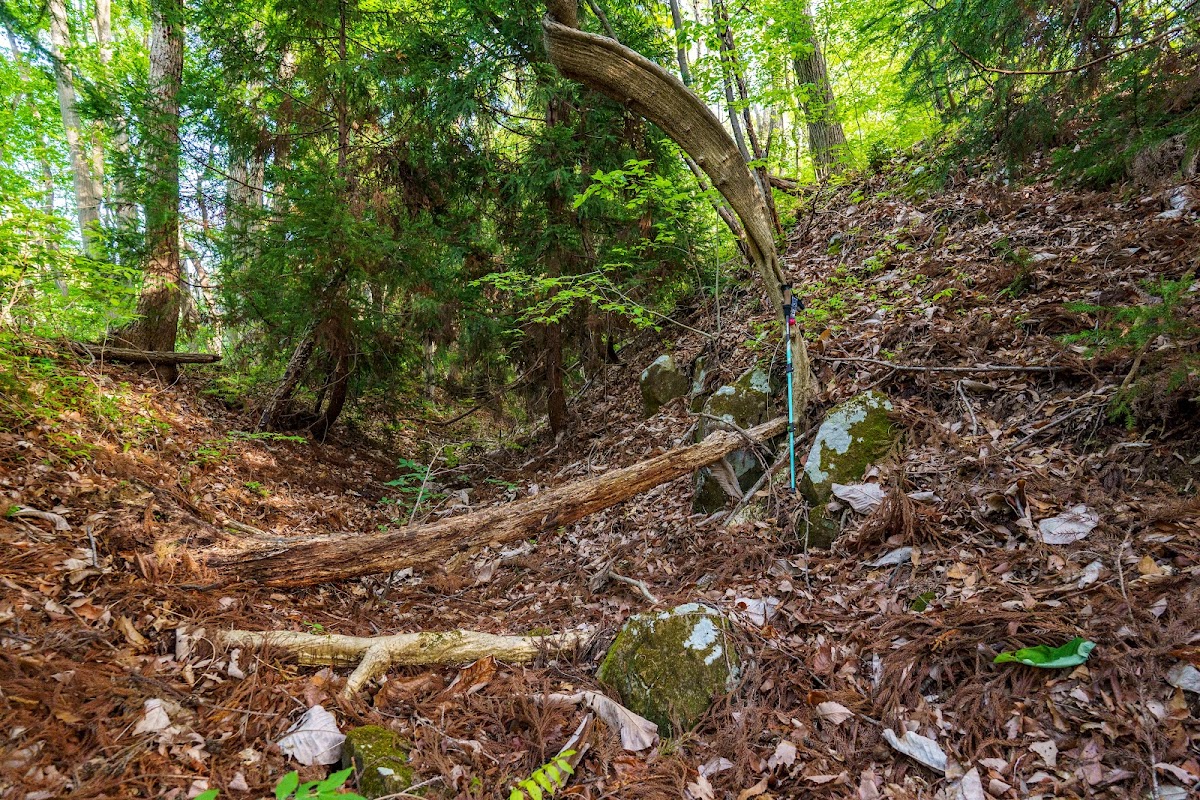
Deep dry moats were dug on the south and west sides of the castle, and are still clearly visible today. The dry moats are approximately 5 meters deep at their deepest point and 10 to 15 meters wide. According to the *Shinpen Aizu Fudoki* (New Edition of the Aizu Topography), there was once a water moat, but it is now filled in.
The dry moats lack sophisticated structures such as shoji-bori (screen-like moats) or une-bori (ridged moats), instead exhibiting a simple box-moat design. This is considered a characteristic of medieval castles.
Enclosure Layout
Multiple enclosures are arranged around the main enclosure (honmaru). The second enclosure (ninomaru) is located south of the main enclosure and is presumed to have housed the residences of senior retainers and barracks. The third enclosure (sannomaru) extends further out, leading to the castle town.
Each enclosure is demarcated by earthworks and moats, enhancing defense and controlling movement within the castle. The *Yama-gunshi* (History of Yama County) records that multiple gates and turrets once existed within the castle.
Relationship with Tsurumine Castle
Immediately north of Inawashiro Castle lies another castle site called Tsurumine Castle. There are theories that Tsurumine Castle was built earlier than Inawashiro Castle, and there are various theories regarding the relationship between the two.
One theory suggests that Tsurumine Castle was the predecessor of Inawashiro Castle, and was the first castle built by Sahara Tsunetsura. Later, the main castle was moved to the current location of Inawashiro Castle, which was larger and more defensibly positioned.
Another theory suggests that Tsurumine Castle functioned as a fortified outpost (tsumejiro) for Inawashiro Castle, meaning it served as an emergency refuge. Tsurumine Castle is located on higher ground than Inawashiro Castle, making it more suitable for defense.
Currently, the Tsurumine Castle site, along with the Inawashiro Castle site, is maintained as part of Kamegajo Park, and remains such as earthworks and moats can be seen. Visiting both castle sites together provides a deeper understanding of the medieval Aizu castle system.
Existing Remains and Highlights
Earthworks
The earthworks are the best-preserved remains of Inawashiro Castle. The earthworks surrounding the main keep are particularly impressive in both height and scale, allowing visitors to imagine their original appearance. There are sections where you can walk along the top of the earthworks, offering panoramic views of the castle grounds.
While parts of the earthworks have crumbled due to years of weathering, their basic shape remains. In spring, cherry blossoms bloom on the earthworks, creating a beautiful scene where historical landscapes and natural beauty blend seamlessly.
Dry Moat
The dry moat on the south side is deep, conveying a sense of its defensive importance. There are sections where you can descend to the bottom of the moat, allowing you to appreciate its scale. Observing the cross-section of the moat reveals the excavation techniques and soil composition, making it valuable material for castle research.
Stone Walls
Parts of the stone walls built using the “nozurazumi” method remain around the main keep. These simple stone walls, constructed by stacking natural stones as they are, have remained intact for over 400 years, demonstrating the high level of stonework technology of the time. The stone walls, while incorporating elements of early modern castles through later renovations, are notable for their use in combination with medieval-style earthworks.
Remains of the Enclosures
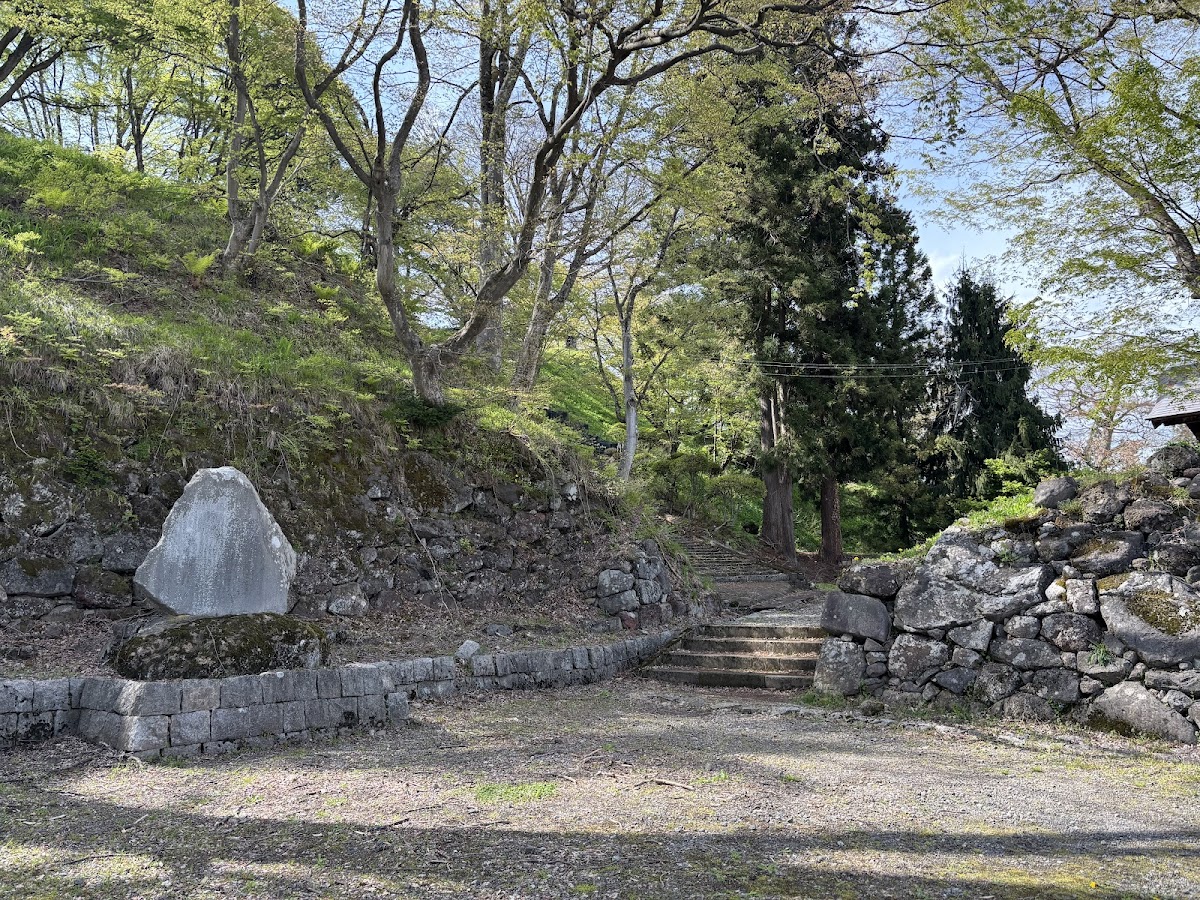
The remains of the main enclosure (Honmaru), second enclosure (Ninokuruwa), and third enclosure (Sanokuruwa) are still clearly visible as flat areas. Walking through each enclosure allows you to experience the scale and layout of the castle. The view from the main enclosure is particularly magnificent, offering a panoramic view of Lake Inawashiro and Mount Bandai.
Information Boards and Explanation Boards
The Inawashiro Town Board of Education has installed information boards and explanation boards throughout the castle ruins. These provide detailed explanations of the castle’s history, structure, and highlights, making them easy to understand even for first-time visitors.
Attractions Around the Castle
Kamegajo Park
The Inawashiro Castle ruins have been developed into “Kamegajo Park,” a place of relaxation for local residents. Walking paths are maintained within the park, allowing visitors to enjoy the changing seasons while strolling through the castle ruins.
The area is especially beautiful in spring during cherry blossom season, with approximately 200 Somei Yoshino cherry trees in full bloom. A cherry blossom festival is also held, attracting many visitors. In autumn, the autumn foliage can be enjoyed, allowing visitors to appreciate the harmonious blend of history and nature.
Inawashiro Town Historical and Folk Museum
Located approximately 2km from Inawashiro Castle, the Historical and Folk Museum exhibits materials related to the Inawashiro clan and Inawashiro Castle. A reconstructed model of the castle, excavated artifacts, and ancient documents are on display, allowing visitors to learn more about the castle’s history.
Lake Inawashiro
Lake Inawashiro, the fourth largest lake in Japan, is located approximately 3km south of the castle ruins. From the lakeshore, one can see the majestic figure of Mount Bandai, and the beautiful scenery, sometimes called “Tenkyo-ko” (Heavenly Mirror Lake), unfolds before you.
Noguchi Hideyo Memorial Museum
A memorial museum centered around the birthplace of the world-renowned bacteriologist Noguchi Hideyo is located approximately 3km from Inawashiro Castle. Hideyo Noguchi was from Inawashiro Town and is honored as a source of local pride.
Mount Bandai
Mount Bandai (elevation 1,816m), towering behind Inawashiro Castle, is a beloved symbol of Aizu. It offers opportunities for climbing and hiking, and from the summit, you can enjoy panoramic views of Lake Inawashiro and the Aizu Basin.
Access and Visiting Information
Access by Public Transportation
- From JR Ban’etsu West Line “Inawashiro Station”: Approximately 25 minutes on foot, approximately 5 minutes by taxi
- From Inawashiro Station, take the Bandai Toto Bus and get off at “Kamegajo Iriguchi” bus stop, then a 5-minute walk.
Access by Car
- From Ban’etsu Expressway “Inawashiro Bandai Kogen IC”: Approximately 10 minutes
- Parking: Kamegajo Park Parking Lot (Free, approximately 30 spaces)
Visiting Information
- Opening Hours: All day (maintained as a park)
- Admission Fee: Free
- Estimated Time Required: Approximately 1 to 1.5 hours for a thorough visit
- Best Season: Cherry blossom season (mid-to-late April), Autumn foliage season (late October to early November)
Precautions During Visits
- To protect the historical remains, please refrain from climbing on the earthworks and stone walls.
- After rain, the ground can be slippery, so we recommend wearing comfortable walking shoes.
- Insect repellent is recommended during the summer.
- In winter, snow cover makes it unsuitable for visits.
Historical Significance of Inawashiro Castle
Inawashiro Castle is an important fortress that watched over the history of the Aizu region for approximately 700 years, from the Kamakura period to the end of the Edo period. Its historical significance can be summarized as follows:
Base of Aizu Rule
The long-term rule of the Inawashiro clan is historically important as a typical example of regional governance by local lords. The Inawashiro clan, as a branch of the Miura clan, built their own power while maintaining ties with the Kamakura Shogunate.
Turning Point in the Sengoku Period
Inawashiro Morikuni’s betrayal at the Battle of Suriagehara marked a turning point in the rule of Aizu, shifting from the Ashina clan to the Date clan. This incident is one of the important turning points in the Sengoku period history of the Tohoku region.
Exception to the One Castle Per Province Decree
During the Edo period, Inawashiro Castle was recognized for its strategic importance as one of the few castles permitted to survive despite the shogunate’s One Castle Per Province Decree. This reflects the unique geographical and military circumstances of the Aizu Domain.
Transition from Medieval to Early Modern Period
In terms of castle structure, Inawashiro Castle, with its coexistence of medieval earthworks and dry moats and early modern stone walls, is a valuable example of the evolution of castle architecture. It occupies an important position in castle research.
References and Historical Materials
The following documents and historical materials are important for the study of Inawashiro Castle:
- “Shinpen Aizu Fudoki”: A local history of the Aizu region compiled in the late Edo period. It describes the structure of Inawashiro Castle and the appearance of the castle town in detail.
- “Yama-gunshi”: A history of Yama-gun compiled in the Meiji era. It describes the lineage of the Inawashiro clan and the changes in the castle.
- ‘Date Seishin Kafu’: A historical document recording the genealogy of the Date family’s retainers. It describes the Inawashiro clan from Inawashiro Moritsugu onward.
- ‘Aizuwakamatsu City History’: A city history covering the history of the entire Aizu region. It helps understand the historical position of Inawashiro Castle.
- ‘Medieval Castle Sites in Fukushima Prefecture’: A survey report by the Fukushima Prefectural Board of Education. It contains detailed records of the remains of Inawashiro Castle.
These documents are available for viewing at the Inawashiro Town Library and the Fukushima Prefectural Library, among others.
Summary
Inawashiro Castle (Kamegajo) is a historically valuable castle site remaining in Inawashiro Town, Fukushima Prefecture. Built around 1191 during the Kamakura period by Sahara Tsunetsura, it served as the residence of the Inawashiro clan for approximately 400 years, and subsequently functioned as an important branch castle of the Aizu Domain until the end of the Edo period.
The coexistence of medieval castle earthworks and dry moats with early modern castle stone walls makes Inawashiro Castle a valuable example of the evolution of castle architecture. Currently, it is maintained as Kamegajo Park, where the remains of earthworks, dry moats, stone walls, and baileys can be viewed in excellent condition.
Its location, blessed with natural scenery such as Lake Inawashiro and Mount Bandai, is also appealing, allowing visitors to enjoy the beauty of each season, from cherry blossoms in spring to autumn foliage. Inawashiro Castle, where you can learn about Aizu’s history and enjoy nature, is a recommended spot not only for history buffs but also for tourists.
When visiting Fukushima Prefecture, be sure to visit Inawashiro Castle ruins and experience the charm of a castle with approximately 700 years of history.