Ohira Castle (Koriyama City, Fukushima Prefecture) Complete Guide: A Thorough Explanation of the History and Highlights of this Tamura Clan Branch Castle
What is Ohira Castle?
Ohira Castle is a medieval mountain castle located in Maeda, Ohira-cho, Koriyama City, Fukushima Prefecture. Built on an isolated hill at an altitude of 290m and a relative height of approximately 60m, it is believed to have functioned as an important branch castle of the Tamura clan, who ruled the Koriyama region during the Sengoku period.
Located at a strategic point in the Nakadori region of Mutsu Province, the castle boasts well-preserved remains such as earthworks, baileys, and moats, making it a valuable historical site for understanding the structure of medieval castles. Even today, clear remains can be seen in the mountains, making it a hidden gem that constantly attracts castle enthusiasts and history buffs.
History of Ohira Castle
Background of Construction and the Tamura Clan
While there are no clear records regarding the construction period of Ohira Castle, it is estimated to have been built by the Tamura clan around the 16th century during the Sengoku period. The Tamura clan was a Sengoku period daimyo (feudal lord) based at Miharu Castle (present-day Miharu-machi, Tamura-gun, Fukushima Prefecture), and controlled a wide area including Koriyama.
The Tamura clan was situated in a location surrounded by powerful neighboring daimyo such as the Date, Soma, and Ashina clans, and was constantly in a state of tension in both diplomatic and military affairs. Under these circumstances, Ohira Castle is thought to have played a crucial role as a defensive base for the Koriyama region and as part of a network of branch castles coordinating with the main castle, Miharu Castle.
Role in the Sengoku Period
Ohira-machi, Koriyama City, where Ohira Castle is located, was a strategic transportation hub in the Nakadori region. Controlling this area meant controlling the north-south roads and monitoring and controlling the movement of goods and troops.
The Tamura clan governed their territory by establishing multiple branch castles, and Ohira Castle functioned as one of them. It is presumed that the castle was staffed by Tamura clan retainers and functioned as a governing base for the surrounding area in peacetime and as a frontline defense during wartime. ### Changes Since the Early Modern Period
After Toyotomi Hideyoshi’s pacification of Oshu (1590), the Tamura clan temporarily lost their territory, and in the early Edo period, the Koriyama region came under the influence of the Aizu and Nihonmatsu domains. It is believed that during this period, Ohira Castle ceased to function as a military base and was abandoned.
Throughout the Edo period, the castle ruins were protected by local people, and the remains have been preserved in relatively good condition to this day. In recent years, investigations by castle researchers have been conducted, and its historical value is being re-evaluated.
Layout and Structure of Ohira Castle
Overall Composition
Ohira Castle has the typical structure of a mountain castle, with multiple enclosures (kuruma) arranged around the top of a hill 290m above sea level. Its location, with a relative height of approximately 60m, strikes a balance between defensive and practical advantages, clearly demonstrating the characteristics of a medieval castle.
The castle area is long and narrow from north to south, with enclosures arranged in stages around the main enclosure. The design, which skillfully utilizes the natural terrain while enhancing defensive capabilities through civil engineering, speaks to the level of castle construction technology during the Sengoku period.
Main Enclosure (Honmaru)
The main enclosure, the heart of the castle, is located at the highest point of the hill. The flat area is relatively large, and it is presumed that the castle lord and important facilities were located there. Earthen ramparts surround the main enclosure, and some sections of these ramparts, over 2 meters high, still exist.
From the main enclosure, one can overlook the surrounding terrain, indicating its military surveillance function. The panoramic view of the city of Koriyama in Fukushima Prefecture and the surrounding mountains remains an attractive point for visitors today.
Second and Third Enclosures
The second and third enclosures are arranged in stages around the main enclosure. These enclosures serve to defend the main enclosure, and their structure is designed to prevent enemy incursions in stages.
Moats and steep slopes are provided between each enclosure, clearly forming defensive lines. In particular, several trenches, approximately 3 to 5 meters deep, have been identified, making them standard yet effective defensive structures for a mountain castle in Mutsu Province.
Features of the Earthworks
One of the greatest highlights of Ohira Castle is its well-preserved earthworks. Earthworks can be found in multiple enclosures, centered around the main enclosure, and some of them retain their original form from the time of construction.
The earthworks are not simply piles of earth, but are strongly constructed using the rammed earth technique (a technique for compacting soil). Among medieval castles in Fukushima Prefecture, the earthworks of Ohira Castle are remarkably well-preserved, making them valuable resources for learning about castle construction techniques.
Trenches and Cut Slopes
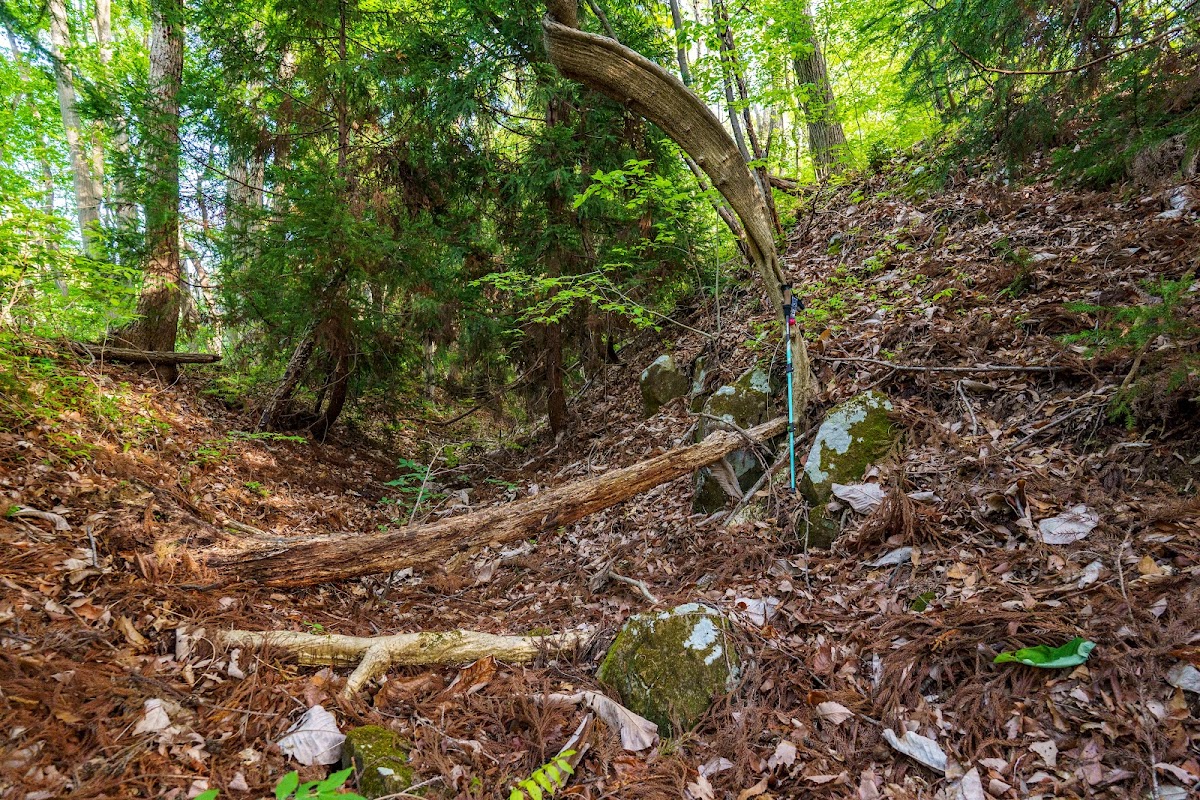
Trenches played a crucial role as defensive structures for the castle. At Ohira Castle, multiple trenches are constructed by cutting across the ridge, limiting enemy incursion routes and facilitating defense.
Cut slopes (artificially carved steep slopes) can also be seen in various places, achieving high defensive capabilities when combined with the natural terrain. These remains are crucial elements for understanding the defensive strategies of hilltop and mountain castles.
Highlights of Ohira Castle
Clearly Preserved Remains
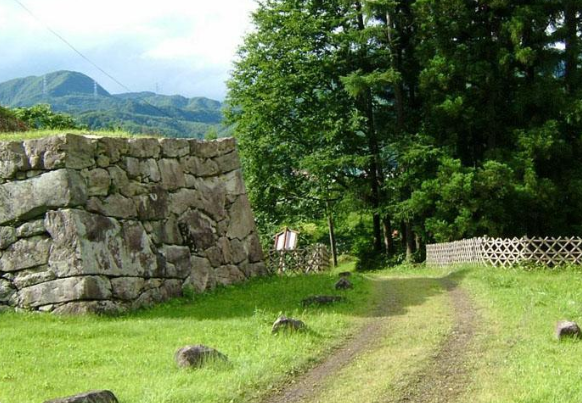
The greatest attraction of Ohira Castle is the opportunity to actually walk around and see the clearly preserved castle remains, even more than 450 years after its construction. Basic structural elements such as earthworks, baileys, and moats are preserved in almost perfect condition, creating an ideal environment for photography and on-site research.
In particular, the earthworks around the main bailey are well-preserved in height and shape, allowing visitors to experience firsthand the castle-building techniques of the Sengoku period. For castle enthusiasts, this will be a valuable opportunity to confirm the actual terrain while comparing it with a castle layout map.
Scenic Viewpoint
The view from the main bailey, at an altitude of 290m, is another attraction of Ohira Castle. On a clear day, you can see the city of Koriyama in Fukushima Prefecture, and in the distance, you can see mountains such as Mount Adatara.
This view is the very same perspective from which the castle’s soldiers once conducted their surveillance, stimulating historical imagination. The scenery is especially beautiful during the seasons of fresh greenery in spring and vibrant autumn foliage.
Coexistence with a Shrine
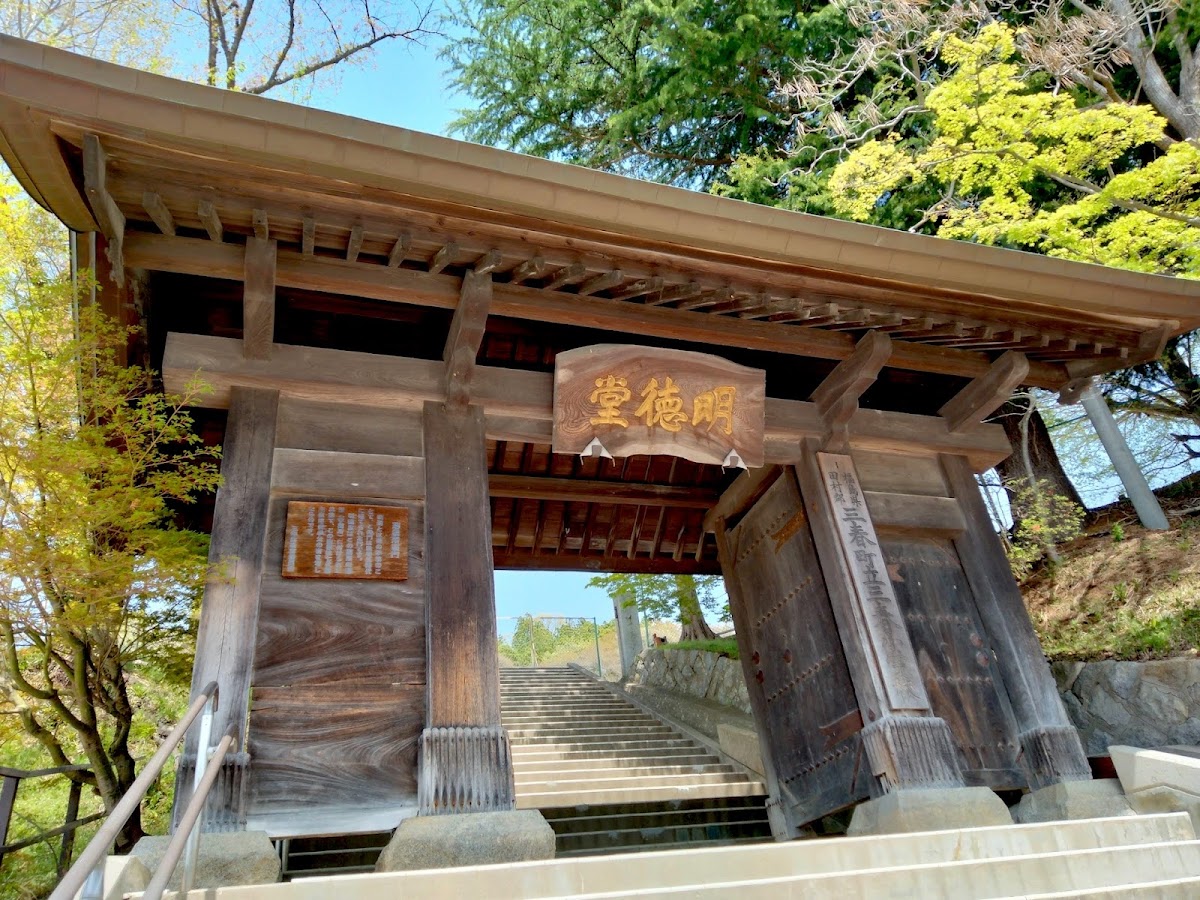
A shrine is enshrined within the castle ruins, serving as a place of local worship. This coexistence of castles and shrines is a common feature of Japanese castle ruins, reflecting the history of the site being cherished by the community even after its abandonment.
The well-maintained access road to the shrine makes the castle ruins relatively easy to access, which is a welcome feature for visitors.
Seasonal Charms
Ōhira Castle displays different expressions in each of the four seasons. Spring brings beautiful fresh greenery, summer is enveloped in deep green, autumn brings vibrant autumn leaves, and winter, snowfall makes the outlines of the remains even clearer.
The period from autumn to winter, when the leaves have fallen, is considered ideal for castle surveys and photography, as the overall layout of the ruins becomes easier to grasp.
Access Information
Location
Address: Maeda, Ohira-machi, Koriyama City, Fukushima Prefecture
Ohira Castle is located northeast of Koriyama City’s urban area and is relatively easy to access.
Access by Car
Access by car is the most convenient. It takes approximately 15-20 minutes from the Koriyama Interchange on the Tohoku Expressway.
A paved road leads almost to the castle ruins, and it is possible to drive up to the area behind the shrine. However, there are narrow sections of the road, so caution is required while driving.
Note: There is information that solar panel installation work was underway as of 2022. It is recommended to check the latest status before visiting.
Access by Public Transportation
If using public transportation, you will need to take a bus or taxi from JR Koriyama Station. However, public transportation to the immediate vicinity of the castle ruins is limited, so access by car is recommended.
Parking
Several parking spaces are available in the area reserved for shrine visitors. However, since this is not an official parking lot, please be considerate of other visitors.
Points to Note When Visiting the Castle
- Attire: As it is a mountain castle, comfortable walking shoes and clothing are essential.
- Season: In summer, take precautions against insects; in winter, take precautions against the cold.
- Equipment: Bring drinks, a map, a camera, etc.
- Safety: Watch your step on steep slopes and around moats.
- Manners: Be respectful on private property and shrine grounds, and always take your trash with you.
Nearby Tourist Attractions
Castles in Koriyama City
If you visit Ohira Castle, we recommend visiting other castle ruins in Koriyama City.
Moriyama Castle: A medieval castle located in the northern part of Koriyama City, with connections to the Date and Tamura clans. Visiting it together with Ohira Castle will help you understand the medieval castle network in this region.
Koriyama Castle: Located near the city center, this castle is the origin of the name Koriyama.
Major Castles in Fukushima Prefecture
Fukushima Prefecture boasts many famous castles, and visiting them along with Ohira Castle is well worthwhile.
Aizu-Wakamatsu Castle (Tsuruga Castle): A representative castle of Fukushima Prefecture, known as the stage of the tragic Byakkotai (White Tiger Corps) during the late Edo period. Its reconstructed keep is beautiful, and it also houses a museum where you can learn about the history of Aizu.
Nihonmatsu Castle: A famous castle located in Nihonmatsu City, its stone walls and reconstructed Minowa Gate are highlights. It has also been selected as one of Japan’s Top 100 Castles.
Miharu Castle: The main castle of the Tamura clan, and an essential castle for understanding Ohira Castle. Located in Miharu Town, Tamura District, Fukushima Prefecture, it retains its stone walls and earthworks.
Tourist Facilities in Koriyama City
Koriyama City Museum of Art: It has a rich collection of Japanese and Western paintings, offering a culturally enriching experience. Kaiseizan Park: A representative park of Koriyama City, also known as a famous cherry blossom viewing spot.
Koriyama City Fureai Science Museum: A science museum with a space theme, its planetarium is popular.
Research and Study of Ohira Castle
Academic Value
Ohira Castle holds significant academic value as a typical example of a medieval castle in the Nakadori region of Fukushima Prefecture. It is indispensable for understanding the network of branch castles of the Tamura clan and provides clues to understanding the realities of regional control during the Sengoku period.
In recent years, castle researchers have been conducting surveys and creating layout maps, and the results are being published in various castle-related books and websites. Many enthusiasts are creating their own layout maps, and it is attracting attention as a subject of castle research.
Status of Cultural Property Designation
Currently, Ohira Castle has not received national or prefectural cultural property designation, but it is recognized as a local historical heritage site. Further detailed investigations may lead to cultural property designation in the future.
Challenges in Preservation and Utilization
While the state of preservation of Ohira Castle is relatively good, continuous management is necessary for long-term preservation. Recent development (such as the installation of solar panels) has raised concerns about the impact on some of the remains.
Preservation activities by local residents and castle enthusiasts, as well as appropriate utilization as a tourist resource, are future challenges.
How to Enjoy Visiting Ohira Castle
Bring a Castle Layout Map
To fully enjoy Ohira Castle, we recommend obtaining and bringing a castle layout map beforehand. By comparing homemade layout maps available online or diagrams in castle-related books with the actual terrain while walking, you can gain a deeper understanding of the castle’s structure.
Photography Tips
Ohira Castle is a castle ruin well-suited for photography. You can enjoy taking photos from various angles, capturing the cross-sections of the earthworks, the depth of the moats, and the expanse of the baileys.
Especially during the leaf-falling season from autumn to winter, the outlines of the remains are clearly visible in photographs, making it ideal for documentary photography. A photograph of the view from the main enclosure will also make a memorable souvenir of your visit.
Historical Walking Course
In addition to visiting Ohira Castle alone, we recommend creating a historical walking course that combines it with surrounding castle ruins and historical sites. Setting a theme, such as a route visiting castles related to the Tamura clan or a route visiting castles in the Nakadori region of Fukushima Prefecture, will allow you to enjoy a more fulfilling castle tour.
Interaction with the Local Community
When visiting castle ruins, it’s important to interact with the local people. You might hear local legends or little-known historical episodes. Observing good manners and showing respect for the community will contribute to the continued preservation of the castle ruins.
Summary
Ohira Castle (Koriyama City, Fukushima Prefecture) is a valuable medieval castle, a mountain castle at an altitude of 290m and a relative height of 60m, with well-preserved remains such as earthworks, enclosures, and moats. It played an important role as a branch castle of the Tamura clan during the Sengoku period, and even today, remains that evoke its appearance at that time can be seen.
Ohira Castle, which holds a crucial position in understanding the castle history of the Nakadori region of Mutsu Province, is a historical site worth visiting not only for castle enthusiasts but for anyone interested in history. When visiting Koriyama City in Fukushima Prefecture, be sure to stop by Ohira Castle and experience the atmosphere of the Sengoku period.
Nearby, there are many other fascinating castles, such as Aizu-Wakamatsu Castle, Nihonmatsu Castle, and Moriyama Castle. Why not use Ohira Castle as a starting point to enjoy a journey exploring Fukushima Prefecture’s rich castle culture?