Imai Castle (Ome City, Tokyo) Complete Guide | History, Remains, and Access Explained in Detail
What is Imai Castle?
Imai Castle is a medieval hilltop castle located in Imai 1-chome, Ome City, Tokyo. It is known as the residence of the Imai clan, who originated from the Kodama clan, one of the seven clans of Musashi Province, and is currently protected as a designated historical site by Ome City.
It is built on the eastern end of a tongue-shaped plateau extending eastward along the Kasumi River, 4-5 meters higher than the surrounding residential area, with a relative height of approximately 10 meters. Remains extend over an area of approximately 120 meters east-west and 75 meters north-south, covering a total area of approximately 8,500 square meters.
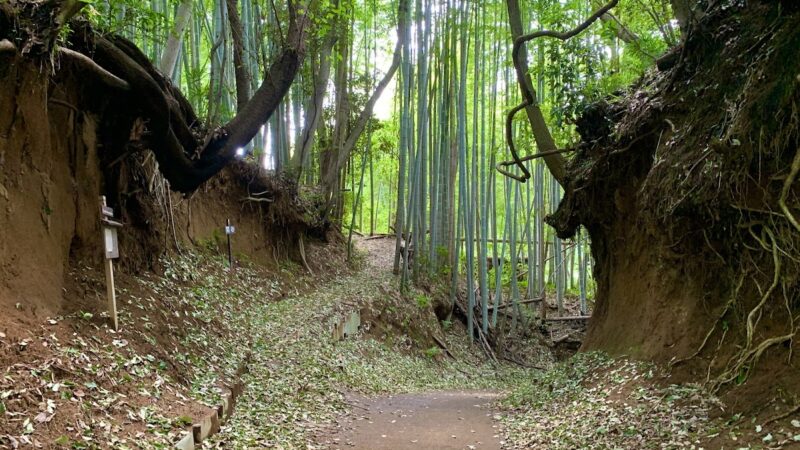
Despite being located within a residential area, the central part of the castle is well-preserved, and remains such as earthworks, baileys, moats, dry moats, and gates are clearly visible. While not developed as a castle park, the moat bottoms are regularly mowed, making it easily accessible for visitors.
Basic Information on Imai Castle
Location: Imai 1-chome, Ome City, Tokyo
Former Province: Musashi Province
Castle Structure: Hilltop Castle
Construction Period: Details unknown (estimated to be from the Kamakura period to the Nanboku-cho period)
Builder: Imai clan
Lord: Imai Shirozaemonjo Tsuneie and successive generations of the Imai clan
Year of Abandonment: Around 1590 (Tensho 18)
Remains: Earthworks, baileys, moats, dry moats, gate
Cultural Property Designation: Ome City Designated Historic Site (Designated November 3, 1953)
Relative Height: Approximately 10 meters
Nearest Station: JR Hachiko Line Kaneko Station (approximately 20-minute walk)
History of Imai Castle
The Origins and Construction of the Castle by the Imai Clan
The Imai clan, who were the lords of Imai Castle, are believed to have originated from the Kodama clan, one of the seven powerful warrior clans of Musashi Province. The seven powerful warrior clans of Musashi Province were a collective term for samurai groups that held influence in Musashi Province from the late Heian period to the Kamakura period, and the Kodama clan was a particularly influential family among them.
The exact date of the castle’s construction is unclear due to a lack of historical documents. However, an archaeological excavation conducted by the Ome City Board of Education in 1967 unearthed numerous artifacts, including stone steles, tombstones, Kaiyuan Tongbao coins, celadon porcelain, and Seto ware porcelain dating from 1312 to 1522, confirming that it was a medieval castle that functioned from the late Kamakura period to the Sengoku period.
Developments in the Muromachi Period
The “Musashi Meisho Zue” (Illustrated Guide to Famous Places in Musashi Province) records that the site of the “old residence” was the location of Imai Shirozaemonjo Tsuneie’s home. Imai Tsuneie, as the head of the Imai clan, maintained his power base in this region.
The Uesugi Zenshu Rebellion, which occurred in 1416 (Oei 23), had a significant impact on the Imai clan’s fate. In this rebellion, led by Kanto Kanrei Uesugi Ujinori (Zenshu) against Kamakura Shogun Ashikaga Mochiuji, the Imai clan is believed to have sided with Zenshu. The rebellion ended in Zenshu’s defeat, and the Imai clan suffered the confiscation of their territories.
However, the Imai clan did not completely perish; despite losing their territories, they managed to maintain a small lineage. During this period, the Mita clan rose to prominence around Ome, and the Imai clan’s influence is thought to have significantly declined.
The Sengoku Period and the Hojo Clan’s Rule
With the start of the Sengoku period, the Kanto region became the sphere of influence of the Later Hojo clan, based in Odawara. The Imai clan, like many other local lords in Musashi Province, was incorporated under the Hojo clan’s control.
During the Tensho era (1573-1592), the Imai clan is said to have been destroyed by the Hojo clan. While the detailed circumstances are unclear, it is believed that the Imai lineage died out around this time.
In 1590, Toyotomi Hideyoshi’s siege of Odawara led to the downfall of the Later Hojo clan, and Imai Castle was abandoned. From this point onward, Imai Castle lost its function as a military facility and disappeared from the historical stage.
Layout and Structure of Imai Castle
Overall Structure
Imai Castle is located on the eastern end of a tongue-shaped plateau extending eastward along the Kasumigawa River. Its layout, which skillfully utilizes this terrain, has been noted for its similarities to Katakura Castle (Hachioji City, Tokyo) and Kozukue Castle (Yokohama City, Kanagawa Prefecture), and shares characteristics common to castles in Musashi Province during the same period.
The castle grounds measure approximately 120 meters east-west and 75 meters north-south, making it a relatively small fortress, but its defensive features are well-developed. Surrounded by a deep dry moat and surrounded by earthen ramparts, it created a robust defensive system despite its small size.
Layout of Enclosures
At the center of the castle is what is believed to be the main enclosure, surrounded by several smaller enclosures. Each enclosure is demarcated by earthen ramparts and connected through entrances (koguchi).
The layout of the enclosures follows the topography of the plateau, making maximum use of the natural terrain. This type of structure is typical of medieval castles, demonstrating ingenuity in constructing effective defensive facilities with limited manpower.
Moats and Earthen Ramparts
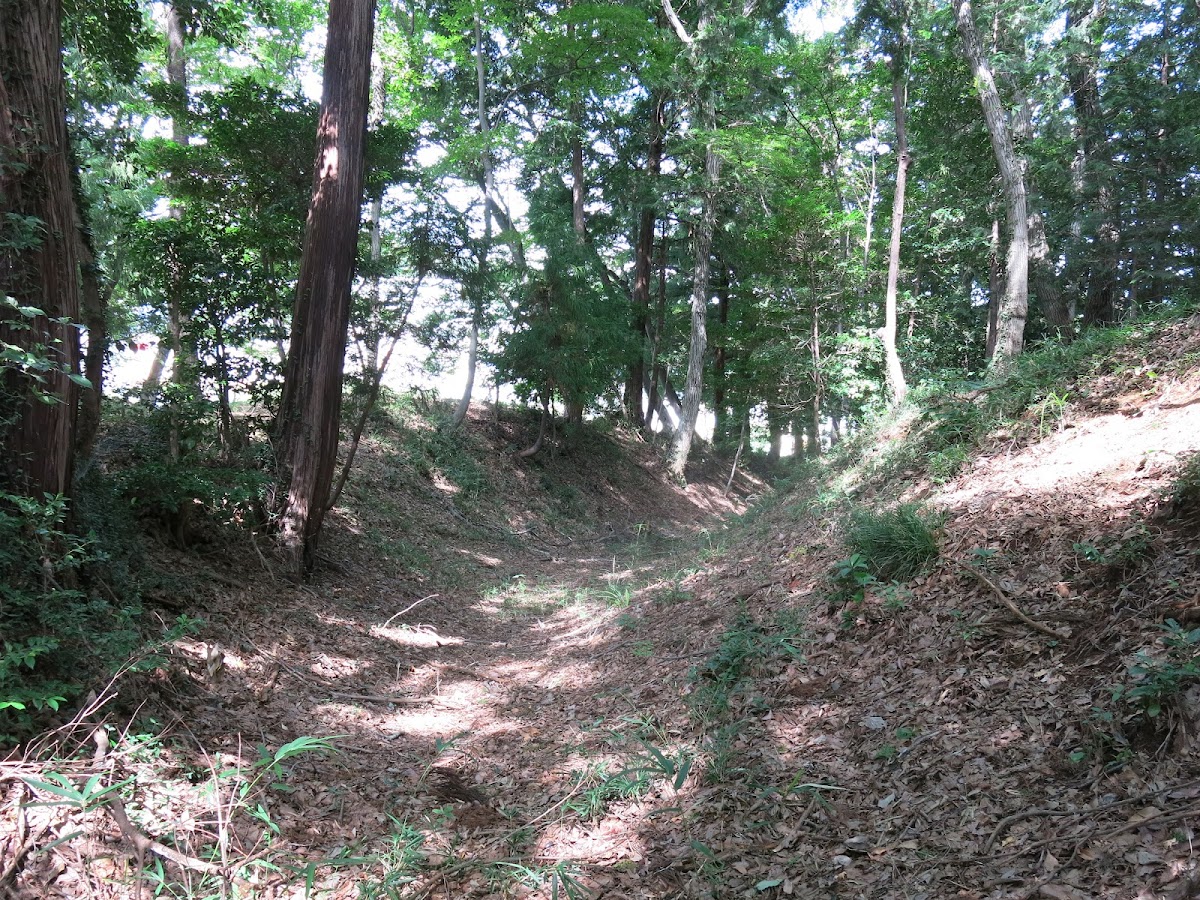
The greatest highlight of Imai Castle is its well-preserved dry moats and lateral moats. The dry moats, in particular, retain their depth, allowing visitors to appreciate the scale of the defensive facilities at the time. The bottom of the moats is relatively neatly mowed, allowing for a clear observation of their shape.
Earthen ramparts remain in various places, and are particularly clearly visible around the main enclosure. While the height of the ramparts varies depending on the location, it is evident that they possessed a sufficient scale as defensive structures.
Entrance Gate
The entrance gate (koguchi) to the castle has also been identified. The entrance gate was not merely an opening, but incorporated defensive features designed to prevent enemy intrusion.
Excavation and Unearthed Artifacts
In 1967 (Showa 42), the Ome City Board of Education conducted two archaeological excavations. These excavations yielded important results that scientifically supported the historical value of Imai Castle.
Unearthed Stone Steles and Tombstones
The excavations unearthed numerous stone steles and tombstones dating from 1312 (Showa 1) to 1522 (Daiei 2). These stone steles are memorial towers widely produced in the Kanto region from the Kamakura period to the Muromachi period, and provide important evidence that Imai Castle was continuously used throughout the medieval period.
Ceramics
Celadon and Seto porcelain have been unearthed, suggesting a high standard of living for the castle lord. These ceramics were considered luxury items at the time, indicating the Imai clan possessed a certain degree of economic power.
Coins
Coins such as Kaiyuan Tongbao have also been discovered, confirming the prevalence of a monetary economy. These are valuable resources for understanding economic activity in Musashi Province during the medieval period.
Highlights of Imai Castle
Well-Preserved Remains
The greatest appeal of Imai Castle is the clear preservation of its remains despite being located within a residential area. The dry moats and earthworks, in particular, are remarkably well-preserved, making them extremely valuable for understanding the structure of medieval castles.
While not developed as a castle park, the site is well-maintained by local residents, with minimal undergrowth, making it easy to visit.
Stone Walls and Bamboo Grove
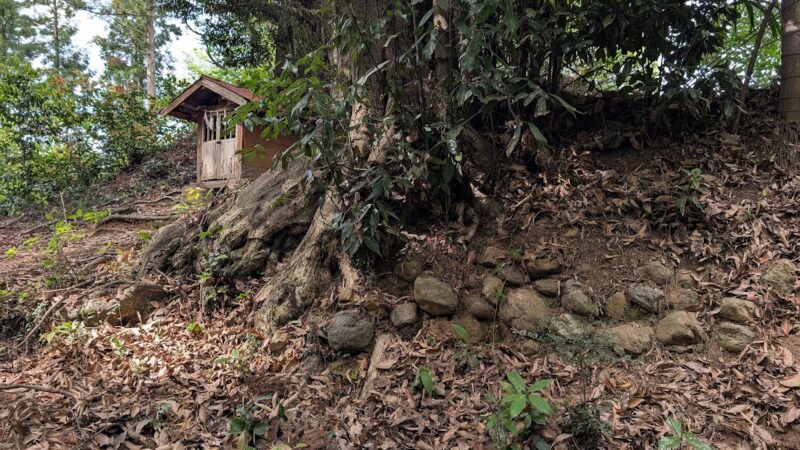
Some stone walls remain, creating a historical atmosphere along with the bamboo grove. The presence of stone walls, unusual for a medieval castle, may tell the story of the castle’s renovation history.
Location relative to Mihashira Shrine
Imai Castle is located approximately 100 meters west of Mihashira Shrine. Its location relative to the shrine is an interesting factor when considering the relationship between medieval castles and religious beliefs.
Relationship with surrounding castles
Castles within Ome City
In addition to Imai Castle, several other medieval castles exist within Ome City. These include Katsunuma Castle, Fujihashi Castle, Karagaki Castle, and Ontake Castle, and it is believed that these castles, interconnected, formed the defense system of the region.
Negoya Castle and Nakayama Ienori Residence
Nearby are the remains of castles such as Negoya Castle and Nakayama Ienori Residence, forming an important group of ruins for understanding the location of medieval samurai bases in western Musashi Province.
Similarities with Katakura Castle and Kozukue Castle
As mentioned above, the structure of Imai Castle has been noted to be similar to that of Katakura Castle and Kozukue Castle. These castles demonstrate the commonalities in castle construction techniques prevalent in Musashi Province during the same period, making them noteworthy in castle research.
Access
Access by Train
Nearest Station: JR Hachiko Line “Kaneko Station”
Approximately a 20-minute walk from Kaneko Station. Exit the station and head southwest, crossing the Kasumigawa River towards the Imai district of Ome City. Using the Mihashira Shrine as a landmark will make it easier to find.
Note that while Kaneko Station is located in Iruma City, Saitama Prefecture, Imai Castle is in Ome City, Tokyo, so access involves crossing the prefectural border.
Access by Car
Approximately 15 minutes from the Ken-O Expressway “Ome IC”. However, the area around the castle ruins is residential, so there is no dedicated parking. Please avoid street parking and use nearby paid parking lots to be considerate of local residents.
Points to Note When Visiting
Since Imai Castle Ruins are located within a residential area, please observe the following points when visiting:
- Be extremely careful of noise and trespassing on private property, as it is a residential area.
- Absolutely avoid parking on the street.
- Always take your trash with you.
- View the ruins carefully to avoid damaging them.
- Avoid visiting early in the morning or late at night.
Cultural Property Designation of Imai Castle
Imai Castle was designated a historical site of Ome City on November 3, 1953. This officially recognized it as a valuable medieval castle ruin and made it subject to protection.
The designation as a city-designated historical site plays an important role in protecting the region’s historical heritage and passing it on to future generations. In the case of Imai Castle, the preservation of the central part of the castle amidst ongoing residential development is largely due to this cultural property designation and its subsequent protection.
Current Status and Challenges of Imai Castle Research
Lack of Documentary Materials
The biggest challenge regarding Imai Castle is the extreme scarcity of documentary materials. Only a brief description exists in the “Musashi Meisho Zue” (Illustrated Guide to Famous Places in Musashi Province), and the construction date, detailed genealogy of the castle lords, and specific battle records remain unclear.
Results of Archaeological Excavations
The archaeological excavation in 1967 yielded significant results, but no large-scale investigations have been conducted since. Further detailed investigations in the future may reveal more about the true nature of Imai Castle.
Layout Research
Castle researchers have made progress in creating and analyzing layout maps, and the structure of Imai Castle is relatively well understood. Detailed layout maps by researchers such as Mr. Yogo are valuable resources for understanding Imai Castle.
Preservation and Utilization of Imai Castle
Current State of Preservation
Despite being located in a residential area, the central remains of Imai Castle are well preserved. This can be attributed to the understanding and cooperation of local residents and the cultural property protection administration of Ome City.
Future Challenges
On the other hand, the site has not been developed as a castle park, and information boards and explanatory signs are limited. To widely recognize its value as a historical heritage site and to ensure its proper preservation and utilization, more proactive efforts are needed.
Potential as a Regional Resource
Imai Castle is a valuable historical heritage site in Ome City and can serve as important educational material for learning about local history. It holds various possibilities, including use in school education and lifelong learning programs, and development as a tourist resource.
Summary
Imai Castle is a valuable medieval castle ruin remaining in Ome City, Tokyo. Built by the Imai clan, a branch of the Kodama clan (one of the seven Musashi clans), it functioned from the Kamakura period to the Sengoku period and was abandoned around 1590.
Despite being located within a residential area, the remains of earthworks, baileys, moats, and dry moats are clearly preserved, making it extremely valuable for understanding the structure of medieval castles. Excavations in 1967 unearthed stone steles and ceramics dating from 1311 to 1522, scientifically confirming the castle’s historical value.
Located about a 20-minute walk from Kaneko Station on the JR Hachiko Line, Imai Castle is relatively easy to access and a historical site worth visiting for castle enthusiasts and history buffs. However, since it is located within a residential area, it is important to be considerate of local residents and observe proper etiquette when visiting.
Imai Castle is a valuable historical heritage site that conveys the activities of medieval samurai groups in western Musashi Province, and it is a cultural asset that should be carefully preserved for future generations.