Complete Guide to Fuse Tenjin-yama Castle (Tottori City) | History, Highlights, and Access Information
What is Fuse Tenjin-yama Castle?
Fuse Tenjin-yama Castle is a Sengoku period mountain castle site located in the Fuse district of Tottori City, Tottori Prefecture. Built on Mt. Tenjin, approximately 180 meters above sea level, this castle played a significant role as an important military base in Inaba Province (present-day eastern Tottori Prefecture) during the turbulent Sengoku period.
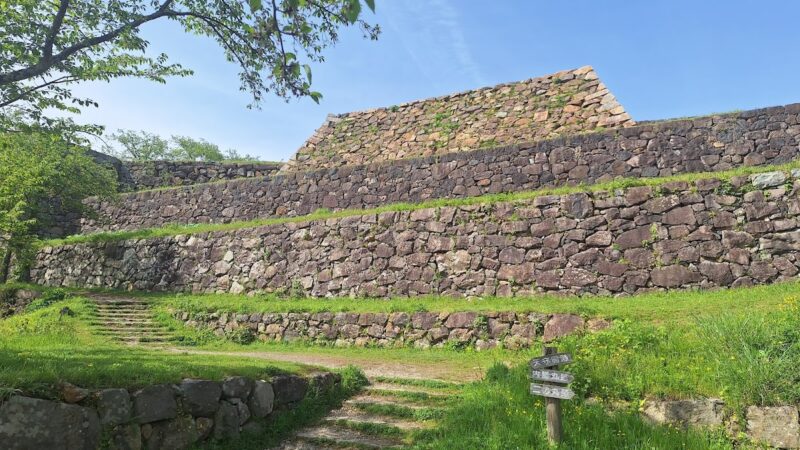
Currently, the remains are well-preserved, making it a historical site that attracts attention from castle enthusiasts and history buffs. Despite being relatively close to Tottori city center, it is a valuable cultural asset that vividly preserves the appearance of a mountain castle from that era.
Basic Information on Fuse Tenjin-yama Castle
- Location: Fuse, Tottori City, Tottori Prefecture
- Castle Classification: Mountain Castle
- Construction Period: Sengoku Period (around the 16th century)
- Elevation: Approximately 180 meters
- Relative Height: Approximately 100 meters
- Remains: Enclosures, moats, earthworks, vertical moats, etc.
- Designation: Tottori City Designated Historic Site (Confirmation Required)
History of Fuse Tenjin-yama Castle
Background of Construction and Inaba Province in the Sengoku Period
During the Sengoku period, when Fuse Tenjin-yama Castle was built, Inaba Province was a turbulent region where multiple forces vied for supremacy. This region was a crucial transportation hub connecting San’in and Sanyo, and its important geographical location facing the Sea of Japan gave it extremely high strategic value.
In 16th-century Inaba Province, a complex political situation unfolded, with local lords maintaining their power while simultaneously being influenced by powerful neighboring forces such as the Amago clan (Izumo), the Mori clan (Aki), and later the Oda clan.
Castle Lords and Changes
While details about the specific lords of Fuse Tenjin-yama Castle are unclear due to limited historical records, it is believed to have been built and maintained by local lords of Inaba Province.
The Yamana clan had long reigned as the shugo (provincial governor) of Inaba Province, but lost real power during the Sengoku period, and local lords became the de facto rulers. It is presumed that influential local figures in the Fuse region built this mountain castle as a defensive base.
Turmoil and Abandonment of the Castle during the Tensho Era
During the Tensho era (1573-1593), Inaba Province underwent a major period of transformation. As Oda Nobunaga’s power expanded and Hashiba Hideyoshi (later Toyotomi Hideyoshi) advanced his conquest of the Chugoku region, Inaba Province also became a battleground.
The siege of Tottori Castle in 1581 is particularly famous, as Hideyoshi’s siege tactics of starvation led to the castle’s fall. During this period, surrounding mountain castles, including Fuse Tenjin-yama Castle, are thought to have played a strategic role.
With the advent of the Edo period, many mountain castles were abandoned due to the “One Castle Per Province” decree, and it is presumed that Fuse Tenjin-yama Castle ceased its role as a military facility around this time.
Layout and Remains of Fuse Tenjin-yama Castle
Castle Structure and Layout
Fuse Tenjin-yama Castle is a typical mountain castle built around the summit of Mount Tenjin. It skillfully utilizes the natural terrain while possessing a structure well-suited for defense.
Main Components:
- Main Enclosure (Honmaru): The central part of the castle located on the mountaintop.
- Secondary Enclosures: Multiple enclosures arranged to surround the main enclosure.
- Moat: A defensive structure blocking the ridge.
- Vertical Moat: A moat dug vertically into the slope.
- Earthwork: An earthen defensive wall surrounding the enclosure.
Characteristics of the Main Enclosure (Honmaru)
The main enclosure is located on the mountaintop of Tenjin-yama and functioned as the central part of the castle. A relatively flat space was secured, suggesting that the lord’s residence and command post were located there.
Traces of earthworks can be seen around the main enclosure, indicating that it was well-defended. Furthermore, the main enclosure offered a view of the Fuse district and surrounding areas, suggesting it also served a surveillance and vigilance function.
Moats and Vertical Moats
The moats and vertical moats are particularly noteworthy defensive features of Fuse Tenjin-yama Castle.
Moats are ditches dug to cut across ridges, serving as an important defensive line to prevent enemy intrusion. At Fuse Tenjin-yama Castle, multiple moats are located along the ridge leading to the main enclosure, demonstrating a multi-layered defensive strategy.
Vertical moats are moats dug vertically along slopes, preventing enemies from climbing the slopes. At Fuse Tenjin-yama Castle, vertical moats are positioned around the main enclosures, a design intended to prepare for attacks from all directions.
Arrangement of Enclosures
Around the main enclosure, multiple enclosures (flat areas) are arranged in a stepped pattern. These enclosures are thought to have been used as garrisons for soldiers and storage areas for supplies.
The arrangement of the enclosures reveals the ingenuity of the castle builders in maximizing the limited space on the mountaintop. Furthermore, the layout of each enclosure allows for mutual support, indicating an efficient defensive system.
Approach to the Castle and Entrance
The approach to the castle was designed with defense in mind, being winding rather than straight. This structure reduced the attacker’s momentum and gave the defenders an advantage.
The entrance (koguchi) was a weak point of the castle and was therefore heavily fortified. At Fuse Tenjin-yama Castle, earthworks and moats were placed around the entrance, leaving traces of reinforced defenses.
Highlights of Fuse Tenjin-yama Castle
Well-Preserved Remains
The greatest appeal of Fuse Tenjin-yama Castle is its well-preserved appearance as a Sengoku period mountain castle. Because it was untouched by development, the original layout has been preserved almost exactly as it was when it was built.
In particular, the moats and vertical trenches are clearly visible, allowing visitors to appreciate the castle-building techniques of the Sengoku period. For those interested in castles, this is a valuable place to observe textbook-worthy remains.
Views and Scenery
The view from the main enclosure is one of the highlights of Fuse Tenjin-yama Castle. You can see the entire Fuse district of Tottori City, and on a clear day, you can see the Sea of Japan and the surrounding mountains.
While this excellent view was important for military surveillance, it also offers modern visitors a wonderful scenic spot to enjoy.
Harmony with Nature
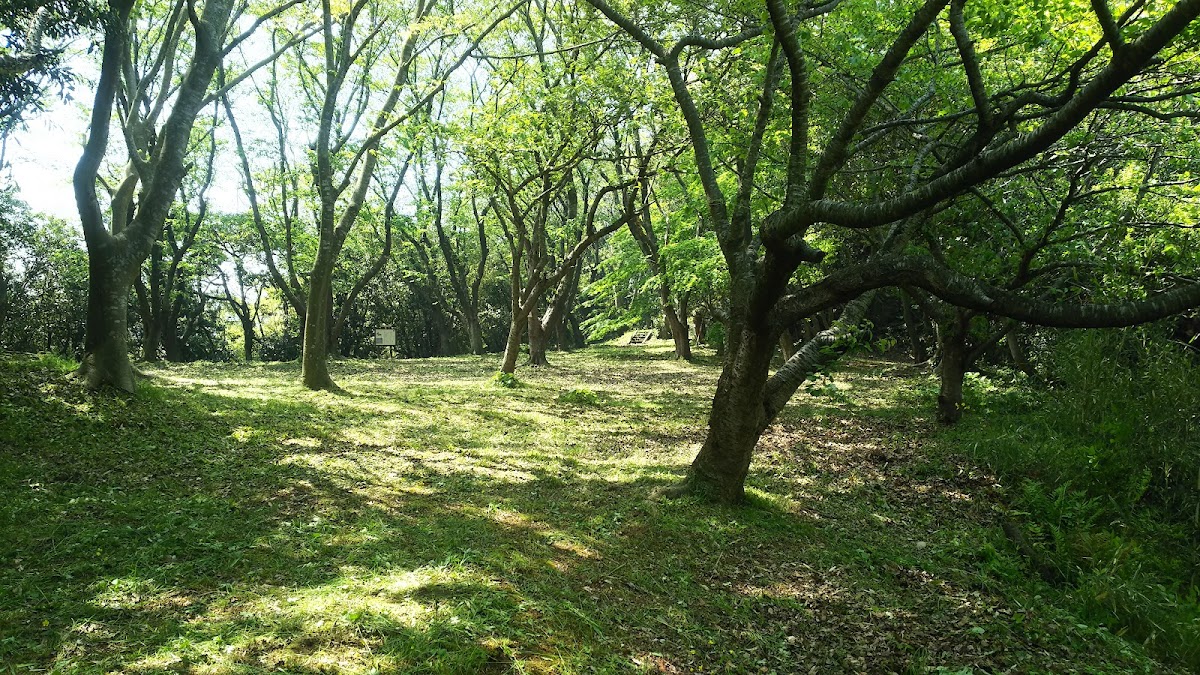
Fuse Tenjin-yama Castle is located in a rich natural environment. You can enjoy the changing seasons, from fresh greenery in spring to vibrant autumn leaves, while strolling through the castle ruins.
The tranquil atmosphere unique to mountain castles, combined with the opportunity to reflect on history while enjoying nature, is a unique charm of Fuse Tenjin-yama Castle.
Access to Fuse Tenjin-yama Castle
Access by Public Transportation
By JR Train:
- Get off at Tottori Station on the JR San’in Main Line.
- Take a local bus from Tottori Station towards Fuse.
- Walk from the nearest bus stop to the castle entrance.
Access by public transportation is somewhat inconvenient, so we recommend checking the bus timetable in advance.
Access by Car
From Tottori City Center:
- Head south on National Route 53 from central Tottori City.
- Approximately 15 minutes towards the Fuse area.
- There may be parking spaces near the castle entrance, but prior confirmation is necessary.
By Expressway:
- Approximately 20 minutes from Tottori IC on the Tottori Expressway.
- Take National Route 53 towards Fuse.
Parking Information
Fuse Tenjin-yama Castle may not have its own dedicated parking lot. We recommend checking Tottori City’s tourist information or local information before visiting. Please avoid parking on the street, as this inconveniences local residents. Please secure a suitable parking space before visiting the castle.
Points to Note When Visiting the Castle
- Clothing and Equipment: As it is a mountain castle, comfortable walking shoes and clothing are essential.
- Season: In summer, insect repellent is necessary; in winter, warm clothing is required.
- Drinking Water: There are no vending machines in the mountains, so please bring your own drinking water.
- Time: Allow approximately 1-2 hours for the round trip to the castle.
- Weather: The ground can become slippery in rainy weather, so visiting on a sunny day is recommended.
Fuse Tenjin-yama Castle and Surrounding Historical Sites
Relationship with Tottori Castle
Fuse Tenjin-yama Castle is located approximately 10 kilometers southeast of Tottori Castle, which was the central castle of Inaba Province. It is possible that it played a supporting role to Tottori Castle.
Tottori Castle is a large-scale castle built on Mount Hisamatsu and is currently designated as a national historic site. Visiting it together with Fuse Tenjin-yama Castle will give you a deeper understanding of the castle network of Inaba Province.
Surrounding Mountain Castles
Besides Fuse Tenjin-yama Castle, many other mountain castle ruins remain around Tottori City.
- Karigane-yama Castle: A mountain castle located in Kofu-cho, Tottori City
- Maruyama Castle: A mountain castle ruin within Tottori City
- Taiko-ga-hira: The location where Hashiba Hideyoshi established his headquarters during the siege of Tottori Castle
Visiting these castle ruins will give you a more comprehensive understanding of the military situation in Inaba Province during the Sengoku period.
History of the Fuse Area
The Fuse area has long been one of the important regions of Inaba Province. Although it has now developed as a commuter town for Tottori City, many historical legacies remain.
When visiting Fuse Tenjin-yama Castle, visiting the surrounding shrines, temples, and historical sites will allow you to gain a deeper understanding of the region’s history.
Preservation and Utilization of Fuse Tenjin-yama Castle
Current Situation and Challenges
While Fuse Tenjin-yama Castle’s remains are well-preserved due to its escape from development, some aspects of its maintenance are insufficient.
Creating an environment where visitors can safely and comfortably view the castle, such as improving the access routes and installing information boards, is a future challenge. Furthermore, continuous preservation and management of the remains is necessary.
Local Initiatives
Tottori City and local history enthusiast groups are working to raise awareness of the value of Fuse Tenjin-yama Castle.
Through regular tours and cleaning activities, efforts are underway to preserve and utilize the castle as a regional historical heritage site.
Potential as a Tourism Resource
In recent years, interest in castle tourism and historical tourism has been growing. Fuse Tenjin-yama Castle holds great potential as a new tourism resource for Tottori City.
Various uses are conceivable, such as developing sightseeing routes that combine the castle with existing tourist attractions like Tottori Castle and Tottori Sand Dunes, or conducting specialized guided tours for history enthusiasts.
Things to Know Before Visiting Fuse Tenjin-yama Castle
Tips for Visiting Mountain Castles
Visiting mountain castles requires special preparation and mindset, different from visiting flatland castles or hilltop castles.
Basic Tips:
- Physical Fitness: Since it involves some mountain climbing, please consider your own physical fitness.
- Time: Plan a schedule with ample time.
- Safety: Avoid going alone; if possible, visit with multiple people.
- Manners: When passing through private property, remember to be considerate of landowners.
- Environmental Protection: Always take your trash with you and protect the natural environment.
Recommended Time to Visit
The best time to visit Fuse Tenjin-yama Castle is spring (April-May) and autumn (October-November).
Spring (April-May):
- Beautiful fresh greenery and mild weather
- Suitable temperatures for hiking
- Flowers in bloom, perfect for enjoying nature
Autumn (October-November):
- Beautiful autumn foliage
- Fewer insects and more comfortable
- Clear air and excellent views
Summer is hot and insect-heavy, so adequate precautions are necessary. Winter is suitable for experienced hikers due to the possibility of snow and ice.
Useful Items to Bring
- Trekking Shoes: Shoes that are non-slip and support the ankles
- Gloves: Useful for gripping tree branches, etc.
- Hat: Protect your head from the sun and branches
- Towel: For wiping away sweat
- Drinking Water: Bring a sufficient amount
- Snacks: Light snacks for energy replenishment
- Insect Repellent Spray: Essential, especially from spring to autumn
- Camera: For recording ruins and scenery
- Map and Compass: To avoid getting lost
- First Aid Kit: In case of injury
To Enjoy the Charms of Fuse Tenjin-yama Castle to the Fullest
Recommendation for Pre-Visit Study
Before visiting Fuse Tenjin-yama Castle, learning about the history of Inaba Province during the Sengoku period and basic knowledge of mountain castles will make your visit more fulfilling.
Learning Points:
- Sengoku Period History of Inaba Province: The Relationship between the Yamana, Amago, Mori, and Oda Clans
- Structure of Mountain Castles: Terminology and Function of Enclosures, Moats, and Vertical Moats
- Castle Construction Techniques: Characteristics of Castle Construction Techniques in the Sengoku Period
- Siege of Tottori Castle: Hideyoshi’s Siege in 1581
Photography Tips
Fuse Tenjin-yama Castle offers the following photography opportunities:
- Moat: The clearly remaining moat is an excellent photo spot.
- View from the Main Enclosure: Scenery of the Fuse area and surrounding areas.
- Vertical Moat: The appearance of the vertical moat carved into the slope.
- Earthwork: Cross-section of the earthwork surrounding the enclosure.
- Harmony with Nature: Landscape woven from the ruins and nature.
Interacting with Locals
The people of the Fuse area are proud of their local history. If you encounter locals during your visit, it’s a good idea to exchange greetings and, if possible, ask them about the history of the region.
You may hear information unique to locals, or legends not found in historical documents.
Summary: The Historical Value of Fuse Tenjin-yama Castle
Fuse Tenjin-yama Castle is a valuable historical site that conveys the history of the region to the present day, as an important military base in Inaba Province during the Sengoku period.
The well-preserved remains of Fuse Tenjin-yama Castle serve as a living textbook, conveying the castle-building techniques and strategic thinking of the time to the present day, and hold significant value in castle research. Furthermore, as a place to learn about history in a rich natural environment, it also possesses considerable educational significance.
When visiting Tottori City, be sure to visit Fuse Tenjin-yama Castle. The time spent reflecting on the Sengoku period in the quiet mountains will surely be an unforgettable experience.
Fuse Tenjin-yama Castle may not be flashy, but it is a place where you can feel the weight of true history. It is a recommended historical site not only for castle enthusiasts, but also for those interested in history and those who enjoy nature walks.
Fuse Tenjin-yama Castle, a hidden historical treasure of Tottori Prefecture. Please see its charm for yourself.