Complete Guide to Tsuzurao Castle | A Thorough Explanation of its History and Highlights in Tottori City
What is Tsuzurao Castle?
Tsuzurao Castle was a hilltop castle located in Takakusa District, Inaba Province (present-day Kanazawa, Tottori City, Tottori Prefecture). Also known as Yoshioka Castle and Kameyama Castle, it was built on a hill 39 meters above sea level and 34 meters above ground, jutting out from the western shore of Lake Koyama, Japan’s largest lake.
This castle was built in 1579 by Yoshioka Shogen Sadakatsu, a powerful local lord of Inaba Province. Although it was a short-lived castle, falling and being abandoned just two years later in 1581 during Hashiba Hideyoshi’s invasion of Inaba, it is known as a castle that played an important role in the history of the Sengoku period.
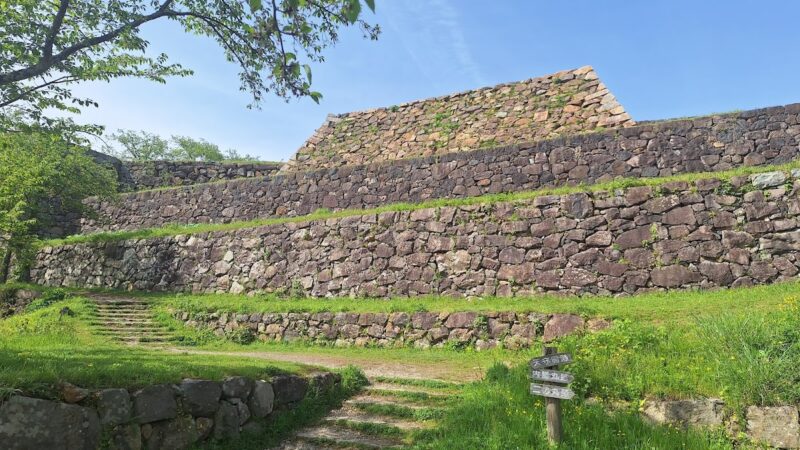
Currently, the castle ruins have been developed into Koyamaike Park, a place of recreation for citizens. However, the remains of the main keep, second bailey, and third bailey are well-preserved, conveying the atmosphere of the Sengoku period.
History of Bōkio Castle
Background of Construction and the Yoshioka Clan
Bōkio Castle was built in 1579 (Tenshō 7), a time of fierce conflict between Oda Nobunaga and Mōri Terumoto in the Chūgoku region. Yoshioka Sadakatsu, a local lord of Inaba Province, was a powerful warlord in the region, siding with the Mōri clan and maintaining his power while maintaining relations with the Yamana clan, whose base was Tottori Castle.
The Yoshioka clan were local lords who had ruled this region for generations. Yoshioka Shōgen Sadakatsu built Bōkio Castle at a strategic point on the western shore of Lake Koyamaike, strengthening its defenses from both land and sea. The terrain, utilizing Lake Koyamaike as a natural moat, held extremely important military value.
The Siege of Tottori Castle in 1581
Bōkio Castle first appears on the historical stage during Hashiba Hideyoshi’s invasion of Inaba Province in 1581. Hideyoshi, acting on orders from Oda Nobunaga, was advancing his conquest of the Chūgoku region and besieged Tottori Castle, a strategic point in Inaba Province.
At this time, Yoshioka Shōgen Sadakatsu, along with his younger brother Yoshioka Ukon, holed up in Bōkio Castle, threatening the rear of Hideyoshi’s army besieging Tottori Castle. For Hideyoshi’s army, capturing Bōkio Castle was essential to securing supply lines and cutting off communication with the Mōri clan.
The Three Attempts and the Story of the Capture of the Thousand Gourd
Hashiba Hideyoshi launched three forceful attacks to capture Bōkio Castle. However, due to Yoshioka Shōgen’s skillful tactics and defense utilizing the terrain, Hideyoshi’s army suffered the humiliation of being repelled three times.
One particularly famous anecdote concerns the “capture of the Senari Hyotan” (thousand gourd) during the major offensive in July. Yoshioka Shogen and his younger brother, Yoshioka Ukon, not only met Hideyoshi’s army but also launched a counterattack, achieving the remarkable feat of capturing the Senari Hyotan battle standard that Hideyoshi had displayed as a symbol of his military achievements. This standard was a symbol of Hideyoshi’s authority, and its capture greatly shocked Hideyoshi’s army.
Hideyoshi also attempted an attack from Lake Koyama using his navy, but he was unable to capture the castle by force due to the Yoshioka clan’s versatile tactics.
Fall and Abandonment of the Castle
Ultimately, Bōkio Castle did not fall by force, but surrendered following the fall of Tottori Castle. In October of Tenshō 9 (1581), when Tottori Castle fell due to Hideyoshi’s siege and subsequent cutoff of supplies, the isolated Bōkio Castle lost its strategic value, and the Yoshioka clan surrendered. According to one theory, it was captured by Kamei Korenori, who sided with Hideyoshi after the fall of Tottori Castle.
After its fall, Bōkio Castle was abandoned and never rebuilt. Although its existence was short, lasting only two years, it left its mark on Sengoku period history as a castle that played an important role in Hideyoshi’s campaign against the Chūgoku region.
Structure of Bōkio Castle
Layout and Arrangement
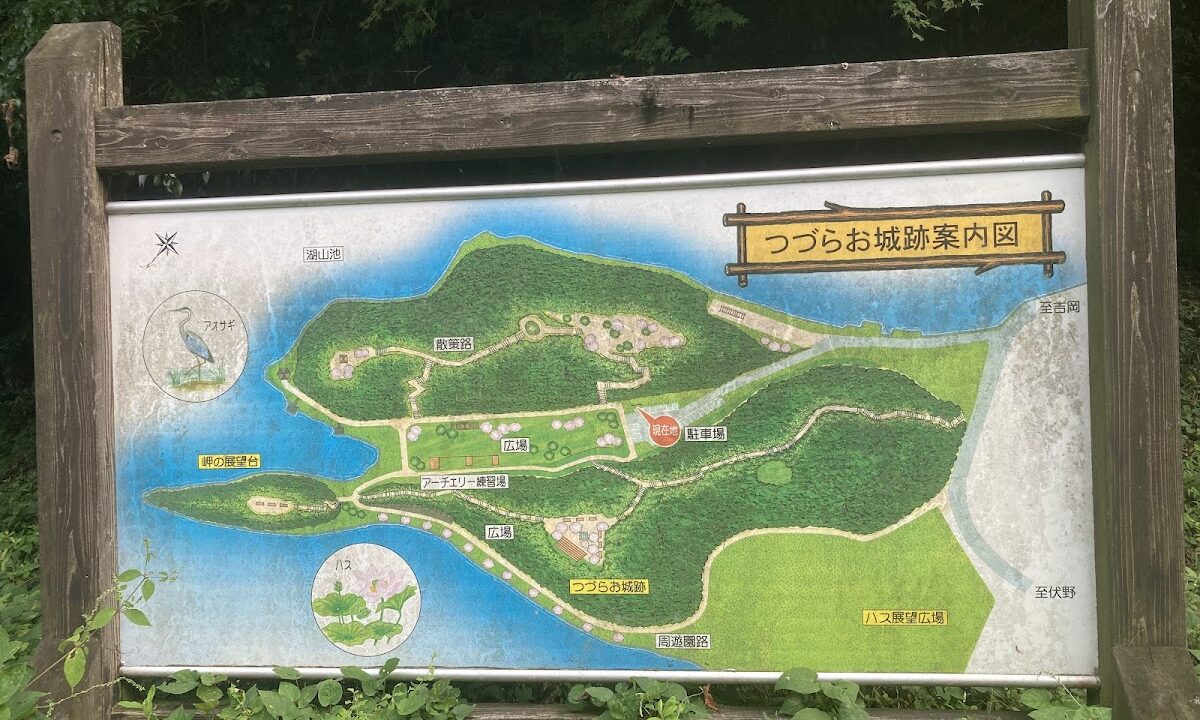
Bōkio Castle is a flatland castle that cleverly utilizes the cape-like hilly terrain jutting out from the western shore of Lake Koyama. The main keep is located on the hilltop at an elevation of 39 meters, with the second and third baileys arranged in a linear fashion towards the east.
The west and south sides of the castle face Lake Koyama, which functioned as a natural moat. This location limited land attacks to the east and north, providing extremely advantageous defensive conditions.
The castle grounds are relatively compact, but the defensive structures are efficiently arranged to withstand a short siege, making it a sufficiently large castle for a local lord.
Structure of the Main Enclosure
The main enclosure (Honmaru) is located at the highest point of the hill and is an enclosure measuring approximately 40 meters east-west and 30 meters north-south. The flat surface remains well-preserved, and traces of earthworks can be seen around it.
From the main enclosure, Lake Koyama can be seen in its entirety, making it a suitable location for monitoring water traffic. It also offers an open view towards Tottori Castle, suggesting it may have functioned as a lookout post for communication.
A moat is located on the east side of the main enclosure, clearly separating it from the second enclosure (Ninokuruwa). This moat is one of the important historical remains that remains clearly visible today.
Arrangement of the Second and Third Enclosures
The second enclosure (Ninokuruwa) is located to the east of the main enclosure and is situated at a lower level. The aforementioned moat separates the main enclosure from the second enclosure, forming a defensive line. The second bailey is thought to have served as a forward position protecting the main bailey.
The third bailey was located further east, at the foot of the hill, and was an important bailey defending the eastern front of the castle. It is presumed that the third bailey contained facilities for garrisoning soldiers and storing supplies.
These baileys were arranged in a continuous pattern, creating a structure that allowed for tiered defense.
Defensive Facilities
The following have been identified as the main defensive facilities of Bōkio Castle:
Moat: The moat between the main bailey and the second bailey is approximately 3 meters deep and 5 meters wide, and remains clearly visible today. This moat was an important defensive line that prevented enemy intrusion.
Earthwork: Earthworks were built around each bailey. Traces of the earthworks can still be seen today, mainly around the main bailey, with a maximum height of approximately 2 meters remaining.
Cliffs: The edges of the enclosures were shaped as steep cliffs, making climbing difficult. The slope on the Lake Koyama side, in particular, was artificially made steep while utilizing the natural terrain.
Gate Entrance: The gate entrance to the castle is thought to have had a curved structure to strengthen its defenses, but clear remains have been lost due to later alterations.
Features of Water Defense
The most distinctive feature of Boukio Castle is its water defense utilizing Lake Koyama. The west and south sides of the castle face the lake, allowing for monitoring and interception of approaching ships.
The Yoshioka clan is believed to have possessed a navy, and they fought on equal or even superior terms against Hideyoshi’s navy. By utilizing the vast body of water of Lake Koyama, it was possible to secure supply lines even under land siege, providing conditions that would give them an advantage in a siege.
Current State of the Bōkio Castle Ruins
Preservation Status of the Remains
The Bōkio Castle ruins are currently maintained as Koyamaike Park, but the remains from the Sengoku period are relatively well preserved. Although there have been alterations due to the park’s development, the layout of the main keep, second bailey, and third bailey remains clearly visible, and defensive structures such as moats and earthworks can still be seen.
In particular, the earthworks surrounding the main keep and the moat separating the main keep and second bailey retain much of their original form, making them valuable remains for understanding the structure of medieval castles.
From the castle ruins, one can enjoy a beautiful view of Koyamaike Pond, and truly appreciate why the Yoshioka clan chose this location.
Development as Koyamaike Park
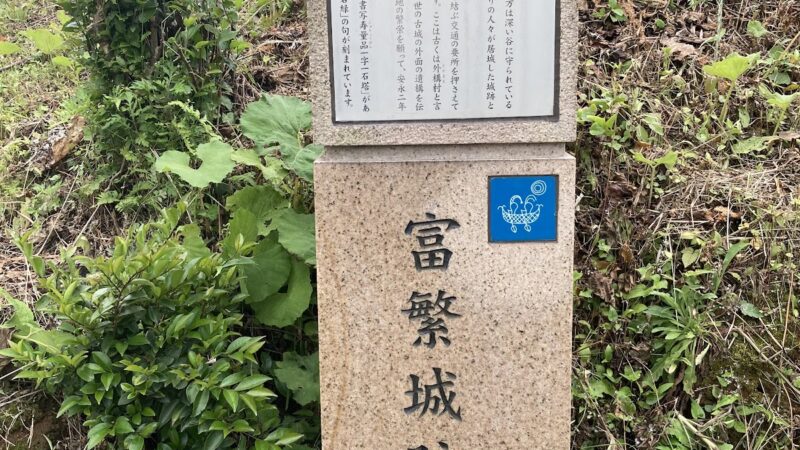
The Bōkio Castle ruins have been developed as part of Koyamaike Park, with walking paths and rest facilities. Information boards are installed within the park, allowing visitors to learn about the castle’s history and structure.
In spring, cherry blossoms bloom, and in autumn, the leaves turn beautifully, making it a place of relaxation for citizens where they can enjoy nature throughout the seasons. It is a valuable spot where you can enjoy historical exploration and nature walks at the same time.
Access and Visiting Guide
Location
Address: Kanazawa/Fukui area, Tottori City, Tottori Prefecture (within Koyamaike Park)
Transportation Access
Public Transportation:
- Approximately 20 minutes by local bus from JR Tottori Station, get off at “Koyamaike Park” bus stop, then approximately 5 minutes on foot
- Approximately 20 minutes on foot from JR Koyama Station
By Car:
- Approximately 15 minutes from Tottori IC on the Tottori Expressway
- Parking: Koyamaike Park parking lot is available (free)
Points to Note
Estimated Time Required: Allow 30 minutes to 1 hour to explore the castle ruins.
Highlights:
- View of Lake Koyama from the main keep ruins
- Moat between the main keep and the second keep
- Earthworks surrounding the main keep
- Layout of each enclosure and use of terrain
Notes for Visitors:
- Although it is maintained as a park, some areas have uneven footing.
- Be careful as it can be slippery in rainy weather.
- Understanding the site will be enhanced if you refer to the information boards and confirm the remains while visiting.
Related Historical Sites in the Surrounding Area
Tottori Castle Ruins: Tottori Castle, which had a close relationship with Bōkio Castle, is located on Hisamatsu Mountain in Tottori City and is a nationally designated historical site. It is about a 20-minute drive away.
Lake Koyama: Around Lake Koyama, the largest lake in Japan, there are other medieval historical sites scattered.
Historical Significance of Bōkio Castle
Position in Hideyoshi’s Campaign of Chūgoku
Bōkio Castle was one of the castles that posed a significant obstacle in Hashiba Hideyoshi’s campaign of Chūgoku. The fact that Hideyoshi suffered the humiliation of having his three attacks repelled and his Senari Hyotan (thousand gourd) banner seized is a noteworthy event in Hideyoshi’s military career.
The existence of this castle prevented Hideyoshi from focusing solely on the siege of Tottori Castle, leaving him constantly threatened from the rear. Despite its small size, it is a prime example of how a strategically important location could outmaneuver a large army, and is attracting attention in the study of Sengoku period history.
Characteristics of a Local Lord’s Castle
Bōkio Castle is a typical example of a castle built by a local lord during the Sengoku period. While not as large as a daimyo’s residence, it cleverly utilizes the terrain and demonstrates ingenuity in maximizing defensive effectiveness with limited resources.
In particular, the layout, which makes maximum use of the geographical location of Lake Koyama, demonstrates the local lord’s practical military knowledge and deep understanding of the region.
Importance in Local History
In the Sengoku period history of Inaba Province, Bōkio Castle was a frontline castle in the power struggle between the Mōri and Oda clans. It is a valuable historical site that shows how the Yoshioka clan, a local lord, attempted to survive amidst these powerful forces.
Currently, Tottori City is working to preserve and utilize the group of Sengoku period historical sites, including Bōkio Castle, as a local historical heritage, increasing its value as a resource for local history education and tourism.
Related Figures
Yoshioka Shōgen Sadakatsu
Yoshioka Shōgen Sadakatsu, the lord of Bōkio Castle, is known as a powerful local lord of Inaba Province. As a general on the Mōri side, he fought against Hideyoshi’s army, outmaneuvering a large force with his superior tactics. The anecdote of capturing the Senari Hyotan (thousand gourd) is a testament to Sadakatsu’s bravery.
Yoshioka Ukon
Yoshioka Ukon, the younger brother of Yoshioka Shogen, also played an important role in the defense of Bokio Castle. He is said to have fought alongside his brother against Hideyoshi’s army and was involved in the capture of the Senari Hyotan (thousand gourd).
Hashiba Hideyoshi
Hashiba Hideyoshi, later known as Toyotomi Hideyoshi, was advancing his campaign against the Chugoku region at the command of Oda Nobunaga during this period. The difficult battle at Bokio Castle is believed to have been a valuable lesson for Hideyoshi, influencing his later tactics.
Kamei Korenori
Kamei Korenori, the lord of Tottori Castle, initially sided with the Mori clan but later switched allegiance to Hideyoshi and is said to have been involved in the capture of Bokio Castle. He is one of the important figures in the Sengoku period history of Inaba Province.
Summary
Bokio Castle is a Sengoku period hilltop castle built on the western shore of Lake Koyama in Kanazawa, Tottori City, Tottori Prefecture. Built in 1579 by Yoshioka Shōgen Sadakatsu, the castle fell just two years later in 1581 during Hashiba Hideyoshi’s invasion of Inaba Province. However, it is known for its remarkable feat of repelling Hideyoshi’s army three times and even capturing the famous Senari Hyotan (thousand gourd) banner.
The castle’s clever layout, utilizing the natural moat of Lake Koyama, its interconnected arrangement of the main, second, and third baileys, and defensive structures such as trenches and earthworks demonstrate excellent design for a local lord’s castle. Currently, the site is maintained as Koyama Pond Park, with well-preserved remains, making it a valuable historical site for learning about the history of the Sengoku period.
When visiting Tottori City, why not visit the ruins of Bōkio Castle along with Tottori Castle and experience the true nature of a local lord’s castle that even troubled Hideyoshi? It’s a fascinating spot where you can experience the drama of the Sengoku period along with the beautiful scenery of Lake Koyama.