Ashino Castle (Nasu Town, Tochigi Prefecture) Complete Guide | History, Remains, and Access Information
What is Ashino Castle?
Ashino Castle (Ashino-jo) is a castle located in Ashino, Nasu Town, Nasu District, Tochigi Prefecture, dating from the medieval to early modern periods. Also known as Sakuragajo, Gotenyama, and Ashino-shi Jinya, it was built on a hill on the east bank of the Nara River. As the residence of the Ashino clan, a branch of the Nasu clan, it functioned as an important base protecting the northernmost part of the Nasu territory, and remained the center of Ashino clan rule for approximately 300 years until the abolition of the feudal system in 1871.
Even today, remnants such as earthworks and dry moats remain well-preserved, and it is also known as a famous cherry blossom viewing spot, with approximately 800 Somei Yoshino cherry trees blooming in spring. As a valuable historical site that continued to be used until the Edo period while maintaining the appearance of a medieval castle, it conveys the history of the region to the present day.
History of Ashino Castle
Two Theories Regarding the Castle’s Construction
There are currently two theories regarding the construction date of Ashino Castle.
Theory 1: Construction during the Tenbun Era (1532-1555)
This theory suggests that Ashino Sukeoki studied military strategy under Ota Dokan and built Ashino Castle during the Tenbun era. Based on the castle’s structure and style, this theory is considered the most plausible. This period was in the midst of the Sengoku period (Warring States period), coinciding with the time when the Nasu clan was strengthening its control over its territory.
Theory 2: Construction in Tensho 18 (1590)
This theory suggests that Ashino Moriyasu built the castle in Tensho 18 (1590). However, because the castle’s structure and defensive style match the Tenbun era style, it is considered more likely that an existing castle was renovated or expanded during this period.
The History and Golden Age of the Ashino Clan
The Ashino clan was a powerful family with a long history as a branch of the Nasu clan. They reached their peak around the time they established Ashino Castle as their base, and especially during the reigns of the 15th generation Ashino Sukeyasu and the 16th generation Ashino Moriyasu, they distinguished themselves in many battles as the northernmost powerhouse of the Nasu clan during the Sengoku period.
The Ashino clan was counted as one of the Nasu Seven Knights and played an important role as a powerful branch of the Nasu clan. The Nasu Seven Knights were seven powerful vassals that formed the core of the Nasu clan’s retainer group, and the Ashino clan was one of the foremost among them.
Toyotomi Hideyoshi’s Siege of Odawara and the Securing of Their Domain
In 1590, during Toyotomi Hideyoshi’s siege of Odawara, Ashino Moriyasu made a crucial decision. He did not follow his lord, Nasu Sukehara, the lord of Karasuyama Castle, but instead, based on his own judgment, joined the Toyotomi side as part of the Nasu forces. This decision proved crucial for the survival of the Ashino clan.
By joining Hideyoshi’s campaign, Ashino Moriyasu successfully secured the security of his territory. This allowed the Ashino clan to retain their land while the main branch of the Nasu clan was dispossessed.
The Battle of Sekigahara and Subjugation to the Tokugawa
In the Battle of Sekigahara in 1600, the Ashino clan fought on the side of Tokugawa Ieyasu. At this time, they played a vital role in preparing for Uesugi Kagekatsu’s southward advance, and were rewarded with an increase in their stipend for their service.
Because of this service, the Ashino clan was granted the special status of Kōtai-yoriai, a type of hatamoto (direct retainer of the shogun) by the Edo shogunate. Kōtai-yoriai were hatamoto with a stipend of less than 10,000 koku, but with status equivalent to a daimyo (feudal lord), and were obligated to participate in the sankin-kōtai (alternate attendance) system. The Ashino clan, as lords of 3,016 koku, controlled villages around Ashino and six villages within Haga County.
Ashino Jinya in the Edo Period
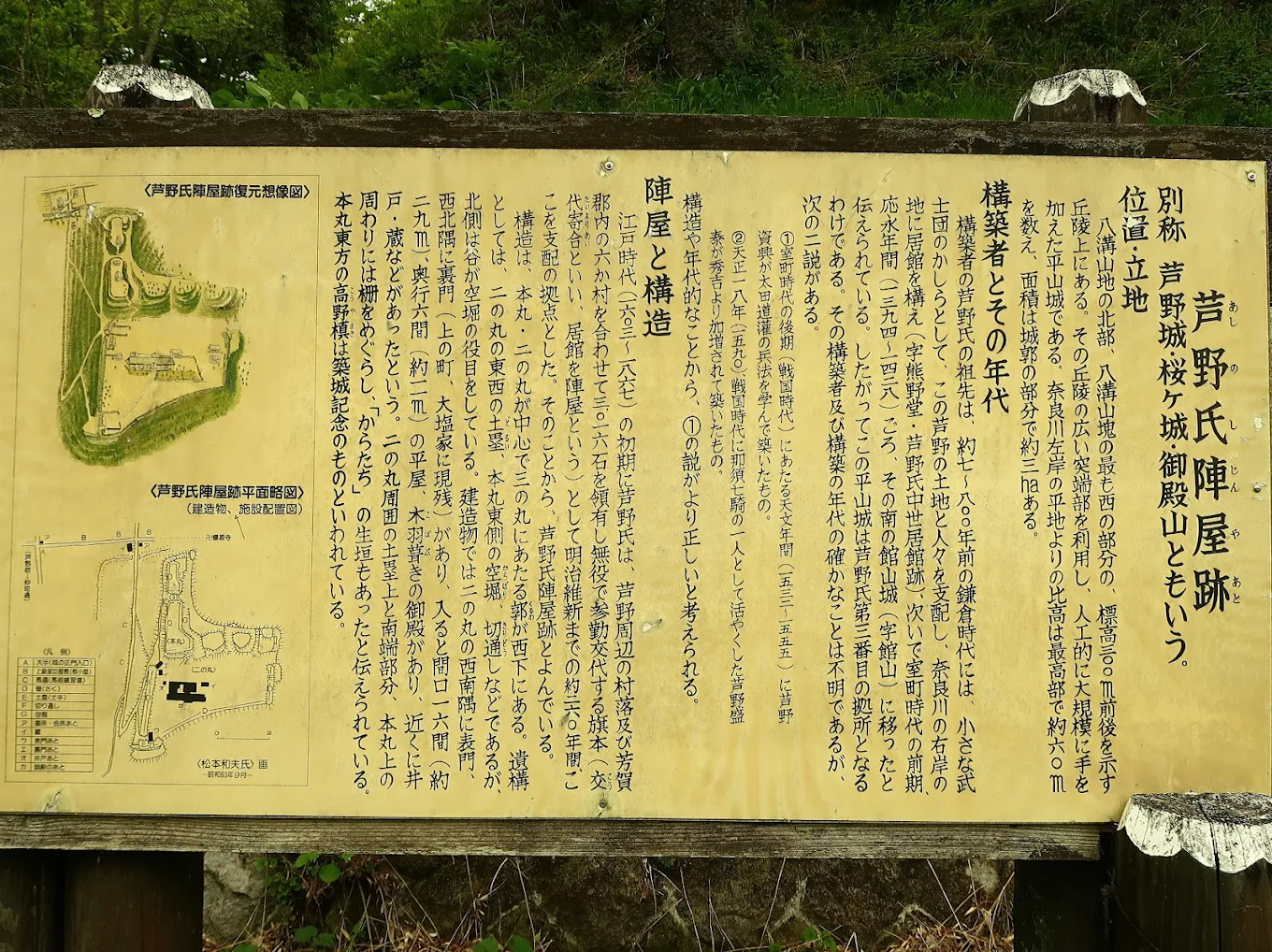
In the early Edo period, the Ashino clan built a jinya (fortified residence) in the Ninomaru (second enclosure) area. This Ashino Jinya served as the residence of the Ashino clan as a kōtai-yoriai (alternate attendance) family. The jinya included a front gate, a back gate, a palace, and storehouses, functioning as the center of their territorial administration.
The Ashino clan, as hatamoto (direct retainers of the shogun) who performed the sankin-kōtai (alternate attendance) system without official duties, used this area as their base of operations until the Meiji Restoration. Ashino Castle is a very rare example, as it retained the appearance of a medieval castle while also functioning as a modern jinya.
Meiji Restoration and Abandonment of the Castle
With the abolition of the feudal domains and establishment of prefectures in 1871 (Meiji 4), the Ashino clan’s rule came to an end. Ashino Castle, which had been the Ashino clan’s residence for approximately 300 years, was officially abandoned at this time. Subsequently, the castle site was developed into a forest and park, and remains so to this day.
Structure and Layout of Ashino Castle
Basic Structure
Ashino Castle is a flatland castle built on a hill on the east bank of the Nara River, with a relative height of approximately 30-40 meters. The castle consists of multiple enclosures, corresponding to the second and third baileys, centered around the main bailey (Honmaru).
The Honmaru is built north of the second bailey and has a long, narrow shape running north-south. Separated by a dry moat, the first bailey is located to the north, and the third bailey to the east, forming a defensive line protecting the Honmaru.
The Second Bailey was used as a military encampment during the Edo period, containing buildings such as the front and back gates, the palace, and storehouses. Its location overlooking the town of Ashino made it ideally suited for functioning as the center of territorial control.
Characteristics of Defensive Facilities
Ashino Castle’s defensive facilities exhibit typical characteristics of a medieval castle.
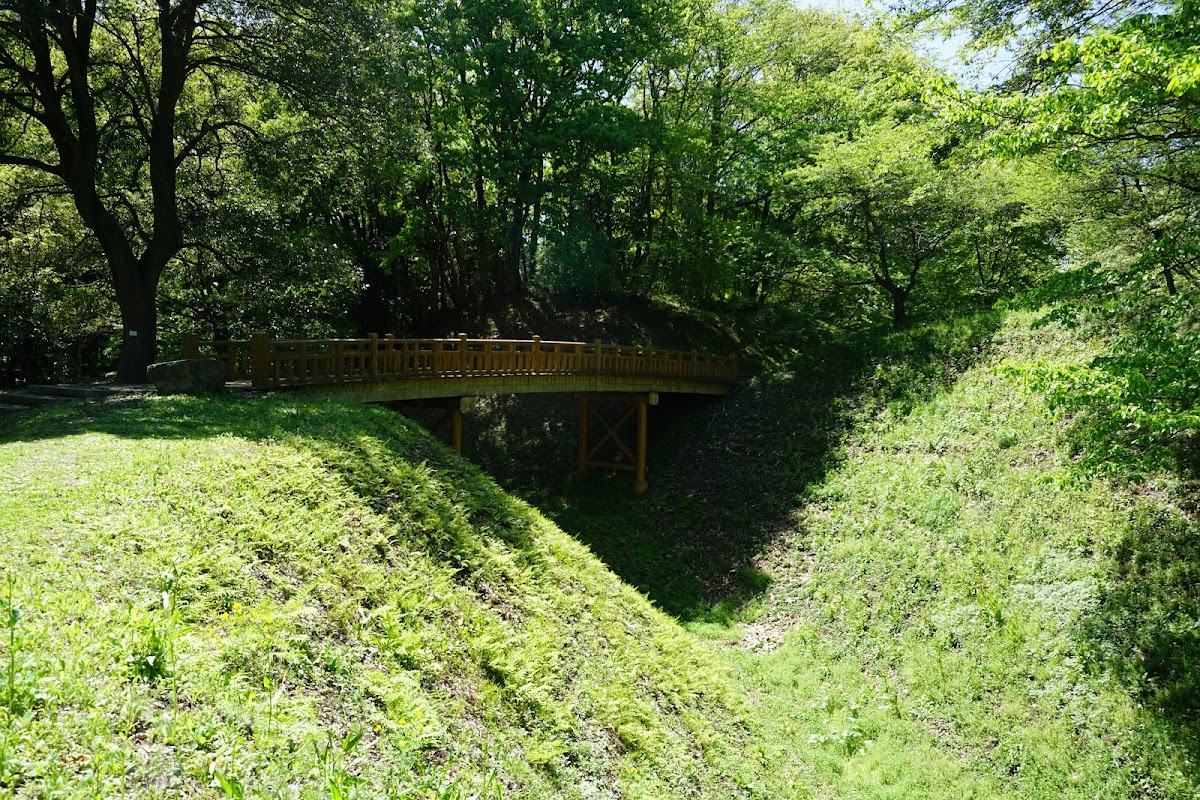
Earthworks remain in various parts of the castle, and are particularly well-preserved around the Honmaru. The height of the earthworks varies depending on the location, but many are around 2-3 meters high.
The dry moats functioned as important defensive structures separating the main keep from the other enclosures. The clearly visible dry moats today offer a glimpse into the defensive system of the time.
The castle’s style matches the construction style of the Tenbun era, which is an important factor in determining the castle’s construction period.
Japanese Umbrella Pine (Koyamaki), a Natural Monument
On a small hill east of the main keep site, a Japanese umbrella pine (Koyamaki), a Tochigi Prefecture-designated natural monument, is planted. This tree is said to have been planted as a commemorative tree for the castle’s construction, and its estimated age is over 470 years, reaching a height of approximately 24 meters.
There is a legend that it was planted when Ashino Sukeoki built the castle during the Tenbun era, and it has become a representative tree of Nasu Town, serving as a living witness to the long history of Ashino Castle.
Highlights of Ashino Castle
Existing Remains
The following remains still exist at Ashino Castle:
Earthwork Remains
Earthworks remain in good condition, mainly around the main keep. The earthworks, 2-3 meters high, give a real sense of the castle’s defensive structure at the time.
Dry Moat Remains
The dry moat separating the main keep from the other enclosures remains clearly visible. Its depth and width indicate that it was a strong defensive structure.
Enclosure Remains
The layout of multiple enclosures, including the main keep, second enclosure, and third enclosure, can be inferred from the topography. Exploring the site while considering the role and relationship of each enclosure is one of the pleasures of visiting.
Nasu Historical Museum
The Nasu Historical Museum is the base for visiting the Ashino Castle ruins. Located within the Ashino settlement, it has ample parking. A walking trail to the Ashino Castle ruins is maintained from here, allowing for safe exploration of the castle site.
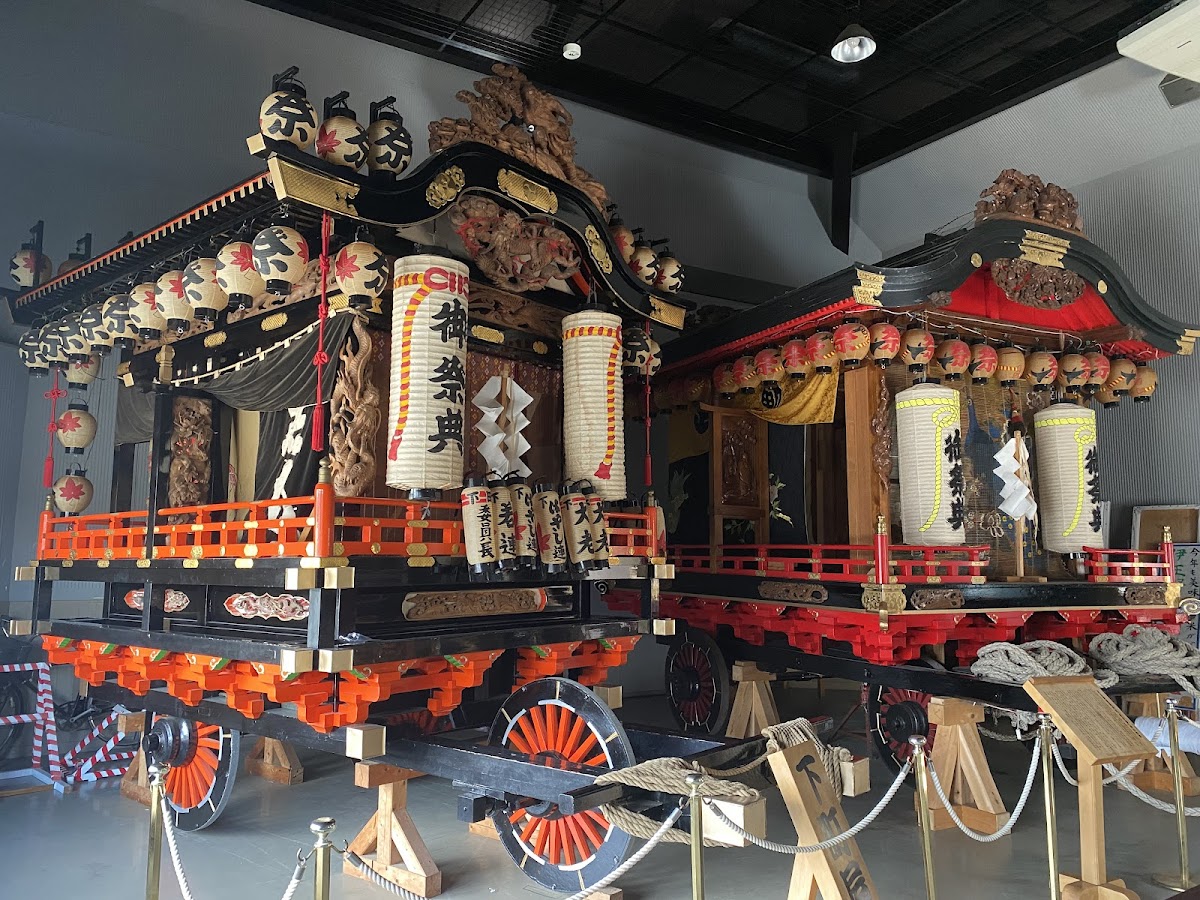
The Nasu Historical Museum displays materials related to the history of the Ashino clan and Ashino Castle. Visiting before touring the castle ruins will provide a deeper understanding.
Charm as a Cherry Blossom Spot
As Ashino Castle is also known as “Sakuragajo” (Cherry Blossom Castle), the castle ruins are known as one of Tochigi Prefecture’s premier cherry blossom viewing spots. Approximately 800 Somei Yoshino cherry trees are planted throughout the castle grounds, and every year in mid-April, the entire mountain is enveloped in a sea of pink.
The cherry blossoms around the site of the former encampment, known as Gotenyama, are particularly spectacular, attracting many visitors. You can enjoy a unique atmosphere that cannot be experienced anywhere else, where the historical castle ruins and the beautiful cherry blossom scenery blend together.
Views
Because Ashino Castle is located on a hill, the castle ruins offer a panoramic view of the town of Ashino. It is a valuable place where you can still experience the view that the Ashino clan must have once seen over their territory.
Access Information
Location
329-3443 Ashino, Nasu-machi, Nasu-gun, Tochigi Prefecture
Access by Car
From the Tohoku Expressway
- Approximately 15 minutes from Nasu IC
- Approximately 20 minutes from Shirakawa IC
From General Roads
- Take National Route 294 to the Ashino area
- It’s easiest to access by aiming for the Nasu Historical Museum
Parking
There is free parking at the Nasu Historical Museum. It’s convenient to use this as a base for visiting the castle ruins.
Access by Public Transportation
JR Tohoku Main Line
- Approximately 20 minutes by bus or taxi from Kuroiso Station
- Get off at Ashino bus stop, approximately 10 minutes on foot
Estimated Visiting Time
Allow 1-2 hours for exploring the castle ruins. Including time for viewing materials at the Nasu Historical Museum, a 2-3 hour stay is recommended.
Points to Note When Visiting
- The walking paths are well-maintained, but we recommend wearing comfortable shoes.
- Don’t forget insect repellent during the summer.
- Crowds are expected during cherry blossom season (mid-April).
- Snowfall is possible during winter, so we recommend checking in advance.
Nearby Tourist Attractions
Iono Castle Ruins
Like Ashino Castle, Iono Castle, a castle of the Nasu clan, is located in the Iono district of Nasu Town. Visiting both Ashino Castle and Iono Castle allows you to compare the characteristics of castles belonging to the Nasu clan.
Ashino Onsen (Hot Springs)
After visiting the castle ruins, we recommend relaxing at the nearby Ashino Onsen. It’s a hot spring facility beloved by locals.
Ashino Gotenyama Park
The area around the castle ruins has been developed into a park, making it enjoyable for strolls even outside of cherry blossom season. It’s also a suitable place for family picnics.
Nasu Historical Museum
As mentioned above, this facility allows you to learn about the history of the Ashino clan and the Nasu region. Visiting it in conjunction with a tour of the castle ruins will provide a deeper understanding.
Historical Significance of Ashino Castle
Defense at the Northernmost Edge of the Nasu Clan’s Territory
Ashino Castle was located at the northernmost point of the Nasu clan’s territory and functioned as a frontline defensive base against threats from the north. During the Sengoku period, this region was constantly in a state of tension, and the existence of Ashino Castle was essential for the Nasu clan’s rule over the territory.
Continuity from the Medieval to the Early Modern Period
While many medieval castles were abandoned with the end of the Sengoku period, Ashino Castle continued to be used as a military encampment throughout the Edo period. It is a very interesting example in the history of castles, as it maintained the structure of a medieval castle while also functioning as a base of control in the early modern period.
The Special Status of a Kōtai-Yoriai
The fact that the Ashino clan attained the special status of a Kōtai-Yoriai, a type of hatamoto (direct retainer of the shogun), is also historically significant. Despite having a domain of less than 10,000 koku, Ashino Castle enjoyed a status comparable to that of a daimyo (feudal lord), and the system of sankin-kōtai (alternate attendance in Edo) demonstrates the skillful governance system of the Edo shogunate.
Current Status and Challenges of Ashino Castle Research
Determining the Construction Date
As mentioned above, there are two theories regarding the construction date: the Tenbun era theory and the Tenshō 18 (1590) theory. The Tenbun era theory is considered more likely based on the castle’s structure, but due to a lack of definitive historical evidence, further research is needed.
The Need for Archaeological Excavation
Ashino Castle has not yet undergone sufficient full-scale archaeological excavation. If planned excavations are conducted in the future, it is possible that the construction date, the castle’s transformation, and the realities of daily life will become clearer.
Balancing Preservation and Utilization
Currently, the Ashino Castle ruins are maintained as a park and are popular as a cherry blossom viewing spot. However, preserving it as a valuable historical heritage site is also important. The challenge for the future is how to balance its use as a tourist resource with its preservation as a historical site with academic value.
Summary
Ashino Castle is a valuable historical site built by the Ashino clan, one of the seven powerful families of Nasu, and was used for approximately 300 years, from the Sengoku period to the Meiji Restoration. It is believed to have been built by Ashino Sukemitsu during the Tenbun era, and after surviving Toyotomi Hideyoshi’s siege of Odawara and the Battle of Sekigahara, it continued to exist as a hatamoto (direct retainer of the shogun) during the Edo period.
Even today, the remains of the castle, such as earthworks and dry moats, are well-preserved and can be viewed via a well-maintained walking path from the Nasu Historical Museum. Furthermore, as its alternative names “Sakuragajo” (Cherry Blossom Castle) and “Gotenyama” (Palace Mountain) suggest, it is also known as a famous cherry blossom viewing spot, with approximately 800 Somei Yoshino cherry trees blooming in spring.
Ashino Castle, which continuously protected the northernmost part of the Nasu clan’s territory, is an important example of the changes in castle architecture during the transition from the medieval to the early modern period, and can be said to be an indispensable historical site for understanding the history of Tochigi Prefecture. It is a beloved local place, attracting not only history enthusiasts but also many tourists during cherry blossom season.
When you visit Nasu Town in Tochigi Prefecture, be sure to stop by the Ashino Castle ruins and experience the history of the Nasu clan and the atmosphere of a medieval castle.
.png)