.png)
Ashikaga Castle (Tochigi Prefecture) Complete Guide: A Thorough Explanation of the 1000-Year-Old Mountain Castle Ruins on Ryogaiyama Mountain
Ashikaga Castle, located in Ashikaga City, Tochigi Prefecture, is a mountain castle with a history dating back to the late Heian period. The castle ruins, spread from the summit to the ridge and foot of Ryogaiyama Mountain, encompass a vast area of approximately 630m east-west and 400m north-south. This article provides a detailed explanation of Ashikaga Castle’s history, structure, highlights, and access methods.
Basic Information on Ashikaga Castle
Ashikaga Castle is a mountain castle ruin located on Ryogaiyama Mountain in Honjo 1-chome, Ashikaga City, Tochigi Prefecture. It is also known by other names such as Ryogaiyama Castle, Iizukayama Castle, Koya Castle, and Kurisaki Castle. Designated as an Ashikaga City Designated Cultural Property (Historic Site) on July 25, 1970, it is now a popular hiking course within the prefectural natural park, enjoyed by many hikers and history enthusiasts. ### Location and Geographical Characteristics
Ashikaga Castle ruins are located northwest of the old Ashikaga town center, centered around the summit of Ryogayama Mountain (251m above sea level). While the elevation difference is approximately 210m, and it may not appear particularly high from the foot of the mountain, it is actually characterized by a rugged terrain with exposed rock faces. This natural fortification is one of the reasons why it functioned as an important military base from the Heian period to the Sengoku period.
History of Ashikaga Castle: From the Heian Period to the Sengoku Period
Construction and the Fujiwara-Ashikaga Clan
Ashikaga Castle is believed to have been built in 1054 (Tenki 2) by Ashikaga Shigeyuki, the first head of the Fujiwara-Ashikaga clan. This construction year coincides with the Former Nine Years’ War (1051-1062) and is closely related to the rise of samurai groups in eastern Japan.
The Fujiwara-Ashikaga clan was a powerful family descended from Fujiwara no Hidesato, and expanded its influence from its base in Ashikaga Manor. Ashikaga Castle functioned as a military base for this family and played an important role in establishing control over the surrounding region. It is important to note that this is a separate lineage from the more famous Minamoto-Ashikaga clan (a branch of Ashikaga Takauji).
Changes in Ashikaga Castle during the Medieval Period
From the late Heian period to the Kamakura period, Ashikaga Castle functioned as the base of the Fujiwara-Ashikaga clan. However, as time passed, the castle’s rulers changed. From the Muromachi period to the Sengoku period, it is believed that the Nagao clan, vassals of the Kanto Kanrei Uesugi clan, used the castle.
Battles of Ashikaga Castle: Four Battles
Throughout the Sengoku period, Ashikaga Castle served as an important strategic base and was the stage for four “Battles of Ashikaga Castle.”
1. The Battle of Ashikaga Castle during the Kyōtoku Rebellion (1455)
In 1455 (Kyōtoku 3), the assassination of Uesugi Noritada, the Kantō Kanrei (governor of the Kantō region), triggered a major rebellion that engulfed the entire Kantō region. Ashikaga Castle became a battlefield during this time, playing a crucial role in the conflict between the Uesugi clan and the Ashikaga clan, the Koga Kubō (governor of Koga).
2. The Battle of Ashikaga Castle in the Eiroku Era (1564)
In 1564 (Eiroku 7), Ashikaga Castle became a target of attack and defense during the conflict between Uesugi Kenshin and the Hōjō clan. During this period, the struggle for supremacy in Kantō was intensifying, and Ashikaga Castle served as a buffer zone between the two forces.
3. The Battle of Ashikaga Castle in the Tenshō Era (1584)
In 1584 (Tenshō 12), Ashikaga Castle once again became a battlefield during the conflict between the Hōjō clan and the Satake clan. Around this time, the influence of the Odawara Hojo clan was expanding in the Kanto region, and the area around Ashikaga Castle was also coming under their influence.
4. Battles during Toyotomi Hideyoshi’s Odawara Campaign (1590)
In 1590, during Toyotomi Hideyoshi’s Odawara Campaign, Ashikaga Castle functioned as a Hojo base, but it fell to the overwhelming force of Hideyoshi’s army. This battle marked the end of Ashikaga Castle’s role as a military base.
Structure and Layout of Ashikaga Castle
Honmaru and Main Enclosures
The Honmaru, the central area of Ashikaga Castle, is located on the summit of Ryogayama Mountain (251m above sea level). The summit is relatively flat and measures approximately 30m x 20m. From the Honmaru, one can enjoy a panoramic view of Ashikaga city, the Watarase River, and the surrounding mountains—a superb viewpoint.
Several outer baileys (koshiguruma) are positioned around the main keep (honmaru). These outer baileys are terraced, flat areas built by cutting into the mountain slopes to defend the main keep. A particularly large series of outer baileys are located on the southwest side, suggesting their strategic importance in defense.
Moats and Defensive Structures
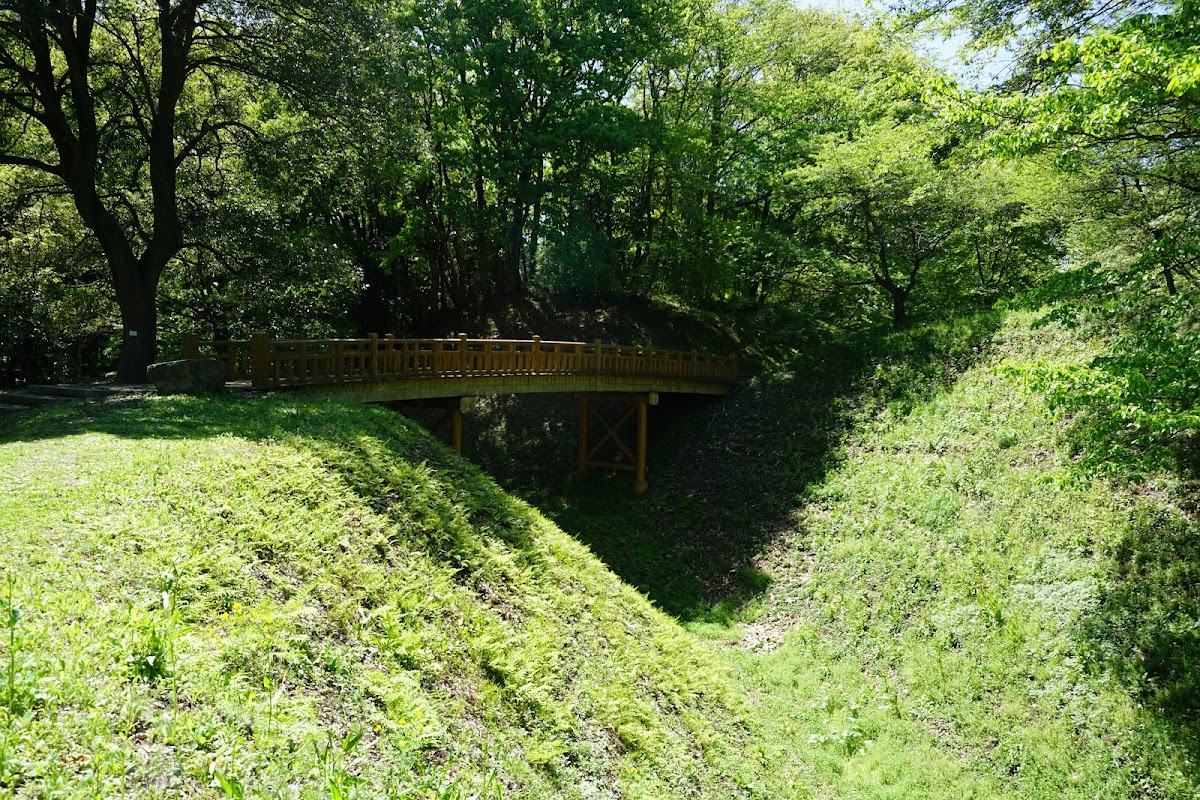
A distinctive feature of Ashikaga Castle is the presence of several moats (horikiri). A moat is a dry ditch dug across a ridge, serving as an important defensive structure to prevent enemy intrusion. At Ashikaga Castle, several moats can be identified on the ridge extending from the main keep, with the moats on the north and east sides being particularly large and clearly preserved.
Furthermore, narrow, passage-like structures called “mushabashiri” (warrior’s walkways) have been identified. These were passages connecting baileys and functioned as important movement routes during defense.
Stone Walls and Earthworks
Partial traces of stone walls remain at Ashikaga Castle. It is believed that the castle, originally built during the Heian period, had a structure primarily consisting of earthen ramparts. However, during renovations in the Sengoku period, some stone walls were added. However, these were not full-fledged stone walls, but rather the “nozurazumi” method, where natural stones were piled up.
Earthen ramparts remain in various parts of the castle, and particularly around the main keep, ramparts 1-2 meters high can be seen. These ramparts served to clearly define the boundaries of the enclosures and enhance defensive capabilities.
Horse Training Ground and Living Space
Within the castle grounds is a relatively large, flat area called the “horse training ground.” While this area is thought to have been used for horse training and gathering, it may also have been used as living space or storage for supplies during peacetime.
It is presumed that the residences of the castle lord and retainers were located at the foot of the mountain, and flat terrain and some stone walls remain today. Many mountain castles have a dual structure, with military facilities at the summit and residential facilities at the foot of the mountain, and Ashikaga Castle is thought to have followed this typical pattern.
Highlights and Walking Points of Ashikaga Castle Ruins
Attractions as a Hiking Course
The current Ashikaga Castle ruins are maintained as a hiking course within the Tochigi Prefectural Natural Park, allowing visitors to enjoy both historical exploration and hiking. There are multiple hiking routes, ranging from gentle courses suitable for beginners to more challenging routes involving rock climbing.
The most common route starts from Orihime Shrine. The trail begins behind Orihime Shrine, and it takes approximately 30-40 minutes to reach the main keep ruins. Since there are stone steps and rocky areas along the way, comfortable shoes and clothing are recommended.
Views from the Main Keep
The views from the main keep are one of the greatest attractions of visiting Ashikaga Castle Ruins. On a clear day, you can see the entire city of Ashikaga, the flow of the Watarase River, and in the distance, the three mountains of Joshu, including Mt. Akagi and Mt. Haruna. You can enjoy the scenery of each season, from cherry blossoms in spring to autumn leaves in fall.
Points to Observe the Ruins
When visiting the castle ruins, pay attention to the following ruins:
- Flat Area of the Main Enclosure: An artificially created flat area on the mountaintop
- Moat: A clear, ditch-like structure cutting across the ridge
- Lower Enclosure: A stepped flat area built on the slope
- Earthwork: A mound of earth remaining around the enclosure
- Traces of Stone Walls: Partially remaining stonework in the wild-stone style
While some of these ruins have information boards, many are blended into the natural surroundings, so careful observation is necessary.
Relationship between Ashikaga Castle and Ashikaga Clan Residence (Banna-ji Temple)
Ashikaga Castle (Ryōgaiyama Castle) is often confused with the Ashikaga Clan Residence (Banna-ji Temple). These two are separate facilities and each had different roles.
What is the Ashikaga Clan Residence (Bannaji Temple)?
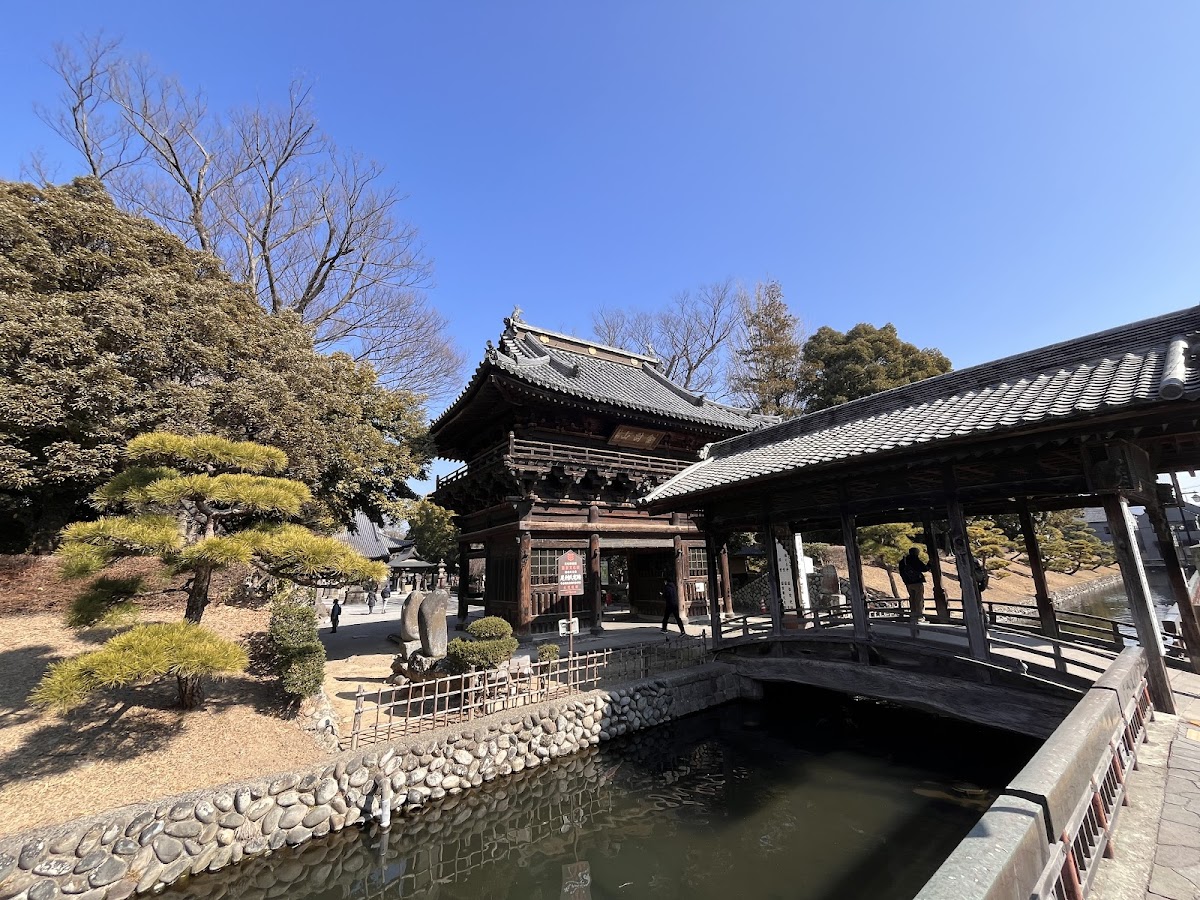
The Ashikaga Clan Residence is a flatland castle (residence) located in the center of Ashikaga City, and was the base of the Minamoto-descended Ashikaga clan. Built around the 12th century by Ashikaga Yoshiyasu, it later became Bannaji Temple, the Ashikaga clan’s family temple. It is a valuable historical site that preserves the form of a square residence surrounded on all four sides by earthen ramparts and moats, and has been selected as one of Japan’s 100 Famous Castles.
The Fujiwara-descended Ashikaga Clan and the Minamoto-descended Ashikaga Clan
The Fujiwara-descended Ashikaga clan (Fujiwara Hidesato lineage), who built Ashikaga Castle, and the Minamoto-descended Ashikaga clan (Seiwa Genji Ashikaga clan), who based themselves at the Ashikaga Clan Residence, share the same name “Ashikaga,” but were separate lineages of samurai.
- Fujiwara-descended Ashikaga Clan: Descendants of Fujiwara Hidesato, they ruled the Ashikaga estate from the late Heian period. They based themselves at Ashikaga Castle.
- Minamoto-Ashikaga Clan: Descendants of Minamoto no Yoshiie, they entered the Ashikaga estate after the 12th century. They established their base at the Ashikaga Clan Residence and later produced Ashikaga Takauji, who founded the Muromachi Shogunate.
While the two clans became related over time, their origins differ. Ashikaga Castle was primarily a military base used by the Fujiwara-Ashikaga clan and various forces during the Sengoku period, while the Ashikaga Clan Residence was the residence of the Minamoto-Ashikaga clan.
Access and Visiting Information
Transportation Access
Using Public Transportation
- Approximately 25 minutes on foot from JR Ryomo Line “Ashikaga Station” to the trailhead (Orihime Shrine)
- Approximately 20 minutes on foot from Tobu Isesaki Line “Ashikaga-shi Station” to the trailhead (Orihime Shrine)
Using a Car
- Approximately 15 minutes from Kita-Kanto Expressway “Ashikaga IC”
- Parking available at Orihime Shrine (free, approximately 20 spaces)
Precautions for Hiking and Walking
- Clothing and Equipment: Comfortable walking shoes (trekking shoes recommended), comfortable clothing
- Estimated Time: Approximately 1.5 to 2 hours round trip from Orihime Shrine to the main keep
- Hydration: Bring plenty of water, especially in summer
- Weather Check: Be careful as rocky areas can become slippery in rainy weather
- Bear Bell: Carrying a bear bell is recommended as you will be in a forest
Nearby Tourist Attractions
When visiting Ashikaga Castle Ruins, we recommend also visiting the following nearby attractions:
- Ashikaga Clan Residence (Banna-ji Temple): One of Japan’s 100 Famous Castles, home to a National Treasure main hall
- Ashikaga School: Japan’s oldest school, a nationally designated historic site
- Orihime Shrine: A shrine for matchmaking, the entrance to Ashikaga Castle
- Watarase Bridge: A bridge famous from a song by Chisato Moritaka
Cultural Property Designation and Preservation Activities of Ashikaga Castle
Ashikaga Castle Ruins were designated as an Ashikaga City designated cultural property (historic site) on July 25, 1970. This ensures the preservation and proper management of the remains.
In recent years, preservation activities by local history enthusiasts and citizen groups have become more active, including regular grass cutting, maintenance of information boards, and the holding of guided tours. Furthermore, the Ashikaga City Board of Education continues to conduct surveys and record-keeping of the remains, advancing the elucidation of its academic value.
Characteristics of Medieval Mountain Castles: Lessons from Ashikaga Castle
Ashikaga Castle is a valuable example of the development process of mountain castles from the late Heian period to the Sengoku period.
Mountain Castles of the Heian Period
It is believed that Ashikaga Castle, in its initial construction, had a relatively simple structure. The main enclosure was located on the mountaintop, with simple defensive facilities surrounding it; residential functions were mainly located at the foot of the mountain. Mountain castles of this period were primarily intended as emergency shelters and were not facilities used on a regular basis.
Renovations in the Sengoku Period
It is believed that Ashikaga Castle underwent large-scale renovations during the Sengoku period. Construction was carried out to enhance its defensive capabilities, including the addition of moats, expansion of the outer enclosures, and the addition of stone walls. Mountain castles of this period were designed with long-term sieges in mind, requiring more practical functions such as water supply and food storage.
From Mountain Castles to Early Modern Castles
After Toyotomi Hideyoshi’s conquest of Odawara, a new system of rule by Tokugawa Ieyasu was established in the Kanto region. During this process, mountain castles gradually fell out of use, transitioning to modern castles built on flat land. Ashikaga Castle, too, was abandoned after its fall in 1590, ending its role as a military facility.
Summary: Historical Value and Modern Significance of Ashikaga Castle
Ashikaga Castle was a mountain castle used for approximately 540 years, from its construction in 1054 until its abandonment in 1590. Throughout this long history, its role changed from the base of the Fujiwara-Ashikaga clan to a frontline base during the Sengoku period (Warring States period).
Currently, the Ashikaga Castle ruins are a popular hiking course for citizens and are also considered academically important as a valuable relic of a medieval mountain castle. The ruins, integrated with the natural landscape of Ryogaiyama Mountain, serve as a living textbook that conveys the castle-building techniques and strategies of the time, evoking a sense of historical romance in visitors.
When visiting Ashikaga City, be sure to visit the Ashikaga Castle ruins, along with the Ashikaga Clan Residence (Bannaji Temple), one of Japan’s 100 Famous Castles. The panoramic view of Ashikaga city from the 251-meter-high mountaintop, along with the historical ruins that bear witness to 1,000 years of history, will surely be an unforgettable experience.