Akataniyama Castle (Gifu Prefecture) Complete Guide: A Thorough Explanation of the History, Remains, and Access to Todoyama Castle
What is Akataniyama Castle?
Akataniyama Castle (Akadaniyama-jo) is a Sengoku period mountain castle located in Shimatani, Hachiman-cho, Gujo City, Gifu Prefecture. Also known as Todoyama Castle (Todoyama-jo), Inunaki Castle (Inunaki-jo), and Kira Castle (Kira-jo), it played an important role as a base for controlling Gujo County, built by Todo Tsuneyoshi.
Built near the summit of Todoyama Mountain (578 meters above sea level), this castle is situated in a strategic location overlooking the town of Gujo Hachiman, and its remains, such as stone walls and baileys, are well-preserved. Currently, it is a popular destination for castle ruin exploration and hiking, enjoyed by history enthusiasts and castle fans.
About the Name and Location
Origin of Multiple Alternative Names
Akataniyama Castle has several names, each with its own origin. The most common name, “Akataniyama Castle,” originates from the place name of the area where the castle was built. On the other hand, the alternative name, “Higashidonoyama Castle,” was given because it meant “Lord’s Mountain Castle” to the Higashi clan, the castle’s lords.
The name “Inunaki Castle” is believed to be based on legends surrounding the castle. The name “Kira Castle” is also thought to be related to an old local name.
Relationship between the New and Old Castles
In fact, the Akataniyama Castle grounds consist of two areas: the new castle and the old castle. The old castle (Higashidonoyama Castle) is located on the summit of Higashidonoyama Mountain at an elevation of 578 meters, while the new castle (Akataniyama Castle) is located on the ridge to the north, at an elevation of approximately 510 meters.
The relative height from Entsukaku in Atago Park is approximately 260 meters, and the walking distance is about 800 meters. These two castles, old and new, together formed a defensive base for Gujo County.
History and Background of Akataniyama Castle
The Origins of the Higashi Clan and Their Expansion into Gujo
The Higashi clan, lords of Akataniyama Castle, were a branch of the Chiba clan, a prominent family of Shimosa Province (present-day Chiba Prefecture). While there are various theories regarding when the Higashi clan expanded into Gujo, they established their power in Gujo County during the late Muromachi period, with Shinowaki Castle as their base.
The Higashi clan, as a powerful local lord in Gujo County, maintained their own sphere of influence amidst the complex political situation within Mino Province. However, with the arrival of the Sengoku period, conflicts with surrounding forces intensified.
The Asakura Clan’s Invasion and Castle Construction During the Tenbun Era
The construction of Akataniyama Castle was prompted by the invasion by the Asakura clan, a powerful daimyo of Echizen Province (present-day Fukui Prefecture) during the Sengoku period. In 1540 and 1541, the Asakura clan invaded Gujo County and attacked Shinowaki Castle, the stronghold of the Higashi clan.
Although Higashi Tsuneyoshi narrowly repelled the Asakura attacks, Shinowaki Castle suffered significant damage. This experience led him to decide to build a new castle on Higashidonoyama, a mountain with more defensible terrain. In 1541, Higashi Tsuneyoshi constructed Akataniyama Castle.
The Higashi Clan’s Golden Age and Rule over Gujo
Based at Akataniyama Castle, Higashi Tsuneyoshi strengthened his control over Gujo County. The rugged terrain of Higashidonoyama and its robust defensive structures made Akataniyama Castle an impregnable fortress.
During Higashi Tsuneyoshi’s time, the Higashi clan reigned as the de facto rulers of Gujo County and wielded influence over the surrounding local lords. The castle town was likely home to the residences of the Higashi clan’s retainers, functioning as a political and military base for governing Gujo County.
Conflict with the Endo Clan and the Downfall of the Higashi Clan
However, the Higashi clan’s prosperity did not last long. Within Gujo County, another powerful local clan, the Endo clan, was expanding its influence. Endo Morikazu came into conflict with the Higashi clan over control of Gujo County.
In 1559, Endo Morikazu attacked Akataniyama Castle. After a fierce battle, Akataniyama Castle fell, and Higashi Tsuneyoshi was killed. This battle marked the end of the Higashi clan’s power in Gujo County, and thereafter, the Endo clan became the rulers of Gujo County.
Akataniyama Castle After its Fall
While there are few clear records of what happened to Akataniyama Castle after the fall of the Higashi clan, it is believed that the Endo clan built a new castle in Gujo Hachiman (later Gujo Hachiman Castle), and Akataniyama Castle gradually fell into disuse.
From the late Sengoku period to the early Edo period, Akataniyama Castle was abandoned and buried in the forest. However, the remains, such as the stone walls, were well preserved and remain to this day.
Details of the Remains and Structure
Characteristics of the Castle Layout
Akataniyama Castle is a mountain castle that skillfully utilizes the steep terrain of Higashidonoyama. It has a linear layout with multiple baileys arranged along the ridge, centered around the main bailey.
The castle area extends long from north to south, and the combined size of the new and old castles is considerable. Each bailey is clearly demarcated by steep slopes, enhancing its defensive capabilities. Multiple trenches blocking the ridgeline were constructed in various places, demonstrating ingenuity in preventing enemy intrusion.
Main Enclosure and Surroundings
The main enclosure is located near the summit of Higashidonoyama and forms the core of the castle. A series of outer baileys surround the main enclosure, creating a structure designed to withstand attacks from multiple directions.
The interior of the main enclosure is relatively flat, suggesting that the lord’s residence and important facilities were located there. Traces of earthworks can still be seen today, allowing us to imagine the structure of the time. From the main enclosure, one can enjoy a panoramic view of the town of Gujo Hachiman and the surrounding mountains, highlighting its strategically advantageous location.
Features of the Stone Walls
One of the greatest highlights of Akataniyama Castle is its well-preserved stone walls. Unusually for a mountain castle from the Sengoku period, stone walls are used in various places, demonstrating the high level of castle-building technology of the Higashi clan.
The stone walls were primarily constructed using the nozurazumi technique, characterized by their simple construction using natural stones piled up as they were. The stone walls are concentrated around the edges of the enclosures and the entrances (koguchi), indicating that important areas were reinforced.
Some sections of the stone walls reach heights of 2-3 meters, a considerable size for stone walls of that era. Although some sections have collapsed, the overall state of preservation is good, making it a valuable historical site that conveys the appearance of the castle at the time of its construction.
Layout of the Enclosures
Akataniyama Castle has multiple enclosures, including the main enclosure. Each enclosure is arranged along the ridge terrain, forming a tiered defensive line.
Around the main enclosure are the second and third enclosures, each functioning as an independent defensive unit. The enclosures are separated by steep slopes and cliffs, creating a structure where even if one enclosure is breached, the next can provide defense.
The size of each enclosure varies, ranging from large to small. Large enclosures were likely used for garrisoning soldiers and storing supplies, while smaller enclosures probably functioned as watchtowers and loopholes.
Moats and Vertical Moats
Moats and vertical moats are crucial defensive features of Akataniyama Castle. Moats, dug to cut across the ridgeline, played a vital role in preventing enemy incursions.
Multiple moats have been identified within the castle grounds, with a particularly large one located behind the main enclosure (continuing along the ridge). This moat is several meters deep, effectively preventing enemy attacks along the ridge.
Vertical moats are dug vertically along a slope, effectively restricting the movement of enemy soldiers moving horizontally. At Akataniyama Castle, vertical moats are positioned on the sides of the main enclosures, reinforcing the defensive line.
Water Sources
One of the most important facilities in a mountain castle is a water source. A water source, known as a “water source,” has been identified at Akataniyama Castle. A water source was a vital lifeline for a castle, and especially important during a siege. The water source at Akataniyama Castle is believed to have utilized spring water from the mountainside, and traces of it can still be seen today.
The path to the water source descends from the castle’s enclosure, strategically placed to minimize enemy attack. This placement demonstrates the meticulous planning of the castle’s builder.
Distribution of Hiking Trails and Remains
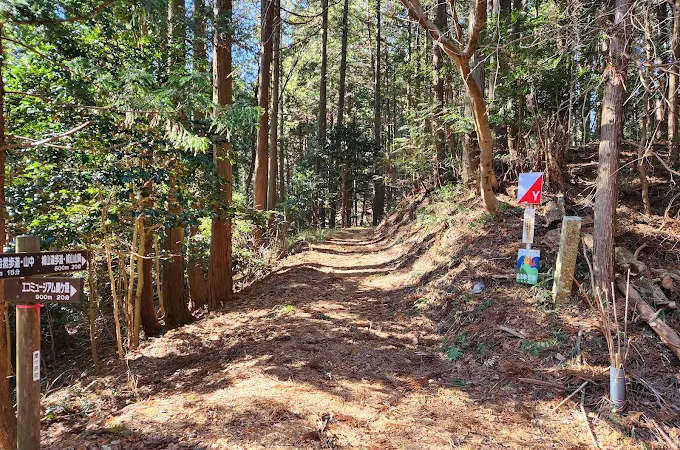
Currently, a hiking trail to Akataniyama Castle is maintained from Atago Park. The trail follows a route close to the original main approach (the front entrance to the castle), allowing visitors to observe various remains as they ascend.
Along the trail, remnants of enclosures, stone walls, and trenches are scattered, and information boards are installed. However, due to the steep slopes and uneven footing characteristic of mountain castles, appropriate preparation and caution are necessary for the ascent.
Upon reaching the main enclosure near the summit, a breathtaking panoramic view unfolds, offering a magnificent vista of Gujo Hachiman Castle and the townscape of Gujo Hachiman. This view truly demonstrates the ideal location of Akataniyama Castle as a base for controlling Gujo County.
Legends and Anecdotes
The Legend of Inunaki Castle
There are intriguing legends surrounding the origin of Akataniyama Castle’s nickname, “Inunaki Castle” (Dog-Crying Castle). Local legends tell of the castle’s lord’s beloved dog crying incessantly in grief as the castle fell, and of the castle’s guardian dog barking to warn of an approaching enemy.
These legends add color to the castle’s history and reflect the feelings the local people have towards the castle.
The End of Higashi Tsuneyoshi
There are several differing legends regarding the end of Higashi Tsuneyoshi’s life. One account states that he was killed in battle within the castle during an attack by Endo Morikazu, while another says he was killed while attempting to escape.
In any case, Higashi Tsuneyoshi is remembered in local history as a warrior who fought to the very end to defend his castle.
Relationship with Gujo Hachiman Castle
When discussing Akataniyama Castle, its relationship with Gujo Hachiman Castle is essential. Akataniyama Castle and Gujo Hachiman Castle are located a few kilometers apart in a straight line, and both castles played important roles in the history of Gujo.
After the fall of the Higashi clan, the Endo clan, who ruled Gujo County, built a new castle on Hachimanyama, closer to the town. This later became Gujo Hachiman Castle. While Akataniyama Castle was a fortified castle deep in the mountains, Gujo Hachiman Castle was developed as a flatland castle with an eye toward the development of the castle town.
Currently, Gujo Hachiman Castle can be seen from the main enclosure of Akataniyama Castle, allowing one to appreciate the relative positions of the two castles. These two castles symbolically represent the changes in castle architecture during the transition from the Sengoku period to the Edo period.
Access Information
Access by Public Transportation
Access to Akataniyama Castle starts from the town center of Gujo Hachiman. The nearest station is Gujo Hachiman Station on the Nagaragawa Railway. It’s approximately a 20-30 minute walk from the station to the castle ruins trailhead (Atago Park).
Gujo Hachiman Station can be reached from Mino-Ota Station by Nagaragawa Railway (approximately 1 hour 20 minutes) or by bus from Gifu Station (approximately 1 hour 30 minutes). Gujo Hachiman is a popular tourist destination with relatively good public transportation.
Access by Car
By car, it’s approximately a 10-minute drive from the Gujo Hachiman Interchange on the Tokai-Hokuriku Expressway to the town center of Gujo Hachiman. There is parking available around Atago Park, the trailhead, but spaces are limited, so early arrival is recommended, especially on holidays.
It’s also possible to use the parking lot at Gujo Hachiman Castle and walk from there towards Atago Park. There are several other tourist parking lots in the town area.
From the Trailhead to the Castle Ruins
The trailhead is at Atago Park (around Entsukaku). From here to the Akataniyama Castle ruins, the climb involves an elevation gain of approximately 260 meters and a walking distance of approximately 800 meters.
The trail is well-maintained, but there are steep slopes and uneven terrain typical of mountain castles. The estimated time is approximately 60-90 minutes for the ascent and 40-60 minutes for the descent. Those who are not confident in their physical fitness or are beginners should be well-prepared and allow ample time for their visit.
Precautions When Climbing the Castle
The following points should be noted when climbing Akataniyama Castle:
Clothing and Equipment: Appropriate hiking clothing and shoes are essential. Especially after rain, the trail can be slippery, so please wear non-slip shoes such as trekking shoes. In summer, insect repellent is necessary; in winter, warm clothing is also required.
Drinking Water: There are no vending machines at the summit. Please bring plenty of drinking water.
Time Management: Please manage your time carefully so that you can descend before sunset. Especially in winter, sunset is early, so we recommend climbing in the morning.
Weather: Climbing in bad weather is dangerous. Please check the weather forecast and avoid climbing if it is too dangerous.
Bear Precautions: As this is a mountainous area, be aware of bear sightings. We recommend carrying a bear bell.
Estimated Visiting Time
For a visit to Akataniyama Castle, you should allow approximately 2-3 hours, including the climbing time. If you plan to carefully observe the remains or enjoy taking photographs, we recommend allowing even more time.
If combining this with a visit to Gujo Hachiman Castle or exploring the townscape of Gujo Hachiman, it will be a half-day to full-day trip.
Nearby Attractions
Gujo Hachiman Castle
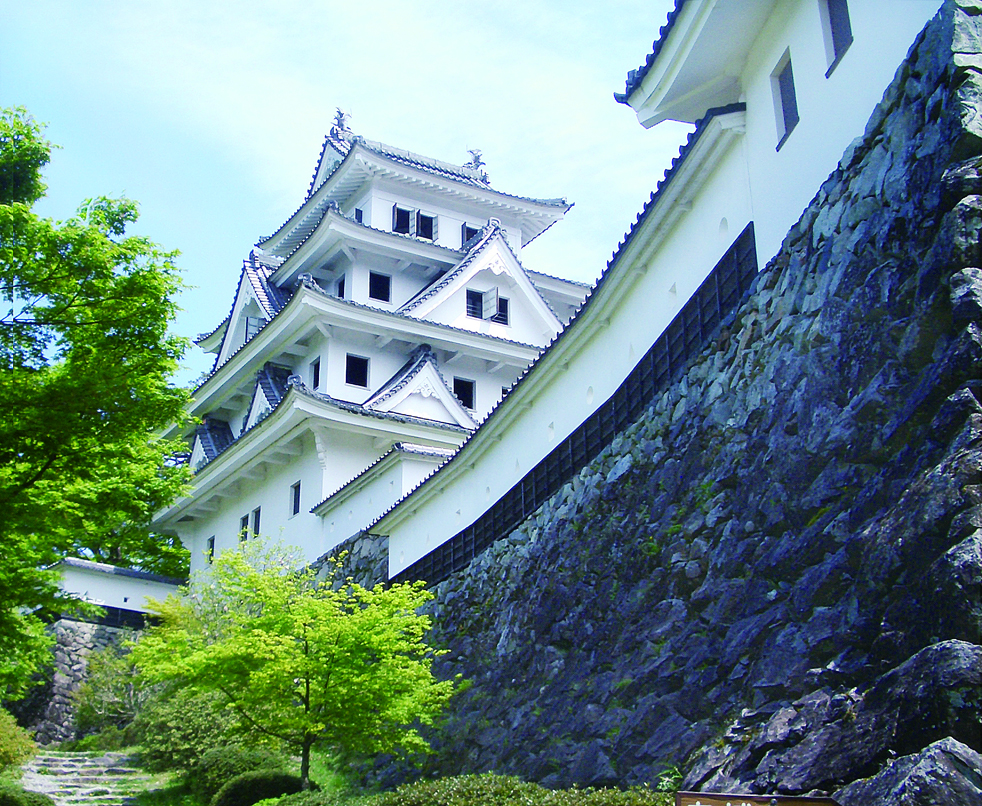
If you visit Akataniyama Castle, be sure to also visit Gujo Hachiman Castle. The castle tower, rebuilt in 1933 (Showa 8), is known as the oldest reconstructed wooden castle tower in Japan. The castle houses a museum where you can learn about the history of Gujo.
Gujo Hachiman Townscape
Gujo Hachiman is a beautiful castle town, sometimes called “Little Kyoto of Okumino.” The old townscape, spread along the clear Yoshida River, has been designated a National Important Preservation District for Groups of Traditional Buildings. A stroll through the town, crisscrossed by waterways, allows you to experience the atmosphere of the Edo period.
Gujo Odori Dance
Gujo Hachiman is nationally known for the “Gujo Odori” dance. Held for approximately 30 nights from mid-July to early September, this Bon dance is considered one of Japan’s three major Bon dances.
Historical Significance of Akataniyama Castle
Akataniyama Castle is not merely a local mountain castle, but an important historical site that reveals the realities of regional governance in Mino Province during the Sengoku period (Warring States period).
The fact that the Higashi clan, a branch of the Chiba clan, established power in the distant Gujo district of Mino Province and created their own system of rule speaks volumes about the complex political situation of the Sengoku period. Furthermore, the fact that they built a new castle to counter the invasion of the Asakura clan is a valuable concrete example illustrating the military tensions of the time.
In terms of its remains, as a mountain castle that made extensive use of stone walls, it is an important document that shows the developmental stage of castle construction technology in Mino Province. The construction of a castle of this scale using stone walls in the mountainous region of Gujo demonstrates the high economic power and technical capabilities of the Higashi clan.
Currently, Akataniyama Castle is protected as a valuable cultural property of Gujo City and is cherished as a regional historical heritage. Improvements to the viewing environment, such as the maintenance of hiking trails and the installation of information boards, are underway, making it a famous castle visited by many castle enthusiasts and history lovers.
Summary
Akataniyama Castle (Higashidonoyama Castle) is a valuable Sengoku period mountain castle ruin remaining in Gujo City, Gifu Prefecture. Built in 1541 by Higashi Tsuneyoshi, it functioned as a base for controlling Gujo County. However, it fell in 1559 to an attack by Endo Morikazu, and the Higashi clan was destroyed.
Built on Higashidonoyama Mountain at an altitude of 578 meters, the castle retains well-preserved remains such as stone walls, baileys, and moats, conveying the appearance of a Sengoku period mountain castle. The stone walls, in particular, are rare for a mountain castle and are one of its highlights.
Climbing the castle requires considerable physical strength and preparation, but the view from the main enclosure is magnificent, offering a panoramic view of the town of Gujo Hachiman and Gujo Hachiman Castle. Visiting in conjunction with sightseeing in Gujo Hachiman will allow you to experience the transformation of castles from the Sengoku period to the Edo period.
This historical site is recommended not only for history buffs and castle enthusiasts, but also for those who enjoy mountain climbing and hiking. When you visit Gujo Hachiman, be sure to stop by Akataniyama Castle.