Gujo Hachiman Castle Complete Guide | History, Highlights, and Access Information for Japan’s Oldest Reconstructed Wooden Castle
Gujo Hachiman Castle, towering over Hachiman-cho, Gujo City, Gifu Prefecture, is a mountain castle boasting a history dating back to the late Sengoku period and the oldest wooden keep in Japan, reconstructed in the early Showa period. Described by Ryotaro Shiba as “the most beautiful mountain castle in Japan,” its appearance changes with the seasons, continuing to fascinate many tourists.
This article comprehensively introduces information you should know before visiting Gujo Hachiman Castle, from its historical background and highlights to access methods and surrounding tourist information.
What is Gujo Hachiman Castle? | Overview of the Mountain Castle Also Known as Sekisui Castle
Gujo Hachiman Castle is a mountain castle built on the summit of Mt. Hachiman (approximately 354 meters above sea level, formerly known as Mt. Ushikubi), and is also known as Sekisui Castle, Gunjo Castle, and Gujo Castle. The name “Sekisui Castle” is said to have been derived from the castle’s landscape, surrounded by lush green mountains.
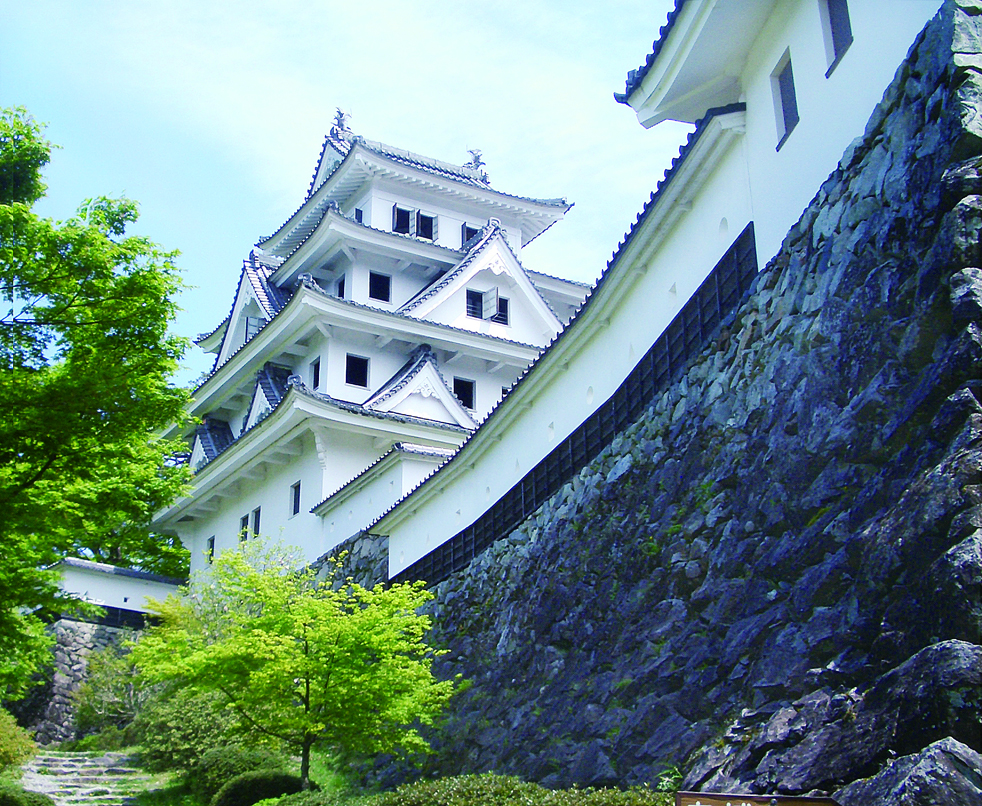
The current castle tower, rebuilt in 1933, is the oldest reconstructed wooden castle in Japan and is designated as a tangible cultural property by Gujo City. Furthermore, the stone walls of the castle ruins are a designated historical site of Gifu Prefecture and are also selected as the 141st of the Continued Top 100 Japanese Castles.
Geographical Characteristics and Defensive Capabilities
The Yoshida River flows to the south of Mt. Hachiman, and the Kodara River flows to the west, both functioning as natural moats. The steep mountain terrain offered excellent defensive advantages, and the presence of flat land at the foot of the mountain, suitable for building a castle town, provided ideal conditions for a mountain castle. This topographical advantage is the reason why it functioned as a key point in the control of Gujo during the Sengoku period.
History of Gujo Hachiman Castle | From the Sengoku Period to the Present
Founding Period: Construction by Endo Morikazu (1559)
The history of Gujo Hachiman Castle begins in Eiroku 2 (1559). At that time, a battle for control of Gujo, known as the “Battle of Akataniyama Castle,” broke out between Higashi Tsuneyoshi, the lord of Gujo, and Endo Morikazu. The place where Endo Morikazu set up camp during this battle is considered the origin of Gujo Hachiman Castle.
Endo Morikazu built a fort on this site, making it his base for controlling Gujo. From then on, the Endo clan ruled Gujo as the castle lords.
Changes in the Sengoku Period and the Succession of Castle Lords
Throughout the Sengoku period, Gujo Hachiman Castle saw several changes in its lords. After the Endo clan, Inaba Sadamichi temporarily served as the castle lord. It is also known as the birthplace of Chiyo, the wife of Yamauchi Kazutoyo, and gained attention in the historical drama “Kōmyō ga Tsuji.”
During the Edo period, the Aoyama clan became the lords of the castle, and the Aoyama family ruled the Gujō Domain until the Meiji Restoration. During the Aoyama clan’s rule, the castle’s fortifications were improved, and many of the stone walls visible today were constructed during this period.
Meiji Restoration and Castle Demolition
Following the turmoil of the late Edo period and the Meiji Restoration, Gujō Hachiman Castle, like many castles throughout Japan, was demolished under the Castle Demolition Order. After the abolition of the feudal domains and establishment of prefectures in 1871, the castle’s buildings were successively dismantled, and for a long time, only the stone walls remained on the mountaintop.
Reconstruction in the Showa Era: The Birth of Japan’s Oldest Wooden Reconstructed Castle
In 1933, a wooden replica castle tower was reconstructed to serve as a symbol of Gujō Hachiman for future generations. This is the current Gujo Hachiman Castle keep, and it holds historical value as Japan’s oldest reconstructed wooden castle.
Even now, more than 90 years after its reconstruction, the dignified style of its wooden architecture remains intact, and it is preserved as a valuable cultural asset that conveys the history of Gujo.
Highlights of Gujo Hachiman Castle | From the Keep to the Stone Walls
The Charm of the Wooden Keep
The greatest highlight of Gujo Hachiman Castle is undoubtedly its wooden keep. Although reconstructed in the early Showa period, it was built using traditional wooden construction techniques, and upon entering, you can feel the warmth of the wood and a unique atmosphere.
The keep houses numerous exhibits related to the history of Gujo Hachiman. Weapons, armor, and ancient documents are on display, allowing you to learn about the history of Gujo from the Sengoku period to the Edo period.
Spectacular Views from the Keep
From the top floor of the keep, a 360-degree panoramic view unfolds. From here, you can enjoy a panoramic view of the beautiful castle town of Gujo Hachiman, with its grid-like street layout and the clear waters of the Yoshida River.
On clear days, you can even see the distant Hakusan mountain range and the mountains of Okumino, and the beauty of the scenery captivates visitors. Ryotaro Shiba’s description of it as “the most beautiful mountain castle in Japan” was likely due to the view from the keep and its harmonious integration with the castle town.
Gujo Hachiman Castle as a Castle in the Sky
In the early mornings from autumn to winter, when weather conditions are right, Gujo Hachiman Castle appears as a “castle in the sky” floating in a sea of clouds. This fantastical sight of the keep floating in the sea of clouds has become a popular topic on social media in recent years, attracting many photography enthusiasts.
The conditions most conducive to the formation of a sea of clouds are a large temperature difference from the previous day, high humidity, and clear, early mornings. It is especially likely to occur from October to November.
Stone Walls Designated as a Prefectural Historic Site
The entire area of the Gujo Hachiman Castle’s stone walls is designated as a Gifu Prefecture Historic Site. In particular, the stone walls around the main keep were constructed during the Edo period under the Aoyama clan, and they demonstrate the high level of stonework techniques of that time.
The stone walls utilize techniques such as “nozurazumi” (rough stone masonry) and “uchikomi-tsugi” (fitted stone masonry), making them valuable historical remains for studying the evolution of castle architecture. Carefully observing the stone walls while climbing the castle will allow you to feel the castle’s history more deeply.
Main Exhibits Inside the Castle
The following exhibits are housed inside the castle tower:
- Armor and Weapons: Armor and swords from the Sengoku period to the Edo period
- Historical Documents: Historical documents related to the Gujo Domain
- Model of the Castle Town: An elaborate model recreating the townscape of Gujo Hachiman during the Edo period
- Portraits of Successive Castle Lords: Documents of successive castle lords, including the Endo and Aoyama families
- Gujo Odori Related Materials: The history of the Gujo Odori dance, which conveys the culture of the castle town
Through these exhibits, you can gain a three-dimensional understanding of the history of Gujo Hachiman Castle and its castle town.
Secret Stories and Legends of Gujo Hachiman Castle
Chiyo, Wife of Yamauchi Kazutoyo, and Gujo Hachiman
Chiyo, the wife of Yamauchi Kazutoyo, who gained attention in the historical drama “Kōmyō ga Tsuji,” is said to have been from Gujo Hachiman. Chiyo was from the Endo family and is said to have been born and raised in Gujo Hachiman.
Chiyo is known as a wise wife who supported her husband Kazutoyo’s rise to power, and her anecdote about purchasing a fine horse is particularly famous. Historical sites associated with Chiyo remain in the castle town of Gujo Hachiman, making it a popular destination for history buffs.
Origin of the Name “Sekisui Castle”
The elegant alternative name “Sekisui Castle” comes from the scenery of the lush green mountains surrounding the castle. It has long been praised as “a castle of accumulating greenery,” and the beauty of the castle embraced by the verdant mountains has been celebrated in poetry.
This alternative name indicates that Gujo Hachiman Castle was not merely a military facility, but a cultural fortress possessing scenic beauty.
Access Information | How to Get to Gujo Hachiman Castle
Access by Public Transportation
Using the Nagaragawa Railway
- Get off at Gujo Hachiman Station on the Nagaragawa Railway.
- Approximately 20 minutes on foot from the station to the center of the castle town.
- Approximately 15-20 minutes on foot from the castle town to the trailhead of the castle mountain.
- Approximately 15-20 minutes on foot from the trailhead to the castle tower.
The total journey from the station takes approximately 50-60 minutes.
Using Local Buses
A community bus operates within the Gujo Hachiman city area. However, the number of services is limited, so it is recommended to check the timetable in advance.
Access by Car
Using the Tokai-Hokuriku Expressway
- Approximately 5 minutes from “Gujō Hachiman IC” to the center of the castle town
- Accessible by car almost to the summit of Shiroyama (to Shiroyama Park parking lot)
- Approximately 5 minutes on foot from the parking lot to the castle tower
Parking Information
- Shiroyama Park Parking Lot (Free, approximately 20 spaces): The closest parking lot to the castle tower
- Castle Town Parking Lot (Paid): Can be used in conjunction with sightseeing in the castle town
During peak seasons, Shiroyama Park Parking Lot may be full, so early arrival is recommended.
Walking Routes to the Castle
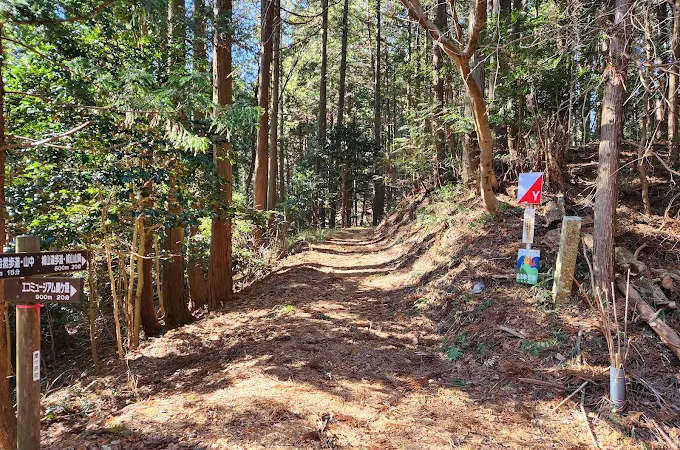
There are several routes from the castle town to the castle tower.
- Omotesando Route: The most common route. 1. Enjoy a leisurely ascent while admiring the stone walls.
- Back Approach Route: A slightly steep slope, but the distance is short.
- Forest Course: Enjoy the natural scenery as you ascend.
All routes will take approximately 15-20 minutes to reach the castle keep. We recommend wearing comfortable shoes.
Opening Hours, Fees, and Visiting Time
Opening Hours
- March-May, September-October: 9:00-17:00
- June-August: 8:00-18:00
- November-February: 9:00-16:30
Last entry is 30 minutes before closing time.
Admission Fees
- Adults (High School Students and above): 400 yen
- Children (Elementary and Junior High School Students): 200 yen
- Group Discount: Discounts available for groups of 20 or more
Combined tickets with museums and other facilities in the castle town are also available, offering savings if you plan to visit multiple locations.
Estimated Visiting Time
- Main Tower Only: Approximately 30-40 minutes
- Including Stone Walls and the Entire Castle: Approximately 60-90 minutes
- Combined with Castle Town Sightseeing: Half a day to a full day
If you want to thoroughly view the exhibits and enjoy the view from the main tower, we recommend allowing about an hour.
Integrated Sightseeing with Gujo Hachiman Castle Town
Gujo Hachiman: A Beautiful Town of Water
When visiting Gujo Hachiman Castle, be sure to also enjoy a stroll through the castle town. Gujo Hachiman is known as a “town of water,” with clear streams flowing through the town and numerous waterways and springs. Main Attractions in the Castle Town
- Sogi-sui: A spring selected as the first of Japan’s 100 Famous Waters.
- Yanaka Water Path: A charming walking path with a waterway flowing through a cobblestone lane.
- Gujō Hachiman Museum: A place to see a performance of the Gujō Odori dance.
- Craftsmen’s Town/Blacksmiths’ Town: A historical townscape with traditional townhouses.
Gujō Odori
The Gujō Odori dance, a summer tradition of Gujō Hachiman, is considered one of Japan’s three major Bon Odori dances. Held for approximately 30 nights from mid-July to early September, the “All-Night Dance” from August 13th to 16th is particularly famous.
The Gujō Odori dance has a history of over 400 years and is designated as a National Important Intangible Folk Cultural Property. Tourists can freely participate and dance alongside the locals.
Food Culture
Gujō Hachiman boasts a fascinating food culture blessed by its pristine rivers.
- Ayu (sweetfish) dishes: The ayu from the Nagara River are exquisite.
- Gujō Miso: Miso made using traditional methods.
- Gujō Ham: A local specialty.
- Soba (buckwheat noodles): Soba made with pure water.
The castle town has many restaurants where you can enjoy the flavors of Gujō.
Gujō Hachiman Castle in Every Season
Spring: The Castle of Cherry Blossoms and Fresh Greenery
From early to mid-April, the entire castle hill is adorned with cherry blossoms. The contrast between the castle tower and the cherry blossoms is magnificent, attracting many visitors. The castle is also illuminated at night, allowing you to enjoy the magical sight of cherry blossoms after dark.
Summer: The Castle of Deep Green
In summer, true to its name, “Sekisui Castle” (meaning “castle of deep green”), you can see the castle enveloped in deep green. Visiting the castle during its early opening hours (8:00 AM) allows you to enjoy a cooler visit.
Autumn: Famous for its Autumn Foliage
From late October to early November, the castle hill is ablaze with autumn colors. The view from the castle tower, with its beautiful contrast between the autumn-colored mountains and the castle town, is a popular photo spot. This time of year also sees a higher chance of a sea of clouds forming, increasing the opportunity to see the “castle in the sky.”
Winter: The Snow-Covered Castle Tower
Gujo Hachiman Castle is exceptionally beautiful in winter, especially after a snowfall. The castle tower, covered in white snow, perfectly embodies the “falling snow” scene that impressed Ryotaro Shiba. While opening hours are shorter in winter, the snow-covered castle is well worth the visit.
Photo Spots and Instagrammable Locations
Distant Views from the Castle Town
The castle tower, viewed from various points in the castle town, is a representative landscape of Gujo Hachiman. The views from “Shiroyama Park Lower Station” and “Yanagimachi” are particularly picturesque.
Panoramic View from the Castle Tower
The view of the castle town from the top floor of the castle tower is a must-see photo spot. The grid-like street layout and the flow of the Yoshida River create a truly Instagrammable landscape.
Combination of Stone Walls and Castle Tower
Photographing the stone walls around the main enclosure and the castle tower together creates a powerful, castle-like image. A particularly recommended angle is looking up from a diagonal position.
Early Morning During Sea of Clouds Season
For photographing the castle tower floating above a sea of clouds in the early autumn morning, the best locations are observation points in the castle town or on nearby hills. It’s also possible to photograph the castle tower over the sea of clouds from the Shiroyama Park parking lot.
The Cultural Value of Gujo Hachiman Castle
Significance as Japan’s Oldest Reconstructed Wooden Castle
Gujo Hachiman Castle’s keep is historically significant as Japan’s oldest reconstructed wooden castle, rebuilt in 1933 (Showa 8). Unlike post-war reinforced concrete reconstructed keeps, it was built using traditional wooden construction techniques, preserving the castle construction technology of the early Showa period.
Designation as one of Japan’s Continued Top 100 Castles
In 2017, Gujo Hachiman Castle was selected as the 141st castle in the “Continued Top 100 Castles of Japan.” This is a result of a comprehensive evaluation of its historical value as a castle, its importance as a cultural property, and its appeal as a tourist resource.
Visitors can also participate in a stamp rally, making it a memorable experience for castle enthusiasts.
Prefectural and Municipal Designated Cultural Properties
- Gifu Prefecture Designated Historic Site: Stone walls of the castle grounds
- Gujō City Designated Tangible Cultural Property: Wooden castle tower
These designations ensure that Gujō Hachiman Castle is properly preserved, managed, and passed down to future generations.
Points to Note and Advice When Visiting Gujō Hachiman Castle
Clothing and Items to Bring
- Comfortable walking shoes: The path to the castle is paved, but there are slopes and stairs.
- Seasonal clothing: The temperature at the summit can be lower than in the city.
- Drinks: Hydration is especially necessary in summer.
- Camera: There are many scenic spots, so check that your camera or smartphone is charged.
Weather and Time of Year
- Rainy weather: The path to the castle can become slippery, so caution is necessary.
- For sea of clouds: Early mornings in October and November are best. Check weather conditions the day before.
- Popular Seasons: It gets crowded during Golden Week, summer holidays, and the autumn foliage season.
Accessibility Information
It’s about a 5-minute walk from the Shiroyama Park parking lot to the castle tower, but there are stairs and slopes. The castle tower itself also has steep stairs, making it difficult to visit in a wheelchair. Those with mobility issues are advised to check in advance.
Nearby Tourist Spots
Gujo Hachiman Museum
At the museum located in the castle town, you can see Gujo Odori dance performances (3-4 times a day). There are also many exhibits where you can learn about the history and culture of Gujo.
Yanaka Water Path
This walking path offers a typical Gujo Hachiman landscape with a clear stream flowing through a cobblestone alley. It’s also a popular spot for taking photos.
Sogi-sui Spring
This spring was the first to be selected as one of Japan’s 100 Famous Waters. It was named after Iio Sogi, a renga poet from the Muromachi period. ### Gujo Hachiman Old Town Hall Memorial Museum
A beautiful memorial museum housed in Western-style architecture from the Taisho era. Historical materials of Gujo are on display.
Summary: Fully Enjoying the Charms of Gujo Hachiman Castle
Gujo Hachiman Castle is a mountain castle with multifaceted charms, including its historical value as the oldest reconstructed wooden castle in Japan, its spectacular views as a castle in the sky, and its harmony with the beautiful castle town.
Built in 1559 by Endo Morikazu at the end of the Sengoku period, it functioned as the center of Gujo’s rule. Although it was lost during the Meiji Restoration, it was rebuilt in 1933 as a source of local pride. The wooden keep, with over 90 years of history, is still loved by many as a symbol of Gujo Hachiman.
When visiting the castle, take your time to fully appreciate the charms of Gujo Hachiman, not only by viewing the keep, but also by observing the stone walls, enjoying the views from the keep, and strolling through the castle town. Gujo Hachiman Castle, which displays different expressions in each of the four seasons, is a place where you can discover something new no matter how many times you visit.
In particular, visiting during the autumn sea of clouds season or during the Gujo Odori festival will allow you to experience the culture and history of Gujo Hachiman more deeply. Enjoy the historical romance from the Sengoku period and the culture nurtured by the clear streams in this castle town watched over by Japan’s oldest reconstructed wooden castle.