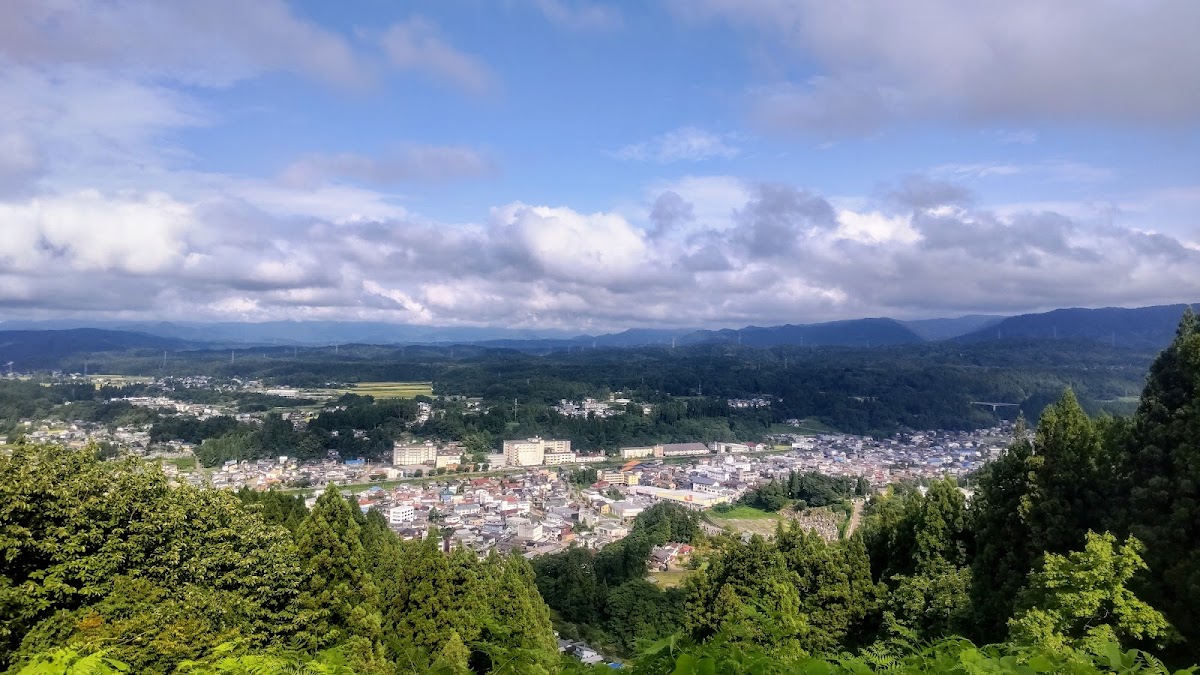
Tochio Castle (Niigata Prefecture) Complete Guide | History and Highlights of the Mountain Castle Where Uesugi Kenshin Raised His Army
What is Tochio Castle?
Tochio Castle is a Sengoku period mountain castle located in the Tochio area of Nagaoka City, Niigata Prefecture. Built on Tsurujoyama Mountain at an altitude of 228 meters, it is also known as Maizuru Castle and Ono Castle. It is a historically important place as the “place where he raised his army,” where Uesugi Kenshin, known as the Dragon of Echigo, served as lord in his youth and fought his first battle.
Currently, it is preserved as a Niigata Prefecture designated historical site, and the remains of the main keep, baileys, and moats are well-preserved. Although the altitude is low, the relative height difference is approximately 157 meters, making it a valuable historical site that conveys the typical structure of a Sengoku period mountain castle.
History of Tochio Castle
From Construction to the Muromachi Period
There are various theories regarding the construction period of Tochio Castle, but it is believed to have been built between the Nanboku-cho period and the early Muromachi period. Located at a strategic point in Koshi District of Echigo Province, Tochio Castle played a crucial role as a military base controlling transportation routes to Kariwa and Uonuma Districts.
During the Muromachi period, it came under the control of the Nagao clan, the deputy governor of Echigo Province, and members of the Nagao family, based in Tochio, served as castle lords for generations. During this period, Tochio Castle functioned as a political and military center within Echigo Province.
Uesugi Kenshin and Tochio Castle
Tochio Castle first appears on the historical stage during the time of Uesugi Kenshin (childhood name: Torachiyo, later Nagao Kagetora). In 1543, at the age of 14, Torachiyo entered Tochio Castle and became its lord. This period was a crucial time for Kenshin to lay the foundation for his success as a military commander.
In 1548, Kenshin fought his first battle at Tochio Castle. Using Tochio Castle as his base, Kenshin fought against the rebel forces led by Nagao Masakage and achieved a resounding victory. The Battle of Tochio Castle is known as the first battle that demonstrated the military talent of Kenshin, who would later be called the “Dragon of Echigo.”
Kenshin spent several years as the lord of Tochio Castle, gaining military and political experience there. Even after becoming the lord of Kasugayama Castle and the ruler of Echigo Province, Tochio Castle continued to function as an important branch castle of the Uesugi clan.
The Otate Rebellion and Tochio Castle
When Uesugi Kenshin died in 1578, the Otate Rebellion, a succession dispute, erupted. Tochio Castle became a battlefield during this civil war. Fierce battles raged between the Uesugi Kagekatsu faction and the Uesugi Kagetora faction, with Kagekatsu ultimately emerging victorious and becoming the head of the Uesugi family.
Tochio Castle played a crucial role in this rebellion, functioning as a base for Kagekatsu’s faction. After the Otate Rebellion, Tochio Castle continued to be maintained as an important military base in Echigo Province under the control of Uesugi Kagekatsu.
From the Toyotomi Era to Abandonment
In 1590, after Toyotomi Hideyoshi’s siege of Odawara, Uesugi Kagekatsu was transferred to Aizu. Hori Hideharu took control of Echigo Province, and Tochio Castle came under his rule. The Hori clan continued to use Tochio Castle, but in 1598, when Hori Hideharu moved his base from Kasugayama Castle to Fukushima Castle (Niigata City), the military importance of Tochio Castle declined.
In the Edo period, due to the Tokugawa shogunate’s “One Castle Per Province” decree, Tochio Castle was officially abandoned. Since then, the castle has been abandoned and its buildings have been lost, but remnants such as stone walls and baileys remain in the natural landscape.
Structure and Layout of Tochio Castle
Characteristics as a Mountain Castle
Tochio Castle is a typical Sengoku period mountain castle built around the summit of Tsurujoyama Mountain, which is 228 meters above sea level. The elevation difference from the foot of the mountain is approximately 157 meters, and the castle boasts a robust defensive structure that takes advantage of the steep terrain.
The castle’s layout is a long, narrow horseshoe shape running north-south, with multiple baileys arranged along the ridge. This arrangement effectively defends against enemy attacks. The design, which makes maximum use of the unique terrain of a mountain castle, demonstrates the high level of castle-building technology of the time.
Main Bailey and Major Baileys
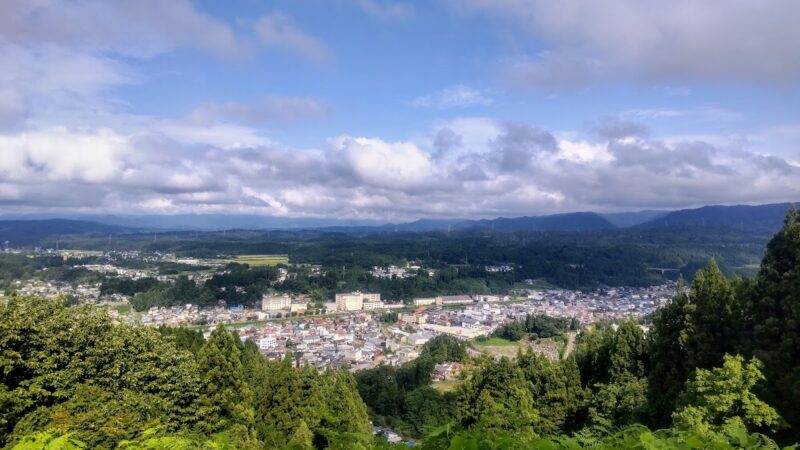
The main bailey is located at the mountaintop, and the remains of the flat bailey are still clearly visible today. The main bailey measures approximately 40 meters east-west and 30 meters north-south, and is believed to have housed the lord’s residence and command post. From the main bailey, one can see the town of Tochio and the surrounding mountains, illustrating its function as a military observation post.
Around the main bailey, baileys such as the second and third baileys are arranged in a stepped pattern. These baileys functioned as defensive positions, designed to gradually prevent enemy incursions. The second bailey, in particular, was the second largest after the main bailey and served as a crucial defensive stronghold.
Moats and Earthworks
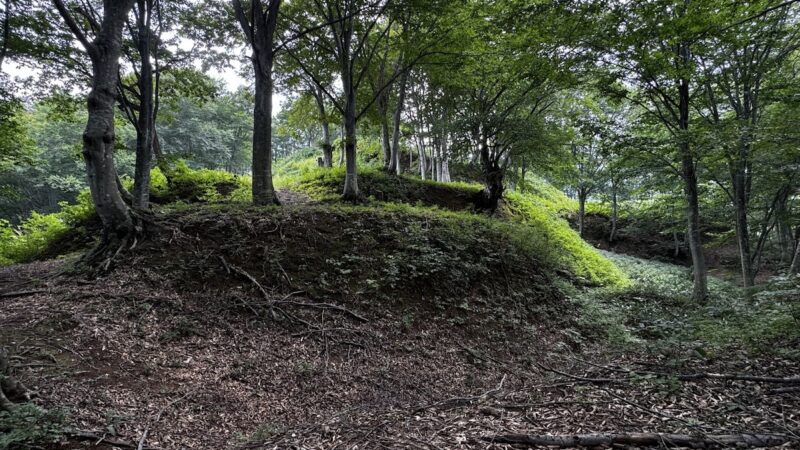
A notable feature of Tochio Castle’s defensive structures is its multiple moats. Digged to cut across the ridge, these moats were important defensive structures that physically prevented enemy incursions. Even today, moats several meters deep remain in good condition, allowing visitors to appreciate the castle-building techniques of the Sengoku period.
Earthworks surround the baileys, further enhancing their defensive capabilities. The height of the earthworks varies depending on the location, but the highest points reach over 2 meters. These earthworks served to protect against enemy arrows and firearms, as well as obstructing visibility.
Access Routes and Entrance Gates
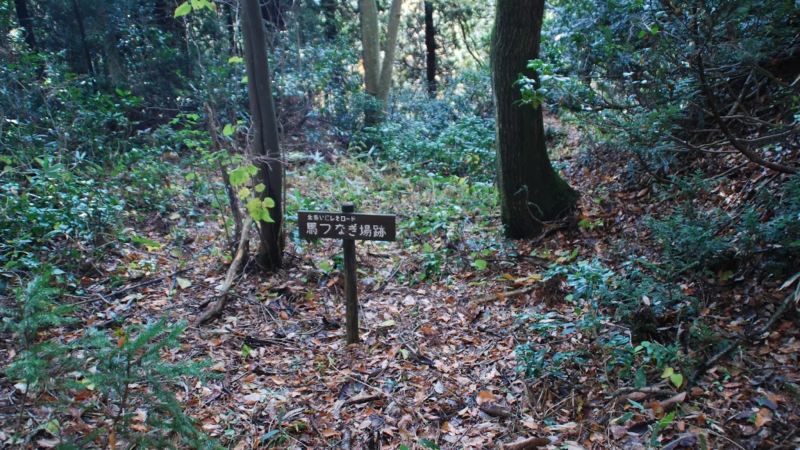
While there were multiple access routes to the castle, the main route was from the east, towards the Suwa Shrine. The access route was intentionally winding, a design intended to slow down enemy advances.
The entrance gates to the baileys also feature a defensive structure. The castle features numerous design elements designed to disadvantage attackers, such as staggered entrances that prevent direct entry and narrow passages.
Highlights of Tochio Castle
Main Enclosure Ruins (Mountaintop)
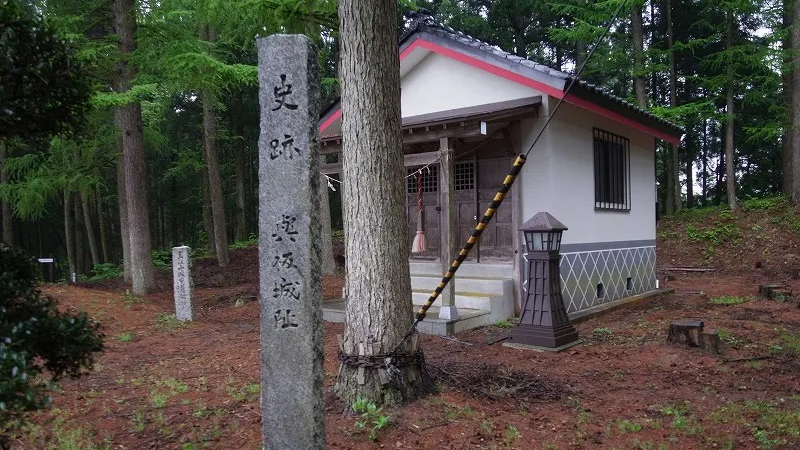
The main highlight of Tochio Castle is the main enclosure ruins located on the mountaintop at an altitude of 228 meters. A spacious, flat area remains, allowing visitors to appreciate the scale of the former castle. A monument marking the castle site stands at the main enclosure, making it a popular spot for commemorative photos.
The view from the main enclosure is magnificent, offering a 360-degree panoramic view of the town of Tochio, the Shinano River, and the surrounding mountains. On clear days, one can even see the Sea of Japan in the distance, highlighting the castle’s strategic importance.
Enclosures and Remains
Several enclosures are arranged in a stepped pattern around the main enclosure, allowing observation of the unique structure of a mountain castle. Each enclosure is relatively well-preserved, making it a valuable resource for learning about the castle’s structure during the Sengoku period.
Of particular note are the clearly preserved moats. The deeply excavated moats speak to the advanced civil engineering techniques of the time. Earthen ramparts also remain in various places, allowing us to understand the layout of the defensive structures.
Statue of Uesugi Kenshin (Akiba Park)
Akiba Park, located at the foot of the Tochio Castle ruins, stands a bronze statue of Uesugi Kenshin. This statue was erected to commemorate Tochio as the “place where Kenshin raised his banner,” and depicts Kenshin in his youth.
Akiba Park also serves as a starting point for climbing Tochio Castle, and is equipped with facilities such as parking and restrooms. Information boards about Tochio Castle are also installed within the park, allowing visitors to learn about its history before climbing.
Suwa Shrine
Located at the eastern foot of Tochio Castle, Suwa Shrine played an important role as the castle’s guardian shrine. It remains a shrine that attracts local worshippers and is one of the main entry points to Tochio Castle.
The hiking trail from Suwa Shrine to the main keep is relatively well-maintained, making it an easy route even for beginners. There are also explanatory signs about Tochio Castle within the shrine grounds, allowing you to learn about its history as you begin your climb.
Access to and How to Visit Tochio Castle
Access Methods
Access by Car
- Approximately 30 minutes from the Kan-Etsu Expressway “Nagaoka IC” via National Route 351
- Approximately 25 minutes from the Hokuriku Expressway “Nakanoshima-Mitsuke IC” via Prefectural Road 138
- Approximately 5 minutes by car from the Tochio town area to Akiba Park
- Free parking available at Akiba Park (approximately 20 cars)
- It is also possible to drive to Nakanomaru-shita using the forest road
Access by Public Transportation
- Approximately 40 minutes by Echigo Kotsu bus “bound for Tochio Bus Depot” from JR Nagaoka Station
- Get off at the “Tochio Bus Depot” bus stop, and it’s about a 15-minute walk to Akiba Park
- Since the number of buses is limited, it is necessary to check the timetable in advance
Ascent Routes
Several ascent routes to Tochio Castle ruins are available, allowing you to choose according to your physical condition and available time.
Suwa Shrine Route (Standard Course)
- Distance: Approx. 1.2km
- Time Required: Approx. 40 minutes uphill, approx. 30 minutes downhill
- Difficulty: Intermediate
- The most common route, with plenty of signposts.
Akiba Park Route (Beginner-Friendly)
- Distance: Approx. 1.5km
- Time Required: Approx. 50 minutes uphill, approx. 35 minutes downhill
- Difficulty: Beginner
- An easy route with a gentle slope.
Forest Road Route (Time-Saving Course)
- Accessible by car to Nakanomaru-shita
- Approx. 15 minutes on foot to Honmaru
- Difficulty: Beginner
- Recommended for those with time or physical limitations.
Advanced Loop Course
- Distance: Approx. 3km
- Time Required: 2 hours 30 minutes to 3 hours
- Difficulty: Advanced
- A full-fledged trekking course visiting multiple baileys and ruins.
Precautions When Visiting the Castle
- As it is a mountain castle, comfortable walking shoes and clothing are essential.
- Always bring your own drinking water (there are no vending machines at the summit).
- Insect repellent is recommended in summer.
- In winter, climbing may be difficult due to snow and ice.
- Carrying a bell or similar device is recommended as bear sightings are possible.
- The hiking trail is well-maintained, but be careful as it can be slippery in rainy weather.
- Cell phone reception is good.
Tourist Spots Around Tochio Castle
Historical Facilities in the Tochio Region
Tochio Art Museum
This museum introduces the history and culture of Tochio, and also features exhibits on Tochio Castle and Uesugi Kenshin. Traditional local crafts are also on display, allowing visitors to gain a deeper understanding of Tochio’s culture.
Roadside Station R290 Tochio
This roadside station sells Tochio’s specialty products and local vegetables. You can purchase Tochio’s famous “Tochio Aburaage” (deep-fried tofu), and enjoy dishes made with local ingredients at the restaurant.
Tochio Fried Tofu
Tochio fried tofu is a nationally renowned specialty of the Tochio region. It’s about three times the size of regular fried tofu, and features a crispy exterior and a fluffy interior. It’s highly recommended to enjoy freshly made fried tofu at a local specialty shop before or after visiting Tochio Castle.
Nearby Castles
Kasugayama Castle
Known as the base of Uesugi Kenshin, Kasugayama Castle is about a 40-minute drive from Tochio Castle. It’s one of Japan’s Top 100 Castles, and many castle enthusiasts visit it along with Tochio Castle.
Yoita Castle
Yoita Castle, known for its connection to Naoe Kanetsugu, is also relatively close to Tochio Castle. It’s an important castle for tracing the history of the Uesugi retainers.
Designation and Preservation Activities of Tochio Castle
Niigata Prefecture Designated Historic Site
Tochio Castle ruins were designated as a Niigata Prefecture historic site in 1973. The designation was based on its high historical value as a castle associated with Uesugi Kenshin, as well as its well-preserved structure as a mountain castle from the Sengoku period.
With the designation as a prefectural historic site, the preservation and utilization of the castle ruins were officially promoted, including the development of hiking trails and the installation of information boards.
Preservation Activities and Development
Preservation activities for Tochio Castle ruins are continuously carried out by Nagaoka City and local preservation groups. The main activities are as follows:
- Maintenance and upkeep of hiking trails
- Installation and updating of guide signs and explanatory boards
- Grass cutting and cleaning activities
- Surveying and documentation of historical remains
- Training and guiding of tourist guides
In particular, the tourist guiding activities by the “Tochio Tourist Guide Club” are extensive, and guided tours of the castle ruins are available by prior reservation. Climbing the castle while listening to detailed explanations from the guides allows for a deeper understanding of the castle’s history and structure.
Future Utilization Plans
Nagaoka City has positioned the Tochio Castle ruins as a tourist resource, the “Birthplace of Lord Kenshin’s Uprising,” and plans for further utilization. Various initiatives are being considered, including expanding trekking courses, improving information facilities, and utilizing digital technology for historical explanations.
Recommended itineraries for visiting Tochio Castle
Half-day plan (3-4 hours)
- Visit the statue of Uesugi Kenshin at Akiba Park (15 minutes)
- Begin the ascent to the castle from Suwa Shrine (40 minutes)
- Lunch break and enjoy the scenery at the main keep site (30 minutes)
- Visit the surrounding baileys and ruins (30 minutes)
- Descend the mountain (30 minutes)
- Enjoy local specialties at a Tochio fried tofu shop (30 minutes)
Full-day plan (6-7 hours)
- Gather information and shop at Michi-no-Eki R290 Tochio (30 minutes)
- Learn about history at Tochio Art Museum (1 hour)
- Ascend to the castle from Akiba Park (Advanced loop course: 3 hours)
- Lunch in Tochio town (Tochio fried tofu) (1 hour)
- Visit Suwa Shrine (30 minutes)
- Tour of nearby historical sites (1 hour)
Castle Tour Plan (2 days)
Day 1
- Morning: Visit Tochio Castle and explore the surrounding area
- Afternoon: Visit Yoita Castle
- Accommodation: Nagaoka City or Tochio area
Day 2
- Morning: Visit Kasugayama Castle
- Afternoon: Visit Kasugayama Castle Historical Site Plaza and sightseeing in Joetsu City
Tochio Castle Photo Spots
View from the Main Enclosure
From the main enclosure ruins, you can enjoy a 360-degree panoramic view, especially recommended on sunny days. In the morning, the townscape of Tochio illuminated by the rising sun is beautiful, and in the evening, the silhouette of the mountains against the sunset is impressive.
Remains of the Moat
The moat, a defensive structure from the Sengoku period, is one of the highlights of Tochio Castle. Taking a photo of the deeply excavated moat from the side conveys its scale and power.
Kenshin Uesugi Statue in Akiba Park
The statue of Uesugi Kenshin in Akiba Park at the foot of the mountain is an excellent spot for taking photos with Tochio Castle in the background. During cherry blossom season, you can photograph the cherry blossoms, the statue, and the castle mountain in the background all together.
Seasonal Highlights
- Spring (April-May): A beautiful season with fresh greenery and cherry blossoms. The cherry blossoms in Akiba Park are particularly magnificent.
- Summer (June-August): Enjoy the atmosphere of the mountain castle enveloped in deep green.
- Autumn (September-November): The most popular season with beautiful autumn foliage. Peak season is late October to early November.
- Winter (December-March): The mountain castle in a snowscape is fantastic, but climbing to the castle is difficult.
Summary
Tochio Castle is a historically important mountain castle where Uesugi Kenshin spent his youth and fought his first battle. Built on Tsurushiroyama Mountain at an altitude of 228 meters, Tochio Castle is a typical mountain castle from the Sengoku period. The remains of the main keep, baileys, and moats are well-preserved, allowing visitors to learn about the castle-building techniques and defensive philosophies of the time.
Designated as a Niigata Prefecture historical site, preservation and utilization efforts are underway, and multiple climbing routes have been established, making it a castle site enjoyable for beginners and advanced hikers alike. The view from the main keep, overlooking the town of Tochio, is magnificent, and trekking while feeling the romance of history will be a special experience.
When visiting Tochio Castle, don’t forget to try the local specialty, “Tochio no Aburaage” (deep-fried tofu). Tochio, where you can enjoy both history and food culture, is one of Niigata Prefecture’s most attractive tourist destinations.
Tochio Castle can be considered the origin of Uesugi Kenshin, the Dragon of Echigo. By actually visiting and experiencing its history and remains, you will surely feel the spirit of the Sengoku period.