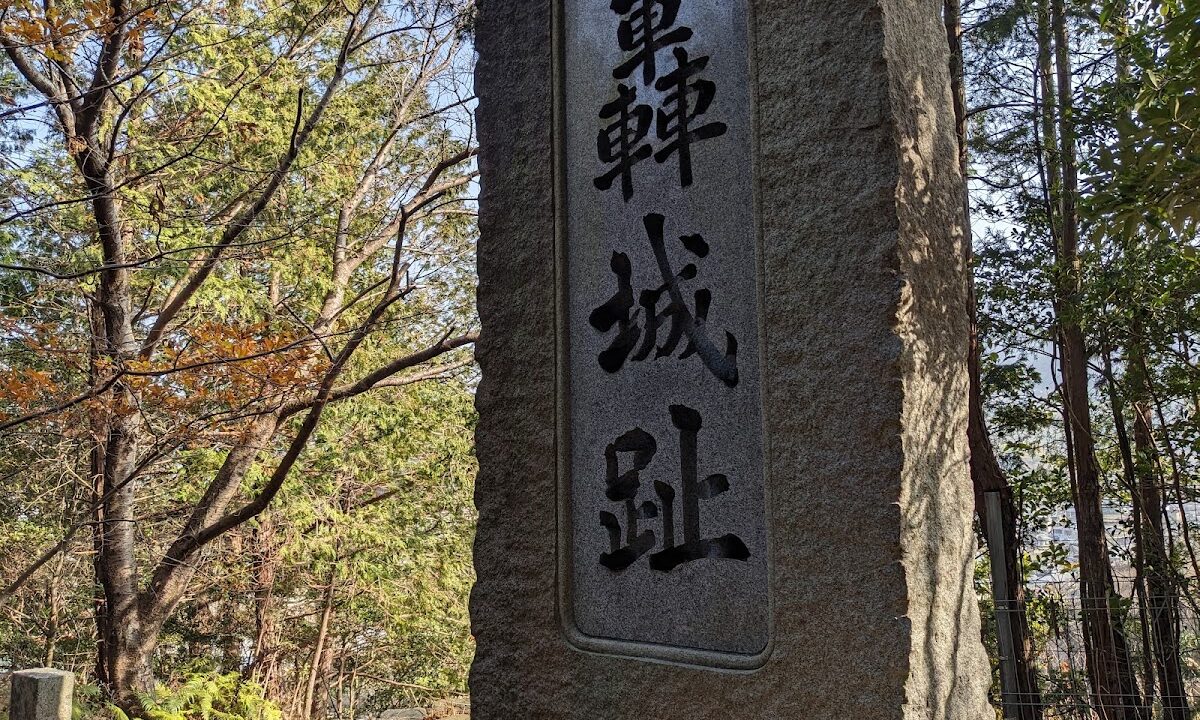
Todoroki Castle (Nikko City, Tochigi Prefecture) Complete Guide | Detailed Explanation of History, Remains, and Access
Todoroki Castle, located in Todoroki, Nikko City, Tochigi Prefecture, is the site of a medieval clan’s residence built during the Kamakura period. Its scale, style, and the state of its remains are all well-preserved, making it a valuable historical site in the study of medieval castles. This article comprehensively explains information useful for castle enthusiasts and history fans, from the historical background of Todoroki Castle to detailed remains and access methods.
Basic Information on Todoroki Castle
Location and Former Province
Location: Matsubara, Todoroki, Nikko City, Tochigi Prefecture
Former Province: Shimotsuke Province
Designation: Nikko City Designated Historic Site
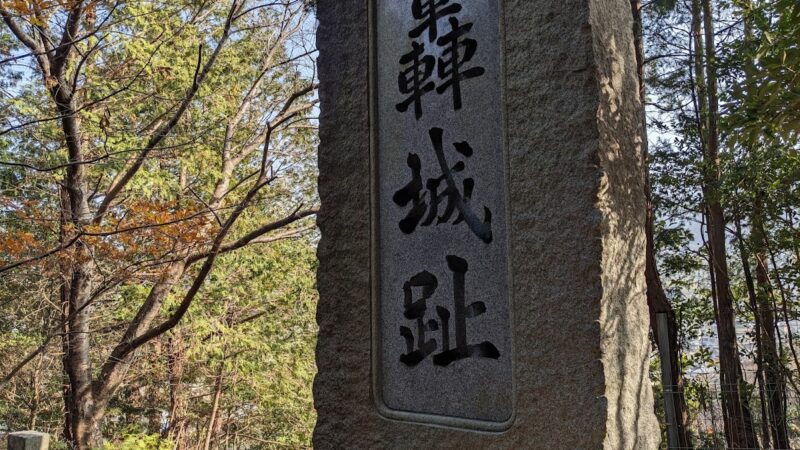
Todoroki Castle is located along National Route 461, approximately 10 km southwest of the center of Nikko City. Currently, the remains are located behind private houses, and explanatory signs and information boards have been installed.
Classification and Structure
Classification: Hill Castle (Residence)
Structure: Square Residence
Keep Structure: None (As it was a medieval residence, there was no keep)
Todoroki Castle has a typical medieval clan residence style, with a simple yet sturdy structure consisting of a square main enclosure surrounded by earthworks and a moat. Unlike the complex layouts of mountain castles from the Sengoku period, it is a castle built on a hill close to plains, strongly characterized as a living space during peacetime.
Builder and Lord
Builder: Hatakeyama Shigeyoshi
Year of Construction: Mid-Kamakura period (estimated to be the first half of the 13th century)
Main Lord: Hatakeyama clan
Year of Abandonment: Unknown (estimated to be the end of the Sengoku period)
Hatakeyama Shigeyoshi was a member of the Hatakeyama clan, a powerful vassal of the Kamakura Shogunate, and held territory in Shimotsuke Province. Todoroki Castle is believed to have been a residence built by the Hatakeyama clan as a base for regional control. While historical records are scarce regarding subsequent lords, it is presumed that the area came under the influence of the Utsunomiya clan during the Sengoku period.
Historical Background of Todoroki Castle
Construction during the Kamakura Period
The mid-Kamakura period, when Todoroki Castle was built, was a time when samurai settled in various regions as jitō (land stewards) of manors and public lands, establishing regional control. The Hatakeyama clan was a powerful vassal family since Minamoto no Yoritomo’s uprising, and while based in Musashi Province, they also acquired territory in Shimotsuke Province.
It is believed that Hatakeyama Shigeaki established his residence in Todoroki for the purpose of managing the local manors and securing a military base. At that time, Shimotsuke Province was important as a transportation route to Oshu (northern Japan) and also passed through the pilgrimage route to Nikkozan, making it a strategically valuable area.
Function as a Residence of a Medieval Local Lord
Todoroki Castle is a fortress that functions more as the daily living space of a local lord than as a purely military facility. While it possesses defensive features through earthworks and moats, it is not a fortress utilizing rugged terrain like a mountain castle, but rather functions as the center of territorial management.
It is presumed that the residence contained not only living quarters but also offices for retainers, warehouses, and stables. The well remains that still exist today are valuable historical relics showing traces of life at that time.
Changes After the Sengoku Period
During the Sengoku period, Shimotsuke Province became a region where the powers of clans such as the Utsunomiya, Nasu, and Satake clans competed. The detailed history of Todoroki Castle is unclear due to a lack of historical records, but it is highly likely that it came under the control of the Utsunomiya clan during this period.
After Toyotomi Hideyoshi’s siege of Odawara, the Kanto region came under the control of Tokugawa Ieyasu, and many small medieval castles were abandoned. It is believed that Todoroki Castle was abandoned sometime between the late Sengoku period and the early Edo period, but the exact year of its abandonment is unknown.
Details of Todoroki Castle’s Remains
Todoroki Castle is a medieval residence site with remarkably well-preserved remains, and is highly regarded by castle researchers. Here, we will provide a detailed explanation of the main remains that can be confirmed on-site.
Earthworks
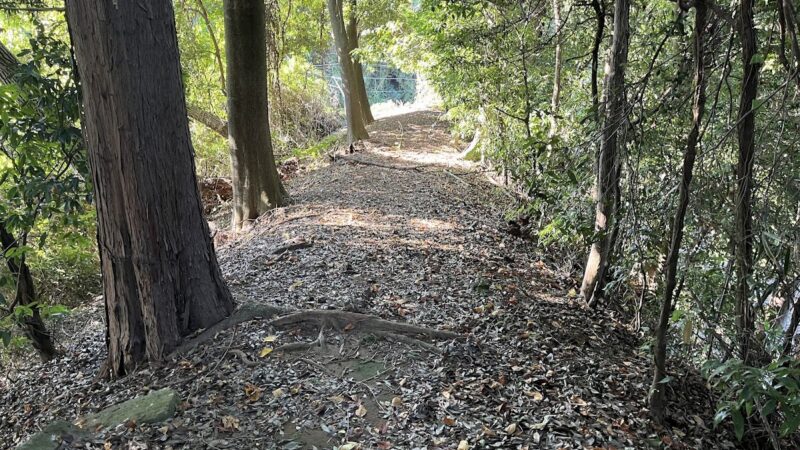
The most prominent remains of Todoroki Castle are the earthworks. Built to surround the main enclosure, the earthworks remain well-preserved, approximately 2-3 meters high. The top of the earthworks is flat, suggesting that fences or walls were once installed there.
The earthworks were constructed using the rammed earth method, and observation of the cross-section reveals traces of soil compacted in layers. This construction method is typical of castles from the Kamakura period and is important evidence supporting the construction date of Todoroki Castle.
On the outside of the earthworks, a flat area called an “inubashiri” (dog run) remains in some areas, showing ingenuity in its defensive function.
Dry Moats and Water Moats
Both dry and water moats can be found at Todoroki Castle. Dry moats, 5-8 meters wide and 2-3 meters deep, remain on the north and east sides of the main enclosure, forming a defensive line in conjunction with earthworks.
On the other hand, traces of water moats remain on the south and west sides. A river still flows in front of the moat today, and a bridge spans it; this is thought to have utilized the former water moat. Water moats were formed by drawing water from springs and surrounding streams, and offered a higher defensive effect than dry moats.
The cross-section of the moats is a V-shape called a “yagenbori,” designed to prevent enemy soldiers from easily climbing them.
Enclosures (Kuruwa)
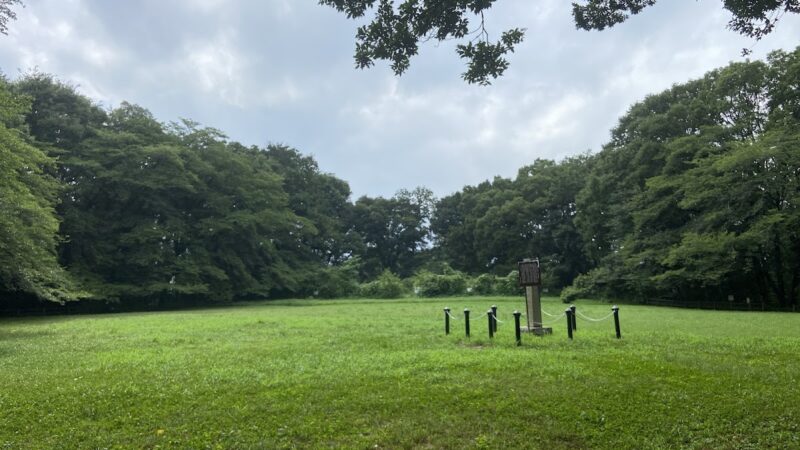
The main enclosure of Todoroki Castle is roughly square, measuring approximately 60 meters east-west and 50 meters north-south, with an area of approximately 3,000 square meters. While parts of the main enclosure are now occupied by private residences, the overall area is flat, allowing one to appreciate the scale of the former residence.
Several flat areas, believed to be secondary enclosures, can be seen surrounding the main enclosure, suggesting the location of retainers’ residences and warehouses. However, due to later topographical alterations, the clear boundaries of the secondary enclosures are difficult to discern.
Well Remains
Within the main enclosure, the remains of a stone-lined well are preserved. It is approximately 1.5 meters in diameter and about 3 meters deep in the currently visible area, but it is thought to have been deeper originally.
The well’s stonework is constructed from stacked natural stones, making it a valuable relic demonstrating the technological level of the Kamakura period. Although currently filled in, it once produced spring water and was used as a source of water for the residence.
Stone Walls
Partial stone walls can also be seen at Todoroki Castle. However, these are not the advanced techniques such as cut-stone or fitted-stone construction seen in early modern castles from the Sengoku period onward, but rather natural stone walls constructed using the nozura-zumi method.
The stone walls are approximately 1.5 meters high at their highest point and are thought to have been used to reinforce the earthworks and strengthen the area around the entrance (koguchi). This is a valuable example of stone wall construction in medieval castles.
Entrance (Koguchi)
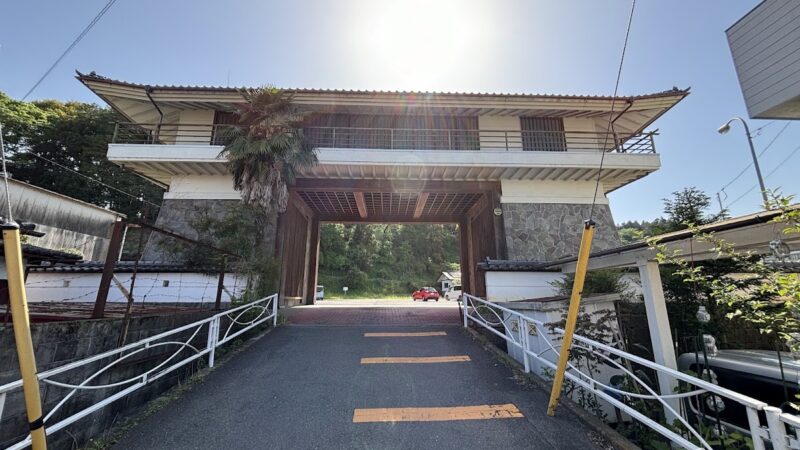
The entrance to the castle, the koguchi, is clearly visible on the south side of the main enclosure. It is a section where the earthworks open, and the earthworks on both sides project outwards, creating a “staggered koguchi” style entrance.
This structure allows for attacks on invading enemy soldiers from the flanks, demonstrating the skillful defensive techniques of medieval castles. A moat is located in front of the entrance, suggesting that entry was via a bridge.
Highlights and Evaluation of Todoroki Castle
A Typical Example of a Medieval Residence
The greatest value of Todoroki Castle lies in its excellent preservation of a typical medieval residence of a powerful local clan during the Kamakura period. Nationwide, there are few examples of residences from this period with such clearly preserved remains, making it a valuable historical site for castle research.
This site is suitable for beginners learning about castles, as it allows you to observe all the basic elements of a medieval castle, such as the combination of earthworks and moats (a basic form of a square residence), the arrangement of the main and secondary enclosures, and the structure of the gate.
Excellent Preservation
Todoroki Castle has not undergone large-scale topographical alterations in later periods and has relatively well retained its original form. The height of the earthworks and the depth of the moats are still largely intact, allowing you to appreciate its defensive capabilities in its heyday.
The preservation of the earthworks, in particular, is excellent, and the ability to examine the construction techniques through cross-sectional observation is academically important. Furthermore, the remaining stone-lined wells and parts of the stone walls are valuable for understanding the daily life of a medieval residence.
Quiet Exploration Environment
Todoroki Castle is not a tourist destination and is a quiet historical site with few visitors. While there are explanatory signs and information boards, large-scale development has not taken place, allowing you to observe the remains in a near-natural state.
Due to its location behind private houses, consideration for residents is necessary when visiting, but this also means you can reflect on medieval history in a peaceful atmosphere. For castle enthusiasts, this is a valuable place to experience a “genuine castle ruin” that hasn’t been commercialized for tourism.
Access and Parking Information
Access by Car
Nearest Interchange: Approximately 15 minutes (approx. 8km) from the Imaichi Interchange on the Nikko-Utsunomiya Expressway
After exiting the Imaichi Interchange, head west on National Route 461. There is an information board near the Todoroki intersection; turn onto the narrow road from there. The information board is relatively easy to find as it’s along National Route 461, but be careful not to miss it.
Parking: There is no dedicated parking lot. A little further from the information board, there is a grassy area where 1-2 cars can park. However, since it is near private residences, please avoid roadside parking and be considerate of traffic.
Access by Public Transportation
Nearest Station: JR Nikko Line/Tobu Nikko Line “Imaichi Station”
Distance from Station: Approximately 6km (approximately 1 hour 20 minutes on foot)
Access by public transportation is inconvenient; taking a taxi from the nearest station is the most practical option. Bus routes passing near Todoroki Castle are limited and infrequent, so checking the timetable in advance is recommended.
Points to Note at the Site
- Consideration for Private Residences: The castle ruins are adjacent to private property. Please be quiet during your visit and refrain from trespassing on private land.
- Checking the Signpost: Following the narrow path from the information board along National Route 461, you will find a small signpost next to a private house. Use this signpost as a landmark to find the castle entrance.
- Condition of the Path: While it’s only a few minutes’ walk from the entrance to the ruins, some parts of the path are not well-maintained. Wearing comfortable shoes is recommended.
- Bridge Crossing: As you proceed from the castle entrance, a river flows ahead, and a bridge spans it. The bridge is old, so caution is required when crossing it.
- Seasonal Visiting Conditions: In summer, vegetation grows thick, making the remains difficult to see. Spring or autumn visits are more suitable for observing the remains.
Related Historical Sites Around Todoroki Castle
Castles in Nikko City
If you visit Todoroki Castle, we recommend visiting other castles in Nikko City.
Iwasaki Castle: A medieval mountain castle located approximately 5km northeast of Todoroki Castle. It functioned as a branch castle of the Utsunomiya clan.
Itabashi Castle/Itabashi Jinya: A castle and jinya (fortified residence) located in the Itabashi district of Nikko City. During the Edo period, it was an important strategic point on the road to Nikko Toshogu Shrine.
Inokura Castle: A medieval castle located in Inokura, Nikko City. Like Todoroki Castle, it is the site of a medieval powerful family’s residence.
Ogura Castle: A mountain castle located in Ogura, Nikko City. Remains from the Sengoku period (Warring States period) still exist.
Nikko Historical Sightseeing
Nikko City is a tourist destination known for its World Heritage Site, “Shrines and Temples of Nikko.” Visiting the following facilities in conjunction with Todoroki Castle will allow you to gain a deeper understanding of the region’s history.
Nikko Toshogu Shrine: A shrine dedicated to Tokugawa Ieyasu, famous for its magnificent architecture.
Nikko Futarasan Shrine: The central shrine of Nikko Mountain worship, with a history dating back to ancient times.
Rinnoji Temple: The central temple of Nikko Mountain, and an important temple of the Tendai sect.
Imaichi Local History Museum: Exhibits historical materials from the Imaichi district of Nikko City, and also houses materials related to Todoroki Castle.
Todoroki Castle Reviews and Ratings
Ratings from Castle Enthusiasts
Todoroki Castle is highly regarded among castle enthusiasts. On a community website for castle enthusiasts nationwide, it ranks first in Nikko City and highly within Tochigi Prefecture, demonstrating its strong support from medieval castle fans.
Points of Appreciation:
- Excellent preservation of the remains
- Allows observation of a typical medieval residence
- Preserves diverse remains such as earthworks, moats, and wells
- Provides a quiet environment for peaceful viewing
Visitor Feedback
The following are some comments from people who have actually visited Todoroki Castle:
“The explanatory signs were easy to understand, and I was able to arrive without getting lost even on my first visit.”
“I was surprised by the height of the earthworks. It really made me realize that even medieval castles had such defensive structures.”
“Although it’s located behind a private house, the remains are clear and impressive.”
“The simple atmosphere, unspoiled by commercialization, is nice.”
“There are many angles suitable for photography.”
On the other hand, some have pointed out that “the parking lot is difficult to find” and “it’s difficult to see in the summer due to overgrown grass,” suggesting the importance of choosing the right time to visit and preparing in advance.
Academic Value of Todoroki Castle
Position in Castle Research
Todoroki Castle is a historical site that has attracted attention from the Japan Castle Association and various castle research organizations. As a medieval powerful family residence from the Kamakura period, its academic value is recognized in the following respects:
- Research on Castle Construction Techniques: It allows for concrete observation of Kamakura period castle construction techniques, such as the rammed earth construction method of the earthworks and the cross-sectional shape of the moats.
- Research on Residence Styles: As a typical example of a square-shaped residence, it is important for studying the living spaces of medieval samurai.
- Regional History Research: It is valuable as physical evidence showing the Hatakeyama clan’s expansion into Shimotsuke Province and their regional control.
- Excellent State of Preservation: It is highly valued for having retained its original form relatively well, with minimal later alterations.
Protection as a City-Designated Historic Site
Todoroki Castle is legally protected as a Nikko City-designated historic site. This system prohibits the destruction or unauthorized alteration of the remains, ensuring their preservation for future generations.
The city’s Board of Education conducts regular surveys to monitor the state of preservation of the remains. They also focus on providing information to visitors and promoting historical education through the installation of explanatory signs.
How to Enjoy Visiting Todoroki Castle
Points for Observing the Remains
When visiting Todoroki Castle, paying attention to the following points will help you understand the castle more deeply.
- Height and Thickness of the Earthworks: Walk around the main enclosure to appreciate the scale of the earthworks. Note that the height varies depending on the location.
- Shape of the Moats: Observe the differences between dry moats and water moats, and the ingenuity of the cross-sectional shapes.
- Structure of the Entrance: Pay attention to the defensive techniques of the entrance. You can see the skillful use of the staggered structure.
- Well Remains: Observe the well remains, which are valuable as remnants of daily life, and imagine what life was like in those days.
- Overall Layout: From a high vantage point, survey the entire site to understand the rectangular layout of the residence.
Photography Tips
Todoroki Castle is a historical site well-suited for photography. Keeping the following points in mind will help you take impressive photos:
- Earthwork Ridge: Photographing the earthwork ridge against a blue sky emphasizes its height.
- Moat Cross-Section: An angle looking up at the earthwork from the bottom of the moat effectively conveys its defensive strength.
- Bridge and Moat: The bridge and moat near the entrance are subjects that evoke the atmosphere of the past.
- Stone Well: Close-up shots that capture the texture of the stonework convey the weight of history.
- Information Board: Taking a commemorative photo with the information board is also recommended.
Best Time to Visit
Spring (March-May): This is the time when plants begin to sprout, making the remains easier to see, and the weather is pleasant. The surrounding scenery is also beautiful during cherry blossom season.
Autumn (September-November): The autumn foliage season is ideal for photography. The ruins are often clearly visible after the grass has been cut.
Summer (June-August): Overgrown vegetation can make the ruins difficult to see. There are also many insects, so caution is advised when visiting.
Winter (December-February): After the leaves have fallen, the overall layout of the ruins is easier to grasp. However, caution is needed when there is snow.
Summary
Todoroki Castle is a historical castle site located in Nikko City, Tochigi Prefecture, a medieval residence of a powerful clan from the Kamakura period. It was built by Hatakeyama Shigeaki, the castle’s builder. Various remains, including earthworks, dry moats, water moats, and well remains, are well-preserved, making it a valuable historical site where typical forms of medieval castles can be observed. It is highly valued by castle enthusiasts.
There is an information board along National Route 461, and you can access the site by following a narrow path from there. There is no dedicated parking lot, but you can park in the nearby grassy area. Since it is adjacent to private residences, consideration for the residents is necessary when visiting, but its appeal lies in the quiet environment where you can calmly observe the ruins.
Protected as a Nikko City designated historical site, Todoroki Castle is an important historical site for learning about Japan’s medieval history and is a place worth visiting in conjunction with Nikko sightseeing. It is a historical site that can be enjoyed by a wide range of people, from castle novices to researchers, and we hope that many people will continue to visit it in the future.