Complete Guide to Nakakuki Castle (Tochigi Prefecture) | A Thorough Explanation from the Oyama Clan’s Residence to a National Historic Site
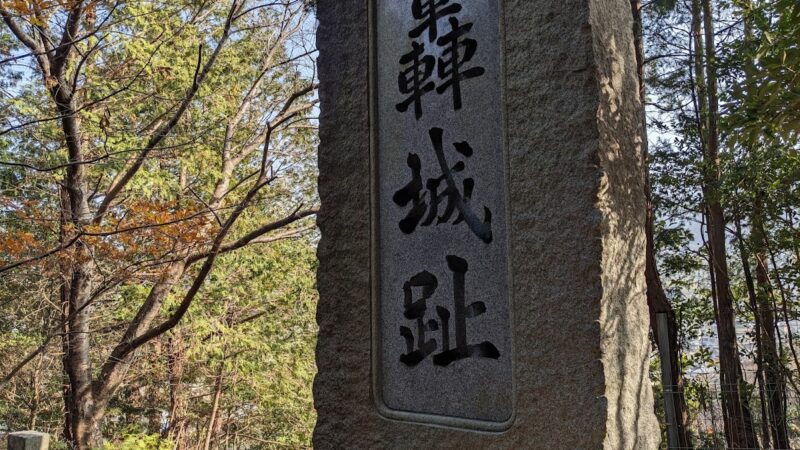
Nakakuki Castle (Nakakuki-jō) was a Japanese castle located in Nakakuki, Oyama City, Tochigi Prefecture, dating from the late Heian period to the Sengoku period. Built in the Samukawa district of Shimotsuke Province, this flatland castle served as an important base for the Oyama clan and was the stage for history for approximately 450 years. Currently, along with the Gion Castle (Oyama Castle) ruins and the Washijo Castle ruins, it is designated as a National Historic Site as part of the “Oyama Clan Castle Ruins (Washijo Castle Ruins, Gion Castle Ruins, Nakakuki Castle Ruins),” making it a valuable historical site for the study of medieval castles.
Basic Information on Nakakuki Castle
Nakakuki Castle has several alternative names, each with its own historical background.
Common Names and Alternative Names
- Kamejō (亀城): Named after the castle’s resemblance to a turtle.
- Tochiijō (戸井城): Named after the old name of the region.
- Nakakukijō (中岫城): Alternative spelling.
- Iwatsubojō (岩筒城): Name used during the rebellion of Oyama Yoshimasa.
These alternative names reflect the castle’s external features and how its name changed over time. In particular, the name “Iwatsubojō” is believed to be the name used during the Oyama Yoshimasa Rebellion in the late 14th century, when Yoshimasa used it as one of his bases to fight against the Kamakura Shogunate.
Location and Former Province
- Current Location: Nakakuki, Oyama City, Tochigi Prefecture
- Former Province: Samukawa District, Shimotsuke Province
- Transportation Access: The JR Mito Line divides the castle ruins north and south.
The castle ruins are currently divided east and west by the JR Mito Line, allowing for the observation of different remains in the northern and southern sections. Located on the way from Oyama Station towards Yuki, it still reflects its advantageous location as a transportation hub.
Classification, Structure, and Construction Information
- Classification: Flatland Castle
- Keep Structure: None (As it is a medieval castle, there is no keep)
- Builder: Oyama Masamitsu
- Year of Construction: Kyūju 2 (1155)
- Main Lords: Oyama clan, Yūki clan
- Year of Abandonment: Keichō 6 (1601)
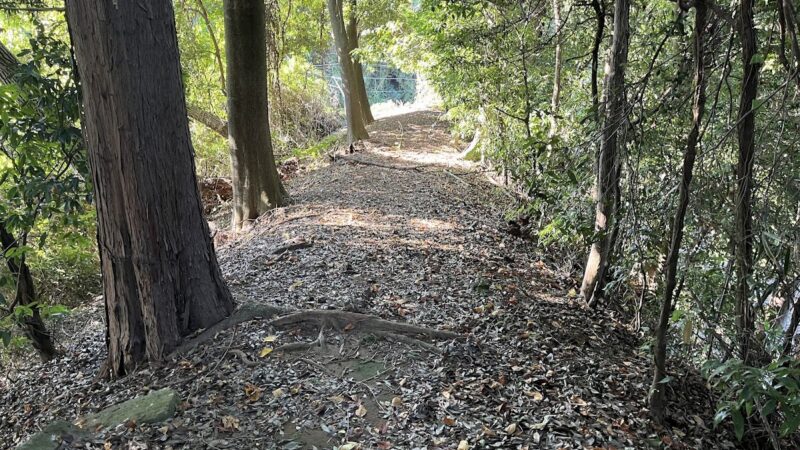
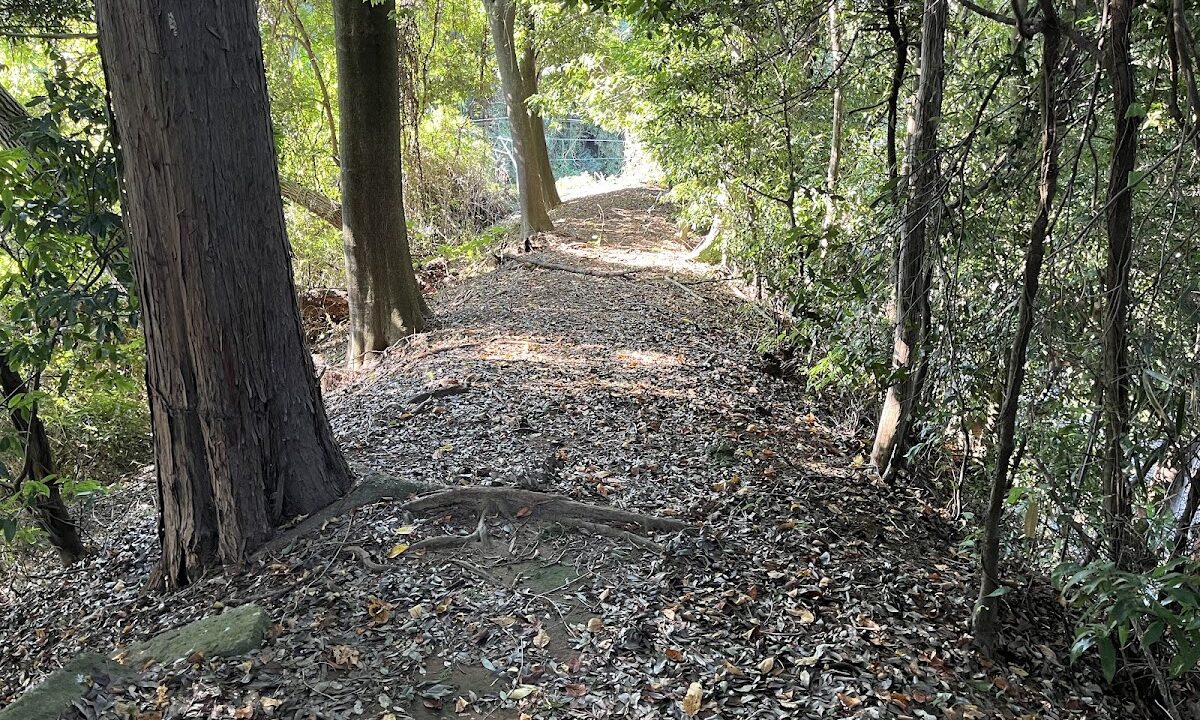
- Remains: Earthworks, dry moats
- Designated Cultural Property: National Historic Site “Oyama Clan Castle Ruins (Washijo Castle Ruins, Gion Castle Ruins, Nakakuki Castle Ruins)”
History and Background
The history of Nakakuki Castle spans approximately 450 years, from the late Heian period to the early Edo period. Its changes are closely linked to the rise and fall of samurai governments in Shimotsuke Province.
Late Heian Period: Castle Construction and the Rise of the Oyama Clan
In 1155 (Kyuju 2), Nakakuki Castle was built by Oyama Masamitsu. Oyama Masamitsu was a samurai from a prestigious family descended from Fujiwara no Hidesato, and was expanding his power as a powerful shogunate retainer in Shimotsuke Province. Masamitsu sided with Minamoto no Yoritomo early on when he raised an army, and after the establishment of the Kamakura Shogunate, he held an important position as a retainer.
Nakakuki Castle functioned as a branch castle of Gion Castle (Oyama Castle), the Oyama clan’s base, and became an important base in the expansion of the Oyama clan’s sphere of influence. From the late Heian period to the early Kamakura period, the Oyama clan controlled the southern part of Shimotsuke Province, and Nakakuki Castle played a part in their governing structure.
Kamakura Period: The Prosperity of the Oyama Clan
Throughout the Kamakura period, the Oyama clan flourished as a powerful shogunate retainer. Koyama Tomomasa distinguished himself on the side of the shogunate during the Jōkyū War (1221), and his achievements led to the expansion of his territory. Nakakuki Castle was used as the residence of the Koyama clan or their senior retainers, and continued to function as one of the Koyama clan’s military and administrative bases.
Nanboku-chō Period: The Koyama Yoshimasa Rebellion and Iwatubo Castle
In the late 14th century, during the turbulent Nanboku-chō period, Nakakuki Castle appears in history as “Iwatubo Castle.” It is believed that Iwatubo Castle was one of the bases used by Koyama Yoshimasa in his rebellion, which began in 1363, against the Kamakura shogunate. This is thought to be Nakakuki Castle.
The Koyama Yoshimasa Rebellion was a large-scale uprising that engulfed the Kanto region, and its influence was described as “shaking the east.” While Yoshimasa temporarily gained the upper hand, he was ultimately defeated by the shogunate forces, and the Koyama clan’s power declined significantly. The role of Nakakuki Castle in this conflict demonstrates its importance as a military base for the Oyama clan.
Sengoku Period: Conflict between the Oyama and Yuki Clans
During the Sengoku period, Nakakuki Castle came to occupy an important position in the relationship between the Oyama and Yuki clans. When Oyama Hidetuna and his younger brother Yuki Harutomo were in conflict, Satake Yoshishige of Hitachi ordered Tagaya Shigetsune, lord of Shimotsuma Castle, to mediate between the two.
During this reconciliation process, Nakakuki Castle became the residence of Yuki Harutomo. Of particular note is the record that when Yuki Harutomo adopted Yuki Hideyasu (originally named Ogimaru, later changed to Hideyasu), the second son of Tokugawa Ieyasu, Harutomo retired and moved to Nakakuki Castle. This occurred around 1590, and Hideyasu later became a daimyo with a domain of 670,000 koku in Kitano-sho, Echizen Province.
Early Edo Period: Castle Abandonment
After the Battle of Sekigahara in 1600, Yuki Hideyasu was transferred to Kitano-sho in Echizen Province. Consequently, Nakakuki Castle, which had been part of the Yuki clan’s territory, also left their control. In 1601, Nakakuki Castle was abandoned, bringing to an end its approximately 450-year history as a castle.
While the military and political role of Nakakuki Castle ended with the Yuki clan’s transfer to Echizen, it continued to be remembered as a historical symbol of the region.
Structure
Nakakuki Castle was built as a flatland castle, characterized by its layout that skillfully utilized the surrounding terrain. It is a valuable historical site that shows the changes in castle structure from the late Heian period to the Sengoku period.
Basic Castle Structure
Nakakuki Castle was a flatland castle built in the plains of Kagawa District, Shimotsuke Province, and had a structure that combined natural terrain with artificial defensive facilities. The castle’s shape resembled a turtle, hence its alternative name, “Kamejo” (Turtle Castle), which suggests the distinctive shape of its layout.
Regarding the castle’s size, current remains suggest that multiple baileys were arranged around the main keep. It possessed a relatively large structure for a flatland castle, reflecting its important role as a stronghold of the Oyama clan.
Defensive Structures
The following elements have been identified as defensive structures at Nakakuki Castle:
Earthworks: Earthworks surrounded the castle. Parts of these remain today, indicating the defensive line of the time. The earthworks served to prevent enemy intrusion and also ensured visibility from within the castle.
Dry Moat: A dry moat was dug to strengthen the castle’s defenses. Unlike water-filled moats, dry moats are a common feature of flatland castles in the Kanto region. Traces of the moat can still be seen in parts today.
Castle Grounds
Currently, the castle site is divided north and south by the JR Mito Line, making it difficult to determine the exact boundaries of the castle grounds. However, based on old maps from before the railway was built and the results of archaeological excavations, it is presumed that the castle encompassed a considerably large area.
In the northern area, parts of a moat and earthworks remain south of the horticultural fields, providing a glimpse into the former castle structure. Remains have also been confirmed in the southern area, indicating that the castle grounds extended over a wide area.
Buildings
As a medieval castle, Nakakuki Castle did not have a keep like early modern castles. However, it is believed that buildings such as the lord’s residence, vassal residences, barracks, and warehouses were located within the grounds. In particular, when Yuki Harutomo retired, a suitable residence must have been constructed.
Unfortunately, the detailed structure and layout of these buildings are not clearly understood due to the limited existing historical materials. Further archaeological excavations may provide new insights.
Current Situation
The Nakakuki Castle ruins are currently protected as a national historic site, but their state of preservation varies greatly depending on the location.
Preservation Status of the Remains
The castle ruins are divided east and west by the JR Mito Line, and the construction of this railway has had a significant impact on the remains. However, valuable remains remain on both sides.
Northern Area: A portion of the moat and earthworks remain in relatively good condition south of the horticultural fields. This section provides important clues to understanding the structure of Nakakuki Castle’s defensive facilities. The height of the earthworks and the depth of the moat offer a glimpse into the castle’s defensive capabilities at the time.
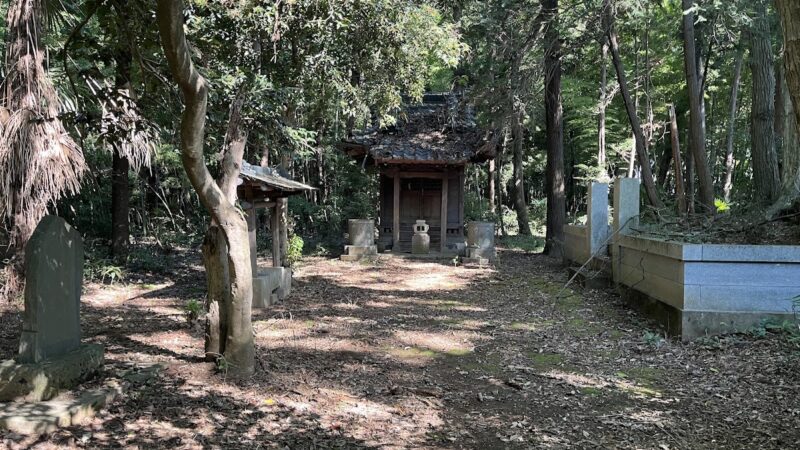
Southern Area: Remains have also been confirmed here, but some parts have been affected by residential development. Nevertheless, traces indicating the outline and layout of the castle remain, contributing to the reconstruction of the overall structure.
Southern Area: Remains have also been confirmed here, but some parts have been affected by residential development. ### Current Land Use
The current land use of the castle ruins is diverse, as follows:
- Residential Land: Part has been developed as a residential area.
- Forest: Some parts remain as natural forest.
- Agricultural Land: Used for agriculture, such as horticultural fields.
- Railway Land: The JR Mito Line passes through the area.
While this diverse land use presents challenges from the perspective of preserving the ruins, it also raises the modern issue of coexistence between local life and historical heritage.
National Historic Site Designation and Preservation Activities
The Nakakuki Castle ruins, along with the Gion Castle (Oyama Castle) ruins and the Washijo Castle ruins, are designated as a national historic site as “Oyama Clan Castle Ruins (Washijo Castle Ruins, Gion Castle Ruins, Nakakuki Castle Ruins).” This designation is a result of the recognition of the historical importance of the Oyama clan and the academic value of their castle complex.
With the designation as a national historic site, efforts are underway to preserve and utilize the castle ruins. The Oyama City Board of Education is primarily responsible for activities such as the preservation of the ruins, research, and information dissemination.
Visiting and Access Information
Nakakuki Castle Ruins are open to the public and can be freely visited. However, since some of the ruins are located on private land and in residential areas, please observe the following points when visiting:
- Avoid trespassing on private land
- Be careful not to damage the ruins
- Take your trash with you
- Be considerate of the lives of surrounding residents
Access Method:
- Located near Nakakuki Station on the JR Mito Line
- On the way from Oyama Station towards Yuki
- If traveling by car, there is no dedicated parking lot, so please use nearby public parking lots.
Related Historical Sites in the Surrounding Area
When visiting Nakakuki Castle, we recommend also visiting the following castle ruins, which are also designated as National Historic Sites and are associated with the Oyama clan:
Gion Castle (Oyama Castle) Ruins: The most important castle ruins as the base of the Oyama clan. Located in the center of Oyama City, it has larger-scale ruins remaining.
Washijo Castle Ruins: Another important stronghold of the Oyama clan. The remains of its defensive structures are relatively well-preserved.
By visiting these three castle ruins, one can understand the overall picture of the Oyama clan’s sphere of influence and castle network.
Historical Significance of the Oyama Clan and Nakakuki Castle
Nakakuki Castle is not merely a local castle; it holds significant meaning in understanding the political and military history of the Kanto region during the transition from the medieval to the early modern period.
The Oyama Clan’s Power Base
The Oyama clan was a prestigious samurai family descended from Fujiwara no Hidesato, and wielded considerable power in Shimotsuke Province. Nakakuki Castle, along with Gion Castle and Washijo Castle, functioned as an important base supporting the Oyama clan’s power base.
By strategically arranging multiple castles, the Oyama clan efficiently governed a vast territory and enabled defense against external enemies. This castle network is a prime example of the governance system of medieval samurai groups and is a subject of study in history and archaeology.
Value in Medieval Castle Research
Nakakuki Castle was a castle used from the late Heian period to the Sengoku period, and it is believed to have undergone numerous renovations and expansions throughout its long history. Therefore, it is a valuable resource for studying the chronological changes in castle structure.
In particular, the arrangement of defensive facilities as a flatland castle, and the structure of earthworks and dry moats, exhibit characteristics of medieval castles in the Kanto region, making it important for comparative studies with other castles of the same period.
Connection to Yuki Hideyasu
At the end of the Sengoku period, Nakakuki Castle became the retirement castle of Yuki Harutomo, and its connection to Yuki Hideyasu, the second son of Tokugawa Ieyasu, enhances the historical significance of this castle. Hideyasu later became a daimyo with a domain of 670,000 koku in Kitano-sho, Echizen Province, and was one of the important figures in the Tokugawa regime.
Nakakuki Castle is an important historical site for understanding the relationship between the Tokugawa and Yuki families, as well as the political trends during the transition from the Toyotomi regime to the Tokugawa regime, such as the distribution of daimyo from Kanto to Hokuriku.
Points to Note When Visiting Nakakuki Castle
When visiting the Nakakuki Castle ruins, keeping the following points in mind will allow you to understand and enjoy the history more deeply.
Highlights of the Remains
- Remaining Earthworks: The earthworks remaining on the south side of the horticultural fields in the northern area are valuable remains that allow you to appreciate the scale of the defensive facilities at the time. The height and width of the earthworks allow you to infer the defensive strength of the castle.
- Traces of Dry Moats: The remaining traces of dry moats provide clues to understanding the castle’s layout. The depth, width, and placement of the moats reveal the design philosophy of the defensive line.
- Observation of Topography: It is also important to observe how Nakakuki Castle, a flatland castle, utilized the natural terrain. Slight differences in elevation and the arrangement of water systems played a crucial role in the castle’s defense.
Understanding the Historical Background
Before visiting the castle ruins, studying the history of the Oyama clan and the changes in Nakakuki Castle will deepen your understanding at the site. Pay particular attention to the following points:
- The background of the castle’s construction by Oyama Masamitsu
- Its role in the Oyama Yoshimasa Rebellion
- The relationship between Yuki Harutomo and Yuki Hideyasu
- The circumstances leading to the castle’s abandonment
Photography Tips
When documenting the remains, pay attention to the following points:
- An angle that shows the cross-section and height of the earthworks
- A position that allows you to appreciate the depth of the dry moat
- A distant view that shows the relationship with the surrounding topography
- Photograph explanatory signs and information boards as well
Summary
Nakakuki Castle, located in Oyama City, Tochigi Prefecture, is a flatland castle dating from the late Heian period to the Sengoku period, and served as an important base for the Oyama clan for approximately 450 years. Built in 1155 by Oyama Masamitsu, Nakakuki Castle became a battlefield during the Oyama Yoshimasa Rebellion, known as “Iwatubo Castle.” During the Sengoku period, it served as the retirement castle of Yuki Harutomo, and was associated with Yuki Hideyasu, the second son of Tokugawa Ieyasu.
Currently designated as a national historic site, the “Oyama Clan Castle Ruins (Washijo Castle Ruins, Gion Castle Ruins, Nakakuki Castle Ruins)” still retain remnants such as earthworks and dry moats. Although divided by the JR Mito Line, valuable remains can be found in both the northern and southern areas.
Nakakuki Castle Ruins are an important historical site for understanding the political and military history of the Kanto region during the transition from the medieval to the early modern period, and are also valuable resources for the study of medieval castles. Nakakuki Castle, which played a part in the castle network that supported the power base of the Oyama clan, continues to quietly tell its history.