Complete Guide to Futto Castle (Ibaraki Prefecture) | The History of Hitachi Province and the Stage of Niwa Nagashige’s Revival
Futto Castle, located in Inashiki City, Ibaraki Prefecture, is a flatland castle built in the early Edo period. It is known as the historical stage where Niwa Nagashige, a daimyo who had been dispossessed of his domain amidst the political upheaval following the Battle of Sekigahara, made his comeback as a daimyo. Built at a strategic point for water transport—the mouth of the Ono River, which flows into Lake Kasumigaura—this castle played a part in establishing the Edo Shogunate’s control over Hitachi Province.
Basic Information on Furuwatari Castle
Location: Furuwatari, Inashiki City, Ibaraki Prefecture
Alternate Name: Furuya Castle
Castle Classification: Flatland Castle
Year of Construction: Keicho 8 (1603)
Builder: Yamaoka Kagetomo
Main Lords: Yamaoka Kagetomo, Niwa Nagashige
Remains: Earthworks, Moat Remains
Cultural Property Designation: None
The place name Furuwatari is known as a difficult-to-read place name, pronounced “Futto,” and has a unique pronunciation different from the common “Furuwatari” or “Kowatari.” This place name is thought to originate from the geographical feature of being the point where the Ono River flows into Lake Kasumigaura.
History of Furuwatari Castle
Construction by Yamaoka Kagetomo
Furuwatari Castle was built in Keicho 8 (1603) by Yamaoka Kagetomo. Yamaoka Kagetomo was a daimyo who distinguished himself on the Tokugawa side in the Battle of Sekigahara and was rewarded with a 10,000 koku domain in Furuto, Hitachi Province.
The Yamaoka clan was based in Mino Province, and Kagetomo served Tokugawa Ieyasu, achieving numerous military successes. He sided with the Eastern Army in the Battle of Sekigahara, and as a result of his service, he received territory in Hitachi Province and built a castle in Furuto, a strategic location along Lake Kasumigaura for water transport and defense.
The Arrival of Niwa Nagashige and the Restoration of the Daimyo Domain
Yamaoka Kagetomo’s reign was short, and in the same year, 1603 (Keicho 8), Niwa Nagashige was transferred to Furuto with a 10,000 koku domain. This transfer held extremely significant meaning for Niwa Nagashige.
Niwa Nagashige was the eldest son of Niwa Nagahide, a senior retainer of Oda Nobunaga known as “Yone Gorōza.” His father, Nagahide, was a powerful daimyo ruling over Kitano-sho in Echizen Province with a domain of 1.23 million koku. However, during Nagashige’s time, his territory was reduced by Toyotomi Hideyoshi, and he was further dispossessed of his domain for siding with the Western Army in the Battle of Sekigahara.
Although Nagashige became a ronin (masterless samurai) for a time, he was granted 10,000 koku in Furuto, Hitachi Province, thanks to the lenient treatment of Tokugawa Ieyasu, thus regaining his status as a daimyo. This was the first step in Nagashige’s comeback, and Furuto Castle is a historically significant castle that played a crucial role in this.
The Subsequent Development of the Niwa Clan
Based at Furuto Castle, Niwa Nagashige continued to serve the Tokugawa shogunate faithfully, gradually increasing his territory.
- Keicho 13 (1608): Increased stipend within Hitachi Province to 15,000 koku
- Genna 2 (1616): Transferred to Tanagura, Mutsu Province, with a stipend of 50,000 koku
- Kanei 16 (1639): Increased stipend and transferred to Shirakawa, Mutsu Province, with a stipend of 100,000 koku
Niwa Nagashige moved to Tanagura after only five years at Furuto, but during this time he solidified his position within the shogunate system and ultimately restored himself to the status of a daimyo with a stipend of 100,000 koku. Although his rule at Furuto Castle was short, it became an important stepping stone for the restoration of the Niwa clan.
Location and Geographical Characteristics of Furuto Castle
Confluence of Lake Kasumigaura and the Ono River
Furuto Castle was built at the point where the Ono River flows into Lake Kasumigaura. This location offers excellent conditions for both water transport and defense.
Lake Kasumigaura, the second largest lake in Japan, stretches across southern Ibaraki Prefecture and served as a vital waterway during the Edo period. The Onogawa River is one of the rivers flowing into Lake Kasumigaura, a crucial waterway connecting the inland areas with the lake’s surface.
Koto Castle, by controlling this confluence, enabled monitoring of water transport and the accumulation of goods. Furthermore, its terrain allowed for the use of the river and lake as natural moats, giving it a certain degree of defensive capability despite being a flatland castle.
Position in Hitachi Province
In the early Edo period, Hitachi Province was an important region where many of Tokugawa Ieyasu’s close associates and hereditary daimyo were stationed. Many domains, including the Mito Domain, Tsuchiura Domain, and Kasama Domain, were located there, serving as a base for the defense of Edo and the control of eastern Japan.
The Inashiki region, where Koto Castle is located, is situated on the southern shore of Lake Kasumigaura, near the border between Hitachi Province and Shimosa Province. This region also contains other castles such as Ukishima Castle, Jinguji Castle, and Sakai Castle, indicating its importance as a strategic point for both water and land transportation.
Layout and Structure of Furuto Castle
Scale and Arrangement of the Castle
Furuto Castle was built as a flatland castle and was a relatively small castle centered around the main enclosure. It is considered to be of a standard size for the residence of a small domain of 10,000 koku.
Currently, most of the castle site is occupied by residential areas and farmland, and clear remains are limited. However, based on archaeological excavations and topographical analysis, the following structure has been estimated:
- Main Enclosure: The central part of the castle, where the lord’s residence and government offices were located.
- Moat: A moat surrounded the main enclosure.
- Earthwork: Earthworks were built for defense.
- Benzaiten: The Benzaiten shrine that remains today may have been part of the castle’s facilities.
Chifuku-ji Temple and Benzaiten
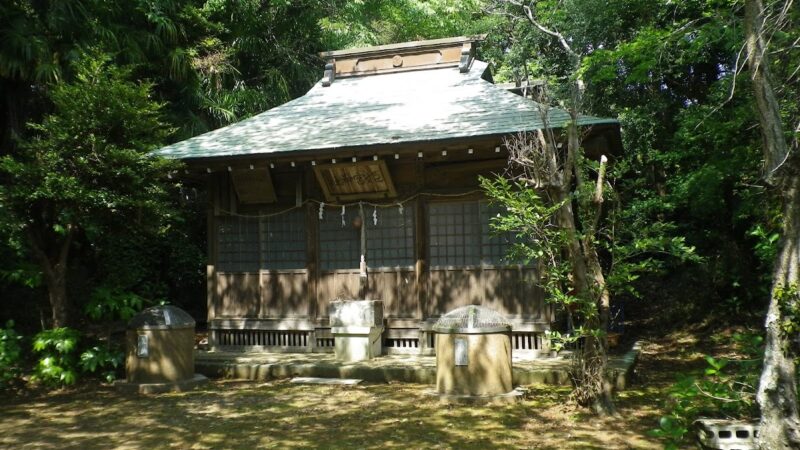
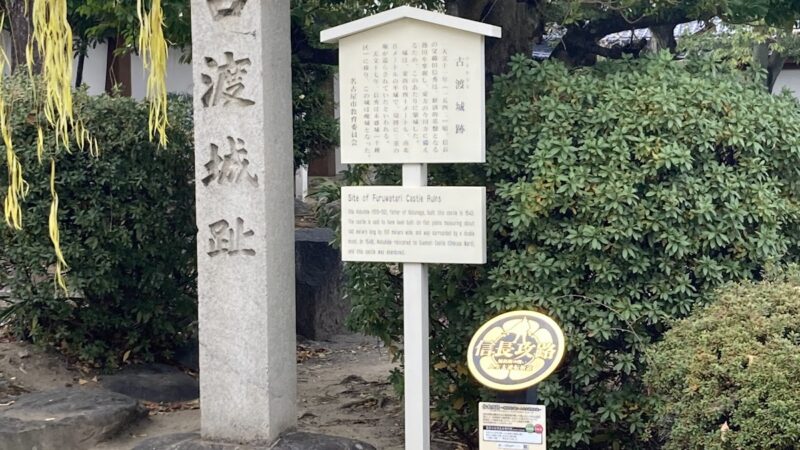
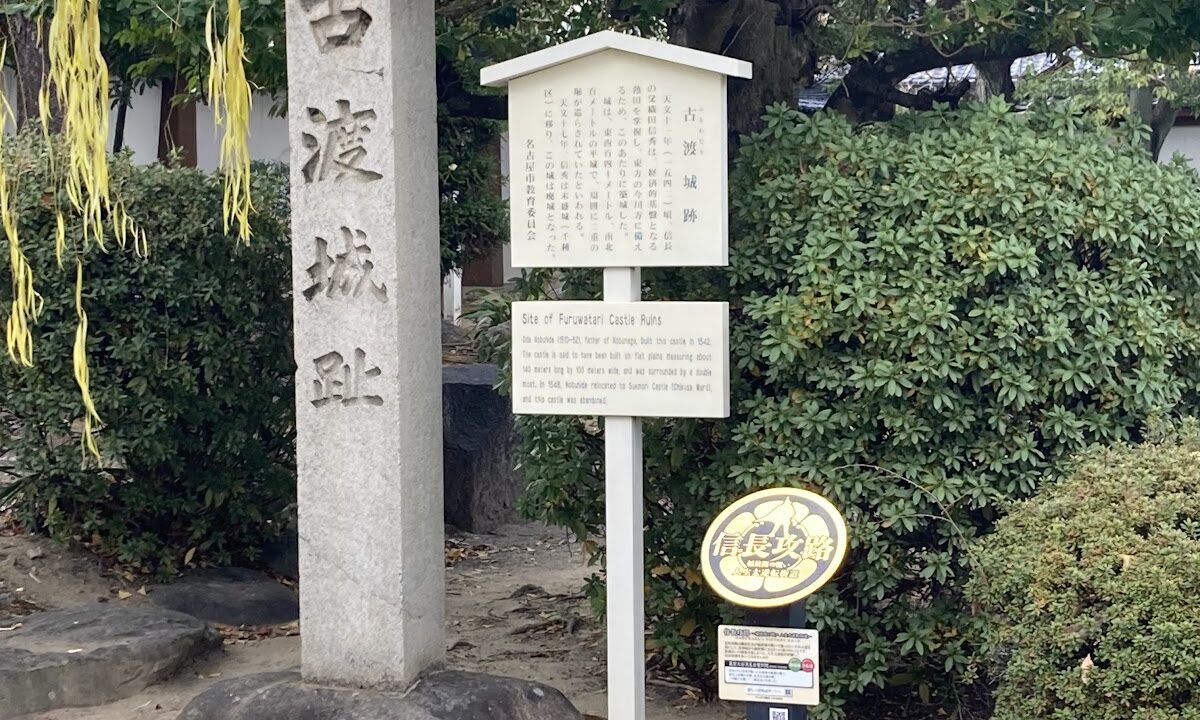
At the site of Furuto Castle, there is a temple called Chifuku-ji, and Benzaiten is enshrined to its northwest. An information board indicating the castle site is installed in front of this Benzaiten, conveying the castle’s history to visitors.
Benzaiten is worshipped as the goddess of water and was often enshrined in castles built near water. At Furuto Castle, given its location facing Lake Kasumigaura and the Ono River, it is thought that Benzaiten was enshrined to pray for the safety of water transport and the protection of the castle.
The main enclosure is believed to have been located south of Benzaiten, and the area is now residential and farmland. While slight elevations resembling earthworks and ditches that appear to be remnants of moats remain in some areas, the site has lost its clear form as a complete castle.
Existing Remains and Points of Interest
Traces of Earthworks
The most clearly identifiable remains at the Furuto Castle site are traces of earthworks. Slight elevations remain at the boundaries of residential and farmland areas surrounding the main enclosure.
These earthworks do not retain their original height or shape, but they provide important clues for estimating the castle’s extent and layout. Compared to other flatland castles in Ibaraki Prefecture, examples of partially preserved earthworks are rare.
Moat Remains and Waterways
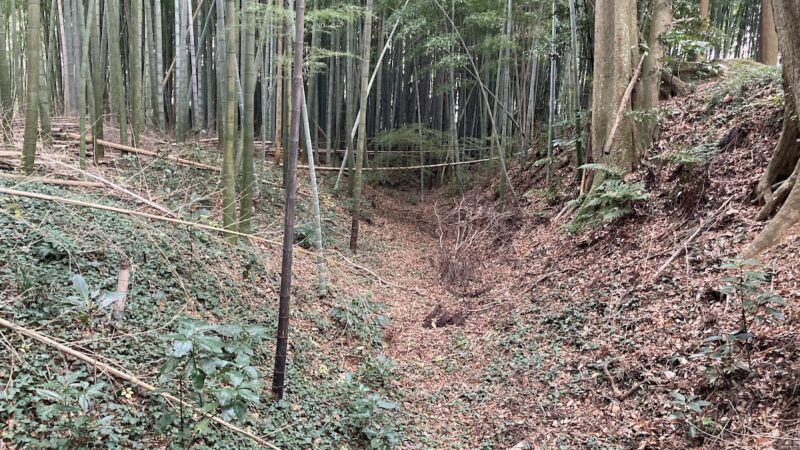
Traces of the moat that is believed to have surrounded the main enclosure also remain in the form of ditches and waterways. Some parts are currently used as agricultural irrigation and drainage channels, showing how the castle-era moat has been directly incorporated into modern life.
Moat Remains and Waterways
Traces of the moat that is believed to have surrounded the main enclosure also remain in some areas as ditches and waterways. Some parts are now used as agricultural waterways and drainage channels, demonstrating how the castle-era moat has been directly integrated into modern life. These moats played a crucial role as part of a defensive system utilizing the natural waterways of the Onogawa River and Lake Kasumigaura.
Benzaiten Shrine and Information Board
The Benzaiten shrine northwest of Chifuku-ji Temple is a valuable historical site that conveys the history of Furuto Castle. The information board installed here contains basic information about the castle’s history and lords, informing visitors to the castle ruins about the existence of Furuto Castle.
The area around the Benzaiten shrine is relatively well-preserved, making it one of the few places where you can feel the atmosphere of the castle ruins.
Surrounding Castles and Historical Environment
Castles in the Inashiki Region
Inashiki City (including the former Sakuragawa Village), where Furuto Castle is located, has many castle ruins. The main ones are listed below.
- Ukishima Castle: A castle built on a floating island jutting out into Lake Kasumigaura
- Jinguji Castle: A castle located near Furuto Castle
- Sakai Castle: The residence of a powerful local lord in the Inashiki region
- Awa Ryugai Castle: A castle with a history dating back to the Middle Ages
- Oinozuka Castle: One of the region’s defensive strongholds
- Sakuragawa Furuto Beacon Tower: A beacon tower for transmitting information
These castles were built from the Middle Ages to the early modern period to control water transport and traffic around Lake Kasumigaura. Furuto Castle, among them, is a relatively new castle built under the shogunate system in the early Edo period, and is positioned as part of the Tokugawa shogunate’s rule over Hitachi Province.
Castle Culture of Hitachi Province
More than 1,000 castle ruins have been confirmed in Ibaraki Prefecture (Hitachi Province), making it one of the most densely populated castle areas in Japan. This reflects the history of Hitachi Province, where powerful samurai groups, primarily the Satake clan, held sway during the medieval period, and where forces such as the Hojo, Satake, and Tokugawa clans competed during the Sengoku period.
Furuto Castle, built in the early Edo period, has a different character from these medieval castles. It is characterized by being a flatland castle built with an emphasis on peacetime governance and water transport management, rather than a mountain castle or fort primarily intended for warfare.
Access and Visiting Information for Furuto Castle
Location and Transportation
Address: Furuto, Inashiki City, Ibaraki Prefecture 300-0638
Public Transportation:
- Approximately 15 minutes by taxi from JR Narita Line “Shimousa-Kanzaki Station”
- Approximately 40 minutes by bus and taxi from Kanto Railway Ryugasaki Line “Ryugasaki Station”
By Car:
- Approximately 20 minutes from Ken-O Expressway “Inashiki IC”
- Approximately 30 minutes from Higashi-Kanto Expressway “Narita IC”
Because access to Furuto Castle Ruins by public transportation is somewhat inconvenient, visiting by private car is recommended.
Points to Note When Visiting
Since Furuto Castle Ruins does not have special management facilities or parking, please note the following points when visiting.
- Use Chifuku-ji Temple and Benzaiten Shrine as landmarks: The signpost in front of Benzaiten Shrine indicates the location of the castle ruins.
- Consideration for private property: The main enclosure site is now residential and farmland, so please be careful not to trespass on private property.
- Confirmation of remains: Traces of earthworks and moats are minute, so it is best to confirm their locations beforehand.
- Surrounding environment: The scenery of Lake Kasumigaura and the Ono River is also important for understanding the castle’s location.
Photography and Recording
Photography is an important means of recording for castle researchers and history enthusiasts visiting the site. The following points are suitable for photography at the Furuto Castle ruins.
- Benzaiten Shrine and Information Board
- Traces of an Earthen Embankment (Slight Elevation)
- Ditches and Waterways Believed to be the Remains of a Moat
- Landscape at the Confluence of the Onogawa River and Lake Kasumigaura
- Grounds of Chifuku-ji Temple
Historical Significance of Furuto Castle
Symbol of the Niwa Clan’s Restoration
The greatest historical significance of Furuto Castle lies in the fact that it was the stage for Niwa Nagashige’s revival as a daimyo. Despite being a family of senior retainers of Oda Nobunaga, the Niwa clan experienced hardships such as reduction in territory under the Toyotomi regime and confiscation of their domain after the Battle of Sekigahara. For them, the 10,000 koku of Furuto was the first step towards their recovery.
In the history of the Niwa clan, who started as a small domain of only 10,000 koku and eventually restored to 100,000 koku in Shirakawa, Furuto Castle is an unforgettable starting point. It is believed that his five years of rule at this castle demonstrated Nagashige’s abilities and loyalty to the Tokugawa shogunate, leading to subsequent increases in territory and transfers.
Edo Shogunate’s Rule over Hitachi Province
Furuto Castle is positioned as part of the administrative system established by the Tokugawa Shogunate after the Battle of Sekigahara. Hitachi Province was home to numerous fudai daimyo (hereditary feudal lords) and shinpan (related feudal lords), including the Mito Tokugawa family, and served as a crucial point for the defense of Edo and the control of eastern Japan.
Even small domains like Furuto played important roles in managing water transport on Lake Kasumigaura and maintaining local security, supporting the lower levels of the shogunate system.
A Hub for Water Transport Management
The location at the confluence of Lake Kasumigaura and the Onogawa River indicates that Furuto Castle functioned as a hub for water transport management. During the Edo period, Lake Kasumigaura was an important waterway connecting Edo with the inland areas of Hitachi Province, used for transporting rice and local products.
It is believed that Furuto Castle played a role in monitoring this water transport and managing the distribution of goods. Its strategically important location, despite being a small domain, was the significance of this castle’s existence.
Research and Historical Materials on Furuto Castle
Main References
The following references are useful for research on Furuto Castle:
- *Comprehensive Survey of Japanese Castles: Ibaraki, Tochigi, and Gunma* (Shin Jinbutsu Oraisha)
- *Illustrated Guide to Castles in Ibaraki* (Kokushokankokai)
- Various castle research journals and local history research papers
Because Furuto Castle was small in scale and had a short period of existence, historical materials are limited. However, fragmentary records remain in historical materials concerning Niwa Nagashige and in the domain administration records of Hitachi Province.
Archaeological Excavations and Future Challenges
No full-scale archaeological excavations have been conducted at the Furuto Castle site. Due to the progress of residential and agricultural development, the state of preservation of the remains is not good.
Future challenges include the following:
- Detailed Layout Survey: Reconstructing the castle’s structure from remaining microtopography.
- Collection of Historical Documents: Clarifying the castle’s actual state from historical documents concerning the Niwa and Yamaoka clans.
- Comparative Study with Surrounding Castles: Clarifying its position within the group of castles in the Inashiki region.
- Preservation of Remains: Considering preservation measures for the few remaining earthworks and moat traces.
Summary
Furuto Castle in Inashiki City, Ibaraki Prefecture, is a historically important castle built in the early Edo period by Yamaoka Kagetomo, and where Niwa Nagashige regained his status as a daimyo. Located at the confluence of Lake Kasumigaura and the Ono River, a strategic point for water transport, it served as a base for regional governance and water transport management as a flatland castle.
Currently, the castle’s remains are limited, with only traces of earthworks and moats remaining. However, an information board installed in front of the Benzaiten shrine at Chifuku-ji Temple conveys the castle’s history to the present day. Although small in scale, Furuto Castle holds an important place in the history of castles in Ibaraki Prefecture, as a symbol of the Niwa clan’s restoration and as a castle that played a part in the Edo shogunate’s control of Hitachi Province.
For castle enthusiasts and history researchers, Furuto Castle is a valuable example for understanding the realities of a small domain in the early Edo period, and an indispensable historical site for understanding the historical landscape around Lake Kasumigaura.